World Maritime University World Maritime University
The Maritime Commons: Digital Repository of the World Maritime
The Maritime Commons: Digital Repository of the World Maritime
University
University
World Maritime University Dissertations Dissertations
11-5-2017
Impacts of anti-corruption interventions: measures in the shipping
Impacts of anti-corruption interventions: measures in the shipping
industry
industry
Mirana Rabarijaona
Follow this and additional works at: https://commons.wmu.se/all_dissertations
Part of the Social Control, Law, Crime, and Deviance Commons, and the Transportation Commons
Recommended Citation Recommended Citation
Rabarijaona, Mirana, "Impacts of anti-corruption interventions: measures in the shipping industry" (2017). World Maritime University Dissertations. 575.
https://commons.wmu.se/all_dissertations/575
non-WORLD MARITIME UNIVERSITY
Malmö, Sweden
IMPACTS OF ANTI-CORRUPTION INTERVENTIONS:
MEASURES IN THE SHIPPING INDUSTRY
By
MIRANA DIMBISOA LOUISIA RABARIJAONA
Madagascar
A dissertation submitted to the World Maritime University in partial Fulfilment of the requirements for the award of the degree of
MASTERS OF SCIENCE
In
MARITIME AFFAIRS
SHIPPING MANAGEMENT AND LOGISTICS
2017
Declaration
I certify that all the material in this dissertation that is not my own work has been identified, and that no material is included for which a degree has previously been conferred on me.
The contents of this dissertation reflect my own personal views, and are not necessarily endorsed by the University.
(Signature): ...
(Date): 18th September, 2017...
iii
Acknowledgments
At the forefront, I would like to thank my dissertation supervisor Dr. Lisa Froholdt
for her continuous support and supervision throughout the dissertation stages.
My gratefulness goes to the maritime professionals who worked with me in the
process of elaborating the questionnaire as well as in the answers they provided.
I would like to express my deepest appreciation to the Faculty members of the World
Maritime University who provided their guidance and advice.
Finally, I would like to thank the International Maritime Organization who supported
Abstract
Title of Dissertation: Impacts of Anti-corruption interventions: Measures in the
Shipping Industry
Degree: MSc
The Moral and Cognitive Development (MCD) theory has been established by
Kohlberg and suggests that an individual acquires the moral principles and moral
behavior through a learning process. According to the MCD theory, an individual is
categorized within an evolutionary and irreversible sequence of three moral levels:
The Pre-conventional, Conventional and the Post-conventional levels. The higher
one’s MCD level, the less likely that person is to do unethical practices. Applying this
theory to the maritime industry and focusing on the issue of corruption, the objective
of the study is to determine the impacts of the anti-corruption initiatives, assumed to
represent morality learning processes for professionals.
The collected data has been organized to analyze different sub-groups and to present
overviews through different angles of observations. Although the sub-groups are not
evenly represented, those who are not statistically relevant are observed individually
and present the MCD levels’ distribution. The overall study provides an overview of
the anti-corruption awareness within the shipping industry and serves as a starting
point for further in-depth analysis. A considerable percentage of the maritime
organizations use Anti-corruption policies while another significant part has not
engaged in any form of anti-corruption initiative. The findings show that for one group
or another, the majority of the participants present a pre-conventional level, which
might suggest that anti-corruption policies are not effective enough to inculcate moral
v
present exploitable potential as most of its subjects belong to the post-conventional
level.
Emergent findings were collected from other variables and from interviews; which
offer different angles of the perspectives to understand corruption through the scope
of gender, age, experience and the dimensions of corruption.
KEYWORDS: Anti-corruption, Moral and Cognitive Development, training
Table of Contents
Declaration ... ii
Acknowledgments ... iii
Abstract ... iv
Table of Contents ... vi
List of Tables ... viii
List of Figures ... viii
List of Abbreviation ... ix
1. Introduction ... 1
1.1 Ethics, morality and Business Ethics ... 1
1.1.1. Factors influencing business ethics ... 2
1.2 Definitions of corruption ... 4
1.3 Corruption in the maritime industry ... 5
1.3.1 Factors of non-integrity in ports ... 6
2. Literature review ... 10
2.1 Kohlberg and the theory of Moral Cognitive Development (MCD) ... 10
2.2 Anti-corruption espoused theories ... 13
2.2.1 Theories of action: Espoused theory vs Theory in practice ... 13
2.2.2 Anti-corruption espoused theories ... 14
2.3 The morality learning process ... 16
2.4 Aim of the study ... 17
2.4.1 Research question ... 17
2.4.2 Elements of comparison ... 19
2.5 MACN ... 19
3. Methodology ... 21
vii
3.2 Elaboration and publication of the questionnaire ... 22
3.3 Presentation of the Defining Issues Test (DIT-1) ... 24
3.3.1 Presentation of the DIT-1 ... 24
3.3.2 DIT consistency tests ... 24
3.4 Limitation of the DIT-1 ... 26
3.4.1 The use of short 3-story form ... 26
3.4.2 The ethical judgment versus the ethical action ... 26
3.4.3 The use of DIT-1 instead of DIT-2 ... 27
3.5 Leading the interviews ... 28
4. Data collection and findings ... 31
4.1 Limitations of the data collection and impacts on the research ... 31
4.2 Data presentation and analysis ... 32
4.2.1 Moral and Cognitive Development: general findings ... 32
4.2.2 Awareness of corruption ... 33
4.2.3 Importance of anti-corruption for the subject ... 35
4.2.4 Organization, position and MCD ... 38
4.2.5 MCD levels observed through gender ... 44
4.2.6 Espoused theories confronted to MCDs ... 46
4.2.7 Espoused theory: the MACN observation ... 49
4.2.8 Age and experience opposed to MCD ... 49
4.3 Interview outcomes: dimensions of corruption ... 53
4.3.1 Mr. D. ... 53
4.3.3 Mr. H. ... 55
5. Conclusion ... 58
List of Tables
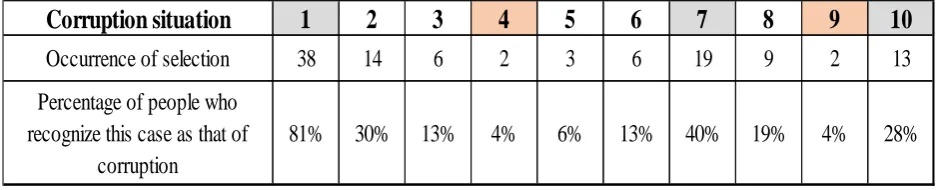
Table 1: Awareness of what is a situation of corruption (Author, 2017) ... 34
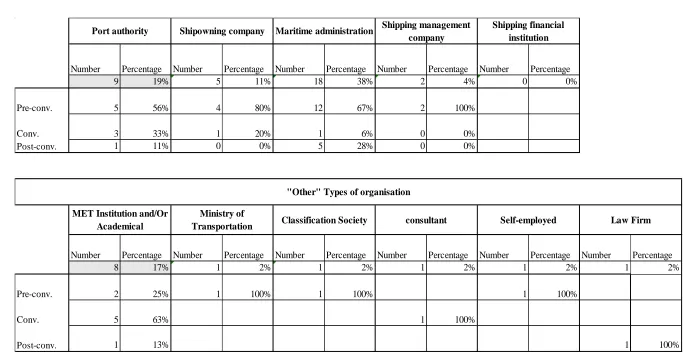
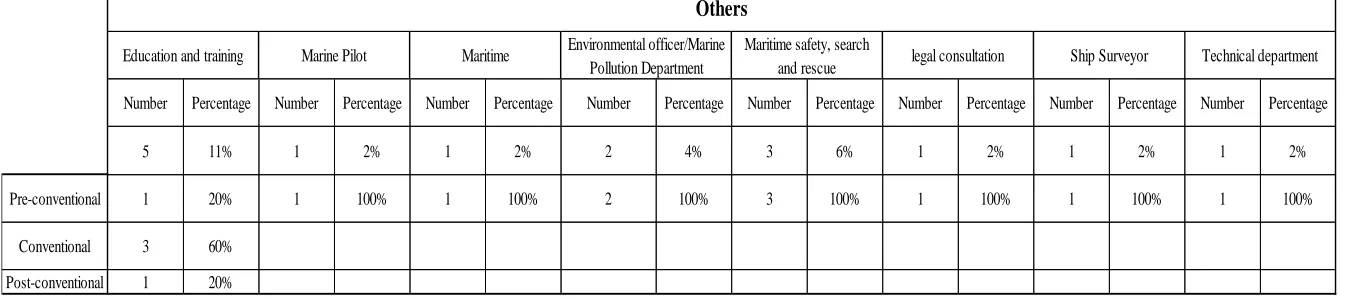
Table 2: Distribution of MCDs according to the type of organization (Author, 2017 ... 41
Table 3: Distribution of MCDs according to the position within the organization(Author, 2017) ... 43
Table 4: MCD distribution in Gender (Author, 2017) ... 44
Table 5: MCD levels confronted with espoused theories (Author, 2017) ... 47
Table 6: MCD level distribution for each espoused theory (Author, 2017) ... 47
Table 7: Distribution of MCD levels according to the age (Author, 2017) ... 50
Table 8: Distribution of MCD levels according to the experience (Author, 2017) . 52
List of Figures
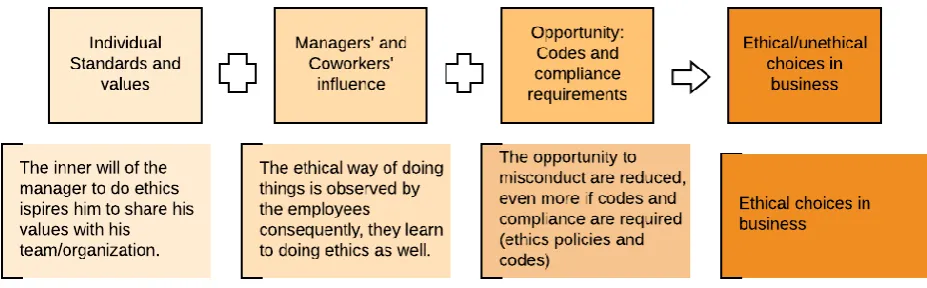
Figure 1: Three Factors that Influence Business Ethics (Ferrell, Hirt, & Ferrell, 2004) ... 2Figure 2: Adapted from Ferrell, Hirt, & Ferrell, 2004 (Author, 2017) ... 3
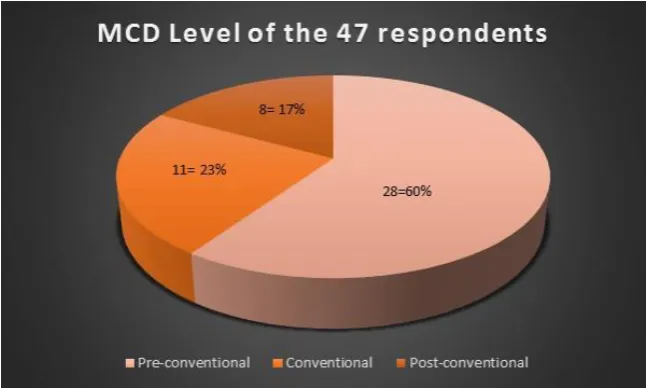
Figure 3: MCD levels distribution( Author, 2017) ... 33
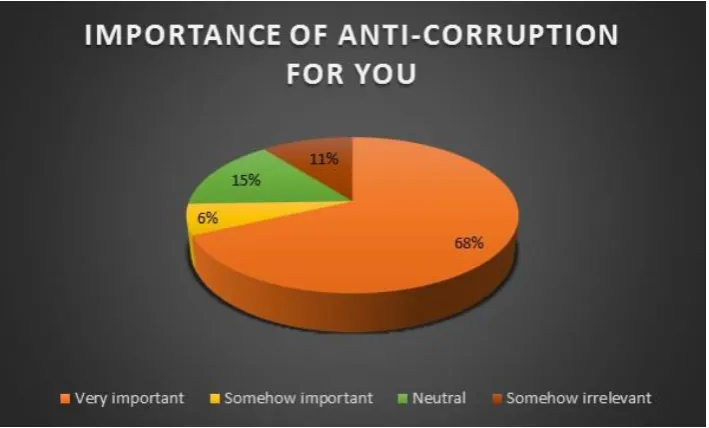
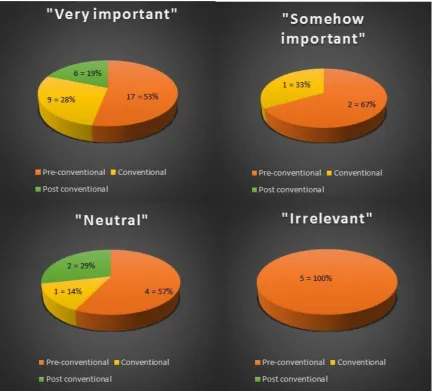
Figure 4: Declared importance of anti-corruption for maritime professionals (Author, 2017) ... 36
Figure 5: MCD levels confronted with declared position on anti-corruption (Author, 2017) ... 37
Figure 6: MCD distribution in Gender (Author, 2017) ... 44
Figure 7: MCD evolution through the age (Author, 2017) ... 50
Figure 8: MCD evolution through the experience (Author, 2017) ... 52
ix
List of Abbreviation
BDN: Bunker Delivery Note
BPP: Bureau of Public Procurement
CIPE: Center for International Private Enterprise
DIT: Defining Issues Test
EU: European Union
ICPC: Independent Corrupt Practices and Other Related Offences Commission
MACN: Maritime Anti-Corruption Network
MCD: Moral and Cognitive Development
MET: Maritime Education and Training
NGO: Non-Governmental Organization
OECD: Organization for Economic Co-operation and Development
PPP: Private Public Partnership
SIRC: Seafarers International Research Centre
TUGAR: Technical Unit on Governance and Anti-Corruption Reforms
UK: United Kingdom
1.
Introduction
1.1
Ethics, morality and Business Ethics
Aiming to study the human behavior and encouraging its ideal expression,
ethics is a branch of philosophy whose notion has varied throughout history. Aristotle
described ethics as the pursuit of the good, eudaimonia, which is the ideal behavior as it leads to a high level of happiness (Gammel, 2009). Kant, in the 18th Century,
defended ethics through the lens of humanism by preaching that the human being has
to be treated with dignity while staying free to exercise autonomy or
self-determination. Ethics, observed as a philosophical discipline, can be defined as a
conceptual framework which takes one through a process of detecting, then analyzing,
understanding and distinguishing the substance of right and wrong, good and bad, the
admirable and the despicable. This process, whose output would ideally be to
encourage the choice for good behavior, is called normative ethics. The ultimate
objective is to ensure the well-being of society, through the establishment of
comfortable and peaceful relationships between its members (Rich, 2016).
Ethics consists of choice: although the principles and theories of what is correct
or not are established and understood, they just serve as guidance since the ultimate
decision belongs to the individual. In a context without any choice, a decision might
have the worst impact on the lives of others, while the individual is not held to be
unethical (Billington & Waters, 2003).
Ethics finds expression in diverse aspects of the everyday life and of course, in
the professional one. Business ethics gathers the principles and norms that shape the
conventional conduct within business organizations. According to Ferrell, Hirt, &
Ferrell (2004), it involves all the stakeholders of a company: employees, customers,
2
Business ethics has grown in popularity because there are benefits to be gained: first,
ethical companies are more profitable. Second, sticking with ethical decisions incurs
to lower stress for decision-makers and employees. Then, the image of the organization
is improving, which is value-adding, while ethical behavior fortifies leadership.
Finally, if the members of an organization are reluctant to conduct ethically, the other
alternative is to implement strict and sanctioning regulations to limit the opportunities
of misconduct, which are costly for the organization (Ferrell, Hirt, & Ferrell, 2004).
The authors explain that each company develops its own habits, culture, and
processes. Consequently, the subtleties deriving from each company’s way of
practicing morality vary. This is why employees might have difficulties to determine
which behavior is acceptable if the firm does not adopt clear ethical standards and
policies. In the absence of such a normative ethical framework, the common way to
deal with ethical matters would simply be to mimic hierarchical superiors (Ferrell,
Hirt, & Ferrell, 2004).
1.1.1. Factors influencing business ethics
According to Ferrell, Hirt, & Ferrell (2004), three factors impact on business
ethics: individual moral standards, the influence of managers and coworkers and
finally, the opportunity to misconduct. One could have strong individual ethics
principles outside the organization, gained through education. However, the
management authority exerts control over the choices made at work. If the
management fails to set the right example, it encourages perceptions of misconduct
opportunities. At this stage, the codes and compliance are required (Ferrell, Hirt, &
Ferrell, 2004).
Considering individual standards and values, the managers’ influence,
opportunities, and codes, the process is explainable as follows: it takes a manager with
inner values to influence his/her team to be ethical. The habit could be conveyed by
the organization’s culture and enforced by the codes. To observe business ethics, the
organization should be considered as a whole entity, with its own behavior through
which ethics is expressed. From the perspective of Human Resource Management, the
Company culture can be viewed as the personality of the organization which should
be the main focus of business ethics’ implementation and improvement.
As Gartenstein (2015) notes, “The most important influence on ethical
behavior in the workplace is overall company culture, (…). A company that bases its
policies and decisions on deeply rooted ethics will create a culture in which employees
are naturally disposed to act ethically, too”.
The more ethics-oriented the company culture is, codes and procedures are
often implemented in order to encourage moral behavior at the workplace. As
suggested by Mccabe, Trevino, & Butterfield (1996), Codes of conduct are viewed
here as a community's attempt to communicate its expectations and standards of ethical
behavior”.
4
1.2
Definitions of corruption
Based on the definitions provided by the United Nations Global Compact and
Transparency International (2011), the distinction between the words corruption,
bribery and extortion are being clarified. Bribery is defined to be the promise, offering
or giving to a public official an undue advantage, whether directly or not. The bribery
occurs when the corrupting agent expects the public official to act or to refrain from
acting in the exercise of his or her official duties based on the bribe offered. When the
initiative comes from the public official to the private agent, it is still bribery through
the solicitation of the unjustified advantage. The act of bribery becomes extortion
when the public official makes a demand for an advantage together with intimidations
and threats on the private actor’s personal integrity or even his/her life (United Nations
Global Compact and Transparency International, 2011).
As bribery and extortion are subsumed in the umbrella term “corruption”, this word
will be used in its broader sense in this study.
Defined by the Center for International Private Enterprise (CIPE), corruption is “the
intentional non-compliance with the arm’s-length principle aimed at deriving some
advantage for oneself or for related individuals from this behavior.”
Begovic (2005) has defined corruption based on its components. This definition
considers three combined elements: first, the arm’s-length principle which stands for
the equal treatment of all agents in the economy to preserve the efficiency of the
market. It refers to any deviation from the principle of equal treatment, to serve one’s
personal interests. Second, the act of corruption is recognized to be so if the deviation
from the arm’s length principle is done intentionally and with all the information in
hands. Finally, the concept of “advantage” or “benefit” is with reference to money or
1.3
Corruption in the maritime industry
Research has been undertaken by the Seafarers International Research Centre
(SIRC) about the relationships between ship personnel and shore-based personnel
(Sampson, Acejo, Ellis, Tang, & Turgo, 2016). The main findings expose an uneven
balance of power between them, seafarers being vulnerable in ports. Ships earn money
for owning companies when they are moving at sea; while anchored in ports, they
incur huge costs. Aware that shipping companies are concerned about this issue, local
officials might take advantage of the companies’ desire to limit the time spent in port
and usurp their authority to extort money or victuals from the ship’s personnel. They
could threaten them with delay, fines or with the tarnishing of the vessel’s reputation.
Arguably, arrival in port should be associated with relaxation for the ship crew.
However, in many cases, it rather brings more stress for the ship’s personnel,
particularly for the captain and the deck officers who are more exposed to interactions
with shore-based officials. For their part, chief engineers may be exposed to fraudulent
dealings with respect to bunker and other engine supplies.
The SIRC research findings suggest that those situations vary according to the
area. For instance, cash extortion and “facilitation gift” might not very much observed
in Japan, United States, and Europe while they are routine in many other parts of the
world. Examples of such gifts are packets of cigarettes and alcohol, the solicitation of
which may be expressed through the raids on the ship’s provisions, and could extend
to financial extortion.
In some ports, if the onboard personnel do not provide gifts, the vessel would
not receive approval of requisite documents. As exposed by Sampson, Acejo, Ellis,
Tang, & Turgo, (2016), such was the case of a vessel when the quarantine inspectors
went to the captain, asking for cigarettes and wine. The captain refused. Consequently,
the ship was arrested for some vague non-conformities resulting in a fine of $100.000
for the company. Additionally, the vessel was blacklisted. Situations like this force the
companies to adhere to those practices as the costs are perceived to be lower than the
6
Findings about financial extortion expose that officials may demand from
captains and the research shows that these solicitations are not necessarily based on
errors found onboard. Frequently, seafarers were fearful of the company’s reprisals
thus, they managed to raise the required funds themselves. Furthermore, the SIRC
research has observed situations where the agent who are paid by the company to assist
the ship’s personnel, actually don’t. These agents seem to favor the long-term
relationships with shore-based authorities.
Finally, the research presents the case of the Chief engineer who faces practices
like “cappuccino” and “magic pipe”, exotic names used to describe corruption related
to fraudulent bunker supplies. The shore-side personnel may transfer less bunkers than
agreed, either by pumping air with the liquid in the case of the “cappuccino” or by
installing a hidden pipe which diverts a part of the cargo elsewhere, in the case of the
“magic pipe”. Meanwhile, they require the chief engineer to sign the Bunker Delivery
Note (BDN) although the bunker is missing tens of metric tonnes, which puts the chief
engineer in an embarrassing position towards the company, or even worse, towards the
charterer who pays for the bunkers (Sampson, Acejo, Ellis, Tang, & Turgo, 2016).
1.3.1 Factors of non-integrity in ports
Although the current study expands on the integrity of shipping companies’ professionals, their interaction with the ports ‘personnel explains through many
factors, their exposure to corruption. A research project has been undertaken by the
Independent Corrupt Practices and Other Related Offences Commission (ICPC), the
Technical Unit on Governance and Anti-Corruption Reforms (TUGAR), and the
Bureau of Public Procurement (BPP), in 2014. Supported by the Maritime
Anti-Corruption Network (MACN), and the United Nations Development Programme
(UNDP), the objective of the project was to assess the corruption risks in Nigerian
ports. In 2014, Nigeria had serious corruption issues, being ranked 139 out of 176 in
the International Corruption Perception Index. The report exposes social, political and
economic factors explain this status but those belong to the scope of the country’s
corruption, with agencies involved in that purpose, the overview of the research points
out that Nigeria does not have an approved National anti-corruption strategy and it
extends in all the areas of businesses, notably within ports. This situation illustrates
accurately the two theories of action; espoused theory and the theory in use as
explained in the literature review. The factors related to shipping are the ones that will
be presented in this section, as they can be considered as generic factors which explain
the existence of corruption within the interaction of vessel’s crew members and the
port-based personnel.
The collaborative research has revealed that on the organizational level, there
is no consistency in the processes and consequently, delays occur which means
demurrage to be paid by importers even if the delay is caused by the deficiencies of
the port agency’s procedure application. The absence of workflow charts, operational
guidelines or any manual of procedure provides for the staff of Ports’ Agencies
unrestricted powers, allowing them to delay the processing of documents. Excuses are
provided such as the cargo clearance system is down but often, not even any justifiable
motives are provided. Aware that ports users, clearing agents, forwarding agents are
eager to avoid tremendous demurrage charges, ports’ employees are requesting
facilitation payments to get the job done faster. When the accumulated demurrage due
to procedural delay attains so vertiginous highs the cargos are abandoned by their
owners and become overtime cargos. It has been observed as well that for some
privileged people, auctions are organized by the agency to sell those cargos at a lower
price than their market values. Offering gifts is rationalized, the practice is accepted
and expected as a tool to stimulate business interactions (ICPC, BPP, & TUGAR,
2014).
On the aspect of ports ‘structure, the study suggests that the inexistence of an
independent place or institution to report corruption issues could encourage the
practice. Port agencies might offer Dispute Resolution Mechanisms, but available only
for the members of concession agreements who have been aggrieved by the terminal
8
unit, they are not effective as some of them perform less than one investigation per
year or even, none. Finally, observing the environmental level, insecurity problems in
the coastal waters contribute to delays in Ports processes and are strongly tied to
corruption issues: working times on ports are reduced to daylight while time is money.
The scarcity of this resource increases the attempt from businessmen to buy for extra
time and bribe (ICPC, BPP, & TUGAR, 2014).
The cost occurred due to the bureaucratic infrastructure which handles the
movements of goods across borders are called soft infrastructure trade cost. Studying
how corruption emerges in the process of clearing goods across borders, Sequeira and
Djankov (n.d.) have identified two sorts of port officials that are able to generate
opportunities for bribe extraction: the customs officials and the port operators. The
research revealed that customs officials possess wider discretionary power as they
have access to all information related to the shippers and their shipments. For instance,
they can decide which cargo to interrupt, to reassess the classification of the goods to
impact on the tariffs, which ones to validate, from which shipper to request further
documentation. concerning the port operators, they create less opportunity for bribes
as they have less access to details about the cargo nor their owners. Bribes happening
in this category comprise officials who approve late cargo arrivals, clerks who stamp
import, export and transit documents before they are submitted to customs while
stevedores organize auctions for the use of port’s equipment and forklifts. Sometimes,
shippers might want to subtract the content of the goods from intrusive scanning
technology and scanner agents comply by accepting money (Sequeira & Djankov,
2010.).
The authors also explain how collusive corruption occurs when the public
official and the private agent agree to undertake a dishonest practice and to share the
benefits from it. On the other hand, coercive corruption refers to the extortion of an
additional fee beyond the official price from the public official to the private agent in
order to get the things done, for instance, to clear the goods through ports. According
the practice of collusive corruption is less costly than that of the coercive one.
Interestingly, shipping companies who are involved in collusive corruption present a
bigger corporate benefit from the internationally sourced inputs and a wider
collaboration with ports as well. Companies who are bearing coercive corruption tend
to present lower internationally sourced benefits with less usage of ports. This
observation infers that companies react to different types of corruption, which affect
their propensity to use maritime transport (Sequeira & Djankov, 2010, p.4).
Finally, one of the most predominant forms of collusive corruption in ports
appears to be the practice of tariff evasion when the importers are reluctant to pay the
too expensive official tax for importation, they collude with the customs
administrations to under-invoice those fees (Olarreaga, Anson, & Cadot, 2003).
As corruption has been established to be amoral, it would be relevant to
understand how morality is measured and what are the corruption expressions within
the shipping industry. The next chapter presents a lighthouse theory in the realm of
Moral psychometrics, the Moral and Cognitive Development (MCD). Based on that
10
2.
Literature review
2.1
Kohlberg and the theory of Moral Cognitive Development
(MCD)
With the theory of Moral and Cognitive Development, Lawrence Kohlberg in
1969 follows in the footsteps of Jean Piaget in his research on the evolution of the
individual's way of thinking. The difference lies in the fact that Jean Piaget focuses his
study on the child and his ability to learn, while Kohlberg proposes a mode of evolution
of moral judgment which can be applied to the adolescent and the adult (Piaget, Kagan,
& Inhelder, 2000).
While maintaining Jean Piaget's stage evolution system, Kohlberg pushes the
theory further, with the elaboration of Moral and Cognitive Development (MCD),
which seeks to define the degree of development of the moral judgment. Kohlberg's
attention is focused on the process of reasoning followed by an individual who is faced
with an ethical dilemma. An ethical dilemma is a hypothetical situation, forcing the
subject to make a choice in a very limited field of possibility, this choice being
underpinned by a moral problem. What will reveal the moral level is not so much the
choice in itself as the moral argument that supports this choice (Kohlberg, 1971).
Following a sequential and irreversible progression, ethical judgments evolve
in a series of three stages of moral development: The Pre-Conventional, the
Conventional and the Post-Conventional. A stage consists of two sub-stages, each of
which tends towards a higher equilibrium and evolution than the one preceding it. Each
level of MCD is further explained below as Kohlberg (1971) has established the
The Pre-Conventional level and its stages
The first level is the Pre-Conventional in which the subject elaborates his moral
judgments on the basis of his immediate interest. By projecting himself into the
situation of the dilemma, he chooses to act according to the punishments or the rewards
likely to happen to him. Therefore, he does not take into consideration the rules
established by the community.
The first sub stage of the conventional level is called Stage 1, which Kohlberg
calls the stage of punishment and obedience. It is an egocentric approach that disregards the interest of others and only takes into account the direct consequences of
one’s actions on one's self. At this point, the rules will be obeyed to avoid punishment.
Stage 2 is that of the Individual instrumental project and exchange, it is the sub-stage of individualism. The subject chooses to obey only if his/her interest can be
satisfied. He/she will retain the rules that are likely to satisfy their interest and own
needs. In his/her logic, it is right to do so and everyone should do the same by obeying
the rules that satisfy from a personal perspective. This is the basis of the reasoning of
barter, the exchange, the transaction that satisfies the parties concerned. Unlike the
first stage, where the subject was egocentric and fearful of retaliation, the individual
in stage 2 takes into account the interests of others and is willing to negotiate.
The Conventional level and its stages
The second level of MCD is the conventional stage. The subject is aware of the
expectations of the community, social rules and educational principles. Consequently,
he tends to comply with these expectations.
According to Kohlberg, Stage 3 is about interpersonal and mutual expectations, relationships and compliance. The individual makes ethical decisions based on what his loved ones would consider appropriate. He desires to enjoy an
appreciable image and to be recognized by his family as a respectable person. The
subject here understands that to conform to the rules is necessary in order to be loved,
12
of others in a narcissistic quest, and to this end, it is appropriate to be concerned with
others. The subject wants to maintain good relations and preserve the common rules
that support these values because he/she is able to make an empathic self-projection.
Stage 4 is called the stage of maintaining consciousness and the social system. The individual fully complies with the rules to allow the system to function properly,
to satisfy the interest of the group or the institution. It is right to participate in the
balance of society by honoring the rules to which we have subscribed. Disobeying the
rules of the system leads to chaos, the individual in stage 4 reasons by asking the
question: "What would happen if everyone did the same (disobedience)? ".
Having fully realized his/her place and role in the system, the subject weighs
the consequences of his actions and puts the general interest before his own, because
his own interest, even if not directly satisfied, is interlaced in the proper functioning
of the institution.
The post-conventional level and its stages
The individual who has reached this level behaves according to universal
principles and values. From here, a distinction must be made between the company
and the group.
Stage 5 is that of primary rights and the social contract. The subject realizes that each individual defends values and opinions, depending on the group to which he
belongs. There is the notion of difference in culture and religion, for example, are
included here. He respects these opinions regardless of the major tendency in his
environment. Next, the individual in stage 5 conceptualizes the well-being of all
through a "social contract" that covers respect for the rights of all members of society
and by virtue of which the subject voluntarily obeys the laws. The subject feels himself
bound by this contract, to serve "the greatest good for the greatest number". It means
that despite the differences in culture and religions which must be respected, if a
conflict raises and a choice must be made, the respect of differences goes after the
good example of this would be the case for radical terrorism in some radical Muslim
groups: an individual in stage 5 would respect the beliefs of the religion but will
condemn the attack on human’s life.
The individual in stage 4 and the individual in stage 5 both want to preserve
the system in the group/society but the difference lies in the fact that the individual in
stage 4 obeys the rules blindly without asking questions because he considers that the
laws are sufficient to order everything. The individual in Stage 5 is defined by
Kohlberg as follows in his notes: "... he or she takes into consideration the moral and
legal point of view, recognizes that they are divergent, that it is difficult to reconcile
them. "
Finally, the stage 6 is called the Stage of Universal Ethical Principles and gives the individual who has attained it the ability to adopt a rational point of view and
recognizes that morality is based on respect for others. Kohlberg explains: "What is
right is what governs universal ethical principles. Laws and social conventions are
usually valid because they are based on such principles. When laws violate principles,
they rely on principles for action. It is a set of universal principles freely chosen by the
individual that defines his moral judgment but always with the aim of respecting the
dignity of the human being. At this stage, the individual could act contrary to the law
if he considers that the principle of human dignity was violated by the law.
2.2
Anti-corruption espoused theories
2.2.1 Theories of action: Espoused theory vs Theory in practice
For an individual to do ethics in a natural manner, the conviction about its
imperative should be the basis of his decisions. This perspective introduces the theories
of action. These theories conceive the individual as an agent who develops an intention
followed by an action designed by him in order to achieve an expected consequence.
This process is undertaken by the agent based on the information he possesses and on
14
According to Argyris and Schön, there are two types of theories of action: The
espoused theory and the theory-in-use. The espoused theory is what an individual
claim to follow while the second theory is what is actually followed by action. It means
that there might be a gap between the intention and the action of the agent. The
discrepancy between the intention and the action could be due to a lack of will to
realize what has been claimed to be done. However, the authors insist that the
distinction is not just about what is said and what is done because both are following
two theories of actions. It means that the individual is aware of the espoused theory,
as it is what he claims to follow, but he might be unaware that what he is actually doing
differ from that although he could be genuinely convinced to follow the espoused
theory.
Those theories are relevant for this study because a company could claim to
fight against corruption as an espoused theory, and codes and policies might even be
implemented as they represent an attempt for the organization to communicate its
expectations of ethical conduct. In practice however, the actual behaviors are not
fighting corruption and this is not always due to a lack of goodwill from the companies
but the empirical upkeep that links codes and employees conduct is in default.
2.2.2 Anti-corruption espoused theories
Corruption has ceased to be a taboo subject, and its elimination has become a
priority for the business community for several reasons as summarized below:
“Now as then, it (corruption) is a major hindrance to sustainable development, with a
disproportionate impact on poor communities, and it is corrosive to the very fabric of
society. Its impact on the private sector is considerable and costly: it impedes economic
growth, distorts competition and represents serious legal and reputational risks”
(United Nations Global Compact & Transparency International, 2011).
Indeed, corruption incurs high transaction costs, and also weakens the
free-market system and obliterates private and public property rights. The loss of the
potential investors ‘confidence causes immeasurable shortfalls which can lead
is considered to be an evidence of a well-managed business. The will to preserve
stakeholders ‘interests, trust and ultimately the surviving of the businesses has
gathered industry peers to join forces and fight corruption.
United Nations Global Compact explain on their website that the international
institution has developed anti-corruption strategies for multinationals. As the
collectivity defines itself, the United Nations Global compact is “A call to companies
to align strategies and operations with universal principles on human rights, labor,
environment and anti-corruption, and take actions that advance societal goals”. This
voluntary and collective initiative gathers international CEOs who are committed to
implementing principles to be applied around the globes, in order to support the UN
goals. The tenth principle of this initiative is Anti-corruption and was adopted in 2004.
The companies committed to UN Global compact are compelled to fight on two fronts
for the purposes of a transparent business environment: first to avoid any form of
corruption, extortion and bribery, and second, to develop anti-corruption policies and
programs within their internal supply chain. The legal enforcement of the 10th principle
is the United Nations Convention Against Corruption, introduced in 2005 (United
Nations Global Compact, n.d.).
In 2016, OECD has released an anti-corruption toolkit for the usage of
governments worldwide. Analyzing corruption in the realm of mine, oil and gas
extraction, this toolkit evidences the patterns, schemes and vehicles of corruption in
the value chain. The findings show that illegal payments, embezzlement, and briberies
are disguised through shell companies or offshore transactions, which make corruption
less obvious and according to the report, high-level public officials are often involved
in imposing corruption (OECD, 2017). In 1997, the OECD negotiated and adopted the
Convention on Combating Bribery of Foreign Public Officials in International
Business Transactions? Criminalizing the act of bribery of public officials, it stands
for the first international instrument to fight corruption and is legally binding (OECD,
16
In 2009, the Anti-Bribery Recommendation took place where convention
parties engaged to establish new measures to strengthen corruption combating
involvement. The main instruments of the recommendation are the prevention,
detection and investigation of foreign bribery in international business transactions
(OECD.org, 2017).
When the United Kingdom has been criticized to have failed the effective
implementation of the OECD convention on Combating Bribery of Foreign Officials
in International Business Transactions, the UK undertook a legislative reform on a
national level and elaborated the UK Bribery Act in 2010. It follows the general
patterns of the OECD anti-bribery convention but has the specificity to criminalize the
act of bribing, but not of accepting bribery (Sohlberg, 2011).
As exposed afore, the shipping industry is not exempted from the destructive
effects of corruption and the UK bribery act has inspired the creation of a collective
action called Maritime Anti-Corruption Network (MACN). Indeed, from the UK
bribery act, shipowners were exposed to the risk of imprisonment in the way the
business has been conducted so far. The shipowners felt the need to form a block to
tackle the corruption because as presented in former examples, a single company
facing a corrupted port official finds itself with staggering fines to pay, for example
due to the uneven balance of power (Froholdt, 2016).
MACN, which will be presented in the section 8 of the study, is the collective
action all devoted to creating a corruption-free business environment within the
shipping industry.
2.3
The morality learning process
The US Ethics Resource Center undertook a survey to observe the knowledge
about ethics as well as the attitudes toward ethics training. The study showed that
within companies have ethics training programs, individual ethics of employees are
their ethics in general have improved through the time they were exposed to the ethics
training, norms and policies in the company (Ferrell, Hirt, & Ferrell, 2004).
This study suggests that doing ethics can be acquired through a learning process.
As well, individuals bring their own level of ethics within the organization while the
organizational framework impact on both their professional behavior and their
personal life ethics level. This learning process is precisely the aspect of ethics to be
analyzed within the maritime industry.
The awareness of corruption refers to the capability to detect a matter of
corruption as it has been established that an individual could genuinely ignore that the
customary practices are actually responding to the definition of corruption. The
awareness to anti-corruption would be the knowledge about ethics training, and the
reaction toward them either positive or reluctant. The personal ethics is the ethics level
that the individual brings to the company before being following ethics training and
policies. This is assumed to be the input and will be expressed by the moral and
cognitive development level observed for professionals who don’t have
anti-corruption training programs.
This study expects that before the exposure to ethics training and policies, the
individual’s morality level is the input. The training is assumed to be the learning
process, and the output would be represented by the level of morality presented after
the adhesion to the learning. The output will be represented by the MCD level of
professionals who have been learning to do ethics within the work environment.
2.4
Aim of the study
2.4.1 Research question
This study is exploratory and intends to assess the impacts of anti-corruption
interventions within a shipping company that is willing to battle corruption. The first
step of the study consists in the identification of a strong model of anti-corruption in
18
companies who actively fight corruption and those who take a passive position towards
it.
The main element to be compared is the average MCD level of the observed
population, but this element taken individually does not convey any pertinent
information. Assuming that a company establishes as objective to fight corruption and
undertakes actions toward that goal, the main tool used would be the training
programs, while the desired effect would be that its employees become invulnerable
to corruption. The invulnerability to corruption will be expressed by a high level of
MCD, expected to be higher than that of the professionals within a company which is
passive towards corruption.
The cause and effect relationship is articulated through a learning process.
Companies who adopt anti-corruption as an espoused theory are infusing in the
thinking of their professionals the reflex to refuse any form of corruption. Ultimately,
these individuals, conditioned to be more ethical if they were not initially, should
present an evolution and show a higher level of morality than that they had before
being integrated into the anti-corruption learning process. As it is impossible to
compare the MCD levels of those same individuals before and after the process, it is
assumed that the average MCD from the population of professionals who are not
exposed to an anti-corruption culture, constitute the input. The training and culture
represent the learning process while the MCD of professionals who are trained against
corruption constitute the output.
The research question is then presented as following:
“Anti-corruption as espoused theory: How efficient is the established framework?”
Answering this question amounts to answering four sub-questions:
2.4.2 Elements of comparison
The Culture of integrity as defended by MACN encompasses training programs
and anti-corruption corporate cultures thus, it is chosen to be the anti-corruption model
to guide this study. The average MCD of MACN members is chosen to represent the
output element of the learning process.
The population to represent the input element is the group of maritime professionals
whose organizations have no declared stand against corruption.
In the first instance, there will be no distinctions between the learning processes
whether they come from individual organizations or they are elaborated within MACN
because the primary comparison stands between the existence of anti-corruption
learning process and its absence; and ultimately on the effect on average MCDs. More
precisely, the MCD levels from non-MACN professionals and MACN population will
be compared in order to assess the effectiveness of the training programs.
2.5
MACN
Since its formalization in 2012, MACN has gathered companies of the shipping
industry, mainly consisting of vessel owning companies but also including cargo
owners and service providers. Aiming at freeing the maritime business platform from
corruption for the purposes of fair trade, MACN members encourage ethical practice
within companies, focusing on the fight against all forms of corruption ranging from
facilitation, bribes to extortion. Cooperating with international institutions such as the
United Nations Development Programme (UNDP), MACN works on identifying the
source of unethical practices and on providing practical tools to overcome the
pressuring and corrupted environment. The MACN’s concept of anti-corruption
initiative is based on three main pillars called the 3C: Capacity building, Collective
action and Culture of integrity.
The Capacity building consists in making available for the member companies
innovative solutions to tackle practically corruption. Based on the challenges
20
front line to face corruption, the right attitude or solution to adopt is elaborated by
MACN. Indeed, different experiences and personalities express different approaches
to tackle corruption and those potential solutions are recorded, analyzed and assessed
in order to provide for the entire community a best practice and conduct guideline.
The Collective action is a collaborative system between the shipping private
sector and the maritime public authorities aiming at balancing the inequality of powers
and reducing the vulnerability of the private agents. This initiative falls into the realm
of Private Public Partnership (PPP), has so far shown its success at supporting benefits
for both private and public sides of the business while being practical and easy to
install. Port and Customs authorities, NGOs, governments and private companies are
working together to localize the sources of corruption and providing solutions through
the maritime supply chain. Tangible results have been observed such as the diminution
of facilitation payments in the Suez Canal, implementation of operating procedures to
make bribes difficult to demand and to offer.
The third pillar is the Culture of Integrity, an effort to face the corruption by
creating deeply engrained behaviors within the concerned stakeholders such as the
Captains and the Public officials. MACN members acknowledge that the creation of a
culture of integrity through a way of thinking, ways of living, and ultimately habits
will anchor the right attitudes to refuse offer and demand for corruption. This culture
of integrity is widely spread within the network, and its main tools are the training
(MACN, n.d.).
The objective of the analysis has been established. The next chapter presents
the tools used to collect the pertinent information, and how they will be used to lead
3.
Methodology
3.1
Material, data and analysis method
The main tool used to collect information is a survey comprising two parts. The
first part collects personal information while the second measures the MCD levels of
the participants with the Defining Issues Test-1. Aside, opportunities to obtain further
information are taken through semi-structured interviews organized with some
maritime professionals. These interviews open the field for the participant to answer
freely, even to develop experiences shared under the cover of strict anonymity.
The study falls within the scope of qualitative analysis research, as it aims at
understanding underlying reasons and motivations, providing acumens into the setting
of a problem instead of quantification of data. Indeed, Denzin and Lincoln (2011)
explained that qualitative research works with non-numerical data on a targeted place
or population, seeking their meaning and ultimately, aiming at helping the society to
understand a certain phenomenon such as, for this study, corruption.
In parallel, qualitative research aims at providing trustworthy analysis and
conclusions. Often, for credibility purposes, it relies on quantitative research, the
science which approaches empirically its observations, analyzes and presents data in a
numerical form (Denzin & Lincoln, 2011).
This is why this study uses triangulation, or the multiple data-gathering
techniques: qualities are quantitatively presented, translated into scales or grades, then
analyzed quantitatively in order to permit statistical analysis (Given, 2008).
Due to the lack of data, the observations are not detailed through the
descriptive statistics ‘elements such as mean, median, standard deviations etc.
However, the percentages are used in the study to express majority and tendency.
22
it gives an overview of the probable general situation and represents an opening for
further in depth quantitative research to provide more precise outcomes.
The use of different source of data also triangulates the results of this study.
Considering that the questionnaire and the interview gather information directly from
the participants, the analysis is mostly based on a primary data collection. However,
secondary data, from different researches are used to compare and discuss the collected
observation from the survey.
3.2
Elaboration and publication of the questionnaire
A questionnaire entitled “Survey for the awareness of anti-corruption in the
maritime industry” has been developed for the study. Comprising two parts, the first
one collects personal information about the subject while the second part contains the
Defining Issues Test-1 itself.
The first part of the questionnaire is aimed at collecting information on how
corruption is practically experienced and perceived by the subjects. It has been
developed in collaboration with MACN, and has undergone a series of modifications
before its final publication. On the 9th of June 2017, Dr. Lisa Froholdt in her capacity
of dissertation supervisor, established a contact between myself, the coordinator of the
research, and Mr. Martin Benderson, Associate at BSR who is a founder and Secretary
of MACN. After my explanation of the study project, Mr. Benderson has put me
directly in contact with Mrs. Cecilia Muller Torbrand, the Program Director of MACN.
During a video conference with Mrs. Torbrand on the 6th of June 2017, the general
objectives have been discussed and positively received. Indeed, the analysis falls under
the scope of the Integrity training developed by MACN. The draft of the questionnaire
has been sent to Mrs. Torbrand on the 28th of June, and it was agreed that the
questionnaire would be sent to certain member companies of MACN instead of Maersk
alone. The initial project intended to select a company with a strong ethical credential,
and for that purpose, proposed to work with MAERSK. Mrs. Torbrand explained that
not only would it not be feasible to collect this kind of information within such a large
companies have more information to offer in terms of evolution. Mrs. Torbrand
suggested to target a specific segment of transportation, chosen to be liner shipping,
and she offered to send the questionnaire to five or seven MACN companies.
Further adjustments were brought on the 10th of July, including grammatical
errors and more precision in some of the questions. Urged by the time and in absence
of further comments from Mrs. Torbrand, I converted the survey from a word
document to a cloud-based questionnaire, using the tool Jotform. The access link was
sent to Mrs. Torbrand on the 18th of July 2017.
Two sets of the same survey were elaborated for the group of subjects from
MACN and the other one for Non-MACN professionals. The Jotform link was shared
to the students of the University and to some Faculty members on the 18th of July 2017.
The survey for MACN was still waiting for approval from Mrs. Torbrand.
On the 20th of July, Mrs. Torbrand asked for the addition of seventeen
questions for the first part of the survey, which would have brought the questions from
ten to twenty-seven. The psychological effect would be to discourage the subject thus,
reduce the number of participants. The additional questions were combined,
reformulated and incorporated within the existing ten questions. Ultimately, the first
part of the questionnaire comprises twenty questions instead of twenty-seven.
On the 8th of August, the final version of the survey was finally published to
MACN companies. The initial deadline to collect the data was supposed to be
mid-August but considering the delays, was negotiated to the beginning of September. For
the individual companies who request so, a short report with the basic analyses of the
24
3.3
Presentation of the Defining Issues Test (DIT-1)
3.3.1 Presentation of the DIT-1
The DIT-1 consists of six stories presenting ethical dilemmas. Each dilemma
is followed by twelve articles which discuss situations, purposes or issues to be
considered in making a decision in the face of the dilemma. The participant reads the
story and decides what should the protagonist decide to do (acting, not acting, making
no decision). For James Rest (1975), making a moral decision means to wonder: "What
is the crucial question that a person must consider in making a decision? ". According
to this importance, each article will be graded “very important", "very important",
"fairly important", "somewhat important" or "not important". James Rest recommends
in his manual to note "No importance" items that are incomprehensible or meaningless
to the participant. Finally, he has to select the four (4) which are considered to be most
important and classify them from the 1st most important to the 4th most important.
3.3.2 DIT consistency tests
The selected of the four major items are reviewed. As candidates are asked to
rate the twelve articles and then select four, the four selected will be among the best
rated in the table. An item judged to be "very important" should have a high rank
among the four selected. The notations can be the same for more than one article, but
there should not be a better-rated item than the one considered the most important.
Otherwise, this would be an inconsistency that will be recorded in the participant's data
sheet. It can be due to a lack of attention by the participant, or a misunderstanding of
the instructions.
Reliability checking consists of three parts. First, the correction sheet should
not contain more than eight inconsistencies for the six stories. Second, the logic of the
classification is reviewed and if the two first rankings are inconsistent with the grades,
the test is invalidated. Finally, it is necessary to verify that the same rating does not
appear more than nine times in more than one story. For instance, if in one story eight
notation, the questionnaire is invalidated. All these inconsistencies may indicate that
the subject does not take the test seriously.
Testing the validity of the DIT: fake good and fake bad
To analyze the validity of the results, Mc Georges in 1979 asked three groups
of subjects to treat the DIT. The first group was asked to respond falsely to the DIT by
tending to the answers that would make the subjects appear more gentile. This is the
fake good group.
In the second group, the members were asked the opposite, either to answer the
DIT by putting themselves in the skin of someone bad, it is the group "fake bad". To
the last group, which would be the reference group, McGee asked to answer correctly
and sincerely to the DIT. The results established that for the fake bad group, the MCD
level is considerably lower than that of the normal group. However, there is no
difference between the results of the normal group and that of the fake good group.
Studies have deepened these findings to show that under the normal DIT process
individuals express their best notions of what is right, which is why the results are
substantially the same for the normal group and the fake good group. This means that
the subject cannot try to be a morally better person than he/she actually is by
manipulating the results of the test.
Calculation of the P. Score and classification
The Score is calculated on the basis of the classified data. Each item has its
rating and the item that the participant classifies as "most important" will have its score
multiplied by four. Gradually, the multiplication will be decreasing such that the article
coming in second importance will be multiplied by three, down to the least important
article which will be multiplied by one. The P score is the total score obtained on the
six dilemmas and extends over a range of 0 points to 95 points. On the basis of the P.
Score thus calculated, James Rest has established a classification which is as follows: P score = [0, 27] pre-conventional level
26
P score =] 41, 95] Post-conventional level
3.4
Limitation of the DIT-1
3.4.1 The use of short 3-story form
For this study, responding to the imperative of time limitation for the project
and in order to obtain as many participants as possible, the first limitation is related to
the number of stories used for the test. Indeed, instead of using the six stories, the
DIT-1 allows the use of a short version of the test, using only three stories which are that
of Heinz, the Prisoner and the Newspaper. The fear was that the subject would not be
motivated to answer the long version of the questionnaire which might have seemed
too long because apart from the stories, the first part of the questionnaire is constituted
by personal information which will be used to enhance the contextualization of the
corruption and the DIT-1 results.
In the short 3-story form, those stories were chosen on the basis of their having
the highest correlation to any 3-story set with the full 6-story set. The P. Score from
the short version correlates up to 93% with the long version, the short version having
substantially the same properties as the longer version.
The consistency check will use the same system as in the longer version but
the limitations will stand at the half of the initial values. For instance, the short 3-story
form questionnaire will be classified to be invalid if it presents more than 4
inconsistencies.
3.4.2 The ethical judgment versus the ethical action
The second limitation concerns the theory, precisely the distinction that must
be made between ethical judgment and ethical action. The DIT measures the level of
moral development, which suggests that, confronted with the situation described in the
stories, the individual will behave in a manner consistent with his or her measured
ethics. However, many factors extend a gap between the ethical judgment and the
action that follows, because the action is visualized independently of a lived context.
The main criticisms of Kohlberg's theory, notably by Gilligan and Habermas (Leleux,
outside a framework of action and interaction. Rest himself provides further analysis
as to the dimension of ethical judgment and action.
According to Rest (1975), the individual must go through four psychological
stages in order to be able to adopt an ethical behavior. First, it must be able to recognize
the presence of an ethical dilemma in the situation mentioned, while identifying the
possible options and their consequences. Secondly, it must be able to render a moral
judgment and feel the will to behave in an ethical manner by disregarding what it
would dictate to him to satisfy his own interests. He is then led to choose the action
that is morally acceptable, that which is legitimated in a social context. Finally, he
must possess sufficient strength of character to behave effectively in an ethical manner
(Rest, 1990).
3.4.3 The use of DIT-1 instead of DIT-2
The last reservation concerns the DIT which, for more than twenty years, has
used the PScore as a unit of measurement. However, more recent research has led the
authors to design a new analysis framework for DIT and, in order to make it more
precise, James Rest, Darcia Narvaez, Muriel Bebeau, and Stephen Thoma established
in 1999 what they call the "Theory of Schemas". It is a matter of studying an individual
in a broader context, trying to identify by the DIT the micro-morality and
macro-morality. According to them, the Kohlbergian study is useful in the determination of
macro-morality. In their article entitled "A Neo-Kohlberghian Approach: DIT and
Schema Theory" (Rest, Narvaez, Bebeau, & Thoma, 1999) they distinguish between
macro-morality:
"Macro-morality” concerns the formal structure of society, as defined by
institutions, rules and roles. "Micro-morality" refers to relationships, especially the
face-to-face relationships that individuals have in everyday life. For the sake of clarity,
the authors propose a validation strategy for DIT using a new version of the DIT to
obtain a more accurate measure of moral judgment. The P. Score establishes the moral
level of an individual without seeking to explain the elements that influence this
judgment, and with recent research, it is necessary to correct this deficiency. The
28
education, the differentiation of the age and the groups of belonging, the correlations
of the social behaviors, the years of studies. A new unit of measurement is thus
developed, the N2, which is generally accepted as more efficient compared to P.Score.
However, the measurement by P. Score is not invalidated. It is only seen as
simplistic since it does not take into account several elements such as the humanitarian
and liberal perspective, which is measured by the new indicator called HUMLIB, the
moral judgment correlated with the religion measured by CANCER10, the correlation
with political beliefs measured by CONLIB, and many other indexes or recently
developed measures. These new measures are only available through the DIT-2 and
the rights to these tests, whether DIT-1 or DIT-2, belong to the Center for Ethical
Studies at the University of Alabama in the States -United.
This study uses the DIT-1 first of all because the P. Score of the DIT-1 is still valid
and for the level of analysis ought to be undertaken the results are not considered too
simplistic. Second, the choice of the DIT-1 responds to practicality reasons inasmuch
as the Ethical Studies Center does not offer research and personal use of the DIT-2. It
is inferred that the center only would be able to score the results and the timing would
depend on their availability while with the DIT-1, it is possible to hand score the
questionnaires.
3.5
Leading the interviews
In order to gather opinions on the wide theme of corruption, semi-structured
interviews have been carried out and two meetings provided interesting information.
The advantage of choosing the interview as a data collecting tool is that, being an
active conversation which involves both the interviewer and the participant, it is a
constructive process. The researcher invites the free expression of the participant’s
opinions and perspectives. This process favors the collection of meaningful, thorough,
and even unpredictable information. The semi-structured interview provides the
advantages of the interview within a frame established by the researcher through a list
The interviews consist of open questions as presented below, which gives an
opportunity for the interviewee to broadly express on experienced situations, position,
and even, proposed solutions to tackle corruption on a very practical basis.
1. What is your definition of corruption?
2. Do you occupy or have held a position that you feel would be sensitive to corruption?
3. Name of Organization (or field of activity):
Position name:
4. Please describe to what extent and in what context were you exposed to it?
Highly exposed Fairly exposed Not really concerned Not at all exposed:
Context:
5. In your opinion, what is the fundamental factor that will have facilitated the emergence of
this corruption situation?
6. Who are the parties involved?
7. What solution would you propose?
8. Do you think you are concerned about the fight against corruption? Strongly agree
Somewhat agree Neutral
Somewhat disagree Strongly disagree
30
The analysis has been planned, the results are presented and analyzed in the
following chapter. Different perspectives are presented and explanations are proposed
4.
Data collection and findings
4.1
Limitations of the data collection and impacts on the
research
The main objective of the research was to compare the group of MACN
members’ professionals with the group of non-MACN professionals. Unfortunately,
only one response has been collected from the MACN group, which makes the
comparison between the two groups unfeasible. The research has been adapted to focus
all the observations on the Non-MACN professionals’ group and to make the
comparison between those who have an anti-corruption espoused theory with those
who have none.
The main impediment to the expression of conclusions which can be
generalized to the entire shipping industry is the amount of data collected. Observed
overall, the number of v