ISSN-L: 2501 - 1235 Available on-line at: www.oapub.org/edu
doi: 10.5281/zenodo.3382261 Volume 5 │ Issue 12 │ 2019
THE EFFECTS OF EXERCISE ON THE REHABILITATION
OF KNEE LIGAMENT INJURIES IN ATHLETES
Argirios Mavrovouniotis1i,
Michael Potoupnis1,
Fares Sayegh1,
Nikiforos Galanis1,
Eirini Argiriadou2,
Fotios Mavrovouniotis2
1School of Medicine, Faculty of Health Sciences, Aristotle University of Thessaloniki,
Greece 2School of Physical Education and Sport Sciences,
Aristotle University of Thessaloniki, Greece
Abstract:
The purpose of the present study was to examine the effects of exercise on the rehabilitation of knee ligament injuries in athletes and to identify what the injured athletes consider as the most effective treatment concerning their rehabilitation, through the administration of a reported condition inquiry. Two hundred ninety six healthy subjects, 22,59+6,31 years old, participated in the research. All the subjects were active or former athletes, competed or had competed in athletic clubs throughout Greece, in various team sports or individual sports and competing categories and had suffered a knee ligament injury in their career as athletes. The effects of exercise on the rehabilitation of knee ligament injuries were measured through a scale of measurements. For data analysis was used the descriptive analysis of the SPSS version 20 for Windows. Data processing showed that the highest percentage of the knee injuries (43,80%) concerns anterior cruciate ligament (ACL) rupture, 34,40% partial or total meniscus rupture, 15,60% ligament injuries and 6,20% medial collateral ligament (MCL) or lateral collateral ligament (LCL) rupture. More than half of the knee injuries (53,10%), namely ruptures of ACL (76,50%), the partial-total rupture of meniscus (17,60%), and the patella dislocations and partial ruptures of MCL and LCL (5,90%), were treated surgically, combined with abstaining from training and matches, medication, bandage usage, immobilization with plaster-brace, medical examinations, physiotherapies, and special therapeutic exercise. The rest of the cases of the knee injuries (46,90%), namely all the cases of ligament over-voltages, ¾ of the meniscus ruptures, half of the patella
dislocations and partial ruptures of MCL and LCL, as well as 1,25% of ACL rupture, were treated conservatively, with different combinations of physiotherapies, special therapeutic exercises, abstention from training and games, medication, bandage usage, immobilization with plaster-brace, further medical examinations. In addition, almost all the injured athletes (except a 6,20%) did a combination of exercise modes for the rehabilitation of their knee ligament injury. More specifically, 18,80% did exercises with straps, resistance bands, weightbearing and isokinetic machine. In addition, 15,60% did exercises with straps, resistance bands, weightbearing, exercises in the water and isokinetic machine and the same percentage (15,60%) did exercises with straps, resistance bands, weightbearing and exercises in the water. 12,50% did exercises with resistance bands and weightbearing, 9,40% did exercises with resistance bands and in smaller percentages the athletes did exercises in the water and gaiting (6,20%), exercises with straps, resistance bands and weightbearing (6,20%), exercises with straps and resistance bands (3,10%), exercises with isokinetic machine and exercises in the water (3,10%), as well as exercises with resistance bands, exercises in the water and in the isokinetic machine (3,10%). In addition, 93,80% of the athletes stated that their knee ligament injury is completely or partially restored. Concerning the athletes’ opinions, 43,80% consider that the most effective treatment for the rehabilitation of their knee ligament injury was strengthening with weightbearing and resistance bands. Likewise, 35,30% of the athletes who underwent surgery consider strengthening mainly by weightbearing and resistance bands as the most effective treatment for the rehabilitation of their injury. In conclusion, according to the opinions of the athletes, who treated their knee ligament injury both non-operatively and operatively, the most effective treatment for the rehabilitation of the knee ligament injury was exercise in the mode of weightbearing and resistance bands. Thus, it could be said that exercise brings about significant positive effects on the rehabilitation of the knee ligament injury. Consequently, exercise should be an integral part of the knee ligament injury rehabilitation and prevention.
Keywords: weightbearing, resistance bands, special therapeutic exercise,
physiotherapy, athletes’ opinions
1. Introduction
55% of the injuries occurred in the lower limbs, with predominance to ligamentous sprains ankle, and approximately 20% in the upper limbs. In addition, Carazzato et al. (1992) identified the prevalence of knee injuries (26,74%), ankle (19,52%), spine (13,44%), hand (13,30%) and shoulder (7,90%) in young volleyball players. It could be said that for both sexes the most common areas injured are the knee and ankle, with sprains/strains being the most common areas for injury (DeHaven, & Lintner, 1986).
In addition, ligament injuries are among the most common causes of musculoskeletal joint pain and disability encountered in primary practice today. Ligament injuries cause disruptions in the balance between joint mobility and joint stability; this imbalance can lead to abnormal transmission of forces throughout the joint and can result in damage to other structures in and around the joint. The joints most often affected by ligament injuries are the knees, hips, shoulders, ankles, elbows, and wrists (Hauser et al., 2013).
Ligaments are the most frequently injured tissues within a joint. More specifically, ACL tears rank second to ankle sprains as the leading cause of injury in college athletes, and the incidence of these tears is increasing at about 1,30% a year in this population (Hootman et al., 2007). About 150.000 ACL injuries occur annually in the United States (American Orthopaedic Society for Sports Medicine, 2012). Moreover, in New Zealand there were 238.488 knee ligament injuries over a 5-year period. Of these, 9.197 (3,90%) underwent surgery, with 7.375 (80%) identified as ACL surgeries. The population-based incidence rate per 100.000 person-years was 36,90 for ACL surgeries and 9,10 for other knee ligament surgeries. ACL injury was more likely to be sports-related than the other knee ligament injuries. In 65% of ACL injuries that underwent surgery the location was a place of recreation or sport (Gianotti et al., 2009).
So given the vulnerability of athletes regarding knee ligament injuries, it is understood, that more studies are needed, which may provide more data over the effectiveness of the rehabilitation of these injuries. However, despite the observed sufficient number of studies on sports injuries in general, and more specifically on ligament injuries, there is a lack of studies examining the effects of exercise and almost no study examining the opinions of athletes about what they consider as more effective, concerning the rehabilitation after a ligament injury. Thus, the aims of the present study were to examine the effect of exercise on the rehabilitation of knee ligament injuries in athletes and to identify what the injured athletes consider as the most effective treatment concerning the rehabilitation, through the administration of a reported condition inquiry.
2. Methods
2.1 Sample
competing categories and various team sports or individual sports, such as volleyball, handball, football, track and field, basketball, taekwondo, kick boxing, jiu jitsu, ballet, modern dance, rhythmic gymnastics, swimming, water polo, tennis, rowing and shooting.
An announcement was sent in each athletic club inviting only subjects who fulfilled the inclusion criteria, namely men and women, active or former athletes, who had suffered a knee ligament injury in their career as athletes. During the conduction of the survey, competing season was in progress. The active athletes participated in either training or matches, depending on their team's obligations and the progress of each championship. However, the former athletes did not have any athletic obligation.
A written informed consent for the participation in the research was obtained from each subject, together with the questionnaire. Additionally, they answered a questionnaire about their anthropomorphological characteristics, athletic career, training and competing conditions, while a research assistant was present in order to give any essential clarifications if he was asked to. Subjects’ age ranged from 16 to 53 years (M=22,59, SD=6,31).
2.2 Procedure
An approval for conducting the research was given by the coach of the team and the head of the department of each sports club, after the aim and the conditions of the research were described. The procedures were in agreement with the ethical standards of the Declaration of Helsinki of the World Medical Association (2000).
Before the beginning of the research, a description of general requirements was given and, also, the aim of the research was described to the participants without any briefing relative to previous research findings. The scale of measurements was also presented and the instructions were explained. The need for absolute honesty and precision was particularly emphasized. All subjects completed the questionnaire once.
2.3 Scale of Measurements
The effects of exercise on the rehabilitation of knee ligament injuries in athletes were measured through the following questions-sentences:
1) What was the exact diagnosis of the injury?
2) Describe the symptoms of the knee ligament injury.
3) How long did you abstain from training or games due to injury? 4) How did you treat the knee ligament injury?
5) What exercises did you do during the rehabilitation of the knee ligament injury? 6) Has the injury been restored?
7) What do you think was the most effective treatment for your recovery?
2.4 Statistical Analyses
For data analysis the SPSS ver. 20.0 for windows was used. Descriptive analysis and frequencies were applied. Descriptive statistics were used for participants’ profile analysis and variable description. Results were expressed as mean values, standard deviation, and percentages.
3. Results
In Table 1, the anthropomorphological characteristics of the sample are presented.
Table 1: Sample’s anthropomorphological characteristics
Mean Standard Deviation
Age (years) 22,59 6,31
Height (cm) 181,33 11,21
Body Weight (Kg) 76,91 15,40
BMI (Kg/m2) 23,17 2,93
Training years 11,21 5,09
As it is shown in Table 1, athletes age was 22,59+6,31 years. In addition, they were training each in his sport for 11,21+5,09 years.
In Figure 1 is presented the kind of the knee injuries, according to athletes’ declaration.
6,20%
34,40%
43,80% 15,60%
Anterior Cruciate Ligament Rupture Partial-Total Meniscus Rupture
Ligament Injuries Medial-Lateral Collateral Ligament Rupture
As it is shown in Figure 1, the highest percentage of the knee injuries (43,80%) concerns ACL rupture, 34,40% partial or total meniscus rupture, 15,60% ligament injuries and 6,20% MCL or LCL rupture.
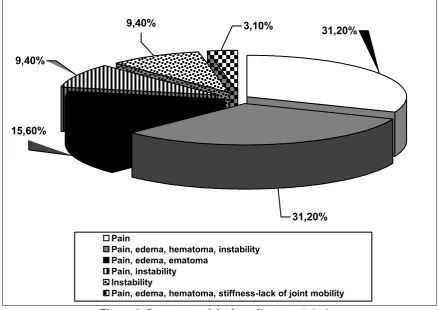
In figure 2 are presented the symptoms of the knee ligament injuries according to the athletes’ statements.
3,10% 9,40%
15,60%
31,20%
31,20% 9,40%
Pain
Pain, edema, hematoma, instability Pain, edema, ematoma
Pain, instability Instability
Pain, edema, hematoma, stiffness-lack of joint mobility
Figure 2: Symptoms of the knee ligament injuries
As it shown in the Figure 2, regarding the symptoms of the knee ligament injuries, 31,20% of the athletes mentioned pain and the same percentage (31,20%) mentioned pain, edema, hematoma and instability. Moreover, 15,60% referred to pain, edema and hematoma, 9,40% mentioned pain and instability, while the same percentage (9,40%) just instability. Lastly, 3,10% of the athletes mentioned pain, edema, hematoma and stiffness -lack of joint mobility.
It is worth mentioning that the athletes who suffered from knee ligament injuries did not participate in training or games for approximately 5,64+5,08 months. The minimum abstention time was 1 (one) month and the maximum time was 18 (eighteen) months.
6,20%
12,50%
53,10% 15,60%
12,50%
Surgery,abstaining from training-matches,medication,bandage usage,immobilization with plaster-brace,medical examinations,physiotherapy
Physiotherapy,abstaining from training-matches,medication,bandage usage,immobilization with plaster-brace,medical examinations
Strengthening with special therapeutic exercise,abstaining from
training-matches,medication,bandage usage,immobilization with plaster-brace,medical examination Strengthening with special therapeutic exercise,physiotherapy,abstaining from training-matches,medication,bandage usage,immobilization with plaster-brace
Abstaining from training-matches,medication,bandage usage,immobilization with plaster-brace,medical examination
Figure 3: Treatment of the knee ligament injury
As it is shown in figure 3, the athletes who suffered from a knee ligament injury treated the injury in many ways. More specifically, the biggest percentage (53,10%) underwent a surgical operation, combined with abstaining from training and matches, medication, bandage usage, immobilization with plaster-brace, medical examinations, physiotherapies, and special therapeutic exercises. 15,60% of the athletes treated the knee ligament injury mainly with physiotherapies in combination with abstention from training and games, medication, bandage usage, immobilization with plaster-brace, further medical examinations. Furthermore, 1/8 of the athletes (12,50%) treated the knee ligament injury mainly with strengthening with special therapeutic exercises, combined with abstention from training and matches, medication, bandage usage, immobilization with plaster-brace, further medical examinations. Another 1/8 of the athletes (12,50%) treated the knee ligament injury mainly with strengthening with special therapeutic exercises, combined with physiotherapies, abstention from training and matches, medication, bandage usage, immobilization with plaster-brace. Finally, 6,20% of the athletes who suffered from knee ligament injury treated the injury mainly with abstention from training and matches, in combination with medication, bandage usage, immobilization with plaster-brace, further medical examinations (Figure 3).
76,50%
17,60%
5,90%
Partial-Total Meniscus Rupture
Patella Dislocation-Partial and Total Rupture of MCL and LCL ACL Rupture
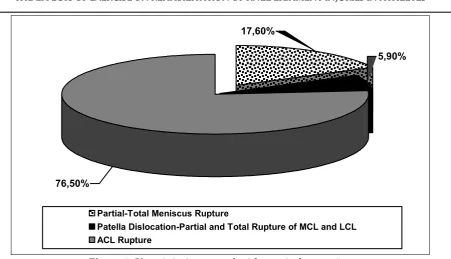
Figure 4: Knee injuries treated with surgical operation
As it is shown in Figure 4, the injuries that were treated with surgical operation were the ruptures of ACL (76,50%), the partial-total rupture of meniscus (17,60%) and the patella dislocations and partial ruptures of MCL and LCL (5,90%). It is worth mentioning that more than half of the knee injuries (53,10%) were treated surgically combined with abstention of training-sports games, medication, bandage usage, immobilization with plaster-brace, further medical examinations, physiotherapies and special therapeutic exercises. However, the rest cases of the knee injuries (46,90%), namely all the cases of ligament over-voltages, ¾ of the meniscus ruptures, half of the patella dislocations and partial ruptures of MCL and LCL, as well as 1,25% of ACL rupture cases were treated conservatively, with different combinations of physiotherapies, special therapeutic exercises, abstention from training and games, medication, bandage usage, immobilization with plaster-brace, further medical examinations.
15,60%
6,20%
12,50% 3,10%
18,80%
3,10%
15,60% 6,20% 6,20%
9,40%
3,10%
No exercise
Exercise with resistance bands Exercise in the water, walking
Exercise on isokinetic machine, exercise in the water
Exercise with straps,resistance bands,weight bearing,exercise in the water,isokinetic machine Exercise with resistance bands,water,isokinetic machine
Exercise with resistance bands,weight bearing Exercise with straps,resistance bands
Exercise with straps,resistance bands,weight bearing,isokinetic machine Exercise with straps,resistance bands,weight bearing
Exercise with straps,resistance bands,weight bearing,exercise in the water
Figure 5: Exercises for the rehabilitation of knee ligament injury
As it is shown in Figure 5, 6,20% of the athletes did not do any exercise for the rehabilitation of the knee ligament injury. Nonetheless, the biggest percentage of the athletes (93,80%) did exercise. With regard to the type of exercise, the athletes did a variety of exercises combined. More specifically, 18,80% of the athletes did exercises with straps, resistance bands, weight bearing and isokinetic machine, 15,60% of the athletes did exercises with straps, resistance bands, weight bearing, exercises in the water and isokinetic machine and the same percentage (15,60%) did exercises with straps, resistance bands, weight bearing and exercises in the water. 12,50% of the athletes did exercises with resistance bands and weight bearing, 9,40% of the athletes did exercises with resistance bands and in smaller percentages they did exercises in the water and gaiting (6,20%), exercises with straps, resistance bands and weight bearing (6,20%), exercises with straps and resistance bands (3,10%), exercises with isokinetic machine and exercises in the water (3,10%), as well as exercises with resistance bands, exercises in the water and in the isokinetic machine (3,10%) (Figure 5).
In Figure 6 are presented the opinions of the athletes who suffered a knee ligament injury on the outcome of the rehabilitation.
25,00%
6,20%
68,80%
No Yes Partially
Figure 6: Has the injury been restored?
As it is shown in Figure 6, it is positive that in most cases, over 2/3 of the sample, the knee ligament injury is restored. However, in 1/4 of the sample, the injury has been partially restored while in 6,20% the injury has not been restored.
Figure 7 shows what athletes, who have suffered a knee ligament injury, consider to be most effective in restoring their injury.
3,10%
3,10% 43,80%
3,10%
9,40%
12,50% 9,40% 6,20%
6,20%
3,10%
Surgery,weightbearing exercises Special exercises,suitable exercise log
Physiotherapies,strengthening with special therapeutic exercise Will and psychological support
Rest, abstraining from trainings-matches Physiotherapy
As it is shown in Figure 7, the biggest percentage of the athletes who suffered a knee ligament injury (43,80%), consider that the most effective treatment for the rehabilitation of their injury was strengthening with weightbearing and resistance bands, while 1/8 of the sample consider as the most effective treatment to rest and abstain from activities, training and sports games (12,50%). 9,40% consider as the most effective treatment physiotherapies and another 9,40% believe that the most effective treatment was physiotherapies and strengthening with special therapeutic exercises. Furthermore, 6,20% think that the most effective treatment was surgery and exercises in weightbearing and another 6,20% consider as the most effective treatment special exercises and suitable exercise log. Finally, in percentage of 3,10 are considered as the most effective treatment resting combined with strengthening by weightbearing and resistance bands, exercises in the water - swimming, will and psychological support and the trainer.
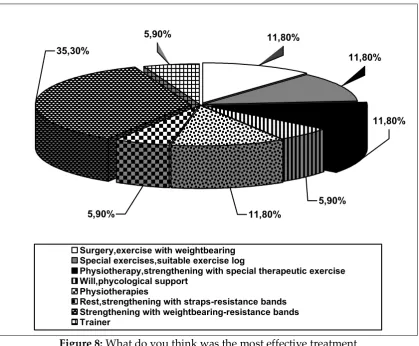
In Figure 8 it is shown what the athletes, who suffered a knee ligament injury and underwent surgery, consider to be the most effective treatment for the rehabilitation of their injury.
35,30%
5,90%
5,90% 11,80%
11,80% 11,80%
11,80%
5,90%
Surgery,exercise with weightbearing Special exercises,suitable exercise log
Physiotherapy,strengthening with special therapeutic exercise Will,phycological support
Physiotherapies
Rest,strengthening with straps-resistance bands Strengthening with weightbearing-resistance bands Trainer
Figure 8: What do you think was the most effective treatment for the rehabilitation after surgery?
treatment for the rehabilitation of their injury strengthening mainly by weightbearing and resistance bands. After that they consider as the most effective treatment surgery and exercise with weightbearing (11,80%), special exercises and suitable exercise log (11,80%), physiotherapies and strengthening with special therapeutic exercises (11,80%), as well as just physiotherapies (11,80%). Finally, in percentage of 5,90% are considered as the most effective treatment for their rehabilitation resting combined with strengthening by weightbearing and resistance bands, will and psychological support and the trainer.
4. Discussion
From the results of the present study it was found that the highest percentage of the knee injuries (43,80%) concerns ACL rupture, 34,40% partial or total meniscus rupture, 15,60% ligament injuries and 6,20% MCL or LCL rupture. It can therefore be said, that between the knee injuries, ACL rupture is the most important and the most common ligament injury and has serious consequences for both the patient and society (Beynnon et al., 2005; Fithian et al., 2002; Frobell et al., 2007; Koutsostathis, 2012). In addition, one of the most common knee injuries in athletes is meniscus rupture, which is observed either as an individual injury or in the context of combined knee ligament injuries, more often with rupture of the ACL (Koutsostathis, 2012).
The biggest percentage of the injured athletes mentioned pain combined with edema, hematoma, instability and stiffness-lack of joint mobility. In addition, due to their injury the athletes did not participate in training or games for approximately 5,64+5,08 months, for at least one month and at most eighteen months. Therefore, it is important to pay particular attention to the treatment of knee ligament injuries.
In addition, patients with ACL injuries who no longer wish to participate in strenuous physical activity or because of serious comorbid medical conditions, including cardiac, renal, or hepatic disease may not undergo surgery, but they can participate in physical therapy programs. More specifically, the physical therapy should aim at strengthening the muscles around the knee, especially the quadriceps femoris and hamstring muscles (Siegel et al., 2012). The physiotherapy protocol should aim to return to the pre-injury activities without instability symptoms, should be intense and last at least 6 weeks and consist from lower extremity muscle strengthening exercises, cardiovascular endurance training and sport-specific and agility exercises such as quick start and stops, cutting and pivoting and a training program using balance perturbations (Fitzerald et al., 2000; Iliopoulos, & Galanis, 2015).
Similarly, 15,60% of the athletes of the present study treated the knee ligament injury mainly with physiotherapies in combination with abstention from training and sports games, medication, bandage usage, immobilization with plaster-brace and medical examinations. Furthermore, 1/8 of the athletes (12,50%) treated the knee ligament injury mainly with physiotherapies and also with special therapeutic exercises, combined with abstention from training and matches, medication, bandage usage, immobilization with plaster-brace.
Furthermore, in ACL sprains characterised by local tenderness, swelling, moderate disability, mild or moderate plane instability and partial tear of the ligament (grade II), and treated non-operatively, an ideal way to start rehabilitation is weightbearing with the knee bend between 40 and 90 degrees of flexion (Huegel, & Indelicato, 1988; Montgomery, & Steadman, 1985; Silfverskiold et al., 1988). Weightbearing is very significant and vital for the knee ligament injury rehabilitation. That is why 68,70% of the athletes of the present study included weightbearing combined with other modes of exercises in their rehabilitation.
Partial weightbearing in one leg is permitted within the limits of pain approximately 2 to 4 weeks after the injury and full weightbearing after 4 to 6 weeks. Half-squats considered as safe quadriceps and hamstring exercises (Huegel, & Indelicato, 1988; Montgomery, & Steadman, 1985; Silfverskiold et al., 1988). Hamstrings act as dynamic agonists to the ACL in preventing pivot shift (anterolateral rotatory instability) during movement when walking, running or/and twisting. Thus, hamstring muscle function is essential for full recovery in ACL injuries (Engle, 1988; Solomonow et al., 1989). It is worth mentioning that the co-contraction of quadriceps and hamstring performs concentric as well as eccentric work, and prepares the knee for weight acceptance in the stance phase of gait (Huegel, & Indelicato, 1988; Montgomery, & Steadman, 1985; Silfverskiold et al., 1988).
professional players engaging with sports which include pivoting movements, and patients with other major knee injuries (pathology in the other ligaments, menisci tears or cartilage injuries) should be treated operatively with an ACL reconstruction (Iliopoulos, & Galanis, 2015). In agreement, in the present study the biggest percentage of the athletes who suffered from knee injury (53,10%) and more specifically from ruptures of ACL (76,50%), partial or total rupture of meniscus (17,60%) and patella dislocations and partial ruptures of MCL and LCL (5,90%), underwent a surgical operation.
It is worth mentioning that reconstruction surgery is as important as the rehabilitation process (Saka, 2014). As for ACL reconstruction, postoperative rehabilitation is a major factor in the success of an ACL reconstruction procedure (Beynnon & Johnson, 1996). That is why 53,10% of the athletes in the present study not only underwent a surgical operation and combined it with abstaining from training and matches, medication, bandage usage, immobilization with plaster-brace, medical examinations, but also combined it with physiotherapies and special therapeutic exercises.
Moreover, clinical investigations of patients after ACL reconstruction have shown that immobilization of the knee, or restricted motion without muscle contraction, leads to undesired outcomes for the articular, ligamentous, and musculature structures that surround the knee. Besides, early joint motion is beneficial for reducing pain, capsular contractions, articular cartilage, and for minimizing scar formation that limits joint motion (Beynnon & Johnson, 1996). Thus, it is worth mentioning that early activity has been proposed in order to avoid deleterious effects of immobilisation on joint cartilage, bone, muscles, and ligaments (Kannus, & Järvinen, 1990; Montgomery, & Steadman, 1985; Sandberg et al., 1987). That is why almost all the injured athletes in the present study, except for 6,20%, did a combination of exercise modes.
strength and proprioception while protecting the graft. This can be achieved only with easy and safe exercises (Iliopoulos, & Galanis, 2015; Norouzi et al., 2013; Siegel et al., 2012). Furthermore, programs that combined multiple exercise modes including plyometrics, strengthening, trunk and balance exercises demonstrated greater ACL injury reduction. Strengthening, proximal control exercises and multi exercise genres may increase efficacy in preventive neuromuscular training intervention designed to reduce ACL injury (Sugimoto et al., 2015).
Moreover, identifying exercises that facilitate balanced activation of the quadriceps and hamstrings might be beneficial in ACL injury rehabilitation and prevention, as anterior tibial shear force and knee valgus moment increase ACL loading. So, muscle coactivation of the quadriceps and hamstrings influences anterior tibial shear force and knee valgus moment, thus potentially influencing ACL loading and injury risk (Begalle et al., 2012).
Additionally, an early start of closed chain exercises in the rehabilitation program, in order to strengthen the hamstring and quadriceps has been proven to be beneficial and safe as well (Fitzgerald, 1997; Iliopoulos, & Galanis, 2015). Closed kinetic chain exercises are those in which the foot is in contact with a solid surface such as with squats and leg presses. Open kinetic chain exercises, in which the foot is not in contact with a solid surface such as those using leg extension, are considered less safe in the postoperative period and should be added no sooner than 6 weeks after the surgery (Risberg et al., 2007). Besides, it is evident that a closed kinetic chain exercise program (foot fixed against a resistance) results in anterior-posterior knee laxity values that are similar to the contralateral normal knee. As for open kinetic chain exercises (foot not fixed against a resistance) the commonly held belief is that they result in increased anterior-posterior knee laxity and anterior tibial translation (Beynnon & Johnson, 1996; Glass et al., 2010).
Furthermore, it was suggested that the forward lunge, as a weightbearing closed kinetic chain exercise, provides a safer approach for developing muscle strength and functional stability in rehabilitation programs of ACL-deficient knees, in comparison with open kinetic knee extension exercise (Norouzi et al., 2013). Additionally, separate closed chain therapeutic exercises such as single-limb dead-lift, lateral-hop, transverse-hop, and lateral band-walk exercises potentially could facilitate balanced activation in ACL rehabilitation and injury-prevention programs, and could be used in post-injury rehabilitation programs in a safe and progressive manner as well (Begalle et al., 2012).
exercises should be completely abandoned and replaced with closed kinetic chain exercises in postoperative ACL reconstruction rehabilitation programs. Both types of exercise apparently can be used in the right postoperative moment (Fitzgerald, 1997; Iliopoulos, & Galanis, 2015).
In addition, ACL injury leads to a decrease in proprioceptive abilities, which can be improved with ACL surgery and postoperative rehabilitation (Dubljanin-Raspopović et al., 2005). Thus, postoperative rehabilitation should also include exercise to enhance core strength, balance, and proprioception (Risberg et al., 2007). Proprioceptive training has high correlation with better results after the surgery and a distinct influence on coordinative abilities (Dubljanin-Raspopović et al., 2005). In addition, Risberg et al. (2007) emphasize that a neuromuscular training program should be part of the rehabilitation program following ACL reconstruction. Neuromuscular performance cannot be separated from other parameters of functional recovery (Dubljanin-Raspopović et al., 2005). It is worth mentioning that when the athletes comply with neuromuscular training protocols that screen for and correct the underlying biomechanical deficits that lead to ACL injuries, the incidence of injuries is significantly reduced. Such preventive biomechanics practices employ basic training methods that would be familiar to athletic coaches (Hewett, & Bates, 2017).
It could be stated that full ROM leads to better functional outcomes and decrease the risk of arthrofibrosis. On the other side, muscle strengthening and the prevention of muscle atrophy are very important for the postoperative rehabilitation, whereas neuromuscular electrical stimulation combined with voluntary muscle contraction can lead to the desirable results (Christensen et al., 2013; Iliopoulos, & Galanis, 2015). In addition, an emphasis on early weightbearing and accelerated rehabilitation protocols, as well as the development of minimally invasive surgical techniques, reduce soft-tissue disruption and subsequent postoperative recovery time, and therefore may be more likely to facilitate a successful return to the higher functional demands placed on the knee by competitive sports participation (Ardern et al., 2011).
Thereafter, measurements of participation in exercises is particularly important, as restrictions to participation in sports or work are likely to be of greater importance to the patient than measurements of impairments such as muscle strength or knee range of motion (Ardern et al., 2011). Sports-specific exercises should be recommended aiming primarily to allow a safe return to sports while minimizing the risk of recurrent injuries (Chinn, & Hertel, 2010). On average, six months serve as a meantime for a safe return to activity, based on biological healing of the graft (Mangine et al., 2008). It is important, therefore, to motivate the patient for longstanding, intensive work. An encouraging atmosphere in the rehabilitation team is the best weapon against the rehabilitative program failure (Kannus, & Järvinen, 1990).
5. Conclusions
In conclusion, according to the opinions of the athletes, who treated their knee ligament injury both non-operatively and operatively, the most effective treatment for the rehabilitation of the knee ligament injury was exercise in the mode of weightbearing and resistance bands. Thus, exercise brings about significant positive effects on the rehabilitation and prevention of knee ligament injury, the most serious of which is the ACL injury. It could be said that the rehabilitation process based on exercise is as important as the reconstruction surgery. Consequently, exercise should be an integral part in knee ligament injury rehabilitation and prevention. Moreover, detailed studies need to be conducted in the future to characterize each individual exercise in terms of its immediate and subjective effects, and functional outcomes in order to support the safety and efficacy of a rehabilitation program for knee ligament injuries.
Conflicts of interest
The authors declare that there are no conflicts of interest.
References
Agel, J., Palmieri-Smith, R.M., Dick, R., Wojtys, E.M., Marshall, S.W. (2007). Descriptive epidemiology of collegiate women’s volleyball injuries: national collegiate athletic association injury surveillance system, 1988-1989 through 2003-2004. J Athl Training, 6(2): 295-302.
American Orthopaedic Society for Sports Medicine. (2012). Available at: http://www.sportsmed.org/uploadedfiles/content/patient/sports_tips/st%20acl% 20injury%2008.pdf.
Ardern, C.L., Webster, K.E., Taylor, N.F., Feller, J.A. (2011). Return to sport following anterior cruciate ligament reconstruction surgery: a systematic review and meta-analysis of the state of play. British Journal of Sports Medicine, 45(7): 596-606. doi:10.1136/bjsm.2010.076364
Begalle, R.L., DiStefano, L.J., Blackburn, T., Padua, D.A. (2012). Quadriceps and hamstrings coactivation during common therapeutic exercises. J Athl Train, 47(4): 396-405. doi: 10.4085/1062-6050-47.4.01.
Beynnon, B., Johnson, R., Abate, J., Fleming, B., Nichols, C. (2005). Treatment of anterior cruciate ligament injuries, Part 2. Am. J. Sports Med, 33: 1751-1767. DOI: 10.1177/0363546505279922.
Beynnon, B.D., Johnson, R.J. (1996). Anterior cruciate ligament injury rehabilitation in athletes. Biomechanical considerations. Sports Med, 22(1): 54-64.
Carazzato, J.G., Campos, L.A.N., Carazzato, S.G. (1992). Incidência de lesões traumáticas em atletas competitivos de dez tipos de modalidades esportivas. Rev Bras Ortop, 6: 745-758.
Chinn, L., Hertel, J. (2010). Rehabilitation of ankle and foot injuries in athletes. Clin Sports Med, 29(1): 157-167. Doi: 10.1016/j.csm.2009.09.006.
Clancy, W.G., Ray, J.M., Zoltan, D.J. (1988). Acute tears of the anterior cruciate ligament: surgical versus conservative treatment. Journal of Bone and Joint Surgery, 70A: 1483-1488.
Christensen, J.C., Goldfine, L.R., West, H.S. (2013). The effects of early aggressive rehabilitation on outcomes after anterior cruciate ligament reconstruction using autologous hamstring tendon: a randomized clinical trial. J Sport Rehabil, 22(3): 191- 201.
DeHaven, K.E., Lintner, D.M. (1986). Athletic injuries: Comparison by age, sport, and gender. The American Journal of Sports Medicine, 14(3): 218-224. Doi: 10.1177/036354658601400307.
Dubljanin-Raspopović, E., Matanović, D., Kadija, M. (2005). Influence of proprioceptive training in the improvement of neuromuscular performance after ACL reconstruction. Srp Arh Celok Lek, 133(9-10): 429-432.
Engle, P. (1988). Hamstring facilitation in anterior instability of the knee. Athletic Training, 23: 226-229.
Fithian, D.C., Paxton, L.W., Goltz, D.H. (2002). Fate of the anterior cruciate ligament-injured knee. Orthop Clin North Am, 33: 621-636.
Fitzgerald, G.K. (1997). Open versus closed kinetic chain exercise: issues in rehabilitation after anterior cruciate ligament reconstructive surgery. Phys Ther, 77(12): 1747-1754.
Fowler, P., Regan, W.D. (1987). The patient with symptomatic chronic anterior cruciate ligament insufficiency: results of minimal arthroscopic surgery and rehabilitation. American Journal of Sports Medicine, 15: 321-325.
Frobell, R.B., Lohmander, L.S., Roos, H.P. (2007). Acute rotational trauma to the knee: Poor agreement between clinical assessment and magnetic resonance imaging findings. Scand J Med Sci Sports, 17: 109-11.
Gianotti, S.M., Marshall, S.W., Hume, P.A., Bunt, L. (2009). Incidence of anterior cruciate ligament injury and other knee ligament injuries: a national population-based study. J Sci Med Sport, 12(6): 622-627. doi: 10.1016/j.jsams.2008.07.005. Glass, R., Waddell, J., Hoogenboom, B. (2010). The effects of open versus closed kinetic
chain exercises on patients with ACL deficient or reconstructed knees: A systematic review. N Am J Sports Phys Ther, 5(2): 74-84.
Hauser, R.A., Dolan, E.E., Phillips, H.J., Newlin, A.C., Moore, R.E., Woldin, B.A. (2013). Ligament Injury and Healing: A Review of Current Clinical Diagnostics and Therapeutics. The Open Rehabilitation Journal, 6: 1-20.
Hewett, T.E., Bates, N.A. (2017). Preventive biomechanics: a paradigm shift with a translational approach to injury prevention. The American Journal of Sports Medicine, 45(11): 2654-2664.
Hootman, J.M., Dick, R., Agel, J. (2007). Epidemiology of collegiate injuries for 15 sports: summary and recommendations for injury prevention initiatives. J Athl Train, 42(2): 311-319.
Huegel, M., Indelicato, P. (1988). Trends in rehabilitation following anterior cruciate ligament reconstruction. Clinics in Sports Medicine, 7: 801-811.
Hunt, K.J., Hurwit, D., Robell, K., Gatewood, C., Botser, I.,B., Matheson, G. (2016). Incidence and Epidemiology of Foot and Ankle Injuries in Elite Collegiate Athletes. The American Journal of Sports Medicine, 45(2): 426-433. Doi: 10.1177/0363546516666815.
Iliopoulos, E., Galanis, N. (2015). The Role of Physiotherapy in Anterior Cruciate Ligament Injury and Reconstruction. Jacobs Journal of Physiother & Exersice,
1(2): 011.
https://www.researchgate.net/publication/326097653_The_Role_of_Physiotherap y_in_Anterior_Cruciate_Ligament_Injury_and_Reconstruction.
Kannus, P., Järvinen, M. (1990). Nonoperative treatment of acute knee ligament injuries. Sports Medicine , 9(4): 244-260. doi:10.2165/00007256-199009040-00005.
Koutsostathis, S. (2012). Knee Ligament Injuries (in greek). https://el-gr.facebook.com/expomedipoint/posts/383794835029875.
Mangine, R.E., Minning, S.J., Eifert-Mangine, M., Colosimo, A.J., Donlin, M. (2008). Management of the Patient with an ACL/MCL Injured Knee. N Am J Sports Phys Ther, 3(4): 204-211.
Norouzi, S., Esfandiarpour, F., Shakourirad, A., Salehi, R., Akbar, M., Farahmand, F. (2013). Rehabilitation after ACL injury: a fluoroscopic study on the effects of type of exercise on the knee sagittal plane arthrokinematics. BioMed Research International, Volume 2013, Article ID 248525, 7 pages. http://dx.doi.org/10.1155/2013/248525
Risberg, M.A., Holm, I., Myldebust, G., Engebretsen, L. (2007). Neuromuscular training versus strength training during first 6 months after anterior cruciate ligament reconstruction: a randomized clinical trial. Phys Ther, 87: 737-750.
Rössler, R., Junge, A., Chomiak, J., Němec, K., Dvorak, J., Lichtenstein, E., Faude, O. (2017). Risk factors for football injuries in young players aged 7 to 12 years. Scandinavian Journal of Medicine & Science in Sports, 28(3): 1176-1182. Doi: 10.1111/sms.12981.
Saka, T. (2014). Principles of postoperative anterior cruciate ligament rehabilitation. World J Orthop, 5(4): 450-459.
Sandberg, R., Balkfors, B., Nilsson, B., Westlin, N. (1987). Operative versus non-operative treatment of recent injuries to the ligaments of the knee: a prospective randomized study. Journal of Bone and Joint Surgery, 69A: 1120-1126.
Siegel, L., Vandenakker-Albanese, C., Siegel, D. (2012). Anterior cruciate ligament injuries: anatomy, physiology, biomechanics, and management. Clin J Sport Med,. 22(4): 349-355. doi: 10.1097/JSM.0b013e3182580cd0.
Silfverskiold, J.P., Steadman, J.R., Higgins, R.W., Hagerman, T., Atkins, J.A. (1988). Rehabilitation of the anterior cruciate ligament in the athlete. Sports Medicine, 6: 308-319.
Solomonow, M., Baratta, R., D'Ambrosia, R. (1989). The role of the hamstrings in the rehabilitation of the anterior cruciate ligament deficient knee in athletes. Sports Medicine, 7: 42-48.
Creative Commons licensing terms