Page 26
PERSONAL FACTORS INFLUENCING THE UNDERSTANDING OF SCIENTIFIC TEXTS Sofia Kasiara1, Nikoletta Kosmidou2, Kleanthi Manika3, Pericles Akrivos1
1Aristotle University of Thessaloniki, Department of Chemistry, P.O.B. 135, GR-541 24, Thessaloniki, Greece
2Aristotle University of Thessaloniki, Medical School, GR-541 24, Thessaloniki, Greece
3National and Kapodistrian University of Athens, Medical School, 75 Mikras Asias, GR-115 27, Athens, Greece
Abstract
Teaching Science is aided, throughout the educational system, by the study of appropriate textbooks. The content of the textbook used for a specific course plays a considerable role to the degree of the assimilation of the topics addressed by it; however, the actual way it is viewed by the readers/students is also expected to be a major factor. In the current study a double-page spread text is introduced to students of Chemistry. The topic described concisely is related to catalysis and the text is accompanied by a variety of visual aids (graph, algebraic equations, 2D chemical formula, diagram, table). The fifty students participating in the survey are covering the whole range from first-year undergraduates to postgraduates and they are tested for their comprehension of the text provided. The extent of this comprehension is correlated to their logical thinking, field dependence/independence and prior knowledge of the topic as they emerge from assessment of separate preliminary tests they have taken in advance.
Keywords: scientific text, prior knowledge, logical thinking, field dependence
1. INTRODUCTION
A textbook for a Chemistry course, whether it is targeted for secondary or higher education and irrespective of the width and depth of coverage of the topics incorporated to it, is by no means simple and its construction not as straightforward as one might think. Such a textbook includes, apart from the text several pictorial representations in the form of formulae (in either 2D or pseudo-3D format), mathematical equations, or linear chemical equations and maybe pictures. Very often the projection of the reaction schemes discussed in the text or the physical or chemical data collected or computed are given in the form of graphs or tables. The information offered through these visual aids, has to be correlated to the text content and interwoven along with it to the scientific background of the students. This form of assimilation of chemical information is a complex procedure influenced by a number of strictly personal factors which govern the visualization of the text and the formation of logical connections between the typed sentences and the data provided in the tables, graphs and formulae. The procedure is further complicated by the fact that a reader of a chemical textbook is required to work mentally on three, initially distinct but finally interconnected “levels” of addressing the compounds studied or the procedures discussed. These three levels correspond generally to the three realms over which chemical aspects expand, namely the macroscopic observation, the submicroscopic world of atoms and molecules and the symbolic one, which includes chemical formulae and chemical equations (Johnstone 1982). It is to be understood that the process is addressed in its furthermost simplicity, i.e. it is not assumed that the reader has to undergo a conceptual change whereupon several back and forth steps would be required in order to align previous beliefs with new data provided, identify inconsistencies and try to build new concepts and ideas. The mere transition from a chemical equation to the text paragraph describing the related synthesis requires an underlying but unavoidable and essential transition from the symbolic to the macroscopic realm of experimental Chemistry.
Page 27
thinking (Izquierdo-Aymerich 2012). A completely analogous reasoning may be applied in the case of the utilization of a textbook as an educational tool, i.e. calling upon it to act as the voice of the teacher in his/her absence. Of course, reading a textbook usually takes place at home, away from the crowd and distractions present in the classroom but lacks the immediacy in communication with the classmates and, especially, with the teacher.
In this respect, reading and understanding a
chemistry-oriented text represents, if not the most productive, at least the initial step within
any intellectual process of acquiring new knowledge and incorporating it to the student’s
scientific background. Better understanding of textbook contents ensures that the scientific
knowledge of the student is enhanced and that his/her starting point towards achieving such a goal in any future courses is elevated, providing a more suitable background for the novel content assimilation and therefore better odds for accomplishing it (Duit & Treagust 2003). More productive and more direct interaction is feasible both with classmates and the teacher (Johnson & Johnson 1999), optimizing the conditions for more elaborate discussions and therefore a smoother and more efficient road to the desired terminal goal of the future courses, provided that the curriculum is constructed in a productive way, leading from the more basic and “wide” topics to more complex and specific, therefore calling for a systematic building-up of understanding of underlying laws and principles governing the phenomena and the related measurements.As a follow up to our recent studies concerning the initial formulation and the consecutive retention of chemistry-related misconceptions in the Greek secondary education (Katsikis et al 2015, Vandoulaki et al 2016), we went on to the investigation of the extent to which such ideas are preserved at the higher level of education (Katsikis et al 2017, Kontopoulou et al 2017). These studies were focused to first year undergraduate students who are exposed to a varying degree of General Chemistry teaching due to their individual curricula, related directly to the breadth and intensity of teaching in terms of hours per week of lecturing and experimenting. In the current study we attempt to discover the personal factors influencing the understanding of a chemical text as a whole, i.e. in the form presented in typical printed textbooks, where the statements are accompanied by visualization-oriented information in the form of tables, algebraic equations and various types of pictorial representations.
The effects of various cognitive factors, like logical thinking or field dependence/independence in education have been investigated to depth (Lawson 1983, Pascual-Leone 1987). More specifically, logical thinking (LTh) refers to the ability of a person to use formal reasoning in the process of understanding specific and formal work examples (Lawson 1978), while field dependence/independence (FDI) is related to a person’s ability to select information related to a specific subject out of complex texts-representations (Tsaparlis & Angelopoulos 2000, Stamovlasis 2006, 2011). Prior knowledge (PK) is also an essential cognition factor and has been investigated to a great extent with respect to science education. It is apparent that students, at any level of their educational program rely on their prior knowledge both in regard to the quantity and kind of new information provided through teaching, before subjecting them to intellectual processes which will transform them to the models they will use further in understanding the discipline taught. This is true for Chemistry at an even greater level than other sciences due to the need to further translate the models produced to abstract principles and the chemical entities comprising the subatomic world (Cook 2006). It has also been argued that prior knowledge is also related to the attention given to teaching and to the general interest shown towards specific course contents (Yang et al 2012). All the above factors have been recognized as the most predictive variables with respect to the future achievements of students, however few are the studies relating them to assimilation of chemical knowledge in secondary and higher level education courses (Niaz 1988, 1989, 1992, Al-Naeme & Johnstone 1991, Lee et al 2001, Danili & Reid 2010).
2. DESCRIPTION OF THE SURVEY
Page 28
human body. The text was accompanied by all sorts of visual representations distributed throughout the text (Gilbert 2010). These included an abstract catalytic cycle where the typical conventions of the chemical symbolic language are used, an enzyme reaction with 2D representations of compounds both spatially and temporally related, a table, a graph in the form of a typical reaction profile, linear chemical equation and algebraic equations related to reaction rate and rate law. Initially a suggestion was prepare a separate layout of the data with the visual information in the form of an appendix but it was dropped since none of the participants, when asked, thought it would be easy to follow.
The final assessment was made in the form of a written test to which the five questions were bearing several related sub-questions. The two initial questions are drawing on high school knowledge, namely given the stoicheiometry of a reaction and the concentration of a product at a specific time, evaluation of the rate of the reaction and identification of various quantities on a typical reaction profile graph.
Following is a requirement for drawing the reaction profile for the same reaction in the presence of a catalyst as well as identification of a “mistake” in the corresponding graph in the text studied.
An error is required to be located in the 2D representation of an enzymic reaction, along with the identification of a peptide bond in the products.
A redox reaction has to be located within a typical catalytic cycle and the corresponding half reactions to be written. Finally, consulting the data of the provided table, a diagram of the total catalyst recovery cycles versus time is required.
2.1 Participants
The survey was carried out in the Chemistry Department of the Aristotle University of Thessaloniki and the population involved took part voluntarily. The students are both undergraduate and postgraduate, covering almost all years of undergraduate studies and several of the directions (i.e. separate curricula forming the last year of undergraduate studies) and some of the postgraduate courses offered by the Department. In this respect it may be possible to compare the achievements of students attending different last-year courses as well as postgraduate master programs.
2.2 Tools applied
The participants were first asked to complete two different questionnaires in an attempt to map their status in fields of phsychomotive factors. The questionnaires have been developed and applied in a series of analogous studies (Tsitsipis et al 2010, 2012). A separate questionnaire was then forwarded to them just prior to the actual assessment procedure, which was intended to reveal their prior knowledge of the topic covered. Most of the questions in it were of the closed type but in a few instances estimations were required based on provided diagrams or on application of known thermodynamics or kinetic theory principles. The effect of a catalyst on various characteristic quantities or points along the reaction path was under investigation as well as the variation of some of the above quantities with temperature or pressure. Finally, reading the prepared document on a large and wide PC screen was followed by a written examination assessment during which they were in contact with the scientific text. Answering the questions of this final test calls for integrated intellectual processes related to all the above evaluated cognition factors and although limited in time, proved to be adequate for all participants to provide their answers.
2.3 Data processing
The individual scores of each participant were recorded and the data obtained incorporated into computer worksheet program from which they were retrieved for statistical analysis using the SPSS package (SPSS).
3. RESULTS AND THEIR DISCUSSION
Page 29
presented briefly. However, the topic is not free from misconceptions, mainly due to misunderstanding the meaning within the science domain of words used in everyday life and second, due to misunderstanding the facts presented theoretically without the aid of a simple experimentation. A common alternative belief for example is that faster reaction always results in isolation of higher product yield. Since misconceptions tend to be persistent, usually irrespective of the degree of later teaching on a subject, we are ready to accept that the population tested could have retained some of them. The prior knowledge test indicated that there it actually covers a wide range; the scores achieved being distributed from 2.1 to 8.2 on a 0-10 scale.
Figure 1. Plot of final test score versus logical thinking assessment. Linear correlation of the data gives y= 8.9259+ 1.5284x with an r2 value of 0.013.
Topics related to catalysis are also present in the undergraduate chemistry course, distributed between General and Inorganic Chemistry (1st semester course), Physical Chemistry (2nd to 4th semester), Biochemistry (4th semester) and Inorganic Chemical Technology (4th semester) obligatory courses while semi-obligatory ones also include analogous material. Detailed descriptions of the theoretical background are presented and several examples of applications discussed in each of the above courses.
Page 30
Repeated revisits to a topic throughout a lengthy educational program are expected to help its better understanding by making use of both short and long term memory assets. They also make it possible to easily recall definitions, rules and relations relevant to the specific topic and relate them to freshly acquired information therefore making it a central point in building more wide and deep comprehension of the science involved. Indeed the final test scores obtained were never below 5.0 (on a 0-10 scale adopted in Greek Universities).
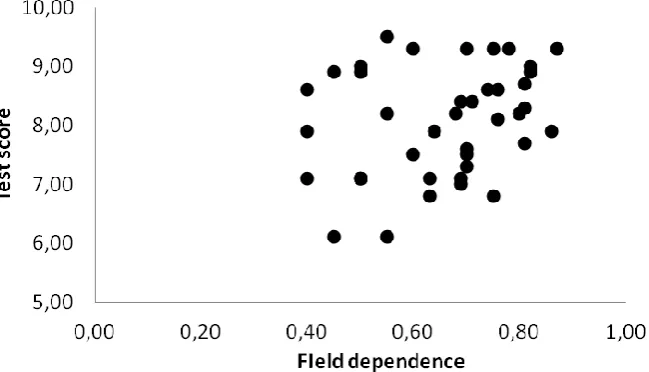
Separate treatment of the data with respect to the scores in the various tests taken by the participants reveal that there exists no significant difference between male and female participants although in some cases the average scores achieved imply otherwise. The gender parameter was implemented in the study in view of results indicating differences in visuospatial thinking between genders (Silverman & Eals 1992) There are two cases confirmed by analysis of variance, between undergraduate and postgraduate students and these refer to the logical thinking test at a probability level of 0.05. The total average of 0.675 (on a 0-1 scale) is partitioned between undergraduates and postgraduates as 0.596 and 0.746 respectively. At the same level of probability the score of the final test gives an average of 7.76 for undergraduates and 8.34 for postgraduates while the values of 8.46 for male and 7.90 for female students is computed as marginally not significant. We may therefore conclude that gender does not seem to affect the overall performance to a significant extent, although a slightly higher achievement for males is observed for field dependence/independence where their average score is 0.69 relative to 0.64 for females on a 0-1 scale. Otherwise the relative scores for logical thinking (0.67 – 0.68) and prior knowledge (0.58 – 0.56) are almost identical for the two sub-groups of participants.
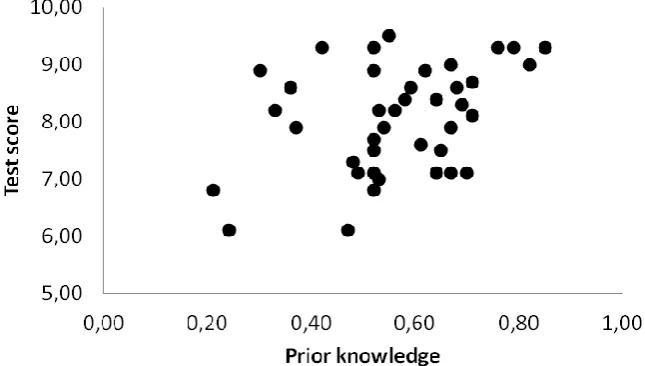
Figure 3. Plot of final test score versus prior knowledge assessment. Linear correlation of the data gives y= 2.3494+ 6.7405x with an r2 value of 0.145.
The final test evaluation was checked for consistency and reliability by applying a series of indexes that have been proposed and used for analogous purposes (Persson 2015, Eggen et al 2017). The easiness index, P, for each question is simply the number of correct answers over the number of total answers given, P = Ncorrect/Ntotal. Typical acceptable values for this index should be above 0.2. In our case the lowest values were around 0.3 while for some questions all the answers were correct. This proved to be tricky in the application of the reliability index, r,
1
correct totalX
X
P
r
P
Page 31
reliability index for all the questions and therefore it was conclusive to apply also a discrimination index D, attempting to verify whether each specific question can be used to discriminate students with high scores (NH) from those with low scores (NL) within a population N.
H L
K
D N N
N
In our case, we used the top and bottom 50% of the population based on the median of the final test score, so the formula reduces to D = (NH-NL)/25. Of course, positive values are expected for the suitable questions and in our case, due to the fact that some questions were answered correctly by every participant, zero D index values were realized.
Experience attained through the undergraduate course makes itself obvious when comparing postgraduate and undergraduate students. The test appears to be more “difficult” to undergraduates since the individual questions’ index of easiness, P, is always lower for the undergraduates as is the average easiness for the test for which values of 0.36 and 0.46 are calculated for undergraduate and postgraduate students respectively.
Some observations regarding the response to specific questions of the assessment test merit discussion. The peptide bond was successfully identified by all, however a 2D chemical equation is difficult to comprehend since only 15 (37.5%) were able to locate a missing group in the reaction provided. It seems that males comprehend spatial structures better and experience, in the form of previous or adaptable skills helps in this field of transferring information from the model to the typical symbolic language of Chemistry. Indeed, of the 25 wrong answers (or no answers) only 5 were of male participants (41.2% of their population relative to 71.4% of the females) and only 9 by postgraduate students (42.9% of their population relative to 84.2% of the undergraduates). Similarly only 21 (52.5%) were able to understand correctly the mismatch between the definition of the effect of catalyst and the presented reaction profile where the catalyzed and the non-catalyzed reactions were led to completion at the same point in time. In this case most probably the energetics of the reactions along the vertical y axis of the diagram appeared more important than the span of the curves along x axis, i.e. time. Again males seem to read the curve better than females since only 5 (41.2%) did not spot the error; erroneous predictions were split between undergraduate and postgraduate students. In line with the above was the observation that only 12 (30.0%) gave the right answer concerning the relation of activation energy to the rate of a reaction. The question was put forward given a typical reaction profile which seems to distract female participants significantly as 22 (78.6%) of the 28 wrong answers were from their sub-population. In the same question there is only a slight advantage of postgraduate students over undergraduate ones.
Reading off data from table and producing a graph appears to be easy as is the identification of a specific chemical event within an abstract catalytic cycle scheme, since all participants answered correctly. This process seems more straightforward than the reverse which was tested in the previously described part of the test.
4. CONCLUSIONS AND FURTHER WORK
Page 32
the same pictorial representations within the same text, would give more insight into the mechanisms involved in the reading comprehension of scientific texts.
REFERENCES
Cook, M 2006, “Visual Representations in Science Education: the influence of prior knowledge and cognitive load theory of instructional design principles”, Wiley Periodicals, vol. 90, pp, 1073- 1091
Danili, E, Reid, N 2006, “Cognitive factors that can potentially affect pupils’ test performance”,
Chemistry Education Research and Practice, vol,7, pp, 64–83.
Duit, R, & Treagust, DF 2003, “Conceptual change: A powerful framework for improving science
teaching and learning”, International Journal of Science Education, vol. 25, pp. 671-688.
Eggen, P-O, Persson, J, Jacobsen, EE, Hafskjold, B 2017, “Development of an inventory for alternative conception among students in Chemistry”, LUMAT, vol. 5, no 1, pp. 1-11.
Gilbert, JK 2010, “The role of visual representations in the learning and teaching of science: An
introduction”, Asia-Pacific Forum on Science Learning and Teaching, vol. 11 (1), Foreword.
Izquierdo-Aymerich, M 2012, “School Chemistry: An Historical and Philosophical Approach”, Science & Education, vol. 22, pp.1633–1653
Johnstone, AH 1982, “Macro and micro chemistry”, School Science Review, vol. 64, pp. 377-379
Katsikis, H, Savvidou, E, Schizodimou, A, Akrivos, PD, Keloglou, G 2015, “Student misconceptions in the 21st century. Chemistry related conceptions of Greek senior high school students”, Educational Alternatives, vol. 13, pp. 384-394
Katsikis, H, Kontopoulou, A, Akrivos, PD 2017, “Living with preconceptions. Response to pH and related aspects of first year university students through the point of view of their high school curriculum”, Educational Alternatives, vol. 15, pp. 291-302
Kontopoulou, A, Katsikis, H, Akrivos, PD 2017, “Living with preconceptions. Does more teaching and lab experimenting help to improve chemical principles assimilation?”, Educational Alternatives, vol. 15, pp. 303-315
Lawson, AE 1983, “Predicting science achievement: The role of developmental level,
disembedding ability, mental capacity, prior knowledge and beliefs”,
Journal of Research in
Science Teaching,
vol. 20, pp. 117–129
Niaz, M 1988, “The information-processing demand of chemistry problems and its relation to
Pascual- Leone’s functional M-space”,
International Journal of Science Education
, vol. 10,
pp. 231– 238
Niaz, M 1989, “Relation between Pascual-Leone’s structural and functional M-space and its
effect on problem solving in chemistry”,
International Journal of Science Education
, vol. 11,
pp. 93–99
Niaz, M 1992, “From Piaget's epistemic subject to Pascual
-
Leone's metasubject: epistemic
transition in the constructivist
-
rationalist theory of cognitive development”,
International
Journal of Psychology
, vol. 27, pp. 443–457
Pascual-Leone, J 1987, “Organismic processes for neo-Piagetian theories: a dialectical causal
account of cognitive development”,
International Journal of Psychology
, vol.22, pp. 531–570
Page 33
Silverman, I, & Eals, M. 1992, “Differences in spatial abilities: Evolutionary theory and data”, in J. H. Barkow, L. Cosmides, & J. Tooby (eds.), The adapted mind: Evolutionary psychology and the generation of culture (pp. 533–549). New York: Oxford University Press.
SPSS Inc.. Released 2009. PASW Statistics for Windows Version 18.0
Stamovlasis. D 2006. “The nonlinear dynamical hypothesis in science education problem
solving: A catastrophe theory approach”,
Nonlinear dynamics. Psychology and Life Science
,
vol. 10, pp. 37–70
Stamovlasis, D 2011, “Nonlinear dynamics and Neo-Piagetian Theories in Problem solving:
Perspectives on a new Epistemology and Theory Development”,
Nonlinear dynamics.
Psychology and Life Science
, vol. 2, pp. 145–173
Taber, KS 2000, “Chemistry Lessons for Universities? A Review of Constructivist Ideas”.
University Chemistry Education
, vol. 4, pp. 26–35
Tsaparlis, G, Angelopoulos, V 2000, “A model of problem solving: its operation. validity and
usefulness in the case of organic-synthesis problems”,
Science Education
, vol. 84, pp. 131–
153
Tsitsipis, G, Stamovlasis, D, Papageorgiou, G 2010, “The effect of three cognitive variables
on students’ understanding of the particulate nature of matter and its changes of state”,
International Journal of Science Education
, vol. 32(8), pp. 987-1016
Tsitsipis, G., Stamovlasis, D, Papageorgiou, G 2012, “A Probabilistic Model for Students’
Errors and Misconceptions in Relation to Three Cognitive Variables”,
International Journal
of Science and Mathematics Education
, vol. 10, pp.777-802
Vandoulaki, M, Karageorgiou, S, Katsikis, H, Akrivos, PD 2016, “Promethean response of
Greek high-school students to the Protean changes of the Chemistry curriculum”,
Educational
Alternatives
, vol. 14, pp. 199-210