“A STUDY TO EVALUATE THE EFFECTIVENESS OF VIDEO
ASSITED TEACHING PROGRAMME ON KNOWLEDGE
REGARDING BREAST SELF EXAMINATION AMONG III
YEAR FEMALE STUDENTS STUDYING AT NANDHA ARTS
AND SCIENCE COLLEGE, ERODE.”
By
REGISTER NO: 301221951 Dissertation Submitted to
THE TAMILNADU DR. M.G.R MEDICAL UNIVERSITY Chennai, Tamilnadu.
In partial fulfillment
Of the requirements for the degree of Master of Science
In
“A STUDY TO EVALUATE THE EFFECTIVENESS OF
VIDEO ASSITED TEACHING PROGRAMME ON
KNOWLEDGE REGARDING BREAST SELF
EXAMINATION AMONG III YEAR FEMALE
STUDENTS STUDYING AT NANDHA ARTS AND
SCIENCE COLLEGE, ERODE.”
By
REGISTER NO: 301221951
M.Sc., NURSING (2012-2014)
NANDHA COLLEGE OF NURSING,
ERODE-638052.
AFFILIATED TO THE TAMILNADU DR. M.G.R
MEDICAL UNIVERSITY,
“A STUDY TO EVALUATE THE EFFECTIVENESS OF VIDEO
ASSITED TEACHING PROGRAMME ON KNOWLEDGE
REGARDING BREAST SELF EXAMINATION AMONG III
YEAR FEMALE STUDENTS STUDYING AT NANDHA ARTS
AND SCIENCE COLLEGE, ERODE.”
Approved by Nandha college research committee.
Principal :……… Prof. Mrs. R.Vasanthi, M.Sc., (N)
Professor in Pediatric Nursing,
Principal, Nandha College of Nursing, Erode-638052.
Research Guide :………. Mrs.Hamidhunniza, M.Sc., (N)
Reader,
Dept of Obstetrics and Gynecology nursing, Nandha College of Nursing,
Erode-638052.
Medical Guide :………
Dr.S. Sasi, M.B.B.S., M.D (O & G) Consultant Obstetrician and Gynecologist, Apollo Hospitals,
Karur – 639 002.
A Dissertation submitted to
The Tamil Nadu Dr. M.G.R Medical University, Chennai In partial fulfillment of the requirement for
Degree of Master of Science in Nursing VIVA VOCE:
---ENDORSEMENT BY HEAD OF THE INSTITUTION
This is to certify that the dissertation entitled “A STUDY TO EVALUATE THE EFFECTIVENESS OF VIDEO ASSISTED TEACHING PROGRAMME ON KNOWLEDGE REGARDING BREAST SELF EXAMINATION AMONG III YEAR FEMALE STUDENTS STUDYING AT NANDHA ARTS AND SCIENCE, ERODE.” Is a bonafide research work by:301221951, Nandha college of Nursing, Erode in partial fulfillment of the University rules and regulation for award of M.Sc., in Obstetrics and Gynaecological Nursing under my Guidance and
Supervision, during the academic year 2013-2014.
Signature of the Head of the department
Mrs. Hamidhunniza, M.Sc., (N). Reader,
Department of Obstetrics and Gynecology, Nandha College of Nursing,
Erode.
Signature of the Principal
Professor. R.Vasanthi, M.Sc., (N), Principal,
ACKNOWLEDGEMENT
“Give me a spirit of thankfulness, Lord, for number less blessing givenBlessings that daily come to me Like dewdrops falling from Heaven”
“Man’s effort is always crowned by God’s grace and blessings”. I express my deep sense of gratitude to the Lord Almighty for the blessings and mercy which enabled me to reach up to this step and complete my study.
This study has been successful only because of many heads, hearts and hands involved in union. With immense pleasure I would like to express that I came to the completion of my research work. I wish to offer my sincere thanks to all those who
have shown faith in my study from its conception.
The present research project has been completed under the expert guidance of
Professor. R Vasanthi, M.Sc.(N), Principal, Nandha College of Nursing, Mrs. Hamidhunniza, M.Sc.(N), Reader, Department of Obstetrics and Gynecology, Nandha College of Nursing, Erode.
I express my deep gratitude for their indigenous guiding force which meant much more than words can convey.
I feel fortunate and deeply grateful to Thiru. Shanmugam, Chairman, Nandha Institutions for giving an opportunity to undertake my M.sc Nursing program
I express my deep thanks and sense of gratitude to Thiru. Nandha Kumar Pradeep, Secretary of Nandha Educational Trust for his support and encouragement for the successful completion of the study.
I wish to extend my sincere thanks to Thiru. Krishnamoorthy, Administrative Officer, Nandha Paramedical Science for his support and inspiration during this study.
I am obliged to Prof. Vasanthi, Principal, Nandha College of Nursing, for her kind support and facilitation for the present study.
My sincere thanks to my Guide, Mrs. Hamidhunniza M.Sc.(N), Reader, Department of Obstetrics and gynecology, Nandha College of Nursing, Erode. For her constant encouragement, valuable guidance, supervision and timely help during the entire course of study.
I extend my sincere thanks for her constructive suggestion and encouragement throughout the study.
I extend my thanks to my class co-coordinator Mrs. Uma Maheswari M.Sc.(N), Lecturer, Community health Nursing, and the entire Master of Nursing Faculties Prof. Lavanya M.Sc.(N), HOD, Medical surgical Nursing, Mrs. B. Angayarkanni M.Sc.(N), Reader, Department of Medical Surgical Nursing, Mrs. Manjula Devi M.Sc.(N), Reader, Department of Mental health Nursing,Mrs. Renuga M.Sc.(N), Reader, Department of Pediatrics Nursing,Mrs. Latha M.Sc.(N), Reader, Department of Community Health Nursing, Mrs. Sasikala M.Sc.(N), Lecturer, Mental health (Psychiatric) nursing, for their constructive criticisms and encouragement which led to the successful completion of the study.
I express my deep sense of gratitude and indebthness to them for their
esteemed guidance, sustained presence, critical comments, constant availability and continuous inspiration right from the planning phase till the completion of the
study. Their patient listening, encouraging words and deep understanding indeed have been pillars of strength for me.
I wish to extend my sincere thanks to Prof. Mr. Dhanapalan M.Sc.(Biostatistics), Nandha College of Nursing, Erode.
Grateful acknowledgement is expressed to all the experts who spared their valuable time for content validity of the tools and their guidance.
I am grateful to the Principal. Dr. K. KUPPUSAMY M.A., M.A., M.Phil., Ph.D., Nandha arts and science college, Erode for granting permission to conduct the
study.
I express my sincere thanks to who have participated in the study and their
kind co-operation throughout the study period.
Special thanks to Mrs. N. Tamizharasi, Library and Information Assistant For extending library facilities throughout the study. I also thank the personnel of
Tamil Nadu Dr. M.G.R Medical University, Chennai, Medical Library for their Valuable contribution to the pool of literature.
An expression of deep and sincere thanks to my lovely Husband, Appa, Amma, sisters, brother and my little child for extending the moral support throughout the study giving me the strength and confidence to complete the study
The present manuscript is not a solo effort. Sincere thanks and
acknowledgement to friends, well-wishers and all others, who assisted, guided, cooperated and supported directly or indirectly for the completion of the project.
Above all, I express my deep sense of gratitude to God Almighty for his ever abiding grace and blessing which gave me strength for the successful completion of this project.
S.NO
CHAPTER
PAGE NO
I
INTRODUCTION
Introduction Need for the study
Statement of the problem
Objectives
Hypotheses
Assumptions
Delimitations
Operation definitions
Conceptual framework
1 1 8 12 12 13 13 13 13 13 15
II
REVIEW OF LITERATURE
Literature related to knowledge breast self examination
Literature related to video assisted teaching programme related to breast self examination
17
18
23
III
METHODOLOGY
Research approach
Research design
Variables of the study
Setting of the study
Population
Sample
Sample size
Sampling Technique
Sampling Criteria
Construction of Research Instrument
Data collection method
Data collection instrument
Description of the instrument
Validity of tool
Reliability of tool
Pilot study
Data collection process
Data analysis
Protection of human subject
35
36
36
37
38
IV
DATA ANALYSIS AND INTERPRETATION
Section I : Description of selected demographic variables Section II : Analysis of pre-test and post-test level of Knowledge Regarding breast self
examination.
.Section III : Comparison of post test scores of knowledge Regarding breast self examination
Section IV: Level of knowledge regarding Breast self Examination
Section V : Association Between pre test scores of Knowledge Regarding breast self Examination 40 42 50 52 54 56
V
DISCUSSION
58VI
SUMMARY,CONCLUSION,IMPLICATIONS
AND RECOMMENDATIONS
Summary of the study
Result and interpretation
Implications
Recommendations 62 62 63 64 65REFERENCES
66LIST OF TABLES
S.NO
TABLES
PAGE
NO
1.1.1 Frequency and Percentage Distribution of Sample inTerms of Demographic Variables.
42
1.1.2 Distribution of Sample In Terms of Age 44
1.1.3 Distribution of Sample In Terms of Religion 45
1.1.4 Distribution of Sample In Terms of Education of Mother 46
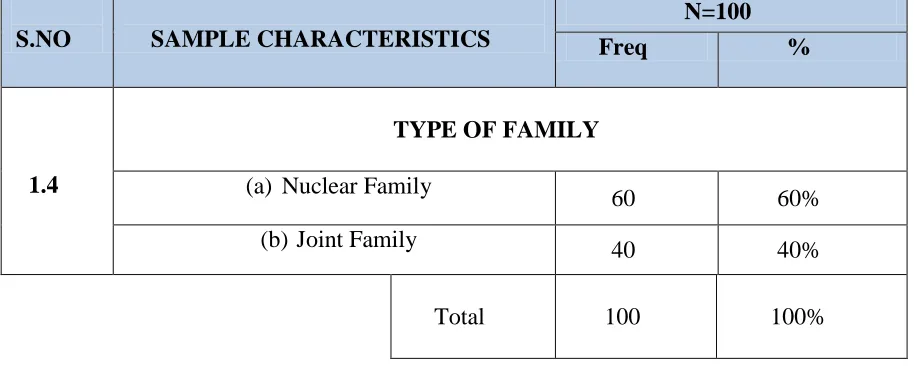
1.1.5 Distribution of Sample In Terms of Type of Family 47
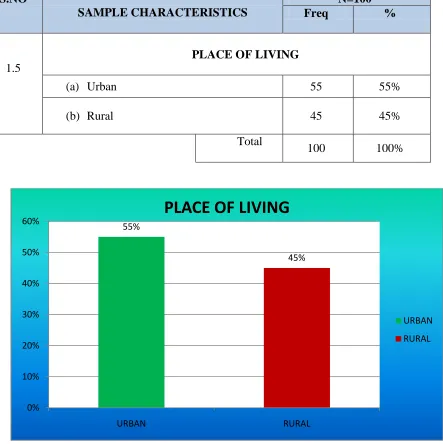
1.1.6 Distribution of Sample In Terms of Place of living 48
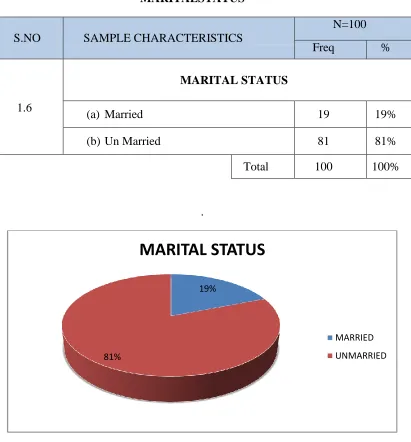
1.1.7 Distribution of Sample In Terms of Marital Status 49
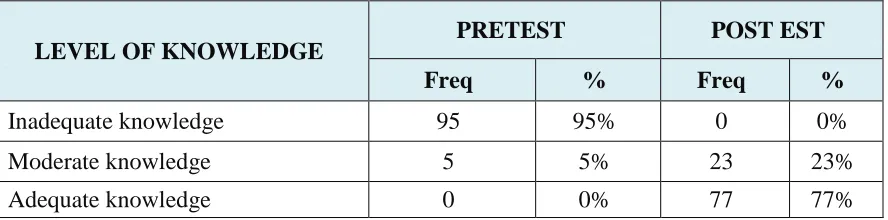
2 Assessment of Pre- Test and Post- Test Level of Knowledge Regarding Breast Self Examination
50
3 Comparison of Pre Test and Post Test Scores of
Knowledge Regarding Breast Self Examination
52
4 Level of knowledge regarding breast self examination 54
5
Association Between Post – Test Scores of Knowledge Regarding Breast Self Examination with Selected Demographic Variables
LIST OF FIGURES
S.NO
FIGURES
PAGE
NO
1 Conceptual framework based on beckers health beliefmodel 16
2 Schematic representation of research design of the study 39
3 Distribution of sample in terms of age 44
4 Distribution of sample in terms of religion 45
5 Distribution of sample in terms of education of the mother 46
6 Distribution of sample in terms of type of family 47
7 Distribution of sample in terms of place of living 48
8 Distribution of sample in terms of marital status 49
9 Assessment of Pre test and post tests level of knowledge
regarding breast self examination 51
10 Comparison of pre test and post test scores of knowledge
regarding breast self examination 53
LIST OF ANNEXURE
S.NO
CONTENT
Page No
1 Letter seeking permission for final study 73
2. Letter seeking expert opinion for content validity of tools 74
3. Content Validity Certificate 75
4 Editor‟s Certificate 80
5 Data Collection Tool 81
6 Lesson plan on Breast Self Examination 89
ABSTRACT
STATEMENT OF THE PROBLEM
“A STUDY TO EVALUATE THE EFFECTIVENESS OF VIDEO
ASSITED TEACHING PROGRAMME ON KNOWLEDGE REGARDING BREAST SELF EXAMINATION AMONG III YEAR FEMALE STUDENTS STUDYING AT NANDHA ARTS AND SCIENCE COLLEGE, ERODE.”
OBJECTIVES OF THE STUDY
To assess the knowledge regarding breast self examination, before and after video assisted teaching programme among III year female students To determine the effectiveness of video assisted teaching programme on knowledge regarding breast self examination among III year female students
To find out the association between knowledge score among III year female students & with their selected demographic variables age, religion, education
of the mother, type of family, place of living and marital status..
HYPOTHESES
H1; There will be significant increase in knowledge regarding
Breast self examination after video assisted teaching programme Among III year female students.
H2; There will be significant association between knowledge score of III year Female students and their selected demographic variables such asage, religion, education of the mother, type of family, place of living and
METHODOLOGY
The conceptual framework for the present study is based on “Becker‟s Health Belief Model”.
The research approach used for this study is the quantitative educative and
evaluative approach was considered to be most appropriate. The research design was “Quasi experimental research design-pre experimental research design.The present study was conducted in Nandha arts and Science College at Erode. The sample for this study consisted of 100 female students studying III year at Nandha arts and
science college,Erode. Stratified random sampling technique was used for the sample selection. The tools used for the data collection was self administered Multiple choice questionnaire which consist of two parts,part one was demographic data and part two
was knowledge of breast self examination questionnaire. Descriptive statistics (frequency, percentage, mean, and standard Deviation) and inferential statistics
(Chi-square, paired „t‟ test) were used to analyze the data and to test the hypotheses.
RESULT AND INTERPRETATION
The following were the results of this study:
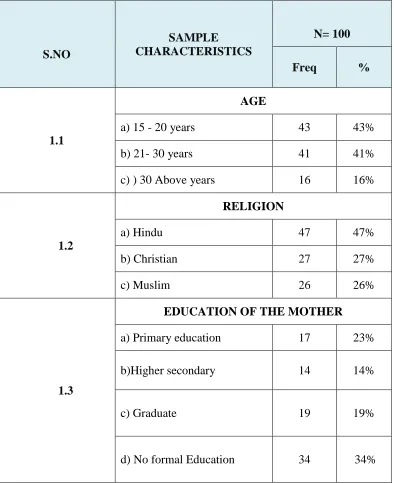
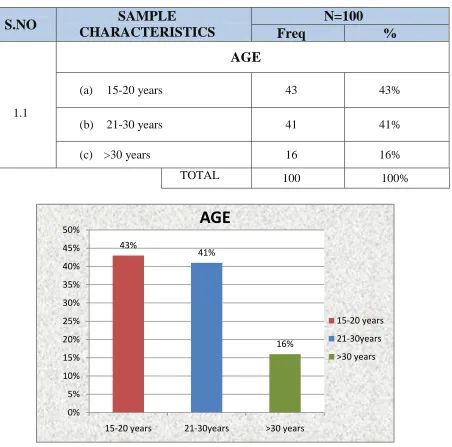
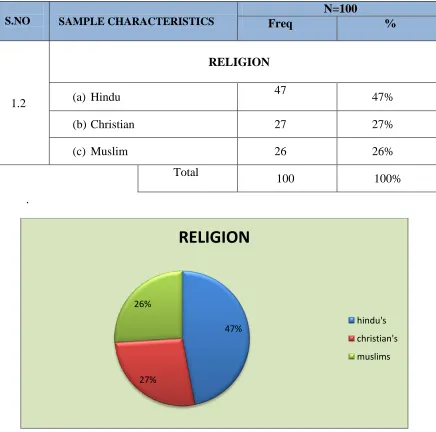
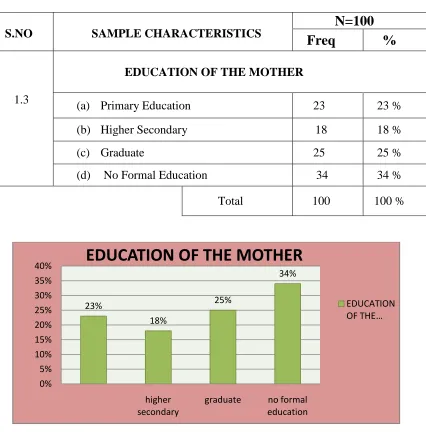
As per demographic characteristic,majority of female students 43 (43%) were between age group of 20-25years,47 of them (47%) were Hindu religion,34 of them (34%) were no formal education of the mother,60 of them (60%) were
The frequency and percentage of pretest and post test level of knowledge
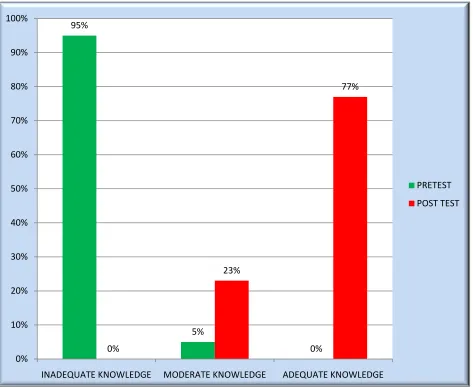
regarding breast self examination shows Majority of female students in pre- test 95 of them (95%) had inadequate knowledge, remaining 5 of them (5%) had moderate knowledge and none of them had adequate knowledge regarding Breast self examination but in post test majority 77 of them (77%) had adequate knowledge, remaining 23 of them (23%) of them had moderately adequate knowledge and none of them inadequate knowledge regarding Breast self examination.
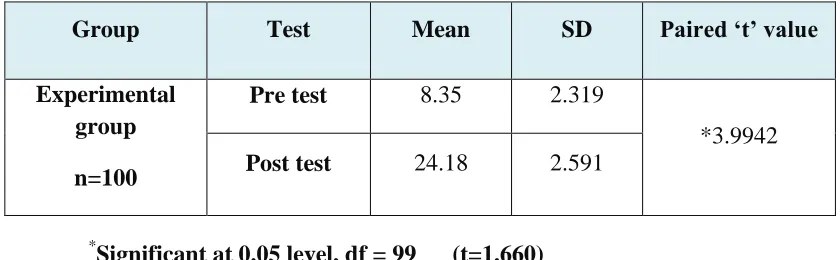
Over all comparison of mean values between pre test 8.35 and post test 24.18 of knowledge regarding breast self examination and „t‟ value 3.99 obtained was found to be significant at 0.05 level.This was conductedthrough video assisted teaching programme is effective in improving awareness regarding breast self examination.
RECOMMENDATIONS
Based on the findings of the study the following recommendations are made ;
The study can be replicated using a large sample to validate the findings on generalization.
A similar study can be conducted by using comparative approach and comparison can be made between nurses with varying qualifications.
A study can also be done to assess the practice and attitude of the female students regarding breast self examination.
Study can be done with randomization for better result.
The study can be conducted among different groups in hospital and community settings
The study can be conducted using various research design.
KEY WORDS
1
CHAPTER - I
INTRODUCTION
“LIFE IS REALLY SIMPLE,BUT WE INSIST ON
MAKING IT COPMPLICATED”
- CONFUCIUS Health is wealth goes the saying. Health is an essential factor for a happy contended life. According to Newman‟s system model, Health is a condition in which the parts and
subparts of the whole person are in harmony. Based on the Alma-Ata declaration, much emphasis is being placed on promotion and preventive healthcare. Encouraging people to adopt healthy life style and appropriate coping strategies are the key aim in the health promotion.
Health is the level of functional or metabolic efficiency of an organism. Health may also refer to; it is the general condition of a person‟s mind & body, usually meaning to be free from illness, injury or pain (as in “good health “or healthy )
- WORLD HEALTH ORGANIZATION Women and men share many similar health problems, but women also have their own health issues, which deserve special consideration. Women‟s lives have changed over the
centuries. Historically life was particularly difficult for most women. Aside from the numerous dangers & diseases.
2
the result of cells that uncontrollably grow & do not die. Normal cells in the body follow an orderly path of growth, division & death. Programmed cell death is called “apoptosis” and
when this process breaks down, cancer begins to form. Unlike regular cells, cancer cells do not
experience programmatic death &instead continue to grow and divide. This leads to a mass of abnormal cells that grows out of control.
- KARA AND ACIKEL, (2013) NATIONAL CANCER INSTITUTE( NCI ) estimates that endometrial, or uterine,
cancer will be diagnosed in an estimated 39,080 American women this year, more than twice the number of women who will be diagnosed with cervical (lower part of the uterus) and ovarian (female reproductive glands) cancers combined. However, in terms of 2010 deaths,
ovarian cancer is forecasted to kill 15,280 women, while deaths caused by uterine (7,400) and cervical (3,670) cancers are fewer than half that number. That is a combined 26,350 deaths in
this country this year from cancers of the female reproductive system. To avoid these cancers, it's important to understand them.
Breast cancer is the most common cancer that women may face in their lifetime (except
for skin cancer). It can occur at any age, but it‟s much more likely after age 40, and the risk goes up as women get older. Because of certain factors, some women may have a greater
chance of having breast cancer than others. But every woman should know about breast cancer and what can be done about it.
In developed and developing countries, breast cancer is shown as a major health problem. Breast cancer is the leading malignant tumor and it consists 30% of cancers among women .Breast cancer is the second leading cause of cancer deaths.
3
Breast cancer affects so many lives today. The peak incidence of breast cancer is the
fifth and sixth decades of life. The more familiarity with breast; the more likely women will notice when something has changed. It is vital for the women to understand the key factors
about the disease, especially risk factors and methods of early detection. Three methods of early detection of breast cancer are mammography, clinical breast examination and breast self examination. If breast self examination is practiced regularly breast disorders can be detected in
early stages and treated promptly.
Medical advances have shown that one-third of all cancers are preventable and a further
one third, if diagnosed sufficiently early, is potentially curable. This observation demands that cancer control should be of increasing priority in the health care programmed of developing
countries.
One potentially important strategy in reducing breast cancer mortality is the use of screening to achieve earlier detection of cancer.. This is very important because an excellent
prognosis is directly associated with the stage at which the tumor is detected and how localized the lesion is. Early diagnosis usually results in treatment before metastasis and signifies a better
outcome of management.
- EUROPEAN JOURNAL OF SCIENTIFIC RESEARCH,(VOL 30, NO 31, 2011)
According to the American Cancer Society, about 1.3million women will be diagnosed
with breast cancer annually. Worldwide about 465,000 will die from the disease. Breast cancer incidence in women in the United States is 1 in 8(about 13%).In 2012, an estimated 192,370
4
cancer is increasing, with an estimated 80,000 new cases were diagnosed annually. It is
reported that one in 22 women in India is likely to suffer from breast cancer during her lifetime.
- AMERICAN CANCER SOCIETY (2012)
Over the years, there has been some debate over just how valuable BSE is in detecting
breast cancer early and increasing the likelihood of survival. For example, in summer 2008,
one study of nearly 400,000 women in Russia and china reported that breast self-examination
does not reduce breast cancer mortality and may even cause harm by prompting unnecessary
biopsies (removal and examination of suspicious tissue). Because of the ongoing uncertainty
raised by this and other studies, the American cancer society has chosen to advise women that
BSE is an “optional” screening tool.
Breast cancer organisation still believes that BSE is a useful and essential screening
strategy, especially when used in combination with regular physical exams by a doctor and
mammography. About 20% of the time, breast cancers are found by physical examination
rather than by mammography.
Breast cancer organisations recommend that all women routinely perform breast
self-exams as part of their overall breast cancer screening strategy.
- MARISA WEISS, M.D.,( 2011)
A woman‟s breasts are constantly changing. They change throughout the menstrual
cycle , when breastfeeding, during pregnancy and in menopause. Most breast changes are not
cause for concern. But the women should know how her breasts look and feel normally, So that
any changes that might indicate a problem can be detected. One way that can be done is
5
1. Breast self-exams aid in the detection of breast cancer are considered optional by the
American Cancer Society. Rather, women should be familiar with the normal
consistency of the breasts and underlying tissue that she can be aware of any abnormal
lumps or other changes. Women should, however, get a regularly scheduled
mammogram and clinical breast exam, which are recommended to help detect breast
cancer.
2. Breast problems usually are benign, such as fibrocystic changes, cysts (fluid-filled
sacs), or fibro adenomas (solid lumps). Most women have lumps or changes in their
breasts that fluctuate during their menstrual cycles. This is normal, as is a firm ridge
along the bottom of each breast. Breasts also may feel different in different places.
3. The best time to do a breast self-exam is on a monthly basis, usually about three to
five days after the end of your period. When the breasts are less tender or swollen. If
women do not have a period, try to remember to do the exam on the same day every
month.
4. Breast self-exams are an option for women starting in her 20s. They are not a substitute
for regular screening mammograms or clinical breast exams to detect breast cancer.
According to the American Cancer Society, women in their 20s and 30s should have a
clinical breast exam at least once every three years. Beginning at age 40, women should
have a clinical breast exam and screening mammogram every year. Women at high risk
of developing breast cancer should add magnetic resonance imaging screening to their
yearly mammogram.
6
For health professionals who believe in evidence based practice, there is some good
evidence that competently performed breast self examination (BSE) is a screening behavior that will reduce the number of deaths from breast cancer. For health professionals who
believe that screening is warranted only when the natural history of the target disease may be altered, there is no evidence whatsoever to support the promotion of breast self examination in adolescents or women in their twenties.
Breast self examination is performed by woman herself. At consistent intervals, which are particularly important if she is still menstruating, the woman is supposed to look at her
breasts for abnormalities, to palpate her breasts, and to identify any findings that require consultation with her physician.
- CORNELIA J.BAINES, MD (2013)
Screening methods such as mammography, clinical breast examination, and breast self-examination (BSE) are described as health improvement activities and play important roles in
the early diagnosis of breast cancer. Breast self-examination is recommended to be performed routinely on a monthly basis in all the women aged above 20 years and the importance of
raising awareness on breast cancer via Breast examination is noted. Breast self-examination, is an easy-to-apply, economical, safe, non-invasive procedure with no special material/tool requirements; and it is an effective diagnostic method for breast cancer which
only takes five minutes
7
Breast self-examination (BSE) is a recommended screening method for early detection
of breast cancer, so it is essential to educate women about BSE as an early detection method for this fatal disease. Nurses and midwives are the health care providers engaged in women
through reproductive life. Women prefer a female health care provider when discussing female-related issues.
Thus, female nurses and midwives play an important role in educating women about the
importance of breast self examination and understanding the risk factors of breast cancer . To secure these objectives effectively, nurses and midwives should be aware of breast self-
examination and the risk factors of breast cancer and keep themselves updated with evidence-based practice concerning these issues.
- HADAYAT ABDEL-RAOOF AMASHA (2012) Prevention is better than cure, Measures should be taken to prevent cancerous lesion by
detecting it at earliest stage. Breast screening in general population has shown to reduce mortality and helps to detect it at earliest stage. Breast self examination is a technique that all women can use to assess their own breasts. Women familiar with their own normal breast
characteristics can easily notice the development of abnormalities early. Each woman and girls should be aware of her own risk factors with regular breast self examination; malignancy may
be discovered early and effectively treated. Regular monthly breast self examination is an essential health maintenance activity.
8 NEED FOR THE STUDY
"Even too much sunshine can be devasting, while only with rain can growth occur. Accept both as part of the growing process in the garden of life."
- Donald S. Neviaser
Collectively, US, India and China account for almost one third of the global breast
cancer burden. Persistent efforts over last 40 to 50 years in the US have resulted in a large
proportion of women presenting in early stages and there has been a consistent decrease in the
death rates due to breast cancer, even though the incidence of breast cancer is rising steadily.
These statistics from IARC (WHO) reflect the same, and offer a good insight for developing
nations like India, as to what can be done. Threat of rise of breast cancer in India is so rampant,
that if we do not act now, we are in for a major shock in the next twenty years.
The World Health Organization (WHO) has predicted that by 2020 the number of breast cancer cases will jump to an alarming figure and one in every eight women would run the risk of developing the disease in her lifetime. The Indian Council of Medical Research
(ICMR) too, concluded that over the last two decades there has been a steep rise in the statistics pertaining to women being diagnosed with breast cancer.
In 2013, it is estimated that among U.S women there will be
9
64,640 new cases of in situ breast cancer (This includes ductal carcinoma in situ (DCIS) and lobular carcinoma in situ (LCIS), of those, about 85 percent will be DCIS.DCIS is a non-invasive breast cancer and LCIS is a condition that increases the
risk of invasive breast cancer deaths.
39,620 breast cancer deaths.
- WORLD HEALTH ORGANISATION
For India, for the year 2012,
144,937 women were newly detected with breast cancer
70,218 women died of breast cancer
144937 / 70218 = 2.06 = round it off to 2. So roughly, in India, for every 2
Women newly diagnosed with breast cancer, one lady is dying of it.
A few decades back: almost 65% to 70% of women suffering from breast cancer were
above 50 years only 30 to 35% women were below fifty years of age. However, presently,
breast cancer is more common in the younger age group and 49% of all women suffering from
breast cancer in Chennai are below 50 years of age. A significant number of patients are below
30 years. The reason is not that few decades back, it was not detected earlier and now it is
being detected earlier. The reason is that there has been a very genuine rise in the incidence of
breast cancer in younger women. Please understand that breast cancer is increasing even in the
older population; it is just that the increase in younger population is more than that in the older
population; maybe because of the predominant young population in India.
10
In India Breast Cancer is the first leading site of cancer in 4 out of 5 urban registries-
Bangalore, Mumbai, Delhi and Bhopal. In Chennai it is the second leading site of cancer. In the hospital based registry in regional center for Cancer Research and Treatment at Kidwai
Memorial Institute of Oncology about 500 cases of breast cancer are registered annually. Bangalore is the 4th in the highest number of breast cancer cases in the country, after Delhi, Mumbai and Chennai, according to National cancer Registry programme, Bangalore in 2012,
Breast cancer is higher due to the dietary shifts from low fat foods to high fat diet and passive reproductive life.
-MR.NANDHA KUMAR (Cancer Research and Treatment at Kidwai Memorial Institute of Oncology) Breast cancer cases have doubled in India in the last two decades. The number of women estimated to be dying of breast cancer every year has also been steadily raising. 48,170 women died due to breast cancer in 2007 and the number reached 50,000 in 2010. Delhi recorded an estimated 810 deaths due to breast cancer in 2010 compared to 779 in 2009 and 749 in
2008.Experts say women now marry late and give birth to fewer children have increased breast cancer rates in India.
Breast Self Examinations aid in the detection of Breast Cancer are considered optional by the American Cancer society.80% of breast cancers diagnosed clinically are found by the
woman herself. American National organizations, institutes and commercial bodies provided lot of information and training on breast self examination. Some private health institutes and commercial non health related organizations also developed breast self examination training
11
Breast Cancer organization believes that Breast Self Examination is a useful and
essential screening strategy used in combination with regular physical exams by a doctor and mammography. The first stage of Breast tumors were detected 53.8% by routine physical
examination, 37.7% by self examination and only 27% detection were accidental. And breast cancer mortality might reduced by 18.8% to 24.4% through self examination or routine physical examination.
- AMERICAN CANCER SOCIETY Early diagnosis affords a better chance of survival and better prognosis in absence of an enact etiological agent for breast cancer, the most appropriate way of controlling it, will be early detection and treatment. Mammography is the method of choice but its use is limited due
to high cost and unavailability. At present a simple inexpensive and early implant for the detection of breast cancer is breast self examination. It is one of the simplest and most
important health programmes to promote early detection. Regular breast self examination can identify any abnormal changes in breast to establish good prognosis. If the young groups of women are targeted with accurate information and encouragement they will learn to examine
themselves and detect every minute changes early in their later life.
Many women feel that doing a breast self exam is an important part of their health
care. It helps them learn how their breasts normally feel, so that if they find a lump they will know whether it is something to discuss with their health care provider. However, there is controversy about recommending breast self exams. .there is no evidence that doing breast self
exams saves lives from breast cancer. Even getting a yearly exam is controversial, but many women and their health care providers feel that this is still an important part of breast cancer
12
The clinician palpates the breast during examination. In recent years emphasis has been
placed on teaching adolescent girls to palpate their own breasts monthly. Early cancer of the breast is curable, and if every adolescent girls would take time to carefully examine her own
breast at regular intervals, many benign and malignant tumour would be discovered easily and early. Nurses should become familiar with the procedure of breast self examination so that they may teach adolescent girls, patients, friends or members of their families.
- DANIEL B.KOPANS, MD (2013)
PROBLEM STATEMENT
“A STUDY TO EVALUATE THE EFFECTIVENESS OF VIDEO ASSISTED TEACHING PROGRAMME ON KNOWLEDGE REGARDING BREAST SELF EXAMINATION AMONG III YEAR FEMALE STUDENTS STUDYING AT NANDHA ARTS AND SCIENCE COLLEGE, ERODE.”
OBJECTIVES OF THE STUDY
1. To assess the knowledge regarding breast self examination before and after
video assisted teaching programme among III year female students 2. To determine the effectiveness of video assisted teaching programme on
Knowledge regarding breast self examination among III year female students 3. To find out the association between knowledge score among III year female
Students & with their selected demographic variables such
13
HYPOTHESES
H1; There will be significant increase in knowledge regarding breast self examination after video assisted teaching programme among III year female students studying at Nandha Arts and Science college,Erode.
H2; There will be significant association between knowledge score of female Students and with their selected demographic variables age, religion, education of the
mother, type of family, place of living and marital status.
ASSUMPTIONS
Students have less knowledge about breast self examination,
Video assisted teaching programme will be effective in increase the knowledge regarding Breast self examination among III year female students studying at Nandha
Arts and Science college,Erode.
DELIMITATIONS
This study is limited to Who are studying III year at Nandha Arts and science college, Erode only.
Sample size limited to 100 female students only
This data collection period limited for 15 days only
OPERATIONAL DEFINITIONS
1. Effectiveness14
In this study effectiveness refers to the improvement in level of knowledge regarding
breast self examination among III year female students.
2. Knowledge
Knowledge is a familiarity with someone or something, which can include facts, information, descriptions, or skills acquired through experience or education .It can refers to
the theoretical or practical understanding of a subject.
In this study knowledge refers to the awareness and familiarity about breast self
examination among III year female students.
3. Breast self examination (BSE)
A Breast self examination (BSE) is an inspection by a woman of her breasts to detect breast cancer early.
In this study BSE refers to gain knowledge regarding Breast self examination among III year female students.
4. Video assisted teaching Programme
It‟s a process of showing set of pictures and information using Laptop/television.
In this study it refers to the use of video as a medium of giving Information regarding breast self examination among III year female Students. Breast self examination is the observation and palpation of breast. Using one‟s own hands for the purpose of detecting
abnormalities. It helps to gain knowledge regarding breast self examination techniques.
15
CONCEPTUAL / THEORITICAL FRAMEWORK
The conceptual framework for this study was based on „BECKER‟S HEALTH BELIEF MODEL‟.
The conceptual Framework of this study was based on BECKER‟S HEALTH BELIEF
MODEL. This model addresses the relationship between a person‟s beliefs and behaviours. It provides a way of understanding and predicting how clients will behave in relation to their
health and how they will comply with health care therapies.
Conceptual Framework is the conceptual underpinning of a study. If Refers to an
understanding of the phenomenon of interest and reflects the assumptions and philosophical view of the investigation.
- Densie polit
The first component of this model involves the individual‟s perception of susceptibility
to an illness. For example, a client needs to recognize the familial link for breast cancer. After
this link is recognized, particularly when one parent and two siblings have died in their second decade from breast cancer, the client may receive the personal risk of breast cancer.
The Second component is the individual‟s perception of the seriousness of the breast
cancer. This perception is influenced and modified by demographic variables lie age, religion, education of the mother, type of family, place of living, marital status. Perceived threat‟s of the
breast cancer and cues of action is administered video assisted teaching programme.
The Third component – the likelihood that a person will take preventive action-It assumed that by performing breast self examination,to find any mass or lump is detected at
16
CONCEPTUAL FRAMEWORK (BECKERS HEALTH BELIEF MODEL)
Figure :1 Effectiveness of video assisted teaching programme among female students in Nandha College of Arts and Science in Erode.CHAPTER II PERCEIVED SUSCEPTIBILITY THOSE FEMALE STUDENTS ARE HIGHER RISK FOR BREAST CANCER. PERCEIVED SERIOUSNESS: BREAST CANCER IS 2ND HIGHEST RATE FOR WOMEN INDIVIDUAL PERCEPTION MODIFYING FACTORS LIKELIHOOD ACTION DEMOGRAPHIC VARIABLES
AGE, RELIGION, EDUCATION OF THE MOTHER, TYPE OF FAMILY, PLACE OF LIVING, MARITAL STATUS
PERCEIVED THREAT
OF BREAST CANCER
LIKELIHOOD OF
TAKING
RECOMMENDED
PREVENTIVE HEALTH
ACTION OF BREAST
SELF EXAMINATION CUES OF ACTION :
VIDEO ASSISTED
TEACHING PROGRAMME REGARDING BREAST SELF EXAMINATION
PERCEIVED BENEFITS
IT ASSUMED THAT BY
PERFORMING BREAST
SELF EXAMINATION
ANY MASS OR LUMP IS
DETECTED AT EARLIER
17
CHAPTER II
REVIEW OF LITERATURE
A review of literature refers to the activities involved in identifying and Searching for information on a topic and developing and understanding the State of knowledge on the topic.
- Polit and hungler, 2004.
Review of literature is an essential component of the research process. It‟s also a
critical examination of publication related to a topic of interest. Review Should be comprehensive and evaluative. Review of literature helps the researcher to build an existing
work, he/she should understand what is already known.
In this present study, investigator has reviewed and organized by the following method.
1. Literature related to knowledge of breast self examination
18
1.
Literature related to knowledge of breast self examination
Anuradha MD (2013) conducted a pre-experimental study to assess the knowledge of the women on breast self examination among 30 women in the age group between 35 – 55 years in PSG hospitals, Coimbatore. Purposive sampling technique was used. Data were
collected by structured interview schedule. Descriptive and inferential statistics were used to analyze data. Result of this study was majority of the women were in the age group of 46-50
years.most of the women (53%) attained menopause and all of them had children and 40% of the women were on oral contraceptive pills. Area wise mean post test knowledge score of
women was found significantly higher (24.87) than their mean pre test knowledge score (5.76) as evident from‟t‟value (29) =20.86 at p<0.05 level. This suggested that the SIM was effective
and it helps to increased the knowledge of women in breast self examination.
Zhang YJ.et., al (2013) A cross sectional study was conducted to determine the level of knowledge about breast self examination among 244 women aged 20-64 in rural area of
western turkey. The samples were selected by cluster sampling. Four trained doctors collected the data by face to face interview between January and February 2013.Descriptive & inferential statistics to analyze the data. The study results shown that 23.4% of them had no
knowledge about breast self examination, 27.9% had moderately adequate knowledge about breast self examination. Only 10.2% adequate knowledge of breast self examination
regularly.76.6% Reported that they heard about breast self examination, but only 56.1% of them had sufficient knowledge about it. Television or radio programs were the main source of information about breast self examination, and 23.4% sample mentioned health professionals
19
Tagnoni G (2012) a descriptive co relational study was conducted to identify knowledge level of breast self-examination and variables related to breast self examination, among 65 Muslim female workers in Mumbai. Purposive sampling technique was used.
Descriptive and inferential statistics were used to analyze the data. Result showed that 86.2% of the women had adequate knowledge about Breast Self Examination and 13.8% moderately adequate knowledge of Breast Self Examination.
Pınar Erbay Dundar (2012) conducted a cross sectional study to determine levels of knowledge regarding breast self examination, among Turkish women. The aims of this study
were about breast self examination and to evaluate health beliefs concerning the model that promotes breast self- examination (BSE) among women aged 20–64 in a rural area of western
Turkey.244 women were recruited by means of cluster sampling in this study. The questionnaire consisted of sociodemographic variables, a risk factors and signs of breast cancer form and the adapted version of Champion's Health Belief Model Scale (CHBMS). Bivariate
correlation analysis, Chi square test, Mann-Whitney U test and logistic regression analysis were performed throughout the data analysis. This study results shown that the mean age of the
women was 37.7 ± 13.7. 49.2% of women were primary school graduates, 67.6% were married. Although 76.6% of the women in this study reported that they had heard or read about breast self examination, our study revealed that only 56.1% of them had sufficient knowledge
of breast self examination, half of whom had acquired the information from health professionals. Level of breast self examination knowledge was the only variable significantly
20
performance and possessed knowledge of breast self examination. By using the CHBMS
constructs for assessment, primary health care providers can more easily understand the beliefs that influence women's BSE practice.
Tarek Tawfik Amin (2012) conducted a cross-sectional descriptive study to assess level and determinants of knowledge about breast self examination among adult Saudi women
in Al Hassan, KSA.Sample size of the study 1,315 Saudi adult females were included, selected through a multistage stratified sampling method from ten primary health care centers. No previous histories of breast cancer, attendance for routine services or accompanying patients
were prerequisites for eligibility. Participants were invited to personal interview with pre-tested validated questionnaire including inquiries regarding knowledge of breast self examination
(BSE).Both descriptive and inferential statistics were applied; logistic regression was conducted to determine the possible correlates of knowledge. This study result shown that the overall level of knowledge regarding breast self examination was low and dependent upon
educational and occupational status.. A positive family history was found in 18% of cases among first and second degree relatives, and 2 % had a prior history of benign breast lesion.
Aluka C (2012) conducted a descriptive co relational study to identify knowledge levels of breast self-examination (BSE) and to examine variables related to breast self examination in Turkish women. Data were collected from a convenience sample of 103
Muslim female workers. Descriptive and inferential statistics were used to analyze the data Results showed that 26.2% of the women reported adequate knowledge of BSE and 4.3% reported that they have inadequate knowledge of BSE. Higher health motivation, higher
21
Swetha (2012) Conducted a Quasi Experimental study to determine the effectiveness of structured teaching programme on breast self examination for early detection of breast cancer for the age group of 20-60year women‟s, the study was conducted at Adhiprasakthi rural
centre, poraiyur, Tamil Nadu, convenient sampling technique was used to select the samples,60 samples are selected, data collection tools consist of structured interview schedule and check list to assess the knowledge, attitude,& practice. first pretest of knowledge, attitude,& practice
was assessed,after the Pretest the STP was given to the same group, then post test was assessed, data collection were analyzed by using descriptive and inferential statistics. women showed a
statistically significant {p<0.05}increases in knowledge regarding breast self examination.
Kesiya (2012)Conducted a study to assess the knowledge and effect of planned teaching programme regarding breast cancer and breast self examination among 60 working women‟s in the secondary and higher secondary education department in Pune city.
Descriptive and inferential statistics were used to analyze the data. A structured questionnaire
was used to collect data .The study showed that the mean knowledge score about breast cancer & BSE obtained from working women‟s in pretest was 7.5 &that of post test was 13.4,this difference was statistically highly significant at [p=0.01]level with „t‟ value of 24,16608 at 39
degree of freedom.
22
incidence, survival and mortality. More women in the BSE group sought medical advice for suspected pathology (4,300) than those in control (2,438; p < 0.05). There were 493 cases of breast cancer in the BSE group with 157 fatalities, 446 cases of breast cancer with 167 fatalities in the control group. There was no significant difference in tumor stage. Nine-year survival (after Kaplan-Meyer) from the time of tumor detection was 65% in the study group and 55% in control (log rank 0.774; p > 0.05). There has been no significant difference in death rates in both groups for the past ten years.
23
Amrik et.al.,(2011) Conducted a quasi-experimental study to assess the effectiveness of structured teaching programme on knowledge and performance ability of breast self examination among 40 women (20 in experimental group and 20 in control group) in selected
rural communities of Ludhiana,Punjab.Structured questionnaire and check list were used for data collection. The data analyzed by mean, standard deviation, „t‟ test and Chi-square test and Co-efficient correlation. The study result shown that there is no statistically significant
different between pre-test Breast self examination knowledge score of experimental group (12.30) and control group (13.65) (T=1.20NS)and Breast Self Examination performance ability
score of experimental group (3.25) and control group (2.85) (t=1.19NS).There was statistically significant increase in post-test knowledge Breast Self Examination score of experimental group (27.85) at 0.001 level. (t=16.52) and in Breast Self Examination performance ability
score of experimental group (17.4) at 0.001 level (t=34.54).
2. Literatures related to effectiveness of video assisted teaching
Jhonson David.S (2013). Conducted a descriptive study were used at small group and individual in-depth interviews to collect data, and using thematic analysis and constant
comparison techniques for data analysis, the aim of the study is to provide information about how women decide to practice BSE and their experiences through the video assisted teaching
programme, 66 women aged 27-50 were recruited. This study results shown that it was found that a sense of self-security became an important motivator for entering BSE practice. The patterns of video include opportunity taking, clarifying confusion, maintaining health, and
illness monitoring, which were connected with the risk perception for breast self examination. We recognize that the way women decide to attend BSE practice is influenced by personal.
24
is essential. This study will assist researchers and health professionals to gain a better
understanding of alternative ways to deal with breast health, and not to be limited by the recommendations of the health authorities.
Mitra Moodi (2013) conducted a Quasi experimental study, 243 female students were selected using multi-stage randomized sampling in 2013. The data were collected by validated and reliable questionnaire (43 questions) before intervention and one week after intervention.
The intervention program was consisted of one educational session lasting 120 minutes by lecturing and showing a film based on HBM constructs. The obtained data were analyzed by
SPSS (version11.5) using statistical paired t-test and ANOVA at the significant level of α = 0.05.this study results shown that,243 female students aged 20.6 ± 2.8 years old were studied.
Implementing the educational program resulted in increased knowledge and HBM (perceived susceptibility, severity, benefit and barrier) scores in the students (p ≤ 0.01). Significant
increases were also observed in knowledge and perceived benefit after the educational program (p ≤ 0.05). ANOVA statistical test showed significant difference in perceived benefit
score in students of different universities (p = 0.05). Due to the positive effects of education on
increasing knowledge and attitude of university students about BSE, the efficacy of the HBM in BSE education for female students was confirmed.
Pamela J. Goodwin (2013) conducted a Self-administered cross-sectional mailed survey, to investigate practice breast self-examination (BSE) through the video assisted teaching programme.120,English speaking nurses certified by college of nursing in Canada
25
Most nurses agreed that before the recommendation they almost always practice BSE (74.3%).
Only 9.5% agreed that nurses should follow the recommendation and not routinely practice BSE. A few also agreed that they now spend less time discussing BSE (25.7%) and that the
recommendation has influenced them to women (12.9%) to practice BSE.
Chinna kannan B (2012) conducted a quasi-experimental research study to assess the effectiveness of Video assisted teaching programme on the knowledge among 248 nurses on
breast self examination. The samples were selected by cluster sampling technique in PHC‟s of Salem district. Data collected by using closed ended questionnaire and observational checklist.
Data were analyzed by descriptive and inferential statistics. The overall pre-test mean knowledge score was 28.13±7.55 (42.61%) whereas in post-test it was 57.71±3.94 (87.44%)
revealing 44.83% enhancement of knowledge score. Highly significant difference was found between the total knowledge scores of pre and post test and area wise score values of pre and post test (P<0.01) revealing effectiveness of Video assisted teaching programme.
Bernice.R (2012) conducted a quasi- experimental study to assess the effectiveness of video assisted teaching (VAT) on breast self examination on knowledge and practice of staff
nurses in Hassan. 60 staff nurses selected as sample by non probability purposive sampling technique. Demographic data, structured knowledge & practice questionnaire and video assisted teaching (VAT) for used for data collection .data analyzed by using Chi-square with
Yates correction and Fisher exact test. The study result shown that overall mean knowledge scores (pre test=13.53, post test= 26.66) and mean practice scores are (pre test= 43.39, post
26
54.6%) respectively, where „t‟ value were knowledge (t=26.67 at p<0.001) and practice
(t=16.32 at p<0.001). The finding signifies that the video assisted teaching was effective to enhance the knowledge and practice of breast self examination.
Rajashree.s (2012)conducted a quasi experimental study to assess the effectiveness of video demonstration programme on knowledge and intentions about breast self examination technique among 255 twelfth standard girls in Government higher secondary school, Vellore. A
pretest was conducted to determine the knowledge about breast self examination. Displayed a 20 minutes video demonstration programme about breast self examination technique. After
intervention delayed post test conducted later between 5-6 weeks in 211 girls. Descriptive and inferential statistics were used to analyze the data. The study result shown that the experimental
group participated in video demonstration programme increase in their knowledge score than the control group. The experimental group girls reported performing breast self examination from the past month as well and they have a higher intention to perform breast self examination
in future.
Coates RJ (2011) conducted health education intervention study by using video slides on LCD in 15 minutes about Breast Self Examination, the study was conducted from March to August 2011 among 250 women beneficiaries‟ in Ahmadabad Municipal Corporation. Data
collected by using questionnaire about breast self examination Data analysis done with the use
of SPSS version. The study result shown that there was a significant increase in knowledge about breast self examination after 3 months of the intervention from 26.8% to 90.8% and in
27
Sanghi. et al.,(2011) Conducted a quasi experimental study to assess the effectiveness of video demonstration programme on knowledge and intentions about breast self examination technique among 255 girls from Higher secondary school in Delhi. A pretest was conducted to
determine the knowledge about breast cancer and breast self examination. Displayed a 50 minutes video demonstration programme about breast self examination technique. After intervention delayed post test conducted later between 5-6 weeks in 211 girls. The study result
shown that the experimental group participated in video demonstration programme increase in their knowledge score than the control group. The experimental group girls reported
performing breast self examination from the past month as well and they have a higher intention to perform breast self examination in future.
Maria Izal (2011)conducted a health education intervention study by using video slides on LCD and flip charts in 30 sessions (20-25 subjects in each session) about Breast Self Examination was conducted from March to August 2010 among 250 women beneficiaries‟ in
Ahmadabad Municipal Corporation. Data collected by using questionnaire about various aspects of breast cancer. The study result shown that there was a significant increase in
28
CHAPTER – III
METHODOLOGY
Methodology is the systematic, theoretical analysis of the methods applied to a field of study. It comprises the theoretical analysis of the body of methods and principles associated
with a branch of knowledge. Typically, it encompasses concepts such as paradigm, theoretical model, phases and quantitative or qualitative techniques.
A methodology does not set out to provide solutions - it is, therefore, not the same thing as a method. Instead, it offers the theoretical underpinning for understanding which method, set of methods or so called “best practices” can be applied to specific case, for example, to
calculate a specific result.
The Methodology is the general research strategy that outlines the way in which a
research project is to be undertaken and, among other things, identifies the methods to be used in it. These Methods described in the methodology, define the means or modes of data collection or, sometimes, how a specific result is to be calculated. Methodology does not define
specific methods, even though much attention is given to the nature and kinds of processes to be followed in a particular procedure or to attain an objective.
The methodology consists of research design, setting, population and sampling, sample size, criteria for selection of samples, instruments and tools for measuring variables, techniques of data collection, method of data analysis, report of pilot study and needed
29
Designing a research involves the development of plan or strategy that will guide the
collection and analysis of the data. The study was designed to assess the effectiveness of video assisted teaching programme regarding knowledge and practice of breast self
examination.
RESEARCH APPROACH
The research approach selected to accomplish the objectives of the study was
Quantitative educative and evaluative approach. Since the purpose of the study was to find out the effectiveness of video assisted teaching programme on knowledge regarding
breast self examination among III year female students, the Quantitative educative and evaluative approach was found to be suitable for this research study.
RESEARCH DESIGN
The research design used for the present study was pre-test and post-test which a Quasi experimental research design –pre experimental research design isused to measure the effectiveness of the video assisted teaching programme on knowledge regarding breast self
examination among III year female students
30
Schematic representation of the design is given below, Pre experimental research design
Pre test treatment Post test
Experimental group O1
X O2
E O1 X O2
KEY
E : Experimental Group
O1 : Pre-test knowledge of breast self examination among III year female students X : Administration of Video assisted teaching programme.
O2 : Post-test knowledge regarding breast self examination among III year female Students.
VARIABLES OF THE STUDY
Variables are characters that can have more than one value. The categories of
variables discussed in the present study .they are,
Independent variable:-
The independent variable is believed to cause or influence the behavior and ideas.
(Polit and Hungler, 2010) The variables that are used to describe or measure the factors that are assumed to cause
or at least to influence the problem are called the independent variables.
31
The independent variable in this study was administering Video assisted teaching Programme regarding breast self examination among III year female students.
Dependent
variable:-Dependent variable is what will be measured; it's what the investigator thinks will be
affected during the experiment.
Dependent variables represent the effect or influence of the dependent variable. They are sometimes referred to as outcome, output, or response variables. They are “dependent” in
that the outcome depends on the effects of the variables being manipulated.
The dependent variables in this study were knowledge regarding breast self Examination among III year students.
RESEARCH SETTING
Research settings are specific places in a research where data collection is to be made. The selection of setting was done on the basis of the feasibility of conducting the study,
availability of subject and permission of authorities.
(Polit and Hungler, 2003)
The Study was conducted among III year female students studying at Nandha arts and science, Erode.
POPULATION
Population is defined as the entire aggregation of cases that meet a designated set of criteria.
32
A research population refers to the entire group to which the results of the research are
to apply it is all the member (or) objects of any defined group from which measurement might be taken (or) collected.
The target population for the present study was female students studying in the selected Nandha arts & Science College, Erode.
SAMPLE
A sample is the portion of the population that has been selected to represent the Population of interest. (Talbott, 1991)
In this study, sample w a s I I I year female students with who fulfilled the inclusion criteria from Nandha arts and science, Erode.
SAMPLE SIZE
The proposed sample size is 100 III year female students studying at Nandha Arts and Science College, Erode.
SAMPLING TECHNIQUE:
Sampling is the process of selecting a portion of the population who represent the
entire population. (Polit and Beck, 2001)
33
CRITERIA FOR SAMPLE SELECTION
The sample for the study was selected based on the following criteria,
Inclusion criteria:
Who are studying III year female students
Who are all present during data collection . Exclusion criteria:
Students who are not willing to participate.
Who have underwent breast surgeries.
Who have been exposed to previous teaching programme about breast self Examination.
SELECTION OF RESEARCH INSTRUMENT:-
Research instruments or tools are ways of gathering data. Without them data would
be impossible to put in hand which is used by the researcher to observe or measure the key variables in the research problem. The major task of the researcher is to select instruments most accurately and precisely measure the variables of interest, Questioning allows gathering
information or data from a large number of samples, relatively, quickly and inexpensively. It avoids interviewer bias, offers anonymity and is cost effective.
34
DATA COLLECTION METHOD
Self Administered Multiple choice Questiontionnaire used for data collection.
DATA COLLECTION INSTRUMENT
The structured questions was prepared by the investigator
The following steps were carried out in formulating the tools.
Related literature was reviewed.
Blue print was prepared.
Subject experts were consulted for their valuable suggestion regarding the tools and alterations were made accordingly.
Statistician was consulted for the preparation of the plan for statistical data analysis.
Reliability was checked by doing pilot study.
Literature needed for the development of the tool was obtained journals, articles, books and research studies. The blueprint was prepared to construct the tools which consist 6
35
DESCRIPTION OF THE INSTRUMENT
The questions related to demographic variables and Semi Structured questions related to knowledge of breast self examination .
Part I: Demographic variables such as Age, Religion, Education of the
Mother, Type of family, Place of living, Marital status..
Part II: It consisted of 40questions related to knowledge of breast self examination.
TOTAL SCORE INTERPRETATION
Part: II
1 1-14 Inadequate knowledge
2 15 -22 Moderately adequate knowledge
3 23 - 30 Adequate knowledge
TESTING OF THE TOOL
CONTENT VALIDITYThe instruments were validated by 5 experts from the field of Nursing and Medicine. The experts suggested addition, deletion of certain items and re-organization of questions.
Appropriate modifications were made and the tool was finalized.
RELIABILITY
36
to replicate research procedures, or the ability to use research tools and procedures that yield
consistent measurements, researchers would be unable to satisfactorily draw conclusions, formulate theories, or make claims about the generability of their research.
The Reliability of the tool was estabilished using split half technique.The reliability value of the tool is r = 0.9,So the tool was feasible and reliable.
(D.ELAKKUVANABHA