A STUDY TO EVALUATE THE EFFECTIVENESS OF
STRUCTURED TEACHING PROGRAMME ON KNOWLEDGE
AND ATTITUDE REGARDING LIFESTYLE MODIFICATION
AMONG PATIENTS WITH CHRONIC KIDNEY DISEASE AT
SELECTED HOSPITAL COIMBATORE.
Ms.Sherly. K
Reg. No: 301613452A Dissertation Submitted to
The Tamil Nadu Dr. M. G. R. Medical University,
Chennai
–
32.
In Partial Fulfillment of the Requirement for the
Award of the Degree of
MASTER OF SCIENCE IN NURSING
BRANCH - I
A STUDY TO EVALUVATE THE EFFECTIVENESS OF
STRUCTURED TEACHING PROGRAMME ON KNOWLEDGE
AND ATTITUDE REGARDING LIFESTYLE MODIFICATION
AMONG PATIENTS WITH CHRONIC KIDNEY DISEASE AT
SELECTED HOSPITAL COIMBATORE.
Ms.Sherly. K
Reg. No: 301613452
A Dissertation Submitted to
The Tamil Nadu Dr. M. G. R. Medical University,
Chennai
–
32.
In Partial Fulfillment of the Requirement for the
Award of the Degree of
MASTER OF SCIENCE IN NURSING
BRANCH - I
MEDICAL SURGICAL NURSING
A STUDY TO EVALUVATE THE EFFECTIVENESS OF
STRUCTURED TEACHING PROGRAMME ON KNOWLEDGE
AND ATTITUDE REGARDING LIFESTYLE MODIFICATION
AMONG PATIENTS WITH CHRONIC KIDNEY DISEASE AT
SELECTED HOSPITAL COIMBATORE.
By
Ms.Sherly. K
Reg. No: 301613452
A Dissertation Submitted to The Tamil Nadu Dr. M.G.R. Medical University, Chennai, in Partial Fulfillment of Requirement for the
Degree of
MASTER OF SCIENCE IN NURSING
BRANCH - I
MEDICAL SURGICAL NURSING
2018
______________________ ______________________
ASTUDY TO EVALUVATE THE EFFECTIVENESS OF
STRUCTURED TEACHING PROGRAMME ON KNOWLEDGE
AND ATTITUDE REGARDING LIFESTYLE MODIFICATION
AMONG PATIENTS WITH CHRONIC KIDNEY DISEASE AT
SELECTED HOSPITAL COIMBATORE.
APPROVED BY THE DISSERTATION COMMITTEE
RESEARCH GUIDE: ………
Prof.Dr.D.CHARMINI JEBA PRIYA, M.Sc (N).,M.Phil.,Ph.d., Principal,
Texcity College of Nursing, Coimbatore – 23.
SUBJECT GUIDE:
………..
Mrs.Littreshia Balin. J, M.SC (N) (MSN) Associate professor,
Texcity College of Nursing, Coimbatore – 23.
MEDICAL GUIDE: ……….
Dr. Asmath Begum, M.B.B.S., DGO, Indian army medical corps.
CERTIFICATE
Certified that this is the bonafide work of Ms. Sherly.K, Texcity College of Nursing, Coimbatore-23, submitted as a partial fulfillment of the requirement for the Degree of Master of Science in Nursing to The Tamilnadu Dr.M.G.R. Medical University, Chennai. Under the Registration No: 301613452
College Seal
Prof. Dr.D.CHARMINI JEBAPRIYA, M.Sc (N)., M.Phil, Ph.D., Principal
Texcity College of Nursing, Coimbatore-23.
Texcity College Of Nursing Podanur Main Road
Coimbatore-23.
DECLARATION
I hereby declare that the dissertation entitled A Study to evaluvate The effectiveness of structured teaching programme on knowledge and attitude regarding lifestyle modification among patients with chronic kidney disease at selected hospital Coimbatore.
Submitted to the Tamilnadu, Dr. M. G. R. Medical University, Chennai, in partial fulfillment of the requirements for the award of the degree of Master of Science in Nursing is a record of original research work done by myself.
This is the study under the supervision and guidance of MRS.LITTRESHIA BALIN. J, M.SC (N) (MSN).,ASSOCIATE PROFESSOR ,Texcity College of Nursing, Coimbatore-23 and the dissertation has not found the basis for the award of any degree/ diploma/associated degree/ fellowship or similar title to any candidate of any university.
SIGNATURE OF THE PRINCIPAL
DEDICATION
THIS DISSERTATION IS
DEDICATED TO
ALMIGHTY GOD,
Beloved husband, kids,
FAMILY MEMBERS, TEACHERS AND
FRIENDS FOR THEIR SUPPORT AND
ACKNOWLEDGMENT
I praise and thank the shepherd of my glorious life; the Supreme Being for the opportunity has given me and the abundant blessings that have bestowed me thoughtful the course of this study.
My heartfelt thanks to the great philanthropist of our institution, The Chairman Mr. HAJI.JANAB.A.M.M.KHALEEL, Texcity College of Nursing, Coimbatore for giving me an excellent opportunity to carry out this study.
I thank our Manager MAJOR. H.M.MUBARAK, Manager, Texcity college of Nursing, Coimbatore for supporting me to complete this study.
“Success is not so much what we have, as it is what we are”. I would like to express my sincere, respectful and whole hearted gratitude to The Most Successful Personality, Prof.Dr.Ms.D.CHARMINI JEBA PRIYA, M.Sc(N).,M.Phil.,Ph.d. Principal Texcity College of Nursing, Coimbatore for granting permission to conduct the study. I Whole heartedly Thank you for your constructive and critical guidance, valuable suggestions and enduring support, and above all the patience extended for clarifying my doubts which kept me on track towards the successful completion of my study.
“Excellence is the gradual result of always striving to do better”. I solicit my esteem gratitude to our vice principal The Woman Of Personal Excellence Prof.Mrs.THENMOZHI.P,M.Sc(N).,M.Sc(Psy).,Texcity College Of Nursing, Coimbatore for her valuable guidance and support.
the shape. Being guided by her is my great honor and privilege and express my gratitude for her valuable guidance throughout this study.
“An investment in knowledge pays the best interest”. I express my sincere gratitude to Dr. Dr. Asmath Begum, M.B.B.S., DGO, Indian Medical Army Corps, Newdelhi. Coimbatore for his valuable guidance and support which improved my knowledge in this study.
“Pleasure in the job puts protection in the work” I am extending my gratitude and sincere thanks to our class co-ordinatorMrs.ANUSHA, M.Sc., (N), [CHN] Assistant professor, Texcity College of Nursing, Coimbatore for her encouragement, guidance and support to pursue this study.
“Great teachers foresee a pupil’s ends”. I would like to extend my thanks to Mrs.VEDADARLY, M.Sc(N.),[MHN],Assistant professor, Texcity College of Nursing, Coimbatore for her expert guidance, support and valuable suggestion given to me throughout the study.
“Praise the bridge that carried you over” I am obliged to The bridge of research Mr.ANNASSAMY, M.Sc (Biochemistry), M.Phil., PGDBI., who helps in research and biostatistics without which the course of work would have been meaningless.
“Ideas shape the course of history”. My sincere thanks to all the experts who had given the content validity, ideas and suggestions to shape this study.
A word of appreciation to,Mrs.Muthu Malini Alice, M.A(Eng),B.Ed. who helps in English editing throughout the study.
I convey my thanks to our computer staff MS. SUMAYA B.Sc (CS) Texcity College of Nursing, Coimbatore for helping me to prepare power point presentation in our study.
I thank to Mrs. Famy Carmel,M.Li.Sc,Librarian, for her kind cooperation in providing the necessary materials.
“Life is a journey and your words have been a guiding light throughout” I dedicate this work to my lovable husband and my kids for their unconditional love, care, supporting prayers and encouragement which planted the confidence on me to complete this task successfully.
Mata, Pidha, Guru, Daivam. “I am very much indebted to my loving parents for their continuous support.
ABSTRACT
Statement of the problem:
A Study Evaluate the effectiveness of structure teaching programme on
knowledge and attitude regarding lifestyle modifications among patients with chronic
kidney disease in Balaji Hospital, Coimbatore.
Objectives :
To assess the level of knowledge and attitude regarding lifestyle modifications
among patients with chronic kidney disease.
To administer a video assisted structured teaching programme on lifestyle modifications among patients with chronic kidney disease.
To assess the effectiveness of video assistedstructured teaching programme on
the level of knowledge and verbal responses structured interview schedule for
attitude regarding lifestyle modifications among patients with chronic kidney
disease.
To find out the correlation between knowledge and attitude regarding lifestyle modifications among patients with chronic kidney disease.
To find out the association between knowledge and attitude regarding lifestyle
modifications among patients with chronic kidney disease with selected
demographic variables.
Hypothesis:
H1: There will be a significant difference between pretest and post-test level of knowledge and attitude scores regarding lifestyle modifications among
patients with chronic kidney disease.
H2: There will be a significant correlation between the pre-test level of knowledge and attitude scores regarding lifestyle modifications among
H3: There will be a significant correlation between post-test level of knowledge and attitude scores regarding lifestyle modifications among
patients with chronic kidney disease.
H4: There will be a significant association between pretest level of knowledge and attitude scores regarding lifestyle modifications among patients with
chronic kidney disease with their selected demographic variables.
Methodology:
One group pretest and posttest experimental research design. 40 samples were
selected using non-probability convenient sampling. A structured Knowledge
questionnaire was used to assess the knowledge and modified Likert Scale was used
to assess the attitude. Descriptive and inferential statistics were used to analyze the
data.
Conclusion:
The study findings revealed that the structured teaching programme regarding
lifestyle modifications improved the knowledge and thereby modified the favorable
attitude of chronic kidney disease patients.The obtained ‘t’ value for comparison of
knowledge score at p<0.05 was 16.87and the obtained ‘t’ value for comparison of
attitude scores at p<0.05 level was 18.87. There was a positive correlation found
between the knowledge and attitude scores in the pre-and post test. The study also
revealed that that there was an association between the pretest level of knowledge
scores and the education, but, other variables like age, sex, religion, occupation.
Income, marital status, type of family, dietary pattern, duration of disease, personal
habits, associated illness were not associated with the pretest level of knowledge
scores. Further, there was no association found between pretest level of attitude scores
Recommendations
A similar study can be conducted in a large group to generalize the study
findings.
A similar kind of study can be conducted for a large group.
A quasi-experimental study can be conducted with a control group for the
CHAPTER -I
INTRODUCTION
Health is the extent of continuing physical, emotional, mental, and social ability to cope with “ones” environment. Good health is harder to define than bad health because it must convey a more positive concept than the mere absence of disease, and there is a variable area between health and disease. Health is defined as a state of complete physical, mental, and social well-being and not merely the absence of disease or infirmity
(WHO, 1946).
1.1. BACKGROUND OF THE STUDY
National kidney foundation (2015) stated that chronic kidney disease is also
known as a chronic renal disease where the progressive loss in renal functions over a period of months or years. The symptoms of worsening kidney function are non-specific and might include feeling generally unwell and experiencing a reduced appetite. People with diabetes, high blood pressure are having more chance of developing chronic kidney disease and its complications.
The incidence of chronic kidney disease and its consequences are increasing throughout western and developing world. The world foundation for renal care estimated that by the year 2020, over 1 million people will be required to provide care for approximately 1,4million people receiving dialysis, and approximate 1.2 million are with functioning transplants. Chronic kidney disease is a gradual and progressive loss of the ability of the kidneys to function normally.
Chandrasekaran (2014) stated that the prevalence of chronic kidney disease in
Adeera Levin (2017) explained the importance of lifestyle management in care for patients with impaired kidney function, common risk factors of chronic kidney disease includes cardiovascular disease and diabetes, lifestyle modification directed at smoking, obesity, alcohol consumption, exercise, and diet are important, Long-term restriction of protein intake delays the progression of chronic kidney disease. Thus, a protein-controlled diet is recommended. The benefit of salt reduction is pertaining to control of hypertension.
Linda (2013) stated that kidney insufficiency and early kidney disease are treated
based on symptoms with a restricted diet and fluid intake, medication and careful monitoring for the onset of serious problems that initiation of dialysis. In later available may return the patient to a nearly normal state of health.
Robert Thomas (2014) explained that progression of chronic kidney disease is
associated with a number of serious complications, including increased incidence of cardiovascular disease, hyperlipidemia, anemia and metabolic bone disease. Chronic kidney disease patient should be assessed for the presence of these complications and receive optimal treatment to reduce their morbidity and mortality
Lewis (2013) described that chronic kidney patient needs to make changes in their
diet, including limiting fluids, eating a low-protein diet as recommended, restricting salt, potassium, phosphorous, and other electrolytes. The purpose of this dietary pattern is to maintain a balance of electrolytes, minerals, and fluid in patients.
Ann, et.al, (2012) said that chronic kidney disease of an individual is maintained
1.2 NEED FOR THE STUDY
Bracken, et.al (2014) stated that the kidney is one of the major vital organs. The
proper function of the urinary system is essential for the normal functioning of the body. Diseases of the kidneys are currently the leading cause of the death throughout the country. Chronic kidney disease is a progressive, irreversible, deterioration in the renal function in which the bodies ability to maintain metabolic and fluid-electrolyte balance fails, resulting in azotemia or uremia. In the early stage of renal impairment, symptoms may be minimized through hemodialysis and regulation of diet, control of fluid intake, and use of medication, as renal function worsens these treatments become insufficient.
Prabahar (2015) stated that chronic kidney disease is a worldwide health
problem. Diseases of the kidney and urinary tract contribute to the global burden with approximately 850,000 deaths every year and 1.15,10,100 disability-adjusted life years. Chronic kidney disease is the 12th leading causes of death and 17th causes of disability. Patients with chronic kidney disease are at high risk for cardiovascular disease and cerebrovascular disease (WHO 2012)
Suresh C. D (2015) stated that chronic kidney disease is a global threat to health
in developing countries. In India, 90% of patients are not able to afford the cost. Over 1 million people worldwide are alive on dialysis or with a functioning graft. The incidence of chronic kidney disease as doubled in the last 15 years.
George (2012) reported that the prevalence of the end-stage renal disease has
increased worldwide, with the common causes which are hypertension and diabetes and associated with large increases in cardiovascular risk. Most of the deaths from cardiovascular diseases are caused by the chronic kidney disease. So the early identification and reduction of chronic kidney diseases have become a vital public health priority.
Sanmugam (2014) started that the average global prevalence of treated end-stage
and transplant patients were 70.60 and 10 patients were per million, respectively. This number is increasing globally at a rate of 7%every years.
Teng. H.L (2013) conducted a study on lifestyle modifications regarding lifestyle
factors, specifically diet and exercise behaviors, which can delay the progression of chronic kidney disease. The study revealed that the effects of a targeted lifestyle modification program are based on the readiness to change health-promoting lifestyle behaviors, renal protection knowledge, and physical indicators of a patient with early chronic kidney disease.
Bren. A. F (2015) started that chronic kidney disease is a progressive disorder
associated with severe metabolic disturbances that greatly increases the risk for cardiovascular disease, osteoporosis, muscle wasting, and other disorder that contribute to extremely low physical low functioning in this population. Lifestyle modifications such as exercise and dietary factors reduce co-morbidities associated with chronic kidney disease.
Buke (2016) stated that modification of lifestyle habits like smoking cessation,
exercise, moderate alcohol consumption, and weight loss in obese people will slow the progression of chronic kidney disease. Diet is considered 0ne of the treatment of chronic kidney disease. Dietary advice includes information about energy, protein, sodium phosphate, potassium, and fluid. The overall aim is to prevent malnutrition, hyperkalemia, hyperphosphatemia, and obesity and to aid in the treatment of hypertension and alleviate the uremic symptom, a balanced healthy diet to meet individual nutritional requirements.
1.3 STATEMENT OF THE PROBLEM
A Study to evaluate the effectiveness of structured teaching programme on knowledge and attitude regarding lifestyle modification among patients with chronic kidney disease at selected hospital Coimbatore.
1.4 OBJECTIVES
To assess the level of knowledge and attitude regarding lifestyle modifications among patients with chronic kidney disease.
To administer a video assisted structured teaching programme on lifestyle modifications among patients with chronic kidney disease.
To assess the effectiveness of video assistedstructured teaching programme on the level of knowledge and verbal responses structured interview schedule for attitude regarding lifestyle modifications among patients with chronic kidney disease.
To find out the correlation between knowledge and attitude regarding lifestyle modifications among patients with chronic kidney disease.
To find out the association between knowledge and attitude regarding lifestyle modifications among patients with chronic kidney disease with selected demographic variables.
1.5 HYPOTHESIS:
H1: There will be a significant difference between pretest and post-test level of knowledge and attitude scores regarding lifestyle modifications among patients with chronic kidney disease.
H2: There will be a significant correlation between the pre-test level of knowledge and attitude scores regarding lifestyle modifications among patients with chronic kidney disease.
H4: There will be a significant association between pretest level of knowledge and attitude scores regarding lifestyle modifications among patients with chronic kidney disease with their selected demographic variables.
1.6 OPERATIONAL DEFINITIONS
1.6.1 Effectiveness
In the study, it refers to the extent to which the structured teaching programme on knowledge and attitude regarding lifestyle modifications among patents which chronic kidney disease which is able to produce the desired effect as measured in terms of gain in test knowledge score and attitude score.
1.6.2 Structured teaching programme
It refers to the teaching programme delivered with the help of PPT and a booklet regarding the lifestyle modifications among patients with chronic kidney disease. It includes medication, diet, exercise, and hypertensive management, glycemic control and smoking cessation of alcohol, relaxation technique, and prevention of complication and follows up.
1.63 Knowledge
It refers to the written response to the knowledge questionnaire on the lifestyle modifications among Patients with a chronic disease which is assessed by the scores obtained.
1.6.4 Attitude
1.6.5 Chronic kidney disease
Chronic kidney disease refers to decreased kidney function and or kidney damage persistent for at least 3 months. Kidney dysfunction is indicated by a glomerular filtration rate of less than 60 ml/min/1.73m2. While kidney damage most frequently is manifested as increased urinary albumin excretion.
1.6.7 Lifestyle modification
The lifestyle modification involves in the area of medication, diet, exercise and hypertensive, glycemic control, and smoking cessation, avoidance of alcohol, relaxation, technique, prevention of complication and follow up,
1.7 ASSUMPTIONS
Chronic kidney disease patients may not have adequate knowledge and attitude regarding lifestyle modifications,
Education will enhance the knowledge and attitude of chronic disease patients regarding lifestyle modifications.
1.8 DELIMITATIONS:
Patients with chronic kidney disease in NG hospital, Coimbatore.
Who are willing to participate in the study.
Who are available at the time of data collection
1.9 LIMITATIONS
The limited sample size places a limitation on the generalization of the study findings.
Knowledge and attitude of the chronic kidney disease patient were assessed only through the verbal responses structured interview schedule, which may be selectively to various factors like inhibition of self-expression.
This study assessed only the chronic kidney disease patient knowledge and attitude, actual practice was not observed.
1.10 PROJECTED OUTCOMES
This study will enable the investigator to improve the knowledge of the chronic kidney disease patients and find out the personnel compelling motivators for change in their attitude.
1.11 CONCEPTUAL FRAMEWORK
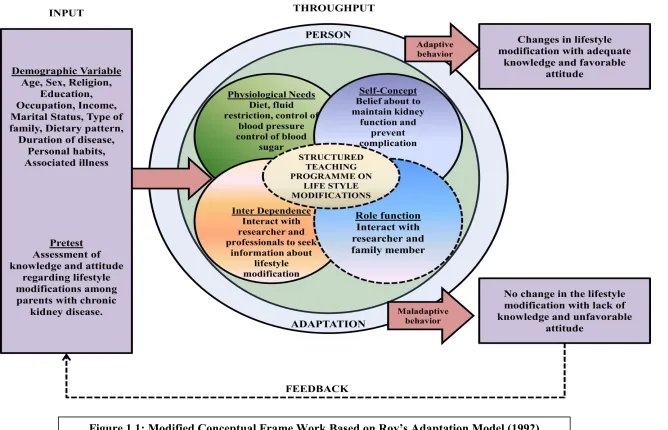
The conceptual framework of the study was decided from modified Roy's adaptation model (1979). Roy points out adaption was a dynamic state of equilibrium involving both high and low response brought by person triggered stimuli. It involves an open system in which stimuli enters from the environment and changes the behavior of a person to adopt condition.
Input
Input consists of stimuli which can come from the environment or within a person. In this study demographic variables age, sex, religion, education, occupation, marital status, family type, dietary pattern, duration of illness, personal habits, associated illness and the knowledge and attitude of lifestyle modifications of chronic kidney disease.
Throughput
an adaptive model. Physiological function, self-concept, role function, and interdependence are involved in adaptation.
Physiologic Function
It involves the body’s basic needs for the patient. Here it refers to diet restriction like low sodium, potassium, protein and phosphorous diet, fluid restriction, control of blood pressure and control of blood sugar.
Self Concept
Self-concepts are about belief and feeling of their body image. It involves maintaining kidney function and preventing complication.
Interdependence
Interdependence refers to interact with researcher and professionals to seek information about lifestyle modifications.
Role Function
This involves the behavior of a person which depends on how a person interacts with the researcher and family members in a given situation. Here the patients interact with the researcher and family members.
Output
CHAPTER- II
REVIEW OF LITERATURE
A literature review surveys scholarly articles, book and other sources relevant to a particular issue, area of research or theory, and by doing so, providing a description, summary and critical evaluation of these works, Literature review is designed to provide an overview of the source which has explored which researching a particular topic and demonstrate to readers, how the research fits into larger field of study (Labaree, 2013)
The review of literature is discussed under the following headings
2.1 Section – A: Literature related to the overall view of chronic kidney disease
2.2 Section – B: Literature related to the lifestyle modifications of chronic kidney disease
2.3 Section – C: Literature related to knowledge and attitude regarding lifestyle
modifications on
chronic kidney disease
2.1 Section
–
A: Literature related to the overall view of chronic kidney
Disease
Kay.S, et.al, (2010) defined renal failure as a clinical syndrome characterized by
and serves as an endocrine organ, secreting such hormones as erythropoietin, rennin, and prostaglandins.
Ilangovan (2012) stated that a chronic kidney disease is a major public health
problem. Chronic diseases are a leading cause of morbidity and mortality in India and other low and middle-income countries, 60% of all deaths occur worldwide due to chronic disease. In India, 521 million deaths occur due to chronic kidney disease in the year 2008 and expected to rise to 7.63 million in 2020 (66.70).
Clyne (2011) stated that patients with chronic kidney disease have a markedly
increased morbidity and mortality from cardiovascular disease and experience a progressive decrease in physical function. The causes of chronic kidney disease are insufficient blood-pressure control, secondary hyperparathyroidism, increased inflammatory activity and a sedentary lifestyle
Ariel Linden (2016) conducted a study on the prevalence of chronic kidney
disease. Chronic kidney disease is found in approximately 20% to 25% in the general population. The chronic kidney disease rate was increased 3 times higher in hospitalization among chronic kidney disease. By 2020, more than 750,000 people in the United States will need dialysis for kidney failure. So there is a need for preventive measures in chronic kidney disease.
Ajay. K. Singh (2012) conducted across 'sectional study among 5588 subjects
kidney disease is 79.5% in the chronic kidney disease group had proteinuria and that early intervention may retard the progression of kidney disease.
George Thomas (2009) stated that aging is the most common risk factor for the
development of high blood pressure and diabetes as well as chronic kidney disease. Nearly one billion people worldwide have high blood pressure and it is expected to increase to 1.56 billion by 2025.
Niina Sandholm (2015) conducted a study to detect genetic variants that might
predispose diabetic women to kidney failure. Their initial study included 3652 Finnish patients with type 1 diabetes. The researchers identified a genetic variant on chromosome 2 that linked with kidney failure in women with type I diabetes but not in men. Additional analysis revealed that also linked with kidney failure in diabetic women in the United Kingdom, the United States, and Italy. So the study concluded that diabetic women with the risk variant had a nearly two-fold increased risk of developing kidney failure compared with diabetic women.
Swarna Soman (2016) conducted a descriptive study to assess the role of
concluded that patients undergoing renal substitutive therapy were affected by depression.
2.2 Section
–
B: Literature related to lifestyle modifications of chronic
kidney disease
Asuman Ugurlu Yildiz (2012) conducted a study on lifestyle education and
counseling on quality of life and renal function in patients with chronic kidney disease. The sample size was 84, quality of life was measured by means of Short Form-36. The education and counseling program focused on behavior style, including exercise and diet issues and also the cessation of smoking and alcohol consumption. The result concluded that patients with chronic kidney disease positively improved their health-related quality of life and some renal functions after the education and counseling.
Suja Abraham (2012) conducted a study to assess the quality of life of patients
on hemodialysis. Fifty patients were selected for the study and randomly divided into two groups, control, and test. Counseling was given to the test group of patients. There was an increase in score in all the four domains (physical, psychological, environmental and social) among the test group and compared with the control group. They found that the psychological domain showed a significant increase in score compared with the controlgroup. The study findings demonstrate that patient counseling plays an important role in improving the quality of life by changing theirpsychological thinking and bringing them toward spirituality.
Sima Maghodasian, et.al, (2012) conducted a case-control study on the lifestyle
centers and clinics in Tabriz, Iran. Demographic data and questionnaire about lifestyle in nutrition, stress, physical activity, and smoking were used to collect the data. The results revealed that physical activity was higher in outpatients whereas smoking was higher in dialysis patients, nutrition and stress were equal in both groups. The study concluded that steps to lifestyle modification were needed for patients with chronic kidney disease.
Nicole Isbel (2013) conducted a study on exercise and lifestyle modification
program on patients with moderate chronic kidney disease. Components included 150 minutes per week of moderate intense exercise as well as group behavior and lifestyle modification sessions. Eighty-three patients were randomized. At the beginning of the study, only 4500 of patients could achieve their age-predicted exercise capacity. Those who participated in the program for 12 months were significantly fit with an 11% increase in their maximal aerobic capacity compared with a 1% decrease in patients receiving usual care. The result showed that the standard care reduces chronic kidney disease patients' risk of dying prematurely from heart disease.
Srinivasan Beddhu (2009) conducted a study on physical activity and mortality
Milav Bhavsar (2013) conducted a retrospective study on the association of mineral and bone disorder levels with chronic kidney disease. The total sample size was 50. 36 (80%) were to have low calcium levels and 39 (86.67%) were to have high phosphorus levels. The result revealed that low calcium and high phosphorus levels are found in patients with chronic kidney disease. So the study concluded that mineral and bone disorder is more common among chronic kidney disease patient and patients need to be taken restricted phosphorus content.
Husin. H. C (2013) conducted a study on the prevalence and correlates of
depression among chronic kidney disease patient in Taiwan, the total sample size was270, structured questionnaire was used for the study that shows the prevalence of depression were 22.6 %. The results are concluded that chronic kidney disease patient with a higher risk of depression.
2.3 Section
–
C: Literature related to knowledge and attitude regarding
life style modification on chronic kidney disease
Kuroki. A (2013) conducted a study on the management of chronic kidney
Thomas. N (2015) conducted a study to assess the knowledge on self-care management among the patients with diabetes at risk of chronic kidney disease. In this study, 15 patients who are at high risk of progressive kidney disease were interviewed. A descriptive research design was utilized. The most important finding from the interview was that most people had an inadequate understanding of the possible risk of kidney disease.
Erick (2014) conducted a study to assess patients knowledge regarding risk
factors, methods which slow progression and complications of chronic kidney disease, on 50 patients. 58% were hypertensive and 16% had a family history of chronic 270, a structured questionnaire was used for the study that shows the prevalence of depression were 22.6 %. The results are concluded that chronic kidney disease patient with a higher risk of depression.
Kuroki. A (2012) conducted a study on the management of chronic kidney
disease and preventing the progression of renal disease. In this study patients with the chronic renal disease were selected, the quasi-experimental research design was adopted. A structured teaching program was given to the patients. The structured teaching program included the following, treating disease worsening conditions like diabetes mellitus, hypertension, anemia etc, and smoking cessation, sodium and potassium restriction, antihypertensive therapy etc. The study report showed that these therapies were effective in preventing the progression of kidney disease in this selected samples.
Thomas. N (2014) conducted a study to assess the knowledge on self-care
study, 15 patients who are at high risk of progressive kidney disease were interviewed. A descriptive research design was utilized. The most important finding from the interview was that most people had an inadequate understanding of the possible risk of kidney disease.
Erick (2012) conducted a study to assess patients knowledge regarding risk
factors, methods which slow progression and complications of chronic kidney disease, on 50 patients. 58% were hypertensive and 16% had a family history of chronic kidney disease, hypertension (36%), diabetes (32%) and smoking (10%) were selected less frequently. 90% of the participants thought that chronic kidney disease increased the risk of death but few thought that chronic kidney disease increased the risk of hypertension, heart attack, and stroke. The study concluded that education is important to prevent risk factor and complications.
Harjo Kaur (2017) conducted a study on the feasibility of a structured group
education session to improve self -management of blood pressure in people with chronic kidney disease, the sample size was 80, and evidence-based structure group educational intervention was given. The study revealed that the structured group education programme was feasible.
Ford (2009) conducted a quasi-experimental study to find out the effect of diet
hyperphosphatemia. The study concluded that an educational intervention can bring about a desirable change in knowledge among hemodialysis patients regarding diet.
Mehmet (2012) conducted a study to assess the knowledge of medication for
chronic kidney disease among chronic kidney disease patients and to evaluate the impact of education on their knowledge of medication. The study population consisted of 90 patients were randomized into 2 groups. Baseline medication knowledge of these patients was assessed by using medication knowledge questionnaire developed for the study. The result showed that medication knowledge of the chronic kidney disease patients was extremely poor regarding the name, indication and dosage regimen of their medication. The study concluded that the need for the continued education for the chronic kidney disease patient for the better understanding of the medications they use.
Mason. J (2015) conducted a study to assess the effectiveness of video assisted
educational intervention in chronic kidney disease management. The total sample size was 100. The quasi-experimental research design was applied. A structured educational intervention was given through video. The study result showed that there was a significant improvement in knowledge and attitude among chronic kidney disease patients. The study concluded that video-assisted educational intervention was effective in chronic kidney disease patients.
Apple. L. J (2013) conducted a study to evaluate the effectiveness of the video
CHAPTER III
RESEARCH METHODOLOGY
3.1 INTRODUCTION
The methodology is the way to solve the problem systemically that includes the step of procedure and strategies of the data (Polit and Beck). It includes research approach, research design, the setting of the study, population, sampling size and sampling technique, criteria for the selection of the sample, description of the tool, content validity, reliability, pilot study, data collection procedure and plan for data.
3.2 RESEARCH APPROACH
The quantitative research approach was selected to assess the effectiveness of structured teaching programme on knowledge and attitude regarding lifestyle modifications among patients with chronic kidney diseas .
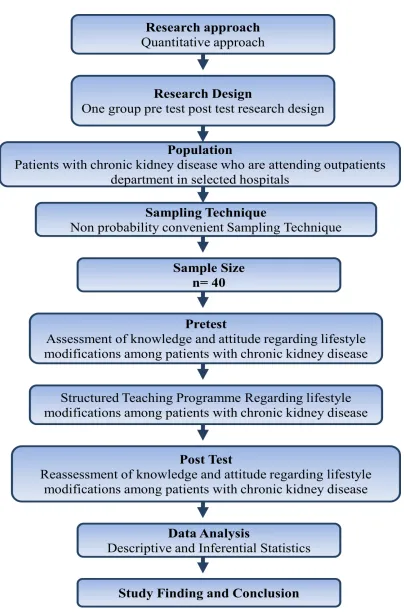
3.3 RESEARCH DESIGN
One group pretest, the post-test design was adopted for the present study. Q1 X Q2
Q1: Pretest assessment
Figure: 3.1: The Schematic Representation of Research Design
3.4 RESEARCH VARIABLES
The Independent variable was video assisted teaching programme regarding lifestyle modifications. The dependent variables were knowledge and attitude regarding lifestyle modifications among patients with chronic kidney disease. Influencing variables were demographic variables.
[image:35.612.108.561.453.663.2]3.5 THE SETTING OF THE STUDY
The study was conducted among patients with chronic kidney disease in Balaji hospital, Coimbatore, which is a 150 bedded Hospital, consists of 6 bedded dialysis units with the outpatient coverage of 150 patients per day. This is a well-equipped hospital for kidney disorder patients with inpatient and outpatient department.
3.6 POPULATION
The population of the study includes patients with chronic kidney disease who are attending the outpatient department during the period of data collection.
3.7 SAMPLES AND SAMPLE SIZE
The sample size is 40 patients with chronic kidney disease.
3.8 CRITERIA FOR THE SELECTION OF SAMPLING
3.8.1 Inclusion Criteria
The patient's age more than 20 years
Patients diagnosed with chronic kidney disease within l-2years
Both female and male patients with chronic kidney disease
Patients who know either Tamil or English
Patients who can read and write
3.8.2 Exclusion Criteria
Patients who are not willing to participate in the study
Patients who are critically ill
3.9 SAMPLING TECHNIQUE
Non -probability convenient sampling technique was used for selecting the samples.
3.10 DESCRIPTION OF THE TOOL
The researcher had developed a structured questionnaire after reviewing of the literature to assess the knowledge and attitude regarding lifestyle modifications among patients with chronic kidney disease. It consists of 3 sections.
Section -A: Demographic Variables
Demographic variables, which include sample number, age, sex, religion, education, occupation, marital status, family income, type of family, dietary pattern, body built, duration of disease, personal habits, associated illness.
Section B: Structured Knowledge Questionnaire
It contains 30 multiple choice questions to assess the level of knowledge regarding the lifestyle modifications in the areas of a brief anatomy of kidney, incidence, etiology, signs and symptoms, diagnostic tests, management and lifestyle changes like healthy kidney diet, exercise, smoking cessation, avoidance of alcohol, relaxation technique. Each correct answer carries one mark, and the wrong answer carries zero marks. The possible maximum score was30, the possible minimum score was 0. Knowledge questions were prepared in the English language.
Section- C: Structured Attitude Questionnaire
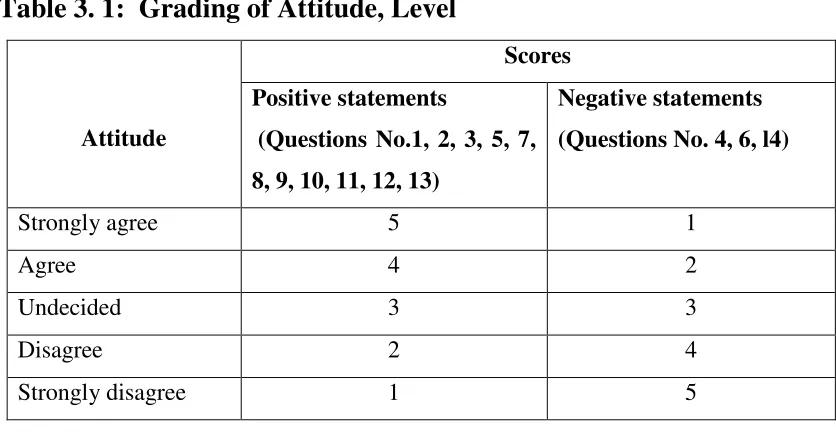
Table 3. 1: Grading of Attitude, Level
Attitude
Scores Positive statements
(Questions No.1, 2, 3, 5, 7, 8, 9, 10, 11, 12, 13)
Negative statements (Questions No. 4, 6, l4)
Strongly agree 5 1
Agree 4 2
Undecided 3 3
Disagree 2 4
Strongly disagree 1 5
3.11 TOOL VALIDITY AND RELIABILITY
3.11.1 Content Validity
The tool was given to 5 experts in the field of nursing and medicine for content validity. All comments and suggestion given by experts were duly considered and corrections were made after discussion with the research guide. The modifications were incorporated in the preparing of final tool.
3.11.2 Reliability
The reliability of the tool was obtained by the Spearman split half method to make sure the reliability of the tool. The value of knowledge scorer was 0.93 and for attitude, score was 0.9. This tool was highly reliable.
3.12 PILOT STUDY:
knowledge and attitude. Structured teaching programme was given for 45 minutes and the post-test was conducted on the 7thday. The post-test score showed a significant increase in the knowledge and attitude regarding the lifestyle modifications among patients with chronic kidney disease. The pilot study revealed that the present study was feasible to conduct.
3.13 DATA COLLECTION PROCEDURE
Formal permission was obtained from the Managing Director of Balaji Hospital, Coimbatore.
The study was carried out for a period of four weeks from 1st January 2018 to30th January2018. Confidentiality and anonymity of the subjects were maintained. Informed consent was obtained from the respondent and the respondent was selected on the basis of the selection criteria.
On the first day, demographic data were collected by a structured questionnaire and pre-test was conducted to assess the knowledge and attitude regarding lifestyle modifications among patients with chronic kidney disease by using a questionnaire. After the pre-test, structured teaching was given for 45 minutes about lifestyle modifications among patients with chronic kidney disease. The patients were encouraged to clarify their doubts. Post-test was conducted on the 15thday by using the same questionnaire to assess the effectiveness of structured teaching programme on improving the knowledge and attitude regarding lifestyle modifications. At the end of the session, booklets were distributed to the patients, those who have participated in the teaching programme.
3.14 PLAN FOR DATA ANALYSIS
the relationship between knowledge and attitude of reading lifestyle modifications among patient with chronic kidney disease and the χ2 test was used to find out the association between the selected demographic variables with the pre-test knowledge and attitude scores.
3.15 ETHICAL CONSIDERATION
CHAPTER-IV
DATA ANALYSIS AND INTERPRETATIONS
This chapter deals with the analysis and interpretation of the data collected from patients with chronic kidney disease in St. Mary's Hospital, Coimbatore regarding lifestyle modifications.
The findings, based on the descriptive and inferential statistical analysis tabulated as follows
Section- I: Distribution of demographic variables of patients with chronic kidney
disease.
Section- II: Description of statistical value of pretest and post-test knowledge scores
regarding lifestyle modifications among patients with chronic kidney disease.
Section – III: Description of statistical value of pretest and posttest attitude scores
regarding lifestyle modifications among patients with chronic kidney disease.
Section – IV: Correlation of pretest and posttest knowledge and attitude scores regarding
lifestyle modifications among patients with chronic kidney disease
Section-V: Association of selected demographic variables with pre-test scores of
Section-VI: Association of selected demographic variables with pre-test scores of attitude regarding lifestyle modifications among patients with chronic kidney disease.
SECTION – I
DISTRIBUTION OF DEMOGRAPHIC VARIABLES OF PATIENTS WITH
[image:43.612.119.531.407.693.2]CHRONIC KIDNEY DISEASE
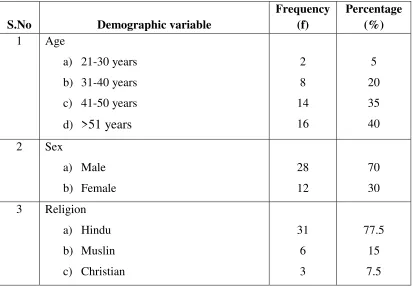
Table: 4.1 Frequency and percentage distribution of samples with the selected
Demographic variables
n=40
S.No Demographic variable
Frequency (f)
Percentage (%)
1 Age
a) 21-30 years b) 31-40 years c) 41-50 years d) >51 years
2 8 14 16 5 20 35 40 2 Sex
a) Male b) Female 28 12 70 30 3 Religion
4 Education a) Illiterate b) Primary Secondary Graduate/diploma 2 18 12 8 5 45 30 20 5 Occupation
a) Unemployed b) Self-employed
c) Government employee d) Private employee e) Coolie worker
10 8 5 11 06 25 10 12.5 27.5 15 6 Income
a) < Rs. 5000 b) Rs. 5001 - 15000 c) Rs. 15001 - 25000 d) >Rs - 25001
10 9 11 10 25 22.5 27.5 25 7 Marital status
a) Married b) Unmarried c) Others 34 4 2 85 10 5 8 Types of family
a) Joint family b) Nuclear
12 28
35 65 9 Dietary pattern
a) Vegetarian b) Non vegetarian
6 34
10 Body built a) Thin b) Moderate c) Obese d) Very obese
10 20 7 3 25 50 17.5 7.5
11 Duration ofdisease a) 1-5 months b) 6-10 months c) 1 1-15 months d) 16-24 months
0 5 14 21 0 12.5 35 52.5 12 Personal habits
a) Alcohol b) Smoking
c) Alcohol and smoking d) Tobacco chewing e) None of the above
10 9 7 0 14 25 22.5 17.5 0 35 13 Associated illness
a) Diabetes b) Hypertension
c) Cardiovascular disease d) Obesity
e) None of the above
Table 4.1 1 shows the description of demographic variables of chronic kidney disease patient.
Among the respondents, 2 (5%) were aged between 21-30 years, 8 (20%) were aged between 3- 40 years, 16(40%) were aged between 41-50 years, 14 (35%) were >50 years of age.
Regarding gender, the respondents 28(70%) were males and 12(30%)were females.
Considering the religion, 31(77.5%) were Hindu, 6(15%) were Muslims and 3(7.5%) were Christian.
Regarding education, 2(5%) were illiterate, 18(45%) had primary education, 12(30%) had secondary education and 8(20%) were graduates and diploma holders. Regarding occupation 10 (25%) were unemployed, 8 (20%) were self-employed, 5(12.5%) were government employees, 11 (27.5%) were private employees and 6(15%) were coolie workers.
Regarding the monthly income of the family 10 (25%) were earning more than Rs. >5000, 9 (22.5%) were earning between Rs. 5001-15000, 11(27.5%) were earning between Rs. 15001-25000, 10 (25%) were earning more than Rs. 25001.
Regarding marital status 34 (85%) were married, 4 (10%) were unmarried, 2(5%) were others.
Regarding the type of family 12 (30%) were belongs to the joint family, 28 (70%) belonged to a nuclear family.
Regarding dietary pattern 6(15%) were vegetarian, 34(85%) were non vegetarian. Regarding body built 10(25%) had a thin body built, 20(50%) were moderately built, 7(17.5%) were obese and 3(7.5%) were very obese.
With regards of the duration of chronic kidney disease in 1-5 months were no cases, 5(12.5%) were having during of 6-10 months, 14(3500) were having during of 11-15 months, 21 (52.5%) were having during of 16-24 months.
4.1.1 A Bar diagram Showing distribution of demographic Variables according to the Age 5%
20%
35%
40%
0% 5% 10% 15% 20% 25% 30% 35% 40% 45%
21-30 years 31-40 years 41-50 years 50 years
Age
4.1.2 Bar diagram Showing distribution of demographic Variables according to the Sex 70%
20%
0% 10% 20% 30% 40% 50% 60% 70% 80%
Male
Sex
FemaleMale
4.1.3 Bar diagram Showing distribution of demographic Variables according to the Religion 78%
15%
8%
0% 10% 20% 30% 40% 50% 60% 70% 80% 90%
Hindu Muslim Christian
Religion
4.1.4 Bar diagram Showing distribution of demographic Variables according to the Education 5%
45%
30%
20%
0% 5% 10% 15% 20% 25% 30% 35% 40% 45% 50%
Illitrate Primary Secondary Graduate/Diploma
Education
Illitrate
Primary
Secondary
4.15 Bar diagram Showing distribution of demographic Variables according to the Occupation 25%
20%
13%
27%
15%
0% 5% 10% 15% 20% 25% 30%
Unemployed Self employed Government
employmee
Private employee Cooli
Occupation
Unemployed Self employed
Government employmee Private employee
4.1.6 Bar diagram Showing distribution of demographic Variables according to the Income 25%
23%
27%
25%
0% 5% 10% 15% 20% 25% 30%
< Rs. 5000 Rs. 5001 - 15000 Rs. 15001 - 25000 >Rs - 25001
Income
4.17 Bar diagram Showing distribution of demographic Variables according to the marital status 85%
10%
5%
0% 10% 20% 30% 40% 50% 60% 70% 80% 90%
Married Unmarried Others
Marital Status
4.1.8 Bar diagram Showing distribution of demographic Variables according to the Type of family 70%
30%
0% 10% 20% 30% 40% 50% 60% 70% 80%
Joint family Nuclear family
Type of family
Joint family
SECTION – II
[image:56.595.96.537.280.375.2]Description of Statistical Value of Pre-test and Post-test knowledge Scores Regarding lifestyle modifications Among Patients with Chronic Kidney Disease
Table 4.2: Mean, standard deviation and t” value of Pre-test and Post-test knowledge
Scores Regarding lifestyle modifications Among Patients with Chronic Kidney Disease
(n=40)
S.No Knowledge Mean SD ‘t’ value Level of significance 1 Pre-test 15.77 3.9
16.87* 0.05* 2 Post-test 22.82 2.97
*significant
Figure 4.2.1 Distribution of Pretest and Post Test Knowledge Mean Scores Regarding Life Style Modification Among Patients with Chronic
KidneyDisease
15.77
22.82
0 5 10 15 20 25
Pre test Post test
M
ean
Knowledge
SECTION – II
Description of Statistical Value of Pre-test and Post-test attitude Scores
Regarding lifestyle modifications Among Patients with Chronic Kidney Disease.
Table 4.3Mean, standard deviation and t” value of Pre-test and Post-test attitude
Scores Regarding lifestyle modifications Among Patients with Chronic Kidney Disease.
(n=40)
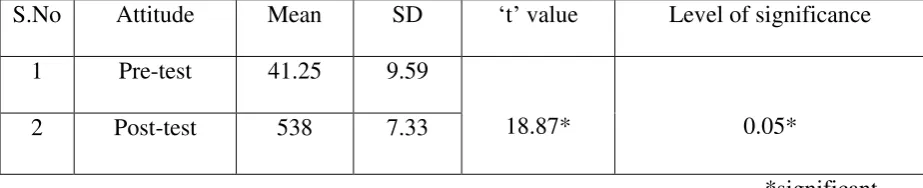
S.No Attitude Mean SD ‘t’ value Level of significance 1 Pre-test 41.25 9.59
18.87* 0.05* 2 Post-test 538 7.33
[image:58.595.84.546.280.374.2]*significant
Figure 4.3.1: Distribution of Pre-test and Post Test Attitude Mean Scores Regarding Life Style Modification Among Patients with Chronic
KidneyDisease
41.25
53.8
0 10 20 30 40 50 60
Pre test Post test
M
ean
Attitude
SECTION-IV
Correlation of pretest scores of the knowledge and attitude regarding life style
modification among patients with chronic kidney disease
Table.4.4 : Mean, standard deviation and correlation of pretest scores of the knowledge
and attitude regarding life style modification among patients with chronic kidney disease
(n=40)
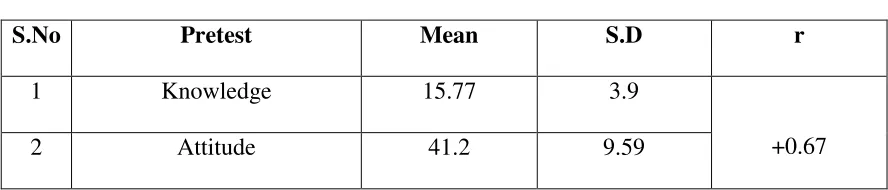
S.No Pretest Mean S.D r
1 Knowledge 15.77 3.9
+0.67 2 Attitude 41.2 9.59
[image:60.612.102.546.254.349.2]Table. 4. 5Mean, standard deviation and correlation of post test scores of the knowledge and attitude regarding life style modification among patients with chronic kidney disease.
(n=40)
S.No Post test Mean S.D r
1 Knowledge 22.82 2.97
[image:61.612.102.547.158.248.2]+0.73 2 Attitude 53.5 7.33
SECTION – V
Association of Demographic Variables with Pretest Scores of Knowledge Regarding
[image:62.612.102.549.243.717.2]Life Style Modifications Among Patients with Chronic Kidney Disease.
Table.4.6: Association of pretest scores of knowledge regarding life style modifications
among patients with chronic kidney disease with selected demographic variables.
n=40
S.No Demographic variable
Above Mean
Below Mean
Degrees of
Freedom χ2
1 Age
a. 21-30 years b. 31-40 years c. 41-50 years d. >51 years
1 4 6 8 1 4 10 6
3 1.421
2 Sex
a. Male b. Female 12 7 16 5
1 0.78
3 Religion a. Hindu b. Muslin c. Christian 15 1 2 16 5 1
2 2.63
4 Education a. Illiterate b. Primary c. Secondary d. Graduate/diploma 0 5 6 8 2 13 6 0
5 Occupation
a. Unemployed b. Self-employed
c. Government employee d. Private employee e. Coolie worker
5 3 3 6 2 5 5 2 5 4
4 1.35
6 Income
a. < Rs. 5000 b. Rs. 5001 - 15000 c. Rs. 15001 -25000 d. >Rs - 25001
5 4 4 6 5 5 7 4
3 1.9
7 Marital status a. Married b. Unmarried c. Others 15 2 2 19 2 0
2 2.34
8 Types of family a. Joint family b. Nuclear
7 12
5 16
1 2.20
9 Dietary pattern a. Vegetarian b. Non vegetarian
3 16
3 8
1 0.95
10 Body built a. Thin b. Moderate c. Obese d. Very obese
5 11 3 0 5 9 4 3
11 Duration ofdisc\ease a. 1-5 months b. 6-10 months c. 11-15 months d. 16-24 months
0 2 7 10 0 3 7 11
3 0.13
12 Personal habits a. Alcohol b. Smoking
c. Alcohol and smoking d. Tobacco chewing e. None of the above
6 1 4 0 8 4 8 3 0 6
4 6.1
13 Associated illness a. Diabetes b. Hypertension
c. Cardiovascular disease d. Obesity
e. None of the above
6 8 2 0 3 5 7 6 0 3
4 1.93
[image:64.612.102.550.66.452.2]*significant Table. 4. 6 shows the association of knowledge with demographic variables with pretest knowledge score on lifestyle modification among patients with chronic kidney disease.
The obtained "χ2”
SECTION – VI
Association of Demographic Variables with Pretest Scores of Attitude Regarding
[image:65.612.100.552.234.732.2]Life Style Modifications Among Patients with Chronic Kidney Disease.
Table.4.7Association of pretest scores of an Attitude regarding life style modifications
among patients with chronic kidney disease with selected demographic variables.
S.No Demographic variable
Above Mean
Below Mean
Degrees of
Freedom χ2
1 Age
a. 21-30 years b. 31-40 years c. 41-50 years
d. >51 years
2 4 9 5 0 4 7 9
3 3.39
2 Sex
a. Male b. Female 15 5 13 7
1 0.46
3 Religion
a. Hindu b. Muslin c. Christian 16 3 2 15 3 1
2 0.25
4 Education
a. Illiterate b. Primary c. Secondary d. Graduate/diploma 0 9 6 5 2 9 6 3
5 Occupation
a. Unemployed
b. Self-employed
c. Government employee
d. Private employee
e. Coolie worker
3 3 3 8 3 7 5 2 3 3
4 2.73
6 Income
a. < Rs. 5000 b. Rs. 5001 - 15000 c. Rs. 15001 -25000 d. >Rs - 25001
4 6 3 7 6 3 8 3
3 5.25
7 Marital status
a. Married b. Unmarried c. Others 17 3 0 17 1 2
2 3.0
8 Types of family
a. Joint family b. Nuclear
6 14
6 14
1 0
9 Dietary pattern
a. Vegetarian b. Non vegetarian
2 18
4 16
1 0.76
10 Body built
a. Thin b. Moderate c. Obese d. Very obese
4 12 4 0 6 8 3 3
11 Duration ofdisc\ease
a. 1-5months b. 6-10months c. 11-15 months d. 16-24 months
0 4 7 9 0 1 7 12
3 2.22
12 Personal habits
a. Alcohol b. Smoking
c. Alcohol and smoking d. Tobacco chewing e. None of the above
6 5 4 0 5 4 4 3 0 9
4 1.78
13 Associated illness
a. Diabetes b. Hypertension
c. Cardiovascular disease d. Obesity
e. None of the above
4 7 4 0 5 7 8 4 0 1
4 3.52
[image:67.612.100.552.68.436.2]CHAPTER V
FINDINGS AND DISCUSSION
This is a non-experimental study to assess the effectiveness of structured teaching programme on knowledge and attitude regarding lifestyle modifications among patients with chronic kidney disease. The data were analyzed using descriptive and inferential statistics. The result of the study was discussed according to the objective.
The first objective of the study was to assess the level of knowledge and attitude regarding life style modifications among patients with chronic kidney disease
The pre-test score of knowledge was 15.77 and post-test was 22.82. The pretest score of the attitude was 41.25 and post-test was 53.8. It shows a significant difference in pretest and post-test scores. It implies that there were an inadequate knowledge and attitude on lifestyle modifications among patients with chronic kidney disease.
A study was conducted by Tamizuddin (2010) showed that 55% of the persons with chronic kidney disease had inadequate knowledge and attitude regarding lifestyle modifications and prevention of complication among patients with chronic kidney disease.
The second objective of the study was to administer a video assistedstructured teaching programme on lifestyle modifications among patients with chronic kidney disease
display and booklets were distributed. The structured teaching programme consists of aspects like diet therapy, exercise therapy, relaxation techniques, avoidance of alcohol, smoking preventingcomplication. The duration of the teaching programme was 45 minutes and it was found to be effective and they communicated and clarified their doubts related to lifestyle.
A similar study conducted by Michelle. M. Estrella (2014) to evaluate the effectiveness of structured teaching programme on management of chronic kidney disease. Post-test was conducted after a week. It revealed that the teaching programme was effective in improving the knowledge and attitude after the teaching programme.
The third objective was to assess the effectiveness of video assisted structured teaching programme on the level of knowledge and verbal responses structured interview schedule for attitude regarding lifestyle modifications among patients with chronic kidney disease.
The pre-test means score for the knowledge was 15.77 and post-test mean score Was 22.82. Thereby the 't' value of knowledge was 16.87. The pre-test mean score for attitude was 46.3 and the post-test mean score was 57.1. Thereby the ‘t’ value for attitude was 18.87.
Both the ‘t’ value obtained from knowledge and attitude were higher than the table value at 0.05 level of significance. This reveals that there was a significant improvement in knowledge and attitude about lifestyle modifications among patients with chronic kidney disease. This, in turn, reveals that the structured teaching programme was effective.
concluded that structured educational intervention was effective in improving knowledge and attitude among chronic kidney disease patients
The fourth objective of the study was to find out the correlation between knowledge and attitude regarding life style modifications among patients with chronic kidney disease
The Karl Pearson's Correlation Coefficient ‘r' was used to find out the relationship between knowledge and attitude regarding lifestyle modifications among patient with chronic kidney disease. The ‘r' value of pre-test is + 0.67 and post-test is +0.73. It reveals that there is an improvement in knowledge which significantly influences the attitude of the chronic kidney disease patients.
Monro (2009) conducted a study to evaluate the effectiveness of teaching programme on lifestyle modifications among patients with chronic kidney disease. The studyresultshows that the patient knowledge is increased when the attitude is increased.
The fifth objective of the study was to find out the association between knowledge and attitude regarding lifestyle modifications among patients with chronic kidney disease with selected demographic variables.
In the demographic variables, education had a significant relation to pretest knowledge. All other demographic variables had no significant relationship with pre-test knowledge regarding lifestyle modifications among patients with chronic kidney disease.
The demographic variables had no significant relationship with pre-test attitude regarding lifestyle modifications among patients with chronic kidney disease.
CHAPTER - Vl
SUMMARY, CONCLUSION, NURSING IMPLICATIONS,
LIMITATIONS AND RECOMMENDATIONS
6.1 SUMMARY
This study was conducted to determine the effectiveness of video assisted teaching programme on knowledge and attitude regarding lifestyle modifications among patients with chronic kidney disease.
6.1.1 Objectives
To assess the level of knowledge and attitude regarding lifestyle modifications among patients with chronic kidney disease.
To administer a video assisted structured teaching programme on lifestyle modifications among patients with chronic kidney disease.
To assess the effectiveness of video assisted structured teaching programme on the level of knowledge and verbal responses structured interview schedule for attitude regarding lifestyle modifications among patients with chronic kidney disease.
To find out the correlation between knowledge and attitude regarding lifestyle modifications among patients with chronic kidney disease.
6.1.2 Hypothesis:
H1: There will be a significant difference between pretest and post-test level of knowledge and attitude scores regarding lifestyle modifications among patients with chronic kidney disease.
H2: There will be a significant correlation between the pre-test level of knowledge and attitude scores regarding lifestyle modifications among patients with chronic kidney disease.
H3: There will be a significant correlation between post-test level of knowledge and attitude scores regarding lifestyle modifications among patients with chronic kidney disease.
H4: There will be a significant association between pretest level of knowledge and attitude scores regarding lifestyle modifications among patients with chronic kidney disease with their selected demographic variables.
The major finding of the Study was as Follows
The pretest mean value of knowledge was 15.77
The post-test mean value of knowledge was-22.82
The pre-test mean value of attitude was 41.25
The post-test mean value of attitude was 53.8
The obtained ‘t’ value for comparison of knowledge score at p<0,05 level wa