A STUDY TO ASSESS THE EFFECTIVENESS OF STRUCTURED
TEACHING PROGRAM ON KNOWLEDGE REGARDING
ADJUSTMENT DISORDER AND ITS MANAGEMENT AMONG
PARENTS OF MIDDLE SCHOOL CHILDREN AT SELECTED
SCHOOL, ERODE.
By
Reg No: 301632551
Dissertation submitted to
The Tamilnadu Dr. M.G.R. Medical University, Chennai.
In partial fullfillment of the requirement for the degree of
Master of Science
In
Department of Mental Health Nursing
ANBU COLLEGE OF NURSING
MGR NAGAR,KOMARAPALAYAM
ENDORSEMENT BY THE HEAD OF THE INSTITUTION
This is to certify that the dissertation entitled “A STUDY TO ASSESS THE EFFECTIVENESS OF STRUCTURED TEACHING PROGRAM ON KNOWLEDGE REGARDING ADJUSTMENT DISORDER AND ITS MANAGEMENT AMONG PARENTS OF MIDDLE SCHOOL CHILDREN AT SELECTED SCHOOL, ERODE” is a bonafied research work of RegNo: 301632551 , M.SC (N)-II year, 2017-2018.
PROF. VIJAYALAKSHMI.K M.SC (N), PRINCIPAL,
ANBU COLLEGE OF NURSING,
A STUDY TO ASSESS THE EFFECTIVENESS OF STRUCTURED
TEACHING PROGRAM ON KNOWLEDGE REGARDING
ADJUSTMENT DISORDER AND ITS MANAGEMENT AMONG
PARENTS OF MIDDLE SCHOOL CHILDREN, AT SELECTED
SCHOOL, ERODE.
By
301632551
Research Advisor
:……….Prof. VIJAYALAKSHMI.K M.SC (N), Principal,
Anbu College Of Nursing,
Komarapalayam.
Clinical speciality advisor : ……….
MS. USHA DEVI.S M.SC (N),Assistant professor and Head of the Department,
Department of Mental Health Nursing,
Anbu College Of Nursing,
Komarapalayam.
A Dissertation submitted to The Tamil Nadu Dr.M.G.R Medical University, Chennai. In
partial fulfillment of the requirement for the Degree of Master of Science in Nursing.
CERTIFIED THAT THIS IS THE BONAFIED WORK OF
301632551
ANBU COLLEGE OF NURSING
A DISSERTATION SUBMITTED TO THE TAMILNADU DR. M.G.R. MEDICAL UNIVERSITY, CHENNAI. IN PARTIAL FULLFILLMENT OF THE REQUIREMENT FOR THE DEGREE OF MASTER OF SCIENCE IN NURSING MENTAL HEALTH NURSING
1. INTERNAL EXAMINER:……….
ACKNOWLEDGEMENT
The reverence of the Lord is the beginning of all wisdom and understanding. ~Psalms 111:10.
I praise and thank the Lord Almighty for the blessing which helped me a lot to complete this study.
It is a great pleasure to express my sincere and respectful regard to our honorable
Shri. Srinivasan, Chairman and Managing Trustee, Anbu Educational Institution, who gave opportunity to complete my master degree in this esteemed institution.
I wish to express my profound and sincere and heartfelt gratitude to the great
personality Prof. Mrs. Vijayalakshmi. K, M.Sc (N), Principal, for her encouragement, patience, valuable suggestions and guidance to complete this study.
I extend my gratitude to Prof. Indira. S, M.Sc (N), Vice-Principal, for her expert guidance, valuable suggestion to bring this study in a successful way.
My words are inadequate to thank my clinical specialty guide Ms. Usha Devi. S, M.Sc (N), Head of the department of Mental Health Nursing, for motivating me to go
ahead in this project. She has given me advice, feedback, valuable guidance and
encouragement which enabled me to accomplish this task.
My heartfelt thanks and gratitude to Ms. Heera Betti. A, M.Sc (N), our Class coordinator, Head of the Department of Medical Surgical Nursing, for her immense help
and moral support, timely help, essential motivation throughout the study.
My heartfelt thanks to Dr. Sampooranam, Ph D, Reader, Department of Mental Health Nursing, Dhanvantri College Of Nursing, Namakkal. Mrs. Naganandini. R, M.Sc (N), Associate professor and HOD of Mental Health Nursing, Vinayaka Mission
Annapurna college of Nursing. Mrs. Muthulakshmi. S, M. Sc (N), M. Sc (psychology), Assistant Professor, vellalar college of Nursing, Tindal, Erode for their valuable
suggestions and validating the content.
I extend my sincere thanks to Mrs.Tamilarasi.M.A, M.A, B.Ed, Head Mistress, Panchayath Union Middle School, Mathur, for giving opportunity to collect data from the samples.
I extend my hearty thanks to all the parents who have participated in this study and co-operated with me to carry out my study in a successful manner.
I express my gratitude to the office staff and library staff for their kind co-operation to complete the study.
I wish to express my sincere thanks to Prof. Subash, statistician, who deserves a word of special thanks for his guidance rendered in this study for statistical analysis and
interpretation of data.
My indebted thanks to Mr. Parthiban. S, B.A, who spend his precious time for editing the tool in both Tamil and English in his busy schedule.
I express my sincere thanks to my beloved Husband Mr. Vijayamoorthy. N for his encouragement, love, financial support, hope and joy instilled in me that made this
work in a present reality.
I express my sincere thanks to my Sisters and Brothers for their prayer, support and their help and encouragement all my ups and downs during my study. I am really
blissful to dedicate this dissertation to my family.
A word of thanks goes to our colleagues for their help and support.
My gratefulness extended to all those who have directly and indirectly helped me
in the completion of this work.
ABSTRACT
Background:
Early adolescence might be broadly considered to stretch between the ages of 10 and 14. They are otherwise called as middle school children. Adolescence is widely recognized as a period of social, religious, political, and vocational adjustments as well as
a period of striving for increasing emotional and financial independence from parents. In
early adolescence period the children should undergone dramatic changes in all the
aspects. Because of this change the children not able to adjust with their life. It is the
responsibility of everyone to help the children. Family plays a vital role. So it is
important to educate the parents.
Objectives:
To assess the effectiveness of structured teaching program on knowledge
regarding adjustment disorder and its management among middle school children
parents.
Methods of Study:
An experimental study was conducted to determine the level of knowledge
regarding adjustment disorder among parents of middle school children in panchayath
union middle school at mathur, Erode. The research design was one group pre test and
post test experimental design. The sample size was 50, purposive sampling technique was
used to select the people of parents of middle school children.
Major Finding of The Study:
From the finding of the study pre test 27 (54%) had inadequate knowledge, 23
(46%) had moderate knowledge and none of them had adequate knowledge. during post
them had inadequate knowledge. Comparison of mean and standard deviation score of
level of knowledge and effectiveness of structured teaching program among parents of
middle school children during pre-test and post-test. In parents pre test mean level of
knowledge score was 10 with the standard deviation of 3.68 and post test mean level of
knowledge score was 19.92 with the standard deviation of 3.77. The mean difference
between the pre test and post test value was 33.18. The paired “t” test value of level of
knowledge was 19.16 in the parents. the statistically significant value was P<0.05. It is
interpreted that structured teaching program can improve the level of knowledge
regarding adjustment disorder. Association of the demographic variables with the level of
knowledge among parents of middle school children. The chi square test shown that there
was no significant association between the selected demographic variables of gender of
children, religion, marital status, relationship with their children, source of information
and there was a significant association between the age of the children, gender of the
parents, educational status of father and mother, occupational status of father and mother,
family income per month, residential area, sharing of personal problem with their parents,
problematic students should be helped.
Conclusion:
Based on the findings mean post test knowledge level was higher than the mean
pre test knowledge level. This result indicates structured teaching program was found to
be significantly effective in improving the knowledge level of the parents regarding
TABLE OF CONTENT
CHAPTER
CONTENT
PAGE
NO
I INTRODUCTION 01-15 Need for study 05
Statement of the problem 10
Objectives
10
Hypothesis
10
Operational definitions
11
Conceptual framework based on Modified Ludwig Von Bertalanffy (1969).
13
II REVIEW OF LITERATURE
16-31
Studies related to incidence, prevalence, and risk factors for adjustment disorder
16
Studies related to knowledge, attitude and perception towards adjustment disorder among parents
27
Studies related to structure teaching program on adjustment disorder among early adolescence
30
III METHODOLOGY 32-42
Research approach 32
Research design 32
Setting of the study 34
Variables 33
CHAPTER
CONTENTS
PAGE
NO
Sample 35
sample size 37
sample technique 37
Criteria for sample selection 37
Development of the tool 38
Description of the tool 39
Validity 40
Reliabillity 41
Method of data collection 42
Plan for data analysis 42
IV DATA ANALYSIS AND INTERPRETATION 43-64
Description of the samples according to the
demographic variables 45
Data on effectiveness of level of knowledge regarding adjustment disorder among parents before and after using structured teaching program.
61
Find out the association between the post test scores of level of knowledge among parents and their demographic variables
63
V DISCUSSION,SUMMARY,CONCLUSION,
IMPLICATIONS AND RECOMMENDATION 65-72
REFERENCES 73
LIST OF TABLES
S.NO
TITLE
PAGE
NO
3.1 Research design 33
3.2 Interpretation of level of knowledge on adjustment disorder 40
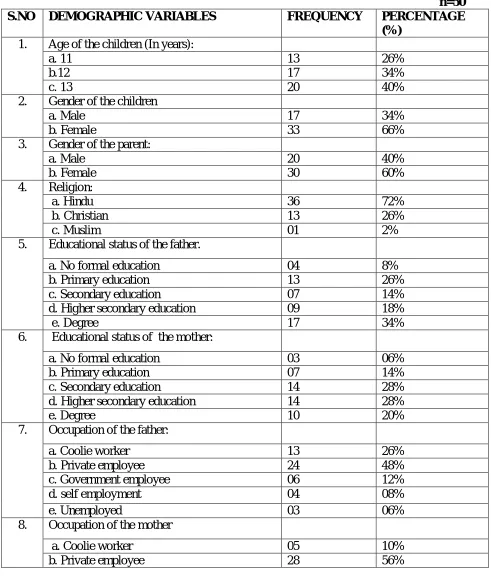
4.1 Frequency and percentage distribution of parents according to their demographic variables
45
4.2 Frequency and percentage distribution of pre and post test scores on knowledge level among parents
59
4.3 Paired “t” test value of pre test and post test scores of knowledge level among parents
61
4.4 Area wise comparision of mean, standard deviation and mean percentage of parents
62
4.5 Chi square values of post test scores adequate knowledge among parents and their selected demographic variables
LIST OF FIGURES
FIGURE
NO
TITLE
PAGE NO
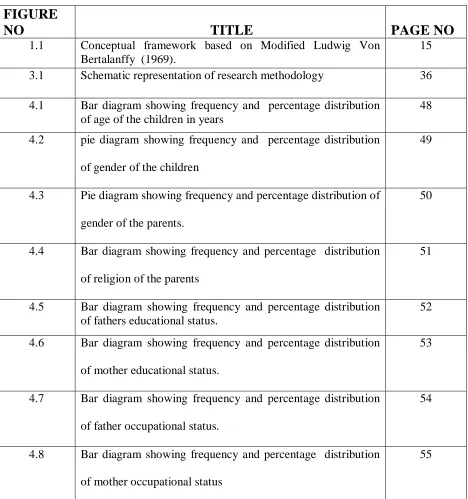
1.1 Conceptual framework based on Modified Ludwig Von Bertalanffy (1969).
15
3.1 Schematic representation of research methodology 36
4.1 Bar diagram showing frequency and percentage distribution of age of the children in years
48
4.2 pie diagram showing frequency and percentage distribution
of gender of the children
49
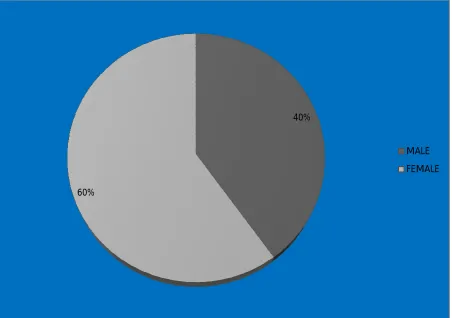
4.3 Pie diagram showing frequency and percentage distribution of
gender of the parents.
50
4.4 Bar diagram showing frequency and percentage distribution
of religion of the parents
51
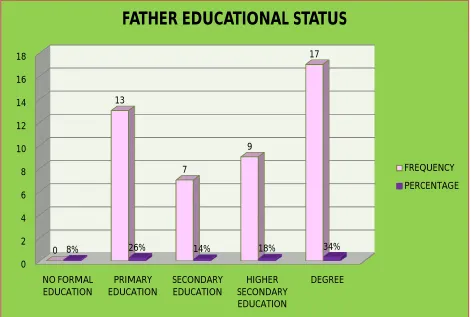
4.5 Bar diagram showing frequency and percentage distribution of fathers educational status.
52
4.6 Bar diagram showing frequency and percentage distribution
of mother educational status.
53
4.7 Bar diagram showing frequency and percentage distribution
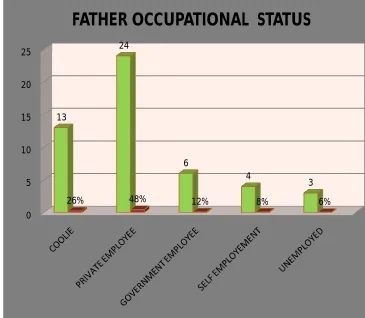
of father occupational status.
54
4.8 Bar diagram showing frequency and percentage distribution
of mother occupational status
FIGURE
NO
TITLE
PAGE NO
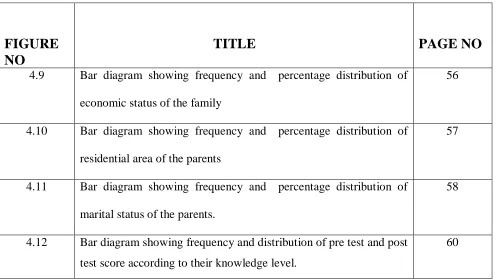
4.9 Bar diagram showing frequency and percentage distribution of
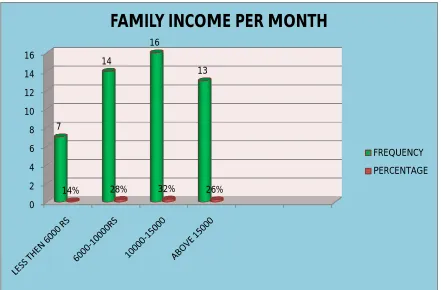
economic status of the family
56
4.10 Bar diagram showing frequency and percentage distribution of
residential area of the parents
57
4.11 Bar diagram showing frequency and percentage distribution of
marital status of the parents.
58
4.12 Bar diagram showing frequency and distribution of pre test and post test score according to their knowledge level.
APPENDICES
S.NO
TITLE
PAGE NO
1. Letter seeking permission to conduct the study i
2. Content validity certificate ii
3. Letter requesting opinion &suggestions of experts vi
4. List of experts vii
5. Consent form viii
6. Certificate by the English & Tamil editor ix
7. Certificate by the Statistician x
8. Tool for research
Demographic variables
Structured knowledge questionnaire
xi-xiii
9. Lesson plan on Adjustment disorder
10. Photographs
1
CHAPTER-I
INTRODUCTION
“Children are not things to be moulded, but people to be unfolded”
- Jess Lair
Early adolescence might be broadly considered to stretch between the ages of 10 and 14. They are otherwise called as middile schoolers. Adolescence is widely recognized as a period of social, religious, political, and vocational adjustments as well as a period of striving for
increasing emotional and financial independence from parents.
According to WHO (2017) Worldwide 10-20 % of children and adolescent experience mental disorders. Half of all mental illness begin by the age of 14 and three-quarters by mid-20s.
Neuropsychiatric conditions are the leading causes of disability in young people in all regions. If
un treated, these conditions severely influence children development, their educational
attainments and their potential to live fulfilling and productive lives. Children with mental
disorders face major challenges with stigma, isolation and discrimination, as well as lack of
access to health care and education facilities, in violation of their fundamental human rights. It is also suggested the comprehensive mental health action plan 2013–2020, adopted by the 66th World Health Assembly, provides a framework for strengthening capacities in countries to address the mental health needs of children and adolescents. The Department encourages the adoption of a life-cycle approach in implementation of mental health policies and strategies.
According to Erik Erikson’s stages of human development an adolescent is a person between the age of 10 and 19. Early adolescence can be a difficult experience for many youth.
2
middle school, adolescents are faced with new challenges including ever changing peer groups
and different educational and behavioral expectations. These challenges have been recognized as
having some bearing on adolescent adjustment to school. Similarly, the relationships adolescents
have at school have been associated with academic adjustment. In the current investigation, it
was anticipated that the relational context in which adolescents operate at school should also be
linked to other indices of adjustment likely social and behavioral.
According to Monroe (1990) adjustment is often used as a synonym for accommodation and adaptation. Strictly speaking, the term denotes the results of equilibrium, which may be
affect by either of these processes.
Adjustment starts from the childhood. Adjustment is not a simple term like adaptation or accommodation. It actually a behavioral process by which humans and other animals maintain an equilibrium among their various needs or between their needs and the obstacles of their environments.
Adjustment is a continuous process, not fixed or static state, in fact adjustment is defined
as the continuous process of satisfying one’s desires, and it involves many aspect of behavior.
Adjustment covers four specific areas which are the academic adjustment, social adjustment,
personal-emotional adjustment, as well as attachment and commitment towards educational
along with institutional goals.
Human behavior normally represents of various problems, needs and requirements and
to solve these we have to make an effort on the part of the organism to avoid tension,
3
particular way of acting or behaving or changes an existing form of behavior or action is
called adjustment.
The maladjustment refers to a tendency to live in a fancy world, volatile feeling such as
fear, anger and excitement, depressive feelings coming from isolation and from feeling of
inferiority. The feelings that one is the victim of fate and misfortune, feeling of self
consciousness and feeling of being hurt easily, feeling of guilt, worry, anxiety and nervousness.
Life is the continuous adjustment of internal relations to external relations. Every new
adjustment is a crisis in self-esteem. All biological phenomena act to adjust, there are no
biologic actions other than adjustment. Adjustment is another name for equilibrium.
Equilibrium is the universal, or that which has nothing external to derange it. Adjustment
problem occurs when there is an inability to make own decision to some need or stress
which occur in the environment both internally and externally.
The common adjustment problems are depression, alcoholism, suicide (Attempted and
Completed), drug abuse, bipolar affective disorder ,violence, homicide, rape, robbery,
aggravated assault, juvenile delinquency, sexual abuse, phobia (Social phobia),conduct disorders
and schizophrenia.
According to Pathak (1990) Adjustment is a built – in mechanism for coping with the problematic or other realities of life. Adjustment has been considered as an index to integration;
a harmonious behavior of the individual by which other individual of society recognize person is
4
In the modern society, life is becoming very complex and conflicting day by day. If a
person is well adjusted only then one can survive without psychological stress resulting from
maladjustment. Hence adjustment is important in one’s life.
Adjustment during the period of adolescence will determine to a larger extent what will
one be as a person as an adult. Generally adolescence is believed to be a period of great stress
and storm as rapid physical as well as mental changes occur during this period. Every cultural
group has expectations of an individual according to their developmental stage. Successful
achievement of such developmental tasks leads to happiness and help to succeed in later tasks,
failure to unhappiness and a developmental lag.
Young people go through a transition in teenage years and one of the biggest issues they
will face affecting mental health and social identity. They experience all sorts of pressures,
difficulties and circumstances such as peer pressure, moving to a new school, breaking
relationships with friends, arguments with parents, struggle for autonomy, exams, not feeling
good enough, changing or chaotic home environment, exam pressure and failures and above all
pubertal changes, school exclusion or truancy.
According to Cairns and Lloyd (2005) extracted data from the young life and times survey in Northern Ireland and reported that school work and exams was the most cited cause of
stress for young people of 16 years old. Anonymous (2004) has examined trends between 1983
and 2003 in young people’s emotional health and well being, as reported through their young
people and health survey and has found that young people are increasingly more likely to worry
5
Emotional problems will often affect school work – worry oneself or about what is going
at home, makes it difficult to concentrate. Pressure to do well and to pass exams may come from
parents or teachers, but adolescents usually want to do well and will push themselves. Excessive
nagging can be counter-productive. Exams are important, but they should not be allowed to
dominate life or to cause unhappiness. School has two types of responsibilities, to remove those
situations/factors/functions which produce maladjustment in students and to detect undesirable
behaviour of students and to correct them.
The family is the oldest and the most important of all the institutions that man has devised to regulate and integrate his behavior as he strives to satisfy his basic needs. Successful adjustment to school largely depends on past experiences at home.
NEED FOR THE STUDY
“Knowing the difficulties of middle school children gives us more empathy and strategy in helping them establish their place in the world”
Parents are wandering why my child’s is behaving like this. What is the reason for this
behaviour. Whether this behavior is right or wrong and what we need to do.
Adjustment disorders are very common among children and adolescents, occurring with
equal frequency among boys and girls. Adjustment disorders occur in all cultures; however
cultural influences may impact the type of stressor and symptoms experienced. Children and
teens of all ages experience adjustment disorder; however, it’s thought that the symptoms of the
disorder will vary between children and adults. Adults may experience a more emotional reaction
while children and adolescents often act out.
6
.The early years of life are important in the development of young children. Parents in 21st Century face many challenges and issues such as poverty, stress and health problems which
affect the health and development of children and have linked to behavioral problems in
childhood. Schools provide important places to offer preventive intervention by teachers by
following certain guidelines of programs .It will be helpful if parents and teachers work together
in identifying the early signs of behavioral problems .It is vital that school children with
behavioral problems are properly diagnosed so that treatment can be started.
Causes of adjustment disorder
Anyone, no matter the age, gender, race, or ethnicity, can be affected by an adjustment
disorder. It is likely the combination of genetics, life experiences, temperament, and changes in
the natural chemicals in the brain that cause adjustment problems.
Risk Factors
This may increase a child or adolescent’s development of adjustment disorder include:
Being diagnosed with a serious illness
Physical or sexual assault
Death of a loved one
Problems in school
Surviving a disaster
Moving to a new city
General inability to cope with change
7
Exposure to violence
SYMPTOMS OF ADJUSTMENT DISORDER
The symptoms of adjustment disorder will vary from one individual to the next and the
symptoms one experiences may be different in another. However, all individuals with this
disorder experience symptoms within three months of a stressful event and the reaction to that
stressor causes significant impairment in social or educational functioning. Signs and symptoms
of adjustment disorder may affect how they feel and think about theirselves and life. Some of the
symptoms of adjustment disorder may include:
Behavioral Symptoms:
Tearfulness
Engaging in self-destructive behaviors
Withdrawing from friends and
previously-enjoyed activities
Increasing amounts of time spent alone
Increased absences from school
Using drugs or alcohol
Skipping school
Fighting
Acting out
Physical Symptoms:
8
Aches and pains
Nausea and vomiting
Diarrhea
Headaches
Changes in appetite
Different sleep patterns
Heart palpitations
Fatigue, lack of energy
Cognitive Symptoms:
Inability to focus on particular tasks
Feeling overwhelmed
Psychosocial Symptoms:
Depressed mood
Worrying
Jitteriness
Fear of separation from important figures in
child’s life
Feeling hopeless
Mood swings
Nervousness
Aggressive outbursts
9 Stress
Suicidal thoughts
EFFECTS OF ADJUSTMENT DISORDER
While most cases of adjustment disorder resolve on their own within six months of the
event, some children and adolescents could experience long-lasting effects that have been caused
by this disorder. These long-term effects may include:
Insomnia
Social isolation and withdrawal
Substance abuse
Alcoholism
Schizophrenia
Depression
Difficulty concentrating
Behavioral changes
Mood swings
Bipolar disorder
Antisocial personality disorder
Self-harm
Suicidal thoughts and behaviors
Adolescence is a crucial period which faces manifold problems of recognition with their
parents, peer groups and all other members of the society. Therefore it is the responsibility of the
10
the importance of exploring the adjustment problems of the adolescents. Family plays the vital in
improving and sustaining the adjustment of the children. So, after notice this statistics the
researcher has decided to do the research work on the adjustment problem and its management of
adolescents by giving knowledge to the parents. The study of adjustment problems among
adolescence is essential because directly or indirectly it will affect the adolescence.
STATEMENT:
“A study to assess the effectiveness of structured teaching program on knowledge regarding
adjustment disorder and its management among parents of middle school children at selected
school, Erode”.
OBJECTIVES OF THE STUDY:
1. To assess the knowledge regarding adjustment disorder among parents of middle school
children.
2. To evaluate the effectiveness of structured teaching program on knowledge regarding
adjustment disorder and its management among parents of middle school children.
3. To determine the association between the knowledge post test scores with selected
socio-demographic variables. RESEARCH HYPOTHESIS:
H1 - There is significant difference in the pre and post test knowledge score regarding
adjustment disorder and its management among parents of middle school children.
H2 - There is significant association between post test score knowledge regarding
adjustment disorder and its management among parents of middle school children’s with selected
11 OPERATIONAL DEFINITIONS:
Assess:
It refers to the process of measuring the level of knowledge among parents on adjustment
disorder and its management which is obtained through structured Questionnaire.
Effectiveness:
It refers to significant gain in knowledge regarding adjustment disorder and its
management among parents of middle school children’s post test score as measured by statistical
analysis.
Structured teaching program:
Refers to systematically developed program with LCD designed to impart knowledge
regarding adjustment disorder and its management among parents of middle school at selected
school.
Knowledge
Refers to assess the knoeledge level of parents regarding adjustment disorder of middle
school children and its management by using structured questionnaire with 30 items.
Adjustment Disorder
Refers to maladaptive reactions that occurs due to physical, social or psychological stress
at the age between 11-13 years and evidenced by symptoms like anxiety, depression, aggression
and educational difficulties.
Middle school children Parents:
Refers to father or mother those who are having early adolescence with the age group
12 Limitations:
1. The parents those who read and write Tamil
13
CONCEPTUAL FRAMEWORK:
The conceptual frame work enables the researcher to create a distinct relationship
between theoretical and empirical literature in addressing spiritual care in nursing practice
-(Christenson, 2007)
A conceptual framework is used in research to outline possible courses of action or to present a preferred approach to an idea (or) thought. It can act like maps that give coherence to empirical inquiry .
-(paula.J.2006) The present study aims at developing and evaluating structured teaching program in terms of improving the knowledge regarding adjustment problem and its management among parents of middle school children.
The conceptual model for the study was based on the general system theory by Modified Ludwig Von Bertalanffy (1969). In this theory the main focus is on the discrete parts and their interrelationship.
Which consist of input, throughput and output? ”system as a complex” interaction, which means that systems consist of two or more converted elements. Which from an organized whole and which interact with each other.
Input
It is the first phase in an system. Based on Ludwig Von Bertalanffy input can be a information, material or energy that enters the system.
In this study “Input” is consider to be information related to adjustment disorder and its management among parents of middle school children.
14
Development of the structured teaching program on adjustment disorder and its management among parents of middle school children.
Validity, Reliability.
Through put
According to Ludwig Von Bertalanffy ”Through put” refers to the process by which the system processes input and release an output. In this study the through put considered for the processing the inputs are,
Pilot study
Pretest by using the structured questionnaire
Administering structured teaching program on adjustment disorder and its management among parents of middle school children.
Post test Output
According to system theory “output” refers to energy, mater and information that leave a system. In the present study ”out put” is consider to be the knowledge obtained through the processing of the post test. It will be received in the form of post test knowledge scores.
16
CHAPTER-II
REVIEW OF LITERATURE
Review of literature is a broad systematic and critical collection and evaluation of
important scholarly published literature as well as unpublished materials. The review serves as
evidence and essential background for any research
(Basavanthappa, 2004)
Review of literature is critical summary of research on a topic of interest generally
prepared to put a research problem is content to identify gaps and weakness is prior studies so as
to justify a new investigation
(Polit and Beck, 2010)
A literature review involves the systematic identification, location, scrutiny and
summery of written material that contains information on research problem
(Polit and Hungler, 2006)
The literature reviewed has been organized and presented under the following headings:
1. Studies related to incidence, prevalence, and risk factors for adjustment disorder. 2. Studies related to knowledge, attitude and perception towards adjustment disorder
among parents.
3. Studies related to structure teaching program on adjustment disorder among early adolescence.
STUDIES RELATED TO INCIDENCE, PREVALENCE, AND RISK FACTORS FOR ADJUSTMENT DISORDER:
17
measure of self-concept, Self-concept Form-5 Questionnaire (AF5) and a broad set of
adolescents' psychosocial adjustment indicators. From the responses of 1,281 participants (53.7%
females) aged 12 to 17 years ( M = 14.98 years, SD = 1.74 years), the results indicated that
higher self-concept scores corresponded to 82 better psychological adjustment, good personal
skills and fewer behavioral problems. The study concluded that the self-concept is a basic
theoretical construct closely related to the psychosocial adjustment in adolescence.
Salwa SM, et.al, (2011) conducted a cross-sectional study to find out the prevalence rate of behavioral disorders and emotional disorders among school children at Baquba city during
educational year 2010-2011.1500 school children of both male and female were selected by
random sampling technique. Revised Rutter Scale (RRS) was used for identification and
measurement of behavioral disorders. It was found that 24.6% of school children had behavioral
disorders and 13.8% had conduct disorders and 10.8% had emotional disorders.
Bulotsky-Shearer RJ,et,al. (2008) conducted a study “On investigation of class room situational dimensions of emotional and behavioral adjustment”. This study used a
developmental-ecological approach to investigate the relationship across the school year between
early problems in preschool classroom situations and a comprehensive set of readiness
competencies for urban low income children. Study identified 3 reliable and unique underlying
classroom situational dimensions and situations, and more problematic across all situations.
Study 2 investigated the relationship between yearly problems in the situations. Outcomes, early
situational difficulties uniquely and differentially predicted lower peer social and classroom
learning outcomes in combination of both the type behavior problem (what) and the situational
problem where explained greater variance in the prediction of readiness outcomes. Contributing
18
Shubhada Kale, (2014) conducted a study on “causal relationship between school
adjustment of middle school students and related variables”. The purpose of the study was to
identify the causal relationship of family factors, social support, school achievement, self
concept and school adjustment and its related variables. Two thousand six hundred and twenty
nine middle school students participated in the study. These results imply the family satisfaction
and self concept are essential to solve the problems of school adjustments especially friends
support, teachers support in school achievement improve self concept and school adjustment.
Warwick et al. (2008) studied mental health and emotional well-being among younger students in further education. Over the last 25 years there has been an increase in reported
behavioral and emotional problems among young people. Moreover, students in higher education
(HE) were reported to have increased symptoms of mental ill health compared with age-matched
controls. Some students in further education (FE) were likely to experience similar difficulties,
especially as an increasing number may come from backgrounds that may make them more
vulnerable to mental health problems. National policies and guidance highlight the importance of
promoting the mental health of young people in general and of students in particular. This
exploratory study aimed to identify whether, and in what ways, FE colleges were contributing to
younger students' (aged 16-19 years) mental health. Interviews with key informants, a survey of
FE colleges in England and five case studies of individual FE colleges providing specialized
mental-health support services to students revealed some evidence of promising and good
practice, but this did not appear to be widespread. Given the current range of college settings, no
single approach to improving mental health among students was likely to be the answer. Rather,
respondents highlighted a number of factors that influence the provision of support services for
19
achievement at college; having in place national and college policies and guidance that address
mental health; building an inclusive college ethos; building leadership at senior and middle
manager levels; having accessible in-college and/or external support services; and the provision
of professional development opportunities for staff.
Kumari (2008) studied the altruistic behaviour of children in relation to the education of their parents. 100 girls of intermediate level belonging to different educational levels of parents
were selected for the present study. The results revealed that girls belonging to low and medium
educated mothers were more altruistic in behaviour as compared to highly educated mothers.
Father’s education has not significant effect on the altruistic tendency of their daughters.
Hampel & Petermann (2006) investigated the age and gender effects on perceived interpersonal stress, coping with interpersonal stressors, and adjustment among early and middle
adolescents. Moreover, the associations of perceived stress and coping with adjustment were
examined. Total sample were 286 Austrian adolescents aged 10 to 14 years who attended the
fifth to seventh grade. Self report data on perceived stress, coping, as well as emotional and
behavioral problems, were assessed. Results of this study indicate that Fifth graders scored lower
on maladaptive coping strategies and externalizing problems and reported more adaptive coping
strategies than sixth and seventh graders. Compared with boys, girls evaluated a higher amount
of perceived interpersonal stress and used more social support. Furthermore, girls scored higher
on maladaptive coping strategies and emotional distress and scored lower on distraction than
boys.
Dwairy (2004) also supported the earlier study, where the researcher examined the parental styles and psychosocial adjustment of adolescents and the relationship between them in
20
Attitude Toward Parents, Lipsitt’s Self-Concept Scale for Children, Rosenberg Self-Esteem
Scale, and the Psychological State Scale were administered to 118 gifted and 115 non-gifted
Arab adolescents in Israel. Results indicated that parents of gifted adolescents tend to be more
authoritative and less authoritarian than parents of non-gifted adolescents. The attitudes of the
gifted adolescents toward their parents were more positive than those of the non-gifted
adolescents. The gifted displayed higher self-esteem and fewer identity disorders, phobias, and
conduct disorders than the non-gifted adolescents. The authoritative parental style correlates
positively with the mental health of both gifted and nongifted adolescents, while the
authoritarian parenting style impacts negatively on the mental health of the gifted, but not of the
non-gifted adolescents. The study results indicated that the authoritarian parenting style is a
crucial factor that influences the well-being of gifted children and may affect their psychological
adjustment.
Anderman, Eric,M. (2002) examined a study of emotional and social adjustment of rural and urban high school students. The study examined health adjustment of adolescents
having school level differences in the relation between schools belonging the various outcome.
In study 1, predictors of belonging were examined. Results indicated that belonging was lower in
urban schools than in suburban schools and lower in schools that used busing practice than those
that did not. In study 2, the relations between belonging and psychological outcomes were
examined. The relations varied depending on the unit of analysis. Whereas individual students
perceptions of belonging were inversely related to depression, social rejection and school
problems, aggregated belonging was related to greater reports of social rejections and school
21
Sung KM, et al. (2006) conducted a study on “psychosocial factors and coping strategies of adolescents in a rural high school ” to evaluate the coping levels of rural adolescent and
gender differences of psychosocial factors. A convenience sample of 72 students complete the
coping response inventory- youth it found for psychosocial factors of depression, self-esteem,
and anxiety. Several relationships observed between in psychosocial factors of rural adolescent.
These rural adolescents endorsed higher levels of avoidance coping than normative samples.
Adolescents reported many problem needing proper coping skills in their everyday lives.
Viera (2006) showed that perceived stress scores were associated with increased absenteeism. Significant differences were found between mean perceived stress scores for males
and females. With each 10-unit increase in perceived stress scores, absenteeism for a 30-day
period increased 0.6 day. Perceived stress scores were also significantly associated with GPA.
With each 10-unit increase in perceived stress scores, GPA decreased by 0.3 point. Obesity as an
Independent Variable did not show significance in relation to school absenteeism, perceived
stress scores, school performance, or academic achievement. Obesity as a predictor of GPA,
however, neared significance when age, gender, perceived stress, and absenteeism were
controlled. A tendency for obese adolescent males to report lower perceived stress scores
compared to non-obese males was also found. Russell reported culpability singularly influential
in determining degree of sympathy. Determines females showed greater empathy and
recommended more financial aid than did men.
Crews (2005) examined the relationship between the amount of extracurricular activities and the school performance and mental health of children and adolescents. Results indicated one
significant linear and one significant curvilinear relationship between extracurricular activity
22
extracurricular activities, their school performance improved (in a linear relationship), while
median amounts of activity were related to the best grades (in a curvilinear relationship).
Although these results were significant, their practical meaningfulness was limited due to a weak
linear relationship and moderate curvilinear relationship. Significant relationships were not
found between extracurricular activity participation and school performance of children or
between extracurricular activity participation and the mental health of children or adolescents.
Sacker A, et al. (2002) conducted a study On “social inequality in educational achievement and psychosocial adjustment throughout childhood”. Developmental resources level
off during adolescents against an alternative hypothesis that continue to influence throughout all
childhood. A study applies to models. 1 the transition from infant to junior schooling at age 7-11
and from compulsory education of further education at age 16. 2nd model is a contextual-
systems. Material deprivation, school composition, parental involvement and aspirations. It
showed that interpreted more broadly than a narrow class based definition. Continue to widen in
adolescence educational achievement and psychosocial adjustment.
Yanos (2000) conducted the study on the psychological predictors of recovery in community adjustment among individuals diagnosed with serious mental illness. Findings
indicated that psychological variables were significantly and meaning associated with social
functioning, and that involvement in consumer-run services was significantly and meaningfully
associated with better overall social functioning than involvement in only traditional mental
health services. Analyses also suggested that the relationship between involvements in
consumerrun services was partially mediated by the use of problem-centred coping strategies.
Premorbid and demographic factors examined in this investigation do not account for the
23
hypothesis that there was a causal relationship between involvement in consumer-run services
and social functioning.
Erol et.al(2000) examined the prevalence of emotional and behavioral problems, and associated factors in children and adolescents aged 6-18 years. This cross sectional study
included 674 children and adolescents aged 6-18 years that were selected from pre-university
college using stratified and probability cluster sampling. A socio- demographic information
form, and the adolescent behavior checklist (ABCL), lecture’s report form (LRF), and Youth
self-report form (YSR) were used for data collection. According to the information provided by
caregivers, lecturers, and youths, the prevalence of problem behaviors ranged between 18.3%
and 47% among those in the institutional care versus between 9% and 11% among the national
sample. Among those in the institutional care, the prevalence of externalizing problems (21.4%-
41.9%) was significantly higher than the prevalence of internalizing problems (6.2%-40.1%). At
the syndrome level, the prevalence of social problems (5.7%-11.7%), thought disorders
(7.2%-18.4%), and attention problems (7.7%-31.4%) among the youths in institutional care was higher
than among the national sample (1.65-5.8%). Age at the first admission, receiving the
institutional care because of neglect and abuse, moves 2 or more times between institutions,
recurrent physical illness, receiving poor quality care, lack of regular contact with parents or
relatives, lack of regular contact with teachers and the institutional staff, poor problem solving
skills, fatalistic beliefs, tobacco and alcohol use, the feelings of stigmatization, and low level
competency were significantly associated with an increased risk of behavioral and emotional
problems.
24
source of listening support, parents and friends as primary source of technical appreciation
support (appraisal support). Peoples with spouse, friends and family members who provide
psychological and material resources were in the better mental health than those with fewer
social contacts.
Rajaswat (2002) conducted a study on self-concept, morality and adjustment of school going adolescents. Self-concept of rural girls and urban girls was highly significant. The rural
girls were having clear vision of self in all dimensions as compared to urban girls. Self-concept
of urban boys and urban girls was less. Morality of rural girls and rural boys was much more
than those of urban girls and urban boys. Moral values of rural girls and rural boys were more
rigid and they followed their values more strictly than the urban girls and urban boys. The
adjustment of rural girls and urban girls was more than rural boys and urban boys. Girls can
adjust easily with the situation while boys of rural and urban areas do not adjust themselves with
the situation. There was a positive but very low correlation between morality and selfconcept of
adolescent rural girls and rural boys. There was a negative but very low correlation between
morality and adjustment. This indicated that morality increases adjustment with decrease in
urban and rural population. There was a very low negative correlation between self -concept and
adjustment of rural girls and rural boys.
Dutta et al. (2003) focused on the home adjustment of 200 adolescents drawn randomly from Assam Agricultural University and Kendriya Vidyalaya, Jorhat, Assam. The tool
adjustment inventory for college students developed by Sinha and Singh (1980) was
administered. The results suggested no difference between the groups of 16-18 years and 19-21
25
Dutta et al. (2003) focused on the health adjustment of 200 adolescents drawn randomly from Assam Agricultural University and Kendriya Vidyalaya, Jorhat, Assam. The tool
adjustment inventory for college students developed by Sinha and Singh (1980) was
administered. The results of the study revealed that adolescents of older age group (19 – 21
years) had good skills of health adjustment than the younger age group (16 – 18 years) of
adolescents. They also reported that boys adjusted better than girls.
Dutta et al. (2004) conducted a study on social adjustment of adolescents on 200 adolescents drawn equally from Assam agricultural university and Kendriya vidyalaya, district of
Jorhat, Assam. Sample of 50 boys and 50 girls covering the age group of 16 to 18 years and 19 to
21 years with equal gender representation was selected. Adjustment inventory for college
students developed by Sinha and Singh (1980) was administered. Results revealed no significant
difference among the gender and also between the two age groups in the areaof social
adjustment.
Jain and Jandu (2004) reported that girls were better adjusted than boys after conducting a study on adjustment on a sample of 240 students (14 – 18 years). Adjustment
inventory for school students developed by Sinha and Singh (1984) was used to measure the
adjustment of the students. They found that girls of non-employed mothers adjusted significantly
well than that of employed mother and no difference was found among the boys of employed and
non-employed mothers. As earlier, study of Mythili et al. (2004) revealed that the students
whose parents were educated found to be facing more adjustment problems.
Van Den Oord EJ, Rispens J.(2005) conducted a Study on “differences between school classes in pre schoolers psychosocial adjustments” by Van Den Oord EJ, Rispens J. class
26
classes and 51 schools, but due to non response actual sample sizes were some what smaller for
most analysis. That on average 87% of the variance was at the child level, 11% at the class level,
3%at the school level. These results suggested that aspects of the interpersonal relations of the
children in the classroom such as aproximity, integration, and the amount of contact could
determinants of differences between school classes in psychosocial adjustment.
This study was design to compare different adjustment problem faced by boys and girls
of senior secondary school. The sample consisted of 50 boys and 50 girls from 5 government and
private senior secondary schools. Adjustment Inventory developed by Dr. (Mrs.) Lalita Sharma
for intermediate and college students was administered on the students. Results confirmed all the
hypothesis of significant difference between the problems of adjustment among senior secondary
school students.
Sujatha et al. (2001) conducted a study on factors influencing adjustment among adolescents was carried out by in Dharwad block of Karnataka. The sample consisted of 300
students studying in high schools and junior colleges of the age range 13 to 19 years. Bell’s
(1934) adjustment inventory modified in the local language was used. They reported no
significant difference among early and late adolescents in the area of adjustment. Krishna (1981) conducted a study on risk-taking and adjustment of adolescents on a sample of 200 (100 boys and 100 girls) XI grade students of range 13 – 18 years. Choice dilemmas questionnaire
(Kogan and Wallach, 1964) and Hindi Adaptation of Bell’s adjustment inventory by Moshin and
Hussain (1970) were administered. The findings revealed that sex contributed significantly to
risk-taking in case of home adjustment only. Riskiness showed significant negative relationship
with social adjustment for boys and significant positive relationship with home and emotional
27
Similarly Leelavathi (2007) in her study in Dharwad city on 450 samples found that males had good social and total adjustment than females and age was associated with emotional
adjustment. Thirugnanasambadam (1990) also supported where he reported that boys were better
adjusted than girls on a sample of 388 students of 9th grade. Children’s behaviour checklist
(Slott, 1974) modified by Shanmugasundaram (1986), adjustment scale (Narayanan, 1982) and
socio-economic scale (Vendal, 1981) were administered. Similarly Dutta et al. (1997) reported
boys to be better adjusted than girls in the areas of health adjustment. The same authors in
another study on home adjustment (1997) reported girls to be better. However Mythili et al.
(2004) investigated the adjustment problems of intermediate students. A sample of 150 boys and
girls students were selected randomly from government and private management colleges in
Vijayawada. A Telugu version of the ‘Mooney problem checklist’ was administered. The data
was subjected to ‘t’ test. The results reported that boys have more adjustment problems
compared to girls.
STUDIES RELATED TO KNOWLEDGE, ATTITUDE AND PERCEPTION TOWARDS ADJUSTMENT DISORDER AMONG PARENTS:
Gutman, Vonnie & Tokoyawa (2005) tested the financial strain, neighborhood stress, parenting behavior, and adolescent adjustment. The sample consisted of 305 African American
families living in inner city neighborhoods. Of the families, 40% were living at or below the U.S.
poverty threshold. The primary caregiver and a focal adolescent (mean age 13.5 years) were
interviewed separately in each family. The results indicated that the income-to-need ratio was
significantly related to financial strain and neighborhood stress, both of which were positively
28
related to more negative and less positive parent–adolescent relations, which predicted a lower
positive and higher negative adjustment in adolescents. The results extend previous findings by
demonstrating that neighborhood characteristics are an important mediator between economic
hardship and parent and adolescent behaviors.
Mythili et al. (2004) examines longitudinal associations between adolescent adjustment and perceived parental support across the middle-school years (ages 11 to 13) in a diverse
sample of 197 girls and 116 boys. Growth curve models revealed associations between the slope
of change in perceptions of support in relationships with mothers and fathers and the slope of
change in adolescent internalizing and externalizing symptoms such that declining support
accompanied increasing problems. After controlling for this correlated change, there was still
evidence of child-problem effects on changes in relationship support (i.e., initial levels of
adolescent externalizing symptoms predicted subsequent changes in perceived parental support),
but there was no evidence of parent-support effects on changes in adjustment (i.e., initial levels
of relationship support did not predict changes in adolescent externalizing symptoms). Declines
in perceived parental support were steeper at high-initial levels of adolescent externalizing than
at average or low levels.
Chahal et al. (2003) investigated the contribution of variables like adjustment, personality, social support and family environment on the well-being of adolescents. A total of
480 adolescents (240 males and 240 females) with age range of 13-14 years were included in the
study. The tests were PGI well-being scale, California psychological inventory, child and
adolescent social support scale, adjustment inventory and family environment scale. Pearson
product moment correlations were computed to find out the relationship pattern among the
29
independent variable towards the dependent variable. For females, family cohesion, intellectual
cultural orientation, achievement orientation, socialization and classmates’ supports, adjustment
and sociability were significantly important contributors of well-being. For males, family
conflicts, organization, adjustment as classmates’ support emerged as important contributors of
well-being
Palsane (1970) explored the role of health adjustment and parental education on personal adjustment on a sample of 85 students out of which 47 were boys and 38 were girls. The results
revealed that adolescents with good health were high in over all adjustment. He also reported that
adolescents with good parental education were better adjusted. Similarly study on the “Influence
of self concept, sex, area and parents’ education on student’s adjustment problems” was carried
out by Alexander and Rajendran (1992). The sample consisted of 671 students. Mooney problem
checklist was administered to assess the adjustment and found females better adjusted than the
males. The results also revealed that urban students to be better adjusted than the rural students.
In relation to the parents’ education, the adjustment was found to be associated. Students of well
educated parents were better adjusted than students of poorly educated parents.
Saxena, Vandana (2007) conducted a study entitled “Impact of family relationship on adjustment, anxiety, Achievement-motivation, self-concept and academic achievement of high
school students”. The main objective was to compare the students having different family
relationship with respect to Adjustment, Anxiety, 79 Achievement-motivation, Self-concept and
Academic achievement.Methodology: The sample comprised 300 boys and 300 girls of Class IX
of Agra City. The tools used were Parental Acceptance-Rejection Questionnaire of Jai Prakash
and Bhargava, Adjustment Inventory for school Students of Sinha and Singh, Indian Adaptation
30
V.P. Eranga, et.al, (2011) conducted a cross sectional study to assess the knowledge and attitude towards attention deficit hyperactivity disorder among primary school teachers in
Gampaha district, Srilanka.210 primary school teachers were selected by stratified sampling
method. The knowledge and attitude of primary school teachers on Attention deficit
hyperactivity disorder were assessed by a self administered questionnaire. The majority showed
good understanding about ill effects of Attention Deficit Hyperactivity Disorder. Three fourth
had a positive attitude towards behavioural therapy.
STUDIES RELATED TO STRUCTURED TEACHING PROGRAM ON ADJUSTMENT DISORDER AMONG EARLY ADOLESCENCE:
Justin Mathew,(2012) conducted a study to assess the effectiveness of planned teaching program on knowledge of adolescents adjustment problems and its management among high
school teachers in selected high schools. The sample size consists of 60 high school teachers
who are working in selected government or private high schools, Hassan. Simple random
sampling technique will be used in this study. Modified Ludwig Open System Model was used
for identification and measurement of adolescent adjustment disorders.
Deelip Natekar, (2014) conducted a study among parents to find out the effectiveness
of structured teaching program on management of violent children in the home setting. The
overall findings of the study revealed that there was very highly significant increase in the
knowledge of parents regarding the management of violent children following the administration
of self instructional module. Therefore it was concluded that structured teaching programme was
highly effective in improving the knowledge of parents on management of violent children.
31
behavioural problems among school children in selected schools at Pune city. 60 school teachers
were selected by convenient sampling method. The tool used to collect the data were structured
knowledge questionnaire to assess the knowledge of school teachers. The result shows that in
pretest majority ( 93.34 %) of the school teachers had average knowledge score whereas in post
test majority ( 75%) of the school teachers had good knowledge score. There is a significant
increase in knowledge of school teachers regarding behavioural problems among school children
and it was found that the effectiveness of planned teaching programme in terms of increase in
32
CHAPTER – III
METHODOLOGY
INTRODUCTIONMethodology of research refers to the investigations of the ways of obtaining,
organizing and analyzing data. Methodological studies address the development, validation and
evaluation of research tools or methods.
- Polit and Hungler (2004) The methodology of research indicates the general pattern of organizing the procedure for
gathering valid and valuable data for the purpose of investigation. The methodology of this study
includes research approach, research design, setting of the study, population sample and
sampling technique, development of tool, data collection procedure and plan for data analysis.
RESEARCH APPROACH:
The research approach is an applied form of research that involves finding out, how well
a program, practice, procedure or policies are working .It’s goal is to assess or evaluate the
success of a program.
-Polit (2004) Quantitative and evaluative approach was used in this study. It is to evaluate the
effectiveness of structured teaching program regarding adjustment disorder and its management
among parents of middle school children.
RESEARCH DESIGN:
It is the blueprint for conducting the study that maximizes control over factors that could
33
implement the study in a way that will help the researcher to obtain intended results, thus
increasing the chances of obtaining information that could be associated with the real situation.
Burns & Grove (2001) A research design selected for the present study was quasi experimental one group pre
test post test design.
One group pre test –post test design.
The study design depicted as below
Pre test Intervention Post test
01 X 02
Table 3.1: Research Design
Key:
O1: Pre test to assess the level of knowledge on adjustment disorder among parents.
X: Intervention (providing structured teaching program)
O2: Post test to assess the effectiveness of structured teaching program regarding
adjustment disorder among parents.
VARIABLES
A variable is an attribute of a person or object that varies that is taken on different values.
Variables are measurable characteristics of a concept and consist of a logical group of attributes.
Three types of variables are identified in this study. They are independent, dependent and
34 Dependent Variables
A dependent variable is the response behavior or outcome that the researcher wants to
predict or explain changes in the dependent.
Polit (2004) In the present study, the dependent variable is knowledge on adjustment disorder among
the middle school children parents.
Independent Variables
An independent variable is a stimulus or activity that is manipulated or varied by the
researcher to create an effect on the dependent variable.
Polit (2004) Extraneous variable:
Age, gender, education, religion, occupation, family income, relationship with their
children, sources of information.
SETTING OF THE STUDY
According to Polit and Hunger (2006), setting refers to the physical location and condition in which data collection takes place in the study. The setting was selected based on
acquaintance of the investigator with the institution, feasibility of conducting the study,
availability of the sample, Permission and proximity of the setting to investigation.
The study was conducted in Panchayath union middle school, located at Mathur, Erode.
POPULATION
The population as an aggregate or totality of all the objects, subjects or members that
conform to a set of specifications.
35 Target population:
Target population consists of the total number of people or object which are meeting
designated set of criteria.
Suresh K Sharma (2012) The target population of this study were parents of middle school children those
who are studied in Panchayath union middle school, located at Mathur, Erode.
Accessible population:
It is aggregate of cases that confirm the design criteria and are also accessible as subject
for the study.
Suresh K Sharma (2012) The accessible population for this study were the middle school children parents in
Panchayath union middle school, Mathur, Erode who meets the inclusion criteria.
THE SAMPLING PROCEDURE:
The process of selecting a portion of the population to represent the entire population is
known as sampling.
Polit & Hungler (1999) SAMPLE:
A sample is a subset of a population selected to participate in the study, it is a fraction of
the whole, selected to participate in the research project
37 The sample size
Sample size is the number of subjects needed in a sample
Polit & Hungler (1995) The sample size was 50.
Sampling technique:
Sampling technique refers to process of selecting a portion of the pop