“A STUDY TO EVALUATE THE EFFECTIVENESS OF STRUCTURED TEACHING PROGRAMME ON KNOWLEDGE REGARDING DISASTER MANAGEMENT AMONG STUDENTS SELECTED NURSING SCHOOLS IN KANYAKUMARI DISTRICT”
By
REG.NO:301211553
Dissertation Submitted to
THE TAMILNADU DR. M.G.R. MEDIAL UNIVERSITY Chennai, Tamilnadu.
In partial fulfillment
Of the requirements for the degree of Master of Science
In
Medical – Surgical Nursing (Sub Specialty – Critical Care Nursing) SRI ADICHUNCHANAGIRI SHIKSHANA TRUST(R) Dharamarathnakara Dr. Mahalingam Institute of
Paramedical Sciences and Research, Sakthi Nagar, Bhavani, Erode.
“A STUDY TO EVALUATE THE EFFECTIVENESS OF STRUCTURED TEACHING PROGRAMME ON KNOWLEDGE REGARDING DISASTER MANAGEMENT AMONG STUDENTS SELECTED NURSING SCHOOLS IN KANYAKUMARI DISTRICT”
Approved by DMIPSR College Research Committee Principal : ---
Prof. Mrs. K. Kalaivani, M.Sc., (Nursing)
Professor in Community Health Nursing, Principal, DMIPSR College of Nursing, Sakthi Nagar, Bhavani, Erode – 638315.
Research guide : ……… Mrs.D.Thulasimani M.Sc (Nursing)
Reader cum HOD of Mental Health Nursing DMIPSR College of Nursing, Sakthi Nagar, Bhavani, Erode – 638315
Medical Guide : Dr. Selvan, M.S., (General Surgeon),
Register No: 72323, VMK Hospital,
Appakudal, Bhavani (T.K), Erode – 638315.
A Dissertation submitted to
The Tamil Nadu Dr. M.G.R. Medical University, Chennai In partial fulfillment of the requirement for
Degree of Master of Science in Nursing
VIVA VOCE:
1. INTERNAL EXAMINER : ….……… 2. EXTERNAL EXAMINER: ……….
ENDORSEMENT BY HEAD OF INSTITUTION
This is to certify that the dissertation entitled “A study to evaluate the effectiveness of structured teaching programme on knowledge regarding disaster management among students selected nursing schools in Kanyakumari district” is a bonafide research work done by Mr. Arun jothi under the guidance of Mrs. K.KALAIVANI., M.Sc (N), PRINCIPAL of Dr. Mahalingam College of Nursing.
Signature of the Principal Prof. Mrs. K.Kalaivani, M.Sc (N)
Date :
ACKNOWLEDGEMENT
“It's time to speak up”
I express my utmost gratefulness to the almighty for his blessings throughout this study.
Gratitude can never be expressed in words but this is only a deep perception, which makes the words to flow from ones inner heart. I express my gratitude to my parents Mr. Jothy, Mrs. Ariyamala, my lovable sister Mrs. Ajeetha and Brother in law Mr.Rajan prabakaran. For their faith, vision on me for their guidance and friendship,I extend my love to my beloved wife Mrs. Lisa Silviya and daughter Topaz praizy for their endless and ongoing support on all my aspects.
I am immensely grateful to his holiness Bairavikya.Sri. Sri. Sri, Balagangadharanatha Mahaswamiji and present pontiff Sri Sri Sri Nirmalanandhanatha Mahaswamiji, President, Sri Adichunchanagiri Mahasamsthana Mutt, Bangalore and honorable Ex - chairman Arulselvar.Dr. N. Mahalingam, Sakthi Group of Companies, for giving me a chance to study in their esteemed institution.
I am solemnly thankful to Sri B.T.Ramachandra, Secretary and Correspondent, Dharmarathnakara Dr. Mahalingam Institute of Paramedical Sciences &. Research, Sakthi Nagar.
DMIPSR, Sakthinagar, Bhavani, Erode for her constant encouragement, patience and motivation that have been a source of success.
My heartfelt thanks to Mrs. D.Thulasimani M.Sc(N)., Lecturer, Department of Medical Surgical Nursing, DMIPSR, Sakthinagar, Bhavani, Erode for her expert guidance and valuable suggestions.
I extend my sincere thanks to our class co-ordinator Mrs.Janaki, M.Sc., (N), Vice Principal cum HOD of Obstetrics and Gynecological Nursing for her guidance and suggestions throughout the study.
I extend my thanks to Mrs. Hemalatha, M.Sc., (N),Assistant Professor cum HOD of Child Health Nursing for her timely advice and guidance.
I also extend my thanks to Mrs. Deepa, M.Sc., (N), and Mrs.R.Tamizhselvi, M.Sc., (N) Assistant Professor, Mental Health nursing department for her timely advice and guidance.
I also extend my thanks to Mrs. Saranya V.L, M.Sc., (N), Lecturer, Medical Surgical Nursing department for her timely advice and guidance.
I also extend my thanks to Mrs. Sri Deepa, M.Sc(N), Assistant Professor and Mrs. Radha, M.Sc., (N), Lecturer, Community Health nursing department for her timely advice and guidance.
Department of Mental Health Nursing, for his valuable guidance and suggestions throughout the study.
I also accord my respect and gratitude to all the faculties of DMIPSR for their timely assistance, cooperation and support throughout the period.
I sincerely express my thanks to Mr. R. Solomon, Masc.(N), principal, Limba school of nursing, Nagercoil, Kanyakumari district for valuable suggestions and guidance in the formulation of tool.
My sincere gratitude to Mrs. T.S. Sumithradevi, M.A, M.Phil, Lecturer in English, who edited the study and made it a meaningful one.
Grateful acknowledgement is extended to Mr.Dhanapal, Head of the department in Statistics, Erode, for his valuable help in statistical analysis of the study.
My sincere thanks to all experts who have contributed their valuable suggestions in validating the tools.
I am truly grateful to all the participants who formed the core and basis of this study with their wholehearted co-operation.
I thank Mr. Madhesh and Mrs. Pavithra, Sri Vijayalakshmi Computers for their assistance in carrying out the computer work on time.
LIST OF CONTENTS
SL.NO. CONTENTS PAGE
NO.
I INTRODUCTION
II REVIEW OF LITERATURE
III METHODOLOGY
IV DATA ANALYSIS AND INTERPRETATION
V DISCUSSION, IMPLICATIONS AND CONCLUSION
LIST OF TABLES
Table
No. TITLE
Page No. 1 Demographic variables
2
Aspect wise pre-test knowledge score regarding disaster management among students in nursing schools
3
Aspect wise post-test knowledge score regarding disaster management among students in nursing schools
4
Frequency distribution level of knowledge among students in pre and post test
5
Comparison of pre-test and post-test knowledge regarding disaster management among students (aspect wise)
6
Comparison of mean scores between pre test and post test on knowledge regarding disaster management (overall)
7
LIST OF FIGURES
Sl.No. TITLE Page
No. 1. Conceptual framework.
2. Schematic representation of the study design 3. Cylindrical diagram showing the age of the students 4. Pie diagram showing the sex of the students
5. Conical diagram showing the educational qualification of the students
6. Conical diagram showing the working unit of the students 7. Cylindrical diagram showing the experience of the students
8.
Cylindrical diagram showing that aspect wise pre-test knowledge score regarding disaster management among students
9.
Pyramidal diagram showing that aspect wise post-test knowledge scores regarding disaster management among students
10. Pyramid diagram showing the level of knowledge of the students
11.
Conical diagram showing the aspect wise comparison of pre-test and post-pre-test level of knowledge regarding disaster management among the students
12.
Bar diagram showing the comparison of overall mean score between pre-test and post-test level of knowledge regarding disaster management among the students
LIST OF ANNEXURE Annexure
No. CONTENT
I Letter seeking permission to conduct pilot study II Letter seeking permission to conduct research study
III Letter seeking opinion and suggestion of experts to validate the tool
IV Content Validation Certificate
V Tool
LIST OF ABBREVIATIONS
(Alphabetical order)
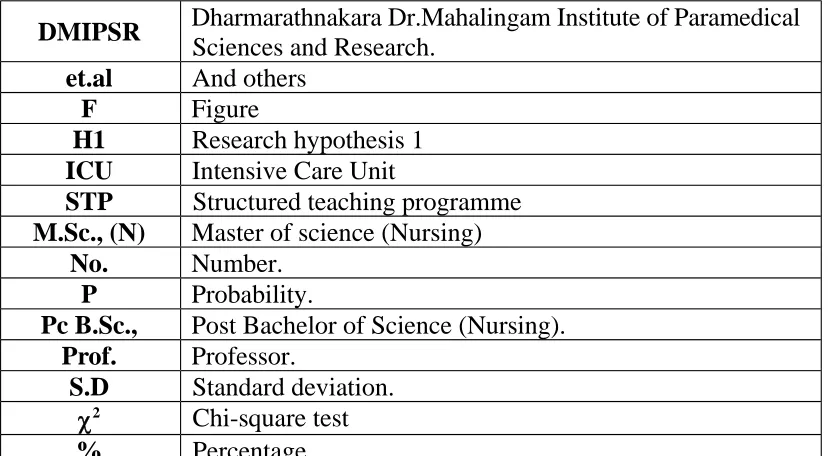
DMIPSR Dharmarathnakara Dr.Mahalingam Institute of Paramedical Sciences and Research.
et.al And others
F Figure
H1 Research hypothesis 1 ICU Intensive Care Unit
STP Structured teaching programme M.Sc., (N) Master of science (Nursing)
No. Number. P Probability.
Pc B.Sc., Post Bachelor of Science (Nursing). Prof. Professor.
S.D Standard deviation. χ2 Chi-square test
[image:11.595.94.509.154.382.2]ABSTRACT
INTRODUCTION
A disaster is a natural or manmade event that negatively affects life, property, livelihood or industry often resulting in permanent changes to human societies, ecosystems and environment. Disasters arise without direct human involvements are known as natural disasters. It can be more severe than man made. The disasters having an element of human intent or negligence are called manmade disasters. Disaster have five phases such as warning period, impact, threat period, inventory period and rescue period.
Disasters cannot be prevented but their impact on people's lives can be reduced to a considerable extent. Disaster management covers all aspects of preventive and protective measures, preparedness, rescue, relief, and rehabilitation operations. It has three phases as follows; impact phase, relief and rehabilitation phase and long term mitigation and preparedness phase.
The disaster managers are health team members, administrative officers, police, rescue teams and volunteers. They must be confident in their function, training and capacity to ensure public safety during the disaster.
STATEMENT OF THE PROBLEM
OBJECTIVES OF THE STUDY
1. To assess the existing level of knowledge of students on disaster of management
2. To evaluate the effectiveness of structured teaching programme on the knowledge of students
3. To identify the association between the students level of knowledge and selected demographic variables.
METHODOLOGY
The research approach used for the study was qualitative, educative and evaluative approach and the research design used was quasi-experiment design, in that pre-experimental one group pre test and post test design.
The study was conducted in LIMBA SCHOOL OF NURSING, NAGERCOIL. 50 students were selected by using purposive sampling technique. The data collection method used for this study was self-report method. Self administrated questionnaire was used for data collection. Descriptive statistical and inferential statistics were used to analyze the data and to test hypothesis.
RESULTS:
¾ The knowledge regarding disaster management among students in pre-test, the mean score was 20.18 and standard deviation was 1.826.
and found effective with highly statistically significant values, (such as mean score = 31.26, standard deviation=1.826 and the 't' value=42.375 with the p value= <0.05).
¾ There was no significant association between the pre-test knowledge of the students with the demographic variables namely age, sex, educational qualification and working unit except years of experience.
CONCLUSION
This study has proved that the students had a remarkable increase in the knowledge regarding disaster management, when compared to their previous knowledge, prior to the administration of the structured teaching programme. This study plays an important role in prevention and management of impact in various disasters. This study has not only improved the knowledge of the students. It could be considered as a part of continuing professional development of students in all aspects.
KEY WORDS
CHAPTER -1
INTRODUCTION
'A stitch in time saves nine"
Emergencies and disaster not only affect health and well being of people, frequently large number of people are displaced, killed or injured or subjected to greater risk of epidemics. Considerable economic harm is also common. Disaster cause great harm to the existing infrastructure and threaten the future of sustainable development. Disasters are not confined to a particular part of the world, they can occur anywhere and at any time. Major emergencies and disaster have occurred throughout the history, as the world's population grows and resources become more limited, community are increasingly becoming vulnerable to the hazards that cause disaster.
The relative number of injuries and death differ, depending on the number of factors such as the type of disaster, the density and distribution of the population, condition of the environment, degree of the preparedness and opportunity of the warning.
A Disaster may have the following main features i.e. unpredictability, unfamiliarity, speed, urgency, uncertainty and threat. Disaster can be of two categories natural and manmade. Natural disasters arise without direct human incoherent, but can become more severe because of human action prior, during or after the disaster itself. Also, one specific event may spawn another type of disaster. For example, a hurricane may cause flooding by excessive rain or by pulling sea water onshore, also called a storm surge.
Natural disaster can be classified by nature, timing, predictability, response time and type of impact. According to time disaster is classified into two, slow (eg. Drought, famine, food shortage) and quick. The quick disaster again divided into predictable (eg. cyclone, flood and typhoon) and unpredictable or sudden (eg. earthquake, landslide: avalanche).
According to response the time disaster is divided into three categories such as long response time (drought, famine), short response time (cyclone, floods) and no response time (earthquake, landslide).
Disasters having an element of human intent or negligence are called man -made disasters. The manmade disaster is classified in two major disaster (setting of fires, epidemic, deforestation, pollution due to prawn cultivation, chemical pollution, & wars) and minor disaster (road / train accidents, riots, food poisoning, industrial disaster, crisis, environmental & pollution).
Disaster have five phases such as warning period, impact period, threat period, inventory period, rescue period. During disaster the actions taken by an organization in response to unexpected events that are adversely affecting people or resources and threatening the continued operation of the organization that is known as disaster management. It includes the development of disaster recovery plans, for minimizing the risk of disaster and for handling them when they occur, and the implementation of such plans. It is carried out by the disaster management team. The members are administrative officers, physicians, students, police, rescue team, volunteers.
STATEMENT OF THE PROBLEM
"A STUDY TO EVALUATE THE EFFECTIVENESS OF STRUCTURED TEACHING PROGRAMME ON KNOWLEDGE REGARDING DISASTER MANAGEMENT AMONG STUDENTS SELECTED NURSING SCHOOLS IN KANYAKUMARI DISTRICT
OBJECTIVES OF THE STUDY
1. To assess the existing level of knowledge of students on disaster of management
2. To evaluate the effectiveness of structured teaching programme on the knowledge of students.
3. To identify the association between the students level of knowledge and selected demographic variables.
NEED FOR THE STUDY
On August 6 and 9, 1945, the cities of Hiroshima and Nagasaki were destroyed by the first atomic bombs used in warfare.
the bombing. Within the following five years, another 60,000 would die of bomb related causes.
The second bomb, called "Fat Man," exploded over Nagasaki, Japan, at 11:02 a.m. on August 9, 1945. It exploded at 1,650 feet with a force of 22,000 tons of TNT. 70,000 people lost their lives in Nagasaki by the end of 1945 due to the bombing. A total of 140, 00 died within the next five years.
Since World War II, there have been about 127 wars and 21.8 million war-related deaths involving more than 50 percent of civilians.
Bhopal Gas Tragedy in India on 3rd
December 1984. About 2 million people were exposed to the gas leaving about 3000 dead. People are still suffering from the adverse effects of the gas. The second example is the accident at reactor 4 of the Chernobyl nuclear power station in the Soviet Union on April 26, 1986, which resulted in the largest reported accidental release of radioactive material in the history of Iodine 131, Caesium 134 and 137, Strontium 90 and other Isotopes throughout the northern hemisphere.
The latest example is the attack on twin buildings of World Trade Centre in New York. The September 11 attacks were a series of coordinated suicide attacks by al-Qaeda upon the United States on September 11, 2001. On that morning, 19 al-Qaeda terrorists hijacked four commercial passenger jet airlines. The hijackers intentionally crashed two of the airlines into the Twin Towers of the World Trade Centre in New York City, killing everyone on board and many others working in the buildings. Both buildings collapsed within two hours, destroying nearby buildings and damaging others, in which about 6000 people lost their lives and thousands were injured.
During the year 2001-2002, over 16 states were affected with heavy rains, landslides and floods. This affected 115 districts involving more than 17000 villages. About 379 districts in 18 states were affected by drought due to sluggish monsoon.
During 2003, 16 states were affected by heavy rains landslides and floods. This affected 236 districts involving more than 41,408 villages. About 158 districts in the other states were affected by drought.
A very severe earthquake measuring magnitude of 8.9 on Richter scale struck northern Sumatra, Indonesia at 06:28 AM 1ST. The earthquake was felt widely along the east coast of India.
Out of the 30 districts in the states, 13 districts namely Chennai, Kanchepuram, Tiruvallur, Cuddalore, Villupuram, Nagapattinam, Thiruvarur, Thanjavur, Kanniyakumari, Thoothukudi, Tirunelveli, Ramanthapuram and Pudukottai have borne the brunt of Tsunami covering 373 Coastal Village/Kuppams. About 8.9 Lakh people have been affected. 1,24,227 houses are reported to have been damaged, with Nagapattinam District topping the list with 36,860 houses located in 73 villages. Enumeration of houses damaged is still on and the final figure may go up to 1.50 lakhs.
Multiple sites in the Indian city of Mumbai were attacked with bombs and gunfire in a coordinated terror attack that began on November 26, 2008, and lasted for three days. The attacks killed 179 people, 300 peoples were injured.
Indian train crashes
¾ 28 May 2010: nearly 150 people died in a derailment blamed on Maoist rebels in west Bengal.
¾ 14 November 2009; at least seven are killed when an express train crashes near Jaipur.
¾ 2 November 2009:14 are killed when a passenger train rams in to a truck at an unmanned crossing in the state of Uttar Pradesh.
¾ 21 October 2009: two passenger trains collide near Mathura in Northern India, killing at least 22.
¾ 14 February 2009: at least 15 people are killed in a train derailment in the state of Orissa.
HYPOTHESES
H1 - There will be a significant difference between the pre - test and post test
knowledge scores on disaster management among students. OPERATIONAL DEFINITION
Disaster
A disaster is any event, natural or manmade, which threatens human lives, damages private and public property, and infrastructure, and disrupts social and economic life.
Disaster management
measures, preparedness, and rescue relief and rehabilitation operations. Staff Nurse
Nurse is a health care professional who, in collaboration with other members of a health care team, is responsible for treatment, safety, and recovery of acutely or chronically ill individuals.
Nursing
The work of caring for the sick or injured or infirm.
Evaluate
To assess or estimate the nature, value, or quality (or) to judge or decide the amount, value, quality or importance.
Effectiveness
It refers to the extent to which the teaching programmes that has achieved the desired effect.
Knowledge
Expertise, and skills acquired by a person through experience or education.
Structured Teaching Programme
The arrangement and relation between the parts or element, something complex.
teach disaster management. Assumption
1. Students have the potential to learn about the disaster management because they are the members of disaster management team.
2. Structured teaching programme is an effective way to improve the knowledge of students regarding disaster management.
Limitation
1. The questionnaire with multiple choices must have prompted the staff nurse to give responses, hence, the possibility of getting average and good score could be a chance factor in this study, which is a limitation of the tool.
2. Non - standardized tool is used for this study. 3. The study is limited to 60 samples only.
CONCEPTUAL FRAME WORK BETTY NEUMAN'S SYSTEMS MODEL
Betty Neuman's Systems model was first published in 1972 in nursing research as a model for teaching total person approach to patient problems.
The Neuman's model focuses on stress and stress reduction and is primarily concerned with the effects of stress on health. This system model consists, of the following which are basic core structures, line of resistance, normal lines of defence, flexible line of defence.
According to Neuman, there are 3 levels of prevention which as follows primary prevention, secondary prevention, tertiary prevention. In this study primary prevention is forecast, early warning, preparedness, monitoring approach of disaster and alertness. This may help to manage the disaster before it occurs.
repair of roads, electricity, communication networks, salvaging damage to agriculture, distribution of seeds, fertilizer, restoration of health & educational facilities and building durable houses for victims.
Neuman describes a stressor as any environmental force that alters the system's stability. Stressor can occur in any number, at any time & in different forms; the same stressor can vary in impact or reaction.
The stressor is divided into three as intrapersonal stressors, interpersonal stressors, and extra personal stressors.
Intrapersonal stressors are those stimuli that occur within the individual. In this study intrapersonal stressors refer to curriculum, previous experience and in-service education.
Extra-personal stressors are those stimuli that occur outside the person. In this study the extra-personal stressors are natural & manmade disasters that have the potential effect on the level of knowledge among the students.
Line of resistance
Normal line of defence
It is represented in Neumann's model as a solid line outside the lines of resistance refers to the equilibrium state or the adaptation state a client has developed ever a time; this state is the norm for the client. In this study the normal line of defence refers to competency of students.
Flexible line of defence:
CHAPTER II
REVIEW OF LITERATURE
"The sources are all around us"
The term literature review refers to an extensive and systematic examination of publications relevant to research project. Before starting any research, a literature review of previous studies and experiences related to the proposed investigation must be done.
Related literature was reviewed in depth regarding disaster management for the present the present study. The review of the literature is organized under the following headlines.
i. Literature related to disaster
ii. Literature related to disaster management iii. Literature related to disaster preparedness
1. LITERATURE RELATED TO DISASTER
measured as the percent of workers who took sick leave), frequency of the absences and number of sick days (both per 100 workers), and duration (mean length of sickness absences, in days) of the results: Sick leave among the study workers increased substantially during the 18 months after the explosion. For example, the prevalence of absences attributed to psychological problems increased from 2.5% of workers during the 6 months before the disaster to 4.6% during the first 6-month period after the explosion and 5.1% during the second, That for respiratory problems rose from 5.4% pre-disaster to 14.9% 6-12 months afterward. In comparison with controls, immediate increases occurred in musculoskeletal, psychological, respiratory and nonspecific ill health (e.g., malaise, fatigue) during the first year post-disaster. Rates of sick leave for musculoskeletal and respiratory reasons remained elevated until 3 years post-disaster, whereas, leave for psychological problems and other ill health had returned to pre-disaster levels by then. Neurological problems increased after 1-year delay. No significant increase in gastrointestinal problems was observed among the study workers, in comparison with controls.
(58.0%) questionnaires were completed and returned of the respondents to the questionnaire, 309 (62.1%) were qualified students, and 148 (37.9%) were students. Sixty-nine (15%) of the total 477 respondents participated in the disaster response to the Great Hanshin-Awaji Earthquake.
II. LITERATURE RELATED TO DISASTER MANAGEMENT
Jacobson HE, Soto Mas F, 2010, USA, described that students, particularly public health students, play a key role in emergency preparedness and response in rural areas. He used. Cross-sectional prevalence of practicing students in regions of North Texas. 3,508 rural students practicing in North Texas participated in the study. Data were collected through a mailed survey; analyses included multi nominal logistic regression and descriptive statistics. He reported that Licensing agencies, professional organizations, and community constituencies may need to play a stronger role in improving the bioterrorism-related emergency preparedness of rural students.
management, planning, and communication in pre and post-disaster interventions with people who have mental illness.
Fenzl M, Jolliff H, 2008, USA, described that chemical exposure preparedness for emergency departments in a Midwestern-city. He collected data through Surveys. The survey was performed in a large Midwestern city (metropolitan population of 1,500,000) nine hospitals. He reported that twelve of the 27 respondents returned the survey for a response rate of 44 percent. None of the EDs had a known cooperative written plan with the police or fire departments. Three safety officers reported limited numbers of hospital security personnel and a total of 35 ventilators for respiratory failure. The four pharmacy directors reported limited sum doses of atropine (315), cyanide antidote (10 complete kits), and succimer (100). Respondents who felt qualified to evaluate the ED gave a mean score of 5.4 on a scale of 1-10 when asked how prepared they felt their ED was to treat 50 chemical exposure patients.
O'Sullivan TL, Turner MC, 2008, Ontario, Canada, Disaster and emergency management. The data collected by e-mail notices it was completed by 30-minute in online survey. The results was total of 1,543 students completed the survey (90% female; 10% male). The results indicate that, students feel unprepared to respond to large-scale disasters/attacks. They reported that Canadian students have indicated that considerably more training and information are needed to enhance preparedness for frontline healthcare workers as important members of the response community.
Chokshi NK, Behar S, 2008, USA, Disaster management among paediatric surgeons: preparedness, training and involvement. The authors conducted an anonymous online survey of members of the American Paediatric Surgical Association in 2007. The authors sent 725 invitations and received 265 (36.6 percent) completed surveys. Overall, the authors found that 77 percent of the respondents felt “definitely” responsible for helping out during a disaster but only 24 percent of respondents felt "definitely" prepared to respond to a disaster. Most felt they needed additional training, with 74 percent stating that they definitely or probably needed to do more training. Investigator report shown that a minority of paediatric surgeons feels prepared, and most feel they require more training. Current training methods may be ineffectual in building a prepared and willing pool of first receivers. Disaster planners must plan for healthcare worker related issues, such as transportation and communication. Further work and emphasis is needed to bolster participation in disaster preparedness training.
essential drug and supply lists, and the provision of a range of medical services that may address chronic health needs.
Joshi sonopant G, 2007, Pune, conducted a study to assess the nurse knowledge about disaster nursing and explore their ability to react when disaster strikes. Research approach adopted was descriptive survey method .the report was F ratio =29/21 =1.38, the level of significance2.76.
Suja suresh, 2005, Delhi, conducted a study to evaluate the effectiveness of structured teaching programme on knowledge and practice of disaster management among school teachers. A true experimental randomized pre test control group design was adapted for this study. Simple sampling was used to select the sample of 60 School teachers (30 conrol and 30 experimental groups) a structured questionnaire was developed by the investigator. The result was a positive correlation between the knowledge and practice in the experimental group in post -test. There was no significant association between the knowledge and practice with demographic variables of the school teachers.
Williams J, Nocera M, etal., USA, The effectiveness of disaster training for health care workers: a systematic review. Even though investigator recommended to conduct many disaster training programme for health worker in future. The available evidence is insufficient to determine whether training interventions for health care providers are effective in improving knowledge and skills in disaster response.
leadership. Defining the structure of the public health system and the scope of public health students' responsibilities will serve as the cornerstone for improvement of bioterrorism preparedness.
Gamble MS, Hanners RB, 2009, USA, Leadership and hospital preparedness: disaster management and emergency services in pediatrics. The study results shown that leadership is critical in emergency preparedness. Hospitals and other health care providers should consider special needs of pediatric patients in their planning, preparation, practice, and partnerships. Using a combination of regional, systems, and hospital approaches will yield more effective responses to disaster events.
Parker MM. 2006, USA, Critical care and disaster management. In recent years, there has been a great deal of attention paid in preparing the healthcare system to handle disasters, in particular terrorist events. Most of the attention has focused on the first responders and the initial emergency management. The Society of Critical Care Medicine (SCCM) can provide valuable expertise and educational programs to facilitate the needed disaster management planning.
III. LITERATURE RELATED TO DISASTER PREPAREDNESS
a disaster is integral to undergraduate nursing education. The authors describe the evaluation of a collaborative learning model that has been used to teach undergraduate nursing students about disaster preparedness
Becker SM, Middleton SA., 2008, USA, Improving hospital preparedness for radiological terrorism: perspectives from emergency department physicians and students. At the request of the Centres for Disease Control and Prevention, researchers at the University of Alabama at Birmingham conducted a series of 10 focus groups (total participants, 77) with ED physicians and students at hospitals in 3 US regions. This study is the first to examine the views, perceptions, and information needs of hospital ED clinicians regarding radiological terrorism. As such, the findings may be useful in informing current and future efforts to improve hospital preparedness.
train clinical pathologists or general hygienists had an education program for BT response. The researcher recommended to all colleges/junior colleges provides education for BT preparedness and response in curricula. It is necessary to raise the perception of BT preparedness and response to induce the schools to provide such programs.
CHAPTER-III
METHODOLOGY
"We must be willing to get rid of the life we have planned, So as to have the life that is waiting for us"
- Joseph Campbell
Research Methodology is a way to solve the problems systematically, according to Sharma (1990) the research methodology involves the systematic procedure by which the researcher starts from initial identification of the problem to its final conclusion.
The study is aimed at evaluating the knowledge of students regarding disaster management.
This chapter deals with the description of methodology, different steps, which were undertaken for gathering and organizing data for the investigation. It includes inscription of research approach, research design, setting, target population, sample size and sampling technique development and description of tools, pilot study, data collection and plan for data analysis.
RESEARCH APPROACH
"It is an applied form of research that involves finding out how well a program practice, procedure or policy is working."
The research approach used for this study is quantitative, educative and evaluative approach.
RESEARCH DESIGN
“The overall plan for addressing a research question, including specification for enhancing the study's integrity". -Polit and Beck 2006.
The research design used in this study is the quasi - experimental design that is one group pre-test, post-test design, is used for assessing the effectiveness of structured teaching program on knowledge regarding disaster management among students working in specialty hospital at Chennai.
Structured Teaching Programme
Group 1 Pre test Post test Pre - Experimental Design
O1 x O2 = E
O1 - Pre-test on disaster management
x - Treatment (Structured teaching programme) O2 - Post test on Disaster management
E - Effectiveness of structured teaching programme
VARIABLES
"An attribute of a person or object that varies and takes on different values". (e.g. body temperature, age, heart rate).
The variables included in this study are independent variables which explain the effect of dependent variable.
Independent Variable
“It is the variable that stands alive and is not depending on any other”. Structured teaching programme on disaster management is the independent variable for this study.
Dependent Variable
It is the outcome variable of interest. In this study, the knowledge of students on disaster management is the dependent variable.
Extraneous variables
"A variable that confounds the relationship between the independent and dependent variables and that needs to be controlled either through research design or statistical procedure".
- Polit and Beck, 2006.
Extraneous variables for this study are previous exposure of students to programmes, seminar, workshops, modules related to disaster management, hospital policies and procedure, etc.
SITE
“The overall location where a study is undertaken”.
SETTING
“The physical location and conditions in which data collection takes place in a study”. Setting for this study is school of nursing, kanyakumari district.
POPULATION
“The entire set of individuals or objects having some common characteristics”. In this study, population includes the students studying in school of nursing, Kanyakumari district.
SAMPLE
Polit and Beck, 2006, defines sample as a subset of a population, selected to participate in a study. Sample for this study comprised of the students studying school of nursing, Kanyakumari district.
SAMPLING TECHNIQUE
In this study, non-probability, "Purposive" sampling techniques is used for the selection of the samples.
CRITERIA FOR SAMPLE SELECTION
The students selected based on predetermined criteria.
¾ Students who are studying at school of nursing, Kanyakumari district. ¾ students who are willing to participate in the study.
¾ Students who are in nursing schools. Exclusive criteria
¾ Students who are on leave.
¾ Students having less than 6 months of study.
DATA COLLECTION METHOD Self-report method is used.
DATA COLLECTION INSTRUMENT
Data collection instrument used for this study, are ¾ Structured questionnaire
¾ Structured teaching programme
DEVELOPMENT OF THE DATA COLLECTION INSTRUMENT
To assess the knowledge of students regarding disaster management "A questionnaire was prepared based on the objective of the study after reviewing of literature on disaster management and considering the opinion of nursing subject experts and medical experts.
DESCRIPTION OF THE INSTRUMENT
Section 1: Demographic data: It includes information regarding age, sex, educational qualification, present designation, years of experience, undergone in-service education and managed any disaster.
Section 2: Question on concept of disaster. It consisted 11 multiple choice questions.
Section 3: Questions on type of disaster. It consisted of 3 multiple choice questions.
Section 4: Questions on management of disaster. It consisted of 19 multiple choice questions.
Section 5: Questions on preventive measures and rehabilitation measures of disaster. It included 7 multiple choice questions.
SCORING INTERPRETATION Knowledge
76-100% - Adequate
51 - 75% - Moderately adequate 50 and below - Inadequate
All the items were multiple choice questions, which had four alternative responses. A score of (1) for correct answer and a score of (0) for incorrect answer was awarded.
When an instrument is valid, it truly reflects concept, it is supposed to measure, and content validity of the instrument was assessed by obtaining opinion from the nursing and medical experts as per the suggestions appropriate modifications were made and the tool was finalized.
RELIABILITY
"The reliability of an instrument is the degree of consistency or accuracy with which an instrument measures an attribute, it is supposed to measure".
In order to establish reliability, test-retest, method is used. The self-administered questionnaire is tested among 5 students who were not included in the study, after 7 days, the same tool is administered without any manipulation to the same students. The reliability value is 0.9 which was indicated as high degree of reliability of the questionnaire.
PILOT STUDY
teaching programme. "Purposive sampling technique" and the self administered questionnaire were used to collect the data from students. Data analysis was done by using differential and inferential statistics. The study reports showed the feasibility of the study.
DATA COLLECTION PROCESS
Prior to data collection written permission was obtained from the concerned authorities. The study is conducted in cross school of nursing, nagercoil. Students who fulfilled the criteria were selected as samples by using purposive sampling techniques. Data was collected from the samples by administering self-administered questionnaires, after getting their consent.
After that, structured teaching programme was given then reassessed the level of knowledge with the help of the same self-administered questionnaire.
Data collection for the main study was done from 30.08.2010 to 21.09.2010. Total samples of the main study were 50 students.
DATA ANALYSIS
Data analysis is the systematic organization and synthesis of research data and the testing of research hypothesis using those data.
The collected data was organized, tabulated and analyzed by using descriptive and inferential statistics.
percentage,
¾ Pre-test and post-test scores analyzed by mean, mean percentage and standard deviation.
¾ Knowledge between the pre-test and post-test was analyzed by paired 't' test.
¾ Association between the level of knowledge in the pre-test and post-test was find out by the chi-square test.
ETHICAL CONSIDERATION
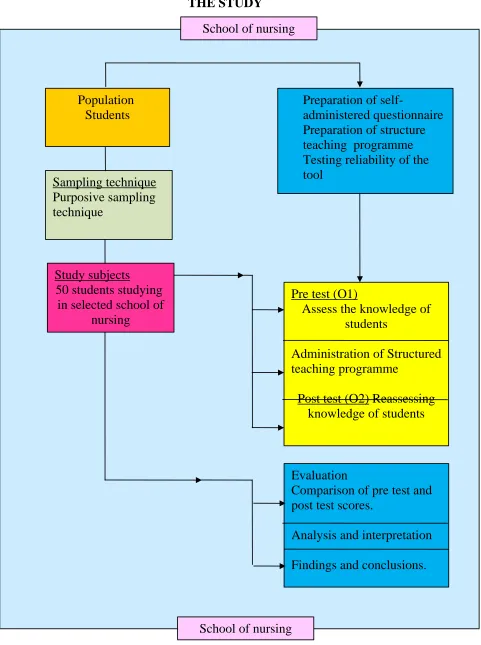
Fig.2: SCHEMATIC REPRESENTATION OF RESEARCH DESIGN OF THE STUDY
School of nursing
Population Students
Preparation of
self-administered questionnaire Preparation of structure teaching programme Testing reliability of the tool
Sampling technique Purposive sampling technique
Study subjects
50 students studying in selected school of
nursing
Pre test (O1)
Assess the knowledge of students
Administration of Structured teaching programme
Post test (O2) Reassessing knowledge of students
Evaluation
Comparison of pre test and post test scores.
Analysis and interpretation Findings and conclusions.
CHAPTER IV
ANALYSIS AND INTERPRETATION
“Learn from yesterday, live for today, hope for tomorrow. The important thing is to not stop questioning”.
- Aristotle
Polit and Hungler, (2004) defines as categorizing, ordering, manipulating and summarizing the data to reduce it into intelligible and interpretable form, so that research problem can be studied and tested including relationship between the variables.
This chapter highlights the analysis and interpretation of data collected from 50 students working in specialty hospitals at Chennai in order to evaluate the effectiveness of structured teaching programme regarding disaster management on the knowledge of students. The data collected from the students before and after the structure teaching programme, was organized, analyzed and interpreted by using descriptive & inferential statistics.
The data collected was analyzed based on the following objectives of the study:
2. To evaluate the effectiveness of structured teaching programme on the knowledge of students.
3. To identify the association between the nursing students level of knowledge and selected demographic variables.
ORGANIZA TION OF FINDINGS
Section 1: Description of frequency and percentage distribution of the students according to the demographic variables.
Section 2: The percentage distribution of pre-test and post-test knowledge of the students on disaster management.
Section 3: Analysis of level of knowledge of the students regarding disaster management in the pre test and post test
SECTION: 1
[image:53.595.90.535.211.461.2]FREQUENCY AND PERCENTAGE DISTRIBUTION OF THE STUDENTS ACCORDING TO THE SELECTED DEMOGRAPHIC VARIABLES.
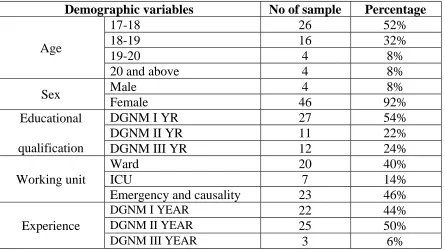
Table 1 : Demographic variables
Demographic variables No of sample Percentage
Age
17-18 26 52%
18-19 16 32%
19-20 4 8%
20 and above 4 8%
Sex Male 4 8%
Female 46 92%
Educational qualification
DGNM I YR 27 54%
DGNM II YR 11 22%
DGNM III YR 12 24%
Working unit
Ward 20 40%
ICU 7 14%
Emergency and causality 23 46% Experience
DGNM I YEAR 22 44%
DGNM II YEAR 25 50%
FREQUENCY AND PERCENTAGE DISTRIBUTION OF THE STUDENTS ACCORDING TO THEIR AGE
Demographic variables No of the sample Percentage Age
17-18 26 52%
18-19 16 32%
19-20 4 8%
[image:54.595.149.451.333.520.2]20 and above 4 8%
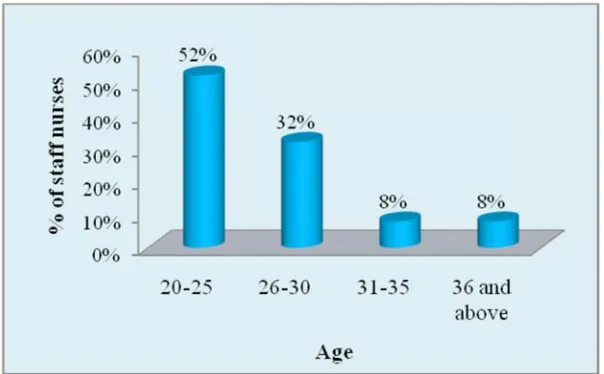
Fig. 3: Cylindrical diagram showing the age of the students
According to their age, 26(52%) of the students were in the age group of 20-25% years, 16(32%) were in 26-36 years, 4(8%) were in 31-35 and similarly 4(8%) with the age group of 36 and above.
Demographic variables No of the sample Percentage Sex
Male 4 8%
[image:55.595.132.466.268.488.2]Female 46 92%
Fig. 4: Pie diagram showing the sex of the students
FREQUENCY AND PERCENTAGE DISTRIBUTION OF THE STUDENTS ACCORDING TO THEIR EDUCATIONAL QUALIFICATION
Demographic variables No of the sample Percentage Educational qualification
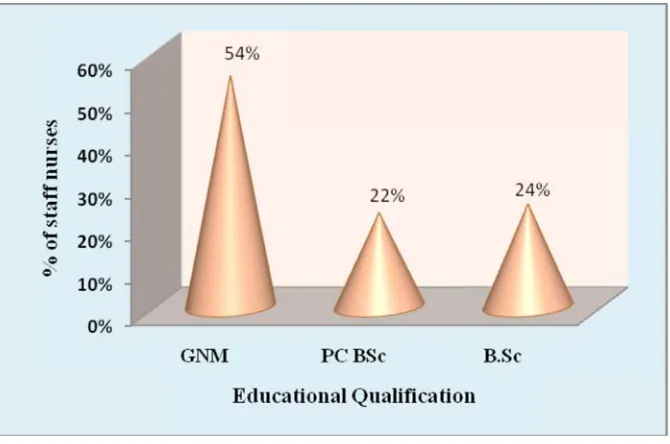
DGNM I YEAR 27 54%
DGNM II YEAR 11 22%
[image:56.595.133.468.325.547.2]DGNM III YEAR 12 24%
Fig. 5 : Conical diagram showing the educational qualification of the students
According to their educational qualifications, around 27(54%) of the students were with DGNM I Year qualification. The students 11 members with DGNM II year qualification were distributed with the percentage of 22 and the students 12 members with DGNM III year qualification was distributed with the percentage of 24.
ACCORDING TO THEIR UNIT
Demographic variables No of the sample Percentage Training unit
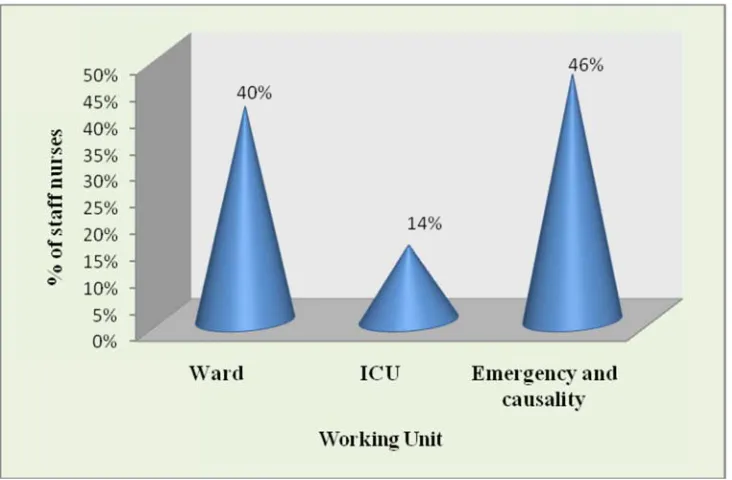
Ward 20 40%
ICU 7 14%
[image:57.595.118.484.297.537.2]Emergency and causality 23 46%
Fig. 6 : Conical diagram showing the training unit of the students
FREQUENCY AND PERCENTAGE DISTRIBUTION OF THE STUDENTS ACCORDING TO THEIR CLASS WISE EXPERIENCE
Demographic variables No of the sample Percentage Experience
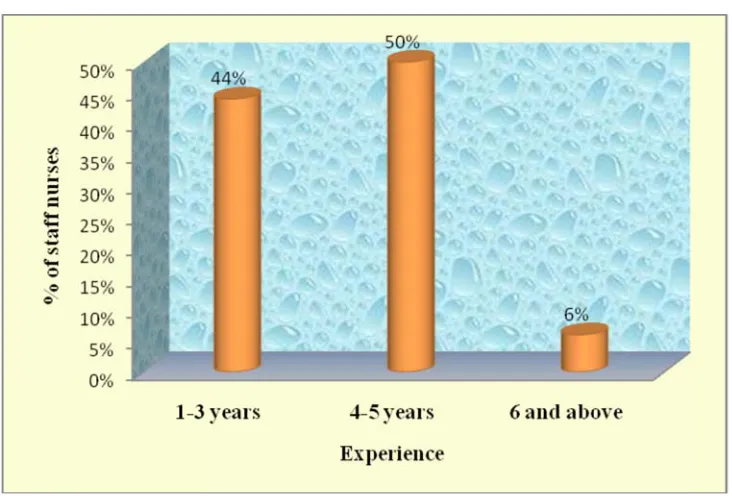
DGNM I year 22 44%
DGNM II year 25 50%
[image:58.595.117.483.342.590.2]DGNM III year 3 6%
Fig. 7: Cylindrical diagram showing the class wise experience of the students
SECTION 2
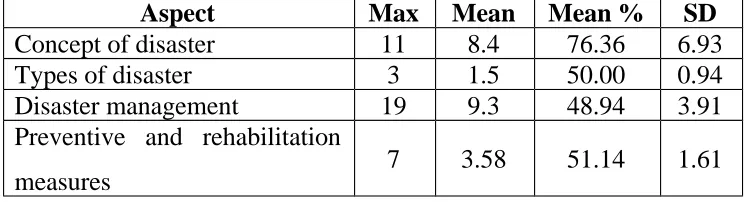
TABLE 2: ASPECT WISE PRE-TEST KNOWLEDGE SCORE REGARDING DISASTER MANAGEMENT AMONG STUDENTS
Aspect Max Mean Mean % SD
Concept of disaster 11 8.4 76.36 6.93
Types of disaster 3 1.5 50.00 0.94
Disaster management 19 9.3 48.94 3.91 Preventive and rehabilitation
[image:59.595.135.465.365.545.2]measures 7 3.58 51.14 1.61
Fig. 8: Cylindrical diagram showing that aspect wise pre-test knowledge scores regarding disaster management among students
The cylindrical diagram shows that, in the pre-test, students had more knowledge (76.36%) on the concept of disaster and comparatively less knowledge (48.94%) in the disaster management. They had (50%) of knowledge on types of disaster and (51.14%) of knowledge on preventive and rehabilitation measures.
DISASTER MANAGEMENT AMONG STUDENTS
Aspect Max Mean Mean % SD
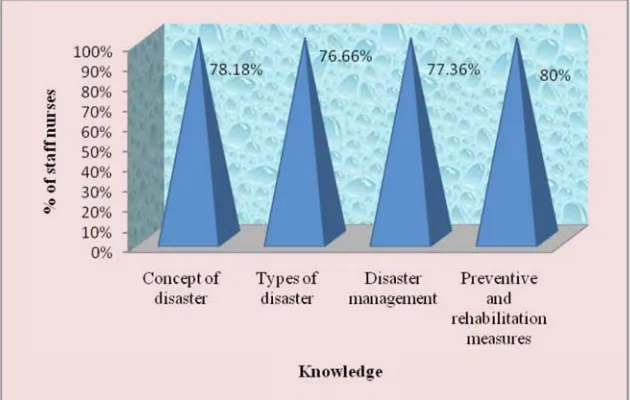
Concept of disaster 11 8.6 78.18 2.49
Types of disaster 3 2.3 76.66 0.49
Disaster management 19 14.7 77.36 1.90 Preventive and rehabilitation
[image:60.595.109.482.134.231.2]measures 7 5.6 80.00 1.18
Fig. 9: Pyramidal diagram showing that aspect wise post-test knowledge scores regarding disaster management among students
The cylindrical diagram shows that, in the post-test, students had more knowledge (80.00%) on the preventive and rehabilitation measures and comparatively less knowledge (76.66%) in the types of disaster. They had (77.36%) of knowledge on disaster management and (78.18%) of knowledge on concept of disaster.
[image:60.595.142.457.314.514.2]Level of knowledge Pre- test Post-test
F % F %
Inadequate 23 46% 0 0
Moderate 22 44 2 24
[image:61.595.105.482.90.168.2]Adequate 5 10 38 76
Fig. 10: Pyramid diagram showing the level of knowledge Of the students
The findings of the Pre-test and Post-test knowledge is to know the effectiveness of structured teaching programme on disaster management among students. It is inferred that, in the pre-test, 46% of students were with an inadequate knowledge and 44% had moderate knowledge and 10% had adequate knowledge regarding disaster management. In the post test, 24% have demonstrated moderate knowledge and 76% have demonstrated an adequacy in their knowledge.
SECTION 3
[image:61.595.136.463.243.440.2](ASPECT WISE) :
Aspect Observation Mean Mean
% Effect SD
‘t’
value ‘p’ value Concept of
disaster
Pre-test 8.4 76.36
1.82 2.852 6.823 P<0.05 significant Post-test 8.6 78.18
Types of disaster
Pre-test 1.5 50.00
26.66 0.781
2 9.318
P<0.05 significant Post-test 2.3 76.66
Disaster management
Pre-test 9.3 48.94
28.42 3.234
3 11.990
P<0.05 significant Post-test 14.7 77.36
Preventive and rehabilitation
measures
Pre-test 3.58 51.14
28.86 1.619
3 9.9420
[image:62.595.124.476.444.640.2]P<0.05 significant Post-test 5.6 80.00
Fig. 11 : Conical diagram showing the aspect wise comparison of pre-test and post-test level of knowledge regarding disaster management among
the students
1.82 and paired "t" value of 6.823, and which shows statically highly significant (P<0.05).
The knowledge regarding types of disasters among students in pre test, the mean was 1.5, standard deviation was 0.7812 and in the post test, the mean score was 2.3 and standard deviation was 0.7812 with the effectiveness of 26.66 and paired "t" value of 9.318, and which shows statically significant (P<0.05).
The knowledge on disaster management among students in pre test, the mean score was 9.3, standard deviation was 3.2343 and in the post test, the mean score was 14.7 and standard deviation was 3.2343 with the effectiveness of 28.42 and paired "t" value of 11.990, and which shows statically highly significant (P<0.05).
TABLE 6: COMPARISON OF MEAN SCORES BETWEEN PRE TEST AND POST TEST OF KNOWLEDGE REGARDING DISASTER MANAGEMENT
(OVERALL)
Aspect Observation Mean Mean
% SD
‘t’
value ‘p’ value Overall
knowledge scores
Pre-test 20.18 50.45
1.826 42.375
(P<0.05 Highly significant Post-test 31.26 78.15
Fig. 12 : Bar diagram showing the comparison of overall mean score between pre-test and post-test level of knowledge regarding disaster
[image:64.595.119.481.410.629.2]SECTION 4
TABLE 7 : ASSOCIATION BETWEEN THE KNOWLEDGE OF DISASTER MANAGEMENT WITH THE DEMOGRAPHIC VARIABLES IN PRE-TEST
Demographic variables
Inadequate Moderate Adequate
Chi-Square
F % F % F %
Age χ2
= 2.5848 df = 6 P>0.05 non-Significant
17-18 10 38.4
6
14 53.8 4
2 7.70
18-19 8 50.0
0
6 37.5 0
2 12.5 0
19-20 2 50.0
0
1 25.0 0
1 25.0 0 20 and above 3 75.0
0
1 25.0 0
0 0.00
Sex χ2
= 0.08001 df = 2 P>0.05 non-Significant
Male 1 25.0
0
2 50.0 0
1 25.0 0
Female 22 48.0
0
20 43.0 0
4 9.00
Educational Qualification χ2
= 2.81790 df = 4 P>0.05 non-Significant DGNM I year 12 44.5
0
13 48.5 0
2 7.00
DGNM II year 7 64.0 0
4 36.0 0
0 0.00
DGNM III year 4 33.3 3
5 41.6 7
3 25.0 0
Training unit χ2
= 4.96134 df = 4 P>0.05 non-Significant
Ward 18 90.0
0
2 10.0 0
0 0.00
ICU 3 43.0
0
4 57.0 0
0 0.00
Emergency and causality
2 8.69 16 69.5 7
Class wise experience χ2
= 17.1727 df = 4 P>0.05 non-Significant
I Year 19 86.3
6
3 14.0 0
0 0.00
II Year 4 16.0
0
18 72.0 0
3 12.0 0
III year 0 0.00 1 33.3
3
2 67.0 0
[image:66.595.87.517.90.221.2]From the above table, it is evident that there is significant association between the pre-test knowledge of the students with the demographic variables "working experience". There is no significant association between the pre-test knowledge of the students with demographic variables namely age, sex, educational qualification andworking unit.
In pre test, the students with the training experience of 1-3 months were with an adequate, moderate knowledge level with the percentage of 86, 14. The students with the training experience of 3-5months were with an inadequate, moderate, adequate knowledge with percentage of 16, 72, and 12. The students with the training experience of 6 and above months were with moderate and adequate knowledge level with the percentage of 33, 67.The demographic variable experience shows significance with the knowledge of students regarding disaster management with chi-square value of 17.1727 and the p<0.05.
CHAPTER –V
DISCUSSION, IMPLICATION AND CONCLUSION
This chapter deals with the research findings regarding knowledge of disaster management among the students.
The knowledge regarding disaster management among students in pre-test, the mean score was 20.18 and standard deviation was 1.826.
2. Evaluate the effectiveness of structured teaching programme on the knowledge of students by the comparison between the pre test and post test knowledge.
The effectiveness of structured teaching programme have been evaluated an effective with highly significant. Statistically it has been observed from the mean score of 31.26, standard deviation of 1.826 and the 't' value of 42.375 with the p value < 0.05.
Suja Suresh, 2005, Delhi, conducted a study to evaluate the effectiveness of structured teaching programme on knowledge and practice of disaster management among students which have been proven by a highly significant difference in knowledge and practice of students between the experimental group (mean difference 22.1, standard deviation 5.62) and control group (Mean difference 0.6, standard deviation 0.88), whereas, a positive correlation between the knowledge and practice in the experimental group in post-test. Thus, this study supports result of current study.
3. To identify the association between the selected demographic variables and the pre test knowledge of students on disaster management.
and training unit. There was significant association between the pre-test knowledge of the students with the demographic variable experience.
IMPLICATIONS OF STUDY
The findings of the study have implications in various field of nursing practice, nursing research, nursing education and nursing administration.
Nursing administration
¾ Nurse administrator should motivate the in-service education and continuing education in hospital and community settings to promote knowledge of the health personnel regarding disaster management. ¾ Nurse administrator can recommend the government and non
government agencies to conduct an awareness regarding disaster and its management among the general public.
¾ The result of this study can be considered as a performance appraisal of the students and according to that in - service education can be planned to all specialty hospitals and in the community to improve the knowledge of health personnel and general public regarding disaster management
Nursing practice
to develop competency in emergency situation in various disasters. Community
¾ Students working in the community setting should practice health education as an integral part of nursing profession.
¾ Community health students made some effort to improve their knowledge regarding disaster management, to take prompt action during disaster and reduce the consequences and repercussions of a disaster.
Nursing education
¾ Allotment of more theory and practice hours for the curriculum of nurse can be improve the competency of the nurse.
¾ The disaster management can be taught to the nursing students by various teaching techniques like workshop, conferences which gives a real life experience.
¾ Special courses on disaster management can be started and the students completing such courses can be certified and thus they can them self utilize in disaster management.
Nursing research
study on disaster management among the health professional and general public which creates an awareness among the health personnel as well as public.
RECOMMENDATION
¾ This study can also be done to assess the practice and attitude of the students on disaster management.
¾ The study can be replicated by using a large sample to validate the findings for generalization.
¾ Similar study can also be conducted in community area/ general public to improve the knowledge and practice of public regarding disaster management.
CONCLUSION
Disaster is a serious disruption of the functioning of society, causing widespread human, material, environment losses, which exceed the ability of the affected society to cope using its own resources.
In developed countries after a major disaster, the need for search, rescue and st aid is likely to be very effective. In developing countries like India, due to lack of resources, knowledge, ignorance and inadequate technological advance may lead to an ineffective disaster management.
BIBLIOGRAPHY
References:
1. All ender, J.A, and Spradley. B.W., (2000). "COMMUNITY HEALTH NURSING - CONCEPTS AND PRACTICE"., 5th
editions., Philadelphia., Lippincott, Pp: 1224-1231.
2. B.T.Basavanthappa.,(1999)., "COMMUNITY HEALTH NURSING"., 2nd edition., Jaypee brother's Medical publishers (P) Ltd., New Delhi., Pp:953-977.
3. Basavanthappa BT, (2001), "NURSING RESEARCH- PRINCIPLES AND METHODS", 6th
edition, Jaypee brothers, New Delhi, Pp: 115-176.
4. Bergeon. D.J and et.al. M., (1994)., "FIRST RESPONDER UPDATE"., 3rd
edition., US., Prentice Hall., Pp:886-896.
5. Boal.S and Goel. A., (2005)., "PRINCIPLES OF EMERGENCY MEDICINE"., 1st edition,. Hyderabad Paras Medical Publisher, Pp: 2189-225.
6. Brunner and Suddarth's., (1998). "TEXT BOOK OF MEDICAL -SURGICAL NURSING.", 11th
7. Burns. N and Grove. S.K., (2001). "THE PRACTICE OF NURSING RESEARCH THE CONDUCT CRITIQUE AND UTILIZATION"., 4th
edition., Philadelphia., W.B.Saunders., Pp:1114-1132.
8. Clark M., (1992). "DISASTER MANAGEMENT COMMUNITY HEALTH NURSING - HEALTH CARE FOR TODAY AND TOMORROW"., 4th edition., restore publication.,Pp:845-857.
9. Clark. M., (1992). "DISASTER MANAGEMENT. COMMUNITY HEALTH NURSING - HEALTH CARE FOR TODAY AND TOMORROW" (4th
Edition). Virginia:, Restore Publishing.
10. Clark.M. (2002). "COMMUNITY HEALTH NURSING"., 6th edition., New Jersey: Pearson. Philadelphia.,Pp:992-1123.
11. Das. B.C and Malini. S., (2005)., "HOSPITAL DISASTER MANAGEMENT PLAN, TEXT BOOK OF COMMUNITY MEDICINE-RECENT ADVANCES". 1st
edition., Delhi., Ahuja Publications., Pp: 3146-3158.
12. Dave. P.K. and et.al. (2000)., "EMERGENCY MEDICAL SERVICES AND DISASTER MANAGEMENT"., 1st
edition., New Delhi., Jayvee., Pp:1454-1468.
13."FIRST AID AND EMERGENCY CARE". (2004). 8th edition. NR Brothers Publishers., Indore., Pp: 214-255.
14. Dhaar, I Robbani.,(2000)., "FOUNDATION OF COMMUNITY MEDICINE"., 2nd
15. Hitchcock. J.E., et.al., (2003)., "COMMUNITY HEALTH NURSING-CARING IN ACTION"., 2 edition., USA: Delmar., Pp:996-1110.,
16. Kunden G.D., (2004), "HOSPITAL-FACILITIES PLANNING AND MANAGEMENT". New Delhi., Tata McGraw Hill Publishers., Pp: 998-1123.
17. L.C.Gupta., Abhetabh Gupta. (1995)., "MANUAL OF FIRST AID MANAGEMENT OF GENERAL INJURIES, SPORT INJURIES AND COMMON AILMENTS". 1st edition. Jaypee brothers medical publishers (p) Ltd., New Delhi., Pp: 260-263.
18. Lewis, et.al. (1998). "MEDICAL SURGICAL NURSING IN CANADA ASSESSMENT AND MANAGEMENT OF CLINICAL PROBLEMS". 1st
edition., Elsevier., Canada., Pp: 1875-1889.
19. Lewis, et.al. (2000)., "MEDICAL SURGICAL NURSING ASSESSMENT AND MANAGEMENT OF CLINICAL PROBLEMS"., 7th edition., Mosby., Elsevier publication., New Delhi., Pp: 1821-1844.
20. Gupta, Mahajan., (1998)., "TEXTBOOK OF PREVENTIVE AND SOCIAL MEDICINE"., 3rd
edition., Jaypee brothers., New Delhi., Pp: 629-639.
178-181.
22. Park's., (2000). "TEXTBOOK OF PREVENTIVE AND SOCIAL MEDICINE". 20th edition., M/s. Banarsidas Bharat publishers., Jabalpur., India.,Pp: 700-707.
23. Smeltzen. S.C. and Bare (2003). "BRUNNER SUDDARTH'S TEXTBOOK OF MEDICAL SURGICAL NURSING"., 10th
edition., Philadelphia., Lippincott.Pp:2231-2245.
24. Stanhope, Lancaster.,(1998).,"COMMUNITY HEALTH NURSING"., Promoting health of aggregates., Families and individuals., 4th edition., Mosby publication., Missouri, Pp: 376-391. 25. WHO. (2002)., "NATURAL DISASTER-CHALLENGING TO
ASIAN PEOPLE"., Retrived from httt://who.org.
JOURNAL
1. K. Amarender Reddy., Health Action., December (2009)., "SOCIAL AND PSYCHOLOGICAL EFFECTS OF FLOODS"., Pp: 14-27.
2. Buthchanan. D and Kington R.S., (2004)., "FUNCTION AND RESPONSE OF NURSING FACILITIES DURING COMMUNITY DISASTER"., American journal of pubic health., Volume-94(8)., Pp:36-41.
nursing. Volume -28 (5), Pp:401-406.
4. Denise danna, (2009), Jona, "IMPROVEMENTS IN DISASTER
PLANNING AND DIRECTIONS FOR NURSING
MANAGEMENT", volume 39, Pp: 423-431.
5. Gebbie K.M, and Qunesh.K, (2000), "DISASTER - A BASIC OVERVIEW, PREPARING STUDENTS FOR DISASTER PREPAREDNESS", 1st
edition. New Jersey, Prentice Hall, Pp:17
6. Hulle. S.V, (2005), "INDIA'S PREDICTABLE DISASTERS, HEALTH FOR THE MILLIONS", Feb-March, Pp: 2.
7. Ignatius. M, (2003), "A PRE EXPERIMENTAL STUDY ON EFFECTIVENESS OF SELF INSTRUCTIONAL BOOKLET ON
DISASTER PREPAREDNESS AMONG STUDENTS,
COMMUNICATING RESEARCH FINDINGS", Pp: 116.
8. Jener, et.tal, (1996), "DISASTER NURSING AND EMERGENCY PREPAREDNESS FOR CHEMICAL, BIOLOGICAL, AND RADIOLOGICAL AND TERRORISM AND OTHER HAZARDS". 1st
edition. Springer publishing company., New York., Pp:2-14.
9. Joshi Sonopant G., Nightingale Nursing Times. (2009)."STUDENTS PERCEPTION OF DISASTER NURSING"., Volume 5., Pp:41-45. 10. Roy.T., (2005)., "INDIA'S PREDICTABLE DISASTER HEALTH
11. Sherrill L., et.al, "NURSING RESEARCH". (2008), "PLANNING FOR MASS DISASTER IN THE 1950S". Volume:57., Pp: 237-243. 12. Social welfare. (2005)., "TSUNAMI IN TAMIL NADU :THE
DAMAGE AND THE STATES RESPONSE"., Febuary.,Pp:8-15. 13. Sreevani.R., (2005). "ROLE OF A NURSE IN DEALING
PSYCHOSOCIAL PROBLEMS OF DISASTER VICTIMS"., Nightingale nursing time., Volume: 1(3)., Pp: 4.
14. Travers. D., et.al, (2002). "COMPARISON OF 3-LEVEL AND 5-LEVEL TRIAGE ACUITY SYSTEM"., Journal of emergency nursing., Volume:37(10)., 411.
15. Waff, TV., (2005)., "DISASTER MANAGEMENT HEALTH FOR THE MILLIONS"., Feb., Pp:8-9.
NET REFERENCE:
1. www.word-detective.com. 2. www.seedtoplate.com. 3. www.wikipedia.com. 4. www.answers.com. 5. www.strongvpn.com. 6. www.who.org.com.
ANNEXURE V
Section – 1
DEMOGRAPHIC VARIABLES PROFORMA PURPOSE
This Performa is used to measure the demographic variables such as age, sex, working unit, professional experience of students
INSTRUCTION
Read the following items carefully and select one correct response by placing the appropriate tick mark in the space provided.
1. Age in years [ ]
a) 21-25 b) 29-30 c) 31-35
d) 36 and above
2. Sex [ ]
a) Male b) Female
3. Educational qualification [ ]
a) Diploma in nursing b) Pc Bsc