TEACHING PROGRAMME ON AWARENESS AND READINESS TO
CHANGE THE ABUSIVE BEHAVIOR AMONG PERSONS WITH
ALCOHOL USE IN SELECTED COMMUNITY AT COIMBATORE.
Ms.K.BANUPRIYA
Reg. No: 301632951
A Dissertation Submitted to
The Tamil Nadu Dr. M. G. R. Medical University,
Chennai
–
32.
In Partial Fulfillment of the Requirement for the
Award of the Degree of
MASTER OF SCIENCE IN NURSING
BRANCH - V
MENTAL HEALTH NURSING
TEACHING PROGRAMME ON AWARENESS AND READINESS TO
CHANGE THE ABUSIVE BEHAVIOR AMONG PERSONS WITH
ALCOHOL USE IN SELECTED COMMUNITY AT COIMBATORE.
Ms.K.BANUPRIYA
Reg. No: 301632951
A Dissertation Submitted to
The Tamil Nadu Dr. M. G. R. Medical University,
Chennai – 32.
In Partial Fulfillment of the Requirement for the
Award of the Degree of
MASTER OF SCIENCE IN NURSING
BRANCH - V
MENTAL HEALTH NURSING
TEACHING PROGRAMME ON AWARENESS AND READINESS TO
CHANGE THE ABUSIVE BEHAVIOR AMONG PERSONS WITH
ALCOHOL USE IN SELECTED COMMUNITY AT COIMBATORE.
By
Ms.K.BANUPRIYA
Reg. No: 301632951
A Dissertation Submitted to The Tamil Nadu Dr. M.G.R. Medical University, Chennai, in Partial Fulfillment of Requirement for the
Degree of
MASTER OF SCIENCE IN NURSING
BRANCH - V
MENTAL HEALTH NURSING
2018
______________________ ______________________
TEACHING PROGRAMME ON AWARENESS AND READINESS TO
CHANGE THE ABUSIVE BEHAVIOR AMONG PERSONS WITH
ALCOHOL USE IN SELECTED COMMUNITY AT COIMBATORE.
APPROVED BY THE DISSERTATION COMMITTEE
RESEARCH GUIDE:
Prof.Dr.D.CHARMINI JEBAPRIYA,M.Sc(N).,M. Phil,Ph.D,. Principal,
Texcity college of nursing Coimbatore -23
SUBJECT GUIDE:
Asst Prof.Mrs. A.Vedha Darly., M.Sc(N)., Texcity College of Nursing
Coimbatore -23
MEDICAL GUIDE: _________________________________________ Dr.Mrs.HEMALATHA RAJMOHAN.M.B.B.S.DPM. Consultant Psychiatrist,
Certified that this is the bonafide work of Ms.K.Banupriya Texcity College of Nursing, Coimbatore-23, submitted as a partial fulfillment of the requirement for the Degree of Master of Science in Nursing to The Tamilnadu Dr.M.G.R. Medical University, Chennai. Under the Registration No: 301632951
College Seal
Prof. Dr.D.CHARMINI JEBAPRIYA, M.Sc (N)., M.Phil, Ph.D., Principal
Texcity College of Nursing, Coimbatore-23.
Texcity College Of Nursing Podanur Main Road
Coimbatore-23.
I hereby declare that the dissertation entitled a study to assess the effectiveness of structured teaching programme on awareness and readiness to change the abusive behavior among persons with alcohol use in selected community at Coimbatore. Submitted to the Tamilnadu, Dr. M.G.R. Medical University, Chennai, in partial fulfillment of the requirements for the award of the degree of Master of Science in Nursing is a record of original research work done by myself.
This is the study under the supervision and guidance of Prof. Dr. D. Charmini Jeba Priya, M.Sc(N).,M.Phil,Phd., Principal, Texcity College of Nursing, Coimbatore-23 and the dissertation has not found the basis for the award of any degree/ diploma/associated degree/ fellowship or similar title to any candidate of any university.
SIGNATURE OF THE PRINCIPAL
DEDICATION
THIS DISSERTATION IS
DEDICATED TO
ALMIGHTY GOD,
OUR BELOVED PARENTS,
BROTHERS & SISTERS,
ACKNOWLEDGMENT
First and foremost, praise and thanks to the God, the Almighty, for his showers of blessings throughout my research and the courage to overcome all the difficulties and whose work to complete the research successfully.
I express my heartfelt thanks to honorable Haji. Janab. A.M.M. Khaleel, Chairman, Texcity Medical and Educational Trust, Coimbatore-23, for giving me an opportunity to utilize all the facilities in this esteemed institution.
I express my sincere thanks to Major H.M. Mubarak, Manager, Texcity College of Nursing, for supporting me to complete this study greater achievements comes from experience and success.
It is my privilege to express profound gratitude and heartfelt thanks to my research & subject guide Prof. Dr .D. Charmini Jebapriya, MSC. (N), M. Phil., Ph.D., Principal, Texcity College of Nursing. Her hard work, effort, interest, sincerity, suggestion and constructing comments, correction, helped me to mold this study in a successful way. Her inspiration and encouragement laid the strong foundation in this research. It is very essential to mention that her wisdom, knowledge and helping nature has made my research a lively and everlasting one.
I owe my deepest gratitude to Prof. P.Thenmozhi, M.Sc(N). M.Sc. (Psy). Vice principal, Texcity College of Nursing, for her unwavering support, collegiality, and mentorship until this work came to existence and also for being ever so kind to show interest in my research and for giving their precious and kind advice regarding complete my study.
I extend my sincere thanks to Asst Prof. B. Anusha, M.Sc (N). Class Co-coordinator Texcity College of Nursing for her esteemed suggestions, constant support, timely help, and guidance till the completion of this study.
I would like to extend my thanks to Mrs.Saranya,M.Sc(N),[MHN], and Mrs.VedhaDarly, M.Sc(N),[MHN], Texcity College of Nursing, Coimbatore, for her expert guidance, support and valuable suggestions given to me throughout the study.
I would like to extend my thanks to Mr. Arputham, ANN'S IT, Podanur, for his full cooperation and help in bringing in a printed form.
For the ancestors who paved the path before me upon whose shoulders I stand, my sisters' brothers, brother in law and benefactors. I do not know how to thank you enough for providing me with the opportunity to be who I am today thank you.
Statement of the Problem:
A study to assess the effectiveness of structured teaching programme on
awareness and readiness to change the abusive behavior among persons with alcohol
use in the selected community at Coimbatore.
Objectives:
To assess the awareness about the hazards of alcoholism and readiness to change the abusive behaviour among persons with alcohol use.
To administer the structured teaching programme about the hazards of
alcoholism and its management.
To evaluate the effectiveness of Structured teaching programme regarding
the hazards of alcoholism and its management.
To correlate the hazards of alcoholism and readiness to change the abusive
behaviour among persons with alcohol use.
To associate the effectiveness of Structured teaching programme awareness
about the hazards of alcoholism and readiness to change the abusive behaviour
among persons with alcohol use.
Hypothesis:
H1: There will be a significant difference between the pretest and posttest score on awareness about the hazards of alcoholism and readiness to change the
abusive behaviour .
H2: There will be a significant association between the effectiveness of Structured teaching programme on awareness and readiness to change the abusive
One group pre-test and post-test designwas used . The population in the study
includes the alcohol abusers in the age group of 20-65 years and who are residing in
Podanur community area Coimbatore.The pre-test was done by using the Structured
Questionnaire on awareness of the hazards of alcoholism and Modified Socrates
readiness to change Questionnaire. Then the structured teaching programme was
given on the hazards of alcoholism and its management by the lecture method with
audio-visual aids for 45 minutes.Post-test was conducted on the 15th day by using the
same questionnaire. Inferential and descriptive statistics were used to analyze the statistical values.
Conclusion:
The improvement means a score of awareness of hazards of alcoholism and its
management was 11.16 with the standard deviation of 7.32 and the "t" value was
10.77 which was significant at 0.05 level. In case of readiness to change, the mean
value was 32.42 with the standard deviation was 22.99 and the "t" value was 9.07
which was significant at 0.05 level. There was a significant positive correlation
between awareness and readiness to change the abusive behavior found in the
analysis. There was a significant association found between age and post-test scores
A similar study can be conducted in a large group to generalize the study
findings.
The study can be conducted to assess the attitudes and coping strategy of
significant family members involved in the care of alcohol dependents.
A comparative study can be done between urban and rural areas.
A quasi-experimental study can be conducted with a control group for the
effective comparison.
This study can be conducted as a descriptive study to assess the extent and
CHAPTER
CONTENT
PAGE NO
I
II
INTRODUCTION
1.1 Background of the study 1.2 Need for the study
1.3 Statement of the problem 1.4 Objectives
1.5 Hypothesis
1.6 Operational definition 1.6.1 Assess
1.6.2 Effectiveness
1.6.3 Structured Teaching Programme 1.6.4 Awareness
1.6.5 Readiness to change 1.6.7 Abusive behavior
1.6.8 Persons with alcohol use
1.7 Assumptions 1.8 Delimitations 1.9 Limitations
1.10 Projected outcome 1.11 Conceptual framework
REVIEW OF LITERATURE
2.1 Literature related to Alcoholism 2.2 Literature Related to Literature related to awareness of alcoholism and readiness to change the abusive behavior.
2.3 Literature related to the effectiveness of structured teaching programme on alcoholism
III
IV
V
VI
RESEARCH METHODOLOGY
3.1 Introduction 3.2 Research approach 3.3 Research design 3.4 Research variables 3.5 Setting of the study 3.6 Population
3.7 Samples and sample size 3.8 Criteria for selection of samples
3.8.1 Inclusion criteria 3.8.2 Exclusion criteria
3.9 Sampling technique 3.10 Description of the tool 3.11Tool validity and reliability
3.11.1 Content Validity 3.11.2 Content Reliability
3.12 Pilot study 3.13 Data collection procedure
3.14 Plan for data analysis 3.15 Ethical consideration
DATA ANALYSIS AND INTERPRETATIONS
FINDINGS AND DISCUSSION
SUMMARY, CONCLUSION, NURSING IMPLICATIONS LIMITATIONS AND RECOMMENDATIONS
6.1 Summary
CHAPTER CONTENT
NO
6.1.1 Objectives: 6.1.2 Hypotheses
6.1.3 Major Findings of the Study
6.2 Conclusion
6.3 Nursing Implications
6.3.1 Nursing practice 6.3.2 Nursing education 6.3.3 Nursing administration 6.3.4 Nursing research
6.4 Limitations
6.5 Recommendations
REFERENCES
APPENDICES
49 50 50 51 51 51 52 52 52
53 53
TABLE NO
TITLE PAGE
NO 3.1 3.2 3.3 4.1 4.2. 4.3 4.4 4.5 4.6 4.7 4.8
Interpretation of Awareness score
Grading of changes to readiness in alcohol abusers Interpretation of changes to readiness in alcohol abusers Frequency and percentage distribution of demographic variables of the persons with alcohol use.
Frequency and percentage distribution of pre-test and post-test scores of awareness about hazards of alcoholism among persons with alcohol use
Frequency and percentage distribution pre-test and post-test scores of readiness for change in the abusive behaviour among persons with alcohol use. .
Frequency and percentage distribution of pre-test and post-test scores of awareness about hazards of alcoholism and readiness for change in the abusive behaviour among persons with alcohol use.
Improvement score of the awareness about hazards of alcoholism and readiness for change in the abusive behaviour among persons with alcohol use
Mean, standard deviation and correlation of post-test scores of the awareness about hazards of alcoholism and readiness for change in the abusive behaviour among persons with alcohol use.
Frequency, percentage, and χ2 of post-test scores regarding awareness about the hazards of alcoholism among persons with alcohol use with the selected demographic variables.
NO
1.1
3.2
3.3
4.1.1
4.1.2
4.1.3
4.1.4
4.2.1
4.3.1
Conceptual Framework based on general system
theory by Ludwig Von Bertalanffy, (1968)
Schematic Representation of Research Variables
Schematic Representation of Research methodology
Bar diagram shows the percentage distribution of
persons with alcohol use based on age
Pie chart shows the percentage distribution of persons
with alcohol use based on Gender.
Cone chart shows the percentage distribution of
persons with alcohol use based on Educational status.
Cone chart shows the percentage distribution of
persons with alcohol use based on Income.
Cone chart shows the percentage distribution of
pre-test and post-pre-test scores of awareness about hazards of
alcoholism among persons with alcohol use.
Cone chart shows pre-test and post-test scores of
readiness for change in the abusive behaviour among
persons with alcohol use.
.
11
20
27
31
32
33
34
36
APPENDIX TITLE
I. Letter seeking and granting permission to conduct the
study
II. Letter requesting expert’s opinion for content validity.
III. List of experts given opinion for content validity
IV. Evaluation criteria check list for content validity
V. Evaluation criteria check list for content validity
Tool-I demographic variable & background information
VI. Letter seeking consent for participants in this study
VII. Certificate for English Editing
VIII. Tool-I Demographic variables & background information
IX. Tool- II Structured questionnaires on awareness of hazards of alcohol and it is management
X. Tool- III Modified Socrates readiness to change
questionnaire
XI. Health teaching plan
XII. Poster
1
CHAPTER – I
INTRODUCTION
Alcoholism is a worldwide problem not confined either to developed or to
developing nations. The adverse consequences of alcohol not only affect the
individual user but society as a whole. Alcohol is a major public health problem
today. Alcoholism continues to be a growing nuisance among all the strata of the
society. Alcohol dependence is one of the most debilitating psychiatric illness
affecting 5% of people, who consume alcohol. The prevalence of alcohol abuse has
increased over the past 10 years, and the age of initial alcohol use has increased
gradually in India. Alcohol dependence is one of the leading causes of disability and
has led to increases in the incidence of crime and violence.
1.1 BACKGROUND OF THE STUDY:
According to All Indian Institute of Medical Sciences, New Delhi (2010),
Alcoholism is the third largest health problem in India besides next to heart disease
and cancer. In India 15 to 20 percent of people take alcohol, over the past 20 years,
the number of alcohol users in our country has increased from one in 300 to one in 20.
The production and sale of liquor in the whole country have increased almost 20
times. The result is that the liquor habit has increased in a large number. With more
than half of all alcohol users in India falling into the criteria for hazardous drinking,
alcohol abuse is emerging as a major public- health problem in the country. Officially,
Indians are still among the world’s lowest consumers of alcohol. Government statistics show only 21% of adult men and around 2% of women have been using.
But up to a fifth of this group- about 14 million people are dependent alcohol users
require “help”.
Protection of populations at high risk of alcohol-attributable harm and those
exposed to the effects of harmful drinking by others should be an integral part of
policies addressing the harmful use of alcohol. Individuals and families affected by
the harmful use of alcohol should have access to affordable and effective prevention
2
beverages have the right to be supported in their non-drinking behavior and protected
from the pressures to drink.
While alcohol can have a very temporary positive impact on a person's mood,
in the long term, it can cause big problems for mental health. It’s linked to a range of issues from depression and memory loss to suicide1. Alcohol alters brain chemistry.
People brain relies on a delicate balance of chemicals and processes. Alcohol is a
depressant, which means it can disrupt that balance, affecting our thoughts, feelings,
and actions – and sometimes our long-term mental health. This is partly down to
‘neurotransmitters', chemicals that help to transmit signals from one nerve (or neuron) in the brain to another. The relaxed feeling people can get when they have that first
drink is due to the chemical changes alcohol has caused in their brain. For most of the
people, a drink can help to feel more confident and less anxious. That’s because it’s starting to depress the part of the brain people associate with inhibition. But, as they
drink more, more of the brain starts to be affected. It doesn’t matter what mood they are in to start with, when high levels of alcohol are involved, instead of the
pleasurable effects increasing, it’s possible that a negative emotional response will take over. Alcohol can be linked to aggression a person could become angry,
aggressive, anxious or depressed. Alcohol can actually increase anxiety and stress
rather than reduce it. Alcohol can make people lose their inhibitions and behave
impulsively, so it can lead to actions they might not otherwise have taken – including self-harm and suicide. Drinking heavily over a long period of time can also have
long-term effects on memory. Even on days when you don't drink any alcohol, recalling
what you did yesterday, or even where you have been earlier that day, become
difficult.
Most people with alcohol use do not have knowledge about the hazards of
alcoholism, those who realize that they are alcoholic and need help, get the best
results. The key objective of the psychoeducation is to provide awareness and to
motivate for his changing from abusive behavior. The current approach is that
alcoholism is to be understood in terms of character and motivation. Motivation
through psychoeducation is considered important in the integration of personality and
in achieving mental health. Lack of proper awareness about alcoholism has been the
3
Motivation is recognized as the result of an interaction between the alcohol
dependents and those around him/her, motivation, they can be understood not as
something one has but rather as something one does. It involves recognizing a
problem, searching for a way to change, and the beginning, continuing and complying
with that changed strategy.
1.2: NEED FOR THE STUDY
The problem of alcoholism is increasing day by day because of social changes,
westernization. It is the major health problem and it is prevalent in all communities,
and it is common in all people irrespective of social status that is rich or poor. It
affects both the individual and family functioning.
According to World Health Organization (2014), Among all age groups
starting from 15 years old, While 5.9% of all global deaths in 2012 were attributable
to alcohol, the percentage of alcohol-attributable deaths among males was higher
(7.6%) than that of death among females (4.0%). Intentional injuries: alcohol
consumption, especially heavy drinking, has been causally linked to suicide and
violence (Cherpitel, 2013; Macdonald et al., 2013). Unintentional injuries: almost all
categories of unintentional injuries are impacted by alcohol consumption. The effect
is strongly linked to the alcohol concentration in the blood and the resulting effects on
psychomotor abilities. Injury to other individuals can be intentional, e.g., assault or
homicide, or unintentional, e.g., a traffic crash, workplace accident or scalding of a
child. Neglect or abuse can affect, for example, a child, a partner or a person in the
drinker’s care. Default on the social role can involve the drinker's role as a family member, as a friend and/or as a worker. Property damage can involve damage, for
example, to clothing, a car or a building. Toxic effects on other individuals include
most notably fetal alcohol syndrome (FAS) and preterm birth complications (Foltran
et al., 2011). Loss of amenity or peace of mind can influence family members
(including children), friends, co-workers, and strangers, who may, for example, be
kept awake or frightened by the actions of the drinker. Physiologically, the liver is the
main site of alcoholic metabolism; hence it is the most affected organ. Acute
4
drinking for a long period causes gastritis, ulcers, and pancreatitis. Heavy alcohol
intake interferes with food digestion and absorption, which leads to vitamin
deficiency. Alcohol increases the effects of the CNS depressant like sedatives and
hypnotics.
So, imparting knowledge about the treatment of alcohol and drug dependence
and the recovery process to a large number of clients is of paramount importance. It
requires less degree of specialist time and can conduct by a trained social worker or
psychologist in an inpatient or outpatient setting.
Information and education aimed at the general population play an important
role in providing skills for responsible decision making about drinking. Educational
approaches are most effective when combined with other policy measures. Education
around alcohol consumption is, therefore, an important tool in prevention and an
essential component of health education in general.
People need to know that the abuse of alcoholic beverages is a very serious
illness. Society has a right to know that this type of abuse is not normal; it causes
enormous hazards to health and to the society and should be treated. The longer an
individual stays trapped in addiction the more their life will be destroyed. Escape
from this destructive behaviour is only possible when the addict is ready to change.
This motivation is brought through psychoeducation which must be strong enough to
overcome denial and ignorance about the problem.
1.3 STATEMENT OF THE PROBLEM
A study to assess the effectiveness of structured teaching programme on
awareness and readiness to change the abusive behavior among persons with alcohol
use in the selected community at Coimbatore.
1.4 OBJECTIVES
5
● To administer the structured teaching programme about the hazards of alcoholism and its management.
● To evaluate the effectiveness of Structured teaching programme regarding the hazards of alcoholism and its management.
● To correlate the hazards of alcoholism and readiness to change the abusive behaviour among persons with alcohol use.
● To associate the effectiveness of Structured teaching programme awareness about the hazards of alcoholism and readiness to change the abusive behaviour
among persons with alcohol use.
1.5 HYPOTHESIS:
● H1: There will be a significant difference between the pretest and posttest score on awareness about the hazards of alcoholism and readiness to change
the abusive behaviour .
● H2: There will be a significant association between the effectiveness of Structured teaching programme on awareness and readiness to change the
abusive behaviour with selected demographic variables.
1.6 OPERATIONAL DEFINITIONS
1.6.1 Assess
The act which is planned by the researcher to evaluate the knowledge of
alcohol abusers on hazards of alcoholism and readiness to change of abusive
behaviour with alcohol use.
1.6.2 Effectiveness
In this study, it refers to find out an intended outcome of structured teaching
programme on creating awareness on hazards of alcoholism and readiness to change
6 1.6.3 Structured Teaching Programme
It refers to a systematically planned group of instructional design to provide
information regarding alcoholism, its causes, hazards, management and prevention of
alcoholism by lecture method and with the use of audio-visual aids such as the poster,
pamphlets to create awareness and to change alcoholics abusive behaviour.
1.6.4 Awareness
It refers to the understanding and the knowledge of the subjects regarding
alcoholism, their causes, hazards, and readiness to change the abusive behaviour as
measured by the structured questionnaires.
1.6.5 Readiness to change
It is the process of preparing a person with alcohol use to change the attitude
towards drinking and reduce the abusive behaviour by creating awareness on hazards
of alcohol use.
1.6.7 Abusive behaviour
It refers to the excessive use of alcoholic beverages by a person, either on
individual occasions or as a regular practice.
1.6.8 Persons with alcohol use
It refers to both gender in the age group of 20 to 65 years who use alcoholic
beverages at least more than 8 times a month or excess.
1.7 ASSUMPTIONS
7
● Alcoholics knowledge regarding alcoholism, causes, hazards, management, and prevention of alcoholism will help them to create an awareness and
readiness to change their abusive behavior.
● Structured teaching programme will enhance the alcohol abuser's knowledge and help them to create an awareness of the hazards of alcoholism and
readiness to change the abusive behavior.
1.8 DELIMITATIONS:
Alcoholics
● who are residing in Podanur community area.
● who are willing to participate in the study.
● who are available at the time of data collection.
1.9 LIMITATIONS:
● The size of the sample is only 50. Hence the study findings cannot be generalized.
● The study was limited to one month, improvement in knowledge takes place slowly.
● The study did not use any control group. There was a possibility of a threat to internal validity, such as events occurring between pretest and post-test
session like mass media or other people can influence the Alcohol abuser’s Knowledge.
● The study finding was limited to the alcohol abusers who are residing in Podanur community area. Hence, the findings can be generalized only to the
8 1.10 PROJECTED OUTCOMES
This study will enable the investigator to know
● How to improve the knowledge of Alcoholics regarding alcoholism, causes, hazards, management, and prevention of alcoholism will help them to create
an awareness and readiness to change their abusive behavior.
● Find out the personnel compelling motivators for change in their attitude.
1.11 CONCEPTUAL FRAMEWORK
The conceptual framework is the interrelated concepts or abstractions that are
assembled together in some rational scheme by virtue of their relevance to the
common theme. (Nancy burns, 2007).
In this study, a conceptual framework is based on Peplau’s interpersonal relation model (1993). Peplau’s based her model on psychodynamic nursing, which she defines as using an understanding of one’s own behavior to help others identify their difficulties. Psychodynamic Nursing applies principles of human relations to
problems that arise at all levels of human relations to problems that arise at all levels
of human experience.
In Peplau’s model, the phase of the nurse-patient relationship reflects the
occurrence in personal interactions. The four phases are orientation, identification,
exploitation, and resolution. During these phases, the nurse assumes various roles,
such as the teacher, Resourcer, counselor, leader, technical expert, and surrogate.
Orientation
The orientation phase begins when a patient expresses the felt need. The
researcher establishes the good rapport with the clients and maintains a trustworthy
relationship with the subjects. The researcher and the patient meet as strangers and
strive to become comfortable with each other which allows the patient to direct
9 Identification
In the identification phase, the person with alcohol use and the investigator
continue to clarify each other’s perceptions and expectations because these determine their personal reactions. In this study, the investigator assesses the demographic
variables such as age, sex, religion, educational status, occupation, income, marital
status, type of family and location of residence. The level of awareness about
alcoholism was assessed using awareness about alcoholism questionnaire and
scored as inadequate awareness, moderate awareness and adequate awareness and
their readiness to change from alcoholism was assessed using Modified Socrates
readiness to change questionnaire and scored as low readiness to change, moderate
readiness to change and high readiness to change.
Exploitation
In the exploitation phase, the investigator assists the group of person with
alcohol use. Structured teaching programme was given on alcoholism, its risk factors,
causes, pathophysiology and management of alcoholism like lifestyle modifications,
diet, medications, and home care remedies, medical and psychiatric care services are
taught to the subjects to raise their awareness of alcoholism and assess their readiness
to change from alcoholism. In exploitation participate towards abstinence from
alcoholism to reduce major health problems, shows regular focus for sleeping,
attainment of normal mood, express the feeling verbally, relieve misbehavior, adapt
socially acceptable sexual behaviour, engage in social interaction and learn the
problem-solving skill.
Resolution
During the resolution phase, after the patient’s needs have met by the collaborative efforts of the nurse and the patient, the therapeutic relationship ends.
The output is the increasing level of awareness and their readiness to change from
10
The resolution includes three levels, inadequate awareness and low readiness
to change from alcoholism, moderate awareness and moderate readiness to change
from alcoholism and adequate awareness and high readiness to change from abusive
behavior. An individual with inadequate awareness and low readiness to change from
11
Adequate awareness
and high readiness to
change
Moderate awareness
and Moderate readiness
to change
Inadequate awareness
and low readiness to
change
ORIENTATION IDENTIFICATION EXPLOITATION
Figure 1.1: MODIFIED E. HILDEGARD PEPLAU’S INTERPERSONAL THEORY (2011)
Establishing
good rapport
Building
a
trustworthy
relationship
Assuring
confidentiali
ty
DEMOGRAPHIC VARIABLESAge
Sex
Education
Religion
Occupation
Income
Marital status
Type of family
ASSESSMENT QUESTIONNAIRES
The structured
questionnaire on
awareness of
hazards of
alcoholism and its
management
Modified
STRUCTURED TEACHING PROGRAMME ON HAZARDS OF ALCOHOLISM AND ITSMANAGEMENT
• Meaning •Causes
• Hazards include physical
12
CHAPTER- II
REVIEW OF LITERATURE
Review of literature is an essential aspect of a research work. It is of great
help to the researcher and works as a guide for the researcher. Review of related
literature serves as a pointer to the lacuna in the concerned piece of research work.
The review of literature may not be systematic but it has been done in such a way to
indicate and elaborate the causes, problems, consequences, and various contributions
in the field of drug and alcohol-related problems. The following are the related
literature that the researcher has taken the initiative in providing the basic information
on the related research topic.
The review of literature is discussed under the following headings
2.1: Section – A: Literature related to alcoholism
2.2: Section –B: Literature related to awareness of alcoholism and readiness to
change the abusive behavior.
2.3: Section – C: Literature related to the effectiveness of Structured teaching
programme on alcoholism
2.1: Section – A: Literature related to alcoholism
Ahuja, (2003) The problems of alcoholism – in terms of personal misery, family budget, family discord, loss of wages, failure of health, accidents and cost in
damage claims, cost of hospital treatment, cost of custodial treatment in jail, monetary
damage in the courts, and inducement to crime – are almost disastrous. Social deviance and social problems emerge from the use and abuse of alcohol. Though the
number of annual arrests for public drunkenness is not much in our country, it is a
known fact that a large number of alcoholics are not arrested because of the fact that
arrest is not considered a good solution to the problem. A good number of persons
13
them while under the influence of alcohol. Alcoholism is a major factor in highway
accidents. Besides, it contributes to thousands of deaths every year.
Peschke, (2004) One of the important social problems is the greatest loss of
life and property due to Automobile accidents and many fatal accidents on the roads is
caused by drinking. In the words of Richards Cabot, “The excessive drinker does not usually drive when s/he is drunk. Moderation is thus more dangerous than excessive
drinking as a cause of automobile accidents.
Sharma, R. N. (2005), illustrates that the excessive drinking robs the man of
his sense of discrimination; he is unable to distinguish between good and bad, right
and wrong. Lal,(2005) indicates that the constitution of India under Article 47, enjoins
that the state shall endeavor to bring about prohibition of the consumption, except for
medical purposes, of intoxicating drinks and of drugs which are injurious to health.
Mohan, (2008) A study was conducted about Alcohol abuse in a rural
community in India: Part II characteristics of alcohol users. About 50% of both male
and female users were between 20 and 39 years of age; 8.1% of males and only 1.3%
of females used alcohol daily or several times in a week. Desi (country) liquor was
the beverage used by more than 85% of the users; 77.5% of males and 96.5% of
females consumed less than one-quarter of a bottle of alcohol, and 65.3% of males
and 93.6% of females were taking alcohol at their houses only. The reasons given for
drinking by the majority of users were 'for pleasures', 'for the celebration of an event'
and 'status symbol'. The quantity/frequency index analysis showed that the
percentage of alcoholics was 4.2 and the remaining were social drinkers. Physical,
economic and social problems were reported by a significantly higher percentage of
alcoholics than social drinkers.
Ahluwalia, (2009) Alcohol is known to damage cells, activates chemical
carcinogens, causes nutritional deficiencies, and decreases the body’s ability to fight cancer and other ailments. An important disadvantage of consuming alcohol is that it
suppresses the immune system which is immensely important for an HIV infected
14
According to World Health Organization (2014), Globally, harmful use of
alcohol causes approximately 3.3 million deaths every year (or 5.9% of all deaths),
and 5.1% of the global burden of disease is attributable to alcohol consumption.
Worldwide about 16.0% of drinkers aged 15 years or older engage in heavy episodic
drinking. The harmful use of alcohol is a component cause of more than 200 diseases
and injury conditions in individuals, most notably alcohol dependence, liver cirrhosis,
cancers, and injuries. In 2012, about 3.3 million deaths, or 5.9% of all global deaths,
were attributable to alcohol consumption. 7.6% of all male deaths in 2012 were
attributable to alcohol, compared to 4.0% of female deaths. The vulnerability of
females to alcohol-related harm is a major public health concern. Further, the
individual(s) affected may be a spouse or partner, child, relative, friend, neighbour,
co-worker, person living in the same household, or a stranger, as is particularly
common in the case of traffic crashes.
Arthur, (2012), said that it is generally accepted the around 2-5% of the adult
population show major signs of alcohol dependence, that alcohol-related harm is
experienced by up to 20% of the population, and that approximately 60% drinkers at
risk-free levels. Further prevalence studies show that there are high numbers of
problem drinkers who attend general hospital services for reasons other than their
alcohol consumption. Nurses are in constant contact with patients who may have an
early problem with alcohol, but who are admitted for other reasons, and they are in a
prime position to comprehensively assess patients (including alcohol screening),
develop rapport and provide 'counseling'. Also, university nursing education is
propelling nurses toward the adoption of an independent discipline focused model of
care which are increasingly becoming independent of the medical model. Recent
trends in the management of problem drinkers suggest that controlled drinking
approaches may well offer treatment options for nurses that the traditional abstinence
approaches did not. Some recent clinical initiatives are discussed which highlight the
flaws existing in nursing education, including lack of sufficient curriculum hours and
15
2.2: Section –B: Literature related to awareness of alcoholism and readiness to
change the abusive behavior.
Amanda Baker. et al., (2005) assessed the effectiveness of a motivational
interview among hospitalized psychiatric patients with comorbid substance use
disorder in reducing alcohol and other drug use. Subjects were assigned randomly to
receive an individual motivational interview or a self- help booklet. The findings
showed that there was a modest short-term effect of the motivational interview on an
aggregate index of alcohol and other drug use.
Edmond Ali., (2006) stated that awareness of self- change as a pathway to
recovery for alcohol abusers. Results from five different groups of subjects, however,
suggest that most people are unaware of this fact. Reasons for this lack of awareness
are decreased exposure and suggestions are made as to the implications of increasing
the public’ awareness about self- changes as a way of recovering from alcohol problems.
Hausen.S.et al.,(2006), examined motivational readiness to change, drinking
behaviour, severity of alcohol and drug use problems, demographic characteristics
and whether the level of perceived self-efficacy was associated with aftercare among
220 alcoholics aged 20-66 years, finding revealed that subjects who felt more
confident in their ability to handle mood-related and social pressure to drink were
more likely to contact after sheds.
Coholic.D., (2010), studied the helpfulness of spiritually influenced group work
in developing self- awareness, and self- esteem. The overall purpose of the group was
to help alcohol abusers to develop their self- awareness and self- esteem. Grouped
therapy analysis of group sessions and individual interviews with the participants
found that the participants perceived the group therapy was helpful in developing their
self- awareness, and self- esteem.
16
with satisfactory psychometric properties. Concurrent validation by comparison with
subject’s choices of cartoons depicting each of the stages of change and with screening questions regarding aspects of drinking behavior was moderate to very
good.
Bradizza .C.M., et al.,(2010) studied alcohol cue reactivity and private
self-consciousness among male alcoholics. A cue reactivity assessment was administered
to 47 men diagnosed as alcohol dependence. The results suggested that individuals
with high private self- consciousness may benefit more from cue exposure-based
treatment, as they are more likely to be urged reactors and to evidence negative mood
reactivity.
Tamerin .J.S., et al.,(2010) studied the awareness of risk and personal
relevance in alcoholism. Self- testing kit was administered to 61 alcoholic patients to
assess respondent’s attitudes towards excessive drinking and its consequences. The results indicated that during sobriety these alcoholics definitely acknowledged the
health hazards of excessive drinking, the seriousness of the problem, its personal
relevance and the value of stopping.
Maisto, Stephen, et al.,(2011), studied the effects of education and readiness
to change on alcohol use in hazards of alcohol users. The study evaluated the effect of
brief advice and motivational enhancement intervention on alcohol consumption. 30
patients who presented for treatment participated in the study. And it was concluded
that brief advice through education seemed more effective for relatively low in
readiness to change compared to those higher in readiness.
2.3: Section – C: Literature related to the effectiveness of structured teaching
programme on alcoholism
Kamins.et al., (2010) studied the cognitive behavioural coping skills and
psychoeducation therapies for a person with alcohol use. The study compared the
efficacy of cognitive behavioral therapy and psychoeducational therapy for a person
with alcohol use. Eighty- eight consecutively referred predominantly diagnosed
17
concluded that cognitive behavioural therapy subjects exhibited significantly lower
rates of relapse than did psychoeducational therapy subjects at 3- month follow up
evaluation. Psychoeducational therapy was more effective in relapse of alcohol than
cognitive behavioural therapy.
Long shore. D.et al., (2011) stated that motivation for alcohol-abusing
through education is widely regarded as crucial to a client's engagement in treatment
and success in quitting alcohol use. Motivation is typically measured with items
reflecting high treatment readiness and low treatment resistance. This was examined
for a 1295 alcohol use samples. Interviews occurred at predicted treatment during the
6 month period. The finding suggests that readiness and resistance should both be
assessed among clients entering treatment, especially when the referral is coercive.
Erimybreckmann. (2011), studied about stabilization of abstinence by means
of education for patients with the alcoholic liver disease. A manual six- week
psycho-educational motivation was conducted in patients with the alcoholic liver disease. 98
of them participated in the group therapy and alcohol abstinence was measured in
each session by measuring the alcohol concentration in breath. The study concluded
that the therapy rate here facilitated a rehabilitation of mental well being and the
relapse was reduced through psychoeducation.
Saitz.R., (2011), studied education for medical inpatients with unhealthy
alcohol use. 341 medical in patients who were drinking risky amounts of alcohol was
selected. A 30- minute session of motivational counseling given and the study
concluded that psychoeducation was sufficient for medical inpatients to motivate for
the with treatment for alcohol dependence and for changing alcohol consumption.
Slaski.S.zylick., (2011) studied the effect of psychoeducation on self-
awareness in alcoholics. Changes in self- awareness in male alcoholics are measured
before and after psychoeducation based on alcoholics anonymous principles. The
results show significant recovery from alcoholism and expected changes and an effect
of motivation on psychoeducation was also identified.
18
Gopi, Deepa (2017) conducted a descriptive study on the effectiveness of
“structured teaching programme on Knowledge and Attitude towards Alcohol Abuse among Adolescent Boys” at chova higher secondary school at Kannur among 100 higher school boys. Samples were selected by using the convenient sampling
technique. The results of this study showed that school students, in general, lacked
knowledge and attitude (pretest knowledge score is 8.69 and attitude score is 24.98)
about alcohol abuse and its adverse effects before the education programme. The
findings of this study support the need for conducting educational programme to
increase the knowledge and attitude (post-test knowledge score and attitude score is
16.69 and 44.45, t value is 18.937 with regard to knowledge and 29.92 with regard to
attitude which is significant at 0.01 level of school students on alcohol abuse and its
related problems.
Snehalatha, Bhagyalakshmi, and Hemalatha, (2017) “A Study to Assess the Effectiveness of Structured Teaching Program on Knowledge Regarding Alcohol Use
and Its Harmful Effects Among High School Children at Municipal Corporation
School in Tirupati. A quasi-experimental one group pre-test post-test design was used.
The pretest means value and standard deviation scores were 15.40+2.499 and the
postest mean value and the standard deviation was 24.08+2.499 and the calculated
t-value was 15.846. Findings revealed that there was a significant improvement
between pre-test and post-test scores among scores among high school children after
the structured teaching program.
19
CHAPTER III
RESEARCH METHODOLOGY
3.1 INTRODUCTION
The methodology is the way to solve the problem systemically that includes
the step of procedure and strategies of the data (Polit and Beck). It includes research
approach, research design, the setting of the study, population, sampling size and
sampling technique, criteria for the selection of the sample, description of the tool,
content validity, reliability, pilot study, data collection procedure and plan for data.
3.2 RESEARCH APPROACH
The quantitative research approach was selected to assess the effectiveness of
structured teaching programme on awareness and readiness to change the abusive
behavior among persons with alcohol use in the selected community at Coimbatore.
3.3 RESEARCH DESIGN
One group pretest, the post-test design was adopted for the present study.
Q1 X Q
2
● Q1: Pretest assessment
● X : Intervention (video assisted teaching on lifestyle modifications)
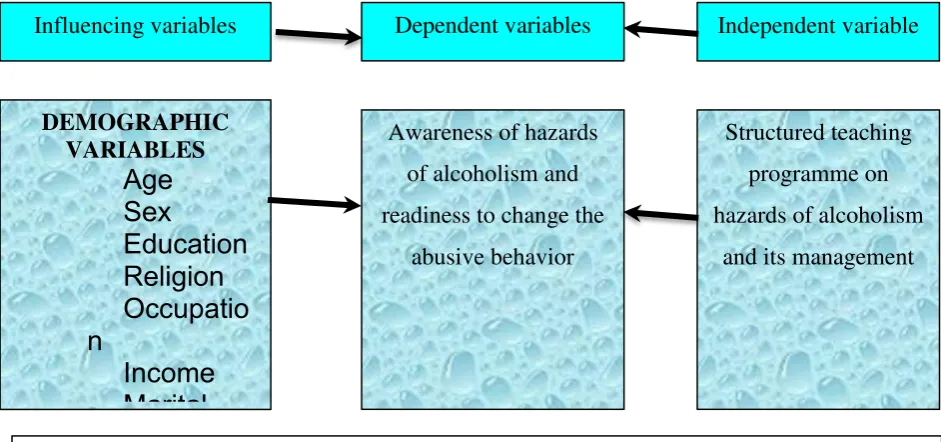
20 3.4 RESEARCH VARIABLES
The Independent variable was a structured teaching programme regarding
lifestyle modifications. The dependent variables were awareness of hazards of
alcoholism and readiness to change the abusive behavior. Influencing variables were
demographic variables.
Q1
X
Q2
Assessment
of awareness of hazards
of alcoholism and
readiness to change the
abusive behavior
Structured teaching
programme on hazards
of alcoholism and its
management
Reassessment
Of awareness of
hazards of
alcoholism and
readiness to change
[image:38.595.107.578.480.701.2]the abusive behavior
Figure: 3.1: The Schematic Representation of Research Design
Influencing variables Dependent variables Independent variable
DEMOGRAPHIC VARIABLES
Age
Sex
Education
Religion
Occupatio
n
Income
Marital
Awareness of hazards
of alcoholism and
readiness to change the
abusive behavior
Structured teaching
programme on
hazards of alcoholism
and its management
21 3.5 THE SETTING OF THE STUDY
The study was conducted to the alcohol abusers who are residing in Podanur
community area Coimbatore.
3.6 POPULATION
The population in the study includes the alcohol abusers in the age group of
20-65 years and who are residing in Podanur community area Coimbatore.
3.7 SAMPLES AND SAMPLE SIZE
The sample size is 50 alcohol abusers and who full fill the inclusion criteria.
3.8 CRITERIA FOR THE SELECTION OF SAMPLING
3.8.1 Inclusion Criteria
● Persons who are in the age group of 20- 65 years.
● Persons who can able to speak Tamil /English
● Persons who are currently using alcohol.
● Persons who are willing to participate in the study
3.8.2 Exclusion Criteria
● Persons who have a physical or mental impairment.
● Persons with other kinds of substance use.
3.9 SAMPLING TECHNIQUE
Non -probability convenient sampling technique was used for selecting the
22 3.10 DESCRIPTION OF THE TOOL
The researcher had developed a structured questionnaire after reviewing the
literature. It consisted of 3 sections.
Section -A: Demographic Variables
Demographic variables, which include age, gender, religion, education,
occupational status, marital status, Monthly income, and type of family,
Section B: Structured Questionnaire on awareness of hazards of alcoholism.
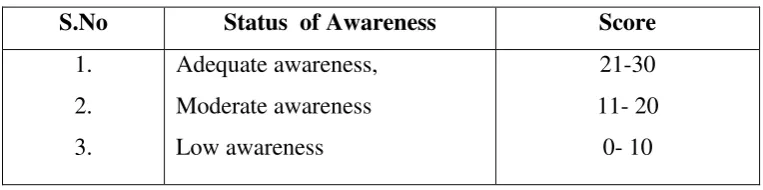
This section consists of 30 questions to assess the awareness about the hazards
of alcoholism among the persons with alcohol use. Each correct answer carries one
mark, and the wrong answer carries zero marks. The possible maximum score was 30;
the possible minimum score was 0. The rating was given from 1 to 30, to know the
[image:40.595.101.483.462.557.2]awareness about alcoholism.
Table 3.1: Interpretation of Awareness score
S.No Status of Awareness Score
1.
2.
3.
Adequate awareness,
Moderate awareness
Low awareness
21-30
11- 20
23
Section- C: Modified Socrates readiness to change Questionnaire
SOCRATES is an experimental instrument designed to assess readiness for
change in alcohol abusers. This section consisted of 20 questions on readiness to
change the alcohol abusive behavior. For each statement, the rating was given from 1
to 5, to indicate agree or disagree with alcoholism. For each statement, circle one
number from 1 to 5, to indicate how much the sample agree or disagree with it right
[image:41.595.161.546.300.426.2]now.
Table 3. 2: Grading of changes to readiness in alcohol abusers
S.No Changes to Readiness Statement Score
1.
2.
3.
4.
5.
Strongly agree
Agree
Undecided
Disagree
Strongly disagree
5
4
3
2
1
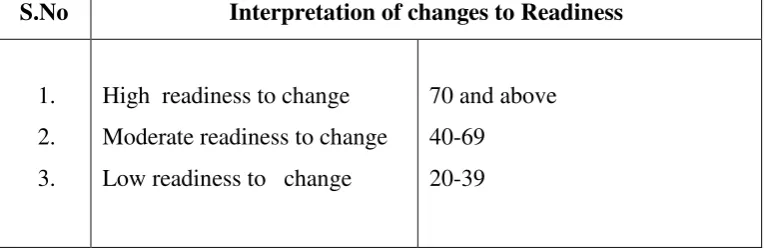
Table 3. 3: Interpretation of changes to readiness in alcohol abusers
S.No Interpretation of changes to Readiness
1.
2.
3.
High readiness to change
Moderate readiness to change
Low readiness to change
70 and above
40-69
20-39
The following is provided as general guidelines for interpretation of scores,
but it is wise in an individual case also to examine individual item responses for
[image:41.595.163.547.510.635.2]24
HIGH scorers say that they sometimes wonder if they are in control of their
drinking, are drinking too much, are hurting other people, and/or are alcoholic and
directly acknowledge that they are having problems related to their drinking, tending
to express a desire for change and to perceive that harm will continue if they do not
change. They also report that they are already doing things to make a positive change
in their drinking, and may have experienced some success in this regard.
Moderate scorers report that they are currently doing things to change their
drinking, but not able to control their desire often.
LOW scorers deny that alcohol is causing them serious problems, reject
diagnostic labels such as “problem drinker” and “alcoholic,” and do not express a desire for change. LOW scorers say that they do not wonder whether they drink too
much, are in control, are hurting others, or are alcoholic.
3.11 TOOL VALIDITY AND RELIABILITY
3.11.1 Content Validity
The standardized tool was obtained and modified by the investigator
under the guidance of the experts and based on a review of the literature. Content
validity was obtained from the experts in the field of Psychiatry and Psychiatric
nursing. All comments and suggestion given by experts were duly considered and
corrections were made after discussion with the research guide. The modifications
were incorporated in the preparing of final tool.
3.11.2 Reliability
Reliability and scoring practicability was tested through the pilot study and
used for the main study. The reliability was checked by the inter-rater method. The
25 3.12 PILOT STUDY:
A pilot study was conducted to find out the effectiveness of structured
teaching programme on awareness and readiness to change the abusive behavior
among persons with alcohol use in the selected community at Coimbatore, for a
period of seven days to find out the reliability and to plan for data analysis. Prior
permission from the authorities was obtained and by using simple random sampling
technique. Consent was obtained from 5 samples. Structured Questionnaire on
awareness of the hazards of alcoholism and Modified Socrates readiness to change
Questionnaire was used as an assessment tool. Structured teaching programme was
given an awareness of the hazards of alcoholism and its management and readiness to
change were assessed. The data were analyzed by using paired ‘t 'test; the calculated value was more than the tabulated value. So, it proved that the effectiveness of the
structured teaching programme. The pilot study revealed that the present study was
feasible to conduct.
3.13 DATA COLLECTION PROCEDURE
Prior permission was obtained from the concerned authorities. Confidentiality
and anonymity of the subjects were maintained. Informed consent was obtained from
the respondents and the respondent was selected on the basis of the selection criteria.
On the first day, Demographic data were collected using the Convenient
sampling technique. 50 people with alcohol use were screened and selected. The
pre-test was done by using the Structured Questionnaire on awareness of the hazards of
alcoholism and Modified Socrates readiness to change Questionnaire. Then the
structured teaching programme was given on the hazards of alcoholism and its
management by the lecture method with audio-visual aids for 45 minutes. The content
of the structured teaching programme consisted of alcoholism Meaning, Causes,
physical, social and psychological hazards, Complications, Management and
Rehabilitation. At the end of the session, pamphlets were distributed to the samples.
Post-test was conducted on the 15th day by using the same questionnaire to assess the
26 3.14 PLAN FOR DATA ANALYSIS
Descriptive statistics, frequency, percentage, mean, standard deviation was
used to describe the demographic variables and to describe the pretest and posttest
score on awareness of the hazards of alcoholism and readiness to change the abusive
behaviour. Inferential statistics, Paired ‘t’ test was used to analyze the effectiveness of structured teaching programme on the awareness and readiness to change the
abusive behaviour. The Correlation test was used to analyze the correlation between
awareness and readiness to change the abusive behavior. The Chi-square test was
used to analyze the association between the selected demographic variables with the
post-test score of awareness of the hazards of alcoholism and readiness to change.
3.15 ETHICAL CONSIDERATION
The research was conducted after the approval of the research committee and
concerned authorities of the community. The nature and purpose of the study were
explained to the authorities of the Podanur community, Coimbatore. Consent was
obtained from the participants. The assurance was given to the study samples that the
28
CHAPTER-IV
DATA ANALYSIS AND INTERPRETATIONS
This chapter deals with the analysis and interpretation of the data collected
from the samples. This study was to assess the effectiveness of structured teaching
programme on awareness and readiness to change the abusive behavior among
persons with alcohol use in the selected community at Coimbatore.
The findings, based on the descriptive and inferential statistical analysis
tabulated as follows
● Section- I: Frequency and percentage distribution of demographic variables of the persons with alcohol use.
● Section- II: Description of statistical value of pre-test and post-test knowledge scores of awareness about hazards of alcoholism among persons with alcohol
use.
● Section - III: Description of statistical value of pre-test and post-test scores of readiness for change in the abusive behaviour among persons with alcohol use.
● Section - IV: Description of statistical value of the mean and standard deviation of pre-test and a post-test score of awareness about hazards of
alcoholism and readiness for change in the abusive behaviour among persons
with alcohol use.
● Section-V: Improvement score of the awareness about hazards of alcoholism and readiness for change in the abusive behaviour among persons with alcohol
use.
● Section-VI: Correlation of post-test scores regarding the awareness about hazards of alcoholism and readiness for change in the abusive behaviour
among persons with alcohol use.
● Section-VII: Association between post-test scores regarding awareness about the hazards of alcoholism among persons with alcohol use with the selected
demographic variables.
● Section-VIII: Association between post-test scores regarding readiness for change in the abusive behaviour among persons with alcohol use with the
29
Section- I: Frequency and percentage distribution of demographic variables of
[image:47.595.97.539.171.772.2]the persons with alcohol use.
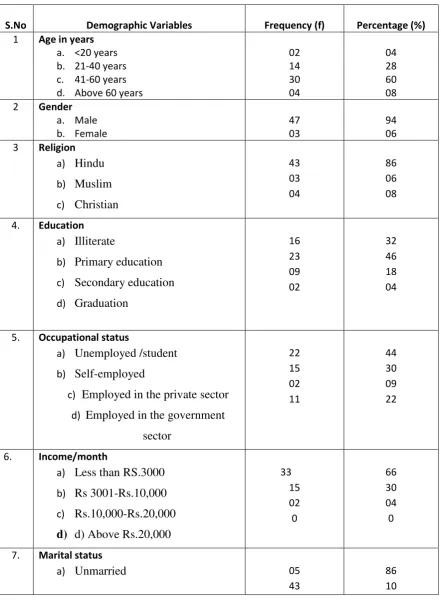
Table: 4.1 Frequency and percentage distribution of demographic variables of
the persons with alcohol use.
n=50
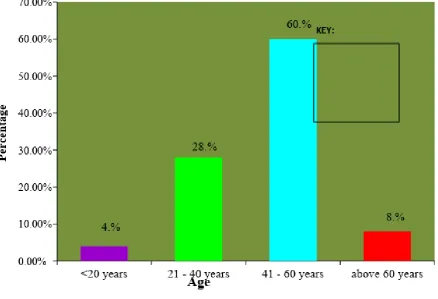
S.No Demographic Variables Frequency (f) Percentage (%) 1 Age in years
a. <20 years b. 21-40 years c. 41-60 years d. Above 60 years
02 14 30 04 04 28 60 08 2 Gender
a. Male b. Female 47 03 94 06 3 Religion a) Hindu b) Muslim c) Christian 43 03 04 86 06 08
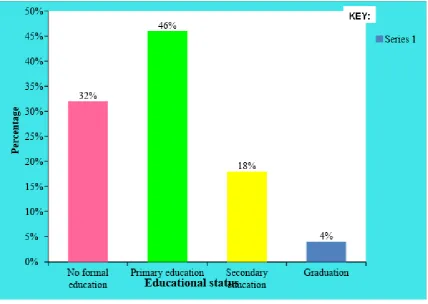
4. Education a) Illiterate
b) Primary education
c) Secondary education
d) Graduation 16 23 09 02 32 46 18 04
5. Occupational status
a) Unemployed /student
b) Self-employed
c) Employed in the private sector
d) Employed in the government
sector 22 15 02 11 44 30 09 22
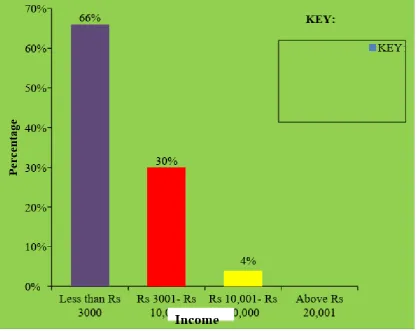
6. Income/month
a) Less than RS.3000
b) Rs 3001-Rs.10,000
c) Rs.10,000-Rs.20,000
d) d) Above Rs.20,000
33 15 02 0 66 30 04 0
7. Marital status
a) Unmarried 05
43
30 b) Married
c) Widow/Widower
d) d) Divorced/Separated
0 02
0 04
S.No Demographic Variables Frequency (f) Percentage (%)
8. Type of family a) Nuclear b) Joint
43 07
86 14
From table 4.1, it implies the distribution of respondents according to certain
demographic factors like age, sex, religion, education, occupation, income per month,
marital status, and type of family.
In case of the religion, 43(86%) Hindus, three (6%) Muslims.
The occupational status of the subjects shows that 22 (44%) farmers, 15 (30%)
daily wager, two (9%) students and 11 (22%) others.
Regarding the marital status of the subjects, 43 (86%) got married, five (10%)
unmarried, no one was widowed/ widower and two (4%) got divorced and separated.
In the type of family, 43 (86%) belonged to the nuclear family and seven
31
Figure: 4.1.1 Bar diagram shows the percentage distribution of persons with alcohol use based on age
The above bar chart shows that among the 50 persons with alcohol use, two
32
Figure: 4.1.2 Pie chart shows the percentage distribution of persons with
alcohol use based on Gender.
The above Pie chart shows that Regarding gender, 47(94%) male and three
[image:50.595.110.513.106.392.2]33
Figure: 4.1.3 Cone chart shows the percentage distribution of persons with
alcohol use based on Educational status.
The above cone chart explains that the educational status of the subjects
reveals that 16 (32%) were illiterate and two (4%) were graduates 23 (46%)
[image:51.595.111.540.110.414.2]34
Figure: 4.1.4 Cone chart shows the percentage distribution of persons with
alcohol use based on Income.
This cone chart shows that among the 50 respondents, 33 (66%) had the
family income of less than Rs. 3000, 15 (30%) had got between Rs 3001-Rs.10,000,
35
Section- II: Description of statistical value of pre-test and post-test knowledge
scores of awareness about hazards of alcoholism among persons with alcohol use.
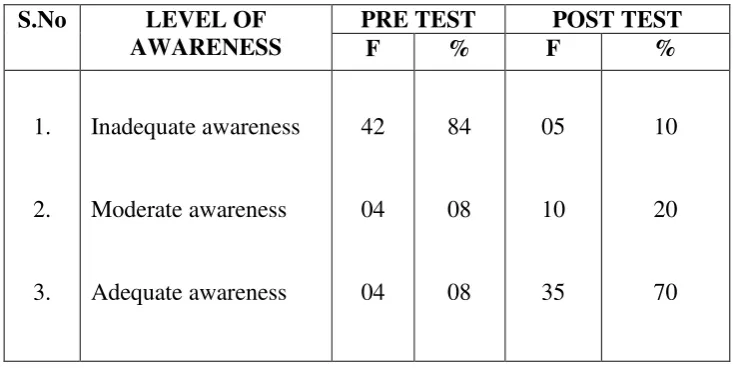
Table: 4.2 Frequency and percentage distribution of pre-test and post-test scores of
awareness about hazards of alcoholism among persons with alcohol use
n=50
S.No LEVEL OF AWARENESS
PRE TEST POST TEST
F % F %
1.
2.
3.
Inadequate awareness
Moderate awareness
Adequate awareness
42
04
04
84
08
08
05
10
35
10
20
70
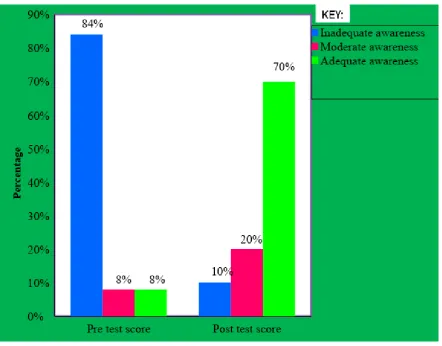
This table 4.2, shows the comparison between the pretest and posttest score of
awareness about the hazards of alcoholism among persons with alcohol use, in which
42 (84%) had inadequate awareness, four (8%) had moderate awareness and four(8%)
had adequate awareness about alcoholism in the pre-test. Whereas in post-test the
subjects had five (10%) of inadequate awareness, 10 (20%) had moderate awareness
and 35 (70%) had adequate awareness about alcoholism after the structured teaching
[image:53.595.132.499.211.395.2]36
Figure 4.2.1: Cone chart shows the percentage distribution of pre-test and post-test
[image:54.595.114.557.112.458.2]37
Section - III: Description of statistical value of pre-test and post-test scores of
readiness for change in the abusive behaviour among persons with alcohol use.
Table: 4.3 Frequency and percentage distribution pre-test and post-test scores of
readiness for change in the abusive behaviour among persons with alcohol use.
n=50
S.No READINESS TO CHANGE
PRE TEST POST TEST
F % F %
1.
2.
3.
Low readiness to change
Moderate readiness to change
High readiness to change
37
09
04
74
18
08
10
07
3
20
14
66
Table 4.3, depicts a comparison between the pretest and post-test score of
readiness to change the abusive behaviour among persons with alcohol use. It shows
that 37(74%) had low readiness to change the