CERTIFICATE BY THE EDITOR
This is to certify that the dissertation entitled ‘A STUDY TO EVALUATE THE EFFECTIVENESS OF STRUCTURED TEACHING PROGRAMME ON KNOWLEDGE REGAREING CERVICAL CANCER AMONG WOMEN IN SELECTED VILLAGE OF VILLUPURAM DISTRICT’ is a bonafide research work done by Arul Libya A, II Year M.Sc., Nursing student of Dharmarathnakara Dr.Mahalingam Institute of Paramedical Sciences & Research, Sakthinagar, Erode district. I, Mrs. T.S. Sumithradevi, M.A., M.Phil, edited this manuscript on behalf of the partial fulfilment of the prerequisite for the degree of Master of Science in Nursing with Specialty – Branch – III, OBG.
Date:
LIST OF EXPERTS
1. Mrs. Jeeva Latha MBBS., DGO., Jeeva Hospital,
Anthiyur
2. Mrs. M.S. Chandraleka M.Sc(N) Associate Professor
Gem College of Nursing Coimbatore
3. Mrs. Premalatha M.Sc (N) Assistant Professor Gem College of Nursing Coimbatore
ABSTRACT
Statement of the Problem
“A STUDY TO EVALUATE THE EFFECTIVENESS OF STRUCTURED TEACHING PROGRAMME ON KNOWLEDGE REGAREING CERVICAL CANCER AMONG WOMEN IN SELECTED VILLAGE OF VILLUPURAM DISTRICT”
Objectives of the study
1. To assess the knowledge of women before and after Structured Teaching Programme regarding Cervical Cancer.
2. To compare the pretest and post test knowledge level to determine the effectiveness of Structured Teaching Programme regarding Cervical Cancer.
3. To find out the association between level of knowledge on Cervical Cancer among women with selected demographic variables such as age, Religion, Marital Status, Education, Occupation, Income, Source of Health Information.
Methods:
Pre experimental design one group pretest and post test was used to assess the effectiveness of structure teaching programme on knowledge regarding cervical cancer among women in selected village of Villupuram District.
Results:
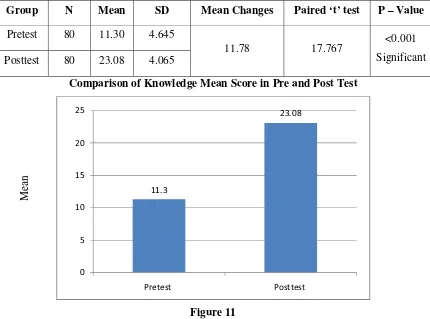
With regard to the pretest knowledge and assessment the mean was 11.30and standard deviation was 4.645. With regard to the posttest knowledge and assessment, the mean was 23.08 and standard deviation was 4.065 this shows there is a significant increase in knowledge, the result was found after structured teaching programme.
Interpretation and Conclusion
TABLE OF CONTENTS
S. NO
CONTENTS
PAGE NO
1. Introduction 1
2. Review of Literature 9
3. Methodology 29
4. Analysis and Interpretation 39
5. Discussion 55
6. Summary Conclusion Implication Recommendation 59
7. Bibliography 67
LIST OF TABLE
SL.NO
TABLES PAGE
No.
1. Distribution of women according to their age 41
2. Distribution of women according to their religion 42
3. Distribution of women according to their marital status 43
4. Distribution of women according to their educational
qualifications 44
5. Distribution of women according to their occupation 45
6. Distribution of women according to their income 46
7. Distribution of women according to their source of health
information 47
8. Level of knowledge of the women in pre and post test 48
9. Comparison of the mean and standard deviation of the women’s
knowledge score in pre and post test 50
10. Mean, standard deviation of the women’s knowledge score with
LIST OF FIGURES
SL.
NO
FIGURES
PAGE
NO.
1. Conceptual Frame Work 28
2. Schematic Representation of Research Design of the study 30
3. Distribution of women according to their age 41
4. Distribution of women according to their religion 42
5. Distribution of women according to their marital status 43
6. Distribution of women according to their educational qualifications 44
7. Distribution of women according to their occupation 45
8. Distribution of women according to their income 46
9. Distribution of women according to their source of health
information 47
10. Level of knowledge of the women’s in pre and post test 49
11. Comparison of the mean and standard deviation of the women’s
LIST OF ANNEXURE
S.NO CONTENT PAGE NO
1. Letter seeking permission to conduct Pilot Study 74
2. Letter granting permission to conduct Pilot Study 76
3. Letter Seeking permission to conduct Main Study 77
4. Letter Granting permission to conduct Main Study 79
5. Letter seeking expert opinion on Validity of the Tool 80
6. Certificate of Content Validity 82
7. Certificate of Medical Guide 83
8. Certificate of Editing 84
9. Consent form Respondents 85
10. Tool for Data Collection 86
11. Scoring Key 102
12. Criteria Measure 103
13. Structure Teaching Programme 104
14. Audio Visual Aids 121
CHAPTER I
INTRODUCTION
Carcinoma is a form of Cancer that is composed of epithelial cells that is tend to infiltrate surrounding tissues and may eventually spread to distant sites. Black M. Jacob (2010)
Cancer is a worldwide problem. There is an increasing incidence of cancer both in developed and developing countries, as it is one such diseases, which has both public fear and
Concern. Cancer in all form is causing about 12% death throughout the world. The magnitude of the problem of cancer in India, can be succinctly described as one of the explosive dimensions in the last decades alone, the number of cancer patients in the country has tripled, thus in India it has the maximum number of cancer patients among all developing countries. One in every 14 Indian is at risk of developing cancer. More than 15 million people suffered from cancer at any point of time in India. The Most common types of cancer in India the
women are the cancer of cervix K. Park (2011)
Cervical Cancer is a condition where a Cancerous growth arises on one of the lower portion of the uterus.
The world wide literature reports, that more than 50% of patients with cancer of cervix report before the age of 50yrs. Even though cancer screening has become prevalent with an arm of early diagnosis and treatment about 60% of patients still present with advanced stage.
The risk factors includes Coitus with multiple partners or unmarried males highest risk for Carcinoma incite is age 25 to 40 Years of age and highest risk for invasive Cancer is from the age of 40 to 60 Years, low socio economic class, early first Pregnancy and infection with Human Papilloma virus. Pilliteri: (2012)
The Pap smear is a primary diagnostic tool for Cervical Cancer. A Pap smear is taken for early detection of Cervical Cancer and diagnosis of Pre cancerous and cancerous conditions of the vulva and vagina. The Pap smear is a painless investigation in which the Cervix is visualized using specular shaped spectacles that is used to remove a layer of cells from the Cervix and the area of Vagina surrounding the Cervix.
smears every year can reduce the occurrence rate of invasive cervical cancer by 93%, while receiving the test every 3years can reduce the occurrence rate by 91%.
Deputy Director General of Bureau of Health Promotion said studies proved that Pap smears remain an effective method to screen for Cervical Cancer, she urged women aged 30 or above to receive the test every year or at least once every 3 years. From 1995, the Indian Government has covered the cost for one Pap smear for women aged 30or above. In 2005, only 54% of women in this age group have received Pap smear in the last 3 years which was much lower than the 90%.
Need For the Study
Incidence of cervical intraepithelial neoplasia and cervical cancer has been increasing in young women over the last few years. The aggressiveness of the diseases in young age is still controversial (Vive Ushal et.al Sep 2007).
Cervical cancer occurs most commonly in women between the ages of 30 and 45 yrs but it can occur in early age of 18 yrs. Risk factors vary from multiple sex partners to smoking to chronic cervical infection.
Moorthy NS. Choudry K.Saksens S, 2013 India conducted a Study on Trends in
Cervical Cancer incidents in Indian Scenario the data published in Cancer incidence in 5 States for various Indian Registries for different periods. During the years 1990-1997 the age adjusted incidence rates of cervical Cancer varied from 10.92 to 65.4 among various registries. The highest incidence was noted in Ambillikai Registry. The age specific incidence rates for Cervical Cancer revealed that the disease increases from 35 Years and reached peak 55-64 years. However, the decrease was very small. In India an organized mass screening programme with Pap smear for early detection of Cervical Cancer is not in practice, the data suggest urgent need for initiation of community screening and educational programme and prevention of Cervical Cancer.
Rniku et. al,2013 conducted a study on women regarding cervical screening facilities
explain in their study that lack of screening facilities and lack of awareness lead to advanced stage. At the initial diagnosis screening early for the high risk groups as well education on preventive measures of the cervical cancer decreases the diseases in the future.
influences etc., so the focus of the intervention should be on positive health massages and women can be empowered to accept the responsibility for control over their health.
Women in Indian are the embodiment of care and nourishment for life. The women drive and concern is seemly of the family preservation of life. The whole family is distorted when any illness affects women. Poverty coupled with ignorance make the patients to neglect the disease in its early stage. Therefore the fight against cancer especially against cervical cancer should give more emphasis on preventive and primitive programmes to women in removing fear, anxiety and ignorance about it. The awareness regarding risk factors preventive measures help them to take preventive and primitive care and early identification of the diseases helps in seeking medical aid in time.
Cervical cancers account for more than half of the cancer among women in rural India
(Jeyanth.K) The rural area population is more than 80% and they are at high risk, belonging
to the low socio – economic status with poor genital hygiene, married in their early teens and are multiparous (Dr. Revathi, MD, Chairman FOGSI) In the present Indian context of paucity of education, diagnostic and therapeutic facilities and money, the most economical and pragmatic way in which to control the of cancer of cervix is by preventive action at the Grassroots level (S. Krishnamurthi, Cancer institute, Chennai 2014).
All the above reasons the community felt need, wide literature review and expert’s prompted the investigator to take up the present study sot that the can follow them up in the village, to motivate them and provide them with adequate information regarding cause and prevention of cervical cancer.
Statement of the Problem
“A STUDY TO EVALUATE THE EFFECTIVENESS OF STRUCTURED TEACHING PROGRAMME ON KNOWLEDGE REGARDING CERVICAL CANCER AMONG WOMEN IN SELECTED VILLAGE OF VILLUPURAM DISTRICT”
Objectives of the study
1. To assess the knowledge of women before and after structured teaching programme regarding cervical cancer.
3. To find out the association between level of knowledge on Cervical Cancer among women with selected demographic variables such as age, religion, marital status, education, occupation, income, source of health information.
Operational Definitions
1. Structured Teaching Programme: Refers to systematically planned group instruction by lecture cum discussion method designed to provide information regarding selected aspects on risk factors signs, symptoms, early diagnosis, treatment and prevention of Cervical Cancer.
2. Women: Refers to female in the age group between 18-45 yrs.
3. Effectiveness refers to the extent to which the Structured Teaching programme on Cervical Cancer has achieved the desire effect in improving knowledge of women as by gaining knowledge.
Sample Criteria
Inclusion
1. Women in the age group of 18-45years 2. Women who are willing to participate
3. Women who are available at time of data collection 4. Women who knows to speak Tamil
5. Women who lives in Kalamaruthoor village of Villupuram District
Exclusion
1. Women who underwent total or partial hysterectomy 2. Women who is seriously ill.
Hypothesis
H1: There is a significant difference in the level of knowledge on cervical cancer
between pretests and posttest.
H2: There is a significant difference between pretest and post test knowledge level to determine effectiveness of structured teaching programme.
H3 : There is a significant association between demographic variables and knowledge
Assumptions
It is assumed thatWomen have inadequate knowledge regarding risk factors, signs and symptoms, early detection and prevention of cervical cancer.
Knowledge of women is influenced by different variables such as Age, Religion, Marital status, Education, Occupation, Income, source of Health Information.
CHAPTER II
REVIEW OF LITERATURE
This section gives literature related to risk factors for Cervical Cancer. The risk of development of cervical cancer varies with the life style of an individual, social customs and geographic distribution. Genital infection is an important risk factor leads to multiparty, early marriage, early first child, low socio economic status and illiteracy.
Literature Review Related To Etiology and Risk Factors Of Cervical
Cancer
Djangidze M bjugili Museridze (2010) conducted study on hormonal contraception
and cervix of the uterus pathology. The effect of hormonal contraception on cervix of the uterus of young nullipara women in Etopia was investigated cohort study was carried out by using simple blind method by means of statistic data manipulation correlation between the application of hormonal contraception and changes of colposcopy pictures in the zone of pathology declared that as medicine of choice for nullipara women in Etopia still is necessary to conduct strong dynamic control of cervix of the uterus in order to avoid complications.
Langille DB rig by JA (2011) Conducted a study on factors associated with pap
testing in adolescents in Northern Nova Scotia. To determine relationship of socio economic factors and contraceptive behavior with pap testing sexually active women 5-19who had received physician services in Northern Nova Scotia in the previous year. These findings suggest that physician use hormonal contraception as a cue for Pap test in adolescent women.
Rajkumar. T, Franceschi. S, Vaccarella.S. Gajalakshmi, Sharmila.A, Snijders.
PJ, (2011) et.al. Conducted a study on Role of Panchewing and dietary habits in Cervical
Carcinoma in Chennai, India. Non viral factors contribute to human papilloma virus related Cervical Carcinogenesis. We investigated the role of Paan Chewing and dietary habits among 205 women with Low Education Level and Low Body weight were also risk factors. For invasive cervical cancer but they did not account for the associations of pan chewing and Low intake of vegetable and fruits. In the analysis restricted to HPV Positive cases and controls, the inverse association with Vegetable and Fruit in take was confirmed. Conversely the adverse influence of Pan chewing on invasive cervical cancer risk seems to the attributable to a higher prevalence of Cervical HPV infection in Women who chewed Pan.
Chhabra S. Sonak M, Prem V, Sharma A (2012) carried out a study with the object
economic status, age, parity, contraceptive views and mode of presentation in current Gynecological Practice. Nearly half 44.6% of overall Cervical Cancer cases occurred between ages of 39-49years.Most women irrespective of the site of Cancer. Over the years the number of Gynecological Cancer is increasing irrespective of Social class with most cases at younger age.
Biswas (2012) A Conducted a study on HPV and Cervical Cancer. Epidemiological
studies have consistently shown that the most important risk factor for Cervical Cancer relates to sexual activity and a sexually transmitted agent probably a virus, is the principal causative agent. In recent years much attention has been focused on HPV as the causative agent. The variation in incidence is explicable inters of differing levels of risk behavior and population screening facilities and uptake. With better understanding of the Etiopathogenisis, Vaccination against HPV is becoming a reality. This may be particularly useful in developing countries. Where it is proving difficult to implement effective screening programme.
Barry H C Smith M, Web mantel D, French (2013) conducted study on the
feasibility of risk based cervical cancer screening in primary care practices is Lansing Michigan US. They collected data through questionnaire from current and life time sex partners those who have history of sexually transmitted diseases, smoking habits, most women (83%) had at least one risk factors for cervical cancer. They found low rates of documented history taking (54%) and sexually transmitted infection testing 4% found that so many women had atleast one risk factor.
Lead researcher Dr. Jennifer smith (2013) says they found that a persistent HPV infection of six months to one year was consistently associated with a women’s increased risk of high grade cervical lesions or Cervical Cancer.The researchers say there are approximately 14 high risk types of HPV that causes invasive cervical cancer the two most common types are 16 and 18, which have different viral genetic patterns.
Bishas L.N. Manna B. Maiti P., K. Sen Gupta (2013) conducted study on sexual
Tindal V.R. (2013) states that the sexually active women is 2-4 times more likely to develop cancer of the cervix than in the sexually inactive women Cancer of the cervix is almost unknown in groups of nuns, whereas cancer of the corpus occur, as frequently in these as in any other section of the population. The disease is rare in all virgins although there are occasional exceptions. Indeed the practice of coitus is not established as being a prime cause of cervical malignant disease. The earlier the age of first intercourse women have greater the risk.
Arora Reddy Rajarani Elleamma (2013) conducted a case control study among 54
women in Pondicherry between 25-50yrs of age with histological confirmed cervical cancer along with husband to find out the male risk factors in etiology of cervical cancer, Personal interview and physical examination of husbands carried out poor genital hygiene was a significant risk factor in case of husbands with ratio of 16.4% other risk factors were multiple sex partners.
Brintion, L.A., (2013) reports that wives of the men previously married to a cervical
Literature Review Related To Knowledge of Cervical Cancer
Sunitha Saxena, Kishore Chaudhuri (2004) conducted a study to assess knowledge,
belief and screening behaviors of health workers in Mudzi district in East Providence Zimbabwe. The result was the knowledge level were lower for many of the predisposing factors of cervical cancer respect for use of vaginal herbs of chemicals which 85% of the health workers knew. Though 50% of the respondents knew of the Pap smear as a screening method for cervical cancer 86.6% did not know the human papiloma virus screening and 90% did not know of the visual inspection of cervix using acetic acid. There also very low knew the LEEP and laster options. The majority 73.3% believed that they were not at rest of developing Cervical Cancer. Most of the respondents 81.7% had not under gone any form of cervical screening. They concluded they is low knowledge levels, negative beliefs about the risk of developing cervical cancer and poor screening behaviors among health workers training in cervical cancer is therefore recommended for health workers.
Naish (2006) in his qualitative study at non English speaking women in UK,
indentified will of knowledge as factors influencing the up talk of Pap smears particularly relating to the need for the screening to be repeated at regular intervals. The women in the study particularly these women from chine’s Bengali and Punjab background also indentified factors like organization and delivery of screening services.
Eddy D.M., Reid J. (2008) conducted a study on screening for cervical cancer, a
review of women’s attitudes knowledge and behavior in United Kingdom. The present work reviews the psychological consequences of receiving an abnormal Cervical Smear result and of secondary screening and examines reasons for women’s non – participation include administrative failures unavailability of a female screener inconvenient clinic time lack of awareness of the test indications and benefits, considering oneself not to be at risk of developing cervical cancer and fear of embarrassment pain or the detection of cancer, the quality screening service can be enhanced by the provision of additional information by improved quality of communication and by consideration of women’s health belief.
Ajai and D. Denole (2012) conducted cross sectional study at 254 randomly selected women in Nigeria, which was done to determine the awareness of women about Cervical Cancer revealed the knowledge about Cervical Cancer was poor in these women it was found that 90% heard of cancer while 15% had heard of Cervical Cancer. The media (38%) and poor were major sources of information on cancer finding suggest that there was a need to educated the women on Cervical Cancer.
Swaddiwadtipong N, Chaovakiratipong, Nguntra P. and Mahasakpasu (2011)
conducted study at district task province North of Bangkok to determine knowledge and prevalence of use of Pap smear screening. An interview survey was conducted of women 18-65 yrs old, who had not undergone hysterectomy in 7 villages, selected from this 54villages in Jan 1991 only 333 of 1603 women interviewed (20.8%) knew Pap test only319 had ever been screened.
John (2012) conducted study to determine the effectiveness of two self instructional
modules on knowledge of women regarding cervical Cancer. Its detection and control in Pune city evaluate approach used with quasi experiment pretest, post test design were given pap test and the women in the second group were given self instructional module. The findings of the study revealed that the women in North groups gained significantly in the post test for group one the value obtained was 10.27 and for group two the value obtained was 8.60.
Dhamija S., Sehgat A Luthera U.K Sehgat K., (2013) et al conducted a study that
an attempt has been made to study the knowledge of Cervical Cancer in the community. The survey under taken is a part of knowledge at practice study prior to invitation of cytological screening total women interviewed by knowledge attitude practice survey were 1411 selected through 2 stage stratified Random sampling subjects for the present analysis. The study brought younger women had between awareness knowledge about Cervical Cancer and related information screening 50% never performed 77.8% presented with gynecological complaints.
Dnamija.S. Sehgal A. Lthrn Ur, Srhgal K. (2014) Conducted a study on factors
Literature Review Related To Screening and Prevention Of Cervical
Cancer
Texas department of health Austin USA (2000) were conducted survey among nine
hundred Mexican American women above their knowledge attitude on pap smear. Mammogram screening practices. The low screening participation among Mexican American women may be due to this limited awareness and knowledge about cervical cancer.
Wiwanikit V (2002) conducted a study on Screening for Cervical Cancer, Pap
Smears are recommended as general screening methods to early diagnosis of Cervical Cancer in older to decrease morbidity and mortality. These results document the importance of Cervical Cancer in Thailand and the high detection rate of Precancerous lesion supports the utility of screening program for secondary prevention of Cervical Cancer. Health education seems to play an important role in success of the Cervical Cancer screening program for Thai Females.
Basu M. (2004) conducted study on the impact of a single round of screening of
visual inspection with a acetic acid (VIA) on cervical cancer incidence and mortality was investigated in a cluster randomized trial in south India women k30-59 yrs of age in 118 clusters in Dindigul District were randomized to VIA screening (57clusters 48,225 women.)
Elizabeth C (2006) Conducted a study on Perception and Practices regarding
Cervical cancer. These study findings suggest that the main barriers identified by non Regular Pep Screeners were no health insurance 33% forgetting to get a Pap test 32% and not liking to get a Pap test planned to continue having them on a regular basis. The results of the study indicate that there is a considerable room for improvement in knowledge perception, practices of all women.
Jenkins et.al (2008) conducted a study implement a media led community education
campaign to find out its effect on cervical cancer screening among Vietnamese American women. A total of 45% women were interviewed at post test the ratio for the intervention effect were statistically significant for having heard of Pap test.
Kim et.al (2010) examined cervical cancer screening knowledge and practices of 159
Jessica A. Khan, Beilef (2012) conducted a study on beliefs about papanicolau smear and compliance with papanicolau smear follow up in adolescent explore the beliefs and attitudes understanding about pap smears and barriers to compliance with pap smear follow up. The findings are perceived benefits to getting pap smears were prevention and early detection or diagnosis and report barriers included pain or discomfort embarrassment, fear of finding a problem fear of the unknown, denial, poor communication or rapport with the provider, the lack of knowledge and peers advice. They concluded that providing on depth education about papanicolau smears addressing barriers to Pap smear follow up, focusing in appropriate provider behaviors and instituting an appointment remainder system may help to develop strategies to enhance compliance Pap smear follow up appointment.
D C Frutas S.L ., Arantes S.L., Debarrossm (2012) conducted study that developed
between women of Anghangura community with the objectives of knowing the demographic, socio cultural, gynecologic and obstetric profile and of assessing health preventive behavior in order to elaborate a plan of obstetrics Nursing assistance.
Yi Jk, (2013) conducted a Study on Acculturation and Pap Smear screening Practices
among Colleges aged Vietnamese Women in United States. The study findings suggest that less Acculturated Women appear to have the believe that Cervical Cancer screening is more important for married women that for unmarried women regardless of the sexual activity. The existence of misconceptions underscores the importance of offering culturally relevant Cancer Education that addresses related misconceptions.
Gajakslakshmi C K. Krishnamurthy Anahd, R. Shanta. V (2013) conducted study
on cervical cancer screening in Tamilnadu, India a feasibility study of training the most common malignancy among females in developing countries including India the present study was under taken to examine if the village health nurse could be trained quickly to identify cervical abnormal cities by visual inspection. Total of 101 village health nurse in identifying cancer among those with abnormal cervix was 95%, 90% of pap smears taken by village health nurse were adequate by WHO criteria.
Jeyant K Rao Nene BM dale P. S. (2013) conducted study to identify cancer cases
Juneja, Shegal Sharma Pondey (2013) conducted a study on social and cultural barriers to papanicolaou to papanicolaou test screening in an urban population to define screening behaviors, attitudes and belief’s regarding cancer and its treatment among women with cervical cancer have a significant association with lack of pap smear screening in women presenting with cervical cancer Future studies might involve education and incorporation of peers and respected community leaders, elder family members and clergy as intermediates who may be more successful in combating fatalistic attitudes. The low acceptability to self screening in the survey suggests that promotion of self screening is unlikely to resolve inequities in screening.
Raof RS Kamth BG. Chandrashkekar Rao (2013) conducted a study in down
string for cervical cancer a community based study in the cervical cancer of Udupi District. Karnataka, India the Objective to this study is to determine the feasibilities of utilizing trained auxiliary nurse midwives in down staging for cancer cervix in rural area population include all married women 35-59 yrs. The auxiliary nurse trained in thick history taking visual inspection of cervix collecting Pap smear. The study revealed if auxiliary nurse midwife trained can identify asymptomatic women.
Sathya Narayana G (2013) conducted program on Profile of a Cancer detection
Conceptual Frame Work
The conceptual produces certain frame of reference for clinical practice research Education.
The conceptual framework selected for the study is based on Orem’s self care model. This conceptual frame work identified and defines the factor for phenomenon of work in Nursing situation describes their relationship.
Tommy AM (1994) each individual has an innate ability to care for oneself. It is a
theoretical model. Which values individual responsibility and believes in health education as a key aspect of nursing intervention – Dorothea Orem
This study is aimed to assess the knowledge on selected aspects of Cervical Cancer among women. The study will focus to find the association if any between knowledge selected demographic variables.
Nursing is concerned with the individuals need for self care action in order to help the women in situation of life, health recovery form disease and cope with their effects.
In Orems view nursing can may one offered to individuals who have self care requisites nursing care assists the women to achieve the health result that the women desires.
The investigator has applied the self care theory and nursing system theory designed by Orem.
Orems self care concepts were incorporated because of their emphasis on health and client as the center activity. The concept of orem self care theory is
• Self care
• Self care capabilities
• Therapeutic self care demand
• Nursing capabilities (nursing Agency)
Self care
It refers to the women going for routine screening Pap smear modifications of life style activities and regular follow up
Self care capabilities
It refers to adequate knowledge as importance, purpose, recommended of Cervical Cancer regular screening for cervical cancer.
Therapeutic self care demand
Nursing capabilities
It refers to assess the knowledge on Cervical Cancer and evaluating the effective structure teaching programme.
Nursing system:
Nursing system refers to screening action a nurse takes to met a clients self care requisites nursing system theory of Orem’s has 3 Nursing Systems.
• Wholly compensatory system
• Partly compensatory system
• Supportive educative system
This study is aimed to assess the effectiveness of structure Teaching Programme on cervical cancer among women. Supportive nursing system appropriate for the study.
Supportive education system is essential in all situations where women have a need to gain knowledge become effective as self care agent.
According to this model the women role is to participate in the study and follow preventive measures.
The nurse action includes
1. Assessment of the knowledge of participants related to Cervical Cancer and Pap smear by administering pre test.
2. Conducting / rendering Teaching Programme to the participants.
3.
Administration of post test to evaluate the knowledge related to Cervical Cancer.3The women action includes
1. Acquiring knowledge about cervical cancer 2. Routine follow up
Based on Orem’s self care frame works the supportive education system operates with the clients centered system where health care teaching materials is considered to be an appropriate teaching strategy.
SELF CARE
• Routine screening for pap smear
• Modification of life style activities R
• Regular follow up R
Self care capabilities Therapeutic self are
demand
• Adequate knowledge on cervical cancer
• Adequate knowledge On importance and Acquisition of knowledge Purposes of cancer screening regarding cervical cancer • Regular screening for Cervical cancer
R
R
Nursing capabilities
Assess knowledge on cervical cancer Organizing structure teaching programme Evaluating the effectiveness of structure Teaching programme
Wholly compensatory
Partially compensatory
Nursing Action
Supportive educative
Acquiring knowledge about cervical Women’s Action
Routine screening
Assessment of knowledge
Nursing Action
Structure teaching programme
CHAPTER – III
METHODOLOGY
This chapter deals with methodology of research that indicates the general pattern of an organized procedure for gathering valid and reliable data for the purpose of investigation
Research methodology includes research approach, research design, the setting the population, sample, criteria for sample selection, method of sample selection, method of sample selection description of tools, testing of tools, development of structured teaching program, pilot study, procedure for data collection, plan for data analysis and protection of human subjects.
Research approach
A pre experiment approach was used to evaluate the effectiveness of structured teaching programme
Research design
Pre experimental design was developed for this study
1 2 O1 – Pretest
W,^Ͳ /
Schematic representation of the study is given in figure – 2 ZhZ>KDDhE/dz
ͺͲ
Ǧ
ȋͳȌ
ȋȌ ȋȌ Ǧ
Ǧ
VARIABLES
Independent Variable
An Independent Variable is the variable that stands alive is not depending on any other. Structured teaching programme on cervical cancer is the Independent Variable for this study.
Dependent variable
It is the outcome variable of interest the variable that is hypothesized to depend on or caused by another in this study Knowledge of women on cervical cancer is a dependent variable.
Setting of the study
Setting refers to the physical location and conditions in which data collection has been taken place. The study was conducted among women who are living in Village in Kalamaruthoor, Villupuram District .
Population
Population includes all possible elements that could include in research (Polit 2012).
The Population for the study includes 80 women who are residing in Kalamaruthoor, Village in Villupuram District.
Sample
Sample is small proportion of the population selected for observation and analysis and the members of the sample or study subject. The sample for the study considered of 80 women.
Sample criteria
Inclusion criteria
Women in age group of 18-45 Yrs
Women who all are willing to participate
Women who all are residing in Kalamarauthoor Village at Villupuram District.
Women who knows Tamil
Method of sample Selection
Women who fulfilled the inclusion criteria were selected as sample by convenient sample.
Data Collection tools
Collection is the gathering of information needed to address a research problem. Tools are the procedures or instruments used by the researcher to collect data
The following tools were used in the study
• Structured interview schedule to asses knowledge as cervical cancer
• Description of the tool
• The tool consisted of 2 parts
DESCRIPTION OF TOOL
Part – I Demographic Data
It contains 7 items of obtaining information regarding age and respondent marital status, graduates, educational qualification, religion, occupation, monthly income, source of health information, age at menopause.
Part – II Structured Interview Schedule on Cervical Cancer
The structured interview schedule regarding cervical cancer consisted on 32 multiple choice questions under aspects such as definition, risk factors, science and symptoms, investigation, managements and prevention of cervical cancer. Each question has 2 response with one correct answer, score 1 for each correct response in a single question and score 0 was given for wrong answers. The total Number of structured interview question was 32.
The resulting score were ranged as follows
• Adequate knowledge - 75 - 100%
• Moderate adequate knowledge _ 50 – 74%
• In adequate knowledge _ 0 – 49%
TESTING OF THE TOOLS
Validity
Reliability
Interview schedule was administered to 8 women in Kalamaruthoor village. The split half method was used to obtain reliability of the tool. The coefficients of whole test estimated by using brown prophesy formula. The tool was found to be reliable.
Preparation of the Blue Print
A blue print was prepared to construct a structured questionnaire based on which the items were developed it depicted the distribution of items according to the content areas.
Structured questionnaire includes three domains with relevant questions.
• Knowledge
• Comprehensive
• Application
Development of Structure Teaching Programme
Teaching plan is guide for teacher because it helps to cover the topic comprehensive way with proper sequence of points without missing anything
The steps involved in Structured teaching programme are
• Framing the outline of the teacher plan
• Preparing outline of the content
• Deciding method of instruction and audio and visual aids
• Content validation of tools structure teaching programme
Framing outline of teaching plan
The outline of teacher plan’s is framed this includes getting of the general and specific objectives, specifying the date time, place, Number of populations.
Preparing the outline of the counter includes
• General information of Cervical Cancer.
• Knowledge regarding Cervical Cancer.
Each areas compresses of separate objectives, times, content teaching, learning activities, visual aids and evaluation measures.
Deciding the method of instruction and audio visual aids
Pilot study
Pilot study had been conducted in the month of ---to --- among women between age group of 18-45 Years. Who met inclusive criteria in Kellapalayam, Villupuram District. The investigator obtained permission from concerned authority. The topic was explained and confidentiality was assured. Structured teaching programme was given after administering pretest, a week later of structured teaching programme. The subjects were reassessed by using descriptive inferential statistics. The pilot participants were excluded from the main study.
Data collection process
The study was conducted in Kalamaruthoor Village in Villupuram Distrist. The period of data collection was from--- to ---.
Prior to the data collection permission was obtained from the concerned authorities. The investigator personally visited each house and administered questionnaire by interview schedule for assessing their knowledge regarding Cervical Cancer. The Structured teaching programme was administered, after each pre test. After 7 days of pretest, post test was conducted using the same interview schedule to evaluate effectiveness of structured teaching programme.
Plan of data analysis
The data is analyzed by both descriptive and inferential statistics, in the basis of objectives and hypothesis of the study. The data master data sheet was prepared by investigator with the help of computer.
The knowledge of women on cervical cancer before and after the administration of Structured teaching programme was calculated by using rang frequency, mean, standard deviation.
Further statistical significance of the effectiveness of the planned teaching programme was analyzed by the paired ‘t’ test. The association between selected demographic variables and pre test score was determined by ‘ANOVA’ and ‘F’ Test. Data was presented in tables, graphs and diagrams.
Protection of human subjects:
Summary
CHAPTER IV
ANALYSIS AND INTERPRETATION
Analysis is described as categorizing, ordering, manipulating and summarizing the data to obtain answers to research questions.
This section highlighted the analysis and interpretation of data collected from 80 women in order to evaluate the effectiveness of structure teaching programme on Cervical Cancer. The data collected from women before and after structure teaching programme was organized, analyzed interpreted by using descriptive inferential statistics.
The data collected was calculated based on the objectives of the study.
To assess the knowledge of women before and after Structured Teaching Programme regarding Cervical Cancer.
To compare the pretest and post test knowledge level to determine the effectiveness of Structured Teaching Programme regarding Cervical Cancer.
To findout the association between level of knowledge on Cervical Cancer among women with selected demographic variables such as Age, Religion, Marital Status, Education, Occupation, Income, Source of Health Information.
Organization of Findings:
The data is organized, analyzed and presented under following headings.
SEC – A:
Distribution of frequency and percentage of selected demographic variables.
SEC – B:
Analysis of pretest and post test knowledge level of women is made as under a) Pretest knowledge assessment
b) Post test knowledge assessment
SEC – C:
Evaluate the effectiveness of structure teaching programme.
SEC – D
SEC – A:
DISTRIBUTION OF FREQUENCY AND PERCENTAGE OF
DEMOGRAPHIC VARIABLES
TABLE – 1
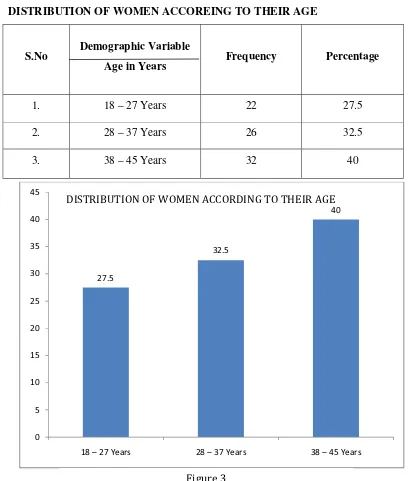
N = 80 DISTRIBUTION OF WOMEN ACCOREING TO THEIR AGE
S.No Demographic Variable
Age in Years Frequency Percentage
1. 18 – 27 Years 22 27.5
2. 28 – 37 Years 26 32.5
3. 38 – 45 Years 32 40
The figure shows that 22 (27.5%) of the respondents were in the age group of 18- 27 years. 26 (32.5%) of the respondents were in 28-37 years and 32(40%) of the respondents were in 38-45year of age.
Ϯϳ͘ϱ
ϯϮ͘ϱ
ϰϬ
Ϭ ϱ ϭϬ ϭϱ ϮϬ Ϯϱ ϯϬ ϯϱ ϰϬ ϰϱ
ϭϴʹ ϮϳzĞĂƌƐ Ϯϴʹ ϯϳzĞĂƌƐ ϯϴʹ ϰϱzĞĂƌƐ
P
ercent
ag
e
[image:32.612.86.495.177.658.2]
DISTRIBUTION OF W
S.No
Demographic
Religi
1. Hindu
2. Christian
3. Muslim
The figure shows that 5 respondents were Christian, an
Ϭ ϭϬ ϮϬ ϯϬ ϰϬ ϱϬ ϲϬ ϳϬ
,ŝŶĚƵ
DISTRIBUTION OF W
6
P
ercent
ag
e
[image:33.612.87.494.80.541.2]
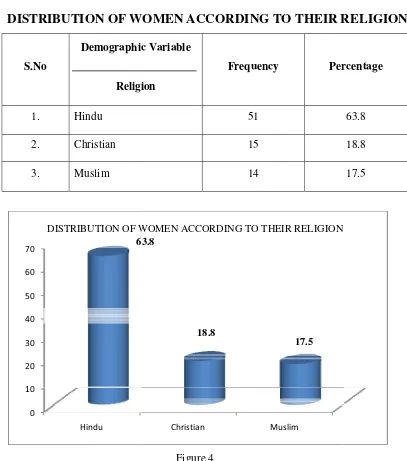
TABLE – 2
WOMEN ACCORDING TO THEIR R
c Variable
ion
Frequency Per
51
15
14
Figure 4
1 (63.8%) of the respondents were Hindu, nd 14 (17.5%) of the respondents were Musli
ŚƌŝƐƚŝĂŶ DƵƐůŝŵ
WOMEN ACCORDING TO THEIR RELIGION
3.8
18.8
17.5
RELIGION
rcentage
63.8
18.8
17.5
TABLE – 3
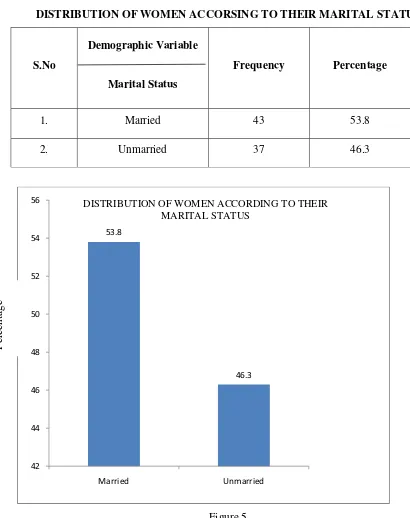
DISTRIBUTION OF WOMEN ACCORSING TO THEIR MARITAL STATUS
S.No
Demographic Variable
Marital Status
Frequency Percentage
1. Married 43 53.8
2. Unmarried 37 46.3
Figure 5
The figure shows that 43 (53.8%) of the respondents were married women and 37 (46.3%) of the respondents were unmarried women.
ϱϯ͘ϴ
ϰϲ͘ϯ
ϰϮ ϰϰ ϰϲ ϰϴ ϱϬ ϱϮ ϱϰ ϱϲ
DĂƌƌŝĞĚ hŶŵĂƌƌŝĞĚ
DISTRIBUTION OF WOMEN ACCORDING TO THEIR MARITAL STATUS
P
ercent
ag
e
DISTRIBUTION OF W
S.No
Demographic Educati Qualifica
1. Illiterate
2. Primary
3. High School
4. Higher Seconda above
The figure shows that 33 (41.3%) of the resp had School education, above.
Ϭ ϱ ϭϬ ϭϱ ϮϬ Ϯϱ ϯϬ ϯϱ ϰϬ ϰϱ
/ůůŝƚĞƌĂƚĞ Wƌŝŵ ϭϱ
DISTRIBUTION OF WOM
P
ercent
ag
e
[image:35.612.88.494.139.323.2]
TABLE – 4
WOMEN ACCORDING TO THEIR EDU QULIFICATIONS
c Variable ional
ation
Frequency Perc
12 1
33 4
18 2
ary and
17 2
Figure 6
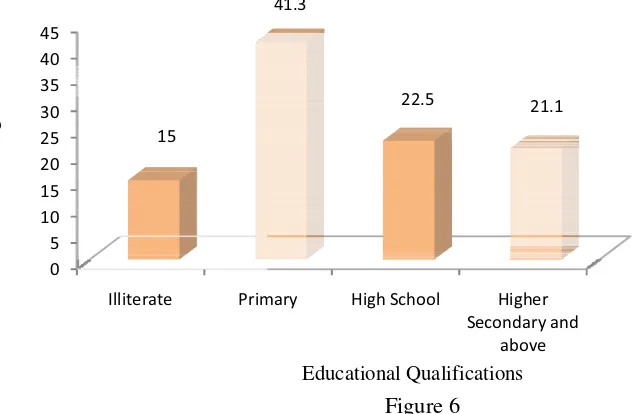
12(15.0%) of the respondents were illiterate a pondents had primary education, 18 (22.5%) , 17 (21.1%) of the respondents studied Hig
ŵĂƌLJ ,ŝŐŚ^ĐŚŽŽů ,ŝŐŚĞƌ ^ĞĐŽŶĚĂƌLJĂŶĚ
ĂďŽǀĞ ϰϭ͘ϯ
ϮϮ͘ϱ Ϯϭ͘ϭ
MEN ACCORDING TO THEIR EDUCATION Q
Educational Qualifications
CATIONAL
centage
15.0
41.3
22.5
21.1
and
of the respondents gher Secondary and
[image:35.612.95.411.355.562.2]DISTRIBUTION OF W
S.No Demographic
Occupa
1. House w
2. Cooli
3. Other
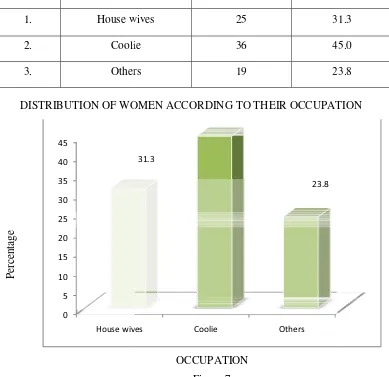
The figure shows that 25 the respondents were coolie works.
Ϭ ϱ ϭϬ ϭϱ ϮϬ Ϯϱ ϯϬ ϯϱ ϰϬ ϰϱ
,ŽƵƐĞǁŝǀ
DISTRIBUTION OF WO
P
ercent
ag
e
TABLE 5
WOMEN ACCORDING TO THEIR O
c Variable
ation Frequency Perc
wives 25 3
ie 36 4
rs 19 2
OCCUPATION Figure 7
5 (31.3%) of the respondents were House wi workers, and 19 (23.8%) of the respondent
ǀĞƐ ŽŽůŝĞ KƚŚĞƌƐ
ϯϭ͘ϯ
ϰϱ
Ϯϯ͘ϴ
OMEN ACCORDING TO THEIR OCCUPAT
OCCUPATION
centage
31.3
45.0
23.8
[image:36.612.94.483.176.553.2]DISTRIBUTION OF
S.No
Demogra
Variab
Incom
1. 1000
2. 1001 – 4000
3. 4001
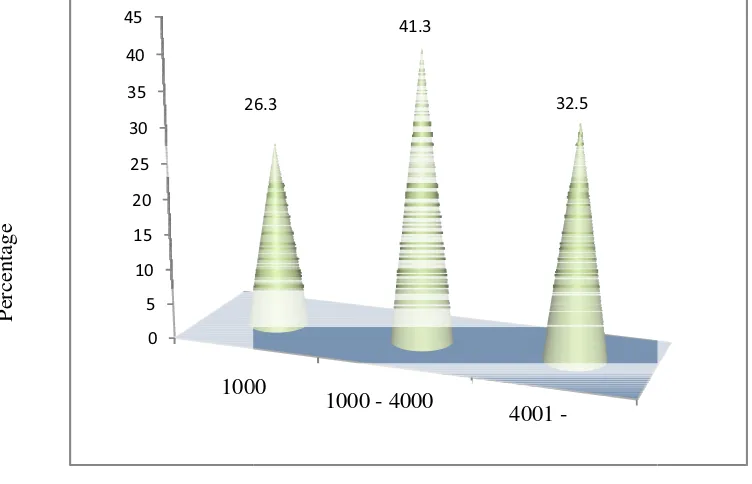
The figure shows that 33(41.3%) of the respondents family earning is 4001.
Ϭ ϱ ϭϬ ϭϱ ϮϬ Ϯϱ ϯϬ ϯϱ ϰϬ ϰϱ
ϭ Ϯ
P
ercent
ag
e
[image:37.612.85.497.89.291.2]
100
TABLE – 6
F WOMEN ACCORDING TO THEI
aphic
ble
me
Frequency Perc
21 2
33 4
26 3
Figure 8
21(26.3%) of the respondents family earni s family earning 1001 – 4000, 26 (32.5%)
Ϯ
ϯ ϲ͘ϯ
ϰϭ͘ϯ
ϯϮ͘ϱ
00
1000 - 4000
4001 -
IR INCOME
centage
26.3
41.3
32.5
[image:37.612.102.478.315.557.2]DISTRIBUTION OF
S.No
Demograph Source o Inform
1. Mass Media
2. Friends
3. Health personn
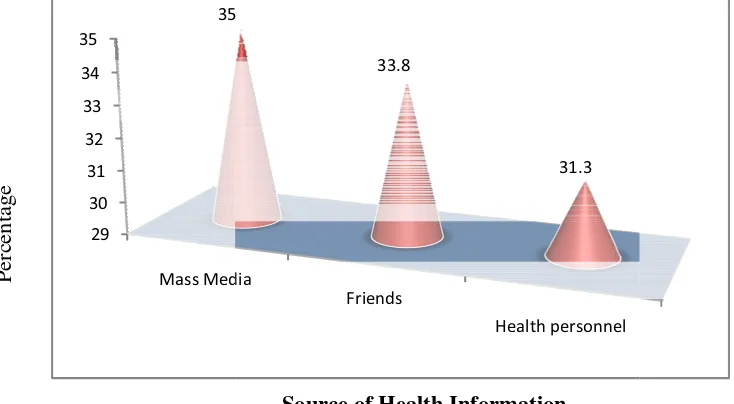
The figure shows information through the mass through friends and relatives, the Health Personnel.
Ϯϵ ϯϬ ϯϭ ϯϮ ϯϯ ϯϰ ϯϱ
DĂƐƐDĞĚ ϯϱ
DISTRIBUTION OF WO
P
ercent
ag
[image:38.612.89.512.120.293.2]e
TABLE – 7
F WOMEN ACCORDING TO THEIR SO HEALTH INFORMATION
hic Variable of Health mation
Frequency
28
27
nel 25
Source of Health Information Figure 9
that 28 (35.0%) of the respondents we media, 27 (33.8%) of the respondents were 25 (31.3%) of the respondents were getting in
ĚŝĂ
&ƌŝĞŶĚƐ
,ĞĂůƚŚƉĞƌƐŽŶŶĞů ϱ
ϯϯ͘ϴ
ϯϭ͘ϯ
OMEN ACCORDING TO THEIR SOURCE INFORMATION
OURCE OF
Percentage
35.0
33.8
31.3
[image:38.612.111.478.343.545.2]SECTION – B TABLE – 8
LEVEL OF KNOWLEDGE OF THE WOMEN’S IN PRE AND POST TEST
n: 80
S.No Level of
Knowledge
Pretest Posttest Frequency Percentage% Frequency Percentage%
1. Inadequate
(0-49%) 61 76.3% - -
2. Moderate
(50%-74%) 18 22.5% 43 53.8%
3. Adequate
(75%-100%) 01 1.2% 37 46.2%
Total 80 100% 80 100%
Figure 10
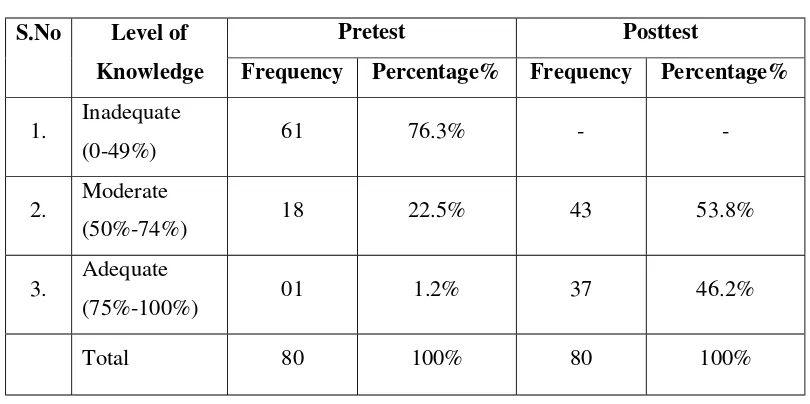
In pretest knowledge on cervical cancer, out of 80 women, 61 (77%) of them had inadequate knowledge, 18 (23%) of them had moderately adequate knowledge and 01 (1%) women had adequate knowledge. In post test knowledge on Cervical Cancer, out of 80 women, 37 (46%) of them had adequate knowledge and 43 (54%) of them had moderately adequate knowledge.
SECTION – C
TABLE – 9
COMPARISON OF THE MEAN AND STANDARE DEVIATION OF
THE
WOMEN’S KNOWLEDGE IN PRE AND POST TEST
Group N Mean SD Mean Changes Paired ‘t’ test P – Value
Pretest 80 11.30 4.645
11.78 17.767 <0.001 Significant Posttest 80 23.08 4.065
[image:40.612.93.523.204.523.2]Comparison of Knowledge Mean Score in Pre and Post Test
Figure 11
There will be a significant increase in knowledge regarding cervical cancer after structure teaching programme than before.
The findings illustrated that the mean Post Test knowledge mean score is 23.8 higher than mean Pretest knowledge score 11.30. Thus, the difference in level of the knowledge was confirmed by obtained paired‘t’ test value (17.767), which was significant (P-value < 0.001 levels).
This indicates structure teaching programme was effective.
ϭϭ͘ϯ
Ϯϯ͘Ϭϴ
Ϭ ϱ ϭϬ ϭϱ ϮϬ Ϯϱ
WƌĞƚĞƐƚ WŽƐƚƚĞƐƚ
M
SECTION – D
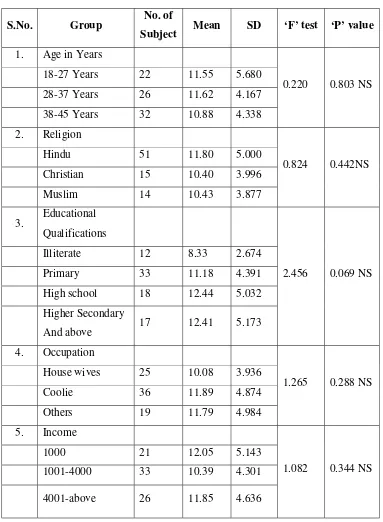
TABLE – 10
MEAN, STANDARD DEVLATION OF THE WOMENS KNOWLEDGE
SCORD WITH RESPECT TO THEIR SELECTED DEMOGRAPHIC
VARIABLES
N: 80
S.No. Group No. of
Subject Mean SD ‘F’ test ‘P’ value
1. Age in Years
0.220 0.803 NS 18-27 Years 22 11.55 5.680
28-37 Years 26 11.62 4.167 38-45 Years 32 10.88 4.338 2. Religion
0.824 0.442NS
Hindu 51 11.80 5.000
Christian 15 10.40 3.996
Muslim 14 10.43 3.877
3. Educational Qualifications
2.456 0.069 NS Illiterate 12 8.33 2.674
Primary 33 11.18 4.391 High school 18 12.44 5.032
Higher Secondary
And above 17 12.41 5.173 4. Occupation
1.265 0.288 NS House wives 25 10.08 3.936
Coolie 36 11.89 4.874
Others 19 11.79 4.984
5. Income
1.082 0.344 NS
1000 21 12.05 5.143
1001-4000 33 10.39 4.301
6. Source of Health Information
0.341 0.712 NS Mass Media 28 10.71 3.740
Friends 27 11.56 4.440 Health personnel 25 11.68 5.771
[image:42.612.122.505.66.170.2](Note: NS means Not Significant)
Table 10 Inferred that mean knowledge score obtained was 11.55 with standard deviation of 5.680 for the women’s age between 18-27 Years, 11.62 with standard deviation of 4.167 for the women’s age between 28-37 Years and 10.88 with standard deviation of 4.338 for the women’s age above 38-45 Years. The result shows that there was the significant difference between the age of the women’s and their knowledge score on Cervical Cancer and ‘P’ value statistically not significant (P< 0.001 level).
Result shows that women’s from Hindu religion score mean value 11.80 with the standard deviation 5.0 and Christian religion score mean value 10.40 with the standard deviation 3.996 and Muslim religion score mean value 10.43 with the standard deviation 3.877. The result reveals that there was no significant difference between the religion and their knowledge score on Cervical cancer and ‘P’ value is statistically not significant (P <0.001 level).
Result shows that, women who all belongs to house wife’s score mean value is 10.08 with the standard deviation of 3.936, Women who were coolie workers score mean value is 11.89 with the standard deviation of 4.874, women who belongs to other jobs with their mean score is 11.79 with standard deviation of 4.984. The result reveals that there was no significant difference between the occupation and their knowledge score on Cervical cancer and ‘P’ value is statistically not significant (P<0.001 level).
Result shows that women’s with income of rupees less than 1000score mean value is 12.05 with the standard deviation of 5.143, women’s with income of Rs 1001 – 4000 score mean value is 10.39 with the standard deviation of 4.301, men with income of Rs.4001 and above score with mean value of 11.85 with the standard deviation of 4.636. The result reveals that there was no significant difference between the income and their knowledge score on Cervical cancer and ‘P’ value is statistically not significant (P<0.001 level).
CHAPTER – V
DISCUSSION
This chapter deals with the discussion of the study with appropriate literature review, statistical analysis and findings of the study is based on objectives of the study. The aim of the present study was to evaluate the effectiveness of structured teaching programme on cervical cancer in terms of knowledge among the women’s residing in selected Kalamaruthoor village in Villupuram District. A total of 80 women’s from Kalamaruthoor Village in Villupuram District area were selected for the study by using convenient sampling method. Pretest was conducted by using structured questionnaire for all the subjects.
The First objective was to assess the Knowledge of Women before
and after Structure Teaching Programme.
In pretest knowledge on Cervical Cancer out of 80 women, 61 (77%) of them had inadequate knowledge, 18 (23%) of them had moderately adequate knowledge and 01 (1%) women’s had adequate knowledge. In post test knowledge on Cervical Cancer out of 80 women 37 (46%) of them had adequate knowledge and 43 (54%) of them had moderately adequate knowledge.
It shows that structured teaching programme was very effective to improve the knowledge level of the women’s.
These findings are strongly supported by the following researchers:
Swassiwadtipong N, Chaovakiratipong, Nguntra P. and Mahasakpasu, (2010).
Conducted study at district tack province North of Bangkok to determine knowledge and prevalence of use of Pap smear screening. An interview survey was conducted among the women of 18-65 Yrs old, who had not undergone hysterectomy in 7 villages, selected from this 54 villages in Jan 1991 only 333 of 1603 women interviewed (20.8%) Knew Pap test only 319 had ever been screened.
The second objective was to determine the effectiveness of Structure
Teaching Programme regarding Cervical Cancer.
There was a significant increase in knowledge regarding Cervical Cancer after structure teaching programme than before.
confirmed by obtained paired‘t’ test value (17.767), which was significant (P- value < 0.001 levels).
This indicates structure teaching programme was effective.
The third objective was to find out the association between knowledge on
Cervical Cancer and selected variables.
It is inferred that mean knowledge score obtained was 11.55 with standard deviation of 5.680 for the women’s age between 18-27 Years, 11.62 with standard deviation of 4.167 for the women’s age between 28-37 Years and 10.88 with standard deviation of 4.338 for the women’s age 38-45 Years. The result shows that there was no significant difference between the age of the women’s and their knowledge score on cervical cancer and ‘P’ value is statistically not significant (P <0.001 level).
Result shows that women’s from Hindu religion score mean value 11.80 with the standard deviation of 5.0 and Christian religion score mean value 10.40 with the standard deviation 3.996 and Muslim religion score mean value 10.43 with the standard deviation 3.877. The result reveals that there was no significant difference between the religion and their knowledge score on Cervical cancer and ‘P’ Value statistically not significant (P<0.001level).
It is inferred that illiterate women’s score mean value of 8.33 with the standard deviation 2.674. women’s of primary education score mean value is 11.18 with the standard deviation 4.391, women’s of high score mean value is 12.44 with the standard deviation is 5.032 and Higher Secondary and above score mean value is 12.41 with the standard deviation of 5.173. The result reveals that there was no significant difference between the education of the women’s and their knowledge score on Cervical cancer and ‘P’ value statistically not significant (P<0.001 level).
Result shows that women’s were belongs to house wife with score mean value of 10.08 with the standard deviation of 3.936, women’s were coolie workers with score mean value of 11.89 with the standard deviation of 4.874 and women’s were belongs to other jobs with their mean score of 11.79 with standard deviation of 4.984 The result reveals that there was no significant difference between the occupation and their knowledge score on Cervical cancer and ‘P’ value statistically not significant (P<0.001 level).
mean value of 11.85 with the standard deviation of 4.636. The result reveals that there was no significant difference between the income and their knowledge score on cervical cancer and ‘P’ value statistically not significant (P<0.001level).
CHAPTER VI
SUMMARY, CONCLUSION, IMPLICATION AND
RECOMMENDATION
SUMMARY
The summary of the study was to evaluate the effectiveness of structure teaching progamme on knowledge regarding Cervical Cancer. The study was conducted in Kalamaruthoor village, Villupuram District in Tamil Nadu.
One group pretest and post test design with pre experimental approach was adopted to evaluate the effectiveness of structure teaching programme on Cervical Cancer. A structured questionnaire was prepared and used to collect the data to assess the knowledge of cervical cancer among women. The prepared questionnaire was validated by subject experts and reliability of the test was tested by using Karl Pearson Formula.
The data obtained were analyzed and interpreted in terms of the objectives and hypothesis of the study. Descriptive inferential statistics where used for data analysis and the level of significance set at 0.05 and 0.01 levels.
SECTION – A:
The analysis of pretest and post knowledge level of women on cervical cancer.
SECTION – B
Evaluated the effectiveness of structure teaching programme in terms of gain in knowledge.
SECTION – C
Analysis of the association between pretest knowledge scores and selected demographic Variables.
1. In pretest knowledge on Cervical Cancer out of 80 women 61 (77%) of them had Inadequate knowledge, 18 (23%) of them had moderately adequate knowledge and 01 (1%) women’s had adequate knowledge. In post test knowledge on cervical cancer out of 80 women 37 (46%) of them had adequate knowledge and 43 (54%) of them had moderately adequate knowledge.
2. The findings illustrated that the mean post test knowledge mean score is 23.08 higher than the mean Prestest knowledge score 11.30. Thus, the difference in level of the knowledge was confirmed by obtained paired ’t’ test value (17.767), which was significant (p-value< 0.001 levels).
There was significant increase in knowledge regarding cervical cancer after structure teaching programme than before.
3. This study proved that there was no significance association between the pretest knowledge score in selected demographic variables like age, education and others. The overall experience of conducting this study was satisfying and enriching. All Health Professional is responsible for producing a comprehensive and holistic care to reduce the mortality and morbidity for women.
CONCLUSION
On the basis of findings of the study. The following conclusions were drawn. It also brings about the limitation of the study into practice. The implications are given on the various aspects like nursing education, nursing practice, nursing research, Nursing Administration and also given in sight into future studies.
The knowledge of women regarding Cervical Cancer was inadequate in assessed in pretest whereas the knowledge level had increased during the post test.
Structure teaching programme was effective in improving the knowledge of women on Cervical Cancer. There is a significant difference between the pretest knowledge scores which was demonstrated by using‘t’ test. The mean difference was (11.78) the findings reveal that the effectiveness of structure teaching programme was more when compared to the pretest knowledge.
This study proved that there was no significant association between pretest knowledge score and selected demographic variables such as age, marital status, education, religion, occupation, income and source of health information.
NURSING IMPICATION:
NURSING EDUACATION:
The study had proved that improving knowledge regarding Cervical Cancer to impart this knowledge the nursing personnel should be given in service education by using different types of audio visual aids to update their knowledge. They can plan teaching on the various aspects of cervical cancer and arrange camps workshop on cervical cancer to identify the learning needs of women. On Cervical Cancer and Pap smear and planning for appropriate intervention.
NURSING PRACTICE:
In rural community setup, community health nurse play an important role. They can do Pap smear screening test in the primary health centre and suggest the women to follow the recommendation of Pap smear test. The nurse can be perceptive and sensitive in the process of identifying and validating any immediate or long term need, concern or problem and can respond to those by appropriate intervention. The investigator felt the need that community health nurse should act as a facilitator to educate women on Cervical Cancer and its screening.
NURSING RESEARCH:
It is essentially to identify at present the level of knowledge regarding Cervical Cancer to know the extent of information is necessary to be given on talk. The extensive research must be conducted in this area to identify the several more methods of education.
NURSING ADMINISTRATION:
Nurse administrator should arrange continuing nursing education for nursing personnel regarding the disease and Pap smear need to prepare adequate learning material for health Education in hospital and in community.
LIMITATIONS
The results of the study could not be generalized as the study is conducted only in Kalamaruthoor village, Villupuram District.
The data was collected only from rural women those who were present in the study area
RECOMMENDATIONS
Similar study can be conducted in larger sample by their findings that can be generalized.
Follow up study may be conducted to evaluate the effectiveness of health education programme on risk factors of Science, symptoms, early detection and prevention of cervical cancer.
Community health nurse must involve in providing training programmes for personnal working in the primary health and welfare agencies in order to equip them with skills required for identification and prevention of cervical cancer in rural women.
In service training, programme should be conducted for nurses and other health personnel who are responsible for health care.
The material can be videotaped and encouraged in outpatients department of hospital and primary health center.
The material can be videotaped and it can be encouraged in outpatients department of hospital and primary health center.
Health information regarding Cervical Cancer can be given by talks.
TALKS
1. Women’s Organization 2. Voluntary Organization 3. Public
CLASSES
1. Schools and Colleges 2. Premarital courses 3. Anganvadi workers
ARTICLES
1. Weekly 2. NewspapersRADIO TALKS
1. Patients2. Public
BIBLIOGRAPHY
BOOKS•Bernet VR Brown LK Myeles Text Book for Midwives, 14th Edition, London, Churchill
Livingston 1999.
•Black M Jacob M.E, Medical Surgical Nursing Clinical Management for Continuity of Care, 5th Edition, Philadelphia; Saunders Company 1997.
•Dawn CS., Text book of Gynaecology, Calcutta; S.M. Arabi Dawn, 1994.
•Dutta DC Text book of Gynecology including contraception 4th Edition, Calcutta, New
Central Book agency Pvt. Ltd. 2003.
•J.E Park Text Book of Preventive Social Medicine, 12th Edition Banarsidas Bhanot publishers.
•Lowder milk et al., Maternity Nursing Tokyo; Mosby,1999.
•Pilliteri, Maternal and Child Health Nursing Care of the Child Bearing and Child Bearing
Family, 5th Edition Philadelphia; Lippincott Williams and Willkins 2003.
•Polit Desnise F., Nursing Research Priciples and Methods, New York; philadelpia, 1996.
•Potter and Perry, Fundamentals of Nursing Missouri, Elsevier, 2005.
•Rao Bhaskar K, et al., Clinical Gynecology, India; orient Longman, 1999.
•Revathi Remakrishhan, Clincal Gynaeeology, Toronto; W.B. Saundars company, 1999.
•Saraiya UB, Rao KA, Chatterjee, A Principle and Practice of Obstetrics and
Gynecology
for post Graduates Second Edition, New Delhi, Jaypee Bros. 2003.
•Shaw Robert W., et al, Gynaeeology, Toronto; Churchill Livingestion, 1999.
•Smith M Claudia, et al, Community Health Nursing, London, W.B. Saunders company,
2000.
•Smith RP, obstetrics and Gynecology and Women’s health 1st Edition, New Jersey, Con
Learning Systems 2002.
•Studdy John, Progress in Obstetrics & Gynacology, New York, Churchill Livingston, 1996.
•Talbot Laura A., Principles & Practice of Nursing Research, New York; Mosby, 1995.
•Tindall VR., Jeffcoat’s Principles of Gynaeeology, India; Gopsons Papers Ltd, 1997.
•Tomay AM, Nursing Theorist and their work 3rd Edition Philadelphia; Mosby 1994. Journals
•Ajayi & D Dewole, Awareness of Women regarding Cervical Cancer British Journal
July,
August 1998.
•Arora Reddy, Rajaraman, Elliamma 1995 risk Factors in Etiology of Cervical Cancer
Journal of obstetrics and Gynecology. Volume II.
•Bailiff A.A study on Cervical screening patients negative attitudes and experiences
Nursing Standards Year Books of Oncology Vol. 14 No.44 2000 July 19-25.
•Biswas Human Papilloma Virus and Cervical Cancer, Journal of Indian Medical
Association Feb 2000.
•Biswas LN, Manna B, Maiti PK, Sengupta S Sexual risk factor for Cervical Cancer
Epodemiology report 1997.
•Chabbra S, Sonak M, Prem V, Sharma S Gynecological Malignancies in a Rural Institute in India. Journal of Obstetric and Gynecology 2002 Jul; 22.
•Dhamija S, Sehgal A, Luthra UK, Sehgal S Factors associated with awareness and knowledge of Cervical Cancer in a community ; African Journal of Medicine.
•Djangidxe M, Djugeli, Museridze NG Hormonal Contraception and Cervix of the Uterus Pathology. Georgina Med news 2007, April (45).
•F Fylan Screening for Cervical Cancer British Journal for General Practioners Aug Vol.
48, No.433.
•Fersant, J.M. et.al., “Clinical and demographic predictors of late-stage cervical cancer”,
Archj Fam Mdeicine, volume 9, No