FORFÁS ANNUAL REPORT 2008
1
To the Minister for Enterprise, Trade and Employment
Pursuant to the Industrial Development Act, 1993, Forfás herewith presents its report and accounts for the year ended 31 December 2008.
Forfás is Ireland's national policy advisory body for
enterprise and science
Mission
To contribute to the future success of Ireland's economy by providing ambitious, coherent and widely understood enterprise and science policy advice that supports growth.
Functions of Forfás
Forfás is the national policy advisory body for enterprise, trade, science, technology and innovation. It is the body in which the State's legal powers for industrial promotion and technological development have been vested. It is also the body through which powers are delegated to Enterprise Ireland for the promotion of indigenous industry and to IDA Ireland for the promotion of inward investment. Science Foundation Ireland was established as a third agency of Forfás in July 2003.
The broad functions of Forfás are to:
Advise the Minister on matters relating to the development of industry in the State;
Advise on the development and coordination of policy for Enterprise Ireland, IDA Ireland, Science Foundation Ireland and such other bodies (established or under statute) as the Minister may by order designate;
Encourage the development of industry, science and technology, innovation, marketing and human resources in the State;
Encourage the establishment and development in the State of industrial undertakings from outside the State; and
Forfás Board Members
4
Statement of the Chairman and Chief Executive
5
Enterprise Statistics
11
Initiatives and Outcomes
25
The Irish National Accreditation Board
75
Forfás Management and Advisory Councils
81
Corporate Governance
90
Financial Statements
95
Forfás Board Members
Eoin O’Driscoll Chairman, Managing Director, Aderra Martin CroninChief Executive, Forfás
Pat Barry
Communications Advisor
Prof. Frank Gannon
Director General, Science Foundation Ireland Sean Gorman Secretary General, Department of Enterprise, Trade and Employment
William O’Brien
Managing Director, William O’Brien Plant Hire Limited
Barry O’Leary
Chief Executive Officer, IDA Ireland
Frank Ryan
Chief Executive Officer, Enterprise Ireland
Dr Don Thornhill
Chairman, National Competitiveness Council
Michael O’Leary
Secretary to the Board
Forfás Audit Committee
William O’Brien Eoin O’Driscoll Sean Gorman
Forfás Management Development Committee
Eoin O’Driscoll Dr Don Thornhill Pat Barry
Jane Williams and Dr Rosheen McGuckian retired from the Board on a rota basis in December 2008. Rody Molloy, former Director General, FÁS resigned from the Board in December 2008.
FORFÁS ANNUAL REPORT 2008
5
Statement of the Chairman and Chief Executive
Eoin O’Driscoll, Chairman
Martin Cronin, Chief Executive
Overview
Ireland’s economy faces major challenges and we must address and overcome them in the context of a severe global economic slowdown.
In particular 2008 was a difficult year. Data indicates a decline of 7.7 percent in real GDP with a projected 8 percent decline in 2009.
There has been a sharp increase in the number of people out of work during 2008 (4.1 percent decrease in employment). Employment in the companies supported by the development agencies (Enterprise Ireland, IDA Ireland, Shannon Development and Údarás na Gaeltachta) was 297,098 in 2008, a decrease of 2.9 per cent on 2007.
Our export performance has been resilient in the context of poor global trade, but has weakened to some extent and is expected to decline further.
Although the economic environment that we face is extremely challenging, we should remember that Ireland has achieved the best twenty years of economic performance in its history; we have invested in areas of competitive importance and there are many factors operating in our favour namely;
Prices have begun to fall, in some cases very sharply, and they will fall further in 2009, resulting in more affordable goods and services.
We are beginning to realise the benefits of major investments already made in transport infrastructures, in higher education capacity and in research.
We have a strong base of modern, internationally trading enterprises in key sectors such as life sciences, functional foods, specialised ICT and engineering, digital media, internet services and a range of internationally traded services.
operations here, in the areas of high end manufacturing, global services (including financial services) and research, development and innovation.
We have achieved good industrial relations, particularly in the trading sectors of the economy over recent years and this will provide an important platform on which to build firm-level partnerships for the development and implementation of recovery and growth strategies, and,
As a small country we have the capacity to respond rapidly to the fast changing global economy.
Future growth in output and employment will depend on the ability of firms to improve their productivity and competitiveness and to grow exports by competing successfully in
international markets. Ireland is in a better position now to achieve this than ever before.
Returning to Export-Led Growth
Ireland’s economy is small and open. Since the early 1960s Ireland has relied on its openness to international trade for economic growth and increased living standards. This openness brought us great prosperity in the 1990s and early 2000s. Recovery in our open economy will arise from increasing our share of international markets and from a return to growth in the economies of our trading partners. Ireland must target improved market share in the short term.
The Government’s framework document, Building the Smart Economy, identifies the fundamental importance of returning to export-led growth. To return to export-led growth we must ensure that:
The Irish enterprise environment is attractive to foreign investment;
Our entrepreneurs are stimulated to create successful businesses; and
Our companies have the very best platform from which to grow and serve global markets.
The enterprise sector faces relatively high cost levels. It is vital that we address cost issues within our control and that we continue to invest to ensure that Ireland is best positioned for recovery.
If we collectively demonstrate sufficient agility and flexibility to rapidly improve competitiveness we will emerge from this downturn in the shortest possible time.
Addressing Short Term Challenges
There are two important issues which require urgent action: achieving reduced costs and balanced State finances.
FORFÁS ANNUAL REPORT 2008
7
We also need to bring the State finances into balance and continue to work to preserve a stable banking system to ensure that the cost and availability of credit does not put enterprises in Ireland at a competitive disadvantage.
Investing for Recovery
We must continue to make strategic investments in the highest priority infrastructures to ensure that Ireland can compete successfully on the global stage:
Boosting our skills in maths and the science subjects is critical to realising employment opportunities in Ireland. We must also develop our strengths in innovation, the
application of computing and communication technologies, international sales and marketing and intellectual property management to underpin future growth.
Opening up third level opportunities to those who opted to enter the workforce on leaving school will help to ensure that we have the skills required for the key growth sectors of the future, including life sciences, ecommerce and web related services and financial services;
Prioritising labour market activation programmes in collaboration with enterprises can help to maintain employment where possible and introduce flexible mechanisms for the re-training of those losing employment.
Investing in critical infrastructures, in particular open access next generation
broadband infrastructure and in the national road network, will reduce bottlenecks for the productive sectors of the economy and will help to position us for an upturn.
Adjusting pay levels to recognise price trends and maintaining flexibility in work practices enables businesses to adjust to changing market conditions;
Strengthening the commercialisation links between enterprises and the research system will enable businesses in Ireland to respond quickly to changing international market demands for goods and services; and,
Reducing the regulatory burden on enterprises across all of Government can contribute to reducing costs.
Acknowledgements
Forfás is committed to:
Successfully identifying and understanding the issues facing enterprise and science;
Proposing policies that address opportunities and challenges; and
Influencing policy-makers to develop an environment that stimulates and supports sustainable economic development and national prosperity.
We believe that the organisation has risen to that challenge and has provided policy analysis and advice that is ambitious, coherent and widely understood. Forfás welcomes the measures in the April 2009 Budget in support of enterprise including the tax treatment of intangible assets, the Enterprise Stabilisation Fund and the pre-school initiative. A full outline of the outputs and impacts of our work can be found in the Initiatives and Outcomes Section of this Report.
Forfás cannot conduct its work without the cooperation and input of a range of stakeholders, nationally and internationally, as they provide us with an informed view of the drivers of the economy and are invaluable in developing and progressing a shared approach to issues and opportunities for enterprise.
The development and implementation of effective enterprise and science policies requires the engagement of the Department of Enterprise, Trade and Employment and a range of other Departments including the Departments of Communications, Energy and Natural Resources; Education and Science; Environment, Heritage and Local Government; Finance; Foreign Affairs; the Taoiseach and Transport, as well as inputs from leaders in the business world, academia and the development agencies.
We would like to express our appreciation to the many people from each of these spheres who worked with Forfás during the year to address the whole of Government realities of enterprise and science policy and helped to keep Forfás informed of the issues facing enterprise today and into the future.
We would like to acknowledge the contribution and assistance provided throughout the year by the Tánaiste and Minister for Enterprise, Trade and Employment, Mary Coughlan, TD and former Minister for Enterprise, Trade and Employment, Micheál Martin TD, the Department of Enterprise, Trade and Employment and a range of other Government Ministers and
Departments.
Forfás works closely with the development agencies, Enterprise Ireland, IDA Ireland, FÁS, Shannon Development and Údarás na Gaeltachta in supporting enterprise in Ireland, and Science Foundation Ireland on issues relating to science and technology. Our partnerships with these agencies are critical to our ability to provide our analysis and advice.
Forfás would also like to acknowledge the contribution of groups and individuals in business, government, employer organisations and trade unions. We would like also to thank the advisory groups to which Forfás provides research and administrative support:
Advisory Science Council, chaired by Mary Cryan.
Expert Group on Future Skills Needs, chaired by Una Halligan.
FORFÁS ANNUAL REPORT 2008
9 National Competitiveness Council, chaired by Dr Don Thornhill.
SSTI Enterprise Feedback Group, chaired by Lionel Alexander.
We would also like to thank:
The Board of the Irish National Accreditation Board, chaired by Máire C. Walsh, for their continued support and contributions.
The Steering Group of Discover Science & Engineering, which was chaired by Leo Enright. Leo gave notice of his resignation as Chair at the end of 2008, a role which he held since the establishment of the programme in 2003. We would like to thank him for his dedication to growing and developing the programme.
We would particularly like to thank Anne Heraty, Dr Rosheen McGuckian, Rody Molloy and Jane Williams who served on the Forfás Board in 2008. Their contributions and views were critical in shaping the work of Forfás.
Finally we would like thank the staff of Forfás. Their dedication and work has delivered a challenging and extensive work programme. Forfás staff have been responsive and innovative in dealing with the rapidly changing enterprise environment and requirements of our
stakeholders. They have addressed an increasingly complex range of issues for enterprise and have carried out effectively other activities such as shared services to the agencies,
Statistical Overview
Forfás collects and analyses a range of data on employment and expenditure by agency-supported firms and on Ireland’s performance in R&D and innovation. This section provides an overview of these indicators.
Employment in Agency-Supported Companies
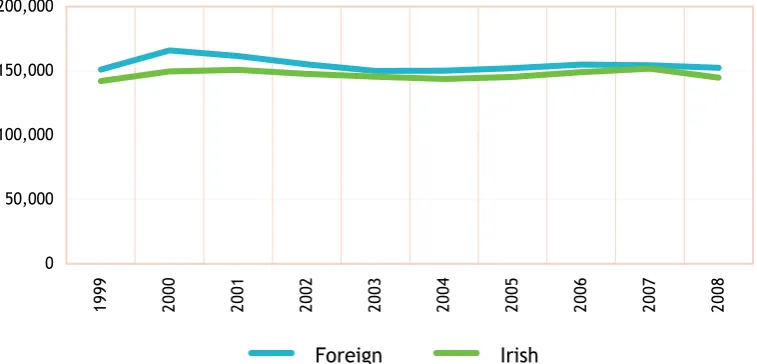
Figure 1 shows a breakdown of total full-time employment in companies supported by
Enterprise Ireland, IDA Ireland, Shannon Development and Údarás na Gaeltachta. In 2008, the total number employed was 297,098, a decrease of 8,938 jobs (2.9 per cent) on employment levels in 2007.
The decrease in employment is comprised of 7,054 net job losses in Irish-owned companies and 1,884 net job losses in foreign-owned companies.
[image:13.595.84.463.432.614.2]During 2008, 21,302 jobs were created in manufacturing and services sectors while 30,240 jobs were lost. Employment in agency-assisted companies is currently 1.4 per cent (3,981 jobs) higher than it was in 1999. Employment in Irish-owned companies has increased from 142,142 in 1999 to 144,734 in 2008, while employment in foreign-owned companies has increased from 150,975 in 1999 to 152,364 in 2008, increases of 1.8 and 0.9 per cent respectively.
Figure 1:Permanent Full-Time Employment (1999 – 2008)
0 50,000 100,000 150,000 200,000 199 9 200 0 200 1 200 2 200 3 200 4 200 5 200 6 200 7 200 8
Foreign Irish
FORFÁS ANNUAL REPORT 2008
13
Gains, Losses and Net Change in Permanent Employment
Figure 2 highlights the trend in the number of jobs being created and lost over the period 1999 to 2008.
In the period 2001 – 2004, agency-assisted companies recorded net job losses. This was followed by a period of net job creation in 2005 to 2007. In 2008, gross job gains of 21,302 were outweighed by losses of 30,240 to give a position of 8,938 net jobs losses.
[image:14.595.92.511.374.573.2]Net job losses in 2008 were concentrated in traditional manufacturing sectors such as food (-1,968), wood and wood products (-1,358), non-metallic minerals (-1,239), and basic and fabricated metal products (-1,531). Computer, electronic and optical products in the modern manufacturing category also experienced net job losses with a decrease of 1,300 jobs in 2008. Employment creation has been driven by the services sectors with financial and business services showing net employment gains of 6 per cent (1,230 jobs) and 7 per cent (647 jobs) respectively in 2008. Computer programming and consultancy saw net employment increase of 771 jobs.
Figure 2:Job Gains, Losses and Net Change in Permanent Full-Time Employment (1999 – 2008)
-40,000 -30,000 -20,000 -10,000 10,000 20,000 30,000 40,000 50,000
1999 2000 2001 2002 2003 2004 2005 2006 2007 2008
Job Change (Full Time) Job Gains (Full Time) Job Loss (Full Time)
Regional Distribution of Employment
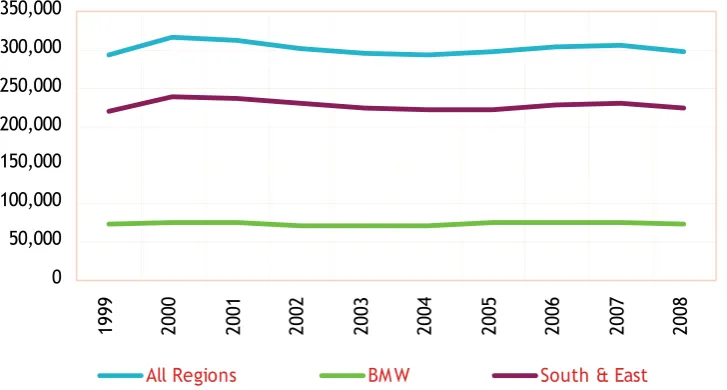
[image:15.595.82.446.238.433.2]Figure 3 shows the share of employment in manufacturing and services sectors accounted for by the Border, Midlands and West (BMW) region over the period 1999 to 2008. There was a 3.8 per cent decrease in total agency-assisted jobs in the BMW region in 2008, with the region accounting for 72,543 jobs, compared to 75,420 in 2007. This equates to 24.4 per cent of total jobs in agency-supported firms. The South and East also saw gross job losses of about 6,061 jobs (2.6 per cent) among agency-assisted firms.
Figure 3:Employment by Region (1999 – 2008)
0 50,000 100,000 150,000 200,000 250,000 300,000 350,000 199 9 200 0 200 1 200 2 200 3 200 4 200 5 200 6 200 7 200 8
All Regions BM W South & East
Source: Forfás Annual Employment Survey 2008
Part-Time, Temporary and Short-Term Contract Employment
In addition to permanent full-time employment, there were a further 30,871 jobs of a temporary or part-time nature recorded in agency-assisted companies in 2008, as illustrated in Figure 4. This represents a decrease of 4,359 (12 per cent) on the previous year and a decrease of 3,519 (9 per cent) on the number engaged in 1999.Taking the two categories of employment together (permanent full-time and temporary/part-time), there are now 327,969 people employed in agency-assisted companies, compared to 327,507 in 1999. This highlights the fact that total agency-assisted employment is back at 1999 levels.
Among Irish-owned companies, there was a decrease in temporary and part-time employment of 1,212 (7 per cent) in 2008. The current level of 16,090 is 1,089 (6.3 per cent) lower than in 1999 when such employment amounted to 17,179.
FORFÁS ANNUAL REPORT 2008
[image:16.595.93.463.127.301.2]15 Figure 4:Trends in Part-Time, Temporary and Short-Term Contract Employment
0 5,000 10,000 15,000 20,000 25,000 30,000 35,000 40,000 19 99 20 00 20 01 20 02 20 03 20 04 20 05 20 06 20 07 20 08
All Ownership Foreign Irish
Source: Forfás Annual Employment Survey 2008
Research and Development
Figure 5: Total R&D Expenditure by Sector of Performance (1998-2008 €million)
698 784 842 900 1000
1105 1210 1330
1458 1598 1684
204 221 238 280 322 405 492 550 601 660 716 70 64 96 104 125 127 138 150 150 180 200 0 500 1000 1500 2000 2500 3000 199 8 199 9 200 0 200 1 200 2 200 3 200 4 200 5 200 6 200 7 2008 (e )
Business Higher Education Government
Sources: Forfás; derived from the Survey of R&D in the Higher Education Sector 2006; The Science Budget 2007/2008 and the Survey of Business Expenditure on R&D 2007/2008 (CSO/Forfás)
Total Research & Development (R&D) performed across all sectors of the economy increased to an estimated €2.6bn in 2008. Overall R&D performance rose by 6.6 per cent between 2007 and 2008, though R&D spending growth slowed from the 10.4 per cent gain seen between 2006 and 2007. The three sectors of the economy where R&D is performed all posted strong gains in the latest year. R&D performed in the business sector rose to an estimated €1.68bn in 2008, with R&D performed in the higher education sector climbing to €716m and R&D
[image:16.595.96.465.418.611.2]Figure 6:Total R&D Expenditure as a % of GDP/GNP
0.00 0.50 1.00 1.50 2.00 2.50 3.00 3.50 4.00
Slovak Republic Poland Italy New Zealand Portugal Spain Ireland (GNP) Netherlands EU Average UK Canada Australia France OECD Germany Denmark USA Korea Japan Finland Sweden
Sources: Survey of R&D in the Higher Education Sector 2006 (Forfás); The Science Budget 2007/2008 (Forfás); Survey of Business Expenditure on R&D 2007/2008 (CSO/Forfás); Main Science & Technology Indicators, 2008/2 (OECD)
FORFÁS ANNUAL REPORT 2008
[image:18.595.92.530.138.395.2]17 Figure 7:Average Annual Growth Rates of Civil GBAORD for Selected Countries (2003-2008) 1.6% 2.2% 2.5% 2.6% 3.0% 3.7% 3.8% 5.1% 5.6% 7.3% 8.1% 13.4% 14.7% 18.6%
0.0% 2.0% 4.0% 6.0% 8.0% 10.0% 12.0% 14.0% 16.0% 18.0% 20.0% Germany Sweden Netherlands United States Belgium Finland United Kingdom Austria Norway Korea Greece Spain Ireland Luxembourg
Sources: The Science Budget 2007/2008 (Forfás) and the Main Science and Technology Indicators 2008/2 (OECD)
Public financing of R&D through exchequer funds and EU funds is measured by GBAORD (Government Budget Appropriations or Outlays on R&D), an internationally recognised indicator for benchmarking State funding of R&D. GBAORD includes public funding for R&D which is performed in the higher education sector, the business sector and funding for
government sector performed R&D. GBAORD spending is expected to reach €1.03bn in 2008, a 10.1 per cent increase in current terms from the 2007 outturn figure of €935m. GBAORD as a percentage of GNP has risen steadily over the past 10 years rising to an anticipated 0.63 per cent in 2008 from 0.35 per cent in 1998.
Figure 8: R&D Expenditure Performed in the Business Sector (1998-2008) €million 0 200 400 600 800 1000 1200 1400 1600 1800
1998 1999 2000 2001 2002 2003 2004 2005 2006 2007 2008
Source: Survey of Business Expenditure on R&D 2007/2008 (CSO/Forfás)
[image:19.595.84.456.518.727.2]Figure 8 shows the trend in R&D expenditure performed by the business sector for the last decade. The upward trend in business R&D is expected to continue for 2008 with preliminary estimates showing research expenditure of €1.7bn. This represents an increase of 5.4 per cent over the outturn for 2007 of €1.6bn. As the chart shows, expenditure on R&D in the business sector has been rising steadily over the past decade with the biggest increase happening between 2006 and 2007 when expenditure increased by more than 10 per cent. In the past decade business R&D expenditure has more than doubled with spending in 1998 of €0.7bn compared to the expected outturn for 2008 of €1.7bn.
Figure 9: R&D Expenditure Performed in the Business Sector as a Percentage of GDP/GNP (2008 or latest year data is available)
0.00 0.50 1.00 1.50 2.00 2.50 3.00
Poland Slovak New Zealand Italy Portugal Spain Canada Netherlands Ireland (GNP) UK EU Average Australia France OECD Denmark Germany USA Finland Korea Japan Sweden
FORFÁS ANNUAL REPORT 2008
19
[image:20.595.98.503.266.476.2]Figure 9 shows an international comparison of business R&D expenditure as a percentage of GDP (in Ireland’s case, GNP) for 2008 or the latest year for which data is available. In 2008 Ireland’s BERD intensity ratio of 1.08 per cent placed it in 13th place out of the 19 countries selected. R&D expenditure intensity is defined as the ratio of total R&D expenditure to overall economic activity measured in GDP or GNP. The leading countries are Sweden (2.64 per cent); Japan (2.62 per cent); Korea (2.49 per cent); Finland (2.46 per cent) and the US (1.93 per cent).
Figure 10: Total Headcount of Researchers in Business Sector by Qualification (2001-2007)
6517 6145 6866 7113
420
466
830
1191
0 1000 2000 3000 4000 5000 6000 7000 8000 9000
2001 2003 2005 2007
Non PhD Qualified Researchers PhD Researchers
Source: Survey of Business Expenditure on R&D 2007/2008 (CSO/Forfás)
Expenditure by Agency-Supported Firms in the Irish Economy
The Forfás Annual Business Survey of Economic Impact 2007 presents results relating to all manufacturing and internationally-traded service firms that are under the remit of Enterprise Ireland, IDA Ireland, Shannon Development and Udarás na Gaeltachta. The survey tracked the 2007 performance of agency-assisted client companies in terms of outputs (sales, exports, net output) and monitored the direct expenditure of these companies in the Irish economy in terms of payroll spend and purchases of Irish-supplied materials and services.In 2008, almost 3,900 companies were surveyed and approximately 800 of these were foreign-owned firms. Approximately 1,300 of the companies surveyed were in the internationally-traded services sectors and 2,600 were in manufacturing businesses.
The overall output of agency-assisted firms in manufacturing and internationally-traded services increased by 6.8 per cent in 2007 (in nominal terms), while direct expenditure in the economy increased by 7 per cent (Table 1).
Direct expenditure by these firms in the economy totalled €36bn in 2007. In total, Irish-owned firms spent €17.8bn in the domestic economy in 2007, comprising of €5.5bn on payroll costs, €8.6bn on Irish raw materials, and €3.7bn on Irish services. This direct expenditure has increased from €8bn in 1990. Direct expenditure by foreign-owned firms amounted to
€18.2bn in 2007, comprising of €7.6bn on payroll costs, €3.4bn on materials produced in Ireland and €7.2bn on services purchased in Ireland. For all firms the 2007 returns for direct expenditure were up 7 per cent and indicate a recovery of direct expenditure levels
[image:21.595.87.519.442.628.2]compared with the downward trend of the previous three years.
Table 1: Contribution of Agency-Supported Firms in the Irish Economy
2006 2007 2006 2007 2006 2007 Change
Sales €m 27,317,905 29,631,680 96,740,748 102,920,889 124,058,654 132,552,549 6.8%
Payroll Costs €m 5,153,048 5,546,380 7,074,674 7,619,610 12,227,722 13,165,990 7.7%
Irish Raw Materials €m 8,361,809 8,644,378 3,291,981 3,350,775 11,653,790 11,995,153 2.9% Services bought in
Ireland €m 3,322,487 3,673,515 6,481,288 7,208,293 9,803,775 10,881,807 11.0%
Direct Expenditure
in the Economy €m 16,837,344 17,864,272 16,847,943 18,178,678 33,685,288 36,042,950 7.0%
Direct Expenditure
as % Sales % 61.6% 60.3% 17.4% 17.7% 27.2% 27.2% 0.0%
All Firms Foreign-owned Firms
Irish-owned Firms
FORFÁS ANNUAL REPORT 2008
21
Corporation Tax Payments
In addition to their expenditure in the economy, manufacturing and internationally-traded and financial services companies provide a very significant direct return to the Exchequer by way of corporation tax payments.
The total corporation tax yield from all sources was €6.4bn in 2007 (Figure 11), a decrease of 4.4 per cent in real terms on the previous year. It is estimated that agency-supported firms in the manufacturing and internationally-traded services sectors accounted for €2.3bn, with an additional €1bn from internationally-traded financial services firms, amounting to €3.3bn (52 per cent) of the €6.4bn total corporation tax paid in the economy.
[image:22.595.101.513.341.528.2]Agency-assisted companies in chemicals/pharmaceuticals and internationally-traded services accounted for 38 per cent and 29 per cent of the €2.3bn respectively.
Figure 11: Corporation Tax Payments 1990-2007 (Constant 2007 Prices)
0 1,000 2,000 3,000 4,000 5,000 6,000 7,000 8,000
1990 1991 1992 1993 1994 1995 1996 1997 1998 1999 2000 2001 2002 2003 2004 2005 2006 2007 Total Corporation Tax
All Agency Manufacturing/ Internationally Traded & Financial Services Firms (inclusive IFSC)
Innovation and Economic Impacts
Figure 12: Innovation Rates by Sector and Size of Enterprise, % (2004-2006)
0
10 20 30 40 50 60 70 80 90
Small Medium Large Total
Industry Service
Source: Community Innovation Survey 2004-2006 (CSO/Forfás)
In the period 2004 to 2006 inclusive, over 47 per cent of Irish enterprises engaged in some form of innovative activity. Almost 57 per cent of industries were classed as innovation active, while 41 per cent of services were classed as innovation active. Large enterprises (250+ employees) were the most prolific innovators, with innovation rates of 84.2 per cent for large industries and 63.1 per cent for large services. This compares with 67.3 per cent of medium sized industries (50-249 employees) and 54.5 per cent of medium sized services. Small enterprises were the least innovation active group, with 51.4 per cent of small industries (10–49 employees) and 38.1 per cent of small services engaging in innovation activities.
Enterprises who are innovation active engage in product or process innovation or both. In the period 2004 to 2006 just over 33 per cent of all enterprises were engaged in some form of product innovation, while 30 per cent of enterprises were engaged in process innovation. Both product and process innovations tended to be higher as the size of the industry
FORFÁS ANNUAL REPORT 2008
23
[image:24.595.99.472.169.376.2]Innovation Impacts
Figure 13: % of Total Turnover Attributed to Product Innovation Activities by Size of Enterprise, 2006
0 1 2 3 4 5 6 7 8 9 10
Small
Medi
u
m
La
rge
To
ta
l
New to firm New to market
Source: Community Innovation Survey 2004-2006 (CSO/Forfás)
Competitiveness
29
National Competitiveness Council
Annual Competitiveness Report 2008: Volume 1, Benchmarking Ireland’s Performance and Volume 2, Ireland’s Competitiveness Challenge Costs of Doing Business
NCC Conference: Ireland’s Competitiveness Challenge Submission to the Commission on Taxation
Discussion Paper on Wellbeing and Competitiveness
30 30 33 33 34 34 Cost of Running Retail Operations in Ireland 35
Socio-Economic Scenarios 35
International Trade Negotiations 36
Next Generation Telecommunications Networks 36
Statement on Infrastructure 37
Regulation 38
Productivity Studies 38
Trade Data and Support 38
Enterprise
39
Catching the Wave – The Report of the Services Strategy Group 40 Life Sciences – Analysis of International Clusters 41 Life Sciences – Ireland’s Eco-System 42
Building Regional Competitiveness 42
Future Enterprise Needs 44
Forfás Budget 2009 Submission 44
Trade Finance 45
Submission to the Commission on Taxation 45
Knowledge
47
Advisory Council for Science, Technology and Innovation Towards a Framework for Researcher Careers
Ireland’s International Engagement in Science, Technology and Innovation Optimising the 4th Level Contribution to Enterprise in Ireland
48 48 49 50
SSTI Enterprise Feedback Group 50
FORFÁS ANNUAL REPORT 2008
27
Joint Programming of Research in Europe 51 European Strategy Forum on Research Infrastructures 52 Irish Involvement in ERA-NETs and Technology Platforms 52 European Molecular Biology Laboratory Evaluation 53
Innovation in Ireland 54
Submission to Irish Energy Research Council’s Proposed Energy Vision and Research Strategy for Ireland
54
People
55
Expert Group on Future Skills Needs All-Island Skills Study and Conference
Importance of Raising National Mathematical Achievement Future Requirement for High-Level ICT Skills in the ICT Sector Future Skills Needs of the Irish Medical Devices Sector
Financial Services – Implementation
Report on Skills for Creativity, Design and Innovation FÁS Skills and Labour Market Research Unit
56 56 58 58 59 60 61 61
The National Skills Strategy 61
Migration 62
Management Development Council
All-Island Benchmarking of Management Practice
62 63 Discover Science & Engineering
General Awareness Primary Level Science Second Level Science
63 64 66 66 Evaluation of Discover Science & Engineering Awareness Programme 67
Sustainability
69
Long Term Framework for Energy Policy 70
Energy Related Goods and Services 70
Environmental Goods and Services Sector on the Island of Ireland 70
EU Climate Change Policy 71
Waste Management 72
After over a decade of growth Ireland
now faces the challenges of a severe
economic downturn. The only viable
route to economic progress is a return
to export-led growth. This will require
a range of responses addressing short
term challenges and longer term
competitiveness needs.
During 2008 Forfás and the National
Competitiveness Council, to which Forfás
provides research support, continued
to identify key issues facing Ireland’s
competitiveness and advised Government
on a range of policy options to restore
Ireland’s relative cost competitiveness,
drive productivity growth in traded and
non-traded sectors of the economy and
position Ireland for rapid growth when
the world economy recovers.
National Competitiveness Council
Forfás provides research and secretariat support to the National Competitiveness Council (NCC). The NCC is a social partnership body, which reports to the Taoiseach on key competitiveness issues facing the Irish economy together with recommendations on policy actions required to enhance Ireland’s competitive position.
The NCC produced the following outputs in 2008:
Annual Competitiveness Report 2008
Volume 1: Benchmarking Ireland’s Performance Volume 2: Ireland’s Competitiveness Challenge
Costs of Doing Business
NCC Conference: Ireland’s Competitiveness Challenge, October 2008
Submission to the Commission on Taxation
Re-Conceptualising Ireland’s Competitiveness Conference, January 2008
Discussion paper on Wellbeing and Competitiveness
Annual Competitiveness Report 2008: Volume 1, Benchmarking Ireland’s Performance and Volume 2, Ireland’s Competitiveness Challenge
The National Competitiveness Council’s Annual Competitiveness Report 2008: Volume 1, Benchmarking Ireland’s Performance and Volume 2, Ireland’s Competitiveness Challenge,
were launched in January 2009.
Benchmarking Ireland’s Performance uses over 140 indicators to assess Ireland’s
competitiveness performance against a range of comparator economies. The aim of this report is to provide an objective evidence base, particularly so that emerging or potential weaknesses in the factors contributing to Ireland’s competitiveness can be identified. The Council’s competitiveness assessment encompasses policies on:
The regulatory environment including taxation, competition and the labour market;
Ireland’s physical infrastructure, including transport, ICT and housing; and
FORFÁS ANNUAL REPORT 2008
31
The main areas for policy action that arise from the benchmarking process are as follows:
Addressing Ireland’s declining cost competitiveness;
The challenges of maintaining high employment levels;
Maintaining infrastructure investment in the context of declining Government revenues; and
Addressing Ireland’s acute energy and environmental challenges.
The benchmarking report was circulated to a wide range of senior civil servants, politicians, business leaders, economists and others and the analysis underpinned the work of the NCC in preparing its recommendations for policymakers.
Volume 2, Ireland’s Competitiveness Challenge identifies the key competitiveness challenges facing enterprise and sets out clear policy actions that can help restore Ireland’s
competitiveness. The NCC recommendations in Ireland’s Competitiveness Challenge are grouped under four key policy areas as follows.
Dr Don Thornhill, Chairman, NCC at the launch of the Council’sAnnual
Competitiveness Report.
Restoring Fiscal Sustainability
Ireland faces harsh new fiscal realities. The deterioration of the public finances has been extremely rapid. It is vital to strike a balance between difficult decisions on controlling current expenditure such as broadening the tax base and introducing transparent user charges where appropriate — while also meeting the challenge of delivering better public services with fewer resources. In this context, the NCC supports:
Maintaining our competitive tax wedge1 on labour and making Ireland a more attractive
location for purchasing and managing of intangible assets.
Initiating further steps towards the introduction of a recurring tax on property, and movement away from stamp duties which are a tax on transactions and act as an obstacle to freeing up the property market. This would benefit the economy and improve the stability and predictability of tax revenues.
Continued selective investment to address infrastructural deficits, even in the context of a slowdown in current expenditure. However, a rigorous process of prioritisation of public capital expenditure is required, based on demonstrable returns on investment and ensuring that those projects critical to supporting a return to export-led growth are given priority.
The NCC is particularly concerned that Ireland benefits from the timely rollout of next generation broadband infrastructure and services and believes this will require well considered State interventions.
Restoring Cost Competitiveness
A key challenge for the Irish economy is the decline in Ireland’s cost competitiveness:
High energy costs relative to other locations with which we compete for trade and investment are a key concern for businesses. Climate change should be a central concern of public policy but care is needed to ensure that measures to meet
environmental targets do not further weaken our relative energy cost competitiveness. Regulation should be effective in managing controllable energy costs. Recovery of the carbon windfall from generators to energy users should continue.
Greater competition is necessary in sheltered sectors of the economy including the professions, waste management and retail and distribution, and the recommendations of the Competition Authority on reducing barriers to entry to markets should be implemented.
Scope exists to leverage the Government’s support of financial institutions, to ensure that lenders make available adequate capital to businesses on appropriate terms. Achieving Public Services Reform
The efficiency of the delivery of public services is an important part of the overall competitiveness of the economy. A high level of integration in policy formulation and implementation across Government is now required to meet objectives such as improving competitiveness, achieving a low carbon economy and building a knowledge economy and society. The challenge for the public service is to deliver better services with fewer resources.
Positioning for Recovery
While the Council highlighted a range of short term actions needed to improve our
competitiveness, it also considers it essential that we do not lose focus on the factors that will drive our long-term competitiveness. The future supply of a highly educated workforce, equipped with skills that are consistent with business needs, will be an important factor in the pace of our recovery.
FORFÁS ANNUAL REPORT 2008
33 Costs of Doing Business
A key challenge for the Irish economy is the decline in Ireland’s relative cost competitiveness, a result of both higher price inflation in Ireland (approximately one third of the loss) and appreciation of the euro against the currencies of many of our trading partners (about two thirds of the loss). Ireland’s above average rate of inflation during the 1999-2007 period was largely due to inflation in the price of property and of services, most of which are
domestically provided.
In 2008, the NCC continued to assess the costs of doing business in Ireland. Key business input costs that weaken Ireland’s overall cost competitiveness include property costs; utility costs, particularly electricity, fixed voice telephone services; waste disposal; and key domestic services, including information and communications technology (ICT), accountancy and legal services.
Despite construction cost reductions in the past year, Ireland’s relative cost competitiveness for these activities against benchmarked locations has not improved in these areas.
The Annual Competitiveness Report 2008 Volume 2, Ireland’s Competitiveness Challenge
report sets out for Government a range of priorities to restore our cost competitiveness — including exposing sheltered sectors of the economy to greater competition, controlling energy costs, balancing our renewables targets with affordability and removing barriers to private investment in waste management infrastructure. The Council welcomed the recent announcement that all Competition Authority reports will be formally responded to by Government.
NCC Conference: Ireland’s Competitiveness Challenge
The NCC held a conference entitled Ireland’s Competitiveness Challenge in October 2008 in the Royal Hospital Kilmainham, Dublin. The objective of this high level conference was to bring together Ireland’s most influential policy-makers, business people and members of academia to discuss the competitiveness challenges and the changing global environment which the Irish economy was facing. The event sought to encourage the diverse selection of delegates to consider, debate and develop possible policy responses to these challenges. Key policy areas discussed at the event included:
Cost competitiveness and the actions needed to restore Ireland’s attractiveness for export related enterprises;
Education and innovation and how best to meet enterprise needs;
Public investment policy and developing Ireland’s infrastructure to a level and quality comparable to other locations with which we compete for trade and investment; and
Mary Coughlan, TD, Tánaiste and Minister for Enterprise, Trade and Employment and Dr Don Thornhill, Chairman, NCC at the NCC Conference:
Ireland’s Competitiveness Challenge.
Submission to the Commission on Taxation
In June 2008, the NCC made a submission to the ongoing work of the Commission on Taxation. The NCC highlighted the importance of maintaining Ireland’s competitive labour tax wedge and the need to review property taxation. The NCC advocated taxation of property stocks through recurrent taxes rather than taxes on transactions.
This submission also highlighted that taxation policy can encourage people to continuously enhance their skill levels, and urged the Commission on Taxation to explore how companies, especially small companies, can be encouraged to invest in research and development, and how the creation and management of intangible assets (e.g. brands, software, copyright etc.) from Ireland can be encouraged.
The NCC cautioned that Ireland needs to proceed carefully on the introduction of a carbon tax as the costs of doing business in Ireland have already increased rapidly in recent years. If a carbon tax is to be introduced, it should be introduced at a relatively low rate, and then ramped up over time.
Discussion Paper on Wellbeing and Competitiveness
FORFÁS ANNUAL REPORT 2008
35
Forfás Activities: Competitiveness
The Cost of Running Retail Operations in Ireland
The Tánaiste and Minister of Enterprise, Trade and Employment requested that Forfás review the costs of running retail operations in Ireland. The purpose of the analysis was to examine the composition of retail business costs in Ireland and to determine how their cost base compares with retailers in other countries. The study found that while operating costs are on average 25 per cent higher in Dublin than in Belfast, they account for a relatively small share of total costs (circa 20-25 per cent). The analysis highlights that the higher operating costs incurred by the retail sector in Ireland add approximately five to six per cent to the total cost base of retailers in Dublin versus those operating in Belfast.
The analysis concluded that there are a number of challenges to be addressed including:
Lowering prices for customers in Ireland;
Reducing the costs that retailers pay for goods, which they argue are significantly higher than those faced by retailers in the UK and Northern Ireland. The study recommended that the Competition Authority review the barriers to competitive distribution and importing. This is to be completed by mid 2009; and
Reducing the costs of doing business in Ireland where higher operating costs in Ireland are primarily driven by higher property, wage, utility (e.g. energy, waste, etc.) and local services costs.
Socio-Economic Scenarios
Forfás undertook a futures orientated study, Sharing Our Future, to assist policy makers in the development of longer term policy and to ensure that Ireland remains competitive in an increasingly conceptual and innovation-driven global economy. To remain competitive there is a need to better understand longer term trends and to incorporate the necessary flexibility in policy to address these changes.
Sharing Our Future outlines a range of strategic policy requirements that are important if Ireland is to optimise future growth out to 2025. It encourages the policy community to factor long term thinking in all short term decision making relating to enterprise in Ireland. This report complements the Government’s framework for sustainable economic renewal, Building Ireland’s Smart Economy.
The identified strategic policy requirements fall under ten headings. These areas include:
Governance
Planning and the Regions
Information and Communication Technologies
Energy Supply and Security
Environment and Climate Change
Transport
Education and Skills
Social Policy and Quality of Life
Enterprise
It is anticipated that the analysis of trends, scenarios and policy options will be published in mid 2009.
International Trade Negotiations
Forfás continues to provide research support and policy advice to the Department of Enterprise, Trade and Employment in developing Ireland’s position both at the World Trade Organisation (WTO) and in negotiations at EU level on future international trade policy. The negotiations are significant for Ireland as a small open economy highly dependent on
international trade for growth and jobs. Forfás has provided economic impact analysis on the latest proposals on international trade liberalisation and the transposition of the EU Services Directive. This analysis sets out the potential gains to Ireland of these initiatives including the benefits of improved market access for exporters. Forfás also examined Ireland’s negotiation stance on international services in support of the Services Strategy Group, prompting
recommendations on establishing a formal, ongoing consultation mechanism and the compilation of a new annual publication on internationally traded services.
Next Generation Telecommunications Networks (NGNs)
Forfás has continued to highlight the potential economic, social and technological benefits of advanced broadband and has worked to stimulate interest in development of NGN
infrastructure, which is important from an enterprise perspective.
Forfás provided input to the Department of Communications, Energy, and Natural Resources’ consultation paper on Next Generation Broadband proposing a range of initiatives to ensure that NGN infrastructure becomes available in Ireland as soon as in leading West European nations.
Forfás also worked with the Department of Communications, Energy, and Natural Resources and the Communications Regulator on a number of issues including:
The existing communications infrastructure in Ireland, particularly in relation to the planned central coordination of existing State-owned and controlled communications infrastructures and ducting, and future development;
Benchmarking Ireland’s performance at a regional and city level against that of other European countries; and
FORFÁS ANNUAL REPORT 2008
37
Statement on Infrastructure
Forfás works closely with the Department of Enterprise, Trade and Employment, the development agencies and various government departments to identify the infrastructure priorities that are critical for enterprise development and the policy actions required to deliver them.
The availability of competitively priced modern infrastructure and related services are critical to support the productive sector and to foster export-led growth. Infrastructure projects of most importance for future economic growth and those likely to have greatest impact in terms of attracting overseas investment and supporting firms in Ireland to trade internationally should be prioritised.
Based on a review of previous investments and the needs of clients of the enterprise development agencies, this report sets out the key infrastructure investment and policy priorities from an enterprise development and competitiveness perspective. The priorities identified include:
The completion on schedule by 2010 of the main inter-urban network linking Dublin with Cork, Galway, Limerick and Waterford, the N18 Galway-Limerick, the N20 Limerick-Cork and the N25 Cork-Waterford sections of the Atlantic Road Corridor and the upgrade of the N4 (west of Mullingar); the N5 (west of Longford); N11 Dublin-Wexford; N25 Enniscorthy-New Ross; N28 Cork-Ringaskiddy; and N80 Portlaoise-Tullamore.
Selective continued investment in public transport options (between bus and rail) which offer the highest returns, based on a full cost benefit analysis, to improve public transport in the key urban centres, particularly Dublin, Cork and Galway. We believe that the extension of the Quality Bus Corridor network in Dublin merits early
consideration.
The timely delivery of Ireland’s planned energy interconnections (i.e., the north-south tie line and the east-west interconnector) and new generation plants is important to ensure adequate generation capacity and to improve energy cost competitiveness. The unbundling of the transmission network is an important element in attracting new investment in generation capacity into the Irish market and should be progressed as a matter of priority.
The bundling of all of the existing State telecommunications assets (commercial semi- state, local authorities, MANs) to provide an open access network capable of providing next generation broadband services. A regulatory framework which incentivises private sector investment in next generation broadband infrastructure, subject to acceptable user charges, is needed. Next generation telecoms infrastructure will be crucial for competitiveness in the future.
The creation of policy and regulatory certainty in the waste sector to incentivise private investment in waste infrastructure. In particular, the issue of the potentially conflicting role of the local authorities as service or infrastructure provider and as regulator of the sector needs to be addressed.
Regulation
Forfás completed a feasibility study for the Department of Enterprise, Trade and Employment of a ‘Single Window’ trade facilitation system, which could simplify clearance of imports and exports and thus reduce trade-related regulatory burden.
As part of the follow up to the report of the Business Regulation Forum, to which Forfás provided research and secretariat support, Forfás is working with the High-Level Group on Business Regulation to provide training to government departments and agencies on the implementation of burden reduction process to reduce red tape for enterprises. This is part of the ongoing process to reduce by 25 per cent the administrative burden that domestic
legislation places on business by 2012. Forfás also published a review of international best in eGovernment.
Productivity Studies
Forfás has established a bursary to encourage supervised research in productivity that is likely to contribute to the identification of policy options. Bursaries have been awarded to four postgraduate students undertaking research in the area of productivity in 2009. In addition, to promote ongoing debate of the issues raised in the Forfás publication, Perspectives on Irish Productivity, a number of high profile seminars on productivity were hosted by Forfás during the year. Forfás is currently developing a productivity guide for enterprises to assist managers in the measurement and improvement of productivity at firm level. The guide is due to be published in 2009.
Trade Data and Support
Forfás provided trade data and analysis to the Department of Enterprise, Trade and
Employment and also compiled a booklet Enterprise Statistics at a Glance 2008. Forfás has brought together data from various sources in a single, accessible format. Enterprise Statistics at a Glance 2008 presents statistics on areas relevant to the performance of Ireland’s enterprise sector, employment and output, international trade in goods and services, inward and outward foreign direct investment flows, and business R&D and
Ireland has a strong base of enterprise,
both indigenous and foreign owned, and
a culture that encourages companies to
develop and expand.
In partnership with the development
agencies, Forfás delivers policy advice
for a strong enterprise environment
which fosters innovation in services and
manufacturing and which stimulates
entrepreneurship.
Catching the Wave
- The Report of the Services Strategy Group
Launching the Report of the Services Strategy Group,
Catching the Wave, A Services Strategy for Ireland, in September 2008 are Tánaiste and Minister for Enterprise, Trade and Employment, Mary Coughlan, TD and Tony Keohane, Chairman, Services Strategy Group.
The Services Strategy Group, chaired by Tony Keohane, CEO, Tesco Ireland, published
Catching the Wave: A Services Strategy for Ireland in September 2008. Forfás provided secretariat and research support to the Group. The report, which was launched by Mary Coughlan, TD, Tánaiste and Minister for Enterprise, Trade and Employment, sets out new policy proposals designed to foster the continued development and growth of Ireland’s services sector.
Key recommendations include: Sectoral Development
Review and where necessary amend ministerial orders and policy statements to facilitate the development agencies in fostering the growth of services.
Carry out in-depth sectoral analysis on areas of opportunity identified in the report to exploit the potential for services exports. Repeat such analysis at regular intervals to ensure that Ireland maintains the ability to adapt to emerging trends.
Consider opportunities for Irish services companies expanding overseas as part of Enterprise Ireland’s longer term strategy, in tandem with opportunities for exporting. Skills
Provide integrated inter-disciplinary education for service activities along the lines of the services science management and engineering programmes offered in the US and UK.
FORFÁS ANNUAL REPORT 2008
41
Innovation
Identify, develop and put in place dedicated business support measures to promote R&D and innovation capability in services companies and to facilitate the development of services in manufacturing enterprise.
Provide structured supports to develop an institutional capacity of R&D in services
Expand the national R&D Tax Credit Scheme to include services R&D and innovation.
Extend national innovation policies and strategies to encompass innovation in services and continue the progress made in the implementation of the Strategy for Science Technology and Innovation 2006 – 2013 (SSTI).
Use public procurement to stimulate services in innovation. Productivity
Ensure the Competition Authority is adequately empowered and resourced to enable it to fulfil its mandate. Introduce a process whereby the Government responds formally to recommendations from the Authority.
Introduce a voucher scheme to encourage locally-trading service firms to benchmark their performance against national and international best practice to enhance their productivity.
Improve coverage and quality of statistics on the services sector to better inform public policy.
Life Sciences – Analysis of International Clusters
Forfás, in conjunction with the development agencies, Enterprise Ireland, IDA Ireland, and Science Foundation Ireland, is developing a strategy to support the evolution of the life sciences sector in Ireland.
The pace of global competition has intensified and many countries have developed life sciences strategies to identify how they can stimulate R&D, entrepreneurship and the growth of indigenous companies and develop a strong reputation so that they can attract mobile investment.
Forfás undertook a desk-based review of international life sciences clusters and a more in-depth analysis of three specific clusters (Medicon Valley, Singapore and North Carolina), which have taken different approaches to developing the sector. The report was circulated to relevant stakeholders in October 2008.
The analysis has highlighted a number of overarching characteristics that are apparent in the more successful life sciences clusters:
Strong leadership is critical and is generally provided by the business community and/or the state with the active support and participation of healthcare and academic
stakeholders.
International and national perceptions of a cluster can affect its continued
Successful clusters harness the opportunities that exist at the intersection of different technologies and industry sectors, and connect life sciences to other technological areas (e.g. bio-informatics, bio-defence, communications and sensor technologies).
Improving technology commercialisation efforts is a core and constant activity. Even those clusters that have a strong history of commercialisation cite the importance of continuously enhancing the supporting environment as the sector evolves.
All regions have a strategy for attracting risk capital, although the approach may differ depending on the stage of development of the cluster.
Established clusters may focus primarily on facilitating connections between venture capitalists and regional businesses.
Less established locations may focus on creating regional angel investment networks and promoting the region to venture capital firms.
Although Ireland is relatively well positioned within the global life sciences sector today, the increased focus and investment by other countries to support and drive the sector within their own economies reinforces the imperative to develop and communicate a strategic direction for Ireland’s life sciences sector, and to demonstrate leadership and collaborative effort to deliver on actions needed to support its future evolution and growth.
Life Sciences – Ireland’s Eco-System
The clusters report, detailed above, formed an element of a study on the business eco-system for the life sciences sector which will be published in 2009. The study aims to ensure that we are best positioned to capture future opportunities based on global trends and on leveraging the strengths and capabilities of the sector in Ireland today.
For the purposes of the study, the life sciences sector has been defined as comprising pharmaceuticals, biotechnology, medical technologies, nutraceuticals and sector specific support services.
Developments in scientific research and technologies are leading to increasing convergence across formerly distinct sub-sectors. Global trends indicate that new products and services based on personalised medicine, combination products, biologically enhanced foods, and remote diagnostics supported by ICTs are already starting to emerge. This study aims to identify how Ireland can strengthen its current life sciences ecosystem to take advantage of this evolution.
Building Regional Competitiveness
In 2008, Forfás began a study on regional competitiveness with the objective of ensuring that each region, from an enterprise perspective, is enabled to develop its competitive
environment, by building on its strengths and national and international networks and addressing barriers to development over the term of the National Spatial Strategy (NSS) to 2020.
FORFÁS ANNUAL REPORT 2008
43
Forfás is developing a suite of Regional Competitiveness Agendas (RCAs)2 for each of eight regions3, based on quantitative and qualitative analysis across key factors of competitiveness including:
Enterprise and Economy
Skills
Innovation
Access and Connectivity
Quality of Life
Leadership
These RCAs aim to assess how each region can build on its own potential, within the overall national context, and continue to develop a competitive environment to support enterprise development over the medium term. They will highlight opportunities to build on each region’s distinctive strengths, identify any barriers and suggest mechanisms to address them. Outputs from the project will be targeted at a wide range of stakeholders and will aim to influence the enterprise agenda within future regional development by:
Contributing to a refresh of the National Spatial Strategy proposed by the Department of Environment, Heritage and Local Government for 2009;
Supporting the enterprise development agencies to influence the range of players that have a role in the development of competitive regions so that cohesive and
complementary actions, that are important from an enterprise perspective, are taken;
Contributing an economic overview to the review of the Regional Planning Guidelines scheduled for completion by early 2010; and
Formulating responses to the DoEHLG consultation process on Local Authority Reform in the context of regional development.
A final report will be completed in 2009.
2 The RCAs will build upon and add value to the Regional Strategic Agendas that were developed in 2006/2007 and on the Gateways Implementation Report published by the DoEHLG and Forfás in 2006. 3 The eight regions are: South West, Mid West, West, Border, Midlands, Mid East, East and South East as
Future Enterprise Needs
With a view to developing a greater understanding of the likely future enterprise base in Ireland and the adequacy of current enterprise related strategies, Forfás began a review in 2008 to:
Assess how enterprise is likely to evolve and develop in Ireland in 2020.
Review existing strategies for appropriateness, adequacy and complementarities.
Identify any additional actions or changes in emphasis required to ensure that Ireland sustains a business environment conducive to enterprise as it is likely to evolve, and prioritise overall actions and investments.
The review will involve extensive consultation with the business community, academia, government and the development agencies and will be completed within 12 months.
Forfás Budget 2009 Submission
The Forfás Budget 2009 submission to the Department of Enterprise, Trade and Employment brought together the inputs of the enterprise development agencies and set out taxation and expenditure priorities in relation to enterprise development.
Two key items underpinning the submission were:
Maintaining competitiveness and ensuring the overall cost of doing business in Ireland does not increase; and
Continuing to invest for the future and to build the knowledge economy. The recommendations on taxation measures were outlined under three headings:
Opportunities for market development and enhancing the knowledge economy
Sustainable development
Reducing barriers to market development
Forfás welcomes the recent announcement in the Supplementary Budget 2009 to introduce a tax deduction for intangible assets as proposed in its Pre-Budget Submission and presentation to the Commission on Taxation.
The future competitiveness of the Irish economy rests on the ability to develop a world-class physical infrastructure system coupled with the human capital capability to drive the
economy forward. In terms of public expenditure priorities, the submission examined
programmes under the various headings of the National Development Plan 2007-2013 (NDP) as they impacted upon enterprise.
Specific priorities were outlined in relation to:
Human Capital – in particular ICT in schools was identified as a priority as well as measures to ensure the implementation of the National Skills Strategy.
Science, Technology & Innovation – areas prioritised included world-class research infrastructure, industry/higher education institutes collaboration, and realising the commercial potential of Ireland’s research community.
FORFÁS ANNUAL REPORT 2008
45
Trade Finance
Credit insurance plays an important role in providing protection to sellers against all or part of the risk of payment default by a buyer. Currently, withdrawal and reduction of short term credit insurance covering a period of less than two years by private credit insurers is a
significant and complex problem. It affects both sellers who want to ensure that they receive payment and buyers in their ability to secure and fund their inputs from suppliers. These credit insurance problems are a recent development closely linked to current uncertain global and domestic economic conditions, where private credit insurers are acting to reduce their risk exposure.
At the request of the Department of Enterprise, Trade and Employment and following extensive consultation with companies, private credit insurers, banks, the Irish Exporters Association, IBEC, the Irish Farmers Association, the European Commission and
representatives of a number of other economic ministries in the European Union, Forfás and Enterprise Ireland sought to identify and assess a range of policy options to alleviate the current problems being experienced with credit insurance. Policy options explored were:
State co-funding the ‘top-up’ for reductions in credit insurance policies.
State targeted interventions.
Alleviating impact through the banking system.
Given the likely high cost to the State of introducing an export credit insurance scheme, the forecasted significant increase in default rates and the increased premium cost to companies, the assessment shows that the impact of a state-supported export credit insurance scheme would be limited. The focus will continue on exploring ways of alleviating the impact through the banking system. The trade finance mechanisms available within the Irish Banking system are being explored as part of the Review of Bank Lending to SMEs (in the context of the bank recapitalisation initiative) and the potential for European Investment Bank action to increase the scope of risk-sharing guarantees offered to ease financing restrictions are being explored.
Submission to the Commission on Taxation
Forfás, on behalf of the development agencies, made presentations to the Commission on Taxation on two occasions (May 2008 and February 2009). These presentations focused on how taxation measures can contribute towards Ireland’s development as a knowledge economy in the medium term, while also addressing the short term needs of business. Forfás made a number of recommendations to encourage the consolidation of high-value activities in Ireland, focusing on the need to create an attractive environment for the location of intangible assets such as intellectual property (IP). Forfás welcomes the recent
announcement in the Supplementary Budget (April 2009) to introduce a tax deduction for intangible assets.
Forfás also highlighted areas of the tax system that could be improved to:
Facilitate internationalisation from Ireland
Develop skills and labour force participation to ensure that the targets set out under theNational Skills Strategy are reached; and
Ireland has made significant investments
in building advanced capability in core
technology areas.
We must now ensure that we can apply
these skills. We must translate our ideas
into high value products and services,
and ensure that the skills that our people
acquire are channelled appropriately for
existing enterprises and in anticipation of
future opportunities.
Throughout 2008, Forfás worked closely
with the Department of Enterprise, Trade
and Employment and other government
departments in support of the goals of
the
Strategy for Science, Technology and
Innovation 2006-2013.
Advisory Council for Science, Technology and
Innovation
The Advisory Council for Science, Technology and Innovation (ASC) is the Government’s high level advisory body on science, technology and innovation (STI) policy issues. It is the primary interface between stakeholders and policymakers in the STI arena. Forfás provides the ASC with research and secretariat support.
The Council’s remit is to contribute to the development and delivery of a coherent and effective national strategy for STI and to provide advice to Government on medium and long term policy for STI.
During 2008 the Council worked on the following topics:
A Framework for Researcher Careers
Ireland’s International Engagement in Science, Technology and Innovation
Optimising the 4th level contribution to enterprise in Ireland
Towards a Framework for Researcher Careers
Towards a Framework for Researcher Careers was published by the ASC in October 2008. The report examines how research careers develop in Ireland and compares the Irish situation with other countries including Korea, Sweden and the UK.
The report calls for a more defined career structure for the increasing numbers of world-class researchers being trained in Ireland so that all sectors including academia, public sector and enterprise can fully benefit from the transfer of knowledge, skills and technolog