Geschke Center
Doctoral Dissertations Theses, Dissertations, Capstones and Projects
5-2018
A Pathway to Scholarship: A Qualitative Study of
the Single African American Mother's Role in the
Academic Development of their Sons for
Kindergarten
Onda Johnson
University of San Francisco, [email protected]
Follow this and additional works at:https://repository.usfca.edu/diss Part of theEducational Leadership Commons
This Dissertation is brought to you for free and open access by the Theses, Dissertations, Capstones and Projects at USF Scholarship: a digital repository @ Gleeson Library | Geschke Center. It has been accepted for inclusion in Doctoral Dissertations by an authorized administrator of USF Scholarship: a digital repository @ Gleeson Library | Geschke Center. For more information, please [email protected].
Recommended Citation
Johnson, Onda, "A Pathway to Scholarship: A Qualitative Study of the Single African American Mother's Role in the Academic Development of their Sons for Kindergarten" (2018).Doctoral Dissertations. 462.
The University of San Francisco
A PATHWAY TO SCHOLARSHIP: A QUALITATIVE STUDY OF THE SINGLE AFRICAN AMERICAN MOTHER’S ROLE IN THE
ACADEMIC DEVELOPMENT OF THEIR SONS FOR KINDERGARTEN
A Dissertation Presented to
The Faculty of the School of Education Department of Leadership Studies Organization and Leadership Program
In Partial Fulfillment
of the Requirements for the Degree Doctor of Education
by Onda Johnson San Francisco
ii
THE UNIVERSITY OF SAN FRANCISCO
Dissertation Abstract
A Pathway to Scholarship: A Qualitative Study of the Single African American Mother’s Role in the Academic Development of Their Sons for Kindergarten
The voices of single African American mothers are critical to research on
kindergarten readiness. This study examined maternal influence on the kindergarten
readiness of African American male children of single African American mothers.
Research on the topic of maternal academic support for sons indicated a deficit view of
mother’s expectations for her son’s performance and cognitive ability in the year prior to
entering kindergarten.
Studies on the educational outcomes of African American male students
suggested this subgroup significantly underperformed on standardized tests in
mathematics and reading compared to their peers. The education community references
the achievement gap as this difference in performance, which is prevalent as early as
kindergarten for African American male students.
Antithetical academic deficiency theory describes maternal behaviors to
circumvent and combat the nonacademic stereotypes of their African American sons. The
theory informs nontraditional parental-involvement practices and positive messages
regarding the academic expectations and support mothers have committed to their sons.
Findings from the study of single African American mothers’ perceptions of the
cognitive ability of their sons suggested that mothers’ positive influence in the areas of
continuous support, academic preparation, and parental involvement impacted their sons’
iii
mothers in countering the degenerative attitudes that dissuade the academic development
iv
This dissertation, written under the direction of the candidate’s dissertation committee
and approved by members of the committee, has been presented to and accepted by the
Faculty of the School of Education in partial fulfillment of the requirements for the
degree of Doctor of Education. The content and research methodologies presented in this
work represent the work of the candidate alone.
Onda Johnson April 23, 2018
Candidate
Patricia A. Mitchell, Ph.D. Chairperson April 23, 2018
Walter Gmelch, Ph.D. April 23, 2018
v DEDICATION
In dedication and memoriam to my Grandparents, James Henry and Lillie Mae
Exum, for their steadfast, bountiful, and unconditional love and support throughout my
life. Thank you for sharing your faith in God, your commitment to each other, and your
dedication to improving the lives of our family. Your belief in me and encouragement to
reach my life goals gave me the confidence to keep pursuing my education. Your lives
are an example of faith, persistence and perseverance, strength and character that serves
as the foundation in all that I do in my life.
In dedication and memoriam to my father, William L. Thompson, who insisted
that I be the best in whatever I chose to do, and who believed I could and would. For
teaching me not to withhold and be silent, but to speak, and raise my voice, because you
knew I had something to say and you enlisted me to have the courage to do so. I will
always love you for telling me and showing me that I was strong.
To my Grandson, Gabriel, I hope that one day you will understand that this was
more than something your Grandmother accomplished; it is an open door to your future. I
expect great things from you, and this work reflects that all things are possible. You are
the first, I pray, of many more grandchildren and future generations of our family. You
have the awesome responsibility of sharing your story about what you saw and
experienced with the others when they arrive. Always be the example or one better than
the example that was set for you. Lead with positivity and possibility, and first and
vi
ACKNOWLEDGEMENTS
I am humbled and deeply appreciative of the extraordinary women that
participated in this study who unveiled their lives for the benefit of others. In examining
your lived experience, I was immersed in your narrative and I felt present in the stories
you told. Your words encircled me as an invisible companion in your history. In each of
you, including the participants in the pilot for this study, I sensed the depth and
bottomlessness of your story, and the victory in your journey.
Individually, your efforts to erase the labels African American male students carry
in academia are commendable. Your mission to open the pathway to scholarship for your
sons and to adjust the lens on the perceptions of African American single mothers is
prodigious. I hope this body of work will honor the spirit, innovation, and tenacity in
your efforts to see your sons to a successful end. I cannot express gratitude enough for
your fortitude and sacrifice.
I would also like to acknowledge the steadfast and resolute support I received
from my chairperson, Dr. Patricia Mitchell. Your reassurance and confidence in seeing
me through this process made a difference in my outlook. Your guidance was particularly
appreciated when I felt there was no end; your generous sentiments and encouragement
were supportive and assisted me in navigating through this journey. I am grateful to have
benefitted from your experience, but mostly from the genuine concern you have for your
students.
Thank you to the other members of my committee: Dr. Walter Gmelch, and Dr.
Richard Greggory Johnson III. You have both been a pleasure to get to know. I
vii
you about the importance of this research erased a mountain of doubt and fear about
whether this work would have relevance and be accepted in the research community.
During my time at USF, I have had the privilege to encounter some very
committed professors in the School of Education. I would like to acknowledge Dr.
Benjamin Baab for the generosity of his time and dedication to his students. After his
retirement, his presence on campus was truly missed, but his lessons endured and I am
grateful to have had the pleasure to experience his teaching.
I would also like to acknowledge Dr. Sylvia Ramirez for making those early
Saturday morning classes worth waking up for. Driving two-and-a-half hours to get to the
campus on Saturday meant waking up with the roosters. Thank you for being there with a
friendly greeting and bag of tricks to keep us engaged and alert for 4 hours.
To my son, Quynton, as I contemplated whether or not to conduct a study of the
educational experiences of African American male students, your educational journey
resonated in me. Your story became a catalyst for this work and, as I reflected on the
experiences and challenges in navigating the educational system for your benefit, I
became more resolute about the importance of a study of this nature. The educational
experiences of African American male students in the United States is a history that is
bound in stereotypes that limit their possibilities and future, your success in overcoming
these barriers is proof that it is possible. Although our story is not reflected in the social
position of the mother-son dyad represented in the current study, as an African American
mother of a son, I understand the importance of the mother’s role in a son’s academic
viii
want you to know how appreciative I am of you for being the man that you are, for our
relationship, and for supporting me in accomplishing this educational capstone.
I would like to thank all my family for their patience as I was on this journey. To
my husband, James, thank you for your love and support. You are the reason I was able
to seamlessly move through this process. To my daughters, Victoria and Alexia, you are
both incredible women and I am in awe of all that you have accomplished. Your
determination, integrity, fortitude, and perseverance are a testament to other women, to
God be the Glory for all that you are and will be.
To my mother, brothers, sister, and sisters-in-law, nieces and nephews, father- and
mother in-law, and to all of my extended family members, friends, and prayer warriors,
you know how important you are to me. I hope I have shown you what is possible when
you are steadfast in your self-commitments to complete what you start. I am grateful for
ix
TABLE OF CONTENTS
DEDICATION ...v
ACKNOWLEDGEMENTS ... vi
LIST OF TABLES ... xi
LIST OF FIGURES ... xii
CHAPTER I THE RESEARCH PROBLEM ...1
Statement of the Problem ...1
Background and Need for the Study ...15
Purpose of the Study ...30
Theoretical Framework ...30
Research Questions ...34
Limitations and Delimitations ...35
Educational Significance ...36
Definition of Terms ...37
CHAPTER II LITERATURE REVIEW ...39
Restatement of the Problem ...39
Educational Equity ...42
Racial Socialization, Culture, Race, and Gender Bias ...50
Maternal Influence ...51
Kindergarten Readiness ...52
Summary ...54
CHAPTER III METHODOLOGY ...57
Restatement of the Purpose of the Study ...57
Research Design ...58
The Research Setting ...60
Population and Sample ...62
Population ...62
Sample...63
Instrumentation ...65
Validity ...66
Pilot Study ...67
Reliability ...68
Data Collection ...69
Data Analysis ...72
CHAPTER IV FINDINGS ...74
Participant Descriptions and Profiles ...74
Participant 1: Penelope Rose ...75
x
Participant 3: Liana ...77
Participant 4: Aniyah ...78
Participant 5: Makayla ...80
Participant 6: Capria ...82
Participant 7: Azra ...82
Participant 8: Kimani ...83
Research Questions and Findings ...84
Research Question 1 ...86
Parental Involvement ...86
Summary ...93
Research Question 2 ...96
Protective Factors...96
Social Diversity ...96
Racial Socialization and Stereotype Threat ...97
Intraracial and Self-Identity ...100
Summary ...106
Research Questions 3 and 4 ...108
Activism and Advocacy ...108
Navigating Educational Institutions ...108
Motivation Toward Learning ...113
Summary ...117
Summary of Major Findings ...118
CHAPTER V DISCUSSION, CONCLUSIONS, AND RECOMMENDATIONS...122
Discussion ...122
Parental Involvement ...140
Protective Factors ...140
Conclusions ...143
Recommendations to Practice ...148
Recommendation for Further Research ...149
Concluding Thoughts ...150
REFERENCES ...152
APPENDIX A INTERVIEW PROTOCOL...165
APPENDIX B A PATHWAY TO SCHOLARSHIP: A QUALITATIVE STUDY OF THE SINGLE AFRICAN-AMERICAN MOTHER’S ROLE IN THE ACADEMIC DEVELOPMENT OF THEIR SONS FOR KINDERGARTEN ...167
APPENDIX C PERMISSION FROM ANDERSON ...170
xi LIST OF TABLES
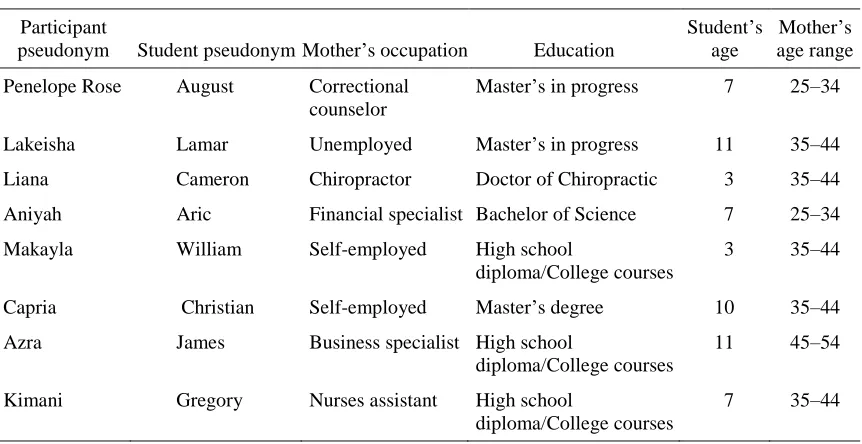
Table 1 Participant Demographic, Occupation, and Age by Pseudonym ... 75
xii LIST OF FIGURES
CHAPTER I
THE RESEARCH PROBLEM
Statement of the Problem
The best available evidence indicates that children of different racial and socioeconomic
backgrounds come into the world equally equipped to excel. … However, by age three,
between-group skill differences are clearly in evidence. Later, gaps in school readiness
are firmly established by the first day of kindergarten.
— Ronald Ferguson, Toward Excellence with Equity, 2007,
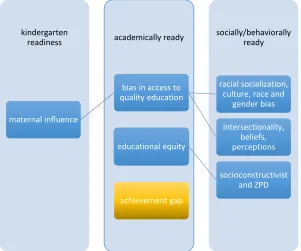
Kindergarten readiness is socially constructed, meaning it is a concept of learning
derived from socially accepted ideologies of what students should know prior to entering
kindergarten. Conceptually, kindergarten readiness has been shaped by educational
policies that have defined the rigor in kindergarten classrooms since the early 1990s. In
the late 1990s, shifting educational priorities and reform amplified the expectations of
what children should know as they enter formal education (Bassok, Latham, & Rorem,
2016; Russell, 2011; Stipek, 2006; Stipek, Feiler, Daniels, & Millburn, 1995).
Academics have not agreed on a single definition of kindergarten readiness; for
the most part, educators define readiness by measures that assess performance in reading,
mathematics, and other skills generally acquired between the ages of 3 and 5. A few
researchers also noted noncognitive skills that include behavioral aptitudes, such as
paying attention, following rules, and motivation for learning in academic environments
as integral to school readiness.
Despite the differences in defining kindergarten readiness, children are expected
academic setting. Researchers indicated that African American male children are more
likely than their Caucasian peers and other minorities to enter kindergarten without the
prerequisites for learning in today’s kindergarten classroom.
The differences between African American male children and their peers in
preparation for formal educational environments may be attributed to a number of
variables, including maternal gender biases on the perceptions of educational attainment
that viewed the competency of African American females in academic environments over
African American boys (Wood, Kurtz-Costes, Okeke-Adeyanju, & Rowley, 2009).
Parental expectations that conform to a nonacademic social stereotyped labeling of
African American male children undermine the confidence of the members of this
subgroup, leading to a predictable negative educational outcome (Wood et al., 2009).
These beliefs also serve to quell the motivation of African American male students
toward academic performance; motivation toward learning is a behavioral aptitude
identified as a prerequisite of kindergarten readiness. Wood et al. (2009) “considered
mothers’ endorsement of stereotypes about gender differences in academic abilities …
[contributed to] the societal and institutional factors that undermine the educational
outcomes of African American males” (p. 12). The Wood et al. study extended the
research on the general patterns of African American parental beliefs on gender
differences in educational attainment compared to their own youth.
A literature review conducted by Mandara, Murray, Telesford, Varner, and
Richman (2012) uncovered limited empirical research on the effects of the gender-based
parenting styles of African American mothers. According to Mandara et al., “only a few
different relationships with their sons and daughters” (p. 130). Results indicated that “the
gender differences in mother–child relationships are especially large among African
Americans” (p. 138). Mandara et al. uncovered limited empirical research on the effects
of the gender-based parenting styles of African American mothers showing mothers’
expectations for daughters “economic self-reliance and assertiveness” and “higher
educational expectations” differed from those for their sons (p. 130), with sons exhibiting
behavioral deficits, and daughters exhibiting stability.
The researchers measured seven maternal parenting variables: maternal warmth,
encouragement, instructiveness, empathy, controlling, negativity, and acceptance
(Mandara et al., 2012). The researchers’ hypothesis suggested that the maternal
gender-related behavior patterns indicated more assistive behaviors such as aiding sons to
complete a task (controlling) and anticipating independence in completing a task by
daughters (encouragement). Maternal behavioral patterns in this study increased the
likelihood of a negative effect on the behavior of African American males over females.
Gender-based parenting resulted in “less optimal parent–child relationships experienced
by African American boys” and “facilitate[ed] the disparities in behavior problems and
achievement between them and African American girls” (Mandara et al., 2012, p. 138–
139). Findings from Mandara et al., relating to self-efficacy, were notable in sons’
rejection of the mothers’ assistance and insistence on completing the task without
mothers’ interference.
Similar to the Wood et al. (2009) study, Mandara et al. (2012) intimated that
maternal gender bias “may force many African American mothers to subconsciously
society” (p. 139). Although the Mandara et al. study examined the relationship between
mothers and sons and mothers and daughters, it did not imply a lack of concern or love
and care in these relationships.
The Allen and White-Smith (2018) study of parental involvement practices
offered a contrasting perspective of the mother–son relationship and maternal
gender-based parenting styles. Allen and White-Smith noted “in a school system that privileges
White middle-class norms, aesthetics, and parenting styles, the parental involvement
practices of Black parents are often pathologized” (2018, p. 410), meaning their actions
and parental engagement were nonconforming and abnormal. African American parents
are marginalized and “met with rejection and exclusion similarly to what their children
experience in school environments” often labeled “confrontational and uniformed,
[school systems] tend to dismiss the critiques of Black parents” (2018, p. 412).
The African American mothers in the Allen and White-Smith (2018) study
evoked cultural wealth, characterized as “the skills, knowledge, connections, and abilities
used by communities of color to fight discrimination and oppression” (p. 414). African
American mothers view cultural wealth as parental involvement in their sons’ education,
used as a tool to push back against the structural and institutional mechanisms that
“socially construct the Black family as deficient” (Allen & White-Smith, 2018, p. 414).
A precept to the attitudes that shape the beliefs of African American mothers
regarding their sons’ cognitive ability are African American maternal parenting styles.
Situated in a cultural framework, African American maternal parenting may be
contextualized in the sociocultural norms that result from environmental strains and
the ideologies of protection reflected in the messages and lessons of racial socialization
taught to African American children on “cop[ing] with racism and racial exclusion while
not allowing it to become a rationale for failure or despair (S. A. Hill, 2001, p. 498).
Research on the mother–son dyad supported the concept that sons are validated
more than daughters as a means to “protect them from the threats of discrimination in the
real world,” providing a perspective on racial socialization and an “explanation for why
the African American mother ‘loves her son’ at least to the extent that such ‘love’ is
centered around ‘protection’ (Telesford, n.d., p. 55). This form of racial socialization is
rooted in the narratives of slaves where it was used as a mechanism to protect the
children in slavery from the harsh reality of their condition. This emphasis on sheltering
their children from harm is as prevalent today as it was more than 400 years ago, during
the period of slavery that began in the 13 colonies.
Parental involvement on the academic achievement of African American youth
has an intervening dimension, an aspect to closing the achievement gap (Jeynes, 2005).
Measuring parental involvement on four aspects of involvement—attendance at school
events, communicating with their children about school, maintaining high expectations
for their children’s success, and checking children’s homework—revealed a high impact
on the academic outcomes for families that participated in the Jeynes (2005) study. A
small but statistically significant difference (.0001 level of probability) in parental
support favored support of daughters over sons. The positive effect of parental
involvement of African American parents has wider implications:
The fact that parents are more likely to be involved in the education of their
African American females are more likely to go to college than African American
males. … The fact that parents are more involved in the education of girls than
boys could be a small contributing factor to this [gender] gap. (Jeynes, 2005,
p. 271)
Other contributing factors included socioeconomic and marital status in
examining parental engagement (Jeynes, 2005). African American parental involvement
was more likely in two-parent middle-class households, with married parents.
Single-parent households faced challenges in allocating time for Single-parental involvement. To offer
a broader perspective and to mitigate against constraints such as time, parental
involvement in the African American community could not be viewed from a single
dimension. Some parents marked their attainment or desire for higher socioeconomic
status (SES) as a means of parental support. An improved SES may open the opportunity
for children from single female-headed households to live in communities with better
schools, and to better afford supplementary educational supports such as tutors and other
educational resources. A focus on other parental-involvement attributes was particularly
emphasized for single parents as a measure of the academic support for their student
(Jeynes, 2005).
Single mothers head 57% of African American households, indicating a high
probability that children born in African American families will be raised by a single
mother (Snyder, de Brey, & Dillow, 2016). The incidence of African American
single-parent households includes those who were never married, separated, divorced, and
widowed. These households represent all SES classes and are not limited to lower income
Socioculturally defined roles of African American women and men blur historical
Eurocentric gender roles. The mother–child household prominent during slavery became
a normatively acceptable household archetype for African Americans in poverty (S. A.
Hill, 2001, p. 496). The childrearing practices in African American single female-headed
households necessitated a “gender-neutral” environment. This process included male and
female role expectations: that is, male children were expected to care for younger
siblings, do housework, and other traditional female roles and female children were
expected to take on work outside the home in these environments. The division of labor
and support relates more to ability than gender in Black families (S. A. Hill, 2001).
Racial socialization, “messages parents transmit to their children about the
significance of group identity, racial stratification, and intergroup and intragroup
relations” (Dunbar, Leerkes, Coard, Supple, & Calkins, 2017) may negatively impact the
expectations of African American male children in single female-headed households.
Researchers noted that in these environments, addressing the effects of racism plays a key
role in the parenting differences of males and females concerning the external social
influences resulting from discrimination. Expectations are predominately due to a “Black
mother’s fear for the safety of her son” and the messaging around gender-based
expectations are borne out of this fear (S. A. Hill, 2001, p. 503). Cautionary messaging is
not relegated only to single African American women in poverty in “understanding that
their sons face many obstacles and even dangers in expressing masculinity. [Black]
parents may develop higher expectations for daughters than for sons and be more tolerant
and self-indulgent with sons” (S. A. Hill, 2001, p. 503). Challenges in raising African
single African American mothers struggled to address the negative educational outcomes
of their sons (Green, 2012, p. 13).
African American mothers’ parenting style is “authoritarian or helicopter
parenting,” as a means to control and protect their sons from racism, victimization, and
incarceration (Henderson, 2016, Abstract). Protective parenting styles are implied in
hovering over the lives of their sons to shield them from social stigma and influences on
the self-identity of their sons (Henderson, 2016). Parents’ beliefs about their children’s
academic ability shaped their children’s self-efficacy and academic outcomes (Wood et
al., 2009). Racial and ethnic identity are indicators of parental and community influences
that can profoundly affect the behaviors and academic outcomes for children and youth.
Research supports the idea that culture conditions individual perception and
cognition by providing sets of values, life expectations, and needs which affect
people’s basic sensory perceptions. Culture serves as a source of lay theories
about the world and shapes how people attend, think, and react, crafting their life
views and philosophies. (Kastanakis & Voyer, 2014, p. 6)
Davis (2003), in examining the intersection of race, gender, and schooling for
African American males, considered the “mechanisms” that influence “disengagement”
in the early grades. This phenomenon can be examined through a social-constructivist
lens with data suggesting that parenting styles in the African American community
contributed to a racial and ethnic identity for African American males that had historical
precedence. Davis used the masculine imaging of African American males as a “social
and academic construct for their personal lives” (p. 520). The masculine identity, a
violent, disrespectful, unintelligent, hyper-sexualized, and threatening” (Davis, 2003,
p. 520).
This racial and gender identity had implications for the cognitive and social
limitations placed on African American males in school settings. This negative
stereotyping occurs early in the educational experiences of African American males and
is oftentimes reinforced in the media, community, and other socially influenced venues
that contribute to “a traditional masculine hegemony of behaviors and attitudes” (Davis,
2003, p. 532). In some ways, a masculine identity undermines an academic identity that is
seen as feminine and undesirable (Davis, 2003; Jackson & Moore, 2008). The media
reinforces this cultural identity by promoting images of “African American males as
individuals deeply embedded in a subculture valuing standards of coolness and
hyper-masculinity signified by identity with the hip-hop culture” (Jackson & Moore, 2008,
p. 849).
The nature of the masculine stereotype identified in Davis (2003) and Jackson and
Moore (2008) was invoked by a review of literature on the topic that suggested “Black
males are often disadvantaged by this perplexing and misunderstood intersection of race”
(Davis, 2003, p. 517). Davis suggested “little is known about the processes and
experiences of early schooling, particularly issues of masculinity and how it influence[s]
schooling” (p. 518). Jackson and Moore (2008) averred that gaining acceptance in a
subculture, such as the hip-hop culture, “encourages behaviors that devalue academic
achievement and depress educational aspirations while condoning activities and
The advent of the term intersectionality (Crenshaw, 1989, as cited in Carbado,
Crenshaw, Mays, & Tomlinson, 2013), responded to the implications of race and gender
that were transposed and in juxtaposition for Black women. Crenshaw’s 1989 essay lay
the framework for the term intersectionality to later be exposed through multiple factions
of intersecting identities (Carbado et al., 2013). Decades after the development of the
theory, intersectionality was first introduced to define Black feminism, expanded beyond
a singular precept to other areas where the multidimensional model can be applied. The
original intent of the theory to expose the distance that bifurcated the social experiences
between African American men and women informed Crenshaw’s definition of
intersectionality.
The cross-sections between race and gender related to bias created an additional
dimension of experiences for African American women that were not implicated
similarly for African American men or White women, with the latter two reflecting the
bilateral indices of discrimination at that time. Intersectionality as a theory that supported
Black feminism explicated the relationship between being Black and a woman and
“addressed the marginalization of Black women within not only antidiscrimination law
but also in feminist and antiracist theory and politics” (Carbado et al., 2013, p. 303).
R. G. Johnson and Rivera (2015), expanded the application of the term
intersectionality and reframed it as an approach to confront the disparaging ideologies of
bias associated with the term. Relating the skill derived from a dual-identity, the
researchers suggested that “oppressed minorities become adept at bicognition, or the
ability to navigate both their own and alien sociocultural milieus” (R. G. Johnson &
identities suggested in the research as: intercategorical, or “discrete traits” in a category;
intracategorical, referencing a self-identification that expands on the racial category or
sexual-orientation, and countercategorical, or opposing the category; transcategorization,
means identification by association. These identities open the possibilities for
self-examination by individuals who may not have considered the social diversity of their
existence “and therefore to the possibility of greater mutual appreciation … and
cross-identification” (Johnson & Rivera, 2015, pp. 511–512).
In the current study, intersectionality is examined through the lived experiences of
participants in preparing their sons for an academic environment. The theory underscores
the interchangeable positional challenges of preparing their sons for an academic
environment and supporting their son’s self-identity. The duality reflects the challenges
of the maternal position to support sons’ academic development while navigating social
institutions that denigrate their parental position and involvement.
The challenges of African American male students in academic settings are well
documented. Research findings supported the pronounced negative effects of low
academic expectations for African American male students by schools and communities.
African American males face greater challenges in academic settings than their female
counterparts: 81% of African American women between the ages of 18 and 24 obtained a
high school credential compared to 72% of African American men in 2006 (Wood et al.,
2009). The disparity in achievement widens in the upper educational levels where
African American women are more prominent (Wood et al., 2009). African American
women earned 40,000 postbaccalaureate degrees in 2005 compared to 16,000 awarded to
Although a myriad of studies examined the academic deficiencies of African
American male students, much of the research has focused on environmental conditions,
such as poverty, as contributors to poor school performance. Although the impact of
poverty cannot be discounted or underrepresented in a study of this kind, it does not go
far enough to address the underlying nature of the persistent gap in academic
achievement for African American male students, which researchers have suggested
should be considered from multiple perspectives. This diversity of thought is particularly
important when considering that the African American community encompasses a range
of SES. Academic concern for African American male students included school
environments with a large percentage of middle-class African American students.
Davis (2003) suggested that a framework of qualitative and quantitative research
in this area should include “using a developmental perspective to study changes in
African American males’ achievement and performance from kindergarten to 3rd grade”
(p. 523). Consideration for early learning, including school readiness, should include the
parental impact on school preparedness. Parental influence is paramount in developing
ideas and acceptance of an academic identity. Cultural orientation, reinforced in the
community, is reflected in Fordham’s (1996, as cited in Davis, 2003) work that “implies
that negative school attitudes can be found among Black students because it is learned
behavior that is community enforced (p. 524). Studying parental influence, particularly
from the maternal perspective, would address a gap in empirical research on the early
learning experiences of African American male students.
Important contextual issues such as maternal perceptions of the academic
development of African American males. Parental perceptions of academic competence
shaped the beliefs of African American male students, including their levels of academic
motivation (Wood et al., 2009). The subgroup displays stereotypical behavior, derived
from understanding the expectation of family members, the community, and society at
large, through attitudes of self-fulfilling prophecy. Self-fulfilling prophecy means
negative attitudes and behaviors that are externally driven by expectations from
influential people or through social engagement that creates a dynamic for the predicted
behavior to occur. “Little evidence is available on the antecedents of underachievement
for young males—the exception being the negative effects of some family and schooling
background variables” (Davis, 2003, p. 515). Studying maternal perceptions of the
cognitive development of their sons prior to the entering formal educational
environments may provide another perspective to the causes that underlie this
phenomenon.
Patterns of racial socialization focus attention on the need to insulate African
American children from racism and the racial exclusionary practices they are expected to
experience in society and in social institutions. Research on the topic of racial
socialization has been inconclusive and contradictory in empirical studies that applied
measures to indicate the impact racial socialization had on academic preparation,
academic outcomes, or the academic self-esteem of African American students (Brown,
2009; Dunbar et al., 2017; Neblett, Chavous, Nguyen, & Sellers, 2009). Researchers
acknowledge that the various measurements used to examined this phenomenon have
fallen short in correlating racial socialization to academic outcomes for African American
to be inconclusive and disparate on whether racial socialization contributes to positive
academic outcomes, suggesting that “many researchers have failed to fully explicate the
mechanism by which racial socialization results in better achievement outcomes” (p. 2).
Accordingly, researchers measure racial socialization practices in a variety of ways and
generally address the mechanisms parents impose in the preparation for the impact of
social environments African Americans must navigate within, particularly for African
American male children (Neblett et al., 2009). In contrast, researchers suggested that
racial-socialization messaging, particularly messages of racial pride, perform several
functions, including encouraging academic performance in school settings resulting in an
indirect or distal link between these messages and the academic achievement of African
American students (Brown, 2009; Henderson Hubbard, Lewis, & Johnson, 2014).
Educators measure academic achievement at the onset of a student’s school experience;
therefore, a positive impact in this area could provide agency against the influence of
racial dominance and prejudice on the academic outcomes of African American male
students (Brown, 2008; McWayne, Mattis, & Hyun, 2018; Neblett, Philip, Cogburn &
Sellers, 2006; Varner, Hou, Hodzic, Hurd, & Butler-Barnes, 2018).
Maternal perceptions of single African American mothers on the cognitive
development of their sons prior to entering kindergarten may impact children’s school
readiness. In the current study, single African American mothers’ influence on their sons’
academic development is the phenomenon under examination. The examination focuses
on maternal contributions and attributes that specifically support the concept of
the investigation was to understand mothers’ process in preparing sons for an academic
environment and their motivation for doing so.
Background and Need for the Study
The National Center for Education Statistics (NCES) identified seven behavioral
attributes that may impact a student’s academic outcomes as they enter kindergarten.
These attributes, reported by teachers in the longitudinal study, ECLS-K:2011 included
paying attention, persisting in completing tasks, showing eagerness to learn new things,
working independently, adapting easily to changes in routine, keeping belongings
organized, and following classrooms rules. From a cognitive perspective, subject-matter
development in reading and mathematics included such skills as letter recognition,
rhyming words, and vocabulary, recognition of numbers, shapes, patterns, and basic
addition and subtraction (U.S. Department of Education, 2016). The National Association
for the Education of Young Children defined school readiness through a focus on the
school environment, social institutions, and familial supports needed to ensure students
succeed in school. The National Association for the Education of Young Children (2009)
adopted the following definition of readiness from Maxwell and Clifford (2004):
School readiness involves more than just children. School readiness, in the
broadest sense, is about children, families, early environments, schools, and
communities. Children are not innately “ready” or “not ready” for school. Their
skills and development are strongly influenced by their families and through their
In California, California Preschool Learning Foundations (2008) identifies the
skillsets for learning. The three-volume set outlines the knowledge children should have
prior to the kindergarten year: social-emotional development, language and literacy,
English-language development, and mathematics; visual and performing arts, physical
development, health; history-social science, and science. These domains are a measure of
the knowledge children should acquire in the first 4 years, according to the California
State Board of Education (SBE; California State Department of Education [CDE], 2018).
Researchers have identified several issues concerning equity in the access to
quality early learning environments. Inequality in educational opportunities between
Whites and racial minorities results from the historical precedence of racial segregation in
public schools. Since the 1970s, researchers have studied differences in the academic
development between Whites and other minority students based on the results of
standardized tests in mathematics and reading. The academic achievement gap, as this
phenomenon has been referenced, has widened and narrowed in response to educational
policy and remains a prominent concern in the educational development of African
American students.
Educators have no debate about whether the achievement gap exists: strong
research has examined the phenomenon from the lens of racial inequality (Jeynes, 2005).
The achievement gap is less about the nature of equity and how to improve school
environments but is more about school improvement, which deemphasizes the need for
equity in the educational system (Berliner, 2009). Referencing the No Child Left Behind
Act of 2001, Berliner (2009) admonished the law to address the educational deficits of
The sociopolitical influence in education has sought to level the playing field
beginning in preschool with such programs as the federal Head Start and, more recently,
Early Head Start programs, and through the enactment of policies intended to address the
disparities in the educational opportunities for African American children and other
minorities. Since 1965, the federal government has invested in preschool programs that
serve low-income households. Access to sufficient slots for placement and the quality of
these programs, compared to the fee-based programs that children from affluent families
can afford, have raised the question of equity. Recent federal investments in platforms
such as the Ready-To-Learn grant have expanded the approach to equality in an effort to
reach more households with an investment in public broadcasting.
Programs such as Sesame Street and SuperWhy, public service announcements
and commercials such as the Sing, Talk, Read initiative, funded through First 5 of
California, an agency created to support child health issues and parental support, are
examples of the expansion. Efforts to inform and to “narrow the achievement gap through
trans media” and to broadened access to information on the importance of a preschool
education and family engagement (P. Johnson, Steven, Lovitts, Lowenstein, &
Rodriguez, 2016, p. 267), are sufficient to heighten the awareness of preparing students
academically and socially for school environments. However, this effort does not resolve
the concern for insufficient access to quality preschool spaces for children from
low-income communities.
Equitable access to quality preschool programs or enriching home environments
for African American students form the basis of the achievement gap (Friend, Hunter, &
formal preschool settings or informal family or kinship settings is a key indicator of
children’s preparedness for schooling (Gable & Cole, 2000). Students who enter
kindergarten deficient in academic and social-emotional preparation are more likely to
face challenges early in their academic careers (Friend et al., 2011; Reardon & Portilla,
2016). The academic and social challenges some African American children face early in
their education persist over time and oftentimes lead to academic incompetence,
increased retention rates, and suspensions and expulsions at higher rates than Caucasian
students (Friend et al., 2011, p. 41; NCES, 2016).
In 2011–2012 data collected from a national population of public schools, schools
retained over 140,000 kindergarten students (4% of the population); males represented
61% of those retained and 5% were Black/African American (U.S. Department of
Education, 2014).
An examination of the achievement gap from a historical perspective supports
framing the issue from its roots. The binary of the Black and White achievement gap is
“one of the most pressing challenges for urban education in the United States today”
(Norman, Ault, Bentz, & Meskimen, 2001, p. 1102). A more egalitarian approach to the
achievement gap may occur through an outline of the educational experiences of
immigrants. For generations, Blacks were unable to access education, as they were
denied an education as a means of control over the masses of individuals shackled to
slavery; the enlightened slave owner understood that an educated workforce would pose a
threat to the master plan of submission. The southern states of South Carolina and
some northern states, freed slaves were allowed access to literacy through educational
institutions built for former slaves.
Fredric (1863), an escaped slave, wrote “It is a saying among the masters, the
bigger fool the better nigger. Hence all knowledge, except what pertains to work, is
systematically kept from the field-slaves” (p. 18). Although regard in this manner was
kept from all slaves, in some cases, house slaves benefitted from their position and the
proximity to books, heretically fulfilling a need for literate slaves to support the master.
Northern Blacks, freedpeople, were not prohibited from becoming literate, and schools
formed for these former slaves to become literate (Small, 1979; Williams, 2002).
Two educational systems arose in a free public education system—one for White
children, further bifurcated by White affluent children—the other for Black children and
other minorities. In 1954, Brown v. Board of Education of Topeka set the stage for
desegregation; the Civil Rights Movement of 1964 moved the needle by only 2.3% for
African American children in the deep South according to The Civil Rights Conference, a
nonprofit civil rights legislative advocacy organization founded in 1950. The 1954
Supreme Court decision, Brown v. Board of Education did not protect African American
students from the racism and prejudice in mostly White schools. More than a decade
later, an attempt to desegregate and diversify public schools provided a decrease in the
dropout rate for African American students enrolled in integrated schools in the 1970s, by
25% (Long, 2014); improvements in the health, earnings, and life outcomes of students in
integrated schools were also attributed to these students.
The Kerner Commission report of 1967 set an historical precedent, commissioned
in the wake of seminal federal policies flowing from Johnson’s congressional agenda for
a “great society.” The platform for the creation of these policies would be a plea to urge
the nation “to build a great society, a place where the meaning of man’s life matches the
marvels of man’s labor.” (The White House, n.d.). Aid to education was one of Johnson’s
many congressional recommendations a year after signing the Civil Rights Act of 1964.
Among the various federal policies and programs established under Johnson’s
presidency, an emphasis on a “War on Poverty” resulted in legislation to fulfill the
promises of the vision of a great society. Among those policies was the Elementary and
Secondary Education Act of 1965 (ESEA), which provided funding to public schools; the
federal preschool program, Head Start, was also established in 1965. This statute signaled
“a landmark commitment to equal access to [a] quality education” (Jeffrey, 1978, as cited
in Paul, 2016).
The original intent of the ESEA was to address the equality of education in the
public school system through the provision of substantial funding to primary and
secondary schools with an emphasis on high standards and accountability, to support
professional development, instructional materials, resources for educational programs,
and to promote parental involvement” (Paul, 2016, p. 1); this work was to be carried out
by school districts through various title funding. ESEA has been revised extensively since
its initiation as successive administrations have replaced the origins of this law with new
educational reform ideals that have ousted Johnson’s vision of a “great society.”
Education reform has responded to shifting priorities as new administrations respond to
ever-expanding needs of students and educational institutions to provide educational
The intent of ESEA, to focus on those in poverty to equalize access to a quality
education, has been expanded to include other areas of discrimination such as gender,
disability, and English-language acquisition that equally impact students of color and
students in poverty (Blankstein & Noguera, 2016). The historical milestones in civil
rights that eschewed slavery and discriminatory practices targeted to Blacks have also
holistically benefitted society as well as others who have experienced “structural barriers
related to race, gender, poverty, and learning differences” (Blankstein & Noguera, 2016,
p. 6). Blankstein and Noguera (2016) espoused that “measures to expand civil rights for
some have incrementally enlarged rights for all people and increased our ability to
provide quality education to all children” (p. 6). The emphasis on all children in an
equity framework calls into question where to place the emphasis on educational equity
for African American students who to still fall behind academically as early as
kindergarten.
The underlying language of equity espoused in books, periodicals, journals,
conferences, and other scholarly gatherings address the academic-achievement gap. More
succinctly, it is the opportunity gap, defined by a number of variables that implicate the
intersections of race, ethnicity, and socioeconomic status, addressing educational
inequity, specifically, “the unequal or inequitable distribution of resources and
opportunities (The Glossary of Education Reform, 2014).
The Schott Foundation for Public Education, an organization with a mission to
address “systemic change in the disparities poor children and children of color face in our
nation’s schools” (n.d.a., para 4) further defined the opportunity gap as “the disparity in
successful” (Schott Foundation, n.d.b., para 2). The opportunity gap is persistent in the
educational experience of African American students. The opportunity gap is
underwritten in the curriculum and pedagogies, the school environment and
neighborhoods, and the impact of the educational experiences of the students in these
environments.
The U.S. Congress commissioned Coleman in 1966 to study the response to Title
IV of the Civil Rights Act of 1964, the Act that mandated the desegregation of public
schools. Coleman’s report, Equality of Educational Opportunity addressed the condition
of educational equity in U.S. public schools. The Coleman report tested the fidelity of
President Johnson’s plan to improve the lives of the low-income Americans through
improved educational opportunities. The findings underscored the disparity in
educational opportunities and were evidence of an opportunity gap between minority and
White students.
In the decade preceding the Civil Rights Act of 1964, Brown v. Board of
Education mandated the dismantling of the segregated public education system, the Civil
Rights Act of 1964, following 10 years later, attended to legislative gaps that permitted
discriminatory educational practices to dominate the educational landscape since
“separate but equal” was indoctrinated in public educational institutions. Title IV of the
Civil Rights Act of 1964, embodied the promise of educational reform and represented
the precipice of equality in education.
Two years after the landmark educational reform legislation, the Coleman report
tested the “availability of equal educational opportunities for individuals by reason of
United States, its territories and possessions, and the District of Columbia” (Civil Rights
Act, 1964, Sec. 402).
During this period, segregation was prominent for minorities and Whites in public
schools with Whites being the most segregated from minorities, representing “80 percent
at grade 1 and 99 percent at grade 12” (Coleman, 1966, p. 3). The report indicated no
significant improvement in desegregation furthering the “inherently unequal” educational
opportunities between Black and White students following the Supreme Court decision
on segregation in 1954 (Coleman, 1966, p. 3). Coleman’s report signified the nation’s
continued unwillingness to provide equal educational opportunities for African
Americans in spite of federal policies that aspersed unequal educational practices.
Following the passage of the Civil Rights Act of 1964, educational reform efforts
have attempted to create a balanced educational system. For nearly 2 decades, the No
Child Left Behind Act of 2001 (NCLB), an act that amended the ESEA, sought to ensure
all students received access to a quality education. Critics of NCLB postulated that the
emphasis on assessments did not have a significant impact on improving the educational
outcomes of the targeted populations, namely the students of color for whom that
legislation was intended.
Socioeconomic and racial segregation have been prominent indicators of poor
academic performance by students of color. In a report for the National Center for
Children in Poverty, Johnson and Theberge (2007), examined the disparities among
low-income and minority children in early childhood, emphasizing the lifelong scarring
effects that a lack of access to institutional supports such as health care, housing, and
development (p. 1). A possible implication of income and racial disparities for minority
children is a “lower level of school readiness” that “can largely be attributed to income
status” (Johnson & Theberge, 2007, p. 2).
NCES, the national system for educational data collection, analysis, and reporting
on the status of education in the United States, reported an increase of 37% (representing
12% of the U.S. population) in the Black population between 1990 and 2016, noting the
majority of the Black population is U.S. born, according to these data (p. ii). More
recently, data retrieved by NCES from August 2, 2016 (U.S. Census Bureau, 2016)
census data indicated a decline in the school-age population for Blacks (15 to 14%). A
similar decline was reported for White school-age children, a decrease from 62 to 52%
for children aged 5 to 17; Hispanics, Asians, and children of two or more races all
increased during the period 2000–2016 (Johnson & Theberge, 2007, p. 13).
School-age population data are similarly reflected in California. According to the
Kids Count Data Center, a longitudinal data collection of child well-being across states
indicated a slight downward trend in the Black school-aged population from 6 to 5%
between 2010 and 2016 for children aged 5 to 11. The significance of these population
changes to the academic achievement gap represents the volume of students this issue
impacts. As the numbers of African American students of school age rise and dip, the
numbers of students identified in the achievement gap should correspond.
During certain periods from 1998 to 2010, the gap narrowed (Reardon & Portilla,
2016). During an earlier period, a widening of the income achievement gap occurred
(Reardon, 2012). The income achievement gap indicates differences between Whites and
socioeconomic background of students. Regardless of the population of students
identified in the gap, differences in achievement for African American students persists
compared to Caucasian students and other minorities.
The academic-achievement gap links to kindergarten readiness. The
kindergarten-readiness gap has varying definitions but generally relates to the academic and social
skills introduced in preschool settings. Children’s proximal social environments predict
kindergarten outcomes (Mollborn, 2016, p. 1878). The most powerful of these are
race/ethnicity, socioeconomic background, and teen parenthood. Although articulated in a
broader developmental ecology, these mediating pathways were significant in the
academic and social-emotional development of children for kindergarten (Mollborn,
2016).
Academic gender stereotyping, the sociocultural mechanisms applied in families
and communities in developing the culturally acceptable identities and behaviors of
gender, suggested that African American mothers have differing academic expectations
for their sons and daughters (Wood et al., 2009). In the discourse on human nature, a
variety of studies linked student academic achievement to parental influence (Jeynes,
2005). Theorizing from a social-constructive perspective, cultural beliefs and perceptions
may influence the maternal attitudes of single African American mothers in the academic
preparation of their sons (Jeynes, 2005).
Mollborn (2016) situated the positioning of parental influence in the “structural
and demographic factors with interactional, psychological, and genetic factors—
described as developmental ecology” (p. 1853). The connections between children’s
environment that are distinct from but influence children’s social interactions and
individual characteristics” (Mollborn, 2016, p. 1853).
Factors that contribute to the child’s academic development, socialization, and
overall health align with school readiness (Mollborn, 2016). Vygotsky (1930, as cited in
Palincsar, 1998) first introduced sociocultural theory, the dynamics of interrelationships
that support knowledge and later learning and mental processes as discourse to the basis
of the acquisition of “learning.” Vygotsky’s perspectives contrasted with those of
Piaget’s sociocognitive-conflict theory of development, focused on the internalized
acquisition of knowledge through experiential learning with peers (as cited in Palincsar,
1998, p. 350). Vygotsky focused on the more knowing others in the proximal placement,
enveloping the child as highly influential in the child’s growth and development.
The zone of proximal development (ZPD) is an integral construct in Vygotsky’s
(1978) sociocultural theory on what a child can perform independently (based on
previous learning) and dependently: learning supported by someone with a higher
capacity in the subject. The duality of learning by activating previous knowledge and
acquiring new learning with support are functions that Vygotsky contributed to the
cultural process of learning.
Vygotsky (1978) considered cognition and learning to have historical pretexts
bound in cultural language, artifacts, and other shared cultural experiences. According to
Vygotsky, learning involves a process that requires engagement with others for optimal
development; this interaction is necessary with people in the environment and coincides
with the child’s active process of learning. Vygotsky’s followers have used the developed
The pronounced effects of low academic expectations for African American male
students by schools, communities, and occasionally parents, are evident in the gender
disparities in educational attainment in the upper educational levels, where African
American female students are more prominent (Hoffman, Llagas, & Snyder, 2003).
Differences in the experiences of African American male and female students in
educational institutions may be attributed to maternal gender biases on educational
attainment that favor African American females. Researchers supported the idea of
gender-stereotype findings as having a significant impact on motivation, maternal
attribution to stereotype beliefs, and the decreased enrollment numbers of African
American men in institutes of higher education (Copping, Rowley, & Kurtz-Costes,
2010; Jacobs, Chhin, & Shaver, 2003; Jeynes, 2005; Noguera, 2003).
Compared to their female counterparts, African American men have fallen behind
in academic attainment. For example, 81% of African American women between the ages
of 18 and 24 obtained a high school credential, compared to 72% of African American
men in 2006 (Wood et al., 2009). The gender gap further widens when comparing
postsecondary-degree holders, and graduate-level degrees wherein African American
women earned 40,000 postbaccalaureate degrees in 2005 compared to 16,000 awarded to
African American men in the same year (Wood et al., 2009).
Studies on the educational experiences of African American men have focused on
issues such as low-SES that factors into poor housing, healthcare, and nutrition as
contributors to poor academic performance for students in these conditions. In addition to
the social and environmental issues that plague low-income communities, the quality of
for students from socioeconomically deprived environments. Other related intrinsic
factors such as motivation, academic ability, and behavioral concerns have reportedly
impacted African American men in obtaining desirable educational outcomes. Various
factors contributed to the elevated numbers of African American adolescents who
dropped out of high school compared to those of other races. From 1972 to 2009, the
number of African American male adolescents dropping out of high school was 8.7%
compared to 5.4% of White male adolescents (Chapman, Laird, Ifill, & KewalRamani,
2011, KewalRamani, 2010, as cited in Chapman et al., 2011).
Important contextual issues such as maternal perceptions of the academic
competency of male children may have contributed to the academic development of
African American male students. Stereotypical behaviors, derived from the subgroups’
understanding of the expectations of family members, the community, and society at
large, are displayed through attitudes of self-fulfilling prophecy. Self-fulfilling prophecy
means negative attitudes and behaviors that are externally driven by expectations from
influential people or through social engagement that create a dynamic for the “predicted”
behavior to occur (Franklin & Boyd-Franklin, 2000; Weinstein, Gregory, & Strambler,
2004). The stereotyping of this social group as nonacademic has perpetuated through
self-efficacy-type behaviors (Wood et al., 2009). A variety of studies have linked student
academic achievement to parental influence. In spite of the expansive body of research on
parental involvement overall, less is known about the influence of parental involvement
on African American youth than about the impact of this variable on the overall student
A dearth of research describes the educational experiences of African American
males in the early years of schooling, particularly in the year preceding kindergarten,
providing a place for this research among empirical research on the academic or
opportunity gap associated with African American males and their Caucasian peers.
Davis (2003) suggested,
One research area that has been neglected deals with issues of Black boys’ early
child- hood schooling and home experiences, such as school readiness. This area
of investigation would provide potentially useful information on Black males’
trajectory of achievement and differences in school engagement over time.
(p. 522)
A theory on the perceptions of single African American mothers in their
assessment of their sons’ academic development in early learning resulted from this
study. Advocates of early learning and primary-education administrators, teachers,
legislators, stakeholders, and researchers may use the findings from this study to assist
African American parents, particularly in single female-headed households to understand
the significance of their influence on the educational outcomes of their male children.
Outcome-based research would advance interventions that would support positive
academic experiences and outcomes for African American male students (Davis, 2003).
An increase in the number of African American males enrolling in and obtaining college
degrees, including graduate-level education, improvement in the SES of this social group,
the potential for a reduction in the percentage of high school dropouts for this social
group, and improved family relations would all be desirable outcomes for this research.
educational outcomes for African American male students. This study informs educators,
policymakers, researchers, parents, practitioners, and the general public about the
attributes that may contribute to the academic success or challenges of the subgroup of
African American male students stemming from maternal perceptions and their influence
on the academic development of their sons.
Purpose of the Study
The purpose of this qualitative study was to explore the perceptions of single
African American mothers on the educational expectations of their sons prior to entering
kindergarten and whether the mothers’ views contributed to the early educational
experiences of their African American sons. Research on gender differences in academic
expectations suggested that motivation for learning—an identified trait for kindergarten
readiness—could be impacted by maternal gender expectations of academic acumen as
well as the influence of cultural indicators of gender-stereotype behaviors. For this study,
maternal perceptions were examined for their understanding of what it meant to be
kindergarten ready and to what extent mothers’ ideas of culturally responsive
gender-based academic preparedness impacted the cognitive development of their sons.
Theoretical Framework
The concepts of ontology (ways of learning or understanding) and epistemology
(ways of knowing) have been reported in a range of theoretical perspectives. From a
sociocultural constructivist perspective, Vygotsky deemed the “activities that take place
in cultural contexts … mediated by language and other symbol systems, are best
understood when investigated in their historical development” (1930, as cited in
In aligning the tenets of sociocultural theory to the educational environment,
Palincsar (1998) suggested that one of the failures of schools to serve all children
includes the pathology that occurs in educational settings when educators use stereotypes
to inform expected behaviors and academic outcomes. This marginalization is
particularly emphasized in social institutions such as school environments. Palincsar
promoted Vygotsky’s assertion of the function of social processes that are interdependent
in learning and development. Palincsar restated the major premises of Vygotsky’s
“genetic law of development” that purports:
Every function in the cultural development of the child comes on the stage twice,
in two respects: first in the social, later in the psychological, first in relations
between people as an interpsychological category, afterwards within the child as
an intrapsychological category. … All higher psychological functions are
internalized relationships of the social kind, and constitute the social structure of
personality. (1998, p. 351)
The precept of duality in a child’s development was first simplified by scholars of
the time as knowledge transfer (Palincsar, 1998). In response, Vygotsky clarified the
concept to distinguish it from knowledge transfer. The distinction in this theory, ZPD, is
the concept of “actual knowledge, what a child can perform on their own and potential
levels of development, what children can do with assistance” (Palincsar, 1998, p. 353).
ZPD reflects the true nature of cognition, according to Vygotskian theorists, “that
is a dynamic and relative indicator of cognition” (Palincsar, 1998, p. 353). Acquired
knowledge, the second phase, is explicit when applied in the construction of new tasks