Geschke Center
Doctoral Dissertations Theses, Dissertations, Capstones and Projects
5-2018
Mentoring and Academic Advising Experiences of
Female Ph.D. Students with Children: A
Qualitative Study
Alyssa Ferree
University of San Francisco, [email protected]
Follow this and additional works at:https://repository.usfca.edu/diss Part of theHigher Education Administration Commons
This Dissertation is brought to you for free and open access by the Theses, Dissertations, Capstones and Projects at USF Scholarship: a digital repository @ Gleeson Library | Geschke Center. It has been accepted for inclusion in Doctoral Dissertations by an authorized administrator of USF Scholarship: a digital repository @ Gleeson Library | Geschke Center. For more information, please [email protected].
Recommended Citation
Ferree, Alyssa, "Mentoring and Academic Advising Experiences of Female Ph.D. Students with Children: A Qualitative Study" (2018).
Doctoral Dissertations. 454.
The University of San Francisco
MENTORING AND ACADEMIC ADVISING EXPERIENCES OF FEMALE PH.D. STUDENTS WITH CHILDREN: A QUALITATIVE STUDY
A Dissertation Presented to
The Faculty of the School of Education Department of Leadership Studies Organization and Leadership Program
In Partial Fulfillment Of the Requirements for the Degree
Doctor of Education
by Alyssa Ferree San Francisco
ii
THE UNIVERSITY OF SAN FRANCISCO
Dissertation Abstract
Mentoring and Academic Advising Experiences of Female Ph.D. Students with Children: A Qualitative Study
Ph.D. student mothers often face challenges when balancing their academic
obligations and family responsibilities. For students with children, there is a correlation
between increased family obligations and decreased productivity (Brus, 2006; Maher,
Ford, & Thompson, 2004; Lynch, 2008), but academic, social, and financial support can
positively impact satisfaction and progress in the Ph.D. program. Faculty advisors play a
crucial role in the Ph.D. experience and can positively or negatively impact a student’s
experience and productivity. The purpose of this study was to explore the academic
advising and mentoring experiences of female Ph.D. students with children.
This qualitative study included ten participants from social science, science, and
engineering degrees. Information was gathered through semi-structured interviews with
female Ph.D. students with children ages ten and under. Questions explored the
expectations students had of their faculty advisors, what academic advising and
mentoring behaviors assisted students’ ability to balance family and academia, and what
academic advising and mentoring behaviors hindered students’ ability to balance family
and academia. Tronto’s (1993) elements of an ethic of care guided emergent themes
from the data analysis.
The study results indicated that students’ expectations of their advisors change as
they progress through the Ph.D. program. Expectations focused on financial support,
communication, professional development, and recognition that students also have
iii
included advisor fit, role conflict, and department culture. Interview responses indicated
that the majority of student participants were satisfied with their advising relationship,
but a few respondents did experience harmful behaviors. Students who were satisfied
with their mentoring experience were more likely to have advisors that displayed all of
Tronto’s (1993) elements of an ethic of care.
The study concluded that faculty advisors play a significant role in Ph.D. student
socialization, how students experience their Ph.D. program, and a student’s academic and
professional success. The data provided insight to the positive and negative impacts
iv
This dissertation, written under the direction of the candidate’s dissertation committee
and approved by the members of the committee, has been presented to and accepted by
the Faculty of the School of Education in partial fulfillment of the requirements for the
degree of Doctor of Education. The content and research methodologies presented in this
work represent the work of the candidate alone.
Alyssa Ferree _____________________ May 2, 2018___________
Candidate Date
Dissertation Committee
Dr. Patricia Mitchell _____________________ May 2, 2018___________ Chairperson
Dr. Desiree Zerquera _____________________ May 2, 2018___________
v
ACKNOWLEDGEMENTS
This research study has enriched my life and broadened my understanding of my
profession and my own values. I am so thankful for my study participants who took time
out of their busy lives to share their very personal stories with me. I am in awe of
everything these women have accomplished in their personal and professional lives.
They are amazing mothers and brilliant scholars, and many of them have dedicated their
time to improving the experiences of students parents on our campus.
Dr. Patricia Mitchell, thank you for your time, patience, and guidance. Even
when life got difficult, you never gave up on my ability to succeed. Dr. Desiree Zerquera
and Dr. Betty Taylor, thank you for your time and support during my dissertation
journey. This experience has challenged me and changed me for the better and I could
not have accomplished this without your guidance and feedback.
To the graduate students I work with on a daily basis, thank you so much for your
friendship, humor, and encouragement. You are all so dear to me and I am honored to
work with you. Supporting you through your graduate school experience encouraged me
to continue my own education. Thank you for being my personal cheerleaders, you have
taught me resilience and how to find humor and balance in the doctoral journey.
To my friends, colleagues, and mentors, thank you for your support and
understanding as I undertook this endeavor. You constantly reminded me why we do
what we do. I am so blessed to surround myself with such an amazing network.
Most importantly, thank you to my family who always had faith in me. To my
parents who always encouraged me to pursue my dreams, thank you for always being my
vi
challenged and supported each other our entire lives. To Rory, thank you for your
support and understanding throughout this process. To my children, I love you and I’m
vii
TABLE OF CONTENTS
ABSTRACT ... ii
SIGNATURE PAGE ... iv
ACKNOWLEDGEMENTS ... v
LIST OF TABLES ... ix
CHAPTER I: THE RESEARCH PROBLEM ... 1
Statement of the Problem ... 1
Background and Need for the Study ... 2
Purpose of the Study ... 4
Research Questions ... 5
Theoretical Framework ... 6
Ethic of Care ... 6
Limitations/Delimitations ... 12
Significance ... 13
Definition of Terms ... 14
Summary ... 15
CHAPTER II: LITERATURE REVIEW ... 17
Restatement of the Problem ... 17
Gender in Higher Education ... 17
The “Leaky Pipeline” ... 17
Work-Family Balance ... 20
Graduate Student Socialization ... 23
Gender and Graduate Student Socialization ... 28
Care and Socialization ... 30
Graduate Student Attrition and Persistence ... 32
Ph.D. Supervision – Academic Advising and Mentoring ... 34
Advising Ph.D. Students ... 35
Mentoring Ph.D. Students ... 38
Summary ... 41
CHAPTER III: METHODOLOGY ... 43
Restatement of Purpose ... 43
Research Design ... 43
Research Setting ... 44
Population ... 46
Instrumentation ... 47
Human Subjects Protection ... 51
Data Collection ... 51
Data Analysis ... 52
viii
CHAPTER IV: FINDINGS ... 56
Overview ... 56
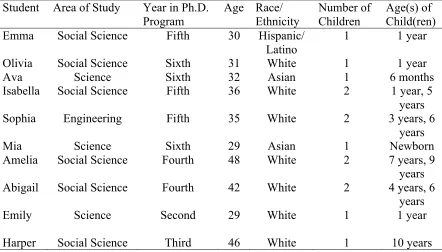
Participant Profiles ... 56
Emma ... 57
Olivia ... 57
Ava ... 58
Isabella ... 58
Sophia ... 59
Mia... 59
Amelia ... 59
Abigail ... 60
Emily ... 60
Harper ... 60
Research Questions and Findings ... 61
Research Question One ... 61
Initial Advising Expectations ... 61
Changes to Expectations Since Starting the Ph.D. ... 62
Funding Transparency ... 65
Maintain a High Level of Professionalism ... 68
Research Question Two ... 71
Definition of Advising ... 71
Quality of Advising Support ... 71
Conflict Management ... 73
Socialization to the Department/Discipline ... 76
Research Question Three ... 80
Definition of Mentorship ... 80
Responsive to Student Needs and Interests ... 81
Preparing for Life After the Ph.D. ... 83
Recognizing and Engaging in Work-Life Conversations ... 85
Summary of Major Findings ... 88
CHAPTER V: DISCUSSION, CONCLUSIONS, AND RECOMMENDATIONS ... 91
Discussion of the Findings ... 91
Range of Advising/Mentoring Behaviors ... 100
Conclusions ... 103
Recommendations for Future Research ... 105
Recommendations for the Profession ... 107
Concluding Thoughts ... 108
REFERENCES ... 111
APPENDIX A: IRB Approval Notification ... 118
APPENDIX B: Letter to Participants ... 119
APPENDIX C: Demographic Questions for Interview Screening ... 120
ix
LIST OF TABLES
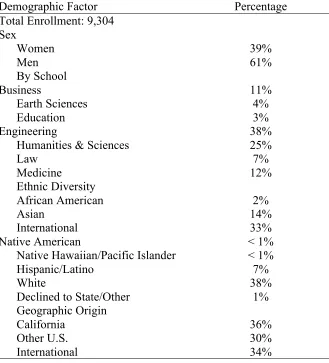
Table 1 Fall 2016 Graduate Student Demographics for the University Where the
Study was Conducted……….………..45
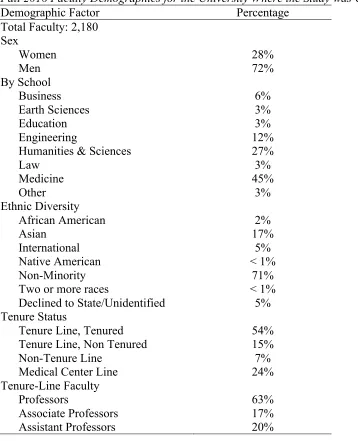
Table 2 Fall 2016 Faculty Demographics for the University Where the Study was
Conducted………...………..46
CHAPTER I
THE RESEARCH PROBLEM
Statement of the Problem
The advisor-advisee relationship is possibly one of the most important
components of graduate education. Faculty advisors play a significant role in the Ph.D.
student experience and degree completion or attrition (Barnes, Williams, & Archer, 2010;
Fagen & Suedkamp Wells, 2004; Golde, 2005; Zhao, Golde, & McCormick, 2007).
While advising and mentoring relationships can positively impact a student’s academic
experience and productivity, other factors in students’ personal and family lives may be
sources of stress or impact time to degree. For Ph.D. students with young children, there
is a correlation between increased family obligations and decreased academic progress,
especially among women and students of color (Brus, 2006; Maher, Ford, & Thompson,
2004; Lynch, 2008). There have been many studies on the importance of mentoring
relationships (Paglis, Green, & Bauer, 2006; Tenenbaum & Gliner, 2001; Zhao, Golde, &
McCormick, 2007) and a growing body of literature on the impact of parenting roles on
the graduate student experience (Brus, 2006; Gardner, 2008; Lynch, 2008), but there is
little information about how female Ph.D. students with children perceive faculty
mentoring and academic advising behaviors.
A student’s satisfaction with the mentoring relationship is affected by behaviors
such as academic advising, personal interest and support, career development assistance,
and whether the advisor is using the student as low cost labor (Zhao et al., 2007). These
mentoring and academic advising behaviors may be especially important to students that
children. Students with additional employment and family obligations are likely to take
longer to complete major milestones or finish their degree program (Maher et al., 2004)
and can benefit from supportive faculty, networking opportunities, advisors that are
knowledgeable about campus resources and degree requirements, and mentors that
understand the work-family balance challenges faced by their advisees.
Graduate students with children can also benefit from the experiences of faculty
advisors that have children. Women are earning doctoral degrees at higher rates, but
those numbers are not carrying over to faculty hires. The underrepresentation of female
faculty members means that female graduate students have fewer mentors and role
models for successfully balancing academia and family. By addressing the challenges
facing Ph.D. students, campus leaders can improve student success and completion rates,
which will impact the pipeline to faculty positions and positions in industry.
Background and Need for the Study
For many students, the years spent in graduate school coincide with their ideal
child bearing years (Kuperberg, 2009; Gardner, 2008). Women now enter graduate
school at similar rates to men, but policies and campus culture have not caught up with
current demographics. Policies and department cultures that prioritize the needs of
single students do not effectively meet the needs of student families (Brown & Nichols,
2012; Kuperberg, 2009; Lynch, 2008; Springer, Parker, & Leviten-Reid, 2009).
Socialization, advising, support networks, and campus culture can positively or
negatively impact a student’s experience and success in graduate school (Gardner, 2006).
Faculty advisors are in the position to impact the experiences of graduate students with
Some universities do provide a parental leave program and family services for
graduate students, but that can range from institutions that only offer an unpaid extension
for milestones to institutions that provide full funding, milestone extensions, affordable
child care options, lactation spaces, and on-campus family housing (Sallee, Dawson Zare,
& Lester, 2009, Mason, Wolfinger, & Goulden, 2013). At many colleges and
universities, departments make accommodations on an individual basis (Springer et al.,
2009). Even at institutions with campus-wide policies, departmental culture and policy
implementation may be more influential on the student’s perceived level of support, a
student’s awareness of support services, and the student’s willingness to make their
family life visible to their advisor and cohort. At the doctoral level, students closely
affiliate to their home department, and department culture has a significant impact on the
student’s graduate experience (Golde, 2005).
In departments with a culture of institutional ownership, graduate students are
expected to be available to their advisor at all times. This is a challenge for student
parents as they balance classes, their research, advising meetings, and family obligations
(Brus, 2006). Students worry that their parental role will cause their faculty and peers to
view them as less dedicated to research, so some students try to separate and hide their
parental role (Espinoza, 2010; Lynch, 2008). Students with available support resources
and understanding advisors are more confident in their ability to manage both their
student and parent roles.
Gardner (2008) found that unsuccessful socialization is a contributing factor to a
student’s decision to leave graduate school. For students with children, they may choose
be able to make all of the social activities with their cohort if families are not invited to
department function or if events conflict with family obligations.
Students attempting to hide their parental role from their advisors and peers are
under additional stress as they attempt to silently negotiate their work-life balance.
Female students attempting this “maternal invisibility” are often in environments where
they assume they will not be taken seriously as an academic if they discuss their family
(Lynch, 2008). It is unfortunate that students feel the need to hide a major part of their
life, especially when research shows that the number of students with children is
increasing. Graduate student demographics are changing, with women entering doctoral
programs in equal numbers to men (Mason et al., 2013; Nettles & Millett, 2006).
Doctoral students are also older than prior generations (Mason, et al., 2013), with
doctoral education careers overlapping with prime child-bearing years. Faculty and
campus leaders need to identify ways to improve the experience of students that do not fit
the traditional student demographic.
Purpose of the Study
The purpose of this study was to explore the academic advising and mentoring
experiences of female Ph.D. students with children. Female Ph.D. students with children
were interviewed about the academic advising and mentoring relationships, satisfaction
with advisor interactions, and if academic advising and mentoring practices and
behaviors alleviate or contribute to work-family balance challenges. Productive advising
and mentoring relationships are associated with successful graduate student socialization
and a positive graduate school experience (Golde, 2005; Lovitts, 2001). Prior studies
progress or attrition (Brus, 2006; Maher et al., 2004; Lynch 2008). This study contributes
to our understanding of the experiences of female Ph.D. students with children and how
academic advising and mentoring relationships may or may not mitigate some of the
stress associated with balancing research and family. Doctoral student experiences are
tied to degree completion rates and the academic pipeline. Ph.D. students are future
academic and industry leaders, so an understanding of how Ph.D. mothers experience
graduate school may provide insight to the academic and career pipelines.
Prior studies have discussed the changing demographics of doctoral education as
students are older, married, and have children. Garder (2009) discussed the need for more
research around concerns and obstacles in the doctoral process. The Survey of Earned
Doctorates (National Science Foundation, 2015) shows that nearly 60 percent of doctoral
recipients are married, which some researchers presume to demonstrate an increase in the
number of students with children or planning to start families. Prior studies have also
focused on work-family issues for faculty, with less research looking at the experiences
of doctoral students (Mason et al., 2013).
Research Questions
The study is guided by the following research questions:
1. What expectations do female Ph.D. students with children have of their faculty
advisors?
2. What academic advising behaviors and practices assist or hinder female Ph.D.
students in balancing family and academic obligations?
3. What mentoring behaviors and practices assist or hinder female Ph.D. students in
Theoretical Framework
Ethic of Care
Lawrence Kohlberg’s theory of moral development was developed in the late
1950s and popularized by the 1970s. Kohlberg’s theory proposes that moral reasoning
has six developmental stages that individuals use to respond to moral dilemmas and make
ethical decisions. Individuals progress through the stages as they gain competence in
moral reasoning and balancing conflicting social-value scenarios. Kohlberg’s theory is
based on an ethic of justice, built on concepts of reciprocity and fairness (Larrabee,
1993).
Carol Gilligan critiqued Kohlberg’s work for gender bias as all of Kohlberg’s
subjects were male and did not reflect the experiences of women. Gilligan went on to
publish her own theory of moral development, based on an ethic of care. Gilligan argued
that women’s perspectives are not represented in psychological, philosophical, and moral
reasoning theories (Wood, 1994). Gilligan claimed that an ethic of justice is not the only
mature moral orientation and that an orientation of care, with an emphasis on concern and
connection to others, could also drive moral decision-making. (Larrabee, 1993). She
identifies women’s perspective as the care perspective, with a focus on caring and
relationships. Kohlberg’s theory reflected societies emphasis on individual achievements
and the “self-made man”, while Gilligan drew attention to the importance of caretakers
and how that work was devalued in society and in Kohlberg’s theory (Brabeck, 1983).
Gilligan (1977) describes an ethic of care as having three levels and two transition
periods. The first level is “Orientation to Individual Survival.” In this level, protecting
oneself; the individual struggles with the difference between wants and needs. The first
transition is the move “From Selfishness to Responsibility”. In this transition, the
definition of self is connected to the attachments to others. Responsibility to others
impacts decisions of what one would do versus what they should do. The second level is
“Goodness as Self-Sacrifice.” In this stage, concern for others and avoiding harm is a
paramount importance. “Goodness” is a reflection of conventional values of
self-sacrifice and the role of women as caretakers. The second transition is the move “From
Goodness to Truth.” In this transition, a woman “strives to encompass the needs of both
self and others, to be responsible to others and thus be ‘good’ but also be responsible to
herself and thus be ‘honest’ and ‘real” (Gilligan, 1977, p. 500). Women realize the need
to balance care of themselves with care of others. The third level is “The Morality of
Nonviolence.” In this final stage, the struggle between care of self and selfishness is
resolved. Nonviolence is the used as the basis for decision-making, as dilemmas are
resolved by decisions to avoid causing harm to self or others.
Feminists had mixed reactions to Gilligan’s theory. Some saw Gilligan’s work as
providing meaning and value to “feminine morality”; others were alarmed by the
suggestion of gender differences and biological determinism (Larrabee, 1993). Gilligan
(1986) has emphasized that her work describes “a different voice,” not “a woman’s
voice” (p. 207). But her research study only included women and how they made
decisions about abortion. Gilligan does note that this “different voice” can also apply to
men, but she also claims that her ethic of care was representative of women’s moral
Some researchers have critiqued Gilligan’s work for reflecting the experiences of
privileged white women and not examining the experiences of marginalized groups or
how care is situated historically (Larrabee, 1993; Stack, 1986; Tronto, 1993; Wood,
1994). Other studies have found little difference in moral development between men and
women in poor communities and communities of color. This evidence points to a need to
further explore the intersections of gender, race, class, and culture and how these
experiences impact moral decision-making.
Noddings (1984; 1992) expanded Gilligan’s work to the field of education.
Noddings’ ethic of care is based on the relationship between the teacher’s role as the
“one-caring” and the student’s role as the “cared-for.” Noddings believed that caring
should be at the foundation of the education system. The emphasis of Nodding’s ethic of
care is on the care and connection teachers feel in their interactions with students and in
decision-making. The “one-caring” feels obligated to care for the “cared-for”,
approaching the relationship as a duty and with a commitment to support their students.
“One-caring” teachers meet their students where they are and acknowledge students’
feelings and needs as the teacher strives to understand the student’s goals and motivation.
(Noddings, 1984). For the ethic of care to develop, the “cared-for” student must be
receptive to a caring relationship from the teacher. Noddings proposed that students will
be receptive and responsive to the teacher if they believe the teacher truly values their
feelings. Noddings’ ethic if care is most frequently applied to one-to-one caring
relationships in K-12 education rather than higher education settings.
Tronto (1987; 1993) proposed shifting the focus away from “women’s morality”
resonate with the experiences of women. Tronto argued that to make the ethic of care a
meaningful moral theory, it needed to expand beyond just a difference between sexes and
scholars must examine how class, racial, ethnic, and societal differences impact morality.
Tronto and Fisher (1990) sought to broaden the ethic of care to include private and public
roles, integrate multiple roles, and to address how caring perpetuates the oppression of
women. Tronto and Fisher also noted that caring is not only a social or moral act, but
also a political act that permeates all aspects of an individual’s life. Tronto and Fisher
define care as “a species activity that includes everything that we do to maintain,
continue, and repair our ‘world’ so that we can live in it as well as possible. That world
includes our bodies, our selves, and our environment, all of which we seek to interweave
in a complex, life-sustaining web” (1990, p. 40). To Tronto (1993), caring varies by
culture, is ongoing, is not restricted to human interactions (caring occurs for object and
the environment), and caring is not only dyadic or individualistic.
Tronto and Fischer (1990) identified four phases of caring: caring about, taking
care of, caregiving, and care-receiving. Each phase is a precondition for the following
phase, but the phases may experience conflict or intertwine as the individuals involved in
the caring relationship approach the situation with different backgrounds, perspectives,
and expectations. An individual (or multiple people) must care about in order for another
individual (or multiple people) to be taken care of. But during the caring process, the
care giver and care receiver might disagree on how care is given, the care giver might not
have the time or knowledge to provide adequate care, or the caregiver may need to
The “caring about” phase of the caring relationship involves recognizing that care
is required. What is cared about varies by individual and is shaped by cultural and
individual experiences. It is assumed that people have some knowledge and connection
with things or people they care about. Resources such as time, funding, knowledge, and
skills impact caring priorities. We cannot always respond to everything we care about.
The “taking care of” phase requires taking responsibility for responding to an identified
need. This phase requires some knowledge and dedicated time to address the caring
needs, find or provide the necessary resources (time, money, skills), and make decisions
regarding care. “Caregiving” is the direct work of meeting the care-receiver’s needs and
usually requires a larger commitment than “taking care of.” The “care-receiving” phase
is how the individual (or group) receiving care responds to the caregiver and the care
provided.
Tronto and Fisher (1990) highlight the flaw of using white middle-class
femininity standards to define female morality and caring.
“By stressing women’s emotional and moral superiority, the middle-class ideal of
femininity made caring about an ideal by which to judge all women. Women who
lack the time knowledge, skills, or resources to meet the white, middle-class
standard of feminine caring about are often seen as defective in their femininity.
Moreover, women, in general, are often pressed to care about more than they can
manage, and are criticized for not caring enough. Such failure becomes a failure
in achieving a basic gender identity, a failure at being womanly, motherly, or
From the four phases of care, Tronto (1993) identified four elements of an ethic of
care: attentiveness, responsibility, competence, and responsiveness. Attentiveness refers
to recognizing the needs of others. In an ethic of care, caregivers are expected to
recognize consequences and the impact of their actions on others. It may not always be
possible to foresee distant consequences, but inattentiveness to others is a challenge to
moral-decision making. Tronto draws attention to the importance of being attentive to
one’s own need for care prior to being able to recognize other’s needs. If one’s needs
are not met, they will not be able to effectively notice or care for others. “Responsibility
has different meanings depending on one’s perceived gender roles, and issues that arise
out of class, family status, and culture, including cultural differences based on racial
groupings” (Tronto, 1993, p. 133). There is no single definition for responsibility in an
ethic of care, but responsibility to care may be impacted by something the caregiver did
or did not do which lead to the need for care. Tronto uses the example of becoming a
parent as a cause for responsibility of caring for those children. Competence in care
helps ensure that caring needs are actually met. “Intending to provide care, even
accepting responsibility for it, but then failing to provide good care, means that in the end
the need for care is not met” (Tronto, 1993, p. 133). Deciding to take care of a problem
without providing the necessary resources, time, skill, or energy is not adequately
providing care. Responsiveness in care describes the ability to understand and respond to
the care-receiver’s position as they describe it. The caregiver understands the problem by
being attentive to the care-receiver’s expression of the situation rather than putting
responsive caregiver cannot assume the care-receiver would have identical experiences,
needs, or reactions.
Ethic of care as described by Tronto was used in this study because Tronto’s
model takes into account the diverse range of experiences and background that
individuals bring to a caring relationship. Ph.D. students and their advisors may
approach situations from very different perspectives, and Tronto’s model examines how
effectively a caregiver (advisors in this study) recognizes the need for care, takes
responsibility, is competent in providing care, and responsive to the experiences of the
care-receiver (Ph.D. students in this study). Tronto’s model recognizes that care does not
occur in a vacuum and external factors impact an individual’s ability to effectively
provide care.
Limitations/Delimitations
The study was conducted at the university where the researcher was currently
employed, which may create bias. The study was conducted at one university and may
not represent the experiences of doctoral students at other universities. The student
participants may have filtered their responses to protect their advising relationship, as this
is a sensitive topic in a relationship where advisors have influence and control over their
advisee’s academic and career success. The study did not address factors such as age,
ethnicity, or socioeconomic status, which can have an impact on a Ph.D. student’s
advising experience. The focus was on doctoral students and may not reflect the
experiences of other graduate students in master’s degree programs and professional
degree programs. This was a qualitative study with ten participants, so the study is
universities. Ph.D. students with children are balancing multiple roles and obligations,
which may have hindered the response rate in the call for participants. The interviewee’s
multiple roles also factored into their availability as many respondents commented that
they did not have time for an hour-long interview. Another limitation is that the study
focuses on doctoral student mothers with children in elementary school or younger. The
experiences of mothers with older children and of male Ph.D. students with children were
not be included in this study.
Significance
This research adds to the body of knowledge on graduate student mentoring and
advising by providing insights to the experiences and expectations of graduate students
with young children. This is a growing demographic and this study will contribute to our
understanding of how academic advising and mentoring may or may not mitigate some of
the stress associated with balancing research and family. There is little information about
the mentoring and academic advising experiences specific to Ph.D. students with
children. Prior research on graduate student academic advising and mentoring has
focused on best practices, differences between disciplines, and how mentoring and
advising affect attrition or persistence.
Information gathered from this study can inform best practices for graduate
student advising and mentoring and might contribute to graduate student programming on
the university campus. This study may also contribute to our understanding of the faculty
pipeline as graduate school is one of the key attrition points on the way to tenure track
faculty careers. Prior research has examined how motherhood impacts tenure track
faculty and future academic leaders at earlier stages in their academic career. This
research may also be of relevance to students in dual-career or dual-student relationships
as the experiences and persistence of female Ph.D. students also affects their partners and
families.
Definition of Terms
The following definitions were used in this research:
Academic advising practices: refers to formal behaviors and actions an advisor
performs while working with his or her doctoral student advisees, including approving
coursework and academic requirements, signing official paperwork, and finding a
dissertation committee (Barnes & Austin, 2009).
Care: “a species activity that includes everything that we do to maintain, continue,
and repair our ‘world’ so that we can live in it as well as possible. That world includes
our bodies, our selves, and our environment, all of which we seek to interweave in a
complex, life-sustaining web.” (Tronto, 1993).
Degree milestones: “the research doctoral program in the United States generally
consists of three major components: coursework, examination/assessment of skills gained
through coursework, and the production of independent research, often referred to as the
thesis or dissertation” (Gardner, 2009, p. 30).
Doctoral advisor: faculty member who “provides doctoral student with continuous
feedback, both formal and informal” (Council of Graduate Schools, 2005, p. 9). Students
may also refer to their advisor as an academic advisor, committee chair, dissertation
Graduate persistence: the retention of a graduate student so they may successfully
complete “at least three distinct stages, namely that of transition and adjustment, that of
attaining candidacy or what might be referred to as the development of competence, and
that of completing the research project leading to the awarding of the doctoral degree”
(Tinto, 1993, p. 235).
Mentoring: one-to-one process where an experienced individual contributes their
knowledge and expertise to guide their mentee towards their intended objective (Cohen &
Galbraith (1995). “It is a type of interpersonal relationship that changes over time and
includes the intentional process of nurturing, support, protection, guidance, instruction,
and challenge” (Williams-Nickelson, 2009).
Mentoring practices: refers to behaviors and actions a faculty member performs
while guiding a doctoral student’s professional development by “giving them a role
model, setting standards, and helping them to …fulfill their potential” (Barnes & Austin,
2009, p. 309).
Socialization: “the process through which an individual learns to adopt the values,
skills, attitudes, norms, and knowledge needed for membership in a given society, group,
or organization” (Gardner, 2008, p. 126).
Summary
Prior research highlights the importance of faculty members in the Ph.D. student
experience, as academic advisors, mentors, and as key contributors to graduate student
socialization. Ph.D. programs typically overlap with key childbearing years, so it is
important to consider how female Ph.D. students with children are experiencing and
studies about mentoring and academic advising relationships, and increasing knowledge
about the experience of graduate students with children, there is unfortunately little
information about how female Ph.D. students with children experience academic advising
and mentoring. The purpose of this study is to fill the gap in the literature about this
topic.
Chapter II provides an overview of the literature describing gender in higher
education, including the “leaky pipeline” and work-life balance, graduate student
socialization, graduate student attrition and persistence, and finally Ph.D. academic
advising and mentoring.
Chapter III describes the interview protocol and research conducted as part of this
study. Female Ph.D. students with children were interviewed to explore and understand
their advising and mentorship experiences.
Chapter IV uses the findings from the student interviews to answer the three
research questions. Emergent themes are highlighted to explore the experiences of
female Ph.D. students with children.
Chapter V provides discussion on how Tronto’s (1993) ethic of care connected or
did not connect with the Ph.D. students’ experiences. Implications and future
CHAPTER II
REVIEW OF THE LITERATURE
Restatement of the Problem
Graduate student mothers often face challenges with balancing family obligations
with their doctoral degree program. Increased family responsibilities may correlate to
decreased productivity, but academic, psychosocial, and financial support can positively
impact productivity and satisfaction in the Ph.D. program. To provide context and
background information about this study, the review of the literature examines work-life
balance for graduate student mothers, the graduate student socialization process, factors
contributing to attrition and retention, and academic advising and mentoring practices.
These topics inform the research questions for this study regarding expectations Ph.D.
mothers have of their advisors, what academic advising and mentoring practices assist
Ph.D. mothers in balancing family and academic obligations, and what academic advising
and mentoring practices contribute to student stress around balancing family and
academic obligations.
Gender in Higher Education
The “leaky pipeline”
There has been a dramatic increase in the number of female graduate students
over the last four decades. Women represented less than 10% of doctoral recipients in
1970 and 51% of doctoral recipients in 2014 (U.S. Department of Education, 2015).
Traditionally, women were advised to put off having children until they completed their
Ph.D. and gained tenure, so they could fully focus on their research and education
has not kept up with the growth in the number of female doctoral recipients (Wolfinger,
et al., 2008). Researchers describe the problem as a “leaky pipeline”, as women are more
likely to drop out of the career path pipeline than their male peers, with motherhood
being a contributing factor to “leaks” (Mason & Goulden, 2002; Wolfinger, Mason, &
Goulden, 2008).
One significant obstacle in combining motherhood and academia is the overlap
between prime childbearing years and average age of Ph.D. students and junior faculty
(Hewlett, 2002; Ward & Wolf-Wendel, 2012). In contrast, men in academia are more
likely than men in other professions to have children and be married (Hewlett, 2002).
The median age for female doctoral recipients is 34 (AAUP, 2001), which is around the
same age that fertility starts to decline (Hewlett, 2002). Female Ph.D. candidates and
recipients try to determine the best time to start a family – while completing the Ph.D., as
a new faculty member working towards tenure, or after receiving tenure. In 2001, the
American Association of University Professors addressed the work-family conflict faced
by female faculty by recommending that up to two years be added to the tenure clock for
new parents. Some female faculty attempt to time pregnancy around the summer months
if they had not yet reached tenure (Armenti, 2004). Others have chosen to delay starting
a family while they worked towards career milestones (Wolfinger, et al., 2008). Even
with family-leave policies in place, there is a fear from female faculty that they will be
penalized in the tenure process. By choosing to postpone childbearing until after
completing a Ph.D. or receiving tenure, some women find that it is too late for them to
start a family. Mason and Goulden (2004) found that 38% of tenure track female faculty
primary caregiver at home (Ward & Wolf-Wendel, 2004; Crittenden, 2002), even in
dual-career households. Women at earlier stages in their academic dual-career may choose other,
more family-friendly career options (van Anders, 2004).
Women choose to leave the academic career pipeline at three key points: during
their Ph.D. program, after completing their degree but before entering the faculty job
market, or after starting a tenure-track position but before reaching tenure (Morrison,
Rudd, & Nerad, 2011; Wolfinger et al., 2008). Mason and Goulden (2002) studied the
“early baby phenomenon”, where women who became mothers during their Ph.D.
program were less likely to become tenure track faculty. They used data from the Survey
of Earned Doctoral Recipients, 30,000 tenure track faculty members. Their study found
that Ph.D. mothers were more likely to obtain adjunct or lecturer positions, while Ph.D.
fathers were represented in tenure-track position at higher rates than mothers and single
men. Mentoring, funding challenges, lack of institutional support for families, and
challenges of work-family balance are all contributing factors to the leak.
Mason et al. (2013) found that female students were more likely than male
students to put off having children and were also more likely to fear that they would be
taken less seriously in their graduate program and research if they were pregnant or had
children. Finances and available time are also contributing factors for delaying having
children, but academic culture around parenting and gender bias were the predominant
factors. Female students in STEM fields reported less flexibility and more perceived
bias than female students in the humanities and social sciences. Kurtz-Costes, Andrews
Helmke, and Ülkü-Steiner (2006) interviewed twenty Ph.D. students and found that
postponing involvement in a serious relationship while in graduate school. Pregnancy and
parenthood were described as a source of stress. Several participants (male and female)
stated that their faculty advisor tried to appear supportive, but it was clear that the advisor
did not believe having children during a Ph.D. program was a good idea. In contrast,
several other students reported that their advisor and department were very
accommodating and supportive, which helped alleviate stress caused by balancing
academics and a family.
Work-family balance
The average age of graduate students has increased in recent years, as has the
number of married students (Gardner, 2009; Brus, 2006; Golde & Dore, 2004).
According to Brus (2006) and Lynch (2008), higher education and doctoral programs are
primarily designed for single, male students, and often do not take into account the
financial and personal needs of students with children. Researchers have found that an
increase in family obligations is associated with decreased academic success (Brus, 2006;
Curtis, 2004). This is especially evident for female students and students of color
(Wagner, 2002). Prior studies have also found that women have higher attrition rates
then their male counterparts (Golde, 1998). While these previous studies have not
studied how advising specifically impacts attrition rates for student parents, these studies
draw attention to areas where higher education institutions may be failing to meet the
needs of this demographic. If women are leaving at higher rates, and family obligations
are tied to decreased productivity, what are institutions, departments, and faculty advisors
demands from academic departments, family, and work, may force students to give up
membership in one of those communities.
Student parents must balance their time commitments to fit the heavy demands of
parenthood and academia. This may mean writing or conducting research late at night
(Gardner, 2008), struggling to find affordable childcare (Lynch, 2008), changing research
topics (Masi de Casanova et al., 2013), switching to part time status, or hiding their
parenting status from their advisor or peers (Lynch, 2008). The reality of balancing
family obligations with a doctoral program means that student parents are constantly
weighing their options in an effort to create the least impact on their family and graduate
career. This could include staying home with a sick child, bringing a child to the office,
running back and forth between campus and family obligations, missing out on important
lab meetings, or missing out on family activities. Every choice has a consequence.
Decision-making is not unique to student parents, but the continuous burden of making
these choices and trying to succeed in both realms can take a toll over time (Brus, 2006).
For students that do not have support from their advisor or feel that they must hide their
parenting status from their research group, this balancing act is especially taxing.
Structural barriers including lack of maternity leave policies, inadequate childcare
options, insufficient financial support, inadequate health care, class scheduling, and lack
of breastfeeding facilities can impact how Ph.D. mothers balance family and academia
(Brown & Nichols, 2012). Springer et al. (2009) surveyed graduate directors of the top
63 sociology departments in the United States, and found that most institutions are
lacking sufficient policies and institutional support for pregnant and parenting graduate
case-by-case basis. If student mothers do not have financial and structural support from their
institution and department, their ability to succeed in the academic environment is
negatively impacted.
Brus (2006) draws attention to the culture of institutional ownership that is
present in many doctoral programs. This describes the expectation that students are
available to their faculty advisors and mentors at all times, with little complaints. This is
an unspoken expectation in many academic departments, carrying over from a time when
most graduate students were white men from wealthy families, without the day-to-day
responsibilities of raising a family. These expectations are typically communicated
through faculty advisors. Institutional ownerships still exists to some degree, with the
expectation that the most dedicated students will work 60 to 80 hours a week in the lab or
office and are available to their advisor on short notice. These measure of success shun
students with family obligations, and sends the message that they cannot succeed in their
doctoral program.
Lynch (2008) and Estes (2011) describe the challenges mothers face with
responding to society’s ideals of being a “good mother” and a “good student”. Lynch
(2008) described the phenomenon as “maternal invisibility”. Students may downplay
their maternal role while participating in their academic role, while also downplaying
their student role when they are away from academia. By separating their two identities,
these parents attempt to meet cultural norms of being both a good mother and an
academic (Espinoza, 2010; Estes, 2011). Students may choose not to discuss their
families or keep photographs in their office. In their family role, they may volunteer at
causes challenges for institutions because they cannot respond to the needs of student
parents if students are trying to hide their parent role (Lynch, 2008). Some students
interviewed by Gardner (2008) discussed how they try to balance their academic and
family expectations by working at night, which can be very isolating, or by changing
their research area or methods for more flexibility with their family obligations. Mason
et al. (2013) discuss the outdated model of the ideal graduate student worker. The current
generation of students looks for flexibility to match their values and life goals, but
academic culture still models the prior generation and senior faculty, who are
predominately male and more likely to be single-income families. Some mothers choose
to integrate their multiple roles. These integrators share their academic experience with
family members, with open communication about the challenges and demands. They are
also likely to share information about their family and personal concerns with faculty
advisors (Espinoza, 2010).
Graduate Student Socialization
Socialization is the ongoing process where a graduate student learns the norms,
values, knowledge, and expectations required to enter their intended profession and
department (Gardner, 2008; Golde, 1998; Lovitts, 2001; Weidman et al., 2001; Austin,
2002; Tinto, 1993; Delmont, Atkinson, & Parry, 2000). Doctoral students interact with
and observe faculty and peers from the time they enter their doctoral program through
graduation. They are simultaneously socialized to their discipline, their graduate student
role, and life as an academic and potentially a future faculty member. They take cues
from faculty and peers throughout their graduate program. Graduate programs tend to be
at a department level, not a university level. Through this design, socialization for
doctoral students is closely related to academic integration (Tinto, 1993).
The socialization process varies by discipline and department, with faculty
advisors playing a key role in the socialization experience (Austin, 2002; Golde, 2000;
Sallee, 2011; Weidman & Stein, 2003; Weidman, Twale, & Stein, 2001). Through
socialization, graduate students are introduced to both their intended profession and their
position as a graduate student. Students must adopt the intellectual skills necessary to
succeed in their field, as well as the norms and practices to integrate into their
department’s culture (Golde, 1998). The advising experience plays an important role in
the socialization process as advisors guide students to not only learn about their research
topic, but also how to do the research and how to be a successful member of the
discipline (Delamont et al., 2000). This involves meeting expected norms and standards
in the field, academically and socially.
Austin and McDaniels (2006) identified four categories of competencies that
Ph.D. students should develop: conceptual understandings, knowledge and skills in key
areas of faculty work, interpersonal skills, and professional habits and attitudes.
Delamont et al. (2000) find that doctoral students believe that they are dependent on
senior members of their departments, as they are not equals in experience and knowledge.
The authors also point out that social science fields are more likely to incorporate
personal relationships in the socialization process, rather than the positional relationships
that are more common in the sciences. Ph.D. students in the sciences have specific roles
and positions in their research group, with clear expectations. This can make it more
Ph.D. students in the social sciences, they may be more isolated without a research group,
which may make their socialization and requirements unclear, not easier. The
socialization process must learn the traditions of their disciplines, while also negotiating
the specific everyday practices and requirements imposed by their advisor. As a new
member of the discipline and department, they are dependent on adapting to the “hidden
curriculum” (Delamont et al., 2000, p. 10) of their research group and department.
Unfortunately, Ph.D. students are often progressing through their programs
without intentional and structured socialization (Austin & McDaniels, 2006; Golde &
Dore, 2001). Several researchers have suggested that advisors and advising/mentoring
behaviors are key to improving the doctoral student experience and Ph.D. student
socialization (Austin, 2002; Austin & McDaniels, 2006; Golde, 2005).
Weidman et al. (2001) propose four stages of socialization – anticipatory, formal,
informal, and personal. In the anticipatory stage, students become familiar with their
academic discipline and expectations for their field. As the student becomes more
familiar with their program and research field, preconceived notions about graduate life
may change. In the formal stage, students receive formal training through courses and
research. In the informal stage, students learn about informal or unspoken role
expectations, department culture, and networks. In the personal stage, students
internalize their role and develop a professional identity where they are a scholar, not a
student. According to Weidman et al. (2001), the three key elements to graduate student
socialization are 1) knowledge acquisition, 2) investment to the profession, and 3)
involvement, including interacting with experts and well established professionals in the
Golde (1998) describes graduate student socialization through four transition
tasks. The first task is intellectual mastery. Students ask themselves “Can I do this?” as
they gain intellectual competency through courses and research. In the second task,
students ask themselves “Do I want to be a graduate student?” as they learn about the
realities of being a graduate student. Through the third task, students decide “Do I want
to do this work?” while deciding if the discipline and graduate program is a good fit. The
fourth task is to integrate into the department and build relationships with peers and other
scholars. Students in this task are asking “Do I belong here?”
Socialization may begin before a Ph.D. student even starts their graduate program
(Sallee, 2011). Students begin learning about graduate school and Ph.D. student
lifestyles through interactions with their professors and graduate student teaching
assistants during their undergraduate career.
Faculty advisors play an important role in graduate student socialization, as they
provide students with the training and skills necessary for their academic discipline and
department culture. Faculty members are crucial participants for all three of Weidman et
al.’s (2001) elements to socialization. Faculty establish the norms for teaching and
research, set expectations, assist students in networking and “learning the ropes” for their
field, and serve as gatekeepers or networkers for students seeking involvement in their
discipline. In Weidman et al.’s (2001) informal stage and Golde’s (1998) fourth task,
students are determining if their experiences, priorities, personal life, and professional
interests are a good match with department culture and expectations. Students are taking
cues from their advisors and colleagues to determine the informal expectations and norms
understanding of their role within the department and if they are a good fit for the
department and discipline. For graduate students with children, advisors can send a
strong message about how a student’s parental identity fits with department culture.
Golde’s (2000) study suggested that Ph.D. student socialization and successful
academic integration is shaped by interactions with faculty advisors. Students with
positive advising relationships were more likely to complete their Ph.D. program, while
negative advising relationships contributed to the decision to leave the Ph.D. program
prior to completion. In Gardner’s (2010) interviews with sixteen doctoral faculty
members about graduate student socialization, faculty members were more likely to
discuss their role in the formal socialization activities (academic guidance and
participation in professional conferences) and less likely to discuss informal socialization
activities (interpersonal development, peer socialization). Faculty participants in
Gardner’s (2010) study credited external participants (e.g. seminar speakers, conference
attendance) with their student’s socialization, and did not seem to be aware of how
important faculty members are for student socialization. It is possible that faculty
participants view their primary role as an academic advisor, not mentor, or that faculty
have not been included in socialization conversations on campuses and do not use
socialization language to describe their advising or mentoring practices.
Advanced graduate students also play an important role in the socialization
process. Weidman and Stein (2003) surveyed 50 Ph.D. students in two departments and
found that students were more likely to have social and academic conversations with their
peers than with faculty members. White and Nonnamaker’s (2008) Doctoral Student
communities that shape the Ph.D. student experience. The five influential communities
are 1) their discipline or sub discipline, 2) the institution, 3) the academic department, 4)
their research or lab group, and 5) the community formed through advising relationships.
Student peers were discussed as important members of the academic department, research
group, and advising group. The faculty advisor is typically the leader of the lab or
research group, and responsible for setting the tone and guiding the development and
direction of that group of students (White & Nonnamaker, 2008). So while peer
socialization is a key component of socialization and community building, these
department and research communities are also tied to faculty support.
Gender and graduate student socialization
Clark and Corcoran (1986) found differences in how men and women were
socialized to academic environments. Women in Clark and Corcoran’s study reported
isolation, hostility, and minimal support from their faculty advisors, especially in male
dominated disciplines. Sallee’s 2011 study found similar socialization differences 25
years after Clark and Corcoran’s study. In Sallee’s (2011) research about male graduate
students in an engineering department, student respondents discussed the objectification
of female faculty and graduate students, hierarchy in the department, and male
competition. If Ph.D. student socialization is gendered, it can be a barrier to successful
integration for female graduate students (Sallee, 2011). Gardner (2008) found that
graduate student mothers experienced isolation because they did not fit the typical
graduate student mold. In a study of 40 history and chemistry students, Gardner (2008)
reported that graduate student mothers described their student experience as different and
feelings of isolation and not fitting the mold contributed to decreased satisfaction with
their graduate school experience and less integration to the department community.
Gardner (2008) notes that little research has been done on the socialization
experiences of underrepresented groups, but prior research does show that demographic
characteristics, including family status, influence the graduate student experience and
persistence rates. Academic culture and graduate student socialization typically reflect
the experiences of White men, given the history of higher education being
male-dominated (Gardner, 2008). An advisor’s socialization methods may not work for all of
their doctoral advisees. Gardner’s study also found that the socialization process affected
student’s attrition or retention.
Ph.D. students of color report isolation and self-doubt in hostile and unwelcoming
environments, and difficulty connecting with advisors and peers who do not understand
or show interest in their experiences or contributions (Gildersleeve, Croom, & Vazquez,
2011; González, 2006; Solórzano, 1998). Norms and practices in predominantly White
institutions and disciplines are generally not inclusive of students of color, so the
socialization experience may push doctoral students of color further away from their goal
of attaining a Ph.D.
Students that fall outside of the norm, including students with children, are more
likely to face barriers to socialization (Gardner, 2008a). For student parents, schedules
and family responsibilities may not fit with the schedules and expectations of their
faculty advisors and academic departments. Similar barriers are discussed in the literature
regarding female faculty with children (Ward & Wolf-Wendel, 2004). When a student
to remove themselves from the program or face isolation from their research group
(Lovitts, 2001). Lovitts (2001) does clarify that successful integration is not required for
completing a doctoral program, and is not a reflection of the student’s intentions and
motivation to attend graduate school, but students who do not integrate may be unhappy
in their chosen program. They may also be viewed by their advisor or peers as bring less
committed or not the right fit for the department or discipline (Lovitts, 2001; Nettles &
Millett, 2006). Students who have children early in their Ph.D. program may have fewer
opportunities and less time to obtain crucial career related experiences and resources,
which impacts their ability to succeed in graduate school and their future careers
(Kuperberg, 2009; Lynch, 2008).
Interaction with student peers is also a significant piece of the socialization
process (Nettles & Millett, 2006; Weidman et al., 2001). Peers help new students adjust
to the expectations and culture of the department and research group through formal and
informal socialization activities. Students with children may have weaker relationships
with their peers (Nettles & Millett, 2006). Faculty advisors’ expectations and behaviors
help set the tone for their research group, which trickles down to the information and
norms graduate students are sharing with new members of their groups.
Care and Socialization
Noddings (1984) is the model most frequently referenced in the literature
regarding caring in education, but that literature is also typically focused on teacher
education for the K-12 level. There are differences between the teacher-student
relationship and the faculty advisor-Ph.D. student relationship, but in both of these
teacher and Ph.D. advisor both have responsibilities to educate and train their students.
Noddings (1984) discussed the obligation and commitment teachers feel towards toward
their students and the care and compassion teachers demonstrate in a caring relationship.
That same type of care, support, and compassion can occur in faculty-student advising or
mentoring relationships. Everyone requires care, no matter their age, career stage, or
education level.
Noddings’ (1984) “one-caring” and “cared-for” roles can also be applied to
supportive and meaningful advising and/or mentoring relationships at the doctoral level,
or any healthy advising/mentoring role at any educational stage. Ph.D. students heavily
rely on their faculty advisors for socialization to the department and discipline (Delamont
et al., 2000; Weidman et al., 2001; Golde, 2000) and advising and mentoring practices
are key factors in a student’s success, satisfaction, and socialization experience (Austin,
2002; Austin & McDaniels, 2006; Golde, 2005). In Barnes et al. (2010) and Golde’s
(2000) studies about doctoral advising, students in described elements of care as one of
the important characteristics of a positive advising relationship. These advisors
demonstrated responsiveness to their advisees needs, met the student were they were, and
showed a genuine interest in the student as a person. These traits reflect Tronto’s (1994)
elements of care and can be included in all stages of socialization. If faculty members are
successfully socializing their advisees to the department and discipline, they must have
an understanding of their advisee’s needs and situation and feel some level of
responsibility for guiding students through the Ph.D. process. The level of care may
vary, as some faculty view their role as more administrative and do not build a strong
intertwined in the socialization process and other aspects of the advising or mentoring
process.
Graduate Student Attrition and Persistence
Recent literature highlights institutional concerns about high rates of doctoral
student attrition (Nettles & Millett, 2006; Gardner, 2008; Gardner, 2009a; Lovitts, 2001;
Golde, 2005; Maher et al., 2004). Estimated attrition rates in these studies range from
40% to 70% of doctoral students leaving their programs before completion. Student
departure can impact students financially and emotionally and is quite expensive for
universities. Tinto (1993) proposed that graduate student persistence is impacted by
faculty-student interactions and the academic and social support systems at the university.
Doctoral student support and socialization occurs at the department level, so doctoral
persistence and attrition is affected by the individual departments, advisors, and research
groups. Tinto highlights the importance of faculty advisors, as student experiences
within departments can vary by advisor.
Lovitts (1996) explored the long term and short term effects of doctoral
persistence or attrition through interviews with 816 graduate students. Of the
participants, 511 had graduated and 305 did not complete their doctoral program. The
study included nine disciplines within the sciences, social sciences, and humanities. The
researcher found that attrition affects all disciplines.
In Lovitts (2001) study of doctoral program attrition rates, the survey responses
and interviews revealed that the difference between degree completers and
non-completers was not in academic ability but in what was occurring during their degree
integrated into their department community. There was no significant difference in
grade point average between completers and non-completers, which challenges the idea
that academic ability is a key contributor to attrition. Golde (1998) interviewed 58
non-completers and found that advisor-advisee relationships contributed to some students
exiting their program. Differences in work style and a mismatch in expectations lead to
dissatisfaction with the advising relationship and graduate program. One of the common
reasons for departure was the realization that graduate school was not the right fit. The
socialization process and advising relationship can help doctoral students adjust to their
new environment, but it can also help students determine if the doctoral degree is the
right place for them at that point in their life. Early departure is not always a bad thing,
and leaving earlier in the doctoral degree is typically easier for the student, department,
and advisor.
Garder (2009b) explored how faculty advisors and graduate students perceive
causes of student departure. Through interviews with 34 faculty advisors and 60 Ph.D.
student mothers, Gardner (2009b) found that students identified personal problems
(marriage, children, family obligations) as a primary reason for leaving graduate
programs. In contrast, when faculty advisors were asked about factors that affected Ph.D.
mothers’ attrition, only one faculty member listed parenting and pregnancy as a
contributing factor. Faculty believed that the Ph.D. mothers left their programs because
they were lacking motivation, lacking academic preparation, or they should never have
started in the Ph.D. program. Some faculty advisors did list personal reasons as a factor