Enterprise Communications Server
Release 5
CallVisor
®
ASAI Technical Reference
555-230-220
Comcode 108001074
Issue 6
Notice
While reasonable efforts were made to ensure that the information in this document was complete and accurate at the time of printing, Lucent Technologiescan assume no responsibility for any errors. Changes and corrections to the information contained in this document may be incorporated into future reissues.
Your Responsibility for Your System’s Security
You are responsible for the security of your system. Lucent Technologiesdoes not warrant that this product is immune from or will prevent unauthorized use of common-carrier telecommunication services or facilities accessed through or connected to it. Lucent Technologies will not be responsible for any charges that result from such unauthorized use. Product administration to prevent
unauthorized use is your responsibility and your system
administrator should read all documents provided with this product to fully understand the features available that may reduce your risk of incurring charges.
Federal Communications Commission Statements Part 15: Class A Statement. This equipment has been tested and found to comply with the limits for a Class A digital device, pursuant to Part 15 of the FCC Rules. These limits are designed to provide reasonable protection against harmful interference when the equipment is operated in a commercial environment. This
equipment generates, uses, and can radiate radio-frequency energy and, if not installed and used in accordance with the instruction manual, may cause harmful interference to radio communications. Operation of this equipment in a residential area is likely to cause harmful interference, in which case the user will be required to correct the interference at his or her own expense.
Part 68: Network Registration Number. This equipment is registered with the FCC in accordance with Part 68 of the FCC Rules. It is identified by FCC registration number
AS593M-13283-MF-E.
Part 68: Answer-Supervision Signaling. Allowing this equipment to be operated in a manner that does not provide proper answer-supervision signaling is in violation of Part 68 rules. This equipment returns answer-supervision signals to the public switched network when:
■ Answered by the called station ■ Answered by the attendant
■ Routed to a recorded announcement that can be administered by the CPE user
A call is unanswered ■ A busy tone is received ■ A reorder tone is received
Trademarks
CallVisor is a registered trademark of Lucent Technologies DEFINITY Enterprise Communications Server is a registered
trademark of Lucent Technologiesin the US and throughout the world.
DEFINITY Communications System is a registered trademark of Lucent Technologiesin the US and throughout the world. MultiQuest is a registered trademark of AT&T.
Dialogic CT-Connect is a trademark of Dialogic Corporation. Netware Telephony Services is a registered trademark of Novell. PassageWay Telephony Services is a trademark of Lucent
Technologies.
Solaris is a trademark of Sun Microsystems, Inc. in the United States and other countries.
UNIX is a registered trademark in the United States and other countries, licensed exclusively through X/Open Company Limited. UnixWare is a registered trademark of the Santa Cruz Operation,
Inc. in the USA and other countries. Vari-A-Bill is a registered trademark of AT&T.
Ordering Information
The ordering number for this document is 555-230-220. To order this document, call the BCS Publications Fulfillment Center at
1 800 457-1235 (International callers use 1 765 361-5353). For more information about Lucent Technologiesdocuments, refer to the
Business Communications Systems Publications Catalog
(555-000-010).
You can be placed on a Standing Order list for this and other BCS documents you may need. Standing Order will enable you to automatically receive updated versions of individual documents or document sets, billed to account information that you provide. For more information on Standing Orders, or to be put on a list to receive future issues of this document, please contact the Lucent
Technologies BCS Publications Fulfillment Center.
Lucent Technologies Fraud Intervention
If you suspect your are being victimized by toll fraud and you need technical support or assistance, call the BCS Technical Service Center Toll Fraud Intervention Hotline at 1 800 643-2353.
Comments
To comment on this document, return the comment card at the front of the document.
Acknowledgment
This document was prepared by the
BCS Product Documentation Development group, Lucent Technologies
Release Notes
xxvii■ ASAI Features up to Release 5.5 xxvii
Global Call Classification xxvii Advice of Charge (AOC) xxviii
Reason Codes xxviii
ASAI Selective Listening xxviii
II-Digits xxviii
Network-Provided Digits (CINFO) xxix R2 MFC Calling Party Information xxix Expansion of Agent Capabilities xxix 27-Character Display xxix Release 5 Feature Interactions xxix
About This Document
xxxi■ Reason for Reissue xxxi ■ Intended Audience xxxii
■ Terminology xxxii
■ How to Make Comments about This Document xxxii ■ Conventions Used in This Document xxxii ■ Related Documents xxxiv
1
ASAI and Capability Groups
1-1■ Introduction 1-1
■ Capabilities 1-2
Capabilities and Associations 1-3 Associations and Capability Groups 1-4
2
ASAI and Supported Applications
2-1■ Introduction 2-1
■ Sample Applications 2-3
Outbound Call Management 2-3
Preview Dialing 2-4
Predictive Dialing 2-4 Inbound Call Management 2-5 ACD Call Activity Monitoring 2-6 Data Screen Delivery and Voice/Data Transfer 2-7 Data Screen Delivery with Call Prompting 2-8 Speech Processing Integration 2-8
Adjunct Routing 2-9
Information Sources for Routing 2-10 Logging for Call Back 2-11 Automatic Agent Reconfiguration 2-12 Sequence Dialing 2-12
■ Office Automation 2-12
Incoming Call Identification 2-13 Phone Management and Directory Services 2-13
Message Desk 2-14
■ Additional Configurations 2-16
Contacting Lucent Technologies 2-20
3
Event Reporting and U-Abort Capabilities
3-1■ Introduction 3-1
Event Reporting Capability 3-1 U-Abort Capability 3-1
■ Event Reports 3-2
Capability Groups and Event Reporting 3-2 Call-Related Event Reporting 3-2 Non-Call-Related Event Reporting 3-3
Information Flow 3-3
Parameters 3-3
Event Reports and Corresponding Items 3-3
■ Alerting Event Report 3-8
connected party number (alerting party number) 3-10
call_id 3-10
party_id 3-10
domain 3-10
user to user information 3-10 reason for redirection 3-11
II-digits 3-11
■ Answered Event Report 3-12
Answered Event Report Items 3-12 called party number 3-12 connected party number
(answering party number) 3-12
call_id 3-13
party_id 3-13
cause 3-13
■ Busy/Unavailable Event Report 3-14
Busy/Unavailable Report Items 3-15 called party number (DNIS) 3-15
call_id 3-15
cause 3-15
■ Call Conferenced Event Report 3-16
Call Conferenced Report Items 3-16 calling party number (controlling party number) 3-16 called party number (new party number) 3-16
old party_id 3-17
other call _id 3-17
resulting call_id 3-17 party_id list (up to six numbers) 3-17 extension list (up to six entries) 3-17
■ Call Ended Event Report 3-18
Call Ended Report Items 3-18
call_id 3-18
cause 3-18
■ Call Initiated Event Report 3-19
Call Initiated Report Items 3-19
call_id 3-19
party_id 3-19
■ Call Offered to Domain Event Report 3-20
Call Offered to Domain Report Items 3-20 calling party number/billing number (CPN/BN) 3-20 trunk group number/trunk group member number 3-21 called party number (DNIS) 3-21 user-entered information 3-21 lookahead interflow information 3-21
domain 3-22
user to user information 3-22 flexible billing 3-22
II-digits 3-22
■ Call Originated Event Report 3-23
Call Originated Report Items 3-23
call_id 3-23
party_id 3-23
calling party number 3-23 called party number 3-23
party extension 3-23
user to user information 3-24
cause 3-24
■ Call Redirected Event Report 3-25
For Monitored Calls 3-25 For Controlled Calls 3-25 Call Redirected Report Items 3-26
call_id 3-26
■ Call Transferred Event Report 3-27
Call Transferred Report Items 3-27 calling party number (controlling party number) 3-27 called party number (new party number) 3-27
other call_id 3-27
old party_id 3-28
resulting call_id 3-28 party_id list (up to six numbers) 3-28 extension list (up to six entries) 3-28
■ Charging Event Report 3-29
Charging Event Report Items 3-29
call_id 3-29
party_id 3-29
called number 3-29
charging number 3-29
type of charge 3-30 Intermediate charge 3-30
Final charge 3-30
Split charge 3-30
charge 3-30
cause 3-31
Considerations 3-31
Call Redirection using ASAI Redirect Alerting Call 3-31 Display of Charge Information 3-31
ISDN 3-31
Lengthy Calls 3-32
Off-Premises Station 3-32
PPM 3-32
Private Network QSIG ISDN Protocol 3-32 Switch-Classified Calls 3-33
■ Connected Event Report 3-34
Multiple Connected Event Reports 3-34 Connected Event Report Items 3-34 calling party number/billing number (CPN/BN) 3-34 trunk group number and trunk group
member number 3-35
called party number (DNIS) 3-35 connected party number 3-35
call_id 3-36
party_id 3-36
cause 3-36
II-digits 3-36
■ Cut-Through Event Report 3-37
ISDN Progress Messages 3-37 Cut-Through Report Items 3-37
call_id 3-37
party_id 3-38
progress indicator 3-38
■ Disconnect/Drop Event Report 3-39
Disconnect/DropReport Items 3-39 connected party number (dropped number) 3-39
call_id 3-40
party_id 3-40
user to user information 3-40
■ Entered Digits Event Report 3-41
Entered Digits Report Items 3-41
call_id 3-41
digits entered 3-41
■ Hold Event Report 3-42
Hold Event Report Items 3-42 connected party number (number that placed the
call on hold) 3-42
call_id 3-42
party_id 3-42
■ Login Event Report 3-43
Login Event Report Items 3-43
agent work mode 3-43
agent physical extension 3-43 agent logical extension 3-43
■ Logout Event Report 3-44
Logout Event Report Items 3-44 agent physical extension 3-44 agent logical extension 3-44
reason code 3-44
■ Queued Event Report 3-45
Queued Event Report Items 3-45 called party number (DNIS) 3-45
call_id 3-45
calls in queue 3-45
■ Reconnected Event Report 3-46
Reconnected Event Report Items 3-46 connected party number 3-46
call_id 3-46
party_id 3-46
■ Reorder/Denial Event Report 3-47
Reorder/Denial Report Items 3-47 called party number 3-47
call_id 3-47
cause 3-47
■ Trunk Seized Event Report 3-49
Trunk Seized Report Items 3-49 called party number 3-49
call_id 3-49
Use of Event Reports in Associations 3-50
■ Event Reporting for Merging Two Calls 3-51
Rules for Merging Two Calls with UUI Information 3-54 Transfer and Conference Interactions 3-55
■ U-ABORT 3-56
Information Flow 3-56 U-Abort Parameters 3-56
4
ASAI and Call Control
4-1■ Third Party Make Call 4-4
Information Flow 4-4
Third Party Make Call Parameters 4-4 ACK (Positive Acknowledgement) Parameters 4-5 Denial (NAK) Causes 4-5 Protocol Error (NAK) Causes 4-6
Considerations 4-6
■ Third Party Make Call and Supported Call Types 4-7
1. Switch-Classified Call 4-7 Call Parameters for Switch-Classified Calls 4-8 Call Classification 4-9 Answer Classification 4-10 Drop Classification 4-12 No Answer Condition 4-12 Busy Condition 4-12 Reorder Condition 4-12 Other Conditions 4-13 Switch-Terminated Call Conditions Prior to
Classification 4-13
ECS Operation for Switch-Classified Call Setup 4-13 Switch-Classified Call Originator 4-15 Switch-Classified Call Destination 4-15 Negative Acknowledgement (NAK) of a
Switch-Classified Call 4-15 Other Failure Conditions for
Call Classification for User-Classified Calls 4-17 ECS Operation for User-Classified Call Setup 4-18 User-Classified Call Originator 4-18 User-Classified Call Destination 4-18 Negative Acknowledgement of a User-Classified
Call 4-19
3. Direct-Agent Call 4-20 Parameters for Direct-Agent Calls 4-20 Call Classification 4-21 ECS Operation for Direct-Agent Call Setup 4-21 Direct-Agent Call Originator 4-22 Direct-Agent Call Destination 4-22 Negative Acknowledgments of a Direct-Agent Call4-22 4. Supervisor-Assist Call 4-23 Supervisor-Assist Call Parameters 4-25 Supervisor-Assist Call Classification 4-25 ECS Operation for Supervisor-Assist Call Setup 4-25 Supervisor-Assist Call Originator 4-26 Supervisor-Assist Call Destination 4-26 Negative Acknowledgments of a
Supervisor-Assist Call 4-27 Parameters and Call Types 4-27
■ Third Party Take Control 4-29
Information Flow 4-29 Third Party Take Control Parameters 4-29 ACK (positive acknowledgement) Parameters 4-29 Denial (NAK) Causes 4-30 Protocol Error (NAK) Cause 4-30
Considerations 4-31
■ Third Party Selective Hold 4-32
Information Flow 4-32 Third Party Selective Hold Parameters 4-32 ACK (Positive Acknowledgement) Parameters 4-32 Denial (NAK) Causes 4-32 Protocol Error (NAK) Cause 4-33
Considerations 4-33
■ Third Party Reconnect 4-35
Denial (NAK) Causes 4-35 Protocol Error (NAK) Causes 4-36
Considerations 4-36
■ Redirect Call 4-37
Information Flow 4-37 Third Party Redirect Call Parameters 4-37 ACK (Positive Acknowledgement) Parameters 4-37 Denial (NAK) Causes 4-37 Protocol Error (NAK) Causes 4-38
Considerations 4-38
■ Third Party Listen-Disconnect 4-40
Information Flow 4-40 Third Party Listen-Disconnect Parameters 4-40 ACK (Positive Acknowledgement) Parameters 4-41 Denial (NAK) Causes 4-41
Considerations 4-41
■ Third Party Listen-Reconnect 4-43
Information Flow 4-43 Third Party Listen-Reconnect Parameters 4-43 ACK (Positive Acknowledgement) Parameters 4-43 Denial (NAK) Causes 4-44
Considerations 4-44
■ Third Party Merge 4-45
Information Flow 4-45 Third Party Merge Parameters 4-45 ACK (Positive Acknowledgement) Parameters 4-45 Denial (NAK) Cause 4-46 Protocol Error (NAK) Causes 4-47
Considerations 4-47
■ Third Party Selective Drop 4-49
Information Flow 4-49 Third Party Selective Drop Parameters 4-49 ACK (Positive Acknowledgement) Parameters 4-49 Denial (NAK) Causes 4-49 Protocol Error (NAK) Causes 4-50
Considerations 4-50
■ Third Party Relinquish Control 4-51
Denial (NAK) Cause 4-51 Protocol Error (NAK) Cause 4-51
Considerations 4-51
■ Third Party Clear Call 4-52
Information Flow 4-52 Third Party Clear Call Parameters 4-52 ACK (Positive Acknowledgement) Parameters 4-52 Denial (NAK) Cause 4-52 Protocol Error (NAK) Cause 4-53
Considerations 4-53
■ Third Party Send DTMF Signals 4-54
Information Flow 4-54 Third Party Send DTMF Signals Parameters 4-54 ACK (Positive Acknowledgement) Parameters 4-54 Denial (NAK) Cause 4-55 Protocol Error (NAK) Cause 4-55
Considerations 4-56
■ Third Party Call Ended 4-57
Information Flow 4-57 Third Party Call Ended Parameters 4-57
Causes 4-57
5
ASAI and Domain Control
5-1■ Domain (Station) Control Description 5-3
Station Domain 5-3
Split Domain 5-3
■ Domain Control Capabilities 5-4 ■ Third Party Domain (Station) Control Request 5-6
Information Flow 5-6
Domain (Station) Control Request Parameters 5-6 ACK (Positive Acknowledgement) Parameters 5-6 Denial (NAK) Causes 5-6 Protocol Error (NAK) Cause 5-7
■ Third Party Domain Control Request
for ACD Split/EAS Skill Domain 5-8
Domain Control Request for ACD Split/EAS
Skill Domain Parameter 5-8 ACK (Positive Acknowledgement) Parameters 5-8 Denial (NAK) Causes 5-8 Protocol Error (NAK) Cause 5-9
Considerations 5-9
■ Third Party Answer 5-10
Information Flow 5-10 Third Party Answer Parameters 5-10 ACK (Positive Acknowledgement) Parameters 5-10 Denial (NAK) Causes 5-10 Protocol Error (NAK) Cause 5-11
Considerations 5-11
Multifunction Station Operation 5-11 Analog Station Operation 5-12
■ Third Party Selective Hold 5-12
Information Flow 5-13 Third Party Selective Hold Parameter 5-13 ACK (Positive Acknowledgement) Parameters 5-13 Denial (NAK) Causes 5-13 Protocol Error (NAK) Cause 5-14
Considerations 5-14
■ Third Party Reconnect 5-15
Information Flow 5-15 Third Party Reconnect Parameters 5-15 ACK (Positive Acknowledgement) Parameters 5-15 Denial (NAK) Causes 5-15 Protocol Error (NAK) Cause 5-16
Considerations 5-16
■ Redirect Call 5-17
Information Flow 5-17 Domain Control Redirect Call Parameters 5-17 ACK (Positive Acknowledgement) Parameters 5-17 Denial (NAK) Causes 5-17 Protocol Error (NAK) Causes 5-18
Considerations 5-18
■ Third Party Merge 5-20
Denial (NAK) Causes 5-21 Protocol Error (NAK) Causes 5-21
Considerations 5-22
■ Third Party Selective Drop 5-23
Information Flow 5-23 Third Party Selective Drop Parameters 5-23 ACK (Positive Acknowledgement) Parameters 5-23 Denial (NAK) Causes 5-23 Protocol Error (NAK) Cause 5-24
Considerations 5-24
■ Third Party Auto Dial 5-25
Information Flow 5-25 Third Party Auto Dial Parameters 5-25 ACK (Positive Acknowledgement) Parameters 5-26 Denial (NAK) Causes 5-26 Protocol Error (NAK) Cause 5-26
■ Third Party Relinquish Control 5-27
Information Flow 5-27 Third Party Relinquish Control Parameters 5-27 ACK (Positive Acknowledgement) Parameters 5-27 Denial (NAK) Cause 5-27 Protocol Error (NAK) Cause 5-27
Considerations 5-28
■ Third Party Send DTMF Signals 5-29
Information Flow 5-29 Third Party Send DTMF Signals Parameters 5-29 ACK (Positive Acknowledgement) Parameters 5-29 Denial (NAK) Cause 5-30 Protocol Error (NAK) Cause 5-30
Considerations 5-31
■ Third Party Domain Control Ended 5-32
Information Flow 5-32 Third Party Domain Control Ended 5-32
6
Event Notification Capabilities
6-1■ Event Notification Capabilities 6-1
Event Notification Cancel 6-1 Stop Call Notification 6-1 Event Notification Ended 6-2
Event Report 6-2
■ Event Notification Request 6-3
Information Flow 6-3
Event Notification Request Parameters 6-3 ACK (Positive Acknowledgement) Parameters 6-3 Denial (NAK) Causes 6-4 Protocol Error (NAK) Cause 6-4
Considerations 6-5
■ Event Notification Cancel 6-6
Information Flow 6-6
Event Notification Cancel Parameters 6-6 ACK (Positive Acknowledgement) Parameters 6-6 Denial (NAK) Cause 6-6 Protocol Error (NAK) Cause 6-6
Considerations 6-6
■ Stop Call Notification 6-7
Information Flow 6-7
Stop Call Notification Parameter 6-7 ACK (Positive Acknowledgement) Parameter 6-7 Denial (NAK) Causes 6-7 Protocol Error (NAK) Cause 6-7
Considerations 6-8
■ Event Notification Ended 6-9
Information Flow 6-9
Event Notification Ended Parameter 6-9
Considerations 6-9
7
ASAI and Call Routing
7-1■ Route 7-2
Information Flow 7-2
Route Parameters 7-2
Denial (NAK) Causes 7-4 Protocol Error (NAK) Causes 7-4
■ Route Select 7-5
Information Flow 7-5
Route Select Parameters 7-6 Denial (NAK) Causes 7-7 Protocol Error (NAK) Causes 7-8
Considerations 7-8
■ Route End 7-9
Information Flow 7-9
Route End Parameter(s) 7-9
Considerations 7-11
8
ASAI and Request Feature Capabilities
8-1■ Request Feature Capability Group 8-2
Information Flow 8-2
Request Feature Parameters 8-2 ACK (Positive Acknowledgement) Parameters 8-3 Denial (NAK) Causes 8-3 Protocol Error (NAK) Cause 8-5
Considerations 8-5
9
ASAI and Value Query Capabilities
9-1■ Value Query 9-2
ACD Agent Login Query 9-2 ACD Agent Status Query 9-2 ACD Split Status Query 9-2 Call Classifier Status Query 9-2 Call Information Status Query 9-2 Date and Time Query 9-2 Extension Type Query 9-2 Integrated Directory Database Query 9-3
Party ID Query 9-3
Information Flow for Value Queries 9-3 Value Query Parameters 9-4
item 9-4
item_params 9-4
ACK (Positive Acknowledgement) Parameters 9-6 ACD Agent Login Query ACK Parameters 9-6 ACD Agent Status Query ACK Parameters 9-6 ACD Split Status Query ACK Parameters 9-6 Call Information Query ACK Parameters 9-6 Call Classifier Status Query ACK Parameters 9-7 Date/Time of Day ACK Parameters 9-7 Extension Type Information Query ACK
Parameters 9-7
Integrated Directory Database Query ACK
Parameters 9-8
Special Character Sets 9-8 Party_ID Query ACK Parameters 9-9 Station Feature Query ACK Parameters 9-9 Status of Message Waiting Lamp feature 9-9 Status of Send All Calls feature 9-10 Status of Call Forwarding feature 9-10 Station Status Query ACK Parameters 9-10 Trunk Group Query ACK Parameters 9-10 Denial (NAK) Causes 9-11 Protocol Error (NAK) Cause 9-13
Considerations 9-13
■ Value Query Response 9-14
Information Flow 9-14 Value Query Response Parameters 9-14 ACK (Positive Acknowledgement) Parameters 9-14 Denial (NAK) Causes 9-14 Protocol Error (NAK) Cause 9-14
10
ASAI and Set Value Capabilities
10-1■ Set Value 10-2
ACK (Positive Acknowledgement) Parameters 10-3 Denial (NAK) Causes 10-3 Protocol Error (NAK) Cause 10-3
Considerations 10-4
MWL 10-4
Flexible Billing 10-4
11
ASAI Maintenance Capabilities
11-1■ Heartbeat 11-2
Information Flow 11-2 Heartbeat Parameters 11-2 ACK (Positive Acknowledgement) Parameters 11-2 Denial (NAK) Causes 11-2 Protocol Error (NAK) Cause 11-2
■ Suspend Alarms 11-3
Information Flow 11-3 Suspend Alarms Parameter 11-3 ACK (Positive Acknowledgement) Parameters 11-3 Denial (NAK) Cause(s) 11-3 Protocol Error (NAK) Cause(s) 11-3
Considerations 11-4
■ Resume Alarms 11-4
Information Flow 11-4 Resume Alarms Parameters 11-4 ACK (Positive Acknowledgement) Parameter(s) 11-4 Denial (NAK) Cause(s) 11-4 Protocol Error (NAK) Cause(s) 11-5
Considerations 11-5
■ Restart and Link Versions 11-5
12
ASAI and Feature Interactions
12-1■ 8411D Stations 12-1
■ Administration without Hardware (AWOH) 12-1
■ Analog Sets 12-2
Redirection 12-2
Redirection on No Answer 12-2 Auto-Answer Option 12-2 Manual Answer Option 12-2 Number of Calls at Analog Sets 12-2 Number of Held Calls 12-3 Switch-Hook Operation 12-3 Switch-Hook Flash Operation 12-3 User-Classified Calls 12-3 Direct-Agent Calls 12-4
■ Announcements 12-4
■ Answer Supervision 12-4
■ ARS/AAR 12-5
■ Attendants and Attendant Groups 12-5
Attendant-Specific Button Operation 12-6 Advice of Charge (AOC) 12-7
■ Attendant Auto-Manual Splitting 12-7
Advice of Charge 12-7
■ Attendant Call Waiting 12-8 ■ Attendant Control of Trunk Group Access 12-8 ■ Attendant Serial Call 12-9 ■ Attendant Through Dialing 12-9
■ AUDIX 12-9
■ Authorization Codes 12-10 ■ Automatic Call Distribution (ACD) 12-10
Agents in Adjunct-Controlled Splits 12-10 Agents in Multiple Splits 12-10 Agent Status Displays 12-11
Announcements 12-11
Assist/Supervisor Assist 12-11 Automatic Answering 12-11
Interflow 12-12
Intraflow 12-12
Night Service 12-12
Timed ACW/Agent Pause Between Calls 12-13
■ Automatic Callback on Busy/No Answer 12-13 ■ Auto-Available Split 12-13 ■ Bridged Call Appearance 12-14 ■ Busy Verification of Terminals 12-15
■ Call Coverage 12-15
Remote Call Coverage 12-16 Coverage of Calls Redirected Off-Net 12-16 Call Coverage Path Containing VDNs 12-16
■ Call Detail Recording (CDR) 12-17
Advice of Charge (AOC) 12-17
Call Splitting 12-18
■ Call Forwarding All Calls 12-18
Off-Net 12-19
■ Call Park 12-20
■ Call Pickup 12-20
■ Call Vectoring 12-22
Adjunct Routing 12-23
Advice of Charge 12-24
Call Prompting 12-24
Lookahead Interflow 12-24 Multiple Split Queuing 12-25 Network-Provided Digits 12-25 Selective Listening 12-25 Vector-Controlled Splits 12-25
■ Call Waiting 12-25
■ Centralized Attendant Service (CAS) 12-26 ■ Class of Restriction (COR) 12-26 ■ Class of Service (COS) 12-26
■ Conference 12-27
Advice of Charge (AOC) 12-27 Basic Conference Scenario: 12-27 Scenario with CDR Call Splitting disabled: 12-27 Conferences Calls involving Multiple Trunks and
Stations 12-28
With CDR Calling Splitting disabled: 12-28 With CDR Call-Splitting enabled: 12-28
Consult 12-28
Selective Listening 12-28
■ DCS 12-29
Advice of Charge 12-29
■ Direct Agent Calling 12-30
Agent Work Modes with ACD 12-30 Agent Work Modes with EAS 12-30 Priority Queuing 12-31 Indications of Direct-Agent Calls in Queue 12-31 Number of Calls In Queue 12-32 Oldest Call in Queue 12-32 Hunt Group Measurements 12-32 Delivering Direct-Agent Calls 12-32 Priority Calling 12-33 Direct-Agent Coverage 12-33
■ Do Not Disturb 12-34
■ Drop Button Operation 12-34
■ Duplication 12-35
■ Electronic Tandem Network (ETN) - Private Network 12-35 ■ Expansion Port Network (EPN) 12-35 ■ Expert Agent Selection (EAS) 12-36
Skill Hunt Groups 12-36
Logical Agents 12-36
User-Classified Calls 12-36 Direct-Agent Calls 12-37 Logical Direct-Agent Calls 12-37 Supervisor-Assist Calls 12-37 Switch-Classified Call 12-38
Event Reports 12-38
Logins and Logouts for Logical Agents 12-40 Work Mode Changes for Logical Agents 12-40 Activate/Cancel Send All Calls and Call Forwarding 12-41 Value Queries for Logical Agents 12-41 Advice of Charge 12-42
■ Facility Restriction Levels (FRLs) 12-42 ■ Forced Entry of Account Codes 12-42
■ Hold 12-42
■ Hot Line 12-43
■ Integrated Services Digital Network (ISDN) 12-43
Germany 12-44
France (VN4) 12-45
Europe (ETSI) 12-45
■ Last Number Dialed 12-45 ■ Leave Word Calling 12-45 ■ Lookahead Interflow 12-45 ■ Advice of Charge (AOC) 12-46
■ Malicious Trace 12-46
■ Message Waiting Lamp 12-46 ■ Mixed FAC & TAC 12-46 ■ MultiMedia Endpoint 12-46 ■ Multiple Split Queuing 12-46
■ Music on Hold 12-46
■ Personal Central Office Line (PCOL) 12-47
■ Priority Calling 12-48
■ Privacy-Manual Exclusion 12-48
■ Ringback Queuing 12-48
■ Send All Calls (SAC) 12-48
■ Send DTMF 12-49
■ Service Observing 12-49 ■ Single-Digit Dialing and Mixed Station Numbering 12-50
■ Station Hunting 12-50
■ System Restarts 12-50
■ Temporary Bridged Appearances 12-50 ■ Terminating Extension Group (TEG) 12-51
■ Timed Reminder 12-52
■ Transfer 12-52
Advice of Charge (AOC) 12-52
■ Trunk-to-Trunk Transfer 12-53
■ VDN Override 12-53
■ Voice (Synthesized) Message Retrieval 12-53
■ World Class BRI 12-54
13
ASAI-Ethernet
13-1■ Overview 13-1
■ Physical Connectivity 13-1
Cable Connectivity 13-3 Administrative Console Connectivity 13-4
■ Administration 13-5
■ System Operation 13-6
14
Installation and Test for
CallVisor ASAI
14-1■ Hardware Installation 14-1 ■ Software Installation 14-2 ■ CallVisor ASAI Link Administration 14-2 ■ DEFINITY ECS Administration Forms 14-7 ■ CallVisor ASAI Link Testing 14-8 ■ Lucent Technologies Business Partners 14-9
A
Call Scenarios and Applications
A-1■ 1. Basic Application Call Scenarios A-2
Outbound Call Management —Preview Dialing
(Non-ISDN Facilities) A-3 Outbound Call Management — Preview Dialing
(ISDN) Facilities or Local Extensions) A-4 Outbound Call Management —Predictive Dialing
(Destination Busy and No Answer) A-5 Outbound Call Management — Predictive
Dialing (Success) A-6 Call Monitoring —
VDNs and ACD Splits A-7 Multiple Queuing and Call Abandon — ACD
Split or VDN Monitoring A-9 Blind Transfer — ACD Split
or VDN Monitoring A-10 Consultation — ACD Split or
VDN Monitoring A-11
Agent Conference A-12
Service Observing — ACD Split or
VDN Monitoring A-13
Incoming Call Monitoring and Manual
Conference — Station Monitoring A-15 Screen-Based Dialing —
Station Monitoring A-16 Screen Transfer — Station Monitoring A-17 Call Coverage to Station —
Station Monitoring A-18 Call Coverage to AUDIX —
Station Monitoring A-19
Adjunct Routing A-20
Message Desk — Incoming Call A-21 Message Desk —
Message Retrieval via Phone A-22 Message Desk — Message Retrieval via Data
Terminal A-23
VRU-assisted Transaction using Selective Listening A-24
■ 2. Calls Across Multiple Switches A-26
External Call to VDN, Answered by Station and
Transferred to a VDN on Another Switch A-27 External Call to VDN, Answered by Station, and
Transferred to a Station on Another Switch A-30 External Call to Lookahead Interflow VDN A-32 External Call to VDN, Answered by a Local
Station, and Transferred to a Lookahead
Interflow VDN A-35
■ 3. Expert Agent Selection Interactions A-39
External Call to VDN, Answered by Logical Agent, and Conferenced with Another Logical
Agent A-39
External Call to a Logical Agent’s Station Transferred to Another
Logical Agent A-42
Direct Agent Call to Logical Agent —
Make Call to Login ID A-44 Value Queries for Logical Agent and Skill Hunt
Groups A-46
■ 4. Converse Vector Command Interactions A-48
External Call to a VDN that has a Converse Step
that is Interrupted A-48 External Call to a VDN that has a Converse Step
that is not Interrupted A-50
Call to Agent with RONA A-52 Direct-Agent Call with RONA A-54
■ 6. VDN in Coverage Path Interactions A-57
Incoming Call Routed to a Station that has a VDN
in the Coverage Path A-57 External Call to a VDN with a Forced First
Announcement that gets Routed to a Second
VDN A-59
Outgoing Call over Non-ISDN Trunk A-61 Outgoing Call over ISDN Trunk that Results in
an ISDN Progress Message A-62
■ 7. User Scenarios — User to User Information (UUI) A-64
Call Sequence 1: A-65 Call Sequence 2: A-66 Call Sequence 3: A-67
■ 8. User Scenarios — Connected IE for
Non-ISDN Trunks A-68
■ 9. User Scenarios — ASAI-Provided Dial-Ahead Digits A-69 ■ 10. User Scenarios — ASAI-Requested Digit Collection A-70 ■ 11. User Scenarios — VDN Return Destination A-71 ■ 12. ASAI Messaging Scenarios — VDN
Return Destination A-73
■ 13. User Scenarios — Flexible Billing A-74 ■ 14. User Scenarios - Information Identifier (II) Digits A-77
B
ASAI and Release 5 Requirements
B-1■ Capacity Requirements and Constraints B-1
C
ASAI Release History
C-1■ Summary of Past Release Notes C-4 ■ G3V4 Release Notes C-4
Send DTMF Signals C-4 MultiQuest Flexible Billing C-4
ASAI-Accessed Integrated Directory Database
Service C-5
Event Report Capabilities C-5 Agent Login Event Report C-5 Call-Originated Event Report C-5 Alerting Event Report C-5 Miscellaneous Enhancements C-6
■ G3V3 Release Notes C-7
Answering Machine Detection (AMD) C-7 User to User Information (UUI) Transport C-7
Version Control C-7
Proprietary Adjunct Links C-7 Multiple Monitors C-8 Optionable Switch-Classified Calls on
International Switches C-8 Multiple Outstanding Route Requests C-8 Connected Event Report for Non-ISDN Trunks C-8 ASAI-Provided Digits C-8 ASAI-Requested Digit Collection C-9
■ G3V2 Release Notes C-10
International Address Type for ISDN Calls C-10 Redirection on No Answer C-10 VDNs in Coverage Path C-10 Converse Vector Command C-10 Called Party Number in Route Requests C-10 Expert Agent Selection (EASe) C-10
■ System Capacity Requirements for Previous Releases C-13
GL
Glossary
GL-1This section summarizes the major enhancements for Release 5 of CallVisor® ASAI; see the DEFINITY®Enterprise Communications Server CallVisor®ASAI Technical Reference, 555-230-220, for more explicit information.
NOTE:
For information on previous release notes, see Appendix C, "ASAI Release History".
ASAI Features up to Release 5.5
This document covers all the features up to Release 5.5.
Global Call Classification
A Global Call Classification capability has been added. The changes support recognition and classification of progress tones, special information tones, answering machines, and modem tones in most countries. As with classification in the US, the accuracy of classification varies with the type of tone and method of tone generation. In addition, the Call Classification Status Query has been enhanced.
The DEFINITY Enterprise Communications Server Change Description Highlights, 555-230-472, provides a high-level description of this feature. To administer this feature in DEFINITY ECS, see the System Parameters OCM Call
NOTE:
The Global Call Classification feature is being qualified in many countries at this time. Contact your local Lucent Technologies representative for availability in your country.
Advice of Charge (AOC)
ASAI now supports the ISDN Advice of Charge feature that enables an application to keep a real-time cost meter running for each active, outgoing call. This feature allows charge information about the call to be returned to DEFINITY ECS in the form of message units that are sent during the call or at the end of the call as a total count of charges to the call. This feature is supported in (France, Germany, Italy, and Spain) as well as other European countries and Australia. It is not currently supported in North America.
Reason Codes
ASAI allows adjuncts to enter a reason code when an agent’s work mode changes to AUX work or when an agent logs out. In addition, the adjunct can also query for an agent’s reason code status. This feature must be optioned and requires the AUX Work Reason Codes and the Agent Logout Reason Codes be set to “forced” or “requested.”
ASAI Selective Listening
This feature allows an ASAI adjunct application to disconnect or reconnect selected listening paths. An application could use this feature to prevent one or more parties on a call from hearing communications among other parties on that call.
II-Digits
II-Digits provide information about the originating line: for example, these digits will indicate if the call originates from a prison, a cellular system, coin, special operator etc. II-Digits are passed to DEFINITY ECS by the network on ISDN-PRI trunks and are then passed to the adjunct over an ASAI link. An ASAI application can use the information provided by II-Digits to properly route or provide special treatment for the incoming call. This feature can also be used to prevent fraud.
Network-Provided Digits (CINFO)
Incoming calls from ISDN-PRI trunks are received by DEFINITY ECS along with the CINFO digits. These digits may represent digits collected from the caller (customer-entered digits or ced), or they may represent digits provided by the network from a database (customer database-provided digits or cdpd). When received from the network, these digits are made available to an ASAI application through the Call Offered to Domain event report or through a route request.
R2 MFC Calling Party Information
If calling party information is provided for calls originating over R2-MFC incoming trunks, this information will be passed to ASAI. The information will be available in all reports that contain the calling party number (CPN/BN), and will also appear in a Route Request.
II-Digits will be populated in the Call Offered, Alerting and Connected event reports. II-Digits will also be populated in Route Request.
NOTE:
ASAI does not support Russian Intrusion, Russia MF Shuttle Signaling, and Re-ring.
Expansion of Agent Capabilities
Up to 20 skills can be assigned to agents. As a result, ASAI has been enhanced to support 600 active split domain controls on Release 5r. Although not directly related to this new expansion feature, up to 300 active notification associations (split/VDN)can be supported in a Release 5i/s and 10,000 in a Release 5r.
27-Character Display
The ASAI-Accessed Integrated Directory query has been modified to return up to 27 characters for names when extensions are retrieved from the switches’ Integrated Directory. Link version 3 must be negotiated between the switch and the adjunct in order for this enhancement to work (otherwise, a maximum of 15-characters are passed).
Release 5 Feature Interactions
This reference manual provides detailed information regarding the CallVisor® Adjunct/Switch Application Interface1 for the DEFINITY® Enterprise
Communications Server (ECS).
NOTE:
The term switch is no longer used in this document and has been replaced by DEFINITY ECS or ECS. A few exceptions remain, such as the feature,
switch-classified calls and the term, switch-hook flash as well as the proper name of ASAI - Adjunct/Switch Application Interface.
ASAI is a communications interface that allows application processors (called adjuncts in this document) to access ECS features and control ECS calls.
The ASAI is implemented using either an Integrated Services Digital Network (ISDN) Basic Rate Interface (ASAI-BRI) or an Ethernet interface (ASAI over the DEFINITY LAN Gateway).
Reason for Reissue
This document has been updated with upto Release 5.5 features.
Intended Audience
This document is written for the application designer responsible for
building/programming custom applications and features. This document is also helpful to any individual who needs a functional description of ASAI.
ASAI provides users with the capability to drive a variety of ECS features. It is essential, therefore, that readers of this document possess extensive knowledge regarding not only these ECS features themselves, but also their interactions.
NOTE:
See the "Related Documents" section for a list of manuals that provide ECS feature and ASAI protocol information.
Terminology
Definitions of terms relating to ASAI can be found in the glossary at the end of this document.
How to Make Comments about This
Document
A reader comment card is provided at the front of this document. While we have tried to make this document fit your needs, we are interested in your suggestions for improving it and urge you to complete and return a reader comment card.
If the reader comment card has been removed from this document, please send your comments to:
Lucent Technologies
Product Documentation Development Group Room 4E-307
200 Laurel Avenue Middletown, NJ 07748
Conventions Used in This Document
The majority of conventions in this document are self-explanatory and need not be discussed here. There are, however, some conventions whose meaning may not be obvious to the reader. An explanation of these conventions follows.
Each capability within the group is divided into the following subsections:
■ Capability Name
Provides a short overview of the capability and its functions.
■ Information Flow
This heading provides information regarding the flow of data from the adjunct to the ECS or vice versa. For example, the ECS may generate reports to the adjunct (application processor), but the adjunct does not need to respond to these reports. This situation is different when dealing with many of the call control capabilities that require a give and take of data between the ECS and the adjunct.
■ <Capability Name> Parameter(s)
This heading documents the type of information (such as the caller_id) that passes between the ECS and the adjunct (usually in the form of a request to the ECS). The actual name is based on the capability being discussed; for example, Call Control Parameters.
■ ACK (positive acknowledgement) Parameter(s)
There are many instances when the ECS simply acknowledges the request made by the adjunct and subsequently performs the operation. There are other times when the ECS replies with specific information (such as the identity of the party making the call) to the adjunct within the
acknowledgement.
■ Denial (NAK) Cause(s)
This heading designates a negative acknowledgement (NAK) from the ECS. This means that the information provided by the adjunct to the ECS was incorrect; for example, one of the parameters, such as the call_id, was incorrect. At this point the ECS rejects the request and terminates the communication channel between the ECS and the adjunct. The ECS also provides a reason why the operation was not performed. These reasons or causes fall under the Denial (NAK) Cause(s).
Each ASAI capability contains a Denial (NAK) section with a list of cause values most commonly occurring. An attempt was made to have these lists complete. However, because of the many unpredictable ECS/feature interactions, it is possible that those lists are not complete. Therefore, application and ASAI library writers should be able to handle any other (valid) cause values not listed under the particular capability.
■ Protocol (NAK) Error Cause(s)
This heading designates a protocol processing error.
■ Considerations
This heading provides the user with any special information that should be taken into account for this particular capability.
Related Documents
Adjunct/Switch Application Interface Specification (ASAI), 555-025-203
The ASAI Specification document provides a detailed description of the ASAI Reference Model and contains all the capabilities available from ASAI. The
CallVisor ASAI Technical Reference, on the other hand, describes only those capabilities available with DEFINITY ECS.
DEFINITY Communications System CallVisor ASAI Planning Guide, 555-230-222
This G3V4 manual provides planning and implementation information for CallVisor ASAI.
DEFINITY Enterprise Communications Server Release 5 CallVisor ASAI Protocol Reference, 555-230-221
The Protocol Reference provides detailed protocol information of CallVisor Adjunct Switch Application Interface (ASAI) for DEFINITY ECS.
NOTE:
Distribution of this document is restricted to Lucent Technologies.
DEFINITY Enterprise Communications Server CallVisor ASAI Overview,
555-230-225
The Overview provides a general description of CallVisor Adjunct Switch Application Interface (ASAI) and applications. This document also describes the functions and services that can be provided using this interface.
DEFINITY Enterprise Communications Server Installation, Administration, and Maintenance of CallVisor ASAI over the DEFINITY LAN Gateway, 555-230-223
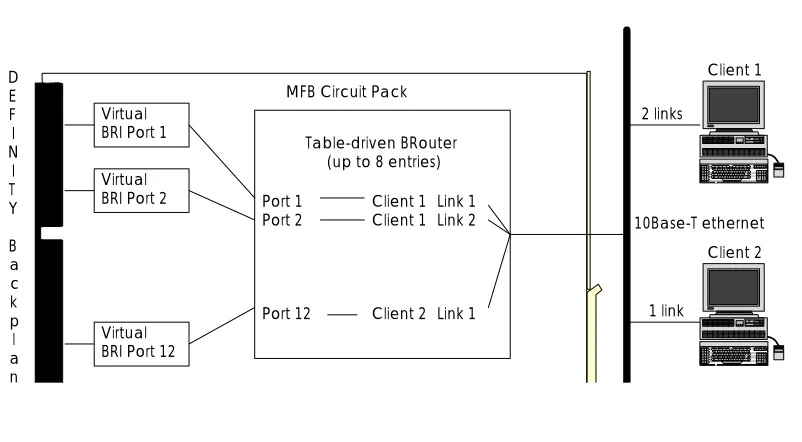
This document describes the installation, administration, and maintenance of the ASAI over the DEFINITY LAN Gateway application, which provides ASAI functionality using 10BaseT Ethernet rather than BRI as a transport media.
DEFINITY Enterprise Communications Server Release 5 CallVisor PC ASAI Installation and Reference, 555-230-227
DEFINITY Enterprise Communications Server Release 5 Administration and Feature Descriptions, 555-230-522
The Administration and Feature Description document serves as an overall reference for the planning, operation, and administration stages of DEFINITY ECS.
DEFINITY Enterprise Communications Server Release 5 System Description and Specifications, 555-230-203
This manual provides a technical description of hardware, environmental, and space requirements and parameters.
DEFINITY Enterprise Communications Server Release 5 Implementation, 555-230-302
This manual documents the implementation of Release 5.
DEFINITY Enterprise Communications Server Release 5 Call Vectoring/Expert Agent Selection (EAS) Guide, 555-230-521
This manual documents call vectoring for DEFINITY ECS.
CallVisor ASAI CD Document Set, 585-246-801
This CD ROM contains four CallVisor ASAI release 5 documents. It includes CallVisor ASAI Technical reference, CallVisor ASAI Protocol Reference, CallVisor ASAI Overview, and CallVisor ASAI PC.
BCS Products Security Handbook, 555-025-600
This manual provides information on securing various Lucent Technologies products against toll fraud.
NOTE:
With regard to CallVisor ASAI, the importance of security cannot be
1
Introduction
The purpose of this chapter is to present an overview of ASAI and the services it provides.
ASAI services are divided into functional sets called capability groups. Capability groups enable the adjunct1 to communicate with and control the DEFINITY ECS.2
Each capability group is defined by the set of functions within it. ASAI defines eight capability groups in all:3
1. For the purpose of this document, the term adjunct is defined as the application processor. 2. ASAI is not limited to a one-to-one correspondence between the ECS and an adjunct. Multiple
adjunct configurations are available and are discussed in a subsequent section. For the sake of this introduction, however, the scope is limited to a single ECS and a single adjunct.
Call Control4 The capabilities in this group enable the adjunct to place, monitor, and control any party on a single call as it moves through the ECS.
Domain (Station/ACD Split) Control4
The station capabilities in this group enable the adjunct to place, monitor, and control all calls at a specific station domain.
This capability group also enables the adjunct to receive reports as to the status of agents on an ACD split. Currently the ECS provides the Logout Event, and, starting with G3V4, the Login Event.
Capabilities
While capabilities are grouped by the services they may provide, all groups divide their particular capabilities into three categories or types. These categories are: initiating, controlling, and terminating capabilities.
3. The Call Control Capability Group is the Single Call Control subset of the Third Party Call Control Capability Group. The Domain Control Capability Group is also a subset of the Third Party Call Control Capability Group, as specified in the Adjunct/Switch Interface (ASAI) Specification, 555-025-203. For the sake of brevity, these groups are referred to as the Call Control Capability Group and the Domain Control Capability Group, respectively. The specific capabilities within each group carry the Third Party prefix; for example, Third Party Make Call and Third Party Domain (Station) Control Request.
Routing This capability group allows the ECS to ask the adjunct for a call’s destination. The adjunct supplies the destination based on call-related information (for example, called number).
Request Feature
The single capability in this group lets the adjunct request ECS features, such as the agent login, logout, work mode changes, Call Forwarding, and Send All Calls (SAC).
Value Query This capability group enables the adjunct to request information regarding ECS resources. Using this capability group would, for example, allow a user to query the ECS for the number of agents currently logged in to an ACD split.
Set Value This capability group enables the adjunct to set
ECS-controlled services, such as the Message Waiting Indicator (MWL), for any specified telephone set.
Maintenance This capability group enables the adjunct to suspend and resume ECS alarms on the ASAI link. It also enables the adjunct or the ECS to request the status of the ASAI software at the remote endpoint using the Heartbeat capability.
Initiating These capabilities are used to open a channel of communication between the adjunct and the ECS for
messaging purposes. An example of an initiating capability is Third Party Make Call that allows the adjunct to direct the ECS to place a call.
Controlling These capabilities are used to exchange information once the channel of communication has been established. For example, Third Party Selective Hold can be used to place a call on hold, or Third Party Merge can be used to transfer a call.
Capabilities and Associations
Central to this introduction of capability groups and ASAI in general is the concept of an association. An association is defined as a channel of communication between the adjunct and the ECS for messaging purposes.
It may be helpful to think of an association as a communications session; each session could involve information pertaining to many calls.
Associations and Capability Groups
ASAI defines eight different types of associations, each of which corresponds to a particular capability group:
■ Call Control Associations
■ Domain (Station/ACD Split) Control Associations ■ Notification Associations
■ Routing Associations
2
Introduction
This chapter examines various configurations and applications that can be supported by the ASAI capabilities.
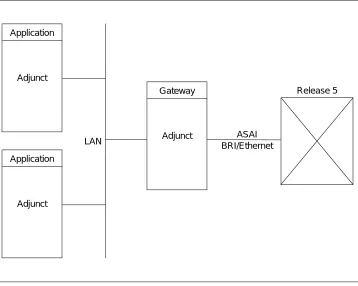
The first part of this chapter presents a simple configuration and several application samples. The latter part provides additional configurations that support the ASAI capabilities, and a table that defines the capacity limitations of ASAI.
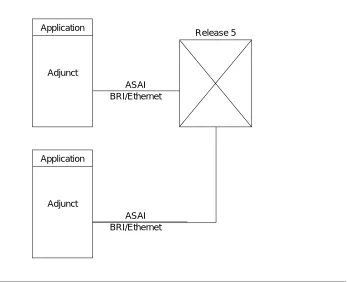
Figure 2-1 illustrates the simplest configuration, an adjunct (application processor) connected to a DEFINITY ECS via a single ASAI-BRI or ASAI over the DEFINITY LAN Gateway (Ethernet) link.
Figure 2-1. Single Link — Single Processor Configuration
Application
Adjunct
ASAI BRI/Ethernet
The adjunct can be a personal computer, a minicomputer, or a mainframe. Applications on the same adjunct monitor and control voice calls or perform other operations on behalf of a telephone user.
Applications on the adjunct can share the ASAI link when communicating with the ECS. The ECS does not distinguish between multiple applications that may be sharing an ECS link.
A user typically has a telephone and a data terminal at his or her desk. The user can control the voice calls at his or her telephone by using the telephone or entering commands at the data terminal. When using the data terminal, the application controls the voice call via the ASAI link. How the data terminal is connected to the adjunct is irrelevant to the ASAI-supported applications described in this document.
Applications
ASAI supports a variety of application types:
■ Those that control a single station (telephone set) on behalf of a specific
user
■ Those that control all parties on a call ■ Those that route incoming calls
■ Those that make outbound calls from an ACD split for a telemarketing
center
■ Those that monitor calls entering vectors and/or ACD splits
The DEFINITY Enterprise Communications Server (ECS) allows an application to control a specific extension on a call and, at the same time, allows another application to control another extension on the call. In this case, both applications can independently control endpoints on the call in the same way that users can by using their telephone set.
Sample Applications
The sample applications in the following section provide a practical, “real world” illustration of ASAI capabilities.
NOTE:
The applications described in this section are not restricted to any particular configuration described in this section, nor are they mutually exclusive. Any configuration and group of applications can be used simultaneously. The ECS does not restrict any mix of applications, except as dictated by capacity and performance constraints. For information on ASAI capacity limits, see Appendix B, "ASAI and Release 5 Requirements".
In addition, the ASAI interface provided by the ECS is not the only system component that might be needed to provide these applications. For example, additional hardware (computer data terminals, voice response units, call classifier boards) and/or software (application interface, call vectoring) might be needed. The ASAI interface only provides the communication link to access the ECS services that make these applications possible.
Outbound Call Management
A good example of Outbound Call Management (OCM) is an Outbound
Telephone Support Center Application. An Outbound Telephone Support Center Application automatically generates outbound calls that are to be handled by a specified user community (agent pool).
Outbound applications fall into two categories:
Preview Dialing — The agent or user previews a screen of data pertaining to the
call and enters information into the system when ready to make the call. Preview dialing allows an agent or user to control when the outbound call is started, enabling the user to prepare for a conversation with the called party.
Predictive Dialing — The adjunct application makes more outbound calls than
there are agents. Statistically, a certain number of calls will go unanswered, will be busy, will go to intercept, or will be answered by machine detection (if so
optioned), etc. The system connects agents only with answered calls. Predictive dialing makes more efficient use of an agent pool by eliminating dialing time, listening to ringing, etc.
Preview Dialing
1. The agent uses a data terminal to log into the outbound telephone support application. The application establishes a Domain (Station) Control association for the agent. There must be one such association for each agent.
2. The agent enters information indicating readiness to preview data. There must be one such association for each agent.
3. The adjunct application displays a screen of data to the agent.
4. When the agent enters information, the application uses the ASAI Third Party Auto-Dial capability to place an outbound call from the agent’s station to the number associated with the displayed data. See “ASAI and Domain (Station ACD Split) Control” in Chapter 5 for more information regarding the Third Party Auto-Dial capability. Alternately, when the agent enters information, the application uses the ASAI Third Party Make Call Capability to place an outbound call from the agent to the number associated with the displayed data. See “Call Control Capability Group” in Chapter 4 for more information regarding the Third Party Make Call Capability.
5. The ECS sends the adjunct event reports about the call for agent tracking until the call disconnects.
6. The cycle continues.
Predictive Dialing
Predictive dialing uses special hardware, a call classifier. The call classifier is capable of detecting ringing, voice energy, special tones, and an answering machine.
1. A user (agent) uses either a telephone set or data terminal to log into the outbound telephone support application. If the user uses the data terminal, then the adjunct application uses the ASAI Request Feature Capability to log the agent into the ACD split on the ECS.
2. The application uses the Third Party Make Call Capability with Service Circuit/Call Classifier and Alert Destination First options to make outbound calls from the ACD split extension to external numbers. This is called a “switch-classified” call. Typically, these numbers come from a calling list maintained for the outbound telemarketing application. The application uses queries to monitor ECS resources such as agents logged into the split, available classifiers, and available trunk resources. The application usually has a pacing algorithm that places calls ahead of available agents. 3. When the call classifier detects answer or an answering machine, the ECS
4. The ECS provides the adjunct application(s) with event reports for call activity within the ACD split. The application, in turn, might display information from the calling list to an agent when the ECS ACD software connects an outbound call to an agent.
5. The cycle continues.
6. For G3V3and later, the Answering Machine Detection feature may be used in conjunction with this type of dialing to receive Connected Event Reports on any type of trunk.
7. Starting with Release 5, Call Classification after Answer Supervision can be enabled, thereby allowing the ECS to classify a call as answered without a call classifier being attached. If Answering Machine Detection (AMD) is desired while this feature is enabled, a call classifier can be connected to the call after answer supervision is received. The call classifier can then detect whether the answering party is an answering machine.
Inbound Call Management
Inbound Call Management provides inbound telemarketing centers with the ability to increase ACD agent efficiency and tracking by enabling ICM applications to:
■ Monitor (receive ASAI Event Reports) all calls delivered to Vector Directory
Numbers (VDNs) and ACD splits and calls originated by ACD agents or users
■ Route calls to specific ACD/hunt groups, VDNs, or ACD agents based on
incoming call information [for example, Calling Party Number/Billing Number (CPN/BN), II-Digits, UUI and Dialed Number Identification Service (DNIS)]1 and ACD call activity (for example, total number of calls queued, or number of available agents)
■ Prepare and deliver, together with the voice call, the appropriate data
screen to the selected agent or user
■ Duplicate and transfer the caller’s data screen when an ACD agent or user
conferences or transfers the voice call to another destination (for example, ACD supervisor, or expert agent)
■ Provide ACD agent functions (for example, login, logout, or work mode
change) from a data terminal
■ Set the billing rate for calls to a 900-number with AT&T MultiQuest
Vari-A-Bill service.
The following sample scenarios illustrate the operation of several ICM applications.
ACD Call Activity Monitoring
The ACD Call Activity Monitoring Application uses event reporting to track the call activity of VDNs, ACD splits, and individual agents or users. (ForG3V3and later, Multiple Monitors provides the ability for up to three ASAI applications to monitor the same ACD Split or VDN domain.)
The application may use the event reports to generate ACD reports containing information such as the following:
■ Call distribution by CPN/BN2 for each DNIS
■ Total number of calls handled by each VDN, ACD split, and/or agent ■ Total number of calls, with CPN/BN, that abandon/drop while in queue ■ Total number of ACD, agent-to-agent, agent-to-supervisor, and personal
calls that were originated and received by each agent
■ Average and maximum time in queue ■ Average and maximum queue length ■ Average and maximum call holding time ■ Average time spent by each agent on a call ■ Total number of calls that interflow/intraflow
■ Total number of calls associated with each II-Digits type.
In addition, if the application has complete control of the agent work modes, such as in adjunct-controlled splits, the agent activity reports can also be generated.
A sample scenario for the ACD Call Activity Monitoring application is as follows: 1. The application uses the Event Notification Request Capabilities and
Domain Control Capabilities to monitor all calls delivered to ACD splits and all calls originated and delivered to an agent station.
2. The ECS sends event reports (for example, Call Initiated, Alerting, Connected, Call Transferred, or Dropped) to the application for all calls entering the monitored ACD splits and stations.
3. The event reports allow the application to produce the ACD Call Activity reports described previously.
2. For more information on CPN/BN and DNIS administration, refer to DEFINITY Enterprise
Communications Server Release 5 Installation and Test for Single Carrier Cabinets, 555-230-894, DEFINITY Enterprise Communications Server Release 5 Installation and Test for Multi-Carrier Cabinets, 555-230-112 and DEFINITY Enterprise Communications Server Release 5
Data Screen Delivery and Voice/Data Transfer
A Data Screen Delivery and Voice/Data Transfer application may use CPN/BN or calling party number DNIS or called party number, and answering destination information to construct and deliver a data screen to the answering agent/user’s data terminal. Likewise, when an agent or user conferences or transfers a call, the application uses the conferenced agent or transferred-to agent information to automatically transfer the data screen to the new agent handling the call.
A sample scenario for the Data Screen Delivery and Voice/Data Transfer application is as follows:
1. The application uses the Event Notification Request capability to monitor all incoming calls to an ACD split or VDN.
2. When a call enters the monitored ACD split or VDN, the ECS sends a Call Offered to Domain Event Report containing the call’s CPN/BN, DNIS, II-Digits, UUI (whether supplied by the network or by some other CallVisor adjunct), and any lookahead interflow and collected digits information associated with the call.
3. The application does a database search on the caller information
(CPN/BN) and retrieves the caller’s data to fill a data screen based on the service dialed (DNIS).
4. When the call is delivered to an available agent and/or user, the ECS sends an Alerting and/or Connected Event Report containing the number of the agent or user handling the call. The application then delivers the
assembled data screen to the data terminal associated with the agent or user handling the call.
5. If the agent or user conferences or transfers the call to another destination, the ECS sends a Call Conferenced or Call Transferred Event Report indicating the new destination. The application then duplicates or recreates the caller’s data screen at the data terminal associated with the new destination.
6. When an agent or caller disconnects and/or drops, the
Data Screen Delivery with Call Prompting
The application can also use the ECS-based Call Prompting feature to obtain additional information (for example, account number) from the caller. The entered information can be used to select the appropriate data screen.
A sample scenario for the Data Screen Delivery with Call Prompting application is as follows:
1. The customer administers a vector with a Collect Digits command as part of the Call Prompting feature.
2. The application uses the Event Notification Request capability to monitor all incoming calls to the VDN used to distribute calls to agents or users. 3. When a call enters the monitored VDN, the ECS sends a Call Offered to
Domain Event Report containing the digits collected for the call in the previous vector’s Collect Digits vector command. (The digits must be in the collected digits buffer before entering the monitored domain in order to be sent in the Call Offered to Domain Event Report.)
4. The application does a database search on the digits collected and retrieves the caller’s data to fill a data screen based on the service dialed. 5. When the call is delivered to an available agent and/or user, the ECS sends
an Alerting and/or Connected Event Report containing the number of the agent or user handling the call. The application then delivers the
assembled data screen to the data terminal associated with the agent or user handling the call.
For Release 5 and later, the following feature provides additional functionality:
■ Network-provided digits (CINFO): the Collect Digits step, in addition to call
prompting digits, can also collect network-provided customer-entered digits (ced) or customer database-provided digits (cdpd). These digits are reported to the adjunct as call prompter data in the Call Offered to Domain Report.
Speech Processing Integration
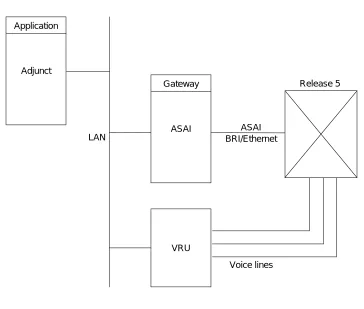
Speech Processing Integration can be achieved if the application uses a Voice Response Unit (VRU) to interact with the caller. The VRU is an adjunct and calls are delivered to VRU ports for announcements and collection of additional information from the caller. The application communicates with the VRU software and uses the information provided by the caller to prepare the appropriate data screen and/or route the call to the appropriate destination (for example, ACD agent).
A sample scenario for the Speech Processing Integration application is as follows: 1. The customer administers the VRU ports as ACD agents in an ACD split.
2. The application uses the Event Notification Request capability to monitor all incoming calls to the ACD split associated with the VRU ports.
3. The application uses the Request Feature capability to log in, log out, and change work modes of the VRU ports. It is recommended that
auto-available agents be used for VRUs so that this Request Feature capability does not have to be invoked.
4. When a call enters the monitored ACD split or VDN, the ECS starts sending Event Reports to the application about the call including the Call Offered to Domain Event Report containing the call’s CPN/BN, II-Digits, DNIS, and any lookahead interflow, and collected digits information associated with the call. The adjunct can also use the ASAI-Provided Digits feature with an adjunct route select to send dial-ahead digits. These digits can be stored in a collect digits vector step and subsequently delivered to a VRU using a converse vector step.
5. When a call is connected to the VRU, the application uses the VRU’s voice processing capabilities to interact with the caller. The caller, after
interacting with the VRU (for example, listening to account balances or transferring funds), may choose to talk to an agent.
6. The application uses Call Control Capabilities (for example, Third Party Selective Hold, Third Party Make Call, and Third Party Merge) to transfer the call to the agent or group of agents (ACD split) designated to handle this type of caller.
7. When the call is delivered to an available agent, the ECS sends an Alerting and/or Connected Event Report containing the number of the agent handling the call. The application then delivers the assembled data screen to the data terminal associated with the agent handling the call. Typically, the VRU is handing this information off to a host that will be delivering the data screen to the appropriate agent.
Adjunct Routing
The Adjunct Routing application allows the ECS to request call routing instructions from an adjunct application.
A sample scenario for the Adjunct Routing application is as follows: 1. The customer administers a vector with an “adjunct routing” vector
command as part of the Call Vectoring feature.
3. The application selects the route for the call based on the call information passed and/or agent availability and sends a Route Select Capability with the route destination.The ECS then routes the call as indicated by the application.
4. When the call is delivered to the destination, the ECS sends a Route End Capability indicating a successful route. If the call cannot be routed to the specified destination, the reason for failure is returned to the application.
ASAI applications may use a variety of criteria for routing a call. Such criteria may be based on:
■ Information received with an incoming call:
— CPN/BN — DNIS — II-Digits — UUI
— Flexible Billing
■ Information collected from the caller:
— using Call Prompting on the ECS — using CINFO (collected from the caller) — using ASAI Request Digit Collection
■ Information provided by the ECS at route request time:
— VDN used to access vector
■ a combination of the above-provided information
Information Sources for Routing
■ CPN/BN is obtained from incoming ISDN/PRI and R2MFC trunk calls.
■ DNIS is obtained from incoming ISDN/PRI trunk calls.
■ II-Digits is obtained from incoming ISDN/PRI trunk call when the network
provides it. The digits contain information about the caller and can be used in adjunct routing applications to route calls.
■ UUI is obtained on ISDN/PRI trunk calls when provided by the network.
Like II-Digits, this information is caller-related. Unlike II-Digits, the contents of UUI are more flexible. Any kind of information (for example, credit card number, PIN, etc.) may be passed as UUI. This information is generated with the call on the local ECS or to a destination on a remote ECS. UUI information may be sent by the network or by an ASAI application.
■ Flexible Billing is obtained on an incoming ISDN/PRI trunk and is used to
■ Call Prompting is collected from the caller using the Call Prompting ECS
feature. Digits collected through Call Prompting (for example, sales, parts, service, etc.) may be used to select an appropriate route for the call.
■ Network-Provided Information (CINFO or Caller Information) is
collected from the caller by the network before the call arrives at DEFINITY ECS. These digits may represent customer-entered or database-provided digits. The network inserts this type of information when routing the call to another ECS. DEFINITY ECS extracts the CINFO and passes it to ASAI as collected digits. These digits may be used in an appropriate manner to route a call.
■ ASAI-Requested Digit Collection allows an ASAI application to request
that the ECS collect additional information from the caller. This is done through a flag in the Route Select message. The ECS uses a DTMF tone detector to detect user-entered digits. These digits are handled like dial-ahead digits and are collected while the call is out of vector processing. This digit detection feature can be used with adjunct routing to detect any input from the caller while the call is being routed (f