Volume 2009, Article ID 512192,9pages doi:10.1155/2009/512192
Research Article
An Iterative Soft Bit Error Rate Estimation of Any Digital
Communication Systems Using a Nonparametric Probability
Density Function
Samir Saoudi,
1, 2Molka Troudi,
3and Faouzi Ghorbel
41Institut TELECOM, TELECOM Bretagne, UMR CNRS 3192 Lab-STICC, Technopˆole Brest-Iroise CS 83818, 29238 Brest Cedex∼3, France
2Universit´e Europ´eenne de Bretagne, (UeB), France
3Institut TELECOM, TELECOM Bretagne, Technopˆole Brest-Iroise CS 83818, 29238 Brest Cedex∼3, France 4Laboratoire CRISTAL, Ecole Nationale de Sciences de L’Informatique (ENSI), Campus Universitaire de la Manouba,
2010 Manouba, Tunisia
Correspondence should be addressed to Samir Saoudi,[email protected]
Received 22 July 2008; Accepted 3 March 2009 Recommended by Sangarapillai Lambotharan
In general, performance of communication system receivers cannot be calculated analytically. The bit error rate (BER) is thus computed using the Monte Carlo (MC) simulation (Bit Error Counting). It is shown that if we wish to have reliable results with good precision, the total number of transmitted data must be conversely proportional to the product of the true BER by the relative error of estimate. Consequently, for small BERs, simulation results take excessively long computing time depending on the complexity of the receiver. In this paper, we suggest a new means of estimating the BER. This method is based on an estimation, in an iterative and nonparametric way, of the probability density function (pdf) of the soft decision of the received bit. We will show that the hard decision is not needed to compute the BER and the total number of transmitted data needed is very small compared to the classical MC simulation. Consequently, computing time is reduced drastically. Some theoretical results are also given to prove the convergence of this new method in the sense of mean square error (MSE) criterion. Simulation results of the suggested BER are given using a simple synchronous CDMA system.
Copyright © 2009 Samir Saoudi et al. This is an open access article distributed under the Creative Commons Attribution License, which permits unrestricted use, distribution, and reproduction in any medium, provided the original work is properly cited.
1. Introduction
The famous Monte Carlo (MC) simulation technique is the most popular technique used for estimating bit error rate (BER) of digital communication systems. The MC method is used when we cannot analytically compute the performance of communication system receivers. Unfortunately, it is well known that the drawback of the MC method is its very high computational cost. If we are studying, for example, a channel with a BER equal to 10−6, it is shown that if we hope to have a relative error estimation equal to 10−1, the number of the incorrect received bits must be at least equal to 102 and then the total number of transmitted data must be at least equal to 108 (see [1]). Consequently, simulation results take excessively long computing time. In this paper, we suggest a new method to estimate the BER
based on an estimation, in an iterative and nonparametric way, of the probability density function (pdf) of the soft decision of the received bit. In this case, the hard decision is not needed to compute the BER. The total number of transmitted data needed is very small compared to the classical MC simulation. Consequently, computing time is reduced drastically. The paper is organized as follows. In
Section 2, a brief review of the MC simulation method is
2. Monte Carlo Simulation: a Brief Review
In this section, we will give a brief description of the MC simulation for any digital communication system. Let us consider any point to point system communication over any channel transmission (Gaussian, multipath fading, etc.) with or without channel coding using any transmission tech-niques (CDMA, MC-CDMA, TDMA, etc.). Let (bi)1≤i≤N ∈
{+1,−1} a set of N independent transmitted bits. Let (Xi)1≤i≤N be the corresponding soft output at the receiver
such as the decision is taken by using its sign:bi =sgn(Xi). Let us introduce the following error function defined by a Bernoulli random variable:
ξbi=
⎧ ⎪ ⎨ ⎪ ⎩
1 ifbi =/bi,
0 otherwise.
(1)
Letpe be the true BER at the output of the receiver. We have
pe=Pr bi=/ bi=Pr ξbi=1=Eξbi, (2) where E(·) is the mathematical expectation operator. The MC method estimates BER using the following average:
pe= 1
N N
i=1
ξbi. (3)
The estimator error is given by
e=pe−pe = 1
N N
i=1
(pe−ξ(bi)). (4)
The MC estimator is unbiased since E(e) = 0 and its variance is given by (assuming that the errors are independent)
σe2=E
pe−pe2= pe
1−pe
N . (5)
Letεbe the relating error of the MC estimator which is given by
ε= σe
Epe =
1−pe
peN . (6)
For small BER (pe1), we have
ε≈1
peN. (7)
Equation (7) gives the number of transmitted data needed for a given BER and for a desired precisionε:
N= 1
ε2pe. (8)
It is clear from (8) that, for example, if we wish to study a channel with a BER equal to 10−7 with a desired precision of 10−1, we must transmit at least 109information bits. Consequently, simulation results take excessively long computing time depending on the complexity of the receiver. So, small BER values require large samples lengthN. That is why, in the following sections, we will suggest a new method to estimate the BER based on nonparametric pdf of soft output decisionX.
3. Nonparametric Probability Density
Function Estimation
Let fX(x) be the pdf of the soft output decision X at the receiver. Let us note that all the received soft output decision (Xi)1≤i≤N are random variables having the same pdf, fX(x). Xi is the corresponding soft output at the receiver such as the hard decision is taken by using its sign: bi = sgn(Xi). The (bi)1≤i≤N are assumed to be independent and identically
distributed withP[bi= ±1]=1/2. The BER is then given by
pe=P bi=/bi,
=P (X >0),bi= −1+P (X <0),bi=+1,
=P X >0|bi= −1P bi= −1
+P X <0|bi=+1P bi=+1,
=P X >0|bi= −1,
=P X <0|bi=+1,
(9)
then,
pe=
0
−∞ f
bi=+1 X (x)dx
=
+∞
0 f bi=−1 X (x)dx
=1
2
0
−∞ f
bi=+1 X (x)dx+
1 2
+∞
0 f bi=−1 X (x)dx,
(10)
where fbi=+1
X (·) (resp., fXbi=−1(·)) is the conditional pdf ofX
such asbi=+1 (resp.,bi= −1).
Equation (10) clearly shows that an alternative method for estimating the BER is to transmit, for example, a sequence ofN bits equal to +1, estimate the pdf of the soft output of the receiver and then calculate the BER by computing the appropriate integral given by (10).
The Kernel estimator is defined as
fX,N(x)=
1
NhN N
i=1 K
x−Xi
hN
, (11)
where (Xi)1≤i≤N are random variables having the same pdf, fX(x).Xi is the soft output at the receiver right before the hard decision.hNis the smoothing parameter which depends on the length of the observed samples,N.K(·) is any pdf (called the kernel) assumed to be an even and regular (i.e., square integrated) function with unit variance and zero mean.
The choice of the smoothing parameter hN is very important. It is shown in [6, 7] that if hN tends towards 0 when N tends towards +∞, the estimator fX,N(x) is
asymptotically unbiased (i.e., for allx,E[fX,N(x)] → fX(x)).
It is also shown that if hN → 0 and NhN → +∞ when
N → +∞, then the MSE of the Kernel estimator tends to zero, that is, for allx:
lim
N→+∞E
fX,N(x)−fX(x) 2
=0. (12)
Moreover, the optimal smoothing parameterhN is com-puted in the minimum of the Integrated Mean Squared Error (IMSE) sense. An approximation of the IMSE is given by the following formula: (see [8])
IMSE≈M(K)
NhN +
JfXh4 N
4 , (13)
whereM(K) = +−∞∞K2(x)dx,J(fX) =
+∞
−∞(fX (x))2dx and fX (x) is the second derivative of the pdf fX(x). The optimal
smoothing value,h∗N, is then given by minimising the IMSE.
We then obtain
h∗N =N−1/5
JfX−1/5(M(K))+1/5. (14) Equation (14) shows that we must computeJ(fX) which unfortunately depends on the unknown pdf, fX. In the rest of this paper, we suggest the use of the most popular Gaussian kernel:K(x)=(1/√2π) exp(−x2/2). In this case, using (11),
we have (proof is given inAppendix A)
J fX,N
= 1
N2h5 N
√
2
N
i=1 N
j=1 K
Xi−Xj
√
2hN
Xi−Xj
2hN 4
+3 4
.
(15)
Let us note that we can easily show that for a zero mean and unit variance Gaussian kernel, we have
M(K)=
+∞
−∞K
2(x)dx= 1
2√π. (16)
4. Soft BER Estimation
To find the optimal smoothing parameter h∗N, we must
resolve (14) using at the same time (15) and (16). Direct resolution seems to be very difficult. That is why we suggest resolving this equation in an iterative way; we begin by an
initial value ofhN (h(0)N = 1/N1/5), then, for each iteration k: computeJ(fX,N) using (15) with the previoush(Nk−1) and
then compute the new value ofh(Nk)by using (14). Once the
optimal smoothing parameter is calculated, the pdf fX,N(x),
if needed, can be estimated by using (11). To estimate the BER of our system, we must evaluate the expression of (10): pe =0
−∞fX,N(x)dx. We can show that for the chosen
Gaussian kernel, a soft BER estimation can be given by the following expression (see proof inAppendix B):
pe,N =
1
N N
i=1 Q
Xi hN
, (17)
where Q(·) denotes the complementary unit cumulative Gaussian distribution, that is, Q(x) =
+∞
x (1/
√
2π) exp(−t2/2)dt. The erfc function can also
be used as follows:Q(x)=1/2 erfc(x/√2).
Let us now summarize the new suggested algorithm which estimates the soft BER of any communication system:
Soft BER algorithm: Let (Xi)1≤i≤Nbe the received soft
out-put decision (corresponding to anN transmitted sequence bits equal to +1, so as the estimated pdf will be the conditional one ofXsuch asb=+1).
(1)Initialization.h(0)N =1/N1/5.
(2)For each iterationk: (k=1, 2,. . .)
(i) ComputeJ(fX(k,N)) usingh (k−1) N (15).
(ii) Compute h(Nk) using J(f (k)
X,N) and M(K) ((14)
and (16)).
(iii) STOP iteration criterion: |h(Nk) − h (k−1) N | <
threshold≈10−3.
(3)Soft BER computation: (see (17)).
5. Some Theoretical Studies
In this section we shall give some theoretical studies. The following theorem will show that the suggested soft BER estimator is asymptotically unbiased. Proof of this theorem is given inAppendix C.
Theorem 5.1. Assume that fX is a second derivative pdf
function, that hN → 0 as N → +∞. Then pe,N is
asymptotically unbiased, that is,
lim
N→+∞E pe,N
=pe. (18)
The following theorem shows that the variance of the suggested estimator also tends to zero. Proof of this theorem is given inAppendix D.
Theorem 5.2. Assume that fX is a second derivative pdf
function, thathN → 0 asN → +∞. Then, the variance of
pe,N tends to zero asNtends to+∞, that is,
lim
N→+∞E
pe,N−E pe,N 2
Using Theorems 5.1 and 5.2, it is easy to show (see
Appendix E) that the suggested estimator is pointwise
consis-tent, that is, the MSE tends to zero as the number of samples
N tends to +∞. This result can be given by the following corollary.
Corollary 5.3. Assume that fX is a second derivative pdf
function, thathN → 0asN → +∞. Then, the MSE of pe,N
tends to zero asNtends to+∞, that is,
lim
N→+∞E
pe,N−pe
2
=0. (20)
In the following, some remarks are given.
(1)Asymptotic normality: Using the central limit
theo-rem, we can show that the sequence of BER estimator
pe,N =(1/N) N
i=1Q(Xi/hN) is asymptotically normal,
that is,
∀c∈R, lim
N→+∞P
pe,N−E pe,N
σ pe,N
≤c
=
c
−∞
1
√
2πexp
− y2
2
d y.
(21)
(2)Boostrap: As fX,N(x) is constructed by the Kernel
estimator (11) for a given observationX1,X2,. . .,XN,
with kernelK and bandwidthhN, then it is easy to find new independent realizations from this estima-tor. It is not necessary to explicitly compute fX,N(x)
in the simulation procedure. New realizationsYcan be drawn as follows:
(i) uniformly choose an indexiwith replacement from the set{1,. . .,N};
(ii) generate a random variableεhavingKas a pdf; (iii) SetY =Xi+εh∗N.
These new realizations can be used to improve the accuracy of the estimator and therefore reduce the variance of the estimator.
6. Simulation Results
Let us consider a simple example in order to verify that our suggested BER estimator works well. In this section, we shall consider a synchronous CDMA system with K
users employing normalized spreading codess1,s2,. . .,sk ∈
{−1/√SF, +1/√SF}SFof length SF chips, through an AWGN channel using binary phase-shift keying (BPSK), where SF is the spreading factor. The received signal is the superposition of the data signals of K users given by
r=
K
k=1
Akbksk+n, (22)
where,
r∈RSFis the received signal (SF=spreading factor);
sk ∈ {+1/
√
SF,−1/√SF}SF is the spreading code for the
kth user;
bk ∈ {+1,−1} is the transmitted binary information symbol of thekth user;
Akis the received amplitude of thekth user;
n ∈ RSF is an additive white Gaussian noise with
zero mean and a covariance matrix equal to σ2I
SF, (n ∼
N(0,σ2I SF)).
It is seen [9] that a sufficient statistic for demodulating the data bits of theKusers is given by theK-vectorywhose
kth component is the output of a filter matched tosk, that is,
yk=skr, k=1,. . .,K. (23) Using (22) and (23), we can show that the output of the
kth matched filter is given by
yk=Akbk+
j /=k
Ajbjρj,k+nk, (24)
whereρj,k is the normalized cross-correlation between the
spreading codessjandsk,nk is the output additive Gaussian
noise (nk ∼N(0,σ2)).
Note that the quantity (24) consists of three terms: the required bit information of the kth user, Akbk; a termj /=kAjbjρj,kwhich is the multiple access interference
(MAI) at the output of the matched filter due to the presence of other users sharing the same channel; and a termnk, due to the output of the background noise through the matched filter. Let us note that the additive noise, MAI +nk , at the output of thekth matched filter is a mixture of 2K−1Gaussian
distribution.
Several multiuser detection methods are given in [9]. Here, we shall focus on the conventional detector which is given by
bk=signyk. (25)
We can show, using (24), that the true bit error rate of the kth user for the conventional detector is given by the following formula:
BERk
= 1
2K−1
b−k∈{±1}K−1 Q
Ak−j /=kAjbjρj,k σ
, (26)
whereb−k=(b1,b2,. . .,bk−1,bk+1,. . .,bK)∈ {−1, +1}K−1.
For numerical results, we focus, for example, on K =
2 users with SF = 7. The two spreading codes are chosen as s1 = (+1, +1, +1, +1,−1,−1,−1)/
√
7 and s2 =
(−1,−1, +1, +1,−1,−1,−1)/√7. We have found that the cross-correlation value of these two codes is equal toρ1,2 =
0.4286.Figure 1(resp., 2) gives the conditional pdf such as
b1=+1 of the output of matched filter for userk=1 and for
a SNR=6 dB (resp., SNR=10 dB).
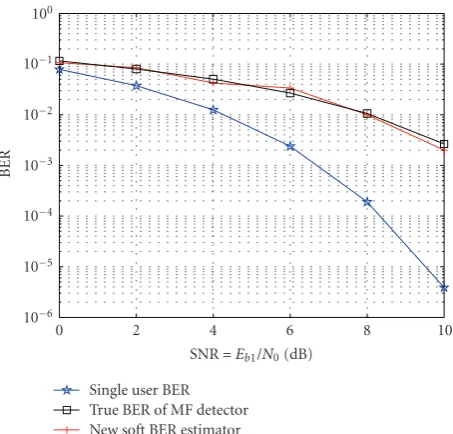
Figure 3gives performance of the conventional CDMA
3 2 1 0
−1
−2
−3
Output of MF of user 1 0
0.1 0.2 0.3 0.4 0.5 0.6 0.7
P
robabilit
y
d
ensit
y
function
Figure1: Conditional pdf such asb1=+1 of the output of matched filter for userk=1 and for an SNR=6 dB.
3 2 1 0
−1
−2
−3
Output of MF of user 1 0
0.1 0.2 0.3 0.4 0.5 0.6 0.7 0.8 0.9
P
robabilit
y
d
ensit
y
function
Figure2: Conditional pdf such asb1=+1 of the output of matched filter for userk=1 and for a SNR=10 dB.
BER algorithm given inSection 4. For this last simulation, we have taken a database of length ofN = 1.000 samples. The figure shows that for SNR = 10 dB, 1000 samples are sufficient to have a good precision of the bit error rate. For SNR = 10 dB, the true BER is equal to 3.0 10−3, therefore, the MC simulation needs at least 30 000 samples for similar precision.
Other Receiver. In this section, instead of using a simple
standard receiver, we shall consider a second example using an MMSE receiver which is an advanced technique using multiuser detection (see [9]). In this case, the output of the MMSE receiver is given by
z=My, (27)
10 8
6 4
2 0
SNR=Eb1/N0(dB)
Single user BER True BER of MF detector New soft BER estimator 10−6
10−5
10−4
10−3
10−2
10−1
100
BER
Figure 3: Soft BER algorithm and true BER comparison for synchronous CDMA system.
where y = [y1,. . .,yK] is the K-dimensional vector of
matched filter outputs (ykis given by (24)). The MMSE filter is given by
M= R+σ2A−2−1, (28)
whereRis the normalized cross-correlation matrix (Ri,j =
sisj =ρi,j),A=diag{A1,. . .,AK}andσ2is the variance of
the additive white Gaussian noise.
The estimated bit for thekth user (1≤k ≤K) is then given by
bk=signzk=signMyk. (29) We can show, using (27) and the fact thaty=Sr(where
S=[s1,. . .,sK] is theN×Kmatrix of signature vectors), that
the true bit error rate of thekth user for the MMSE receiver is given by the following formula:
BERk
= 1
2K−1
b−k∈{±1}K−1 Q
(MR)k,kAk−
j /=k(MR)k,jAjbj σ(MRM)k,k
,
(30)
whereb−k=(b1,b2,. . .,bk−1,bk+1,. . .,bK)∈ {−1, +1}K−1.
For numerical results, we focus on K = 2 users with the same spreading codes chosen for the first simulation (conventional detector). Let us note that the conditional pdf such asb1=+1 of the output of MMSE filter for each user is
a mixture of 2K−1Gaussian distribution.
Figure 4gives performance of the MMSE receiver based
8
Single user BER MF detector
True BER of MMSE receiver New soft BER estimator 10−4
Figure 4: Soft BER algorithm and true BER comparison for synchronous MMSE-CDMA receiver.
taken a database of length ofN=3.000 samples. The figure shows that for SNR = 6 dB, 3000 samples are sufficient to have a good precision of the bit error rate. For such SNR, the true BER is equal to 5.0 10−3, therefore, the MC simulation needs at least 50 000 samples for similar precision. Let us also note that for SNR=8 dB,Figure 4shows that the true BER is equal to 6.0 10−4. In this case, the MC simulation needs at least 170 000 samples for a good precision. The soft BER estimation, by using only 3000 samples, gives a value of the BER with an error of 0.2 dB.
7. Conclusions
In this paper, we have suggested a new iterative soft bit error rate estimation for the study of any digital communication system performance. This method is based on the use of nonparametric pdf estimation of the soft decision of the received bit. Small length of transmitted data, compared to the MC method, is needed for the BER estimation. Convergence of this method in the MSE criterion has been proven. Some simulation results have been given in synchronous CDMA system case with both conventional detector and MMSE multiuser receiver.
Appendices
A. Proof of
(
15
)
Proof. Using the definition ofJ(fX), we have
J fX,N For a zero mean and unit variance Gaussian Kernel, the second and fourth moment are, respectively, equal to 1 and 3, that is,t2K(t)dt=1 andt4K(t)dt=3. Therefore, (A.4)
Proof. We must evaluate the expression of (10) in the case
By using the following change of variable,t =(x−Xi)/hN,
C. Proof of
Theorem 5.1
Proof. Let us first recall that the true BER is given by
pe=
0
−∞fX(x)dx. (C.1)
The suggested soft BER estimator is given by
AsfXis assumed to be second derivative pdf function, we can use Taylor series expansion of fXas follows:
fXx−hNt= fX(x)−hNt fX(x) +
AsKis a zero mean and unit variance Gaussian Kernel, (C.6) becomes
D. Proof of
Theorem 5.2
Proof. Let us first recall that the suggested soft BER estimator
is given by
then, the variance of this estimator can be computed as
Var pe,N
whereAis given by
Now, to determine the analytical expression of (D.2), we
We can easily show that for the chosen Gaussian kernel, we have
Using (D.6), (D.7), and the following change of variable, (v,w)=((x+y/2),x−y), we have (using the fact thatK(·)
AsfXis assumed to be a second derivative pdf, we can use Taylor series expansion of fXas follows
fX that K is a zero mean and unit variance Gaussian kernel)
EA2=h2N
E. Proof of
Corollary 5.3
Proof. We have,
Epe,N −pe
This means thatpe,N is pointwise consistent.
References
[2] T. Ait-Idir, S. Saoudi, and N. Naja, “Space-time turbo equal-ization with successive interference cancellation for frequency-selective MIMO channels,” IEEE Transactions on Vehicular Technology, vol. 57, no. 5, pp. 2766–2778, 2008.
[3] M. Rosenblatt, “Remarks on some nonparametric estimates of a density function,”The Annals of Mathematical Statistics, vol. 27, no. 3, pp. 832–837, 1956.
[4] E. Parzen, “On estimation of a probability density function and mode,”The Annals of Mathematical Statistics, vol. 33, no. 3, pp. 1065–1076, 1962.
[5] R. Kronmal and M. Tarter, “The estimation of probability densities and cumulatives by Fourier series methods,”Journal of the American Statistical Association, vol. 63, no. 323, pp. 925– 952, 1968.
[6] S. Saoudi, A. Hillion, and F. Ghorbel, “Nonparametric prob-ability density function estimation on a bounded support: applications to shape classification and speech coding,”Applied Stochastic Models and Data Analysis, vol. 10, no. 3, pp. 215–231, 1994.
[7] S. Saoudi, F. Ghorbel, and A. Hillion, “Some statistical proper-ties of the kernel-diffeomorphism estimator,”Applied Stochastic Models and Data Analysis, vol. 13, no. 1, pp. 39–58, 1997. [8] M. Troudi, A. M. Alimi, and S. Saoudi, “Fast plug-in method
for parzen probability density estimator applied to genetic neutrality study,” inProceedings of the International Conference on Computer as a Tool (EUROCON ’07), pp. 1034–1039, Warsaw, Poland, September 2007.