EFFECTIVENESS OF STRUCTURED TEACHING PROGRAMME ON
KNOWLEDGE AND ATTITUDE REGARDING IMPORTANCE OF
PLAY NEEDS AMONG PARENTS OF UNDER FIVE CHILDREN.
Dissertation Submitted To
THE TAMIL NADU DR.M.G.R.MEDICAL UNIVERSITY
CHENNAI
IN PARTIAL FULFILMENT OF REQUIREMENT FOR THE DEGREE OF
MASTER OF SCIENCE IN NURSING
EFFECTIVENESS OF STRUCTURED TEACHING PROGRAMME ON
KNOWLEDGE AND ATTITUDE REGARDING IMPORTANCE OF
PLAY NEEDS AMONG PARENTS OF UNDER FIVE CHILDREN.
Dissertation Submitted To
THE TAMIL NADU DR.M.G.R.MEDICAL UNIVERSITY
CHENNAI
IN PARTIAL FULFILMENT OF REQUIREMENT FOR THE DEGREE OF
MASTER OF SCIENCE IN NURSING
APRIL 2016
INTERNAL EXAMINAR : EXTERNAL EXAMINAR:
Signature : Signature :
EFFECTIVENESS OF STRUCTURED TEACHING PROGRAMME ON
KNOWLEDGE AND ATTITUDE REGARDING IMPORTANCE OF
PLAY NEEDS AMONG PARENTS OF UNDER FIVE CHILDREN.
2015-2016
COLLEGE SEAL:
SIGNATURE: _________________
PROF. Mrs. V. KAVITHA M.SC (N) .,
Principal, Arvinth College of Nursing,
2/191, Ellaikkal Medu,
Mettupatti (Post),
Namakkal Dist.- 637020
Dissertation Submitted To
THE TAMIL NADU DR.M.G.R.MEDICAL UNIVERSITY
CHENNAI
IN PARTIAL FULFILMENT OF REQUIREMENT FOR DEGREE OF
MASTER OF SCIENCE IN NURSING
EFFECTIVENESS OF STRUCTURED TEACHING PROGRAMME ON
KNOWLEDGE AND ATTITUDE REGARDING IMPORTANCE OF
PLAY NEEDS AMONG PARENTS OF UNDER FIVE CHILDREN
2015-2016
Approved by Dissertation Committee on: 23.12.2015
Research Guide : _____________________________
PROF. Mrs. V. KAVITHA M.SC (N) .,
Principal, Arvinth College of Nursing,
2/191, Ellaikkal Medu,
Mettupatti (Post),
Namakkal Dist.- 637020
Clinical Guide : _____________________________
Mrs. A. KAVITHA M.SC (N) .,Assit.Professor, Arvinth College of Nursing,
2/191, Ellaikkal Medu,
Mettupatti (Post),
Namakkal Dist.- 637020
Dissertation Submitted To
THE TAMILNADU DR.M.G.R MEDICAL UNIVERSITY,
CHENNAI
IN PARTIAL FULFILMENT OF REQUIREMENT FOR THE DEGREE OF
MASTER OF SCIENCE IN NURSING
CERTIFICATE
This is to certify that, this thesis, titled, ³$ 678'< 72 $66ESS THE EFFECTIVENESS OF STRUCTURED TEACHING PROGRAMME ON IMPORTANCE OF PLAY NEEDS AMONG PARENTS OF UNDER FIVE CHILDREN ,16$.7+,+263,7$/.$//$.85,&+,9,=+8385$0´submitted by Mrs. V. TAMILSELVI., II year M.Sc., Nursing (2014-2015 Batch) Arvinth College of Nursing in partial fulfilment of the requirement of the Degree of Master of Science in
Nursing from The Tamil Nadu Dr. M.G.R Medical University is her original work carried out
under our guidance.
PROF. Mrs. V. KAVITHA M.Sc (N) .,
Principal, Arvinth College of Nursing,
2/191, Ellaikkal Medu,
Mettupatti (Post),
ACKNOWLEDGEMENT
³7KHORUGLVP\VKHSKHUG,VKDOOQRWZDQW´
The journey from the basic search from dissertation up to this bound book is solitary.
In a project like this, the investigator requires assistance, encouragement and support from
many. I am fortune to have an abundance of all requisites at every step.
I wish to acknowledge first, The Lord almighty for his abundance blessing, will power, strength and health throughout the dissertation.
At the outset I the researcher of this study, express my heartfelt gratitude to the
honorable Dr. K. MANI M.S. ORTHO., D. ORTHO., CHAIRMAN, Arvinth College of
Nursing, Namakkal for giving me an opportunity to carry out this study successfully.
I express my gratefulness to PROF. Mrs. V. KAVITHA, M.Sc., (N) ,PRINCIPAL, Arvinth College of Nursing, honorary professor in Community Health Nursing for her
valuable guidance, thoughtful suggestions and constant encouragement throughout the study.
I extend my heartful thanks and since gratitude to my guide
Mrs. A. KAVITHA, M.Sc.,(N), ASSISTANT PROFESSOR head of the Department of Child Health Nursing, Arvinth College of Nursing, for her immense patience, gentle
reminders, timely and succinct advice and guidance throughout the study.
I owe my genuine gratitude and heartfelt thanks to Mrs. V. THENDRAL, M.Sc., (N),
ASSOCIATE PROFESSOR, our class coordinator, head of the department of Maternal Nursing, Arvinth College of Nursing, for her constant guidance, patience, constructive effort,
inspirational and valuable suggestion , throughout the study.
My deepest gratitude and immense thanks to Mrs. R. RUCKMANI, M.Sc., (N),
ASSOCIATE PROFESSOR, Head of the Department of Medical Surgical Nursing , Arvinth College of Nursing, without whose input, guidance, motivation and untired efforts,
this study would not have been possible.
My special thanks to Ms.V.UDHAYAKUMARI, M.Sc.,(N), LECTURER, Department of Pediatric Nursing, Ms. MUTHUKUMARI, M.Sc.,(N), LECTURER, Department of
I owe my profound gratitude and exclusive thanks to Mr. R. NAGARAJ, M.Sc (N), ASSISTANT PROFESSOR, Department of Mental Health Nursing, for his constant inspiration, timely help and patient endurance which helped me in completion of the study.
I also thank all the faculty members of Arvinth College of Nursing, Namakkal, who
helped me in conducting the study.
I thank our librarian, Mr. R. RAMAN Arvinth College of Nursing, Namakkal.
I express my sincere gratitude to Mrs.E.SUGUNA, Mr.RAMKEE office staff for rendering their help in all the way.
I wish to extend my sincere thanks to Dr. G. VENKATESAN , M.D.,D.C.H.,
Medical director of the Sakthi hospital, Kallakurichi.
I express my sincere and special thanks to Mr.G.K.VENKATRAMAN, Statistician for his valuable guidance and advice in statistical analysis and presentation of data.
It is privilege to express my deep sense of gratitude to Mr. P. GOVINDARAJ, M.A,M.Phil., Tamil Literature, Mr.RAJAMOHAN, M.A, B.Ed., M.Phil., English Lecturer for their valuable editorial support.
We are what, we are with the blessing and love of our dear and near one. It would not
have been possible for me to complete this work, without the love and support of my parents
and my friends, who initiated me to take up this noble profession and also for their strong
support, prayers and encouragement throughout my carrier.
I extent my deep sense of gratitude to my lovable husband Mr. P.GOVINDARAJ and my child G.T.AKSHAY and my sister Mrs. V. PUNITHAVALLI for their invaluable support, constant encouragement, timely help and inspiration throughout the course of this
study.
I render my deep sense of gratitude to all my classmates, seniors and friends for their
constant help throughout the study.
I thank all my well wishers who helped me directly and indirectly.
INDEX
CHAPTER CONTENT
PAGE NO
I
II
III
INTRODUCTION
Background of the Study
Need for the Study
Statement of the problem
Objectives of the study
Hypothesis
Operational definition
Assumptions
Delimitations
Projected Outcome
REVIEW OF LITERATURE Review of Literature
Conceptual Framework
RESEARCH METHODOLOGY Research Approach
Research Design
Setting of the study
Population
Variables
Sample and Sample size
Sampling technique
Sampling criteria
Description of the tool
Content Validity
Pilot Study
Reliability
Method of data collection
Plan for data analysis
1-4
4-6
6
7
7
7
9
9
9
10-21
10
18
22-30
22
22
23
23
23
23
23
25
26
28
28
28
28
IV
V
VI
VII
VIII
IX
DATA ANALYSIS AND INTERPRETATION
RESULTS AND DISCUSSION
SUMMARY, CONCLUSION, NURSING IMPLICATIONS, RECOMMENDATIONS AND LIMITATIONS
REFERENCES
APPENDICES
ABSTRACT31-46
47-50
51-55
56-62
63-168
169-170
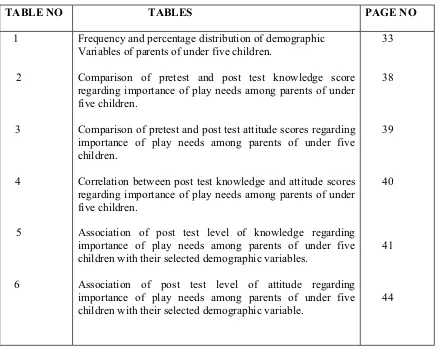
LIST OF TABLES
TABLE NO TABLES PAGE NO
1
2
3
4
5
6
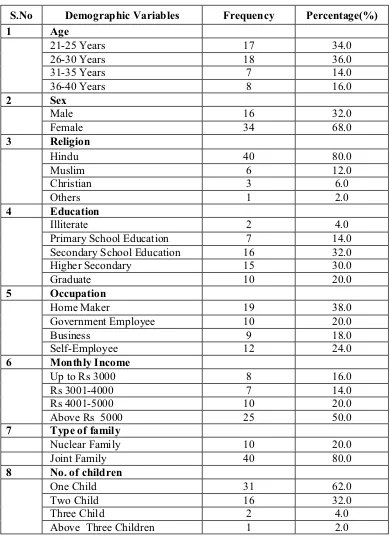
Frequency and percentage distribution of demographic Variables of parents of under five children.
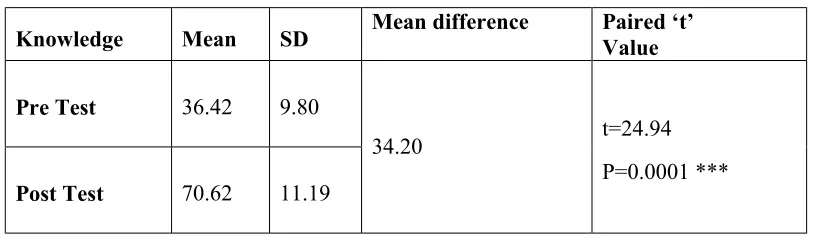
Comparison of pretest and post test knowledge score regarding importance of play needs among parents of under five children.
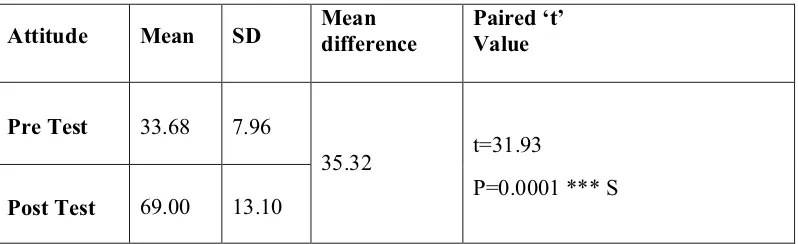
Comparison of pretest and post test attitude scores regarding importance of play needs among parents of under five children.
Correlation between post test knowledge and attitude scores regarding importance of play needs among parents of under five children.
Association of post test level of knowledge regarding importance of play needs among parents of under five children with their selected demographic variables.
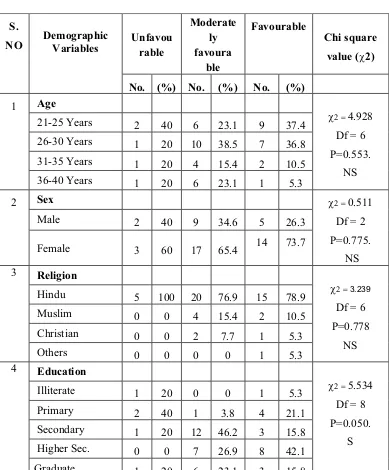
Association of post test level of attitude regarding importance of play needs among parents of under five children with their selected demographic variable.
33
38
39
40
41
44
[image:10.612.89.526.98.454.2]
LIST OF FIGURES
FIGURES NO
TITLE PAGE
NO
1
2
3
4
Conceptual framework
Schematic representation of research methodology
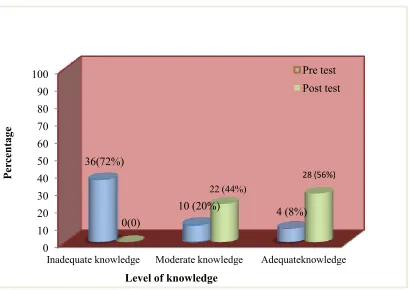
Percentage distribution of pretest and post test level of knowledge regarding importance of play needs among parents of under five children.
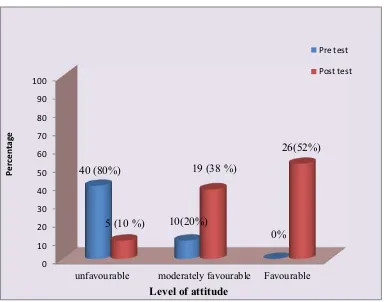
Percentage distribution of pretest and post test level of attitude regarding importance of play needs among parents of under five children.
21
24
36
LIST OF APPENDICES
APPENDIX
TITLE
PAGE NOI
II III
IV
V
VI
VII
VIII
IX
X
XI
XII
Letter seeking permission to conduct study
/HWWHUVHHNLQJH[SHUW¶VRSLQLRQIRUFRQWHQWYDOLGLW\
List of experts for content validity
Format for content validity
Informed consent form Content validity certificate
Certificate for English Edition
Certificate for Tamil Edition Lesson Plan (English)
Lesson Plan (Tamil)
Data Collection Tool (English) Data Collection Tool (Tamil)
63
64
65
66
72
73
74
75
76
107
145
1
CHAPTER - I
INTRODUCTIONBACKGROUND OF THE STUDY
³3OD\LVWKHURRWDQGIRXQGDWLRQRIFUHDWLYLW\LQWKHDUWVDQG
VFLHQFHVDOVRDVLQGDLO\OLIH´
- Stephen nachmanovitch
&KLOGUHQDUHWKHIXWXUHKRSHRIPDQNLQG7RGD\¶VFKLOGUHQZLOOEHWKHPDVWHUVRI
WKH IXWXUH ZRUOG $V WKH VD\LQJ JRHV ³KHDOWK LV ZHDOWK´ +HQFH LI FKLOGUHQ DUH
healthy, the future generation will be healthy, resulting in a healthy nation.
Parul Datta (2009) states that play is universal activity for all children. Through the universal medium of play children learn what no one can teach them.
([SHUWVLQFKLOGGHYHORSPHQWDQGEHKDYLRUKDYHVDLGUHSHDWHGO\WKDW³SOD\LVWKH
work of the chiOG´ ,Q SOD\ FKLOGUHQ FRQWLQXDOO\ SUDFWLFH WKH FRPSOLFDWHG VWUHVVIXO
processes of living, communicating and achieving satisfactory relationships with other
people.
Shonkoff and Phillips (2000) says that modern findings in neuroscience suggest that play promotes flexibility of mind, including adaptive practices.
Today many health care settings providing care for children. They have play
rooms with age appropriate toys. Play helps in development of children in various
aspects such as physical, mental and social. Toys are selected for their recreational
and educational value. Children should be allowed to play without much interference,
so that they become more independent. Play helps children comprehent the world in
which live and distinguish between reality and fantasy.
Research shows that play has many benefits for children, families and the wider
community, as well as improving health and quality of life. Recent research suggests
2
x increase their self-awareness, self-esteem, and self-respect x improve and maintain their physical and mental health x give them the opportunity to mix with other children
x allow them to increase their confidence through developing new skills
x promote their imagination, independence and creativity
x offer opportunities for children of all abilities and backgrounds to play together x provide opportunities for developing social skills and learning
x build resilience through risk taking and challenge, problem solving, and dealing
with new and novel situations
x provide opportunities to learn about their environment and the wider community.
Play is integral to the academic environment. It ensures that the school setting
attends to the social and emotional development of children as well as their cognitive
development. It has been shown to help children adjust to the school setting and even
WR HQKDQFH FKLOGUHQ¶V OHDUQLQJ UHDGLQHVV OHDUQLQJ EHKDYLRUV DQG SUREOHP-solving
skills.
According to Parte and Newhall (1943) play behavior can be described as unoccupied, solitary, onlooking, parallel, associative and co-operative. Unoccupied , child is not involved in play activity but may move around randomly. Onlooker, when the child watch others play but does not become engaged in their play.
Solitary, the child plays alone independently. Parallel, it is an independent play activity. Child play alongside other children but not with them. Associative, social interaction occurs between children. As the child grows, the way of play will change.
It provide creative and ideas.
Importance of play includes physical, emotional, cognitive, intellectual, social
and moral development. Through play, children are able to test their abilities, to
assume and try out various roles and to learn the effect the behavior has on others. In
physical development, children develop the muscular and sensory abilities through play. At the time of running, climbing, riding, cycle and in other active play. In
3
numbers and name of the objects. In social development, as children grow, they enjoy playful interaction with other children. Children learn right from wrong. In
moral development, when children engage in play with their peers and families, they began to learn some behaviors are acceptable while others are unacceptable.
Researchers at the National Institute for play are creating a clinical scientific
framework for play. They states seven patterns of play which indicate the range of
types of activities. They are attunement play, body play, object play, social play,
imaginative play, story telling play, and creative play
Here are some list of play associated with specific play groups.
Terrikyle (2013) states that, in newborn, prefers interacting with the parents to toys. Play is critical to infant development, as it give infants the opportunity to
explore their environment, practice new skills and solve problems. As infants become older, toys may be geared toward the motor skills and language skills that the child
developing. Toddlers need at least 30 mts of structured physical activity and
anywhere from one to several hours of unstructured physical activity per day.
Providing sincere encouragement for the pre-school FKLOG¶V HIIRUW DQG accomplishment help him and her develop a sense of co-operative play encourage
the pre-VFKRRO FKLOG WR OHDUQ WR VKDUH WDNH WXUQV DQG FRPSURPLVH OLVWHQ WR RWKHU¶V
opinions and use self control and over come fear.
Selection of play materials and toys depends upon age, abilities, interest,
likes and dislike, culture experience, personality and level of intelligence of the
play. The play materials should have the following the characteristics: Safe,
washable, light weight, simple, durable, easy to handle and non-breakable,
realistic, attractive, constructive and offer problem solving opportunities and no
sharp points that can cut on puncture children should not be allowed to play
with adult darts or other equipment having sharp points.
The variety of toys listed for infant, toddler, pre-school of any age is based on
the assumption of normal and development. Infant learns motor skill, bodily control and co-ordination by various means they need stimulation with toys for visual,
auditory and tactile sensation. The play materials suitable for them can be as follows.
4
Toddler are rapidly learning language and have some sense of danger QHYHUWKHOHVV WKH\ GR D ORW RI SK\VLFDO ³ WHVWLQJ´ MXPSLQJ IURP KHLJKW FOLPELQJ
hanging by their arms rolling and rought-and-tumble play they have good control of
their hands and finger and like to do things with small objects. Pull-pust toys, water
play toys, ball, doll, household articles, crayons and marker.
pre schooler have longer attention spans than toddlers typically they talk a lot and ask a lot of question they like to experiment with things and with their
still-HPHUJLQJSK\VLFDOVNLOOVWKH\OLNHWRSOD\ZLWKIULHQGVDQGGRQ¶WOLNHWRORVHWKH\FDQ
take turns and shaking one toy by two or more children. Paint materials, colored
picture books, doctor set toys and tricycle.
AAP (2012) states that play is a natural tool for children to develop resiliency as they learn to co-operative, over come changes and legotiate with others. Play also
allows children to be creative.
The physically and emotionally healthy children of today will become the
productive citizens who will contribute positively to society in future.
NEED FOR STUDY
Children are growing up in a rapidly changing world characterized by dramatic shifts in what all children are expected to know and be able to do. Higher and tougher
standards of learning for all populations of students are focusing on a narrow view of
learning. Consequently, students have less time and opportunity to play than children
of previous generations. Few would disagree that the primary goal of education is
student learning and that all educators, families, and policymakers bear the
responsibility of making learning accessible to all children. Decades of research has
documented that play has a crucial role in the optimal growth, learning and
development of children from infancy through adolescence. Yet, this need is being
challenged, and so children's right to play must be defended by all adults, especially
educators and parents. The time has come to advocate strongly in support of play for
5
United Nations (1959) adopted the rights of the child. According to the decelaration the development of children has been considered an integral part of
national development. The rights of the child include right to full opportunity for play
and recreation.In India, the United Nation declaration of the right of the child adopted
in the year of 1974.
Even before the United Nations high commission for human rights cited play as
a right of every child. Philsophers and psychologists such as plato, Piaget and
Friedrich Frocbel, recognized the importance of play in health child development.
The American Academy of Pediatrics (AAP) published a study in 2006
entitled: "The importance of play in promoting healthy child development and
maintaining strong parent-child bonds". The report states: "Free and unstructured play
is healthy and - in fact essential for helping children reach important social,
emotional, and cognitive developmental milestones as well as helping them to manage
stress and become resilient".
The 17thInternational Play Association ( IPA) World Conference 2008 will
be held in Hong Kong. Its main focus is on what play is, alarming trends affecting
childhood. IPA is deeply concerned by a number of alarming trends and their negative
impact on children's all-URXQG GHYHORSPHQW VXFK DV VRFLHW\¶V LQGLIIHUHQFH WR WKH
importance of play, overemphasis on theoretical and academic studies in schools,
increasing numbers of children living with inadequate provisions for survival and
development. Hence following proposals are listed such as play is essential for the
physical and mental development of child, play is a part of education, play is an
essential part of family and community life, child needs opportunities to play at
leisure, the needs of the child must have priority in the planning of human settlements.
The population of India is estimated at 1,267,401,849 as of July 1 2014. As
per the details from census 2011, the total number of children in the age-group of 0-5
years are 15,87,89,287 of the total population in India. The total population of Tamil
Nadu as per 2011 census is 72,147,030. The total child population (age 0-5) was 7,423,832. According to government of India 2011 census, The actual population of
Villupuram district is 3,458,873. The child population between the age of 0- 5 years
6
Hennies and acke (1933) compared a treatment group of children who exhibited behavioural disturbances and received thirty sessions of non directive play
therapy with a control group receiving non-play therapy social education. Results
showed a decrease in EHKDYLRUDO GLVWXUEDQFH DQG DQ LQFUHDVH LQ ³3HUVRQ FHQWHUHG
FRPSHWHQFLHV´
Monisha M (2010) conducted a study to assess the effectiveness of structured teaching programme on importance of play among mothers of under five children.
The results of the pretest score was lower than the post test score. The finding of the
study revealed that most of the parents had inadequate knowledge on importance of
play needs.
AAP (2012) states that play provides time for parents to be fully engaged with their children, to bond with their children, and to see the world from the perspective
of their child. So, parents should encourage physical activity in children. Regular
SK\VLFDO DFWLYLW\ LPSURYHV JURVV PRWRU VNLOOV PD\ HQKDQFH WKH FKLOG¶V VHOI ±
confidence.
Researcher have a own interest in engaging to do research on importance of
play needs to the under five children. Hence a play is a funniest activity of the
FKLOGUHQ¶VEXWLWKDYHDFUXFLDOUROHLQGHYHORSPHQWRISK\VLFDOSV\FKRORJLFDOVRFLDO
aVSHFW DQG DOVR LW HQKDQFHV FKLOG¶V FRJQLWLYH VNLOO GHYHORSPHQW DQG PRWRU
development. Various research studies has shown that the problems which faced by
WKH FKLOGUHQ¶V ZKR ODFN RI SOD\ DW GHYHORSPHQWDO VWDJHV VXIIHUV IURP EHKDYLRXUDO
changes, depression, lack of intellectual skills. As the investigator thought that play
will help the children to develop skill, creativity, intelligence, emotional ability ,
speech , social and moral development. So the investigator decided to carry out the
study.
STATEMENT OF THE PROBLEM
A study to assess the effectiveness of structured teaching programme on
knowledge and attitude regarding importance of play needs among parents of under
7
OBJECTIVES
x To assess the pretest knowledge regarding importance of play needs among parents of under five children.
x To assess the pretest attitude regarding importance of play needs among parents of under five children.
x To assess the effectiveness of structured teaching programme on importance of play needs among parents of under five children.
x To correlate the knowledge and attitude regarding importance of play needs among parents of under five children.
x To find the association between the post test knowledge and attitude regarding importance of play needs among parents of under five children
with the selected demographic variables.
HYPOTHESIS
H1 ± There is significant difference between pretest and post test knowledge and attitude scores on importance of play needs among parents of under five children.
H2 ± There is significant association between the post test knowledge and attitude score with demographic variables.
OPERATIONAL DEFINITIONS
ASSESS
In this study it refers to assess the level of knowledge and attitude regarding
importance of play needs among parents of under five children.
EFFECTIVENESS
In this study it refers to significant gain in knowledge and attitude as
determined by significant difference between pre and post test knowledge and attitude
8
STRUCTURED TEACHING PROGRAMME
It this study it refers to the systematically arranged information regarding the
definition, importance, types, development with play, varieties of play materials
according to the age group and the toys designed to teach regarding importance of
play needs for under five parents.
KNOWLEDGE
It refers to the information acquired through the education regarding importance of play needs. They measured in terms of knowledge questionnaire. The
purpose of the study, knowledge is classified into three levels.
Score Level of knowledge
Below 50 Inadequate
51 ± 75 Moderately adequate
76 ± 100 Adequate
ATTITUDE
An attitude is an expression of favour or disfavour response towards a person, place, thing or event regarding importance of play needs. They measured in terms of
Likert Scale. For the purpose of the study, attitude is classified in three levels.
Score Level of Attitude
Beow 50 Unfavourable
51 ± 75 Moderately favourable
76 ± 100 Favourable
PARENTS
In this study it refers to parents who have children under five years got admitted
in sakthi hospital.
UNDER FIVE CHILDREN
In this study it refers to the child with an age group of under five years which
9
PLAY
Play is an enthusiastic activity of each and every children, spending time with toys, games. That helps the child to develop creativity, intellectual activities and more
helps in their physical and psychological development.
ASSUMPTIONS
x Under five parents may have inadequate knowledge on importance of play needs.
x Under five parents need education regarding importance of play needs.
x Structured teaching program will improve the knowledge and attitude regarding importance of play needs.
DELIMITATIONS
x The study was delimited to 6weeks only
x The study was delimited to under five parents who were admitted in Sakthi hospital.
x The study was delimited to under five parents who are available at the time of data collection.
PROJECTED OUTCOME
x This study will help the under five parents to gain adequate knowledge and awareness on importance of play needs.
x This study help to share the information regarding importance of play needs of the surrounding mothers.
10
CHAPTER II
REVIEW OF LITERATURE
Bob Dietz (2004)
review of literature is an essential aspect of scientific research. It is a systematic identification, location, scrutiny, summary of writtencontent that contains information relevant the problem under the study. An extensive
review of literature was done by the investigator to gain insight into the selected
problem.
Paykey (2009) review of literature is a critical summary of research on a topic of interest generally prepared to put a research problem in context (or) to
identify gaps and weakness in prior studies so as to justify a new investigation
David Williams (2005) a literature review is a body of text that aims to review the critical points of current knowledge and methodological approaches on particular
topic. A review of related literature gives an insight into various aspects of the
problem under the study. It serves as an integrated function that facilitates the
accumulation of knowledge. Hence review of literature is important to a researcher in
order to know what has been established and documented.
PART: 1 REVIEW OF RELATED LITERATURE
It has been arranged under the following headings
¾ Studies related to importance of play needs
¾ Studies related to knowledge and attitude regarding importance of play
needs among parents of under 5 children.
¾ Studies related to effectiveness of structure teaching programme on
11
STUDIES RELATED TO IMPORTANCE OF PLAY NEEDS
S. Vasanthakumari (2014) conducted a effectiveness of play therapy in promoting socialization among the mentally challenged children at Mugappair East ,
Chennai. 60 moderately challenged were selected as subject using simple random
sampling technique where lottery method was used to select the subjects for this
study based on the inclusion and exclusion criteria. Majority of the children 43
(71.7%) had inadequate level of socialization, 10 (16.7%) had moderate level of
socialization and 7 (11.6%) had adequate level of socialization in pre-test. After play
therapy, 17 (28.3%) had adequate level of socialization and 43 (71.7%) had moderate
level of socialization. The effectiveness of play therapy was statistically tested by
SDLUHGµW¶ test and the result was found to be statistically significant at P<0.001 level.
The study demonstrated that the level of socialization among the moderately mentally
challenged children was inadequate before the play therapy and it significantly
improved after the play therapy. Therefore, play therapy is to be provided as a
planned program in periodic sessions as the moderately mentally challenged children
are trainable group where play therapy helps to enhance an optimal level of
socialization.
Mrs. K. Jenifer Priscilla (2013) conducted a true experimental study to assess the effectiveness of child centered play therapy on adjustment difficulties among
primary school children in selected schools at Viruthunagar. 60 samples were selected
through simple random sampling technique. The mean post test level of adjustment
difficulties among primary school children in experimental group was lower than the
mean post test level of adjustment difficulties in control group. The investigator felt
that more importance should be given for child centered play therapy to reduce the
adjustment difficulties among primary school children.
Mercy (2012) conducted a quasi experimental study was conducted to evaluate the effectiveness of kaleidoscope vs toy mobile phones as distraction technique on
pain among children during IV infusion at selected hospital, Salem. 60 samples were
selected through non probability convenience sampling technique. Pain observation
scale was used to assess the level of pain. Kaleidoscope was given to children in
12
onset of procedure. Mean score for experimental I was 3.58 +/- 1.15 which was
lower than mean score of experimental II of 2.73 +/- 0.94 which revealed the toy
mobile was more effective compared to kaleidoscope in reducing the pain among
FKLOGUHQ 7KH µW¶ YDOXH ZDV ZKLFK ZDV VLJQLILFDQW DW 3& OHYHO ,W ZDV
concluded that non- pharmacological measures are effective in distracting pain of
children without any complication.
Pragathi.G (2012) conducted a quasi experimental study to assess the effectiveness of play therapy children in C.S.I. Mission hospital at Marthandam. 30
samples were selected through the stress and anxiety among hospitalized children was
assessed by using modified scale and demographic variables were used to collect
data. Descriptive and inferential statistics were used to analyze the data. The paired
µW¶ WHVW ZDV SHUIRUPHG WR FRPSDUH WKH SRVW WHVW YDOXH RI VWress and anxiety. The
FDOFXODWHG YDOXH RI µW¶ ZDV DQG UHVSHFWLYHO\ ZKLFK LV JUHDWHU WKDQ WKH
table value. This shows that there was significance difference in post test value. The
study revealed that there is decreased level of stress and anxiety after play therapy. So
the play therapy was effective in reducing stress and anxiety among hospitalized
children.
Ms.Shiny Isac (2011) conducted a control group study to assess the effectiveness of therapeutic play during intravenous cannulation on level of pain
among children admitted in a selected hospital at Salem. 40 samples were selected
undergone intravenous cannulation on the level of pain the study showed statistical
significance at p<0.05. It is recommended that therapeutic play can be given to
children before intravenous cannulation for reducing the pain.
Ms. Shahila Shawkath (2011) conducted a quasi experimental study to assess
the effect of self instructional module on play stimulation among mothers of infants
in selected village areas of Kanyakumari district. 60 samples were selected through
purpose sampling technique. The result is the mean knowledge score was 10.35 and
mean knowledge score after administration of self instructional module was 19.05.
The mean difference LV7KHµW¶YDOXHLV7KHUHZDVDVLJQLILFDQWLQFUHDVHLQ
the level of knowledge among mothers of infant on play stimulation after the
administration of self instructional module. That was no significant association
13
SA.Sangeethajanani (2011) conducted a true experimental study to effectiveness of therapeutic play and hospital routine in reduction of anxiety among
hospitalized children at selected hospital Chennai. 40 samples were selected at
findings of the study revealed that in experimental group the mean difference score
ZDV ZLWK FDOFXODWHG µW¶ YDOXH RI ZKLFK VKRZHG WKDW WKHUH LV VLJQLILFDQW
effect in reduction in the level of anxiety at p<0.001 and in control group the mean
GLIIHUHQFH VFRUH ZDV ZLWK µW¶ YDOXH RI ZKLFK DOVR VKRZHG VLJQLILFDQW
reduction in level of anxiety at p<0.001, however therapeutic play was found to be
more effective than hospital routine at level of p<0.05 with table value of 5.22.
Therapeutic play can be used effectively in reducing the level of anxiety among
hospitalized children.
Rathilka.N (2010) conducted a quasi experimental study was conducted to evaluate the effectiveness therapeutic play as distraction technique on pain during
injections among hospitalized infants (6 weeks ± 12 months) in selected hospitals,
Salem. 70 infants were selected using non-probability convenience sampling.
Modified laurence infant pain behaviour observation checklist was used to collect
data from the infants. The therapeutic play was given in experimental group in which
play was started before 5 minutes of injection administration. The mean score of the
infants in experimental group 9.03 +/- 1.543 was lower than that of the control group
12.7+/- 7KHµW¶YDOXHZDVZKLFKKLJKO\DFFHSWHGDW37KHVWXG\
reveals that most of the infant had reduction of pain during injection through play.
Manjusha Mathew (2010) conducted a quasi experimental study to evaluate the effectiveness of play therapy in improving treatment compliance among
hospitalized children in Caritas hospital at Kottayam. 60 samples were selected
through non probability convenient sampling technique. The overall mean
LPSURYHPHQWVFRUHIRUWUHDWPHQWFRPSOLDQFHZDVZLWK6'WKHSDLUHGµW
value of 55.112 with shows high statistical significance at the level of p<0.001. On
the above findings of the study, the investigator felt that after play therapy the
treatment compliance is improved in the hospitalized children. So play therapy is very
14
Naderi., et. al., (2010) conducted a experimental study to examine the efficacy of play therapy on Attention Deficit Hyperactivity Disorder (ADHD). Anxiety and
social maturity of 3-5 years children at Bangalore. 80 samples were selected through
the control group were randomly assigned. Revealed that play therapy decreased
ADHD and anxiety but increased social maturity. The results authenticated that play
therapy as an effective therapeutic procedure for children experiencing a broad range
of problems such as ADHD and anxiety.
Oalline (2010) conducted a experimental study of child centered play therapy with preschool children who had impaired hearing. 24 samples were selected
randomly assigned to either a treatment or control group. In this group received 50
PHWHU¶VSOD\WKHUDS\VHVVLRQVIRUGD\V&KLOGUHQLQWKHH[SHULPHQWDOJroup showed
statistically significant increases in mature behavior patterns as compared to the
control group. Parents and teachers also reported positive behavior changes in these
children.
Nnodum B.I (2010) conducted a quasi experimental study to investigated the
effectiveness of child centered play therapy in improving the social skills of primary
school isolates and consequently reduce their isolate behavior. 48 samples are
randomly selected from the target population and they were randomly assigned to the
experimental groups. Isolate trait identification questionnaire for children (ITIQFC),
FKLOGUHQ¶V 6K\QHVV 4XHVWLRQQDLUH 64 FKLOGUHQ¶V 6RFLDO 6NLOOV ,GHQWLILFDWLRQ
Questionnaire (SSIQ). Two null hypothesis tested at 0.05 level of significance were
raised to guide the study. Data collected were analyzed with ANCOVA F-Test . The
result revealed that the treatment techniques were equally effective and superior to the
school condition in improving the social skills of isolates and reducing their isolate
behavior.
STUDIES RELATED TO KNOWLEDGE AND ATTITUDE REGARDING IMPORTANCE OF PLAY NEEDS AMONG PARENTS OF UNDER FIVE CHILDREN
Mr.Prasannakumar D.R (2014) conducted a comparative study to assess the knowledge of mothers of under five children regarding importance of play in growth
and developmentin selected rural and urban areas, Bangalore. A comparative survey
15
convenient of 80 mothers of under five children. Out of which 40 from Bommasandra
and Masthenahalli rural areas under Chandapura primary health center and
Hongasandra and Begur urban areas under Begur primary health center, Bangalore.
Data collected was analyzed using descriptive and inferential statistics findings of the
study revealed that majority 55% of the rural mothers and 30% of the urban mothers
had moderate knowledge while 62.5% of urban mothers and 30% of the rural mothers
had adequate knowledge regarding the importance of play in growth and development
of under five children. The total difference in the mean of overall knowledge score
ZDV ZLWK WKH µW¶ YDOXH RI DQG IRXQG WR EH VLJQLILFDQW DW WKH OHYHO RI
P<0.01. The study findings, it is understood that the samples had moderate
knowledge regarding the importance of play in growth and children. The knowledge
number of children they have.
Catherine. S & Lisa (2013) conducted a descriptive analysis on mothers knowledge about children's play activities and language development short-term
Stability and Interrelations. The total samples selected for this study were Sixty-four
mothers of children ranging in age from 6 to 58 months (under 5 children) were
asked to determine, for pairings of play and language items, which item was more
advanced developmentally. Finally, Mothers knowledge about language development
was stronger than an unrelated to their knowledge about play, suggesting that
maternal knowledge about developmental domains is inadequate.
Aruna (2011) conducted a descriptive was done to assess the knowledge, attitude and practice among mother of hospitalized children regarding play needs at
Kovai medical center and hospital, Coimbatore. 60 samples were selected by using
non-probability sampling technique. Data collection was done by structured interview
schedule. Results shows that 41 (68.5%) of mothers had an excellent attitude. 19
RI WKHP KDG D JRRG DWWLWXGH WRZDUGV SOD\ QHHGV RI FKLOGUHQ 7KH µW¶ YDOXH
6.904 was significant at 0.01 level shows that mother with graduation had more
NQRZOHGJHUHJDUGLQJSOD\QHHGVWKDQPRWKHUVZLWKSULPDU\HGXFDWLRQ7KHµW¶YDOXH
2.82 was significant at 0.01 level shows that the knowledge was more among mothers
who got information from the mass media than family members. Regarding the
practice among mother towards play needs of children, 16 (26.7% ) of mother had
good skilled practice about play needs and 44 (73.3%) of them had poor skilled
16
knowledge and attitude towards play needs, they had poor application skills of play in
their daily practice.
Ms. Cinthol kumar (2008) conducted a descriptive and explorative study to assess the knowledge, attitude and practice among mother of children regarding play
needs at KMCH hospital Coimbatore. 60 samples were selected through
non-probability purposive sampling technique. The factors that affect the play needs of
children are lack of time, unaffordable cost of play materials 25 (41.59%), wrong
concept regarding the role of play in developing fatigue disease 60 (100%) bad
habits, misunderstanding between the neighbours, injury and accidents 57 (97%). The
µU¶YDOXHZDV
Ms. Thenmozhi.S (2008) conducted a explorative and descriptive study to assess the knowledge regarding play needs and selection of toys among mothers
having children under five years of age selected village at Namakkal. 100 samples
were selected through simple random sampling technique. The results of the mean
score of 67.92% is the highest knowledge and 59.80% of mothers having least
knowledge on toys for children from 5 months to preschool age. Mothers with 2 or
more children are high in their knowledge regarding the play and selection of toys
due to their previous experience in selection of play and toys for the first child.
STUDIES RELATED TO EFFECTIVENESS OF STRUCTURE TEACHING PROGRAMME ON IMPORTANCE OF PLAY NEEDS
Abbas Rezaei. et.al., (2014) conducted a effectiveness of gestalt group play therapy on improvement of behavioural problem in pre school children. In this
research of quasi experimental, 20 children were selected as an accessible sample and
randomly divided into control and experimental groups. The experimental group
received the control group which did not receive any intervention. Pre school children
behavioural problems questionnaire were administered to all subject as the pre and
post test. The results showed the difference between mean post test scores of
behavioural problems in the experimental group. The mean scores of the experimental
group was less than that of control group. The gestalt group play therapy could be
applied alongside other therapy methods as an effective method on improvement of
17
Ramalakshmi. R (2014) conducted a Video-assisted teaching programme on knowledge and attitude regarding play needs among mothers of
toddler a quantitative, evaluative research regarding play needs among mothers of
toddler in a selected village at Coimbatore. 40 samples were selected by using
stratified random sampling technique. Data were collected through base line data,
structured interview schedule and modified 5 point Likert scale. The result of the
study revealed the post mean percentage score of knowledge and attitude is higher
than pretest mean percentage score. There was a significant difference between mean
pretest score on knowledge and attitude of mothers of toddler on play needs. Hence,
the video assisted teaching programme was effective on play needs of toddler.
Mary usha .x (2011) conducted a quasi experimental study to assess the effectiveness of video assisted therapeutic play on anxiety and physiological
parameters for the preparation of hospitalization among preschoolers in a selected
hospital at Coimbatore. 40 samples were selected through convenience sampling
technique. The results shows the comparison of pre-test and post test anxiety and
physiological parameters in the experimental group with regard to the anxiety the
FDOFXODWHGYDOXHRIµW¶LVJUHDWHUWKDQWKHWDEXODWHGYDOXHµW¶DWOHYHO
of significance. Therefore there is a significant difference in anxiety between the pre
and post test. Video assisted therapeutic play is an essential intervention to reduce
anxiety in hospitalized preschoolers. It explores the recent concepts based on a
traumatic care in child health nursing.
Monisha. M (2010) conducted a experimental design study to assess the effectiveness of structured teaching programme on importance of play among
mothers of under five children at Kovilpalayam, Coimbatore. 40 samples were
selected through descriptive and inferential statistics were used to analyze the data.
7KHUHVXOWRIWKHSUHWHVWVFRUHSRVWWHVWVFRUHDQGWKHµW¶YDOXH7KH
18
PART II
CONCEPTUAL FRAMEWORK
The word conceptual framework represents a less formal attempt at
organizing a phenomenon. Conceptual model deals with concepts that are
used as building blocks and provide a conceptual perspective regarding
inter related phenomena which are closely structured.
The central focus of Imogene .LQJ¶V IUDPHZRUN LV PDQ DV D G\QDPLF
human being whose perception of objects, person and events influence his
behavior, social interactionDQGKHDOWK,PRJHQH.LQJ¶VFRQFHSWXDOIUDPHZRUN
includes three interacting system which each system having its own distinct
group of concepts and characteristics. These systems include personal system,
interpersonal system aQGVRFLDOV\VWHP.LQJ¶VEDVLFDVVXPSWLRQPDLQWDLQHGWKDW
nursing is a process that involves caring for human beings which health being
WKH XOWLPDWH JRDO 7RUUHV WKH WKUHH V\VWHP WKDW FRQVWLWXWH .LQJ¶V
conceptual framework provide the basis for development of her theory of goal
attainment.
The personal system refers to the individual. The concept within the
personal system and fundamental in understanding human beings are perception,
self, body image, growth and development, time and space. Imogene King viewed
perception as the most important variables because perception influences
behavior. King summarized the connections among the concepts in the
following stDWHPHQW $Q LQGLYLGXDO¶V SHUFHSWLRQ RI VHOI ERG\ LPDJH WLPH DQG
space influence the way he or she responds to persons, objects and events in his
or her life. As individuals grow and develop through the life span, experiences
with changes in structure and function of their bodies over time influence their
perception of self, interpersonal systems involve individuals interacting with one
another.
Imogene king (1981) stated, although personal and social systems influence the
quality of care, the major elements in a theory of goal attainment are discovered in the
19
in a health care organization to help and to be helped to maintain a state of health that
permits functioning in roles. King believed that interactions between the nurse
and mothers results in goal attainment. Further, King proposed that through
mutual goal setting and goal attainment, transactions results in enhanced growth and
development for the parents.
This theory is based on the concepts of the personal and interpersonal systems
including interaction, perception, transaction and action. A basic theory for
conceptual framework, which is aimed to assess the effectiveness of structured
teaching programme on knowledge and attitude regarding importance of play needs
among parents of under five children. The major concepts are described as follows.
1.Perception
3HUFHSWLRQ LV WKH SHUVRQ¶V UHSUHVHQWDWLRQ RI WKH UHDOLW\ ,W LQIOXHQFHV DOO RWKHU
behavior of a person and it is more subjective and unique to each person. The
researcher perceives that the parents have lack of knowledge and attitude regarding
importance of play needs.
2.Judgement
The judgement is a decision made by the researcher and the parents. Here the
researcher judges that the parents have lack of knowledge and attitude regarding
importance of play needs.
3.Action
It refers to WKH FKDQJHV WKDW KDYH WR EH DFKLHYHG 7KH UHVHDUFKHU¶V DFWLRQ LV WR
provide a structured teaching programme on knowledge and attitude regarding
importance of play needs among parents of under five children.
4.Mutual goal setting
Here the researcher plans to educate about the importance of play needs and the
20
5.Reaction
Reaction means decision to act. In this study the researcher developed a tool to
assess the existing knowledge and attitude regarding importance of play needs among
parents of under five children.
6.Interaction
Interaction is a process of perception and communication between person to person, represented by verbal and nonverbal behaviors that are goal directed. Here the
researchers gave structured teaching programme on knowledge and attitude regarding
importance of play needs among parents of under five children.
7. Transaction
The transaction is purposeful interaction that leads to goal attainment, between
the researcher and the parents of under five children. Here the researcher assesses the
effectiveness of structured teaching programme on knowledge and attitude regarding
importance of play needs by post test by using the same tool.
Positive outcome is adequate knowledge and attitude regarding importance of
play needs among parents of under five children which has to be enhanced further.
Negative outcome is moderate and inadequate knowledge and attitude regarding
importance of play needs among parents of under five children.
.LQJ¶VFRQFHSWXDOIUDPHZRUNSURYLGHVDXVHIXOVWUXFWXUHIRUWKHUHVHDUFKHU
in educating parents regarding importance of play needs. This theory also
provides direction for nursing practice by emphasizing the process of
multidisciplinary collaboration, communication, interaction, transaction and the use
of critical thinking. Thus the researcher adopted this model to assess the
effectiveness of structured teaching programme on knowledge and attitude
Nurse as a
educ
ator
Pare
nts of under
five children
Per
c
eption
:
N
eed
to
tea
ch
th
e
p
ar
ents
of
under
five
chi
ldren
about
knowled
g
e
and
atti
tude
on
importance
o
f
play
needs
Ju
dgme
nt:
Mobilize
the
re
sources
for
te
ach
in
g
about
impo
rt
an
ce
o
f
pla
y
needs
amon
g
p
are
n
ts
of
und
er
fiv
e
children
ACTION
:
P
lanne
d
to
conduct
S
TP
on
knowled
g
e
and
attitud
e
on
import
an
ce
of
play
needs
ACTION:
Motivated
to
att
end
the
STP
o
n
knowled
g
e
an
d
att
itude
on
importance
play
needs.
JUDG
E
MENT
:
Seekin
g
for
inform
ation
sourc
e
o
f
learnin
g
w
ill
improv
e
th
e
know
ledg
e
and
attitude
P
E
RCE
P
TION:
N
eed
to
gain
knowled
g
e
and
g
o
o
d
attitud
e
on
importance
o
f
play
needs
T
o
attend
the STP
on
know
led
g
e and
attitude
on
importan
ce of
play
needs
among
pare
nts
of under
children
T
o
assess
the level
knowledg
e and
attitude
and
develop a
tool, STP
on
knowledg
e and
attitude on
importanc
e of play
needs
Pr
e
tes
t
STP
on
Knowledg
e
and attitude
on
importance
of play
needs
among
pare
nts of
under f
ive
children
P
ost te
st
G
oal Not
Attained
:
There
is
no
improvement
in knowledg
e
and attitude
on importance
of play
needs
not improved
T
r
ansact
ion:
Dif
fe
re
nce in
leve
l of
knowledg
e
and attitude
on importance
of play
needs
G
oal Attained
There
is
improvement
in knowledg
e
and attitude
on
importance of
play
22
CHAPTER - III
RESEARCH METHODOLOGY
This chapter provides a brief description of the research method adopted by the
investigator to compare the knowledge and attitude regarding importance of play
needs among parents of under five children.
RESEARCH APPROACH:
E
valuative research approach was used for the study.RESEARCH DESIGN:
The research design used for this study was one group pretest post test research design.
Polit (2008) states that the purpose of experimental study is to observe, describe
and documents aspects of a situation as it naturally occur.
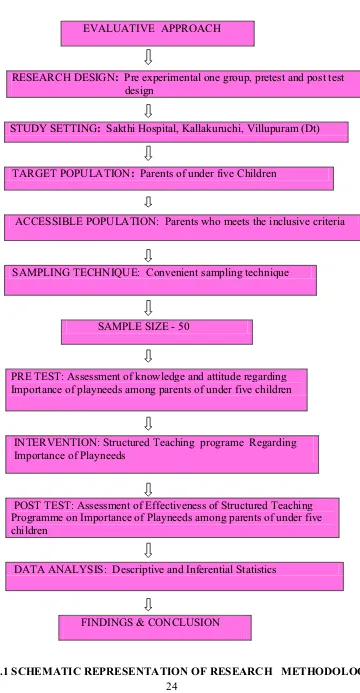
The schematic representation follows
Group Pre-test Intervention Post-test
Parents
of
under
five
children
Knowledge and
Attitude regarding
importance of play
needs among parents
of under five
children. Before
administration of
structured teaching
programme.
01
Structured teaching
programme
u
Knowledge and attitude
regarding importance of
playneeds among parents of
under five children after
administration of structured
teaching programme.
02
23
SETTING OF THE STUDY
Polit and Hungler (2006)
Setting is the physical location and condition in which data collection takes place in a study.The study was conducted in Sakthi Hospital, Kallakuruchi, Villupuram (D.T)
which has provision of 50 beds. It is a multi speciality hospital. It has emergency
services, NICU, ICU, Pediatrics ward, Gynecology ward, Gastroenterology ward.
The monthly statistics of pediatric inpatient and outpatient are approximately 900
under which 500 were under five children.
VARIABLES
Variables are concept at different levels of abstractions that are concisely
defined to promote their measurement or manipulation with in the study.
Independent variable
Structured teaching programme on importance of play needs.
Dependent variables
Knowledge and attitude regarding importance of play needs among parents of
under five children.
STUDY POPULATION
The target Population for this study was parents of under five children. SAMPLE
The sample for this study included parents of under five children who meets
inclusive criteria.
SAMPLE SIZE
Sample size was 50.
SAMPLING TECHNIQUE
EVALUATIVE APPROACH
RESEARCH DESIGN: Pre experimental one group, pretest and post test design
STUDY SETTING: Sakthi Hospital, Kallakuruchi, Villupuram (Dt)
TARGET POPULATION: Parents of under five Children
ACCESSIBLE POPULATION: Parents who meets the inclusive criteria
SAMPLING TECHNIQUE: Convenient sampling technique
SAMPLE SIZE - 50
PRE TEST: Assessment of knowledge and attitude regarding Importance of playneeds among parents of under five children
INTERVENTION: Structured Teaching programe Regarding Importance of Playneeds
POST TEST: Assessment of Effectiveness of Structured Teaching Programme on Importance of Playneeds among parents of under five children
DATA ANALYSIS: Descriptive and Inferential Statistics
FINDINGS & CONCLUSION
[image:36.612.170.530.49.742.2]
25
SAMPLING CRITERIA
Inclusion criteria
* Parents who have the under five children.
* Parents who were willing to participate in the study.
* Parents who were available at the time of data collection.
* Parents who understand Tamil.
* Parents whose child admitted in general ward.
* Parents who accepted to come back on post test day in case of discharge.
Exclusion criteria
* Parents who were not willing to participate.
* Parents who were not available at the time of data collection.
* Parents who were unable to participate due to illness.
* Parents whose child admitted in ICU / NICU.
SELECTION AND DEVELOPMENT OF TOOL
The tool is a vehicle that could obtain data pertinent to the study and at the same time adds to the body of general knowledge in the discipline. Data collection
tools were used by the researcher to observe or measure the key.
Selection and development of the tool was done based on the objectives of the
study. After the review of related review of literatures the structured knowledge and
attitude interview questionnaire regarding importance of play needs among parents of
under five children was developed by the investigator. The developed tool was refined
26
DESCRIPTION OF THE TOOL
The tool consists of three sections
SECTION ± A
It deals with demographic variables, which includes age, sex, religion,
education, occupation, monthly income, types of family, number of children, age of
children, place of residence and source of information regarding play needs.
SECTION ± B
This section consists of structured questionnaires to assess the knowledge of importance of play needs among parents of under five children. It consists of 30
multiple choice questions. Scoring was done for items. In each question there was
more than one right choice. Each correct answer was given a score of one and wrong
answers a score of zero. Knowledge was measured in terms of knowledge score. The
total scores of knowledge were 30.
Scoring key
Each correct answer carries ± 1 mark
Each incorrect answer carries ± 0 mark, and it is classified as
Score Level of knowledge
Below 50 Inadequate
51 ± 75 Moderately adequate
76 ± 100 Adequate
SECTION - C
A Likert scale was prepared by the investigator to assess the attitude of parents of under five children regarding importance of play needs. It consists of 10 statements
that are 5 positive statement and 5 negative statements. Each statement was scored in
27
Scoring key
Each items has 5 options such as strongly agree, agree, uncertain, disagree,
strongly disagree.
The scores for the positive item was 5 points for those who strongly agree, 4
points for those who agree, 3 points for uncertain, 2 points for those who disagree and
1 point for those who strongly disagree.
Maximum possible score was 50 and minimum was 10
Score Level of attitude
Below 50 Unfavourable
51 ± 75 Moderately favourable
76 ± 100 Favourable
DEVELOPMENT OF THE STRUCTURED TEACHING PROGRAMME
The structured teaching programme on importance of play needs was
developed based on the review of related research / non research literature. Seven
specific objectives were formulated on importance of play needs. Content was
prepared according to those objectives. Structured teaching programme was
developed in the form of lesson plan. The following steps were adopted to develop the
structured teaching programme.
x Preparation of structured teaching programme.
x Establishment of content validity of structured teaching programme.
x Translation of structured teaching programme in Tamil.
DESCRIPTION OF THE STRUCTURED TEACHING PROGRAMME
7KHVWUXFWXUHGWHDFKLQJSURJUDPPHZDVWLWOHGDV³,PSRUWDQFHRISOD\QHHGV´
The structured teaching programme was planned for one session. It consists of the
introduction, definition, characters, purpose, importance, types, selection criteria and
28
CONTENT VALIDITY
Polit and hungler (1999) stated that it is concerned that sampling adequacy of items for the construct that is being measured. Content validity is relevant for both
affective measures and cognitive measures. The content validity of an instrument is
necessarily based on judgment. The content validity of tool was done by 3 nursing
experts, 2 pediatricians. Experts were asked to give their opinion and suggestions
about the concept of the tool. The modifications recommended by the experts were
incorporated in the final preparation of the questionnaire by the investigator. The tool
was translated into Tamil by language experts.
PILOT STUDY
Pilot study is a trial run for major study to test the reliability, practicability, appropriateness and flexibility of the tool for the study. The investigator conducted a
pilot study with 5 samples in P.V hospital, kallakurichi. The data was analyzed by
using descriptive statistics that is mean, percentage and standard deviation of the
variables and were calculated and compared. Results revealed that there was a
positive correlation. The tool was found feasible and practicable. The investigator
proceeded for the main study. No modification was done in the methodology and tool.
RELIABILITY
Polit and Hungler (1999) state that one important characteristics of measuring tool is its reliability, which refers to the degree of consistency or accuracy
with which an instrument measures an attribute.
The structured interview questionnaire was tried on five parents of under five
children residing at selected hospital at kallakurichi. Reliability was found out by split
KDOI PHWKRG XVLQJ VSHDUPDQ %URZQ¶V IRUPXOD 7KH UHOLDELOLW\ RI WKH NQRZOHGJH
questionnaire was found to be r = 0.83 and for attitude r = 0.87 Hence the tool was
29
PROCEDURE FOR DATA COLLECTION
The data collection period was from 01.08.15 to 31.08.15. Before conducting
the study formal permission was obtained from medical director of Sakthi Hospital,
Kallakurichi. The samples were selected by non probability convenient sampling
technique. One group pretest and post test pre experimental design was used. Before
pretest the samples were gathered between 11am-1pm at conference hall in Sakthi
hospital. In pretest the investigator collected data about parents demographic
variables, knowledge and attitude on importance of play needs for ½-1 hour. After
pretest the structured teaching programme was given for 1 hour. During structured
teaching programme the play needs were displayed to the parents of under five
children according to the age group. Post test was conducted on 8 th day after
structured teaching programme by using the questionnaire and attitude rating scale to
find out the effectiveness of structured teaching regarding importance of play needs.
The data was collected on all six days of week. The timing of data collection was
from 9am-5pm. Every sample was given 1½ - 2 hours to assess the knowledge and
attitude structured teaching programme was given about 1 hour.
Pretest Date Total Number Post Test Date 03.08.15 8 11.08.15
05.08.15 10 13.08.15
07.08.15 12 15.08.15
17.08.15 7 25.08.15
20.08.15 13 28.08.15
ETHICAL CONSIDERATION
The research proposal was approved by the dissertation committee prior to pilot study. The oral consent was obtained from each participant of the study before
the data collection. Assurance was given to the subjects that the anonymity of each
individual would be maintained. The subjects were given rights to withdraw from the
30
PLAN FOR DATA ANALYSIS
x The data obtained were analyzed using both descriptive and inferential statistics.
x Descriptive statistics used to find out frequency, percentage, mean and standard deviation.
x µW¶WHVWZDVXVHGIRUFRPSDULQJWKHNQRZOHGJHDQGDWWLWXGH
x Correlation was used to find out the relationship between knowledge and attitude among parents of under five children.
31
CHAPTER - IV
DATA ANALYSIS AND INTERPRETATION
INTRODUCTION
It is a systematic organization and synthesis of research data. In order to answer
the research questions and test hypothesis. Interpretation is the process of making
sense of study results and of examining their implications. Descriptive and inferential
statistics was used to analysis the data. SPSS package 16.0 version was used.
Abdellah and Levine mentioned that interpretation of tabulation data could
bring light to the real meaning of the findings of a study. According to Kerlingers,
³$QDO\VLV LV WKH FDWHJRUL]LQJ RUGHULQJ PDQLSXODWLQJ DQG VXPPDUL]LQJ RI GDWD WR
REWDLQ WKH UHVHDUFK TXHVWLRQV´ 7KH DQDO\VLV RI WKH Gata was done using descriptive
and inferential statistical methods, organized and presented in the forms of tables and
graphs. The data analysis was done based on the objectives of the study.
OBJECTIVES OF THE STUDY
x To assess the pretest knowledge regarding importance of play needs among parents of under five children.
x To assess the pretest attitude regarding importance of play needs among parents of under five children. <