STUDENTS – FUTURE HEALTH PROFESSIONALS ABOUT THE PROBLEMS OF REFUGEES IN BULGARIA
Lyudmila N. Chakarova
Medical University – Sofia, Faculty of Public health, Dept. “Medical ethics and law” Sofia 1528, 8 Bialo more str.
Abstract
In recent months, according to official data, in the country arrived about 10 500 refugees, mostly from Syria. This created tension among the population. From the perspective of humanity and justice these people deserve respect and protection. But despite the traditional hospitality towards them appeared certain negativity.
The aim of the study is to investigate the attitudes and relation towards refugees and the opportunities for their social protection.
Material and methods: We carried out an anonymous survey among students of the Faculty of Public Health at the Sofia Medical University for their attitude to some moral and health issues related to the refugees in the country.
Results and conclusions: The investigation reveals that Bulgarian students, as representatives of the citizenship, are not prepared to accept refugees for permanent residence. This indicates the need for clarification of the universal value aspect of the phenomenon in order to overcome fear and reserves. Population in Bulgaria should change the attitude towards the problem, because in a globalized world many people go to live at will or compulsory to another place or country.
Key words: refugees, tension among the population, humanity values
The problem with the refugees all over the world and now in Bulgaria is becoming more important. People are very sensitive to this, large groups of foreigners with different customs, religion and outer appearance to reside in the country. Morally we owe respect to refugees, to their human rights such as the right to respect for the persons and the right to physical and psychological integrity and security, the right of respect for their private life, the right of respect for their moral and cultural values and religious and philosophical beliefs and the right to protect their health and the securing of health care. These rights are not only moral, their foundation is in the eternal values. These rights are guaranteed also by the Universal Declaration of Human Rights, which is the basis of many international documents and charts.
However, when it comes to a specific event and the own country, people feel difficult to keep to these values, because when many foreigners have to stay in one place this hides a lot of risks. That is why the population and the entire state as an institution should be prepared for events of this kind and be ready to face the problems caused by a wave of people seeking shelter and protection.
In the recent months, according to the official data, the country entered about 10 500 refugees, mostly from Syria. This created tension among the population. From the perspective of humanity and justice they deserve respect and compassion. But despite the traditional hospitality towards this people appeared negativity.
By law, every person who illegally crosses the state border of the Republic of Bulgaria must be subject to arrest by the Border Police. Foreigners crossing the border have the right to request for refugee status or humanitarian status. A foreigner, who has been granted a refugee status receives all the rights of Bulgarian citizens except the right to vote, to hold public positions or be soldier. A foreigner granted humanitarian status have the rights and obligations of a person entitled to temporary residence in Bulgaria. Foreigners in Bulgaria who want to get a refugee status are mainly from Africa, the
Middle East and some countries in Asia. In the recent months, the greatest part of the illegally crossing the border persons are coming from Syria because of the civil war there. In December 2013 information was published that 57 % of the illegal immigrants in Bulgaria come from Syria, followed by those from Afghanistan - 16,3%, Algeria – 4,2%, Palestine – 4,4% and Mali – 2,9%.
In the same month a sociological survey was carried out, which shows that 62,2% of the respondents do not want more refugees in Bulgaria, 15% - agree with the reception of refugees and 22,7% can not judge. On the other hand is the issue that the refugee flow to Bulgaria represents a risk to the national security. A small number of the refugees are suspected of being sympathetic to terrorist groups. These data creates additional tension among the native population.
But the problem is, as already mentioned of moral essence. In terms of human values we all have a moral commitment to prevent human suffering. Humanity, charity and compassion are values that everyone should know and that everyone should possess as qualities. Today, however, things are different and the meaning of these words is almost forgotten. People seem not to remember that despite the diversity of race, color, language and religion, we are all human beings. We all breathe air and need security and good living conditions. All people have dreams, all people suffer equally. There exists one prejudice that is absolutely wrong and unfair, and that is to put all people, entire communities or groups under a common denominator because of one definite person. One person takes the incorrect decision and we throw the blame on everyone.
Aim of the study: An inquiry was carried out with students from the School of Public Health at the Medical University - Sofia on their relation to some moral and health issues related to refugees in the country.
Material and Methods: A sociological study was made with the help of an anonymous questionnaire. Object of the study were 68 students studying for future health professionals and management experts in the healthcare field.
Results and interpretation: The question: "Do you agree in our country refugees to reside permanently?" received the following answers: - Yes – 11,42 %, No -51,42 %, partly – 34,28 %, don’t know – 2,85 %. Here it is clear that the majority of respondents, more than 50% do not agree in our country to reside permanently refugees. / Fig.1/
1 2 3 4
Fig. 1. Consent for permanent residence of refugees in the country
Yes/1/ – 11,42 %, No /2/ -51,42 %,- partly/3/ – 34,28 %, don’t know//4 – 2,85 %
The next question was: “Are you ready to live together with them?” The received answers are: Yes – 17,14 %, No – 51,42 %, partly – 20 %, don’t know – 8,57 % and not given any answer -2,85 %. These responses confirm again the unwillingness of the population to have the refugees permanently in the country. /Fig.2/
0 2 4 6 8 10 12 14 16 18 20
1 2 3 4 5
Series1
Fig.2. Readiness to live together with the refugees
Yes /1/ – 17,14 %, No /2/ – 51,42 %, partly/3/ – 20 %, don’t know /4/ – 8,57 %, no answer/5/ -2,85 %
The next question was formulated like that: “Are you worried by the fact that they are of another religion and have different traditions” The received answers are: Yes – 20 %, No – 54,28 %, partly – 20 %, don’t know – 2,85 % and not given any answer - 2,85 %. Here is demonstrated that the
questioned students are not worried by the fact that the refugees are of different religion and traditions. Here once more is proven that Bulgarians have always been and still are very tolerant to various religions and traditions. /Fig.3/
1
2 3 4
5
Fig.3. Concerns about the different religion and traditions
Yes /1/– 20 %, No/2/ – 54,28 %, partly /3/– 20 %, don’t know /4/ – 2,85 %, no answer /5/ -2,85%
The question: "Would you become friend with refugees?" received the following answers: Yes – 34,28 %, No - 22,85% , partly – 11,42%, don’t know - 0%. /Fig. 4 / The answers show that if there is a closer contact the majority of respondents would become friends with representatives of the refugees. It is clear that what mostly repels and creates resentment is that we don’t know each other and accept all people as a part of a group which is connected to certain, mostly negative, qualities.
1 2 3 4
Fig. 4. Willingness to make friends with refugees
Yes /1/– 34,28 %, No /2/ - 22,85%, partly/3/ – 11,42%, don’t know - 0%
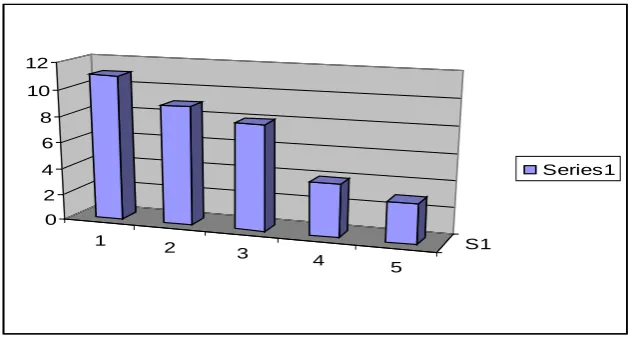
The next question that was stated is: “Do you agree your child to become friend to a child – refugee?” The given answers are: Yes – 31,42 %, No – 25,71 %, partly – 22,85 %, don’t know – 11,42 % and not given any answer – 8,57 %. The attitude of the questioned is that the greatest part do agree their child to become friend to a child –refugee. The traditional Bulgarian hospitality and friendliness has not disappeared, as it seems, when parents are ready their child to become a friend to a refugee child. /Fig, 5/
1 2
3 4
5
S1 0
2 4 6 8 10 12
Series1
Fig.5. Readiness your child to have a refugee friend
Yes /1/– 31,42%, No /2/– 25,71 %, partly/3/ – 22,85%,don’t know/4/ – 11,42%, no answer/5/ – 8,57 %
To the question "Do you think that refugees can express aggression against the Bulgarian population?" the responses were: Yes – 42,85 %, No – 14,28 %, partly - 28,57 %, don’t know – 0 %. This again reveals fear of the unknown and the different and the need to overcome the preset negative feelings before any contact with the other and the different persons.
The question: “Do you think there could be attacks and robbery on their part?” received the following responses: Yes – 51,42 %, No – 8,57 %, partly - 28,57 %, don’t know – 11,42 %. The answers show that more than half of the surveyed are afraid of attacks and robbery on the side of the refugees. The next question that we discuss is: "Are you afraid that they will bring diseases that are not known and common in Bulgaria?". / Fig. 6 /
1 2 3 4 5
Fig .6. Concerns that refugees will bring new diseases in the country
Yes/1/ – 62,85 %, No/2/ – 5,71%, partly/3/- 20%, do not know/4/ – 5,71% and -5,71% /5/ nonresponders
The answers given are: Yes – 62,85%, No – 5,71%, partly- 20%, do not know – 5,71% and -5,71% nonresponders. Here the respondents have given expression of the concerns that refugees can bring some diseases that are not common in the country.
To the question: "Do you think that the new diseases will load additional the health system?" the answers are: Yes – 77,14 %, No – 11,42%, partly - 2,85%, don’t know – 8,57 %. The fear that the health system of the country will be loaded too much if refugees bring unusual for the country diseases is really very big. /Fig.7/
1 2 3 4
Fig.7. Fear that the new diseases will load additional the health system
Yes /1/ – 77,14 %, No/2/ – 11,42%, partly/4/ - 2,85%, don’t know /3/– 8,57 %.
The next question is: “Do you worry that along with the refugees in the country may infiltrate terrorists?” Here the answers are: Yes – 68,57 %, No – 2,85 %, partly – 20 %, don’t know – 2,85 % and non responders – 5,73 %. The fear that along with the refugees in the country may infiltrate terrorists is really very high. This may have his reasons because from the countries from the Middle East and Africa Bulgaria may be entered by all kind of suspicious persons. /Fig.8/
1 2 3 4 5
Fig.8. Fear of terrorists entering the country along with the refugees
Yes /1/ – 68,57 %, No/2/ – 2,85 %, partly /3/– 20 %, don’t know/4/ – 2,85 % and non responders /5/– 5,71 %.
Since respondents are current and future health professionals, many of the questions relate to the health problems associated with refugees. The question: "Are you afraid to work with patients refugees?" received the answers: Yes – 14,28%, No – 62,85 %, partly - 20%, do not know – 2,87%. From a professional point of view it is clear that the future health specialists in their majority /62,85%/ are willing to work with those in need of medical care as any other in this situation. As health personnel the surveyed show no fear to work with patients – refugees. This proves that Bulgarian health professional will never leave somebody who needs their help without attention. /Fig. 9/
1 2 3 4
Fig. 9. Fear to work with refugees
Yes/1/ – 14,28%, No/2/ – 62,85 %, partly/3/ - 20%, do not know/4/ – 2,87%.
But their fears that refugees do not have health insurance and will rely on the general financial resources of health insured Bulgarians expresses in the following way. The answers to the question "Do you think the refugees should be treated, although they do not have any medical coverage?" are: Yes – 71,42 %, No – 11,42 %, partly – 5,71 % , don’t know – 8,57 % and not answered – 2.85 %. The next question that was stated was: “Would you work with such contingent of patients?” The received answers are: Yes – 54,28 %, No – 11,42 %, partly – 22,85 %, don’t know – 5,71 % and not responding – 5,71%. Here again we can see that from a professional point of view the surveyed will fulfill their duty. More than the half /54, 28%/ will take care of any person of need of their professional help.
Another interesting question is: "Do you think, that refugees accept and stick to the universal values, although with a different religion?" / Fig. 10/
1 2 3 4
Fig.10. Acceptance of universal values by refugees
Yes/1/ – 31,42 % , No/2/ – 17,14 % , partly/3/ – 42,85 %, don’t know/4/ – 8,59%
The answers to this question are: Yes – 31,42 %, No – 17,14 %, partly – 42,85 %, don’t know – 8,59 %. Summed the positive responses /answers "yes" and "partly" give the encouraging rates of 74,27 %, showing that the trend is more optimistic than it looks/.
Perhaps there is a large moral field of wavering people, who by a better awareness would accept the refugees in a way similar to the way that would accept anyone in need of sympathy and assistance countryman.
A very significant question is the following: “Do you think that refugees should be integrated in the Bulgarian society?” The responses that we received are: Yes – 28,57 %, No – 34,28 %, partly – 22,85%, don’t know – 8,57 % and non respondents -5,71 %. /Fig. 11/
1 2 3 4 5
Fig.11. Integration of refugees in the Bulgarian society
Yes/1/ – 28,57 % , No/2/ – 34,28 %, partly /3/– 22,85%, don’t know/4/ – 8,57 %, non response/5/ -5,71 %.
The next question was: “Does mankind possess the potential to solve the problem with the refugees in a peaceful way?” The received answers are: Yes – 62,85 %, No – 8,57 %, partly – 14,28 %, don’t
know – 11,42 % and non respondents - 2,85 %. Here we can see the optimism – the majority of the participants express their optimism the mankind to be able to solve the refugee problem peacefully. The last question was: “Do you consider that the globalization will bring to a state that there will be no more refugees in the world?” The received answers are: Yes – 31,42 %, No – 42,85 %, partly – 20 %, don’t know – 5,71 %. In relation to the globalization the majority is not optimistic that it will bring to a state, when there will be no refugees at all.
Conclusions and recommendations
The investigation reveals that Bulgarian students, future health professionals, as representatives of our citizenship have no disposition to accept refugees for permanent residence. Our results are in coincidence with the data received by other surveys in connection with the refugees. But in terms of professional commitments, they will not refuse medical care to any person in need. As health personnel the surveyed show no fear to work with patients – refugees, which proves that Bulgarian health professional will never leave somebody who needs their help without attention.
It is also demonstrated that the questioned are not worried by the fact that the refugees are of different religion and traditions. Here once more becomes clear that Bulgarians have always been and still are very tolerant to various religions and traditions.
The traditional Bulgarian hospitality and friendliness has not disappeared, as it seems, when parents are ready their child to become a friend to a refugee child.
The answers also show that more than half of the surveyed are afraid of attacks and robbery on the side of the refugees.
The survey shows, however, that it is necessary to explain the universal value aspect of the refugee problem and accept the need of assistance and protection of this people. At the same time our people has to show an active position to the injustices and all other reasons that result in that, large numbers of people to have to leave their homes and countries.
The majority of the participants express their optimism that mankind will be able to solve the refugee problems in a peaceful way.
In relation to the globalization the majority is not optimistic that it will bring to a state, when there will be no refugees at all.
In the terms of the principles of medical ethics a change should be considered in direction of
explaining the needs of refugees and focus on the compassion, the common feature of all people - the vulnerability of human beings and the need always to help those in need.
Besides that it is necessary the population, the institution and the judicial power to change their attitude and the way of thinking towards the refugees and their problems. The National Agency for Refugees has to change its way of solving and treating these people and undertake more decisive actions that will calm the appeared tension.
The institutions and organizations which help and support the refugees need to synchronize their activities with the leading European documents and practices.
Bibliography
Апостолов, М. (2006 г.) Исторически, социални и етични измерения на медицината, С. Борисов, В.,С. Попова, (2007 г.) Социална медицина, София
Все повече бежанци търсят закрила в Българиял http://www.aref.government.bg/?cat=14 Воденичаров, Ц., С. Попова. (2003 г.) Медицинска етика. С.
Воденичаров, Ц. (2009 г.) Здравна политика основана на доказателства. Здравна политика и мениджмънт, бр.4, с.3-8.
Воденичаров, Ц. (2010г.)10-те принципа на медика и мениджъра.София, 80 с.
Воденичаров, Ц., С.Попова, М.Мутафова, Ел Шипковенска. Социална медицина. Ик. „ГорексПрес” София 2013 г.
Горненски, П. 2010. Устойчиво развитие и обществено здраве, София. ГорексПрес.2010 г.158 с. Над 11000 нелегални имигранти са заловени на границата с Турция. mediapool,bg. www.mediapool. bg / nad-11000-nelegalni-imigranti-sa-zaloveni-na-granizata-s-tursiya-news214318. html
Сова Харис „62,2 % от българите не искат повече чужденци” в-к Сега, бр. 4947 (72) 27 Март 2014 г.
Статут на бежанец. Държавна атенция за бежанцигте. http://www.aref.government.bg/?cat=14 Стойчев, Ал. (2007 г.) Правото на здравни грижи и достъпът до тях – държавна или гражданска отговорност. Сборник. Етиката в българското здравеопазване. София, с. 204.
Чакърова, Л., (2011 г ) Професионална етика за за специалисти по здравни грижи. Изд. Екс-Прес Габрово.
Чакърова, Л., (2013 г) Макроетика и устойчиво развитие на здравеопазването. Изд. Екс-Прес Габрово.