USF Scholarship: a digital repository @ Gleeson Library | Geschke
USF Scholarship: a digital repository @ Gleeson Library | Geschke
Center
Center
Doctoral Dissertations Theses, Dissertations, Capstones and Projects
2019
The Pilgrims’ Return: The Influence of the Assisi Pilgrimage on
The Pilgrims’ Return: The Influence of the Assisi Pilgrimage on
High School Participants
High School Participants
Christopher Michael Iwancio
Follow this and additional works at: https://repository.usfca.edu/diss
The University of San Francisco
THE PILGRIMS’ RETURN: THE INFLUENCE OF THE ASSISI PILGRIMAGE ON HIGH SCHOOL PARTICIPANTS
A Dissertation Presented to
The Faculty of the School of Education Department of Leadership Studies Catholic Education Leadership Program
In partial Fulfillment of the Requirements for the Degree
Doctor of Education
by
Fr. Christopher Iwancio OFM Cap. San Francisco
THE UNIVERISTY OF SAN FRANCISCO
Dissertation Abstract
The Pilgrims’ Return:
The Influence of the Assisi Pilgrimage on High School Participants
Catholic schools were founded to assist parents in the passing of the faith to their children
(Second Vatican Council, 1965; SCCE, 1994). Despite this mission, research has indicated that
in the United States there has been a disassociation Catholics from their faith (Pew, 2008, 2014;
Smith and Denton, 2005; St. Mary’s Press and CARA, 2018). Programming was developed to
encourage youths’ faith development and their active membership in the Catholic Church
(Denton and Smith, 2005; USCCB, 1997). One program, pilgrimages, has seen an increase in
participants across the world (Cleary, 2017; Harris, 2010, Rymarz, 2008).
This mixed-method study sought to explore the motivations and influence of the Assisi
pilgrimage on participants from St. Bonaventure High School (pseudonym). The Assisi Pilgrim
Survey, an 18 item survey consisting of questions about demographics, religiosity utilizing
questions from the National Study of Youth and Religion (2002), and open ended questions were
distributed to current students who went (n=24). Race, socio-economic status, and religiosity
data were used for purposeful sampling. Eight students participated in semi-structured
interviews, in which they also provided photos from their pilgrimage.
The study found that the pilgrims had tourist motivations, social motivations, religious
motivations, and Franciscan motivations for attending the pilgrimage. It also found that a
number of external factors such as money and family played a role in their
desire to attend. Students described their experience as affording them the opportunity to
connect to both peers and adults during free time, being able to understand more and to relate
better to the person of St. Francis by visiting places connected to his life and the Franciscan
movement, as well as participating in a number of structured activities that influenced their faith.
This study suggests that pilgrimage was an influential campus ministry program to
pilgrims of different backgrounds, and religiosity in a positive way. It affirms the use of
pilgrimages as programming alongside retreats and service trips. However, it was found that
Campus Ministry programming needs to addresses the needs of students in their day-to-day
context, as well as, to develop more resources to allow more marginalized students to attend.
This dissertation, written under the direction of the candidate’s dissertation committee and
approved by the members of the committee, has been presented to and accepted by the Faculty of
the School of Education in partial fulfillment of the requirements for the degree of Doctor of
Education. The content and research methodologies presented in this work represent the work of
the candidate alone.
Christopher Iwancio May, 1, 2019
Candidate Date
Dissertation Committee:
Ursula Aldana, Ph.D. May, 1, 2019 Chairperson
Michael Duffy, Ed.D. May, 1, 2019
Emily Nusbaum, Ph.D. May, 1, 2019
Kathryn Barush, D.Phil. May, 1, 2019
DEDICATION
As they approached the village to which they were going, he gave the impression that he was going on farther. But they urged him, “Stay with us, for it is nearly evening and the day is
almost over.” So he went in to stay with them. -Luke 24:28-29
This dissertation if dedicated to my father, Paul Iwancio, and my high school teacher, Michael
DeMarco, for their dedication to the field of education, for instilling in me the importance of
education, and its transformative power of education when society sees it as a basic human right.
And
To every one of my teachers, who have dedicated themselves to the vocation of Catholic
education.
Acknowledgements
When I began my teaching career, a number of the administration team that helped guided me through first year of teaching and taught me ways to use the gifts and talents that I had in better way, were graduates from the Catholic Educational Leadership Program at the University of San Francisco. When I joined the Capuchin Franciscan friars in California, I petitioned them to study at the University of San Francisco. Dr. Gini Shimabukero sat down with me and laid out a study plan that I could present to them. That plan was later altered at the encouragement of Dr. Ursula Aldana, who encouraged me to pursue the doctorate program. For her encouragement and seeing potential in my academic abilities, I am beyond grateful. I am also grateful her patience and guidance as my advisor and dissertation committee chair.
I would like to thank my religious superiors Fr. Matthew Elshoff and Fr. Harold Snider for allowing me to participate in this program. I would also like to thank the friars of Our Lady of Angeles Province for the encouragement and support as I pursued this degree. Finally to Br. Tran Vu, my guardian, for his care and support of my studies.
I am eternally grateful for the many Catholic educators, both living and deceased who encouraged me throughout my education including: Mrs. Betty Penn, Mrs. JoAnne Morgan, Ms. Kathy Maskell, Mr. Michael De Marco, Mr. Simon Donoghue, Dr. Ellen Weir, Dr. David Williams, Abbot Placid Solari, O.S.B., and Fr. Paul Janowiak, S.J..
I would also like to thank the many faculty both past and present at the University of San Francisco including Dr. Jane Bleasdale, Fr. Ralph Metz, Dr. Jason Hanks, Dr. Doreen Jones, Dr. Nathan Alexander, and Dr. Matthew Mitchell. In addition, I would like to thank Thanh Ngoc Ly, and Carole Vineyard for helping me navigate the University of San Francisco. I would also like to thank the feedback, support, and encourgament of my committee including Dr. Mike Duffy, Dr. Emily Nusbaum, and Dr. Kate Barush. To the many friends and colleagues who journeyed with me at the University of San Francisco including : Sonya Arriola, Alex
Macmillian, Scott Roos, Jonjee Sumpaico, Alicia Tapia, Kathleen Quiazon, and the many others who are not mentioned here, thank you for your company and encouragement. Special thank you to Sr. Elizabeth O’Donnell, O.P. and Mr. Rudy Trujillo, whose proof reading, suggestions, and editing made this work possible.
Finally I would like to thank everyone at the education institutions with which I have been blessed to have been connected including: Shrine of the Little Flower School, Archbishop Curley High School, Belmont Abbey College, Dominican School of Philosophy and Theology, Catholic High School, Junipero Serra High School, St. Ignatius College Preparatory, and St. Bonaventure High School (pseudonym).
LIST OF TABLES
1. Cleary (2016) Australian World Youth Day Research Participants……….…47
LIST OF FIGURES
1. Race or Ethnic Demographics…….………67
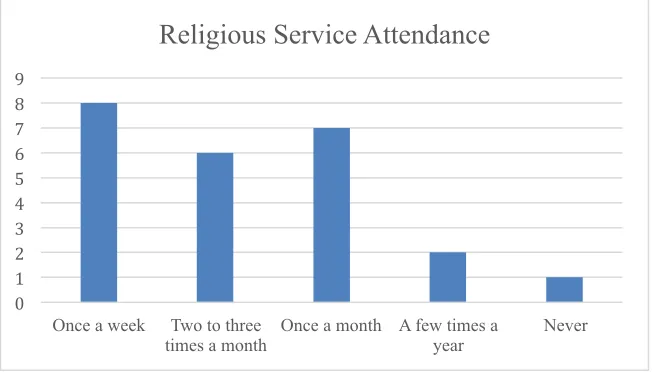
2. Religious Service Attendance………..67
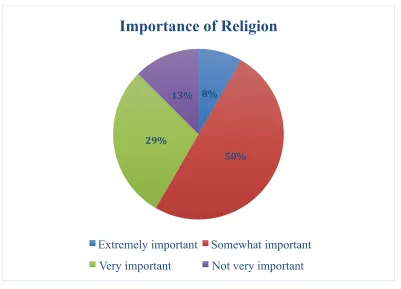
3. Importance of Religion………68
4. Closeness or Distance to God………69
5. The defeated knight………76
6. Town of Assisi from La Rocca………...81
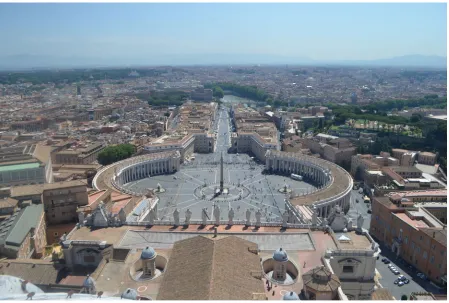
7. View from St. Peter’s Dome………82
8. Assisi from the Leper Colony………85
TABLE OF CONTENTS
ABSTRACT………ii
SIGNATURE PAGE………..iv
DEDICATION……….v
ACKNOWLEDGEMENTS………..….vii
LIST OF TABLES………...viii
LIST OF FIGURES………ix
CHAPTER ONE: THE RESEARCH PROBLEM……….……….1
Statement of the Problem………...1
Background and Need………...….1
Purpose………...7
Theoretical Framework………...……...7
Research Questions………..……..8
Significance………8
Definition of Terms………..10
CHAPTER TWO: REVIEW OF LITERATURE……….…11
Restatement of the Problem……….……….11
Overview……….…..11
Adolescent Religiosity……….….12
Studying Youth and Religion…………...………..12
Recent Research of Youth Religiosity………..…..………..….15
Moral Therapuetic Deism………..…………...……….19
Post-Modernism………...………..21
Chain of Memory………...22
Passing on the Faith to Youth in the Church……….………...24
Mission of Faith Transmission and Schools…………...…..……….24
The New Evangelization……….………....…...25
Development of Catholic Schools in the United States……….26
Early Youth Ministry………..………..………...27
Youth Ministry in the United States………..………28
Development of Youth Ministry in Schools.………....………...31
Programming………...32
Influence of Campus Ministry Programming in Secondary Schools…...34
Pilgrimages………...37
Development of Pilgrimages………..…………37
Pilgrimage Theory………..………40
Youth Pilgrimages and World Youth Day….………...…….44
Religious Experience.……….………...…….48
CHAPTER THREE: METHODOLOGY……….53
Restatement of the Purpose of Study………...53
Research Design………..53
Setting……….55
Population and Sampling………57
Instrumentation and Data Collection……….……….58
First Phase………58 Second Phase………58 Limitations…………...………59 Delimitations………..………..…………60 Data Analysis……….……..……61 Ethical Considerations……….………62
Background of Researcher………..64
Positionality………….………65
CHAPTER FOUR: RESULTS……….…….66
Overview……….66 Demographics……….66 Pilgrim Profile……….………69 Vern………..……….69 Robert……….……...70 Kyle………...70 Leonardo………...71 John………...71 Aaron……….………71 George……….………..72 Motivations……….……….72 Tourist Motivation………73 Social Motivation………..73 Religious Motivation………74 Franciscan Motivation………..74 Vulnerable Experiences………75 Experiences……….75
Visiting Franciscan Places and Meeting St. Francis………75
Francis Made Real……….78
Exploring and Making New Connections………79
Going up to La Rocca………80
Climbing up St. Peter’s Dome………...82
Sneaking out and Drinking………84
Faith Experiences……….……….85
The Leper Colony……….……….85
Mass Together………...87
Robert’s Experience……….88
Aaron’s Experience………..92
Additional Perspectives of Influence on Faith……….95
Summary……….99
CHAPTER FIVE: CONCLUSIONS, IMPLICATIONS, AND RECOMMENDATIONS ………...…100
Summary of the Study………...100
Research Question 1………..103
Research Question 2………..105
Research Question 3………..107
Conclusions and Implications………...108
Research Question 1………...108
Research Question 2………...109
Research Question 3………...110
Summary………...112
Recommendations for Future Research………113
Recommendations for Future Practice………..114
Closing Remarks………...117
REFERENCES……….……120
APPENDICES……….…………132
Appendix A: Letter to Administration………….………...……133
Appendix B: Minor Consent and Assent Letter………..……135
Appendix C: Student over 18 years old Consent Letter………….……….……139
Appendix D: Assisi Pilgrim Survey ………….………..……142
Appendix E: Interview Guide………….……….146
Appendix F: IRB Permission………….………..148
Appendix G: Permission from School………….………...….…………150
CHAPTER I
THE RESEARCH PROBLEM
Statement of the Problem
Catholic schools have been established to assist parents and churches to the pass on
the Catholic faith, as well as to help each young person develop as a whole person through
participation in religious practice both individually and communally. Schools and churches
have developed youth ministry and special programing geared towards young people to
foster this growth through activities such as retreats, service projects, and extended trips.
Despite this mission, recent research has shown a disassociation of youth from the faith
(Pew, 2008; Pew, 2014; Smith and Denton, 2005; St. Mary’s Press and CARA, 2018).
However, there has been a significant increase in youth participation in special religious
travel called pilgrimages, but little research has been done on the influence of pilgrimage
experiences on Catholic high school students, as part of a youth ministry program (Cleary
2017; Harris, 2010; Rymarz, 2008).
Background and Need
Despite the efforts of my parents, my local church and my Catholic school, I too fell
away from the practice of my faith during high school. I participated in a number of events
sponsored by the school and parish that ought to engage youth through dances, retreats,
special prayer rituals and other programing. Despite the number of programs, they did not
engage me or help me to develop my faith. However, when a couple of my friends invited
me to go on a special religious experience which involved traveling out of state, I found
Now, having participated in a number of youth pilgrimages as a chaperone, I see that these
programs provide a unique opportunity to reach and to influence the lives of young people.
Youth ministry seeks to respond to the needs of youth, to help them develop, and to
share their talents with others (USCC, 1976). The role of youth ministry is to empower
young people to be disciples, to help them grow into participation in the Church and to foster
personal and spiritual growth (USCCB, 1997). Churches, schools, and other organizations
use youth ministry to assist parents, the primary educators, in the development of their
children (USCCB, 1997). While youth ministry can provide experiences that help young
people develop their faith, Aldana (2015) pointed to a need to study the impact of religious
programming on the lives of the young people to see if it meets the needs of young people
within their particular social and cultural context.
While Catholic youth ministry has worked to foster the faith lives of teenagers, recent
research has revealed that a disassociation from Catholicism in the United States is
significantly high. The Pew Research Center’s (2008) America’s Changing Religious
Landscape study found that Catholicism has lost more adults than other religious groups (p.
19). The Pew Center (2014) reported that between the years of 2007-2014 the number of
adult Catholics dropped by approximately four million people (p. 9). Among Catholic
teenagers the decline is particularly staggering compared to other religious groups. In 2005,
Smith and Denton published an in-depth longitudinal study called the National Study of
Youth and Religion (NSYR) to study the spiritual lives of teenagers (13-17 years old). They
found Catholic teenagers scored “5 to 25 percentage points lower than their conservative,
mainline, and black Protestant peers on many of a variety of religious belief, practices,
Mary’s Press and CARA (2018), reported that 13 was the median age for disaffiliation from
Catholicism.
A number of forces have had a negative impact on these efforts. In the United States
the influences of individualism, materialism, pleasure seeking, and consumerism have been
powerful influences undermining the Christian faith (USCCB, 1992). The impact of these
influences has led to the rejection of authority (Wright, 2016), privatization of religion
(Wright, 2016), and the dissolving of family structures (Smith and Denton, 2005). As a
result, religious formation has suffered from a breakdown in the chain of religious memory,
which has been passed from one generation onto the next (Hervieu-Léger, 2000).
Despite the disassociation of youth from organized religion there has been a
worldwide increase of youth participating in religious pilgrimages (Cleary, 2017; Harris,
2010; Rymarz 2007a, 2008). Casti (2015) described the increased participation of youth in
the pilgrimage to the ecumenical religious community in Taize, France, which comprises
many Protestant, Orthodox, and Catholic members. Harris (2010) observed the Marian
shrine in Lourdes, France, where in the mid-nineteenth century St. Benadette experienced a
vision of the Blessed Virgin Mary, has seen an increasing number of young people going to
assist many sick and elderly pilgrims. El Camino de Santiago de Compostela, a pilgrimage
which follows various paths throughout Europe to what is believed to be the final resting
place of St. James in Galicia, has also seen a recent increase in young participants. In 2005
the Pilgrim’s Office in Santiago de Compostela (Oficina de Acogida al Peregrino) reported
that 30,217 pilgrims under the age of 30 registered for the pilgrimage while in 2016, a record
75,460 pilgrims under the age of 30 registered (Oficina de Acogida al Peregrino, 2016).
pilgrimage sites such as Mexico City, Santiago de Compostela, and Lourdes in order to help
revitalize the faith, especially among youth (Casti, 2015; Cleary, 2011).
Pope John Paul II, following the call of Pope Paul VI to develop new ways to pass
down the faith, developed World Youth Day. Pope John Paul II (1996) wrote that the
purpose of World Youth Day was to:
make the person of Jesus the centre of the faith and life of every young person so that
he may be their constant point of reference and also the inspiration of every initiative
and commitment for the education of the new generations. (¶1)
Since 1984, World Youth Day (WYD) has been held every two to three years (Norman and
Johnson, 2011). In 2000 over 2.5 million people traveled to WYD and in 1995, when held in
Manila, WYD drew over 4 million people (Rymarz, 2006). While much programming is
available for youth in parishes and schools, Pope John Paul II (1996) intended the pilgrimage
experience to offer to youth “new encouragement for commitment, objectives which foster
ever greater involvement and participation” (¶ 3).
WYD, while considered by the church as a pilgrimage, is not easily classified as a
pilgrimage because it does not fit traditional pilgrimage theory. Norman and Johnson (2011)
point out that WYD has no permanent geographical tradition. While pilgrimages such as
Lourdes, and Santiago de Compostela have a geographical center to which people gravitate,
the location of WYD changes every time it is held. However, the powerful religious
experiences described at WYD are comparable to those at fixed geographic pilgrimage
shrines and sites. For example Rymarz (2007) reported that 12 months after the pilgrimage
Germany described as having experienced their faith being strengthened as a result of the
pilgrimage experience.
Research into youth pilgrimage reflects that the practice of pilgrimage appeals to
young people from early teens to those who are in their mid-thirties. The pilgrimage to Taize
is geared towards those between ages 17-29 (Vilaça, 2010), WYD targeted for those ages
16-30 (Rymarz, 2007). Ann Casson (2013) noted that school-aged students (18 and under) from
England experienced pilgrimages differently than young adults (19+) from England. She
also observed that the experience of pilgrimages differs from the experiences of retreats and
mission trips and that more research is needed to understand the experience of pilgrimages
taken by high school students.
Pilgrimage is a multidimensional experience with different expectations and
motivations held by young pilgrims (Eade and Sallow, 2000; Rymarz, 2007). While research
of Australian youth showed that those attending World Youth Day had a particularly high
religious commitment (Cleary, 2017; Mason, 2010; Rymarz, 2007), research of English
youth on pilgrimages to Taize and Lourdes revealed that religious commitment was
particularly low (Casson, 2013; Casti, 2015; Harris, 2010). To account for these differences,
the Catholic journalist, John Allen (2005) developed categories for those who had varying
levels of interest in the pilgrimage experiences; those who were tourists, those who were
unsure of their motivations, and those who were strongly committed to the experience.
Mason (2010) further developed the categories to include the devoted, the involved, the open,
and the social. Similarly Cleary (2017) developed four key groups: devoted pilgrims,
reflected both the religious and social nature of pilgrimages (Cleary, 2017; Harris, 2010;
Rymarz, 2011; Singleton, 2011).
During youth pilgrimages both social and religious activities might take place.
Formal rituals such as Mass and Confession, which have been traditionally a part of Catholic
pilgrimages, are also part of youth pilgrimages. Devotions such as a Stations of the Cross,
which is a prayer ritual reflecting on the passion and death of Jesus, takes place during World
Youth Day. Taize pilgrimages often include the singing of repetitive chants; and rosaries, a
repetitive cycle of prayers meditating on the life of Mary and Jesus, are often recited at
Lourdes. Participants often receive formal presentations or instructions on various topics
such as the Bible sessions at Taize and catechism sessions at WYD. Social interactions can
range from small group sharing at Taize (Casti, 2015), exchanging souvenir pins with others
at WYD (Singleton, 2011), and relaxing at a local food establishment (Harris, 2010).
Pilgrimages are complex religious and social experiences, whose form can take many
different shapes. Upon their return home pilgrims have reported increased involvement in
their churches and youth groups (Kregting and Harperink, 2005; Rymarz, 2007) and were
found to be more likely to discuss religion with family and friends (Rymarz, 2007).
Additionally after returning home pilgrims have reported being more empathic for those in
need and a greater desire to help others (Cleary, 2017; Harris, 2010).
Pilgrimages is one of a number of initiatives the larger institutional Catholic Church
has engaged to provide ways for youth to encounter the message of God’s love and to be
embedded into the life of the Church further deepening their knowledge of the faith. To
address the current context, new and creative programming has been created in parishes and
their faith community, and to cultivate the spiritual growth of each person (USCCB, 1997).
The development of these programs has been occurring at multiple levels of the church:
global, diocesan, parishes, and schools. East, Eckert, Kurts and Singer-Towns (2004) found
that participation in extended experiences, like World Youth Day (WYD), were beneficial for
youth to “feel pride and enthusiasm in being Catholic”, to develop “a deep sense of
community”, to create opportunities for new leadership roles, and to help young people
experience a “larger sense of the Church”(p. 46-47). With the potential for youth attending
pilgrimages like WYD (Rymarz 2007b, 2008) and Lourdes (Harris, 2010) to have a positive
effect; research needs to be done on the pilgrimage experience of Catholic high school youth
from the United States.
Purpose
The purpose of this mixed-method study is to understand the impact of a pilgrimage
to Assisi on adolescent participants from St. Bonaventure Catholic High School
(pseudonym). Through surveys it identified the various demographic of those who attended
the pilgrimage, their religiosity, as well as some of the motivations and experiences of
participants for attending the pilgrimage, that were used to develop a purposeful sample.
From this sample, the researcher conducted semi-structured one-on-one interviews of
participants in order to provide deeper understanding of the influence of the Assisi
pilgrimage and its elements on participants and their personal faith.
Theoretical Framework
Three interrelated fields of theory, which included adolescent religiosity, youth
ministry, and pilgrimages, were explored through the theoretical framework found in the
the breakdown of the passing of faith, which she terms the chain of memory, as being
influenced by the social forces of post-modernism. However, despite these forces, she
observed the phenomenon of the World Youth Day pilgrimage, in which many young people
were participating in a religious experience, showed the chain of memory being reinvented in
a unique way. From this framework the field of sociology of religion focused primarily on
contemporary research that has been done within the context of United States culture.
Further research focused on the ecclesial role of the Catholic Church on transmission of the
faith to young people through youth ministry within the context of Catholic schools. Finally,
the field of contemporary pilgrimage theory was mined, with regards to the phenomenon of
World Youth Day.
Research Questions
1. What are the motivations of St. Bonaventure High School (Pseudonym) students who
attended the Assisi pilgrimage?
2. How do students describe their experience of this pilgrimage and its elements?
3. How do students describe the influence of this pilgrimage experience in relation to their
personal faith and practices?
Significance
Little research has been done to explore the effectiveness of Campus Ministry
programs (Cutarelli, 2006; Sureau, 2012). This study adds to the body of research and
knowledge regarding the experience of youth while on pilgrimage, as well as the body of
research on campus ministry programing in the United States. It also provided insights
benefitting future creation of effective pilgrimage experiences for youth in varying forms.
adults and therefore, “research is required into the experience and understandings of
pilgrimages within the Catholic secondary school”(p. 45). Because young people “are active
agents in their own formation process” (CCE, 1988, ¶105) cooperation in the process is
essential. Hence, the voice and agency of young people is crucial as “the voices of young
people themselves are rarely considered when discussing effective Christian education and
youth ministry” (Kaster, 2008, p. 5). This study provided a greater voice for those who
participate in campus ministry programs, and provided more agency on the part of young
people in the research of their experience of faith. Because pilgrimages for youth require a
large commitment of resources including personnel, money and time (Mason, 2010), by
studying how students experience various elements, resources should be better allocated, as
recommended by Smith and Denton (2005) to provide for more effective youth ministry.
It is hoped that this study will lead to better campus ministry programming at
Catholic high schools. Well-run and relevant programming can be transformative to
adolescents not only in faith practices, but in their overall personal development.
This study led to more research on adolescent faith, research that allowed for young people to
have more agency, as well as allowing for marginalized voices to be heard. The
transmission of religion, particularly in the history of the Catholic Church, has led to the
founding of many great social institutions, such as schools and parishes, but throughout
history these institutions have contributed oppressive and destructive forces that have led to
the destruction of cultures and the stifling of human development. In addition, if the goal of
youth ministry programs is to foster adolescents to grow and participate in faith, but also to
avenue youth to voice their experiences and helping to shape programming in which they
take part.
Definition of Terms
Religiosity- “the content of religious belief, the conduct of religious activity and the
centrality of religion to life” (Pearce and Denton, 2011, p. 13)
Spirituality- “the personal search and desire for a meaningful connection to something or
someone sacred” (Pearce and Denton, 2011, p. 15).
Religious- the way in which a person is “spiritual in a particular way as informed by the
beliefs and practices of a religious group” (Rossiter, 2011, p. 59).
Pilgrimage- A journey undertaken by someone or a group of people in order to seek
meaning or purpose in one’s life.
Youth Pilgrimage- A pilgrimage organized by a church, organization, school or group for
the purpose of helping young people develop their faith.
Youth Ministry- “The response of the Christian community to the needs of young people
and the sharing of unique gifts of youth with the larger community” by drawing on “the
resources and gifts of the adult community to provide opportunities for growth” and the
opportunity for young people to work with adults in using their gift and talents to carry out
the Church’s mission. (USCC, 1976, p. 4).
Campus Ministry- Youth ministry programming carried out within the context of a school
CHAPTER II
REVIEW OF LITERATURE
Restatement of the Problem
The Catholic Church in the United States has faced a sharp increase in those
disassociating from the Catholic faith. While, adolescence has been seen as an important
time in the formation of faith development, it is currently a time when many adolescents are
leaving the faith. Catholic schools, along with parents and parishes, have devoted a
significant amount of attention and resources to develop programming to stem the departures
(Denton and Smith, 2005). While the effectiveness of these programs is unknown, the
initiative of World Youth Day has shown to be a highly attended pilgrimage that has helped
in the adolescents’ faith development, in particular for those who attend Catholic schools
(Cleary, 2016; Mandes, 2016; Mason, 2010; Rymarz, 2011, 2007a, 2007b). Along side the
development of WYD, a number of other pilgrimages have seen a growth in the number of
young people participating. However, little to no research has been done on the influence of
the pilgrimage phenomenon on American Catholic high school students.
Overview
This review of literature will address areas of current research on adolescents’
religious practices and the efforts of the Catholic Church to foster growth in religious
practices, faith and behavior among young people. The review will focus on current studies
reporting an increase in disassociation of young Catholics in the United States and the social
influences believed to have contributed to this decline, as well as current understanding of
adolescent religiosity. With this background, the review will explore the Church’s mission
this context the development of Catholic youth ministry and its programming within the
United States, will be analyzed. Finally, literature concerning the phenomenon of pilgrimage
will be explored including its ancient roots, to its modern decline, and its post-modern
revitalization. The growth of pilgrimages for youth will be examined with special emphasis
on World Youth Day in its unique role in serving as a model for ministry to youth in a
post-modern context.
Adolescent Religiosity
Studying Youth and Religion
In modern times, early figures such as John Locke and Jean-Jacque Rousseau showed
interest in the religious lives of children and adolescents and saw it as a unique experience
different from the religious life of adults (Schweitzer, 2014). Some of the contemporary
research done on adolescent religiosity has viewed the period of adolescence as in important
time in religious development in which many rapid changes can occur (Fowler, 1981;
Regnerus and Eucker, 2006; Smith and Denton, 2005;). Between childhood and adulthood
many theorists have observed a number of stages in religious development (Schweitzer,
2014). James Fowler (1981) used the work of Piaget, Erikson, Kohlberg, and Niebuhr to
create a six-stage (one-pre stage) structure to account for the faith development stages that
can occur from childhood to adulthood. Fowler (1981) developed his stages of faith as
follows:
Stage Zero –Undifferentiated: describes the time approximately from birth to two
years old in which early learning of either trust and safety, or distrust
Stage One-Intuitive-Projective: describes a phase commonly seen between the
ages of three to seven in which the person develops the imagination and becomes
aware of the self (p.122-134).
Stage Two- Mythic-Literal: describes the time of school age children, in which the
person becomes aware of justice in the telling of stories (p.135-150).
Stage Three- Synthetic-Conventional: describes approximately the age of 12 to
adulthood in which the person’s perspective extends beyond the family, a person’s
identity forms, and contradictions may be found but may be ignored (p.151-173).
Stage Four- Individuative- Reflective: describes the time approximately from the
mid-twenties and mid-thirties in which a person struggles with their beliefs, as
they begin to take more personal agency for these beliefs (p.174-183).
Stage Five- Conjunctive: takes places within a mid-life crisis in which the paradoxes
of previous beliefs that conflicted with one another are resolved and the person comes
to a more multi-dimensional understanding of faith (p.184-198).
Stage Six- Universalizing: in which a person treats all people with love as part of a
universal community and does not desire anything for himself or herself (p.199-211).
McDargh (2001) noted that the person’s faith development brings together two poles,
the person living in a certain context and the other that one’s personal faith as tied to the
universal. The person’s development is tied heavily to the cognitive development of the brain
(King and Roeser, 2009).
Webb-Mitchell (2001) having worked with a number of people with various
developmental challenges, criticized Fowler and other developmental psychologists for
stage. Fowler’s stages have been criticized for suggesting that people, with what appeared to
be earlier forms of faith, had less meaningful religious lives (King and Roeser, 2009).
Fowler’s work showed that faith is developed over time and takes different forms as a
person. However, it is important to note that adolescents’ religiosity is a multi-dimensional
phenomenon that can be difficult to measure.
Adolescents face a number of experiences that can have negative impact on their
future well-being. Felitti et al. (1998) conducted a study of 45,000 adults in Southern
California researched the adverse childhood experiences (ACE) of participants including
“psychological, physical, or sexual abuse; violence against mother; or living with household
members who are substance abusers, mentally ill or suicidal, or even imprisioned” (p. 245).
The study reported that more than half of those who participated had at least one ACE and
more than 20% had three or more ACEs. The study found a strong relationship between the
numbers of ACEs a person experienced to a higher risk of death. Those who had more than
four categories “had 4-12 fold increased health risks for alcoholism, drug abuse, depression
and suicide attempt”(p. 245). On the other hand, people’s practice of religion, their personal
religious beliefs and the importance they place on religion has been revealed in research to
have positive effects of on people’s lives.
Studies have shown that religion has an inverse effect on substance abuse of drugs,
alcohol and tobacco (Adamczyk, 2012; Bridges and Moore, 2002; Evans et. Al, 1995;
Pawlak and Defronzo, 1993; Wallace and Williams, 1991). Further studies observed that
religion had a positive effect on suicide prevention, lower depression, and overall wellness
(Benson, Roehlkepartain, and Rude, 2003; Donahue, 1995; Jessor, Turbin, and Costa 1998;
research determined religion had been found to improve academic achievement, civic
engagement, and volunteering (Muller and Ellison, 2001; Regnerus, 2000; Serow and
Dreyden, 1990; Smith 1999).
Voas (2016) stated that when studying adolescent religiosity the three best measures
of religion were: belief, practice, and affiliation. The dimensions of belief and practices are
considered primary, “representing the distinction between the internal (belief in creeds,
knowledge and acceptance of doctrine, affective connection) and the behavioral
(participation in services, private devotion and communal activity)” (p. 202). Voas further
postulated that affiliation, often measured through self-identification, and does not
necessarily indicate a person’s agreement on basic tenets of the faith or participation in a
particular religion.
Recent Research of Youth Religiosity
Not only has there been a decline in the religious practices of young Catholics, but
also in the beliefs of the Catholic faith (Pew, 2008; Pew, 2014; Smith and Denton, 2005; St.
Mary’s Press and CARA, 2018). This section will give an overview of some of the research
reflecting this decline among adolescents, as well as the challenge to beliefs held later in
adulthood. This review will focus mainly on the research that has been widely used by
academic researchers, to give a snapshot into the life of Catholics within the United States.
In 2007 the USCCB commissioned the Center for Applied Research in the Apostolate
(CARA), a non-profit research center affiliated with Georgetown University, to study U.S.
adults (over the age of 18) Catholics’ beliefs and practices of the sacraments. In February
2008, 1,007 self-identified Catholics were surveyed through a random sample by telephone,
attention to the generational differences among Catholics. Of those surveyed, 99% of
Pre-Vatican II Catholics (born before 1943) received First Communion, compared with 85% of
Millennial Catholics (born after 1981). While 95% of Pre-Vatican II Catholics received the
sacrament of Confirmation, compared with only 69% of Millennial Generation received the
sacrament. Those who attended Catholic educational institutions were more likely to have
received both First Communion and Confirmation. “Nearly all weekly Mass attenders and
those who have attended Catholic educational institutions have received their First
Communion and have been confirmed” (p. 2). Of those who attended a Catholic high at
some point only 29% reported weekly mass attendance, compared with 22% of those who
did not attend a Catholic high school (p. 22). While this may imply that the Catholic
educational institutions have a positive impact on sacramental practice, it may also be the
case that those who have a high sacramental practice are more likely to attend Catholic
educational institutions.
St. Mary’s Press and CARA (2017) partnered to study those between the ages of
15-25 who no longer affiliate themselves with the Catholic faith in order to learn the reasons
why they left the Church. The study was conducted in two phases. The first phase took place
in September 2015 and consisted of 214 surveys from young people who were between the
ages of 15-25 who had left the faith. The second phase, conducted between January and
March 2017, followed up with interviews of fifteen people from the first phase in order to
understand how they came to disaffiliate. The study found no significant difference in the
number of male and female teenagers or young adults leaving the Catholic Church. At 20
percent, the most common response for leaving was they stopped believing in God or
left the church between the ages of 13 and 17 (p. 42). Some common reasons for
disassociation, which appeared in the interviews, included dissent on the Church’s teaching
on same-sex marriage, abortion and birth control (p. 21).
Pew Center’s study America’s Changing Religious Landscape (2014), a national
representative telephone survey of 35,071 adults, served as a follow up to Pew Center’s 2007
study, of the same name. The study found that between the years of 2007-2014 the number of
adult practicing Catholics in the United States declined from approximately from 54.3
million to 50.9 million. Within that same period of time, “the percentage of Americans who
are religiously unaffiliated – describing themselves as atheist, agnostic or ‘nothing in
particular’ – has jumped more than six points, from 16.1% to 22.8%” (p. 9). Of those
identifying themselves as religiously unaffiliated or “nones”, 36% of those entering
adulthood (those between 18 and 24 years old) made up the largest generational group.
Religiously unaffiliated adults, made up the single largest religious group in the United
States. Defining “unaffiliated” often called “nones” included those who are atheists,
agnostics or no religion in particular (p. 10).
The Higher Education Research Institute (2005) conducted a survey of 112,232
first-year college students from 236 colleges and universities studying the spirituality of students.
The report found that first year students surveyed demonstrated a relatively high level of
religious involvement. It stated that, “about for in five report that they attend religious
services in the past year and that they discussed religion/spirituality with friends and family”
(pg. 4). While Roman Catholic was the highest religious preference at 28 % of those who
were surveyed, they scored below average on a number of measures including “Religious
Skepticism” (p. 22).
The National Study of Youth and Religion (NSYR), was a nationally represented
longitudinal study funded in part by the Lilly Endowment to study American youth and
religion. Conducted from 2002-2015 in separate waves through surveys and interviews, in
four waves, the NSYR focused on adolescents ages 13-17 transitioning into adulthood (ages
23-28). The findings presented will focus on the first two waves of data which were spaced
three years apart. Wave 1 which ran from 2002-2003 had a representative sample survey of
3,290 households with one parent and one adolescent (ages 13-17). Wave 2 took place
between June 2005 and November 2005 with respondents between the ages of 16-21 in 2,604
households which consisted of 78.6% of Wave 1 participants.
Hardie, Pearce and Denton (2016), using data from the first two waves found a
decline in religious services for all youth despite level of attendance. Although young
women reported higher service attendance than young men, there was a greater decrease
(.70) among women than men (.54) between the two waves (p. 163). Sixty-five percent of
those 17 years old had a reported a decrease in attendance of compared with fifty-six percent
of 13 years (p. 164). Those with more structural supports, such as going to a four-year
college or university or living at home, experienced less drop in attendance (p. 170). For
example those who simply moved away from parents saw a decrease in attendance by 89
percent compared to a 59 percent decrease in those who entered a college or university (p.
165).
In examining religious beliefs, Smith and Denton (2005) found that overall, religious
beliefs among adolescents was surprisingly very high. Of those surveyed, 84 percent of all
at 85 percent (Smith and Denton, 2005). Of those surveyed, 65 percent of teenagers reported
seeing God involved in their lives, 64 percent of all Catholic teenagers reported seeing God
involved (Smith and Denton, 2005). One significant difference between Catholic teenagers
and the general population of teenagers surveyed was in the belief of demons and evil spirits.
Only 28 percent of Catholic teens held a definite belief, compared with 41 percent of the
general population of teenagers (Smith and Denton, 2005). Regarding religious experience,
one major difference found between Catholic youth and all the teenagers surveyed was that
of having had a powerful experience of worship, which was found for 51 percent for all
youth surveyed compared to 37 percent for Catholic teenagers (Smith and Denton, 2005).
In their interviews, Smith and Denton (2005) found youth overall were inarticulate
about religion and faith, while Catholic teenagers in particular were found to be the most
inarticulate. Smith and Denton theorized that teenagers could not articulate their beliefs, not
because they lacked maturity or intellectual abilities, but rather because they had not been
“effectively educated in and provided opportunities to practice talking about their faith” (p.
133). In many cases this interview was the first time any adult had asked them about their
faith and how it had impacted their lives. Smith and Denton found that compared to other
youth surveyed “on most measures of religious faith, belief, experience, and practice,
Catholic teens as a whole show up as fairly weak” (p. 216).
Moralistic Therapeutic Deism
As a whole Smith and Denton (2005) found that among those they interviewed,
regardless of the religious tradition, many teenagers’ views were “vague, limited, and often
quite at variance with the actual teachings of their own religion” (p. 134). Smith and Denton
Through analysis and by developing themes of the data Smith and Denton (2005)
summarized the prevailing dominant attitudes and beliefs of teenagers in the United States as
“Moralistic Therapeutic Deism” (p.162). They defined the construct of major beliefs are
held by youth as:
1. A God exists who created and orders the world and watches over human life on
earth.
2. God wants people to be good, nice, and fair to one another, as taught in the
Bible and by most world religions.
3. The central goal of life is to be happy and to feel good about oneself.
4. God does not need to be particularly involved in one’s life except when God is
needed to resolve a problem.
5. Good people go to heaven when they die. (p.162-163).
Smith and Denton (2005) found that Moral Therapeutic Deism asserted a level of influence
between the teenagers’ individual beliefs and practices and organized religion’s beliefs and
practices. They also found that Moral Therapeutic Deism varied how it influenced teenagers
and could not be considered a monolithic system of belief and practices. One teenager
interviewed stated:
I think every religion is important in its own respect. You know, if you’re Muslim,
then Islam is the way for you. If you’re Jewish, well, that’s great too. If you’re
Christian, well good for you. It’s just whatever makes you feel good about you (p.
This piecing together of faith found in Moral Therapeutic Deism, mimics the phenomenon of
the creation of the new chain of memory theorized by Hervieu-Léger, as the result of
postmodernism.
Post Modernism
Postmodernism has been seen as having an effect on the changes taking place in
adolescents’ religiosity. Kopp (2010) viewed postmodernism as a collection of various
philosophies that is a rejection of modernism. While it would be difficult to define
postmodernism as one particular movement with defining features, however Schweitzer
(2004) noted that postmodernism has a number of features which has impacted adolescents
and religion including: pluralization, individualization, privatization of religion, and
globalization.
Schweitzer (2004) defined pluralization as “the process through which religious
orientations and attitudes have taken on multiple shapes” (p. 14). Schweitzer defined
individualization as a religious orientation that is not as much influenced by institutional
organized religion and its structures, but rather by “a matter of individual choice” (p.14).
Privatization of religion is defined as the treatment of religion as a private matter, which is
separated from “work, economy, and politics” and relegated to one’s personal intimate
character (p.14). Globalization is seen as the economic process in which different cultures
are brought closer together, which may result in a clash of cultures.
As a result, many adolescents have taken a hodgepodge approach to faith and have
incorporated pieces of different faith traditions into their lives without necessarily
appropriating or internalizing their meanings (Schweitzer, 2004). Schweitzer goes on give
the resurrection; also believe in reincarnation (p. 51-52). Flory and Miller (2008) noted
“spirituality has become decoupled from religion, with many people pursuing their own
private, individualistic, and non-institutionalized form of spiritual fulfillment where the
individual quest for meaning takes precedence over membership in, or commitment to, the
religious community” (p. 11).
Chain of Memory
The French sociologist, Danièle Hervieu-Léger has theorized that the breakdown of
the structures of transmission (chain of memory) has led to the fragmentation and the
creation of bricolage. Casson (2011) defined bricolage as the “making creative and
resourceful use of whatever materials are on hand regardless of their original purpose” (p.
208). Hervieu-Léger (2006) sees bricolage as the individual beliefs being a composite or
mixture of a number of borrowed elements from various sources. This is seen as a byproduct
of the increasing pool of religious resources brought about by globalization (Hervieu-Léger,
2006). Another important factor in the current situation of religious beliefs, is the weakening
of religious structures, which has led to the breakdown of the structures by which the faith is
transmitted, which is referred to as the chain of memory (Hervieu-Léger, 2006). These
changes have resulted in a society that is “less and less able to nurture the innate capacity of
individuals and groups to assimilate or imaginatively to project a lineage of belief” (p. 123)
which has led to a fragmentation of religious memory and identity. With people’s desire for
utopia, there has been an increase in new religious movements and strengthening of ethic
religions, Hervieu-Léger (2000) saw a desire for people to reinvent the chain of memory in a
response to a post-modern world.
have begun in modernity and continued through postmodernity, to bring about and the end of
religion, religion has been revived in some ways and taken on new forms (Schweitzer, 2004).
Contrary to popular thought teenagers are “spiritual, but not religious” and American
adolescents are drawn to and participate in many traditional religious practices and
communities (Smith and Denton, 2005). Research has also shown that adolescents are
religious. According to NSYR Wave 1, 59 percent of youth attended religious services at
least once a month, and 45 percent desired to attend religious services at least weekly if it
were up to them (Smith and Denton, 2005).
Despite the influences of postmodernism a number of social structures such as
parents, schools, and religious programming have been able to keep the chain of memory
going and have had an influence on the religious life of teenagers. Smith and Denton (2005)
reported that adolescents who have parents who find faith to be important and attend church
more often are more likely to be religious and attend church more often. Approximately 45
percent of US teens have attended some sort of religious retreat, conference or event (Smith
and Denton, 2005). For Catholics, the role of Catholic schools has an impact on retention of
youth, St. Mary’s Press and CARA’s (2017) study of those who have disaffiliated from the
Catholic Church reported that only 19 percent at some point attended Catholic elementary
school, and only 8 percent attended Catholic high school. However, Smith and Denton noted
that despite the large numbers of U.S. teenagers who participated in organized religious
programming, effects of the programming have not been sufficiently researched. Also the
U.S. Catholic Church had “invested fewer resources into youth ministry” compared to others
(p. 210) and structures that supported “youth ministry and education have thus become
Passing on the Faith to Youth in the Church
Mission of Faith Transmission and Schools
The Second Vatican Council (1965) stated in Gravissimum Educationis, that people
of “every race, condition and age, since they enjoy the dignity of a human being have an
inalienable right to an education” (¶1). Further it established that every Christian has a right
to a Christian education (¶2). The Gravissimum Educationis also declared the church has
the responsibility not only to proclaim the Gospel message of Jesus to all people, but also to
take a role and assist in Christian education (¶2). Christian education was laid out in
Gravissimum Educationis, asnot just helping people to mature, but also helping them to
develop their “knowledge of the mystery of salvation”, as an awareness of the gifts they have
been given, as helping them develop their ability to worship God, formation in justice and
holiness, as well as the agency to spread the good news (¶2). While parents have the primary
responsibility for the education of children (¶3), the community assists them (¶3), and the
Church uses a number of means to assist in education in a special way though schools (¶4).
To define the mission of the Catholic school better the Sacred Congregation for
Catholic Education (1977) published a document entitled The Catholic School, which stated:
The Catholic school, far more than any other, must be a community whose aim is the
transmission of values for living. Its work is seen as promoting a faith-relationship
with Christ in Whom all values find fulfillment. But faith is principally assimilated
through contact with people whose daily life bears witness to it. Christian faith, in
Henning (2008) explained that in the task of forming youth parishes and Catholic schools are
partners. Henning (2008) described the task of the transmission of the faith as cognitive
(knowing), affective (loving) and behavioral (serving).
The New Evangelization
While passing on the faith has always been a part of the mission of the church, the
21st Century has seen a large decline in the number of those committed to the Catholic faith
especially in Europe and North America (Rymarz, 2012). In response to this decline the
church has been engaged in the New Evangelization. New Evangelization is a term first used
by Pope John Paul II in 1979 during a visit to Poland to refer to an ecclesial effort called on
by Pope Paul VI (Cahall, 2013). At the tenth anniversary of the Second Vatican Council,
Pope Paul VI (1975) in the apostolic exhortation Evangelii Nuntiandi called for the
examination of the evangelization that was started at Vatican II in both content and
methodology. In dealing with the methodology of evangelization Paul VI (1975) wrote that
in proclaiming the message of the faith the “presentation depends greatly on changing
circumstance” (¶ 25) which include “time, place and culture” (¶ 40). While Paul VI
embraced culture, there is a cautionary note that contemporary culture does not always
support the gospel message and can undermine its message, so the content of the message
must take priority (Rymarz, 2010).
Building on the Second Vatican Council and Evalgelii Nuntiandi, Pope John Paul II
(1990) wrote Redemptoris Missio not only to promote the transmission of the teachings of the
church, but also to provide a space in which one can have a personal encounter with Jesus
(Rymarz, 2010). Pope John Paul II saw three situations in which the church is called to
First, there is the situation which the Church's missionary activity addresses:
peoples, groups, and socio-cultural contexts in which Christ and his Gospel are not
known. . . . Secondly, there are Christian communities with adequate and solid
ecclesial structures. . . . Thirdly, there is an intermediate situation, particularly in
countries with ancient Christian roots, and occasionally in the younger Churches as
well, where entire groups of the baptized have lost a living sense of the faith, or even
no longer consider themselves members of the Church, and live a life far removed
from Christ and his Gospel. (¶ 33).
Rymarz (2010) noted that the main theme within the new evangelization centers on each
person having an encounter with the person of Christ in an intimate way from which a person
changes and as a result is empowered to “engage and critically shape culture” (p. 20). One of
the challenges has been that while the Church held a particular place of power and influence
in the past, that place has been lost and now it must compete with a number of other sources
for attention (Rymarz, 2010).
Development of Catholic Schools in the United States
The change of the church’s particular place of influence can be seen in the system of
schools in the United Stated. When the first few Catholic schools were founded, the mission
of Catholic schools sought to provide a place where Catholic groups, who had emigrated
from Europe, a space to develop their identity within a majority Protestant country which
sought to provide the freedom to practice religion (Heft, 2011). However, an influx of
immigrants to the United States from Europe, who were seeking better opportunities and
religious freedom, lead to the need for a more robust Catholic school system (Heft, 2011). In
to establish a unified education system, which would include religious instruction (Heft,
2011). In Mann’s school system resided religious instruction, which was in the Protestant
tradition, and growing anti-Catholic movements threatened the religious identity of Catholics
(Heft, 2011).
To respond to these needs, the United States’ bishops the declared in 1844 at the
Third Plenary Council of Baltimore that every parish should establish a school. Catholic
schools thrived until the 1960s, which was seen as the high water mark. However, significant
social changes, both within the United States and the Catholic Church impacted enrollment in
Catholic schools. Before 1960, over 90 percent of teachers were either priests or religious
brothers or sisters. By 2000 priests and religious made up approximately 7 percent of
teachers (Przygocki, 2004). With the loss of these educators, came a greater need for lay
teachers who could share in the mission of Catholic education (Heft, 2011). With the onset
of lay teachers schools needed to pay competitive salaries to its teachers, therefore tuition
rates for students had to increase to meet this need (Heft 2011). As the result of a number of
these economic and demographic factors over 6000 Catholic schools across the United States
have closed (Knowles, 2014). Most of the schools closing were in urban settings, while
schools in suburban settings are still surviving (Heft, 2011). Catholic schools must now take
in more non-Catholic students to fill their enrollment numbers. This is a challenge to the
mission of the school if they are to take their role of transmitting the faith seriously, if
schools do not take their role of passing on the faith seriously then they become like other
private schools (Rymarz, 2010).
While Catholic schools and parishes in the United States have been the major
institutions responsible for the transmission of the faith, and the development of Catholic
identity, a number of other initiatives have helped young people. To provide a place for
youth to place to grow and develop Auxiliary Bishop Bernard H. Sheil founded the Catholic
Youth Organization (CYO) as a boxing program for teenage boys in Chicago (Roberto,
2010). In 1905, Confraternity of Christian Doctrine (CCD) was started by Pope Pius X to
provide religious instruction and in 1935 became an independent agency in the United States
for those who did not attend Catholic schools (Roberto, 2010). For adolescents, CCD
(Confraternity of Christian Doctrine), Catholic Schools and CYO (Catholic Youth
Organization) served as the primary means by which youth were ministered (Smith and
Denton, 2005; Roberto, 2010). Throughout the turbulent social changes in the 1960s, CYO,
CCD and Catholic schools struggled to meet the needs of young people. Because of the rapid
social changes taking place in the 1960s and 1970s, participation in these activities fell and
there was a need for a new approach to ministry (Roberto, 2010).
Youth Ministry in the United States
The Church responded to this need, in 1976 a special advisory board from the United
States Catholic Conference (USCC) published A Vision of Youth Ministry to develop
guidelines for youth ministry (McCarty, 2005). The document was based on the idea of
companionship using the Biblical Story of the Road to Emmaus (Luke 24:13-35) as a model
(Canales, 2007). The document, while beneficial, was not as comprehensive as it sought to
be (Canales, 2007), and was only the work of one department of the USCC, called the
In the 1970s and 1980s the field of youth ministry grew as dioceses developed offices
to support youth ministry. The role of youth minister was created in parishes in order to help
parishes to offer youth formation (McCarty, 2005). Part of the changes facing youth ministry
was the growth in lay youth ministers who developed into a field of professional ministers
(McCorquodale, 2001). With the growth of this field, the National Federation for Catholic
Youth Ministry formed in 1982 as the successor to the National Catholic Youth Organization
Federation (McCorquodale, 2001).
In 1997, a more comprehensive strategy for youth ministry was approved and
published by the United States Council of Catholic Bishops (USCCB), the renamed bishops’
conference. Renewing the Vision (RTV), brought with it a broader approach addressing
developmental issues of youth (Roberto, 2010). Both Canales (2007) and Roberto (2010)
note that the document was significantly impacted by Pope John Paul II, whose pastoral
letters, World Youth Day events, and other actions drew focus on the contemporary issues
facing young people.
The USCCB’s (1997) document, Renewing the Vision, developed three goals for the
Church to “respond to the needs of young people and to involve young people in sharing their
unique gifts with the larger community” (p. 9). Renewing the Vision lays out a framework
for youth ministry by first addressing the goals for ministry, next by examining the themes
and components for ministry, and finally by providing an image for ministry. RTV (1997)
named three goals for ministry with Adolescents:
Goal 1: To empower young people to live as disciples of Jesus Christ in our world
Goal 2: To draw young people to responsible participation in the life, mission and
work of the Catholic faith community (p. 11).
Goal 3: To foster total personal and spiritual growth of each young person (p.15).
Roberto (2010) noted that while two of the goals found inspiration from A Vision of Youth
Ministry, one goal was added “specifically designed to focus youth ministry on promoting
active discipleship in the lives of young people” (p. 36).
Renewing the Vision was intended by the United States Council of Catholic Bishops
to provide an integrated approach rather than one particular model, recipe, or program (1997,
p. 19). In developing the components for a comprehensive framework, the document states
that “no one strategy, activity, or program is adequate to the task of promoting the three goals
for ministry with adolescents and that families, parishes, and schools cannot work in isolation
if the Church is to realize its goals” (p. 19). In addition the document stated the “approach
uses all of our resources as a faith community-people, ministries, programs-in a common
effort” (p. 19-20). The framework consist of the following parts:
-Utilize each of the Church’s ministries-advocacy, catechesis, community life,
evangelization, justice and service, leadership development, pastoral care, prayer and
worship- in an integrated approach to achieve the three goals for ministry with
adolescents;
-Provide developmentally appropriate programs and activities that promote personal
and spiritual growth for young and older adolescents;
-Enrich family life and promote the faith growth of families of adolescents;
- Incorporate young people fully into all aspects of church life and engage them in
-Create partnerships among families, schools, churches and community organizations
in a common effort to promote positive youth development (p. 20).
Canales (2007) noted that while the list was rather generic, the framework was one piece
lacking from the earlier document, A Vision of Youth Ministry. Seven themes that Renewing
the Vision (1997) takes up in fleshing out the framework suggested that ministry should be:
developmentally appropriate; family friendly; intergenerational; multicultural;
community-wide collaboration; with leadership development; flexible and adaptive.
The essential eight components for ministry with adolescents that the document lays
out are: advocacy; catechesis; community life; evangelization; justice and service; leadership
development; pastoral care; prayer and worship. One of Canales’ (2007) criticisms regarding
the document is that prayer and worship is listed last among the components, but
theologically speaking it should be first because of the “vital relationship between the way
we worship and what we believe” (p. 64).
Development of Youth Ministry in Schools
The roots of campus ministry in Catholic schools were first developed at secular
colleges and universities. In 1893 at the University of Pennsylvania, a group of young
Catholics organized a Newman Club, modeled after the Melvin Club at the University of
Wisconsin, in order to help students grow “spiritually, socially and intellectually” (Cutarelli,
2006, p. 24.). For the subsequent decades a large number of Newman Clubs developed
throughout the country, as well as a number of campus ministry programs and organizations
to respond to the needs of college students in secular universities and Catholic colleges