Geschke Center
Doctoral Dissertations Theses, Dissertations, Capstones and Projects
2018
An Examination of Bullying in Catholic Middle
Schools in the Pacific and Mountain States in the
United States
Margaret Murphey
University of San Francisco, [email protected]
Follow this and additional works at:https://repository.usfca.edu/diss
Part of theEducational Leadership Commons, and theElementary Education Commons
This Dissertation is brought to you for free and open access by the Theses, Dissertations, Capstones and Projects at USF Scholarship: a digital repository @ Gleeson Library | Geschke Center. It has been accepted for inclusion in Doctoral Dissertations by an authorized administrator of USF Scholarship: a digital repository @ Gleeson Library | Geschke Center. For more information, please [email protected].
Recommended Citation
Murphey, Margaret, "An Examination of Bullying in Catholic Middle Schools in the Pacific and Mountain States in the United States" (2018).Doctoral Dissertations. 449.
The University of San Francisco
AN EXAMINATION OF BULLYING IN CATHOLIC MIDDLE SCHOOLS IN THE PACIFIC AND MOUNTAIN STATES
IN THE UNITES STATED
A Dissertation Presented to
The Faculty of the School of Education Department of Leadership Studies Organization and Leadership Program
In Partial Fulfillment
of the Requirements for the Degree Doctor of Education
by
Margaret Murphy San Francisco
ii
THE UNIVERSITY OF SAN FRANCISCO
Dissertation Abstract
An Examination of Bullying in Catholic Middle Schools in the Pacific and Mountain States
in the United States
Every child has a right to feel safe at school. The highest prevalence of bullying
occurred in middle school grades 6 through 8. In a school environment, bullying can
inhibit student learning, as it may cause a great deal of pain, anxiety, and stress for the
victim. Bullying and aggressive behavior have negative effects on student learning and
students’ attitudes toward school. The occurrence of bullying can change the expectation
of security in a school climate. Schools need to teach acceptance toward all differences,
an appreciation of diversity, and the significance of various collective customs and social
characteristics that all live together in the same school environment.
The purpose of this study was to investigate the issues of bullying behavior in
grades 6-8 in Catholic schools in the Pacific and Mountain States in the United States. A
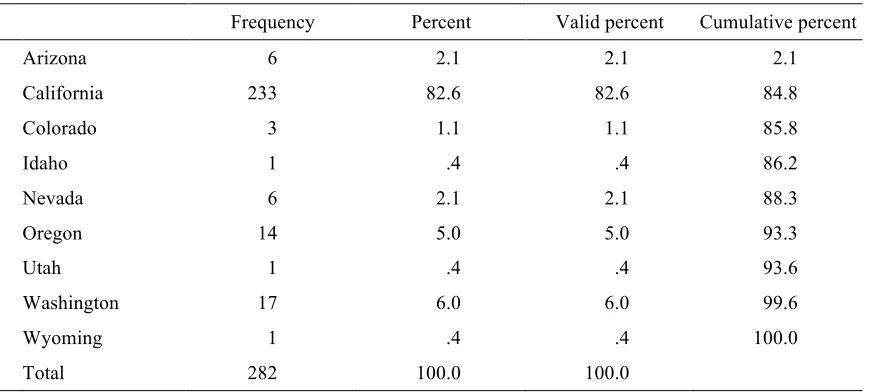
survey-method approach was used for the 282 participates from 9 different states. The
investigation looked at how students get along with their peers and how they feel about
various forms of bullying. The researcher assessed what Catholic middle school students’
thoughts and feelings are about their peers, teachers, and staff that support students who
are bullied.
The Ecological Model of Child Development was applied to this research. This
model explains the characteristics of a child who is the bully, the students who are bullied,
the bystanders, the school staff, the school environment, and the child’s perceptions. The
iii
environmental aspects can present better understanding of this problem. There is a need
in schools to see bullying as a range of behaviors rather than merely labeling the bully.
Catholic middle school students felt their school was important and a good place
to be. The research showed that the majority of students do not encourage others to hurt
weaker students. More than half the participants stated that they do not tell lies or make
fun of other on the Internet. Student-victims felt more support from their teachers than
iv
This dissertation, written under the direction of the candidate’s dissertation committee
and approved by the members of the committee, has been presented to and accepted by
the Faculty of the School of Education in partial fulfillment of the requirements for the
degree of Doctor of Education. The content and research methodologies presented in this
work represent the work of the candidate alone.
Margaret Murphy May 3, 2018
Candidate
Dissertation Committee:
Patricia Mitchell, Ph.D. May 3, 2018
Chairperson
Walter H. Gmelch, Ph.D. May 3, 2018
Committee Member
Jane E. Beasdale, Ph.D. May 3, 2018
v
ACKNOWLEGEMENTS
I would like to thank my Dissertation Committee Chair, Dr. Patricia Mitchell. She
has been my biggest supporter and confidant, knowledgeable in every aspect, making me
laugh, settling me down, and the best “pep talker” around. Thank you to my committee
members, Dr. Walter Gmelch and Dr. Jane Beasdale. Their interest in Catholic education
and the topic of bullying encouraged me tremendously.
There were many other professors at USF that aided me along the way. Thank
you to Dr. Christopher Thomas, Dr. Doreen Jones, and Dr. Virginia Shimabukuro for
your expertise. This was an enormous and difficult topic and your initial input helped
guide my study. Also, thank you to Thanh Ngoc Ly for all the lovely chats, your happy
smile, keeping my files all organized, and your consistent help throughout this process.
My tennis friends at Tiburon Peninsula Club and Harbor Point were encouraging
in every way. Thanks for keeping score on the court when my brain was fuzzy and hitting
those tennis balls to me so I could get my energy out. I also really appreciate my fun
social group at Harbor Point. A special thanks to Catherine in assisting me in getting my
questionnaire out to the right people at the right time. Thank you Carol Ann for instilling
wisdom about children and quick food recipes during late study nights. Thank you for
your friendship.
My family has been my rock. Thank you to the entire Murphy clan: my daughters,
siblings, nieces, nephews, cousins, aunts, uncles, in-laws, “out-laws”, and my large
extended family for listening to me talk about my topic. Education was paramount to our
grandparents and it is no mistake that it has trickled down through the generations. Thank
vi
and social justice from a very early age. They encouraged me as a young teacher and
doled out wisdom by the bucketful. I know my mom and dad are smiling down from
heaven and probably humming “When Irish Eyes are Smiling.” Thanks to my siblings
who kept checking in with me over the years and made sure I was on target. They were
the ones who have had my back!
My daughters, Nicole and Lauren, have been by my side this entire journey. The
wonderful years that we were all “college” students together made me proud. We edited
each other’s papers, encouraged each other along the way, commiserated during finals,
and celebrated together at the end of each semester. I pray you each continue your
passions with style, wisdom, grace, and faith in yourself. My favorite wish to both of you
has always been, “Enjoy getting lost and finding yourself.” My whole heart and soul is
vii
TABLE OF CONTENTS
ABSTRACT ... ii
SIGNATURE PAGE ... iv
ACKNOWLEGEMENTS ... v
LIST OF FIGURES ... ix
LIST OF TABLES ... x
CHAPTER I THE RESEARCH PROBLEM ... 1
Statement of the Problem ... 1
Purpose of the Study ... 4
Research Questions ... 5
Background and Need for the Study ... 5
Conceptual Rationale ... 8
Significance of the Study ... 11
Limitations ... 15
Definition of Terms ... 16
CHAPTER II REVIEW OF LITERATURE ... 20
Overview ... 20
Studies on Bullying ... 20
Measure of Traditional Bullying ... 29
Measure of Cyberbullying ... 30
Measures of School Performance ... 30
Measure of Physical Health Outcomes ... 30
Measures of Self-Esteem, Depression, and Anxiety ... 31
School Climate and Bullying ... 33
Targets and Victims of Bullying ... 36
Catholic Schools and Social Justice ... 38
Strategies to Increase Bully Awareness ... 42
Summary ... 48
CHAPTER III METHODOLOGY ... 51
Restatement of the Purpose of the Study ... 51
The Research Questions ... 51
Research Design ... 52
Research Setting ... 52
Population ... 53
Sample ... 54
Instrumentation ... 55
Validity and Reliability ... 56
Data Collection ... 57
viii
Protection of Human Subjects ... 60
Background of Researcher ... 60
CHAPTER IV RESULTS ... 63
Restatement of the Purpose ... 63
Research Question 1 ... 63
Research Question 2 ... 66
Research Question 3 ... 69
Research Question 4 ... 71
Research Question 5 ... 72
Additional Findings ... 73
Summary ... 75
CHAPTER V SUMMARY, DISCUSSION, CONCLUSION, IMPLICATIONS, AND RECOMMEDATIONS ... 77
Summary of Findings ... 77
Discussion ... 78
Research Question 1 ... 78
Research Question 2 ... 78
Research Question 3 ... 80
Research Question 4 ... 80
Research Question 5 ... 81
Conclusion ... 82
Conclusion and Implications ... 82
Recommendations ... 84
Recommendations for Future Research ... 84
Recommendations for Future Practice ... 85
Final Thoughts ... 86
REFERENCES ... 89
APPENDIX A USF IRB Approval Letter ... 99
ix
LIST OF FIGURES
x
LIST OF TABLES
Table 1 Distribution of Students by State ... 54
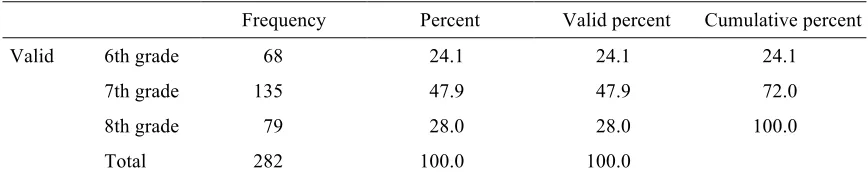
Table 2 Distribution of Students by Grade ... 55
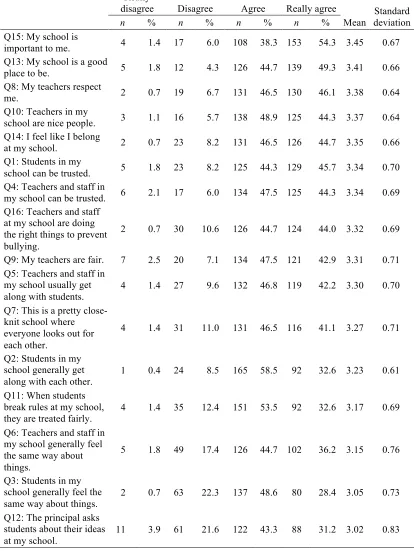
Table 3 Frequencies, Mean, and Standard Deviations for School Climate ... 64
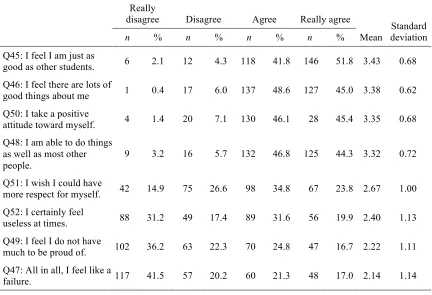
Table 4 Frequencies, Means, and Standard Deviations for Self Worth IssuesError! Bookmark not defined.
Table 5 Frequencies, Means, and Standard Deviations for Students’ Own Behavior ... 67
Table 6 Frequencies, Means, and Standard Deviations for What Has Happened to MeError! Bookmark not defined.
Table 7 Frequencies, Means, and Standard Deviations for Judgments About Bullying Behavior ... 70
Table 8 Frequencies, Means, and Standard Deviations for Victim Support by Peers ... 71
Table 9 Frequencies, Means, and Standard Deviations for Victim Support by
Teachers ... 73
Table 10 Frequencies, Means, and Standard Deviations for Degrees of Bullying ... 74
CHAPTER I
THE RESEARCH PROBLEM
Statement of the Problem
School bullying has been a pervasive problem. Bullying is a form of intentional
aggressive behavior that is hurtful, threatening, and creates unjust power (National Center
for Educational Statistics, 2016). More than one in five students stated they had been
bullied. Of students who were bullied, 33% reported that bullying occurred at least once
or twice a month during school (National Center for Educational Statistics, 2016).
The highest prevalence of bullying occurred in middle school Grades 6 through 8
among students aged 11 through 14 and bullying has happened in all urban, suburban,
and rural schools (Bradshaw, Waasdorp, & O’Brennan, 2013; Charmaraman, Jones, Stein,
& Espelage, 2013; D’Esposito, Blake, & Riccio, 2011; Gould, 2009). Social aggression
tends to peak in early adolescence, making intervention efforts in the middle school vital
(Bradshaw et al., 2013). Before planning and implementing prevention and intervention
programs, leaders and teachers in schools must recognize the extent of bullying, the
characteristics of bullying, and the effects of these actions on victims (Adams &
Lawrence, 2011; Carney & Hazler, 2016; Milsom & Gallo, 2006; Phillips & Cornell,
2012; Seaman, 2012).
Educators have begun to take a more active approach to understanding the
dynamics of bullying, the possible warning signs of the victims of bullying, and the
involvement of students, parents, school boards, and pastors (Carney, Hazler, & Higgins,
2002; Domino, 2013; LaFee, 2012). Schools have started to communicate openly and
students who bully their peers as well (Cornell & Mehta, 2011; Gould, 2009; Mitchell &
Brendtro, 2013; Simmons, 2011).
In a school environment, bullying can prevent student learning, as it may cause a
great deal of pain, anxiety, and stress for the victim. Long-term effects may damage a
student’s self-esteem, confidence level, and emotional health (Adams & Lawrence, 2011;
Beane, 2009; Mitchell & Brendtro, 2013; Peterson & Ray, 2006). The strongest predictor
in the prevention of bullying activities is a positive school climate (Richard, Schneider, &
Mallet, 2012; Roman & Taylor, 2013; Studer & Mynatt, 2015).
Intervention strategies with bullies are necessary because a single bully may have
multiple victims. Helping students improve their social skills, manage anger and
aggressive feelings, develop empathy for others, and learn better problem-solving
strategies is critical (Bradshaw et al., 2013; Carney & Hazler, 2016; Clarke & Kiselica,
1997; Hoover & Oliver, 1996; Vieno, Gini, & Santinello, 2011).
Social aggression and bullying were once viewed as a normal part of growing up.
Some adults thought of bullying as a right of passage (Richard et al., 2012; Roman &
Taylor, 2013). Educators now view bullying as unacceptable behavior (Orpinas, Horne,
& Staniszewski, 2003; Swear, Espelage, & Napolitano, 2009). In 47 states, legislation has
required schools to take an active leadership role in preventing bullying. Initiatives to
develop and implement prevention programs that protect students from danger and create
a positive school climate have allowed students to achieve academic, social, and
emotional strength and confidence in their lives (National Center for Mental Health
Victims are less likely to seek help if they believe their school tolerates or ignores
bullying behavior (Di Stasio, Savage, & Burgos, 2016; Unnever & Cornell, 2004). Boys
are more likely than girls to tell an adult about harassment. Girls preferred to describe
bullying confrontations to their peers, rather than to an adult (Simmons, 2011). Victims in
lower grades also report the incidences to an adult more often than victims in the higher
grades (Mitchell & Brendtro, 2013; Unnever & Cornell, 2004).
Bullying and aggressive behavior have negative effects on student learning and
students’ attitudes toward school (Bazelon, 2013; LaFee, 2012; Phillips & Cornell, 2012;
Preble & Gordon, 2011). Victims of bullies suffer not only emotional distress, but also
are avoided by classmates. Students who are bullied are often rejected by their peers,
rendering those victims with the highest level of depression and loneliness (Allen, 2010;
Juvonen, Graham, & Schuster, 2003; LaFee, 2012; Vieno et al., 2011).
All students have a right to feel safe at school, yet bullying may occur in any of
our school communities. Bullying is not a contemporary issue; it has occurred throughout
history (Accordino & Accordino, 2011; Glenn, 2004; Hoover, Oliver, & Hazler, 1992;
Roman & Taylor, 2013). Bullying has a negative impact on how students feel about
themselves (19%), their interactions with friends and family, their school achievement
(14%), and their physical over all health (9%; National Center for Educational Statistics,
2016).
Graham (2010) stated that a generation ago, if students were asked what they
were most worried about, they might have responded, “Passing exams and being
promoted to the next grade.” Today, students’ concerns about school often revolve
Holladay, 2011; LaFee, 2012). The perpetrators of bullying are seen as more destructive,
and the victims feel more defenseless (Mitchell & Brendtro, 2013; Unnever & Cornell,
2004). Educators who want to understand the dynamics of school bullying will need to
learn that the complications of victims and bullies are not the same as years ago (Domino,
2013; Duplechain & Morris, 2014; Graham, 2010; Peterson & Ray, 2006; Studer &
Mynatt, 2015).
This researcher explored the problem of bullying and aggressive behavior in
Grades 6 through 8 in Catholic schools. Limited research existed on the topic of bullying
in the middle school grades in U.S. Catholic schools. Hence, the goal of this research
was to fill the gap in the current research. Specifically, this research explored (a) the
studies on bullying, (b) the school climate and bullying, (c) targets and victims of
bullying, (d) Catholic schools and social justice, and (e) strategies to increase bully
awareness.
Purpose of the Study
The purpose of this study was to investigate the issues of bullying behavior in
Grades 6 through 8 in Catholic schools in the Pacific and Mountain States of the United
States. This research examined the attitudes of middle school students regarding their
school climate. This investigation considered how students get along with their peers and
how they feel about various forms of bullying. The researcher assessed Catholic middle
school students’ thoughts and feelings about their peers, teachers, and staff that support
students who are bullied. This exploration used a survey-methods approach to explore
to better understand the social problem of bullying in the middle grades in schools and
identify preventive measures that are currently in place.
Research Questions
The following questions guided this study:
1. What are Catholic middle school students’ attitudes toward their school
climate?
2. How do students in Catholic middle schools get along with their peers?
3. How do Catholic middle school students think and feel about various forms of
bullying?
4. What are Catholic middle school students’ thoughts and feelings about
support from their peers at their school regarding students who are bullied?
5. How do Catholic middle school students feel about their teachers and staff
supporting students who are bullied?
Background and Need for the Study
All students have a right to feel safe at school, yet bullying may occur in any
school community. Bullying is repeated aggression or harassment by one person toward
another person. It is a form of violence that often occurs in situations where the victim is
unable to escape because the bully is either physically or verbally stronger than the victim
(Bauman & Del Rio, 2006; Donoghue, Almeida, & Brandwein, 2014; Hazler, 1996).
Boy bullies are more physically aggressive than girls. Boys usually harass their
victims directly through physical aggression, whereas girls bully indirectly by using
subtle gestures, such as social exclusion and gossip (Datta, Cornell, & Huang, 2016;
primary factor in predicting trauma in students (Bhatta, Shakya, & Jefferis, 2014;
Bowllan, 2011; Carney, 2008; Cornell & Mehta, 2011; Duplechain & Morris, 2014;
Salmivalli, 2014).
In the middle school years, adolescents experience various types of bullying:
verbal, physical, emotional, cyber, and relational (Bauman & Del Rio, 2006; Bradshaw et
al., 2013; Brady, 2008). School administrators and teachers need to be attentive to the
specific areas in schools that might not be supervised, making them accessible for
bullying (Jenkins, Demaray, Fredrick, & Summers, 2016; Juvonen & Graham (2001).
The most frequent reasons students are bullied are based on their physical appearance,
race/ethnicity, gender, disability, religion, or sexual orientation (National Center for
Educational Statistics, 2016).
Bullying is often covert, which poses a challenge for educators to help victims.
Bullying is likely to occur when adult supervision is inadequate. Teachers often do not
identify bullying and many victims of bullying are reluctant to seek help because they
believe teachers will not take effective action (Bazelon, 2013; Belmont & Cranston,
2009; Gould, 2009; Semerci, 2016; Unnever & Cornell, 2004).
Bullies tend to have negative attitudes toward school and are more likely to have
disciplinary issues in school (Clarke & Kiselica, 1997; Di Stasio et al., 2016; Espelage,
Bosworth, & Simon, 2000; Mitchell & Brendtro, 2013). Olweus (1991) found that
students identified as bullies in Grades 6 through 9 were four times more likely to be
involved in criminal activity in adulthood. Schools need to identify and support bullies so
they can prevent victimization, now and later in their lives, and encourage aggressive
2011; Beane, 2009; Couvillon & Ilieva, 2011; Datta et al., 2016; Duplechain & Morris,
2014). Middle school students who bully tend to experience low levels of empathy and
the victims of bullying tend to have low self-esteem (Cornell & Mehta, 2011; Espelage et
al., 2000; Jenkins et al., 2016; Twemlow, Fonagy, & Sacco, 2004).
This study explored the issue of peer bullying as a sociocultural attribute with
social groups with various levels of perceived power. Schools that embrace the mitigation
of bullying may be more likely to create an environment that enhances a welcoming
environment in which every student feels empowered to speak and be heard (Bowllan,
2011; Donoghue et al., 2014; Jenkins et al., 2016; Smith, Pepler, & Rigby, 2004; Swearer
et al., 2009).
Limited data existed among the middle school grades in Catholic schools on the
subject of bullying. This researcher delved into this topic to add to the research and fill
the gap in the current research. This study was designed to improve Catholic schools’
climate, assist in developing common language associated with bullying and harassment,
and help provide a needed perspective to assist school personnel in the challenges of
facilitating students’ acceptance and tolerance of difference among the student
community.
Conceptual Rationale
The conceptual model used for this study is the ecological model of child
development (Bronfenbrenner, 1979; Bronfenbrenner & Ceci, 1994; Bronfenbrenner &
Morris, 2006). This theory has influenced many psychologists in analyzing people and
the effects of different environments people encounter (Walls, 2016). Figure 1 explains
Figure 1. The human ecology theory by Bronfenbrenner.
From The Child, by C. B. Kopp & J. B. Krakow, 1982, Boston, MA: Addison-Wesley.
This model rationalizes the characteristics of a child who is the bully, the students
perceptions (Bronfenbrenner & Morris, 1998). An additional strength of the
Bronfenbrenner (1977) framework is that it partitions not just the environment, but also
students’ insights, which is crucial in understanding why students in similar environments
may express different behaviors regarding bullying.
Educators can use an ecological model to describe and explain the effects of many
factors regarding a child’s behaviors. The learning process encompasses how an
individual relates to their environmental circumstances (Rose, Espelage, Monda-Amaya,
Shogren, & Aragon, 2015). Individual behavior governs the social context that
accompanies most of human learning. The repetitions, patterns, and nuances of people’s
culture and their environment define human behavior (Bronfenbrenner, 1989; Domino,
2013; Glenn, 2004; Santrock, 2011; Smedley & Syme, 2000).
Researchers found a shift from defining bullying based solely on individual
differences, such as strength and personality, toward bullying in the social context,
especially in a school environment (Jenkins et al., 2016, LaFee, 2012).
Ecological-systems theory presents a very fluent argument for a bullying program, with interventions
and research based on the psychological foundations of behaviorism. The child is in the
center and all the circles represent interactions that can impact the child’s life. This
contextual framework can enable schools to apply this knowledge for better
understanding of bullying behavior. This model also underlines environmental influences
on individual behavior: family, classroom, peer groups, social, economics, cultural, and
religious situations (Bronfenbrenner & Morris, 2006; Espelage, Rose, & Polanin, 2015,
Bronfenbrenner’s ecological-systems theory (1994, 1997) includes five levels: the
microsystem, the mesosystem, the exosystem, the macrosystem, and the chronosystem.
1. The microsystem comprises the environment. Direct interactions with people
include family, friends, classmates, teachers, neighbors, and anyone with
whom one is in contact. The microsystem is the setting in which people have
social interactions with others. People relate, mingle, give information, and
receive knowledge in the microsystem.
2. The mesosystem encompasses the interactions between two microsystems.
Family experiences may relate to school experiences, positively or negatively.
Teacher-to-teacher communication may occur on behalf of a child. One’s
friends may influence relationships in a family.
3. The exosystem reflects the connection that is not actively involved with the
child. A person who does not have a direct role but has a secondary effect on
the child is part of the child’s exosystem. For example, a child may be quite
attached to their father. If the father works oversees for a time, conflict may
arise between the mother and child, which may result in a tighter bond
between the mother and child.
4. The macrosystem includes broader cultural aspects of an individual’s situation.
The macrosystem comprises the socioeconomic status of the family, ethnicity,
and type of living situation. Financial acuity affects the types of schools that
are available in a student’s area, the student’s access to technology, and the
5. The chronosystem, the outer most stratum, incorporates transitions and
environmental changes in a person’s life. Divorce, repeated home moves, loss
of job or wage reductions, and career moves are part of the chronosystem.
Significance of the Study
The knowledge gained from this study added insight to why the phenomenon of
bullying occurs in the Catholic middle schools under investigation. Some explanations of
bullying drew on an understanding of child development (Bazelon, 2013; Datta et al.,
2016; Rigby & Johnson, 2006). This investigation of peer bullying may assist leaders in
schools in modifying policies in their school environments to create and build on current
bullying-awareness programs. Students should have a sense of safety at school (Allen,
2010; Couvillon & Ilieva, 2011; Merrell, Gueldner, Ross, & Isava, 2008; Phillips &
Cornell, 2012). Parents should also feel that their children are safe in a school
environment. The occurrence of bullying can change expectations of security in a school
climate (Bauman & Del Rio, 2006; Donoghue et al., 2014; Preble & Gordon, 2011;
Swearer et al., 2009).
Bullying is a current topic today for several reasons. Technology available to
sixth through eighth grade students has dramatically changed over the last several years,
creating a digital world that did not previously exist (Bauman, Toomey, & Walker, 2013;
Brady, 2008; Hoglund, Hosan, & Leadbeater, 2012). Cyberbullying and the ability to
harass one another anonymously from a keyboard is a contemporary problem that is
difficult for parents to monitor (Semerci, 2016). Today’s adolescents can now bully each
other without physical contact and without being known, thereby creating a new virtual
effects of torment (Couvillon & Ilieva, 2011; Hase, Goldberg, & Smith, 2015; Holladay,
2011). In middle school, 24% of students are cyberbullied and 45% happen on school
grounds (Centers for Disease Control and Prevention, 2015).
Another issue that brought this topic to the forefront of educational studies was
the significant number of suicides reported in the last several years. High school
counselors are on alert to watch for certain behaviors and triggers that could correspond
to suicidal behavior (Adams & Lawrence, 2011; Bauman et al., 2013; Duplechain &
Morris, 2014). Today, such caution extends to the middle school level. Students who
bully, are bullied, or perceive bullying behavior are more likely to report higher rates of
suicide-related behaviors than students who indicated they had no bullying involvement
in school (Centers for Disease Control and Prevention, 2015). Bullying is a contributing
factor in suicidal behavior among adolescents aligned with extremely publicized suicides
among teens in the Unites States (Bhatta, Shakya, & Jefferis, 2014; Mynard & Joseph,
2000; Nixon, 2014; Pergolizzi, Richmond, & Macario, 2009).
Depression can connect bullying and suicide attempts in children of both genders
(Espelage & Hong, 2017; Seals & Young, 2003; Studer & Mynatt, 2015). A large number
of suicides link to long-term aggressive bullying behavior, online and in person. A link
exists between being bullied in a school environment and thoughts of suicide or plans of
suicide. Programs implemented in middle schools for the prevention of bullying can
benefit adolescents in coping with suicidal ideation (Bhatta et al., 2014; Carney, 2008;
Cornell & Mehta, 2011; Studer & Mynatt, 2015).
School shootings have been another factor in retaliation against bullying, even
(Duplechain & Morris, 2014). Many incidents that involve guns or weapons link to
perpetrator(s) who often experienced harassment at school, rather than a place of comfort
and protection to learn. Some students who feel isolated, lonely, depressed, or angry may
lash out in harmful ways, and their own violent acts represent an extension of the
bullying they experienced (Carney, 2008; Hong, Cho, & Lee, 2010; Mitchell & Brendtro,
2013; Seals & Young, 2003).
In school tragedies, four important factors affected the offender: the perpetrator
felt excluded in the social world, imagined violence would solve their problems and even
elevate their status as a “hero,” the community has failed them, and they had access to
guns and weapons (Viadero, 2009). School shootings are rare but they are highly
publicized, which can make parents, teachers, and administrators nervous (Duplechain &
Morris, 2014). The best prevention for schools is to build an environment and climate in
which students feel comfortable to share any of their fears with school personnel
(Gereluk, Donlevy, & Thompson, 2015; Jenkins et al., 2016; Mitchell & Brendtro, 2013;
Studer & Mynatt, 2015).
The tragedies of these shooting are life changing and create escalating levels of
violence as retribution for the pain and anguish put upon perpetrators by other bullies
(Bhatta et al, 2014; Hase et al., 2015). Conflicts are part of the natural order of life and
relationships, and schools need to teach problem-solving skills (Duplechain & Morris,
2014; Hong et al., 2010; Viadero, 2009).
The media has often documented issues surrounding bullying, and has brought
this important issue to the forefront so that students, teachers, administrators, parents,
Instead of using complex statistics and graphs, magazine articles found in the aisles of
supermarkets show broad overviews and current events surrounding bullying as a means
of encouraging conversations and discussions among peers. Thus, the media has assisted
in bringing awareness of this issue by speaking to the general population (Jenkins et al.,
2016; Studer & Mynatt, 2015).
The majority of students bullied do not report this behavior to their teachers or
parents. Bullies students feel unhappiness, loneliness, and tend to have fewer friends
(Coloroso, 2003; Jenkins et al., 2016). Teachers and parents need to watch for depression,
anxiety, stress, and feelings of negative self-image and low self-esteem. Students who are
victimized can have issues with social development. In contrast, schools should be a
place where students build friendships, social acceptance, trust, and confidence
(Donoghue et al., 2014; Glenn, 2004; Jenkins et al., 2016).
Victims of bullying lack friendships and social skills (Olweus, 1993, 1997).
Students who address long-term bullying see the school environment as unfriendly and
frightening, at times. Their levels of fear, anxiety, and insecurity lead them to feel
vulnerable not just during the school day, but later in their lives as adults (Adams &
Lawrence, 2011; Graham, 2010; Mynard & Joseph, 2000).
Students who are bullied manifest physical symptoms such as headaches, stomach
issues, sleeping and eating difficulties, anxiety, depression, or difficulty concentrating
(Centers for Disease Control and Prevention, 2015). Also, pupils who bully are more
likely to misbehave, participate in or instigate fights, have poor grades, break rules, and
abuse alcohol and drugs later in life (Carney et al., 2002; Datta et al., 2016; Scanlan,
guilty, helpless, anxious, and fear they are next (Jenkins et al., 2016; Juvonen & Graham,
2001; Salmivalli 2014; Seals & Young, 2003;).
The environment of the school is also affected by bullying behavior. When
schools ignore bullying, the school climate can become a place of insecurity, where
perceived power is not equal for all students. Learning is hindered because students feel
the environment is hostile and believe they are disrespected (Datta et al., 2016; Espelage
et al., 2015; Maccoby, 1986; Schwartz, Stiefel, & Rothbart, 2016).
Limitations
The researcher hired an online company to survey Catholic middle school
students. Even though 13 states were included, not all the states responded. The level of
honesty might not be accurate because some students may have been hesitant to admit
that their school had an issue with bullying. Self-reporting can be a problem in any
survey, but especially with a sensitive subject. Some students may have become upset
during the survey, but the surveys were not taken in a school setting, so no information is
available and the researcher has no way to follow up.
The biggest limitation to this research is the lack of validity and reliability in the
original survey. The researcher received an e-mail from Dr. Csuti, Vice President of
Research, Evaluation & Strategic Learning at The Colorado Trust stating no information
exists on validity and reliability scores. All researchers who worked on those studies have
moved to other work and Dr. Csuti has lost touch with them. All available information is
online, consisting of the surveys themselves. The researcher had already completed the
This study investigated Catholic schools in 13 states. The sample may not be
generalizable to other school settings. Parents and students were only able to use
technology to complete the online survey. This research did not capture the location of
the school in the state or other demographic data. This study did not inquire information
on the size of various schools or the size of the communities in which they are located.
Students who live in large urban city, suburbs, or small rural areas were not differentiated
for the questionnaire. This study also did not include gender differences.
Definition of Terms
The following terms are operational for clarification purposes in this research.
The definition of bullying and types of bullying need to be clearly stated for teachers,
administrators, students, parents, and school communities (Bradshaw et al., 2013; Carney
& Hazler, 2016; Donoghue et al., 2014; Hase et at., 2015; Roman & Taylor, 2013).
An aggressor is a student who engages in bullying, cyberbullying, or vengeance
(Donoghue et al., 2014).
A bully is a person who is trying to hurt or control someone else or a situation
(Bazelon, 2013; Sidanius & Pratto, 2001). The American Psychological Association
(2011) described bullying as follows:
Commonly labeled as peer victimization or peer harassment, school bullying is
defined as repeated physical, verbal or psychological abuse of victims by
perpetrators who intend to cause them harm. The critical features that distinguish
bullying from simple conflict between peers are: intentions to cause harm,
repeated incidences of harm, and an imbalance of power between perpetrators and
and intimidating gestures (e.g., eye rolling) by powerful peers are all examples of
behaviors that constitute abuse that is physical, verbal or psychological in nature.
(p. 3)
The bystander is aware that bullying is happening and watches bullying in action.
Bystanders can offer assistance by reporting the incident or they can be silent victims
(Adams & Lawrence, 2011; Datta et al., 2016).
Cyberbullying is bullying with the use of any technological device or electronic
platform such as computers, cell phones, and tablets. Communicating on
social-networking sites, text messages, e-mails, instant messaging, chat rooms, and websites can
be sources of cyberbullying (Donoghue et al., 2014; Ortega et al., 2012). Mean and
harassing text messages, rumors spread by e-mail, posts on social-network sites, and
posting inappropriate pictures or videos are some examples of cyberbullying (Bradshaw
et al., 2013; Holladay, 2011; Kite, Gable, & Filippelli, 2010).
Students who exclude others students perform an act of bullying. Exclusion
includes the act of not letting others join in a group or an activity and is considered a way
of dominating a situation. Peers who would like to connect felt rejected and left out
(Sidanius & Pratto, 2001).
A hostile environment is a condition in which bullying causes the school
environment to be infiltrated with pressure, contempt, or rudeness that is unambiguous to
change or alter the student’s academic or social success in education (Hase et al., 2015).
Name-calling is using a name other than their given name in a derogatory manner
Physical bullying involves purposely hurting someone’s body or damaging their
possessions. Physical bullying can include fighting, hitting, punching, shoving, kicking,
pushing, pinching, tripping, spitting, stealing, breaking someone’s possessions, using
weapons, and making malicious or vulgar hand gestures (Carney, 2008; Mynard &
Joseph, 2000).
Power can be defined as someone older, stronger, or smarter (real or perceived) in
any given setting (Bradshaw et al., 2013; Roth, Kanat-Maymon, & Bibi, 2011; Sidanius
& Pratto, 2001).
Prejudicial or racial bullying rests on an individual’s or group’ attitude toward
people of different races, religions, social standing, or sexual orientations. This form of
bullying can include all other types of bullying (Donoghue et al., 2014). Some examples
are inappropriate gestures, racial slurs, name calling, or making fun of someone’s culture,
accent, food, or skin color. These types of hate crimes can be severe (Juvonen et al.,
2003; Richard et al., 2012).
Retaliation is any form of harassment or intimidation directly against another
student who comes forward to report bullying behavior, provides pertinent information
about bullying, or has witnessed any form of bullying (Datta et al., 2016; Schwartz et al.,
2016).
Social bullying is also called relational bullying. Social bullying involves hurting
a person’s reputation, their relationship with friends or others, or their social lives
(Phillips & Cornell, 2012; Schwartz et al., 2016). Social bullying can include ostracizing
another person on purpose, making someone feel unwanted, telling someone not to be
about others, gaining someone’s trust and then purposely breaking it, and embarrassing a
person in public. The leading justification the bully uses is to harm relationships among
others (Orpinas et al., 2003).
The target is a person being bullied (Cornell & Mehta, 2011; Donoghue et al.,
2014, Schwartz et al., 2016). In this research, target, victim, and bullied are used
interchangeably and have the same meaning.
Verbal bullying is saying or writing mean or intimating things. Verbal bullying
can include teasing, mocking, making fun of others, name calling, spreading rumors and
lies, inappropriate sexual comments, and verbally threatening someone (Hase et al., 2015;
Orpinas et al., 2003; Phillips & Cornell, 2012; Polanin, Espelage, & Pigott, 2012; Roman
CHAPTER II
REVIEW OF LITERATURE
Overview
This study investigated students’ attitudes toward bullying in Catholic middle
schools. To provide context and clarity for this study, the review of literature examined
(a) studies on the topic of bullying, (b) the affects of bullying in the school climate, (c)
the affects that bullying had on bullies and their targets, (d) Catholic schools and social
justice related to bullying, and (e) strategies that can be implemented to increase bully
awareness in the school environment.
Studies on Bullying
Limited research was conducted on the topic of bullying prior to 1960. Norwegian
researcher Olweus (1978) was a pioneer in the investigation of bullying in the early
1970s in Scandinavia. Olweus’s groundbreaking research and first book in 1978 are
considered seminal works on this challenging topic. Olweus’s (1978) book introduced the
world to the issue of bullying and formed the basis of further research. Olweus (1978)
discovered that students who demonstrated behaviors of physical weakness, emotional
issues, or lack of social skills were more likely at risk to be targeted for bullying.
Olweus (1991) developed the first version of the Olweus Bullying Prevention
Program (OBPP) in Norway and later led the way for many studies throughout the world.
The OBPP aims to decrease bullying in elementary, middle, and junior high (students
aged 5 to 15). This program addresses bullying in schools, classrooms, with individuals,
and in the community. The goals are to decrease bullying among students, counteract
expanded on this sensitive issue in school communities, which led to many research
studies during the 1980s and 1990s that focused on bullying in school settings (Boulton
& Underwood, 1992; Glenn, 2004; Hoover & Hazler, 1991; Whitney & Smith, 1993).
Studies on bullying in the United States span from the early 1980 to the present.
This researcher chose four studies, dated 1994 - 2013, to compare the evolution of
changing attitudes toward bullying. Behaviors tolerated in the 1990s are not acceptable in
the classrooms today (Bowllan, 2011; Duplechain & Morris, 2014; Graham, 2010;
Phillips & Cornell, 2012; Semerci, 2016; Solberg & Olweus, 2003; Whiney & Smith,
1993).
Oliver, Hoover, and Hazler (1994) surveyed middle and high school students
(n = 207) from Ohio, Minnesota, and South Dakota. Students ranged from seventh
through 12th grade; 97 were girls and 103 were boys; and 95% were Caucasian. Oliver et
al. presented several questions to middle and high school students, surveying the students
in the classroom in groups of 10 to 30 and at least one researcher was present to answer
questions. Researchers told students to answer “as they really felt” and that all responses
would be confidential. Oliver et al. investigated the following six statements using a
6-point Likert-type scale ranging from 1 (strongly agree) to 6 (strongly disagree):
1. In my opinion, most victims of bullying brought it on themselves.
2. Bullying often helps the bullied person(s) by making them tougher.
3. Bullying often helps the bullied person(s) by teaching them about behavior
that is unacceptable to the group.
4. In junior high (or middle school), if I became friends (or was friendly) with a
5. In my middle school (or junior high), bullies and high-status (are more
popular) than people who were picked on.
6. Most teasing I witnessed was done “in fun” (not done to hurt others’ feelings).
Oliver et al. (1994) found the following results. For Question 1, 43.5% (n = 64) of
participants strongly agreed or agreed that “victims brought it on themselves.” A total of
60 participates did not respond to this question. None of the participants disagreed or
strongly disagreed.
For Question 2, “bullying makes victims stronger,” results showed 39.5%
(n = 80) of students strongly agreed or agreed and 21% (n = 44) disagreed or strongly
disagreed with this statement.
The third question, “bullying teaches about behavior that is unacceptable to
groups” was divided by gender: 39.1% of boys (n = 41) disagreed or strongly disagreed
with this statement and 52.6% of girls (n = 51) also felt the same. Girls tended to disagree
more strongly than boys, but both groups fell on the disagree side of neutral.
The fourth statement, “perceived loss of social status” had no impact in that the
study results showed no strong patterns: 35% (n = 73) strongly agreed or agreed and
41.7% (n = 83) disagreed or strongly disagreed that being friendly with the bullied meant
one could lose friends.
The fifth section “social status of bullies” was divided by gender. Boys agreed
that bullies had a higher status only 23.2% (n = 24) compared to girls 34.4% (n = 32).
Of boys, 32.6% (n = 34) compared to girls 22.6% (n = 21) children believed bullies did
with the average score dropping on the agree side of the scale’s midpoint, whereas boys
were on the disagree side.
The final question “teasing as playful” was significant: 50.5% (n = 102) of
participants thought that most teasing was done in fun, not hurtful. Only 18.8% (n = 38)
disagreed.
Participants in this study believed bullied victims were partially to blame for their
persecution. Blaming the victim justified bullying and placed students in great danger
(Seals & Young, 2003). The study showed that only a minority agreed that bullying could
make weaker students tougher. For students who participate in bullying thinking that they
will “teach” the victim about group values, a possible remedy might be to teach less
aggressive interaction skills (Smedley & Syme, 2000). Students may ignore other
students that who are perceived to have lower status because students perceived bullying
hurts their own status (Valadez & Mirci, 2015).
All the participants in this 1994 study agreed that bullies have a higher social
status compared to victims. More importantly, students agreed that teasing was done in
fun. Students perceived teasing that was playful and have had little understanding that it
was perceived as bullying by victims. These kinds of misconceptions represent a
mediation theme for counselors and professionals (Mynard & Joseph, 2000; Studer &
Mynatt, 2015). This research was exploratory and descriptive and stated that more
research was needed on this topic (Oliver et al., 1994).
Espelage et al. (2000) guided a study in a large middle school in the Midwest.
Answering a survey were 558 participates in sixth through eighth grades; 54% were
seventh-grade students (n = 173), and 27% were eighth-grade children (n = 153).
Approximately 84% were White (n = 468), 9% (n = 52) were African American, 3%
(n = 19) were biracial, and 3% (n = 19) stated other races. In this investigation, the
authors include the following demographics: gender, grade, race, free/reduced-priced
lunch, Chapter 1 status, and zip code. Researchers also classified students into “family
types”: two parents (biological/adoptive), single parent, and stepfamily.
To discern bullying behaviors, Espelage et al. (2000) asked students how many
times in the last 30 days they participated in the following behaviors:
1. “I called other students names”;
2. “I teased students”;
3. “I said things about students to make other students laugh”;
4. “I threatened to hit or hurt another student”; and
5. “ I pushed, shoved, slapped, or kicked other students.”
The answer choices ranged 0 = never, 1 = 1 or 2 times, 2 = 3 or 4 times, and 3 = 5 or
more times (Cronbach’s alpha = .83).
The researchers asked participants about positive adult messages about violence.
Students responded to questions about the adults they spend the longest amount of time
with and to specify how many of them say the following:
1. “If another student hits you, hit them back”;
2. “If another student wants to fight, you should try to talk your way out of the
fight”;
3. “If another student asks you to fight, you should tell a teacher or someone
4. “Fighting is not good, there are other ways to solve problems.”
Reponses included 0 = none, 1 = few, 2 = most, and 3 = all (Cronbach’s alpha = .77).
Another area was family physical discipline. Researchers asked students, “If you
break a rule in your home, how often are you spanked, hit, or slapped?” Response choices
were 0 = never, 1 = seldom, 2 = sometimes, 3 = often, and 4 = always.
The final area concerned adult contact and time with family. Students judged, “On
an average weekday, how many hours a day do you spend without an adult around you?”
and “On an average weekday, how many hours a day do you talk to or do activities with
your family?” The responses were 0 = 0 minutes, 1 = 1 to 30 minutes, 2 = 30 minutes to 1
hour, 3 = 1 to 2 hours, and 4 = 2 to 4 hours. The other three features in this study were
neighborhood safety, access to guns, and feeling unsafe at school.
Major findings showed that 19.5% (15.5% of the male students and 23% of
females) stated they had not bullied in the past 30 days. Results showed that 82.8%
(n = 462) of students never or seldom were spanked, hit, or slapped, whereas 17.25
(n = 96) reported sometimes, often, or always. Student results indicated that 33.9%
(n = 189) spend more than 1 hour a day without an adult whereas 41.3% (n = 230) spent
30 minutes or less without supervision. This study also found that 75.8% (n = 423) of
students did not have access to a gun, but 24.2% (n = 135) stated they could get a gun
very easily (Espelage et al., 2000).
These results also showed that adults play a significant part in a student’s
development and the message is substantial that they relay to their children, especially
their attitude and behavior regarding fighting, discipline, and the amount of time they
their bully programs. Administrators and teachers often recommend school counselors for
students regarding bullying. Counselors should understand all perspectives in the students’
lives in mediation to discover family and environmental dynamics. The benefits of an
approach that includes families, peers, neighborhoods, and social and environmental
aspects can present better understanding of this problem. A need persists to see bullying
as a range of behaviors rather than merely labeling the bully (Bronfenbrenner, 1977,
1979; Olweus, 1997; Walls, 2016).
This research targeted bullying behaviors among middle school students in the
context of family and adult influences, peer influences, and environmental factors. For
gender, male students reported higher rates of bullying compared to females. Family
structure was not a significant factor in bullying, but family physical discipline
significantly linked to bullying behavior. Students who recounted that their families used
physical discipline when they broke rules at home were more likely to participate in
bullying at school (Carney, 2008; Coloroso, 2003; Mitchell & Brendtro, 2013; Whitney
& Smith, 1993).
Spriggs, Iannotti, Nansel, and Haynie (2007) steered a large-scale study
(n = 11,033) of students in sixth through 10th grades in public and private schools from
the from Quality Education Data’s list of U.S. schools. Black and Hispanic students were
oversampled to provide a higher estimate for these groups: Whites (n = 6,466), Blacks
(n = 2,262), and Hispanics (n = 2,305). The demographic break down was male (46%),
low income (27%), moderate income (53%), and high income (21%); middle school
Spriggs et al. (2007) used self-reporting questionnaires. After receiving parental
consent, surveys were self-administered in the classrooms. Topics included information
about personal and social means, health issues, health outcomes, and demographic items.
The main categories were bully occurrence, family-living organization, peer relations,
and school factors.
The questionnaire included a standard definition of bullying. The researchers
gauged bullying by asking the frequency at which a student was bullied or bullies other
classmates. The choices of responses were “not at all,” “once or twice,” “two or three
times a month,” “about once a week,” and “several times a week.” Spriggs et al. (2007)
categorized results as “bully-victims,” “victims,” or “bullies.” For each label, students had
to report at least two or three times per month. The last label was “noninvolved” for those
students that marked “not at all” or “once or twice.”
The major findings presented from this research indicated that in
“noninvolvement” with bullying, results were similar: Whites (79%), Blacks (81%), and
Hispanics (78%; Spriggs et al., 2007). The “victim” label presented Whites (9%), Blacks
(6%), and Hispanics (9%). The “bully” label showed Whites (9%), Blacks (10%), and
Hispanics (11%). In all ethnic groups, the “bully-victims” reported 3%.
The results also compared these three groups in family situations. Living with two
biological parents was Whites (66%), Blacks (36%), and Hispanics (59%). All three
groups indicated a high level of parent support: Whites (70%), Blacks (67%), and
Hispanics (58%) and parent communication Whites (81%), Blacks (79%), and Hispanics
(78%). In classmate relationships, survey results demonstrated that students felt equally
This questionnaire also presented issues in the school such as “perceived
academic achievement,” “school satisfaction,” and “felt safe at school.” Students rated
overall academic success 26% very good, 68% good/average, and below average was 6%.
The average score of students feeling safe at school was 64%, Whites (69%), Blacks
(52%), and Hispanics (57%).
The Spriggs et al. (2007) study explored bullying behavior by ethnicity. School
performance was below average for White and Hispanic students. School satisfaction was
also below average for Black and Hispanic adolescents. All groups that claimed negative
peer relationships in conjunction with social isolation predominantly aligned with the
issue of bullying (Coloroso, 2003; Gould, 2009; Whitney & Smith, 1993).
The biggest impact of this study was the investigation of the bully-victim as one
group rather than one group being categorized as the victim and another group being
labeled as bullies. The group of bully-victims did not differ from peers that were not
involved in most school factors such as peer relations, academics, school satisfaction, and
feeling safe at school (Spriggs et al., 2007).
The researchers did not explore all components of family life in this study but this
and others research that delved into bullying explored not only the lens of demographics
of gender, race, and affluence, but added in a student’s family life styles, peer
relationships, academic achievement, and feeling safe at school, clearly yielding a better
picture of human behavior (Bhatta et al., 2014; Bronfenbrenner & Ceci, 1994;
Charmaraman et al., 2013; Espelage et al., 2015). Programs may need to address family
communications and participation in young teens when preparing for interventions
Spriggs et al. (2007) also pointed out that mitigating bullying has no single
solution. Programs that are most effective consider all aspects of a child’s life. Teenage
behaviors need to be investigated as socially learned adaptions to a broader ecological
scale. Most programs ignore family issues (life-style, living arrangement, parent-school
involvement, and family communication (Hase et al., 2015; Kowaleski-Jones & Dunifon,
2006; Unnever, 2005; Viadero, 2009).
Kowalski and Limber’s (2013) research considered traditional bullying and
cyberbullying. Bullying is no longer limited to schools with a burst of electronic and
online bullying (Espelage & Hong, 2017; Patchin & Hinduja, 2010). These researchers
theorized a connection between these two types of bullying. Because cyberbullying is
often anonymous, they tested the connection between targets of traditional bullying and
cyberbullying behaviors.
The researchers studied students from two schools in Pennsylvania who
volunteered to complete a school-based survey. Both schools did not use any organized
bullying-prevention program at the time of this study. A total of 931 students, female
(n = 433), male (n = 485), and unspecified (n = 13) participated from Grades 6 through
12. Students’ age ranges were 11 to 19. Parents received written notice ahead of time
that their child would be taking the survey and researchers requested parents contact the
school if they did not want their child to contribute. Pupils answered questions in the
following five areas.
Measure of Traditional Bullying
Students answered demographic questions, some of which were from the Olweus
definition of bullying and gave examples of these types of behaviors. Then, participants
answered questions: “How often have you been bullied at school in the past couple of
months?” and “How often have you taken part in bullying another student(s) at school in
the past couple of months?” Kowalski and Limber (2013) use a 5-point scale to rate
responses according to these labels: “I haven’t been bullied,” “It happened once or twice,”
“2 - 3 times a month or more,” “About once a week,” or “Several times a week”.
Measure of Cyberbullying
Students then read a definition of cyberbullying: bullied through e-mail, instant
messaging, in a chat room, on a website, or through a text message sent to a cell phone.
Kowalski and Limber (2013) asked participants to answer questions about their own
experiences using the same 5-point scale to assess students’ responses.
Measures of School Performance
In this section, Kowalski and Limber (2013) asked students, “In the last couple of
months, how often have you been absent from school?” and “In the last couple of months,
how often have you had to leave school because you were sick? Then students specified
the grades they typically get in school by indicating one of nine responses: “mostly As,”
“mostly As and Bs,” “mostly Bs,” “mostly Bs and Cs,” “mostly Cs,” “mostly Cs and Ds,”
“mostly Ds,” “mostly Ds and Fs,” and “mostly Fs.” The researchers rated scores 1 though
9, with higher numbers representing lower grades.
Measure of Physical Health Outcomes
Kowalski and Limber (2013) asked participants to specify how often in the past 4
weeks they felt 10 symptoms of any of the following: anxiety, problems sleeping,
bed-wetting. The choices were “never,’ “sometimes,” and “often.” The average score was
taken to stipulate an overall indictor of students’ health. Higher numbers suggested more
health issues. The internal consistency with this sample was .85 (Kowalski & Limber,
2013).
Measures of Self-Esteem, Depression, and Anxiety
In this section, students answered questions from the Rosenberg Self-Esteem
Scale (10 items), the Beck Youth Depression Scale 9 (20 items assessing characteristics
of depression), and the Beck Youth Anxiety Scale (20 items of signs of anxiety;
Kowalski & Limber, 2013). The first test used a 5-point scale. The last two used a 4-point
scale.
Major study findings showed that 15% (n = 132) indicated they were bullied at
school at least once (victim only), 17% (n = 156) showed they bullied others at school
(bully only), 19% (n = 173) specified bullying others and being bullied (bully-victim),
and 49% (n = 442) were not involved in traditional bullying (Kowalski & Limber, 2013).
Results showed that, when it came to cyberbullying, 10% (n = 88) stated at least once
(victim only), 6% (n = 54) reported they cyberbullied others (bullying only), 5% (n = 47)
admitted they had cyberbullied others and been cyberbullied (cyber bully-victim), and
79% (698) claimed they did not participate in the previous 2 months (Kowalski & Limber,
2013).
Of the total, three quarters (77.1%) of students were not involved in either
traditional bullying or cyberbullying. More importantly, victims of traditional bullying
were not involved in cyberbullying. Also, this study showed that a larger percentage of
traditional bully-victim was not involved in cyberbullying, but were cyber-bully victims
(Kowalski & Limber, 2013).
These results aligned with previous research showing 21% of students were
involved at least once in the past couple of months with cyberbullying as a victim, bully,
or bully-victim (Kowalski & Limber, 2013). For traditional bullying, 51% of participants
claimed to be involved at least once as victim, bully, or bully-victim (Kowalski & Limber,
2013).
Outcomes of this study revealed that the anxiety and depression level of males
who bullied others was the same for those who were not involved in bullying, whether it
traditional bullying or cyberbullying. Compared to girls who bullied, boys’ level of
anxiety and depression were higher than that of girls uninvolved in either form of
bullying (Kowalski & Limber, 2013).
Results also showed a correlational with depression, anxiety, self-esteem, health
issues, school absences, and grades achieved in school, related to students’ linked to
bullying and cyberbullying. The connection was highest between (a) cyberbullying
victims and depression, (b) traditional victimization and anxiety, and (c) traditional
victimization and health issues. The idea of suicide was not significant in this study, but
the authors noted that the status of suicide is a complicated behavior and mindset with
many risk elements that need further study (Kowalski & Limber, 2013).
Understanding traditional bullying and cyberbullying is vitally important for
school communities. Interventions and school programs should be designed to target and
treated the same is incorrect (Couvillon & Ilieva, 2011; Espelage & Hong, 2017; Kite et
al., 2010; Nixon; 2014; Semerci, 2016).
School Climate and Bullying
As researchers suggested, bullying victimization can be entrenched in the
environmental framework of any school (Datta et al., 2016; Hase et al., 2015; Sidanius &
Pratto, 2001). Bullying may happen in all school communities and is currently the most
frequently reported discipline issue (Belmonte & Cranston, 2009; Bowllan, 2011;
Domino, 2013; Studer & Mynatt, 2015). Exploring and considering the entire school
climate, which should include all staff members, parents, board members, clergy, and
students, can provide clarity for this problem. By looking at the broad view, school
leaders can begin to know the contextual opportunities in schools that can counteract
bullying behavior and improve the school’s climate (Clarke & Kiselica, 1997; Cornell &
Mehta, 2011; Graham, 2010; Jenkins et al., 2016; Roman & Taylor, 2013; Swearer et al.,
2009; Whitney & Smith, 1993).
School administrators who fail to provide professional development on bullying
impact the school climate (Charmaraman et al., 2013; Roth et al., 2011). Teachers and
staff may not understand the undercurrent among students (Hase et al., 2015; Holladay,
2011; Roman & Taylor, 2013). Staff may be unaware of policies to protect students from
destructive and hurtful experiences in the educational settings, and are not likely to
recognize their own role in preventing them (Graham, 2010). Teachers may not be able to
assess or recognize bullying behavior if they lack familiarity with current definitions, as
these have changed over the years (Adams & Lawrence, 2011; Charmaraman et al., 2013;
Despite the current research on bullying, numerous myths persist (Adams &
Lawrence, 2011; Hazler, 1996; Hoglund et al., 2012). Some myths are that getting bullied
is an accepted part of growing up and will “toughen ” children; another is that victims
will always continue to be victims (D’Esposito et al., 2011; Graham, 2010). Additional
myths are that boys are physical and girls are relational victims and bullies, zero-
tolerance policies decrease bullying activities, and bullying involves only a perpetrator
and a target. If teachers and staff are unaware of these misunderstandings, the school
climate may suffer (Charmaraman et al., 2013; Domino, 2013; Graham, 2010; Simmons,
2011).
The whole school community can be affected by bullying. For example, recent
media attention regarding school shootings across the United States can directly impact
students’ stress and anxiety levels (Collopy et al., 2012; Richard et al., 2012; Roman &
Taylor, 2013). Bullying and other factors such as isolation, mental illness, anti social
behavior, economic stresses in the family, and dysfunctional home situations may
contribute to these news stories (Datta et al., 2016; Duplechain & Morris, 2014; Mitchell
& Brendtro, 2013). Teachers and parents worry about students feeling depressed and
lonely (Cornell & Mehta, 2011; LaFee, 2012; Preble & Gordon, 2011; Seals & Young,
2003; Stephenson & Smith, 1987; Vieno et al., 2011).
If schools do not include language to help bullied students or ignore the issues of
bullying, they are part of the problem and are allowing the bullying to occur (Adams &
Lawrence, 2011; Charmaraman et al., 2013; Coloroso, 2003; Veenstra, Linndenberg,
Oldehinlel, De Winter, & Ormael, 2005; Wolke, Woods, Bloomfield, & Karstadt, 2001).
Brendtro, 2013; Phillips & Cornell, 2012). Schools may have students who are being
bullied who are at risk of dropping out; of experimenting with drugs, alcohol, and unsafe
sex; and of considering suicide (Di Stasio et al., 2016; LaFee, 2012; Milsom & Gallo,
2013; Studer & Mynatt, 2015).
Bullies are everywhere. Identifying victims of bullying is important for the school
climate because teachers need to intervene promptly (Donoghue et al., 2014; Graham,
2010; Roth et al., 2011; Seaman, 2012). Researchers found that students are often
reluctant to seek help for bullying issues and school staffs are unlikely to spot bullying
through direct observation (Allen, 2010; Carney, 2008; Phillips & Cornell, 2012;
Whitney & Smith, 1987). A safe school environment means well-lit halls, classrooms,
fields, access to water and safe equipment, and a healthy learning atmosphere for all
students, but also an environment free from violence and victimization (Bowllan, 2011;
Domino, 2013; Roman & Taylor, 2013).
The literature review showed schools are challenged to reduce bullying and
provide a safe learning environment for all students (Graham, 2010; Mitchell & Brendtro,
2013; Preble & Gordon, 2011; Seaman, 2012). Ignoring bullying can have immediate and
long-term consequences on student learning, social atmosphere, and long-term impact on
their development (Adams & Lawrence, 2011; Donoghue et al., 2014; Hase et al., 2015;
Scanlan, 2011). Positive effects accrue from safety and security in the school, the
optimism of students and teachers, and the improvement of academic and social learning
(Bowllan, 2011; Nixon, 2014; Phillips & Cornell, 2012; Richard et al., 2012; Roman &