Modern Journal of Language Teaching Methods ISSN: 2251-6204
Vol. 8, Issue 2, February
2018
Page 1
Modern Journal of Language Teaching Methods ISSN: 2251-6204
Vol. 8, Issue 2, February
2018
Page 2
Modern Journal of Language Teaching Methods (MJLTM)
ISSN: 2251 - 6204
www.mjltm.com
Editorial Board:
1.
Hamed Ghaemi,Assistant Professor in TEFL,Islamic Azad University (IAU),Iran
2.
Domingo Docampo Amoedo,Full Professor,Department: Signal Theory and
Communications, Vigo University,spain
3.
Barbara Sicherl Kafol,Full Professor of Music Education University of
Ljubljana,slovenia
4.
Agüero-Calvo Evelyn,Professor of Mathematics,Technological Institute of Costa
Rica
5.
Tito Anamuro John Albert,Assistant professor Universidad del Norte,Colombia
6.
Dlayedwa Ntombizodwa,Lecturer,University of the Western Cape,South Africa
7.
Doro Katalin,PhD in Applied Linguistics,Department of English Language
Teacher Education and Applied Linguistics,University of Szeged,Hungary
8.
Dutta Hemanga,Assistant Professor of Linguistics,The English and Foreign
Languages University (EFLU),India
9.
Fernández Miguel,PhD,Chicago State University,USA
10.
Grim Frédérique M. A.,Associate Professor of French,Colorado State
University,USA
11.
Izadi Dariush,PhD in Applied Linguistics,Macquarie
University,Sydney,Australia
12.
Kaviani Amir,Assistant Professor at Zayed University,UAE
Modern Journal of Language Teaching Methods ISSN: 2251-6204
Vol. 8, Issue 2, February
2018
Page 3
13.
Kirkpatrick Robert,Assistant Professor of Applied Linguistics,Shinawatra
International University,Thailand
14.
Mouton Nelda,PhD in Education Management,North-West University
(NWU),South Africa
15.
Naicker Suren,Department of Linguistics and Translation,University of South
Africa
16.
Ndhlovu Finex,PhD,Linguistics Programme,University of New
England,Australia
17.
Raddaoui Ali Hechemi,PhD,Associate Professor of Applied
Linguistics,University of Wyoming in Laramie,USA
18.
Rolstad Kellie,PhD,Associate Professor of Education,University of
Maryland,USA
19.
Shahbazirad Mohammad,PhD candidate in English language and
Literature,Yerevan State University,Armenia
20.
Stobart Simon,PhD,Dean of Computing,Teesside University,UK
21.
Suszczynska Malgorzata,Senior Assistant Professor,University of
Szeged,Hungary
22.
Weir George R. S.,PhD in Philosophy of Psychology,University of
Strathclyde,Glasgow,UK
23.
Zegarac Vladimir,PhD,University of Bedfordshire,UK
Abstracting/Indexing
Modern Journal of Language Teaching Methods ISSN: 2251-6204
Vol. 8, Issue 2, February
2018
Page 4
Index
Copernicus 2011
Linguistics Abstract
Modern Journal of Language Teaching Methods ISSN: 2251-6204
Vol. 8, Issue 2, February
2018
Page 5
EBSCO Publication
Lulu Publication
Directory of Open Access Journals
Modern Journal of Language Teaching Methods ISSN: 2251-6204
Vol. 8, Issue 2, February
2018
Page 6
ProQuest
Modern Language Association
Cabell's Directories
Modern Journal of Language Teaching Methods ISSN: 2251-6204
Vol. 8, Issue 2, February
2018
Page 7
COPE
Directory of Research Journal Indexing (DRJI)
Indian Citation Index
International Society of Universal Research in Sciences
Modern Journal of Language Teaching Methods ISSN: 2251-6204
Vol. 8, Issue 2, February
2018
Page 8
Ulrich's
Modern Journal of Language Teaching Methods ISSN: 2251-6204
Vol. 8, Issue 2, February
2018
Page 9
Table of Contents
Vocal Hygiene as a Treatment for Teachers: A ReviewAtoosa Mozafar Zangeneh1, Farzad Izadi2, Leila Ghelichi3
An Analysis of Translation Strategies in the Persian Translation of Woody Allen and Fernando Sorrentina’s Comic Stories Adopted by Hossein Yaghoobi
Mehri Farzaneh ª,Mostafa Movahed,Zahra Yazdani Zadeh
The Effect of Age at Implant on the Vowel Space of Cochlear Implanted Children
Seyedeh Zahra Asgharia, Fatemeh Nematib, Rezvan Akbari Maniec, Farzaneh Esna-Asharid, Farhad Farahanie
Valence effects on phonological processing in normal Persian speaking children: A study by ERP Sousan Salehi1, Ahmad Reza Khatoonabadi1*, Mahmoud Reza Ashrafi2, Ghasem Mohammadkhani3, Saman Maroufizadeh4
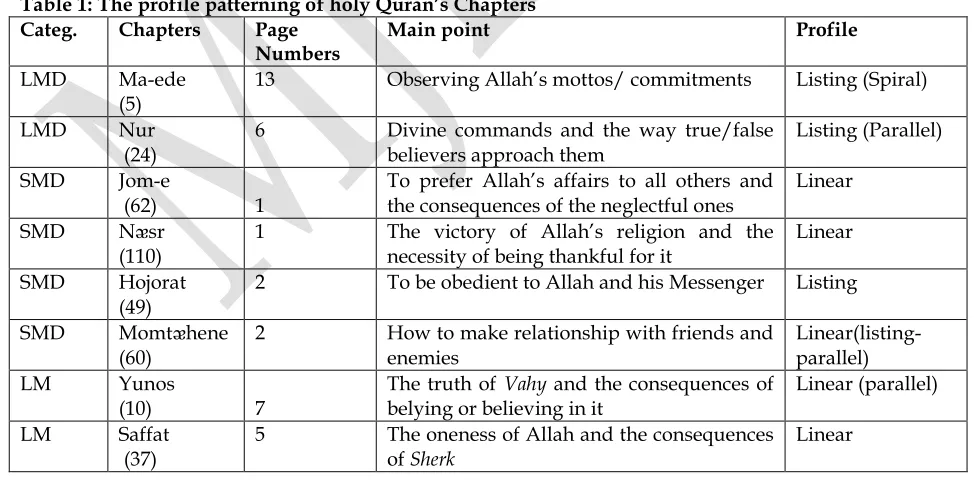
The Rhetorical Preference of Quran’s Different Chapters Mehrnoosh Eslami1,Seyyed Fazel Fazeli2,Naser Rashidi
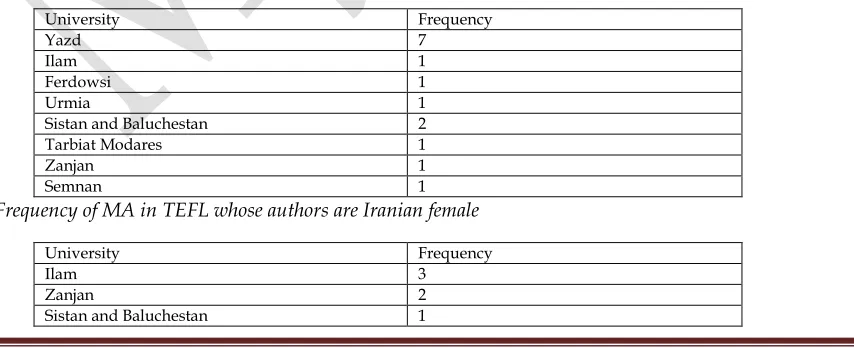
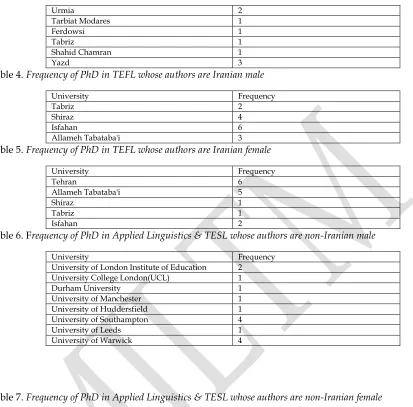
A Cross-Cultural Move Analysis of Master and Doctoral Theses/Dissertations Acknowledgment across Gender: the Case of Applied Linguistics Discipline
Ali M. Fazilatfar ,Hossein Kargar Behbahani,Mina Hosseini
The Motivational Outcomes Of Connectivism Theory In EFL
Mohammad Borna (corresponding author)1, Mahboobeh Fouladchang2
An overlook on musical and semantic repetition in Persian poem Dr. Asadollah Jafari,Seyyed Hosein Mostafavi
A Look at the Function ofFather and Son in the Epic Literature of Iran and the World Asadollah Jafari1, Elham Choobineh2
Bashkir Epic “Ural-Batyr”: Traditions of Its Modern Recitation and New Projections of Its Archaic Character
Rosalia A. Sultangareeva
Teaching Foreign Language: Teaching… Or Fraud? Sergey Anatoljevich Filatov
A Model for Interpreting Author's Intent in the Text of a German Short Story Tatiana N. Lapchinskaya
Language And Social Structure Olga B. Istomina
Modern Language Policy: Specifics Of Formation And Development Of The French Vertical Dmitry Yu. Gulinov 1Marina R. Zheltukhina, Larisa A. Shestak, Gennady G. Slyshkin, Veronica V. Katerminaand Ludmila D. Chervyakova
Modern Journal of Language Teaching Methods ISSN: 2251-6204
Vol. 8, Issue 2, February
2018
Page 10
Linguacultural Specificity Of Transferring The Category Of Comic By The Language Means
Aida G. Sadykova1, Diana F. Kajumova2, Diana N. Davletbaeva3, Gulnara H. Aleeva4, Elena L. Iakovleva5, Marina A. Zaichenko6, Galina V. Matveeva7
The Adequacy Of The Reflection Of The Comic By Means Of Another Language: Translation Equivalence And Adequacy.
Diana F. Kajumova1, Aida G. Sadykova2, Gulnara H. Aleeva3, Luiza R. Zakirova4,Galina V. Kolpakova5, Liliya I. Galeeva6, Gulnara A. Arslanova7
Public Trust Of The Population In Economic Reforms: A Theoretical And Practical Aspect
Elena V. Kamneva 1, Marina V. Polevaya 2, Sergey A. Polevoy 3, Nikolay S. Prjazhnikov 4, Tatiana V. Folomeeva 5 & 6 Eleonora V. EgorovaPsychological And Pedagogical Support Of Parents In Developing Social Adaptation Resources In Inclusive Education Participant
Svetlana V. Gridneva 1, Yuri A. Bubnov 2, Tatiana A. Dronova 3, Oksana V. Shabanova 4, Svetlana N. Kazakova 5 & Ludmila N. Gridyaeva6
Social Exclusion As Theoretical Construct: Conceptualization Problems
Tatiana I. Barsukova 1, Lyudmila A. Shvachkina 2, Valentina I. Rodionova 3, Lyudmila A. Saenko 4, Stanislav T. Baranov 5
Family Psychological Violence Influence On Adolescent Aggressive Behavior Formation Valentina I. Rodionova1*, Lyudmila A. Shvachkina2, Leila E. Kuznetsova3
Modern Journal of Language Teaching Methods ISSN: 2251-6204
Vol. 8, Issue 2, February
2018
Page 11
Vocal Hygiene as a Treatment for Teachers: A Review
Atoosa Mozafar Zangeneh1, Farzad Izadi2, Leila Ghelichi1
PhD candidate of speech& language pathology, Department of speech & language pathology, School of Rehabilitation Sciences, Iran University of Medical Science, Tehran, Iran.
MD, Associate Professor of Otorhinolaryngology ,Fellowship of laryngology,Department of Otolaryngology Head & Neck Surgery, Rasoul Akram Hospital,, Iran University of Medical Science,
Tehran, Iran.
PhD, Assistant Professor of speech& language pathology, Department of speech & language pathology, School of Rehabilitation Sciences, Iran University of Medical Science, Tehran, Iran.
Abstract
Introduction: Prevention of voice problems of teachers is very important because of its negative effects on teacher's quality of life and work. Therefore, prevention of voice disorders of teachers has been a main subject in many studies related to educational and direct voice intervention programs. Vocal hygiene is one of the main components in the treatment of teachers’ voice complaints.
Objective: Vocal hygiene methods divided to two parts for reviewing the studies related to preventive vocal treatment methods of teachers: First, vocal hygiene program which includes techniques that educate patients about normal and abusive voice production (preventive or indirect method); The other procedure is vocal educational programs which have two parts (preventive and direct method).
Materials and Methods. A survey over the vocal hygiene literature was conducted using the following electronic databases to provide this narrative review: Cochrane Library, OvidSP, Science Direct, Springer, Scopus, Google Scholar and PubMeb. These searches were done using the following key words: voice hygiene, voice educational program, voice training program and teacher. Selected essays were published or accepted from 2000 till 2015. totally, 14 articles that investigated the impact of voice hygiene or voice education program or both on the vocal quality of teachers were selected for this review.
Keywords: Voice disorders; Teacher; Dysphonia; Professional voice; Treatment; Vocal hygiene
Introduction
Voice is one of the most important ways of communicating of each person. So any injury or disorder can cause social or occupational difficulties.
Professional voice user is a person whose professional role and employment is depended on the usage of a "good" voice (e.g. A singer, actor, teacher, lawyer, minister or public speaker) [1, 2]. Several studies have shown a high incidence (about 14.6%) of voice disorders in teachers, along with the personal, professional and economical consequences of the disorder. (3) It is also explained that teachers are at the highest risk for developing signs and symptoms of vocal problems. Voice problems are result of hyper functional vocal behavior and the main complaints are temporary voice loss hoarseness, tiredness and fatigue [1, 4-7]. This kind of voice disorders may have negative effect on teacher's quality of life and work [1, 2, 4]. Prevention of voice problems in teachers has been a main subject in many studies related to educational and direct voice intervention programs. In these studies, a comparison made between voice educational programs and voice training exercises. Several authors believed that vocal educational programs or indirect interventions for teachers can prevent from occupational dysphonia and inform teachers about the signs of voice disorder onset [3, 4, 8-12]. Educational or indirect programs are consisting of vocal hygiene habits. They help professional voice user to understand vocal anatomy and voice use, the effect
1
Corresponding Author: Leila Ghelichi, PhD, Assistant Professor of speech& language pathology, Department of speech & language pathology, School of Rehabilitation Sciences, Iran University of Medical Science, Tehran, Iran.
Modern Journal of Language Teaching Methods ISSN: 2251-6204
Vol. 8, Issue 2, February
2018
Page 12
of environmental factors on voice efficacy, healthiest possible behaviors and conditions that promote laryngeal and vocal health and eliminate vocal disorders [2, 4, 9, 13-16]. On the other hand, vocal hygiene programs are time and cost effective for both patient and therapist.
As mentioned above, suitable voice is very important for different aspects of teacher's live, so the aim of this review is to investigate the effectiveness of the vocal hygiene programs as an indirect therapy for voice disorders in teachers' guild. We don't want to compare the direct and indirect protocols but instead our aim is to study the vocal hygiene programs advantages in comparison with voice educational programs advantages for teachers as a main group of occupational voice disorders patients.
Vocal Hygiene Treatment Methods
Vocal hygiene is considered as a patient oriented behavioral treatment that employed as both a preventive and therapeutical (or direct and indirect) strategy [10, 17-19].
So treatment methods that contain vocal hygiene strategies can be classified into two separate groups: 1) Vocal hygiene program which includes techniques that educate patients about normal and abusive voice production and effects of environmental factors and individual habits on voice to prevent or reduce voice disorders (preventive or indirect method) [5, 10, 11, 20-26]. 2) Vocal educational programs which have two phases; in one section they have traditional (preventive) vocal hygiene program and in another section they introduce some kind of voice training methods to shape or reform voice producing approach [3, 4, 8, 27-30]. This approach addresses both speech and non-speech factorswhich control voice production with cognitive–behavioral techniques [10].
In this section we only mention the studies that used vocal hygiene program as their main treatment strategy for teachers and did not use the voice shaping programs (group or individual therapy).
Pizolato et al. [27] investigated two groups of teachers. The 40 teacher in the first group participated in 2 lectures that gave them guidance on vocal hygiene habits. In another group beside lectures they had training exercises. In the lecture, the teachers were informed about how the voice is produced, and which the pathologies that may cause voice disorders are. The participants also instructed to practice healthy voice habits. Vocal hygiene program was focused on the importance of intake water, the effect of eating on the vocal tact, management of the vocal tract mucosa, and vocal rest as after work. The subjects were instructed to avoid vocal habits that are dreadful to the voice, such as: speaking loudly, shouting, throats clearing, speaking over background noise, overall speaking in uncomfortable positions, the use of sprays, constant intake of cold drinks, sudden changes in body temperature without suitable clothing for the situation, practicing physical activities and poor sleep quality. In both groups teachers showed higher overall V-RQOL scores after therapy. But, there were no statistical difference in scores between the groups.
In another study Roy et al. [8] divided participants in to 3 groups. In one of the groups 15 teachers participated in the voice hygiene sessions. The teachers underwent treatment over a 6-week period which was 4 sessions. Clinicians provided a VH program, and delivered written instructions that teachers must followed them. The VH program was gathered from a Morrison et al. template and with some suggestions from other sources. The Morrison et al. hygiene program included components which are presented in most traditional VH treatment programs. Ambiguous details of the vocal hygiene program were reviewed with the clinicians. All clinicians have had such VH programs before. In the VH group, subjects followed each week, for tracking all of vocal hygiene suggestions/ behaviors. Based on pre- and post-treatment comparisons, they observed desire improvements but there were no significant changes on mean VHI scores, voice severity self-ratings, and the acoustic measures of percent jitter and shimmer. In comparison with control group both treatment groups experienced more improvement but there were no significant differences between treatment groups.
Pasa et al. [9] have investigated the effects of vocal hygiene program and vocal functional exercises on teacher's voice. In VH group 13 teachers had four sessions in ten weeks. The purpose of this training was
Modern Journal of Language Teaching Methods ISSN: 2251-6204
Vol. 8, Issue 2, February
2018
Page 13
to learn correct vocal behaviors especially in the school environment. The topics of the VH session were the prevalence and effect of voice disorders in teachers, anatomy and physiology of voice, symptoms and etiology of voice disorders, methods to eliminate abusive vocal behaviors, management of health factors that cause or establish voice problems, and optimizes the speaking environment that maximize vocal efficiency and eliminate vocal injuries. The results revealed that VH appeared to be more effective in increasing knowledge of voice and decreasing vocal misuse behaviors. In addition, VH was shown to be more useful than VFE by subjects in the study.
Nanjundeswaran et al. [31] in their study, examine two types of treatment. They had individually tailored VH program and the VH program plus resonant VT (VH + VT). Study conducted both in Pittsburgh and Hong Kong and subjects were student teachers. Interventions in Pittsburgh and Hong Kong had same format, except for language of delivery (English in Pittsburgh and Cantonese in Hong Kong). At first, 7 teachers participated in 2-hour educational lectures on VH. After a short 10 to15 minutes conversation, clinician adopted VH program for each participant with main focus on hydration, control external inflammation factors, and prohibit yelling and screaming. Results suggest that a minimalist, individually tailored VH program may be adequate to prevent voice disorders in healthy student teachers except subjects had more serious problems.
Bovo et al. [32] in another study investigate teacher's voice in two groups; one of them only delivered two theoretical lectures, each 60 min long and in another group they had two lecture and three-month use of a portable vocal amplifier. In first group 20 participants did not receive any direct treatment; but, they inform about vocal hygiene norms. Data suggested that in course only group outcome measures changed but the results were not statistically significant.
In another study of Roy and his colleagues [33] they divided teachers in three groups: vocal hygiene, vocal function exercises, and a non-treatment control group. As their former study they use the VH program that adapted from a Morrison et al. template and the treatment plan was exactly the same too [8]. In three group comparison, data revealed that VFE group had better treatment result and subjects were more satisfied with it. VH group was better than controls but had lower scores in outcome measurements.
In this part we mention the studies that use vocal hygiene as one of their treatment methods and compares it with one of the voice therapy techniques or control group. The results are controversial; half of the researches show that vocal hygiene has better or the same effect of voice therapy techniques [8, 9, 27] and others showed reverse results [3, 31, 33]. But in all of studies vocal hygiene groups have better outcome than control groups [3, 8, 9, 31-33].
Modern Journal of Language Teaching Methods ISSN: 2251-6204
Vol. 8, Issue 2, February
2018
Page 14
Results Outcome measure
Type of treatments Participants
Authors
(i) Improvement in voice quality was observed in the group with vocal hygiene guidance.
(ii) There was no significant difference between groups.
Voice-Related Quality of Life instrument
V-RQOL vocal hygiene and voice
training exercise
70 teachers from public schools
Pizolato et al. 2013(27)
Modern Journal of Language Teaching Methods ISSN: 2251-6204
Vol. 8, Issue 2, February
2018
Page 15
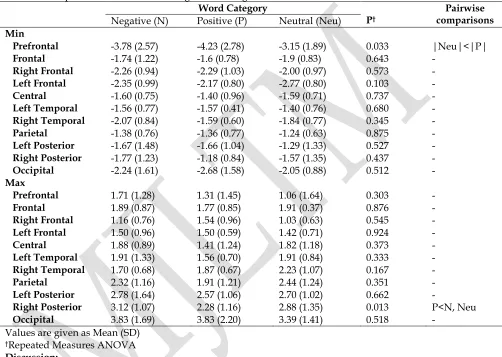
TABLE1. Summaries of studies using Vocal hygiene program
(i) Compared to the control group, both treatment groups experienced more improvement on specific outcomes measures.
(ii) There were no significant differences between the VA and VH groups.
Voice Handicap Index (VHI), a voice severity self-rating scale and
acoustic analysis voice amplification using
the ChatterVox portable amplifier (VA), vocal hygiene (VH), and a non
treatment control group 50 full-time elementary
and secondary school teachers with a history of
voice problems
Roy et al. 2002 (8)
(i) VH and VFE subjects reported improved vocal characteristics and voice knowledge after training while the control group showed deterioration on most variables.
(ii) VH participants showed greater improvements than the VFE participants.
voice knowledge and self-report questionnaire and
acoustic analysis
vocal hygiene training (VH), vocal function exercises (VFE) and control
group 37 primary school
teachers
Pasa et al. 2007 (9)
(i) Minimalist, individually tailored VH program may be sufficient to prevent voice problems.
(ii) For participants with existing voice problems, VT may be required to maximize results of intervention.
Voice Handicap Index (VHI)
Individually tailored VH program, the VH program plus resonant VT (VH + VT)
and a control group 31 female and male
student teachers in Pittsburgh and Hong Kong (29 female and 2
male) Nanjundeswaran et al. 2012 (31)
(i)After 3 months, results in “course + amplifier” group demonstrated a significant amelioration.
(ii) The same measures also changed in the “course only” group, but the results were not statistically significant.
Voice Handicap Index (VHI) and perceptual grade of dysphonia Course(VH lecture) plus
vocal amplifier group and course only group 40 female primary school
teachers Bovo et al.(32)
VFE group showed higher scores both in VHI and questionnaire than VH group
Voice Handicap Index (VHI) and teacher's
questionnaire vocal hygiene (VH), vocal
function exercises (VFE), and non treatment control
group Sixty full-time elementary
and secondary school teachers with a history of
voice problems
Roy et al. 2001 (33)
Modern Journal of Language Teaching Methods ISSN: 2251-6204
Vol. 8, Issue 2, February
2018
Page 16
Vocal educational programs
In this part we only point out the studies that used vocal education program as one oftheir main treatment strategies for teachers (group or individual therapy). This program contains both vocal and environmental elements of voice production.
In the Bovo et al. [3] study 64 women teachers divided in two groups. 23 teachers in first group received professional voice user course (4 sessions) and an instructional pamphlet and during next 3 months they focused on the vocal ergonomics norms and fill out daily reports and do their exercises and report the outcome. Another group is control group. Twelve months later teachers in two groups compared and results revealed that acoustic and VHI parameters is better in treatment group but there was no significant difference in stroboscopic results in two group.
Pizolato et al. [4] examined two groups of teachers. In the first group teachers participated in 2 vocal hygiene habits lectures. In the experimental group there were 36 teachers who received lecture and four voice training exercise sessions. The sessions include four main topics: 1) posture and cervical relaxation; 2) respiration; 3) phonation, frequency, and intensity; and 4) resonance and articulation. Voice training exercises showed a positive and immediate effect on quality of voice, but it was not continued longitudinally.
Gillivan-Murphy et al. [34] assigned 20 teachers in two treatment and control group. In treatment group participants received direct treatment for 5 to 6 sessions in 8 weeks. The treatment procedure was same as VFE techniques used by Roy et al. [33] that described in the previous section. The indirect phase of treatment (VH) contain written information on the different parts (medical, vocal abuse and misuse, health, emotion and environmental). The main source for VH information was Morrison and Rammage model. Control group received no treatment. Treatment group showed enhanced voice symptoms and voice care information in all of self-reported masseurs except VQRL than control group.
In their study, Faham et al. [35] recruited 61 teachers to treatment group and 66 teachers to control group. Treatment group received voice education program in 4 weeks and continued to use it for another 4 weeks. Participants in treatment group learned some vocal hygiene issues (voice production, voice and larynx protection, vocal abusive behaviors detection, prevention and substitution), correct breathing patterns and effect of them on voice production and laryngeal muscle tension and reduction of it. Control group received no treatment. Teachers in the excremental group improved notably in VHI score, whereas teachers in the control group showed deterioration.
Duffy and Hazlett [36] in their study examined 55 teachers and divided them in three groups. 23 teachers were in the control group, 20 in the indirect treatment group, and 12 in the direct treatment group. In the indirect group information presented about vocal hygiene tips in daily life. In direct group despite this information, they also provided trainings about posture, respiration, release of tension in the vocal tract, resonance, and voice projection. Acoustic
and self-perceptual assessments showed deterioration for the control group, progression for the direct group, and no change for the indirect group.
Richter et al. [37] investigated 204 student teachers in two groups: training group consisted of 123 participants and control group consisted of 81 participants. In the training group participants received training in 1.5 year; 8 sessions in first half that included voice hygiene, postural alignment, breathing control, optimal pitch, vocal intensity, vocal resonance, articulation and prosodic information. Two review sessions in second half and a voice teacher that screened vocal parameters in last half. The training group demonstrated improved voice quality compared with control group, whose voice qualities worsen. But both groups reported increase in self-reported vocal strain.
65 future teachers enrolled in Timmermans et al. [38] research. Students divided in two groups (32-person training group and 30-person control group). The voice training group received 3 hours of indirect and 3 hours of direct training. The indirect treatment focused on reducing the factors that cause a voice problem. On the other hand, direct treatment concentrated on the voice production, such as an
Modern Journal of Language Teaching Methods ISSN: 2251-6204
Vol. 8, Issue 2, February
2018
Page 17
appropriate posture, breathing techniques and good breath support; find optimal pitch, the control of pitch, voice projection, resonance and articulation. After 4 months subjective measurements (voice loading test and dysphonia severity index (DSI)) revealed no differences between groups. In contrast, objective measurements (GRBAS) showed several significant differences between two groups.
In their later study Timmermans et al. [39] investigated 81 students (27 males and 54 females). The trained group (n = 51) received the same treatment protocol as their earlier research [38], plus 30 minutes individual training for each person. The control group (n = 30) received no treatment. Again after 4 months subjective measurements demonstrated no major change except in strain parameter; and objective measurements also showed improvements in many parameters between two groups.
In this part we pointed out the researches that used vocal educational program as one of their treatment protocols; and mainly compare it with no treatment group. It is obvious that different vocal educational programs with different durations all have positive effect on voice qualities in different studies.
TABLE 2. Summaries of studies using Vocal education program
Modern Journal of Language Teaching Methods ISSN: 2251-6204
Vol. 8, Issue 2, February
2018
Page 18
Results Outcome measure
Type of treatments Participants
Authors
A year after the course, the positive effects kept on, but they were a little reduced
stroboscopy, perceptual and
electro-acoustical voice analysis,
Voice Handicap Index, and a course benefit
questionnaire professional voice users
course (4 session) 64 women teach in
elementary and kindergarten school Bovo et al.(3)
(i) Improvement in voice quality was observed in the experimental group with voice training exercise.
(ii) Voice training exercises showed a positive and immediate effect on quality of voice, but it
was not continued longitudinally.
Acoustic analysis of the vowel [i] Experimental group: vocal
hygiene and voice training exercise
Control group 81 women and 21 men
teaching in public schools Pizolato et al.
2013(4)
Direct treatment that contains VFEs and VH education enhanced self reported questionnaire and voice care information.
Self-report questionnaire: Voice-Related Quality of Life
(VRQOL), the Voice Symptom Severity Scale (VoiSS) and Voice Care Knowledge
Visual Analogue Scale (VAS) Treatment group: vocal
function exercises (VFEs) and vocal hygiene (VH)
education
Control group 20 school teachers
Gillivan-Murphy et al.(34)
Teachers in the excremental group improved notably in VHI score, whereas teachers in the control group showed deterioration Voice Handicap Index
(VHI)
I Treatment group: some vocal hygiene issues, correct breathing patterns and effect of them on voice
production and laryngeal muscle tension and
reduction of it
Control group 61 teachers
in the treatment group and 66 teachers in the
control group Faham et al.(35)
Acoustic and self-perceptual assessments showed deterioration for the control group,
progression for the direct group, and no change for the indirect group.
Acoustic measurements: highest
frequency, lowest intensity, maximum phonation time (MPT),
and jitter. self-perceptual
measurements: Vocology Screening
Profile (VSP) and
Voice Handicap Index (VHI)
Indirect group: vocal hygiene (VH), direct group
: vocal hygiene (VH) + information about posture,
respiration, release of tension in the vocal tract,
resonance, and voice projection
Control group 55 teachers divided in
three groups: 23 were in the control group, 20 in the indirect treatment
group, and 12 in the direct treatment group Duffy and Hazlett (36)
(i)The training group demonstrated improved voice quality compared with control group, whose voice qualities worsen.
(ii) Both groups reported increase in self reported vocal strain.
videostroboscopy, VHI, the highest fundamental, the lowest intensity, the
jitter, MPT and a vocal loading test voice hygiene and voice
education program and control group with no
treatment 204 student teachers in
two groups: training group consisted of 123 participant and control group consisted of 81
participants
Richter et al. (37)
Modern Journal of Language Teaching Methods ISSN: 2251-6204
Vol. 8, Issue 2, February
2018
Page 19
Conclusion
Various voice treatment methods used for teacher with voice complaints. Among vocal hygiene plays an important role in prevention of voice disorders and improvement of vocal quality and self perception of voice. In this paper two main approaches for voice treatment in teachers that contain vocal hygiene were discussed. These two techniques were vocal hygiene program (preventive or indirect method) and vocal educational program (direct method). As mentioned above in indirect method the treatment effect was little and last for few months after treatment but in direct method evidence showed that outcomes were significant and observable for own teachers too. This procedure also had longer effects.
References
1.Martin S. and Darnley L. The teaching voice: Whurr Publishers,2004.
2. Colton R.H., Casper J.K., Leonard R. Understanding Voice Problems: Lippincott Williams and Wilkins, 2011.
3. Bovo R., Galceran M., Petruccelli J. and Hatzopoulos S. Vocal Problems Among Teachers: Evaluation of a Preventive Voice Program. Journal of Voice, 2006; 12(6):705-22.
4. Pizolato R.A., Rehder M.I.B.C., Tadeu dos Santos Dias C., Meneghim M.C., Ambrosano G.M.B., Mialhe F.L. and Pereira A.C. Evaluation of the Effectiveness of a Voice Training Program for Teachers. Journal of Voice, 2013; 27(5):603-10.
5. Roy N., WeinrichB., Gray S.D., Simon M., Dove H., Corbin-Lewis K., Stemple J.C. and Sapienza C.M. Three Treatments for Teachers With Voice Disorders: A Randomized Clinical Trial. Journal of Speech, Language and Hearing Research, 2003; 46:670-88.
6. Hazlett D.E., Duffy O.M. and Moorhead S.A. Review of the Impact of Voice Training on the Vocal Quality of Professional Voice Users: Implications for Vocal Health and Recommendations for Further Research. Journal of Voice, 2009; 25(2):181-91.
7. Barnes-Burroughs K. and Rodriguez M.C. The Teaching Performer: A Survey of Assets Versus Choices in Voice Use. Journal of Voice, 2011; 26(5):642-55.
8. Roy N., Weinrich B., Gray S.D., Tanner K., Walker Toledo S., Dove H., Corbin-Lewis K. and Stemple J.C. Voice Amplification Versus Vocal Hygiene Instruction for Teachers With Voice Disorders: A Treatment Outcomes Study. Journal of Speech, Language, and Hearing Research, 2002;45:625-38.
(VLT)
(i) Subjective measurements revealed no differences between groups.
(ii) Objective measurements showed several significant differences between two groups.
subjective measurements: voice
loading test and dysphonia severity
index (DSI)
objective measurements:
GRBAS 3 hours indirect treatment:
reducing the factors that cause a voice problem. 3 hours direct treatment: posture, breathing, pitch, voice projection, resonance
and articulation
control group 65 future teacher in two
groups:
32 student in training group and 30 student in
control group Timmermans et al. (38)
(i) Subjective measurements revealed no differences except in strain parameter between groups.
(ii) Objective measurements showed several significant differences between two groups.
subjective measurements: voice
loading test and dysphonia severity
index (DSI)
objective measurements :
GRBAS 3 hours indirect treatment:
reducing the factors that cause a voice problem. 3 hours direct treatment: posture, breathing, pitch, voice projection, resonance
and articulation plus 30 minutes individual training
control group 81 students (27 males
and 54 females) in two groups:
51 student in training group and 30 student in
control group Timmermans et al. (39)
Modern Journal of Language Teaching Methods ISSN: 2251-6204
Vol. 8, Issue 2, February
2018
Page 20
9. Pasa G., Oates J. and Dacakis G. The relative effectiveness of vocal hygiene training and vocal function exercises in preventing voice disorders in primary school teachers. Logopedics Phoniatrics Vocology, 2007;32: 128-140.
10. Behlau M. and Oliveira G. Vocal hygiene for the voice professional. Current Opinion in Otolaryngology & Head and Neck Surgery, 2009;17:149–54.
11. Timmermans B., Vanderwegen J. and De Bod.S. Outcome of vocal hygiene in singers. Current Opinion in Otolaryngology & Head and Neck Surgery,2005;13:138-42.
12. Yiu E.M-L. Impact and Prevention of Voice Problems in the Teaching Profession: Embracing the Consumers’View. Journal of Voice,2002;16(2):215-28.
13. Chan R.W. K. Does the Voice Improve with Vocal Hygiene Education? A Study of Some Instrumental Voice Measures in a Group of Kindergarten Teachers. Journal of Voice,1994;8(3):279-91.
14. Zambon F., Moreti F. and Behlau M. Coping Strategies in Teachers With Vocal Complaint. Journal of Voice, 2013;28(3):341-8.
15. Van Houtte E., Claeys S., Wuyts F. and Van Lierde K. The Impact of Voice Disorders Among Teachers: Vocal Complaints, Treatment-Seeking Behavior, Knowledge of Vocal Care, and Voice-Related Absenteeism. Journal of Voice, 2010;25(5):570-5.
16. Cantor Cutiva L., Vogel I., Burdorf A. Voice disorders in teachers and their associations with work-related factors: A systematic review. Journal of Communication Disorders. 2013;46:143–55.
17. Timmermans B., De Bodt M.S., Wuyts F.L. and Van de Heyning P.H. Analysis and Evaluation of a Voice-Training Program in Future Professional Voice Users. Journal of Voice, 2004;19(2):202–10.
18. Timmermans B., De Bodt M.S., Wuyts F.L. and Van de Heyning P.H. Training outcome in future professional voice users after eighteen months voice training. Erasmus Institute Brussels, Department Rits Faculty of Medicine, UA, Belgium. Department of Otolaryngology, Head and Neck Surgery and Communication Disorders.
19. Rodrıguez-Parra M.J. , Adrian J.A. , Casado J.C. Comparing voice-therapy and vocal-hygiene treatments in dysphonia using a limited multidimensional evaluation protocol. Journal of Communication Disorders,2011; 44: 615-630.
20. Pedrosa V., Pontes A., Pontes P., Behlau M. and Peccin S.M. The Effectiveness of the Comprehensive Voice Rehabilitation Program Compared With the Vocal Function Exercises Method in Behavioral Dysphonia:A Randomized Clinical Trial. Journal of Voice,2015.
21. Achey M.A., He M.Z. and Akst L.M. Vocal Hygiene Habits and Vocal Handicap Among Conservatory Students of Classical Singing. Journal of Voice,2015.
22. Pedersen M., Beranova A. and Moller S. Dysphonia: medical treatment and a medical voice hygiene advice approach. A prospective randomised pilot study. Eur Arch Otorhinolaryngol, 2004;261:312-5. 23. Timmermans B., De Bodt M.S., Wuyts F.L. and Van de Heyning P.H. Voice quality change in future professional voice users after 9 months of voice training. Eur Arch Otorhinolaryngol,2004;261:1-5.
24. Yun Y., Kim M. and Son Y. The effect of vocal hygiene education for patients with vocal polyp. Otolaryngology–Head and Neck Surgery,2007;137:569-75.
25. Broaddus-Lawrence P.L., Treole K., McCabe R.B., Allen R.L. and Toppin L. The Effects of Preventive Vocal Hygiene Education on the Vocal Hygiene Habits and Perceptual Vocal Characteristics of Training Singers. Journal Of Voice,2000;14(1):58-71.
26. Thomas L.B. and Stemple J.C. Voice Therapy: Does Science Support the Art? Communication Disorders Review,2007;1(1):49-77.
27. Pizolato R.A., Rehder M.I.B.C., Tadeu dos Santos Dias C., Meneghim M.C., Ambrosano G.M.B., Mialhe F.L. and Pereira A.C. Impact on quality of life in teachers after educational actions for prevention of voice disorders: a longitudinal study. Health and Quality of Life Outcomes,2013;11(28).
28. Sataloff R.T. Vocal Health and Pedagogy Volume 2: Advanced Assessment and Practice: Plural Publishing,Inc; 2006.
Modern Journal of Language Teaching Methods ISSN: 2251-6204
Vol. 8, Issue 2, February
2018
Page 21
29. Hackworth RS. The effect of vocal hygiene and behavior modification instruction on the self-reported vocal health habits of public school music teachers. International Journal of Music Education,2007;25(1). 30. Behrman A., Rutledge J., Hembree A. and Sheridan S. Vocal Hygiene Education, Voice Production Therapy, and the Role of Patient Adherence: A Treatment Effectiveness Study in Women With Phonotrauma,2008;51:350–66.
31. Nanjundeswaran C., Li N.Y.K., Chan K.M.K., Wong R.K.S., Yiu E.M.L. and Verdolini-Abbott K. Preliminary Data on Prevention and Treatment of Voice Problems in Student Teachers. Journal of Voice,2012;26(6).
32. Bovo R., Trevisi P., Emanuelli E. and MartiniI A. Voice Amplification For Primary School Teachers With Voice Disorders: A Randomized Clinical Trial. International Journal of Occupational Medicine and Environmental Health,2013;26(3):363 – 72.
33. Roy N., Gray S.D., Simon M., Dove H., Corbin-Lewis K. and Stemple J.C. An Evaluation of the Effects of Two Treatment Approaches for Teachers With Voice Disorders: A Prospective Randomized Clinical Trial. Journal of Speech, Language, and Hearing Research, 2001;44:286–96.
34. Gillivan-Murphy P., Drinnan M.J., O’Dwyer T.P., Ridha H. and Carding P. The Effectiveness of a Voice Treatment Approach for Teachers With Self-Reported Voice Problems. Journal of Voice,2005;20(3):423-31.
35. Faham M., Ahmadi A., Drinnan M., Saadatmand N., Fatahi E. and Jalalipour M. The Effects of a Voice Education Program on VHI Scores of Elementary School Teachers . Journal of Voice,2015.
36. Duffy O.M. and Hazlett D.E. The Impact of Preventive Voice Care Programs for Training Teachers: A Longitudinal Study. Journal of Voice,2003;18(1).
37. Richter B., Nusseck M., Spahn C. and Echternach M. Effectiveness of a Voice Training Program for Student Teachers on Vocal Health. Journal of Voice,2015.
38. Timmermans B., Coveliers Y., Meeus W., Vandenabeele F., Van Looy L. and Wuyts F. The Effect of a Short Voice Training Program in Future Teachers. Journal of Voice,2010;25(4):191-8.
39. Timmermans B., Coveliers Y., Wuyts F.L. and Van Looy L. Voice Training in Teacher Education: The Effect of Adding an Individualized Microteaching Session of 30 Minutes to the Regular 6-Hour Voice Training Program. Journal of Voice,2011;26(5).
Modern Journal of Language Teaching Methods ISSN: 2251-6204
Vol. 8, Issue 2, February
2018
Page 22
An Analysis of Translation Strategies in the Persian Translation of Woody Allen and
Fernando Sorrentina’s Comic Stories Adopted by Hossein Yaghoobi
Mehri Farzaneh ª,Mostafa Movahed,Zahra Yazdani Zadeh ªFaculty member of Payame Noor University ,Isfahan ,Iran
Instructorof Payam Noor University ,Isfahan ,Iran
Abstract
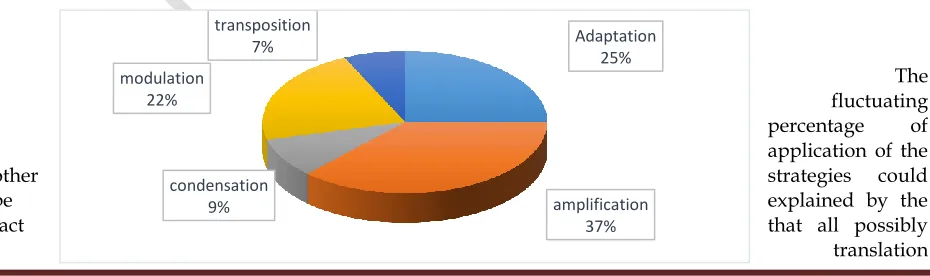
In translating comic expressions, a translator should be able to preserve the imaginative pleasure and emotional impacts without damaging the exact meaning. This principle is important for the purpose of conveying the message of the source text to the target text in a way that helps audience make sense of the product (translation). Therefore, every translator needs to have a good command of both languages and cultures being translated as well as knowledge about how to cope with different translation strategies in translating comic expressions. The present study is a descriptive qualitative research that aimed to explore and describe the translation techniques used in translating comic stories written by Woody Allen and Fernando Sorrentina translated by Hossein Yaghoobi. To this end, six stories of the book were selected as the source data. This study employed two stages of analysis, that is, domain and taxonomic analyses. In the domain analysis, comic translations from the book were identified, evaluated, and verified. In performing the taxonomic analysis, the 5 translation techniques namely adaptation/cultural equivalent, amplification/addition, condensation/reduction, modulation, and transposition proposed by Newmark(1982), Panek(2009), and Molina & Albir (2002) applied in the translation of the selected comic expressions were identified and discussed. Based on the analysis of the results, the procedures with a higher rate of use were amplification (37%), adaptation (25%), and modulation (22%). The strategies with a lower rate of application, however, were condensation (9%) and transposition (7%).Besides, the most frequently used strategy in comic translation was amplification, however, the least frequently used strategy was transposition..
Keywords: comic translation,strategy,source text ,target, translator
Introduction
Translation consists of transferring the meaning of the source language into the receptor language by going from the form of the first language to the form of a second language by way of semantic structure in which meaning must be held constant(Larson,1984:3).Newmark(1982:7) defines translation as a craft consisting in an attempt to replace a written message or statement in one language by the same message or statement in another language .Becuase the role of translator is to keep the meaning constant , whenever necessary, the receptor language form should be changed in order that the source language meaning not be distorted(Larson,1984:11).Translator plays an important role as a bilingual or multi-lingual cross- cultural transmitter of culture and truths by attempting to interpret concepts and speech in a variety of texts as faithfully and accurately as possible(Gerding , 2000).There have been many different texts which are translated from one language into another language such as religouse, history, psychology ,literature and so on. One kind of literary text is humour.The term “ humour” itself originated from Latin word “ umor” meaning fluid and was used as a medical term(Chiaro,2010:13).Chiaro states that todays humor is an “ umbrella term” that covers such concepts as “ comedy” , “ fun” , “ ridiculous” and more( Chiaro ,2010:14).Dudden (1987:7) remarks that humour to the anthropologist is “ a determined because the sociological factors are the primary mechanism leading to its occurrence”.According to Vandaele:” humour translation is qualitatively different from “ other types “ of translation and , consequently, one can not write about humour translation in the same way one writes about other types of translation”(Vandaele,2002:150). Considering the complicity , Chiaro compares translation of poetry with translation of humour and states that “ humour easily wins the first prize”(Chiaro,2010:21).Humour
Modern Journal of Language Teaching Methods ISSN: 2251-6204
Vol. 8, Issue 2, February
2018
Page 23
becomes “untranslatable” simply because “ an adequate degree of equivalence is hard to achieve”( Chiaro,2010:8).According to Molina and Albir,(2002) there are 18 translation techniques : aptation,amplification,borrowing,calque,compensation,description,discursive creation,established equivalent, generalization, linguistic amplification, linguistic compression, literal translation , modulation ,particularization, reduction, transposition, substitution and variation. For translating humour texts ,Panek ,M(2009) introduces some strategies which are condensation, decimation, deletion ,paraphrasing, neologism, transposition, modulation, substitution and literal translation .The aim of this study is to identify techniques and strategies which are applied for translating humour texts.To this end we refer to Newmark ,(1988 ) and Molina & Albir, (2002 )strategies of translation in general and Panek ,(2009) techniques of humour translation in specific
Literature Review
Humor is one of the important aspects of humanity It is an integral part of everyday communication and it is a literary works. Humor translation is said to “present some extra difficulties not encountered in translating straight referential prose and compare with the difficulties faced in the translation of poetry” Chiaro,( 1992). Humor is also considered as “one of the specific textual aspects which pose the greatest challenge to the translator, and which test the process of decision making to the full” (Sousa, 2002). Different definitions of translation are told by many translators. Newmark ,(1982: 7) defines translation as a craft consisting in an attempt to replace a written message or statement in one language by the same message or statement in another language. Larson, (1984: 3) defines translation as a process of transferring the meaning of the Source Language (called SL henceforth) into the Target Language (called TL henceforth), which is the language of the receptors, by retaining the SL and changing its forms. Translation process involves the perspectives of formal equivalence which represents the closest equivalent in terms of meaning and styles of both the SL and TL.At last , translation is transferring the meaning of written or spoken language into their closest equivalent written or spoken language.Translation is a complicated process.The translator moves back and forth from the source text to the target text .In translating, Newmark ,(1988:144) mentions that there are basic translation processes. Those are:
• The interpretation and analysis of the SL text :This explains the reason for interpretation of the translator on the text is. A translator should be someone who has experience in the message he wants to transform or at least, he processes adequate knowledge.
• The translation procedure :This process “may direct”, or the basis of SL and TL corresponding syntactic structure, or through an underlying language “inter language”.
• The reformulation of text :In this point, the process has to be in accordance with the writer’s ideas of intention, the reader’s curious wish, the proper form of TL and so on.
The categories used to analyze translations allow us to study the way translation works .These categories are related to text ,context and process. Textual categories describe mechanisms of coherence ,cohesion and thematic progression.Newmark ,(1988:144) also divided the translation procedure many types . We discuss on some strategies that applied in this study .They are as follows:cultural Translation : This is an approximate translation where an SL culture word is translated by TL cultural word. Shift or transpositions : A “shift” or “transportation” is a translation procedure involving a change in the grammar from SL to TL.Modulation : Modulation define “a variation through a change of viewpoint, of perspective and very often of category of thought”. Free modulation are used by translator when target language rejects literal translation. Compensation : This procedure occurs when loss of meaning, sound effect metaphor or pragmatic effect in one part of a sentence is compensated in another part.Reduction and expansion : In this type, a translator has to change the system of the translation work from the original one to obtain the most appropriate translation result to find out the closest equivalent in TL Newmark, (1988:56).Amplification: explanation of the meaning of a segment of
Modern Journal of Language Teaching Methods ISSN: 2251-6204
Vol. 8, Issue 2, February
2018
Page 24
the text. It is used in an „anonymous‟ text when it is poorly written, or has important implications or omissions Newmark, (1988, p.90).
Molina & Albir, (2002) suggested 18 translation techniques. Some of the techniques is considered in this study are as follows : Adaptation : Molina & Albir, (2002: 500) define adaptation as replacing a cultural element in a SL text with the one originating from TL culture which makes the translation of the original more familiar in the TL. According to Hatim & Munday, (2004: 151), adaptation is used in those cases where the type of situation being referred to by the SL message is unknown in the TL culture. Therefore, the translator has to create a new situation that can be considered as being equivalent. Amplification : Molina & Albir, (2002: 500) define amplification as the technique applied by adding or introducing information item that is not present in the SL text. This technique can be used to provide necessary additional information. Amplification occurs when the TL uses more signifiers to cover syntactical or lexical gaps.Compensation : Molina & Albir (2002: 500) explain that compensation takes place when an item of information or a stylistic effect from the ST that cannot be reproduced in the same place in the TT is introduced elsewhere in the TT. Modulation : Hatim & Munday, (2004: 150) define modulation as a variation of the form of the message obtained by a change in point of view when literal or transposed translation results in a grammatically correct utterance or is considered unsuitable, unidiomatic, or awkward in the TL. Molina & Albir ,(2002: 510) specify that it changes the point of view, focus, or cognitive category in relation to the ST which can be either lexical or structural. Reduction : Molina & Albir ,(2002: 510) define reduction as suppressing or reducing information item found in the SL so that it does not appear in the TL. Transposition :Molina & Albir, (2002: 511) define transposition as changing the grammatical category. Budiharjo & Minggus (2016: 103) specify that transposition means translating units of translation by applying changes in grammatical category, because of the difference between the grammar of the SL and that of the TL.
3.METHODOLOGY
To study the strategies used to translate comic expressions, as practiced by Yaghoobi Hossein, a well-known Iranian translator, a careful proximity of the source language (English) sentences and the respective Persian translation of the intended sentences was created. Of the total sentences contained in these stories, 100 comic phrases or sentences were extracted and classified based on the application of translation techniques These technique are: adaptation/cultural equivalent, amplification/addition, condensation/reduction, modulation, and transposition of Newmark, (1981),Panek ,(2002),Molina and Albir , (2002) .To carry out the study six stories of woodyallen and Fernando Sorrentino were chosen as the main sources.Hoseein yaghobi ,in his book titles “ Harjo Marj-e Mahz” has translated these stories The number and percentage of each strategy practiced by translator was measured and put into a table. Then, to analyze the strategies used in the translation of the so-called sentences and phrases, a qualitative and descriptive analysis was carried out by the researchers.The frequencies and percentages of each translation technique applied by Yaghoobi Hossein in the translation of the comic stories of Woody Allen and Fernando Sorrentina are given in Table 3.1.
3.1.Tables .Number and percentage of translation methods used in the translation of the comic stories of Woody Allen and Fernando Sorrentina
Transla tion method Adaption/c ultural equivalant Amplifi cation /additio n Condens ation/ reductio n modula tion transpos ition
number 25 37 9 22 7
percent age
%25 %37 %9 %22 %7
As it is observed in the above table amplification, adaptation, and modulation were the most frequently used techniques in Yaghoobi's translation. The table also reveals that compensation was the
Modern Journal of Language Teaching Methods ISSN: 2251-6204
Vol. 8, Issue 2, February
2018
Page 25
least frequently used strategy with 2-time occurrence (2%). It seems that compensation has little use in transmission of comic mode and the translator has preferred to use this technique less than the other techniques.
4. RESULT AND DISCUSSION
4.1. Amplification/Addition
In amplification, the translator adds more details or words to a SL information item in the TL text, mainly to express the same idea. The analysis of the data shows that amplification is the most frequently occurring technique (37%) in the group of techniques. This over-use of amplification technique may be due to translator’s preference for descriptions of details that are not expressed in the SL. It seems that the translator does really know what these comic terms imply or denote, but cannot find an equivalent term in the TL, or actually, there is no equivalent term in the TL, so he tends to describe them. Table 4.1.1. shows three randomly chosen examples of this type of translation.
4.1.1. Table.Samples of amplification translation strategy adopted by Yaghoobi
Source Texts Target Texts
This wretch who had made me miss my siesta.
mardake tarsoo mesle khoroose bi mahal chorte baad az zohre mara pare kard.
my point of view won out belakhare harfe manteghie man be korsi neshast.
you don’t understand these matters chand dafe behet goftam halo to in chiza ro nemigiri
aking a look at English and Persian version of sentence (3) indicates the words "chand dafe" and "halo" have been added to the Persian translation in order to make the translation more intelligible and humorous for the Persian readers.
4.2. Adaptation/ Cultural equivalent
As it is observed in table 1, the frequency of adaptation in Yaghoobi's translation is also high (25%). The following table illustrates some examples of this approach.
4.2.1.Table Samples of adaptation translation strategy adopted by Yaghoobi
Source Texts Target Texts
My wife watched an endless television program
hamsaram yek seriale darepite television negah mikard.
Whenever I feel like it harvaght eshgham bekeshad.
I must go az khedmateton morakhas mishavam.
According to New Mark, (1988) adaptation, also known as cultural equivalent, is a shift in cultural element where the translator expresses cultural realities of the original text in a quite different way that is familiar or better suited to the culture of the target language. This mostly achieves a more familiar and intelligible text. A simple example would be translating “Whenever I feel like it ” from English into Persian. In this case the translator would need to adapt the translation to the cultural reality of the Persian-speaking world and translate it as “harvaght eshgham bekeshad ”In this example, “I feel like it”
Modern Journal of Language Teaching Methods ISSN: 2251-6204
Vol. 8, Issue 2, February
2018
Page 26
has been translated as" eshgham bekeshad" Most Iranian people know what is" eshgham bekeshad" , thus the translator has preferred to adapt or domesticate the translation in a way that conveys the same result as in the source-text and have a similar effect on the TL readers.
4.3. Modulation
The results of this study demonstrate that modulation is another translation technique that has widely been used in by the translator (22%). The following table presents some specific examples of this strategy.
4.3.1.Table: : Samples of modulation translation strategy adopted by Yaghoobi
Source Texts Target Texts
A sprig of parsley Ashghal sabzi
How the devil do you have the nerve to walk into my house
mage khoneye mardom tavile ast ke hamintor saretono mindazid paeen o miaed too. I missed slept with my clothes on bedone inke hata sham bokhoram o
lebasamo avaz konam roye takht az hosh raftam.
According to Molina, (2002) modulation basically means using a phrase that is different in the source and target languages to convey the same idea. In other words, modulation helps the translator generate a change in the point of view or pespective of the message Munday,( 2008), p. 57; Molina & Albir,) without altering its meaning and without generating an unnatural feeling in the reader of the target text. which can occur not only on the word level but also on the phrase, clause and sentence level (Barth, 1971, p. 41). Here's an example of modulation in translating from English to Persian: How the devil do you have the nerve to walk into my house?
"
؟ mage khoneye mardom tavile ast ke hamintor saretono mindazid paeen o miaed too"
In the light of the above example(s) one may infer that the translator has tried to avoid lack of fluency or exoticism in the translation and convince the Persian readers that they are not reading a translation, but an original text. Obviously, providing such a translation requires an excellent knowledge of both languages (English and Persian) involved in the translation, and the translator has benefited well from this knowledge.
4..4.condensation
Based on the results illustrated in table 1, condensation was applied 9 times (9%). Table 5 illustrates some examples of this approach.
4.4.1. Table : Samples of condensation translation strategy adopted by Yaghoobi
Source Texts Target Texts
The animal slipped up his pants leg between the leg and the pants
ankabot be sorat az roye kafsh varede pacheye shalvaresh ahod va az pash bala raft To imagine the frenzied state of nervousness
and excitation with which I was seized
mitavanand hads bezanand ke man aan roz zohr che hali dashtam
A receptionist with a rear end you can’t keep your eyes off
yek monshie to del boro
Modern Journal of Language Teaching Methods ISSN: 2251-6204
Vol. 8, Issue 2, February
2018
Page 27
An example of this procedure could be the following one: A receptionist with a rear end you can’t keep your eyes off " yek monshie to del boro"
According to Panek, (2009), in condensation the translator suppresses a SL information item in the TL text, mainly when that information is considered unnecessary. The above presented translation indicates that the phrase ‘with a rear end’, in the SL sentence has been omitted from the TL text because the phrase seems to be redundant and unnecessary from the point of view of the translator. Obviously, It is the role of the experienced translator to decide which elements are redundant and can be deleted. The reasons behind such deletions are not clear, but probably the main reason of employing such a strategy in translation is its simplicity whereby the translator decides to transform a long and complex sentence in the SL into a short one in the TL. According to Zhao, (2016), this strategy is especially beneficial for children’s literature translation, whose readers are children with incomplete cognitive level and limited vocabulary.
4.5. Transposition
Another technique used by the translator is transposition, which is defined as changing the grammatical category of the SL and that of the TL (Makaryk,1993; Molina & Albir.( 2002); Megerdoomian ,(2017 ). Table 6 illustrates some special examples of transposition.
4.5.1.Table: Samples of transposition translation strategy adapted by Yaghoobi
Source Texts Target Texts
Presumed insanity divaneye mashang
I’d waken integrate mood with a rosy outlook on
sarhalo sarzende az takhtekhab boland shodam
Blinded momentarily by arrogance .I honestly believed .I could easily crush him against the wood of baseboard with my shoe
qorore kazeb baraye yek lahze cheshme basirate mara koor kard.
These examples clearly show how morphological or syntactic categories of the SL (English) have been changed in the TL (Persian).According to Megerdoomian (2017), grammatical transpositions, with appropriate morphological and syntactic adjustments, are quite frequent in order to obtain a translation that sounds as if it had been originally written in the TL.
5.CONCLUSION
The current study is a descriptive qualitative research that aims to identify the translation strategies used in translating comic stories of Woody Allen and Fernando Sorentino translated by Hossein Yaghoobi in his book titled Harj-o -Marj-e -Mahz .After collecting and analyzing data ,it has been concluded that modulation, transposition , condensation ,amplification and adaptation have been used by the translator . Based on the analysies of the results the most frequently used translation strategy was amplification with the occurance of 37 times (%37). The least frequently used strategy , however , was transposition with 7-time occurance (%7)
5.1.Figure : The percentage of applied strategies in translator's work
The fluctuating percentage of application of the
other strategies could
be explained by the
fact that all possibly
translation Adaptation 25% amplification 37% condensation 9% modulation 22% transposition 7%
Modern Journal of Language Teaching Methods ISSN: 2251-6204
Vol. 8, Issue 2, February
2018
Page 28
strategies can not be equally applied to comic expressions .
An example appendix
Appendix 1
CONDENSATION/REDUCTION:
I could easily crush him against the wood of
baseboard with my shoes. lenge kafsh kalakash ra bekanam va amadeye fekr mikardam ke mitavanam ba yek zarbe zarbe shodam.
The animal slipped up his pants leg between leg and the pants.
ankabot be sorat az roye kafsh varede pacheye shalvaresh ahod va az pash bala raft
Knock it the floor and then kill it , catch it. ba zarabate kari khedmatash beresad.
I was only looking for something simple ,catchy popular songs, half time tunes, television jingles.
faqat mokhastam yek ringe bazari va yek ahange aame pasand benavazam
The sudden image of Maria Alejandra afflicted me with the first feelings of remorse in four years.
baad nakhodagah dochare azaabe vejdan ham shodam.
To imagine the frenzied state of nervousness and excitation with which I was seized .
mitavanand hads bezanand ke man aan rooz zohr che halo rozi dashtam
A receptionist with a rear end you can’t keep
your eyes off . yek monshie too del boro
The largest denomination in circulation. eskenase dorosht
Not too long novel romanak
Appendix 2
MODULATION:
I have common sense enough. Age man khodam ye moqe kharyat
nakonam
Never again would I dare harm him. jorat nemikardam be joonesh soe qasd konam
The full strength toxic type az noe qavi va filkosh
This wretch mardake tarsoo
I’d awaken in great mood with a rosy outlook on life
Sare halo sarzende az takhtekhab boland mishavam
My point of view won out. Harfe manteqie man be korsi neshast
Modern Journal of Language Teaching Methods ISSN: 2251-6204
Vol. 8, Issue 2, February
2018
Page 29
I missed slept with my clothes on.
lebasamo avaz konam roye takht az hosh raftam.bedone inke hata sham bokhoram o I get to your city now and again. bazi vaqta be shahreton saraki mikesham
Is bonkers about drinking lots of water be nooshidane meqdare ziadi aab dar rooz gir dade
He’ll do right by your pocket ou monasebe bodjeat barat ye lebase dorosto hesabi joor mikone
He said to keep a keen eye out for Mr.
Binky Peplum. begam ou mara ferestadebehem goft ke biam inja va be binki piplim
Simple fabrics parcheye khoshko khali
My bad faith lezate zire posti
to such and such a place
mohtaram be folano folane tamame mosaferane A sprig of parsley
ashqal sabzi
I missed slept with my clothes on bedone inke hata sham bokhoram o lebasamo avaz konam roye takht az hosh raftam.
How the devil do you have the nerve to walk into my house
mage khoneye mardom tavile ast ke hamintor saretono mindazid paeen o miaed too
money must change hands
pool harfe avalo mizane
hear himself
nedaye daroon
his face like a thunder cloud sarzaneshhayash ra shoro kard
Dmitri Simininov just because of this? demitry simnoto dige dari kheili in qazie ro gonde mikoni
Renowed investment banker failed to get his son into a kindergarten of ample distinction
bankdare khar pool az familhaye dooremon be har dari zad natavanest baraye pesare 5 salash az yek mahde koodake dorosto hesabi paziresh begirad
He as a hopless drunkard
yek dayemolkhamre avazie dozd
Knock it to the floor and kill it,catch it ba zarabate kari khedmatesh resid
Appendix 3
AMPLIFICATION /ADDITION were he to consider it
khodaee nakarde yek moqe maslahat bedone ke
Modern Journal of Language Teaching Methods ISSN: 2251-6204
Vol. 8, Issue 2, February
2018
Page 30
she’s back from work khaste va koofte az sare kar bargashtam
The man who wouldn’t let me play my horn had taken possession of my soul
raeesi ke be man ejaze nadahad sheypooram ra bezanam dar haqiqat pardedare saffaki ast ke roohe mara taskhir karde va be zanjir keshide ast
I love the horn , I fear dismissal
avail yadavari mikard cheqadr asheqe navakhtan ba sheypoor hastam va dovomi nahib mizad ke cheqadr az ekhraje mahale karam mitarsam
my point of view won out
belakhare harfe manteqie man be korsi neshast
my sour-faced wife mesle borje zahremar ba chehreye darham You are a man who deposits a
vast amount of ichor on your clothing
az oun daste adamhaye shelakhtee hasti ki hesabi roye lebasat kesafat kari mikoni
new situation
In the morning he enjoys on examination of house perhaps without set purpose
sobha doost dare noqate mokhtalef va bekre khone ro kashf kone
I could easily crush him against the wood of baseboard with my shoes <