Original Research Article.
Assessment of Knowledge about Knee Osteoarthritis Diagnosis and
Management among Primary Health Care Physicians in Jeddah 2017
M. S. Al-Shareef
1, S. T. Alqutub
2, A. M. Ibrahim
3*1Family Medicine Resident, Ministry of Health, Jeddah, KSA.
2MD, MPH, Community Medicine Consultant, Member of Local Research Ethics Committee
and Director of Planning, Jeddah Health Directorate, Jeddah, KSA.
3*MPA in Epidemiology & Biostatistics,
Community Medicine Consultant, Jeddah Health Directorate, Jeddah, KSA.
ABSTRACT
Background: Osteoarthritis (OA) is a degenerative joint disease caused by inflammation and eventually loss of the cartilage. It is the commonest form of arthritis and one of the leading causes of pain and disability worldwide. Several studies have documented discordance between the physicians’ practice and OA management recommendations around the world. In 2013 the Saudi ministry of health (MOH) issued National clinical practice guideline (CPG) for the management of OA in primary health care (PHC). This study is to assess the physicians’ knowledge about the guidelines and to assess physicians’ knowledge about the diagnosis and management of OA cases.
Materials and Methods: A cross-sectional study conducted at PHC in Jeddah. We included a sample of 187 practicing physicians. A Self-administered questionnaire was handed to the physicians to assess their knowledge on OA diagnosis and management strategies.
Results: Almost two thirds of the physicians (65.8%) had only MBBS qualification, and the rest were either certified family medicine Diploma (10.7%) or Board certified (23.5%). For OA diagnosis, two thirds of the physicians (63.1%) had above average level of knowledge, both board certified family medicine and specialists obtained significantly highest proportions of above average scores (P<0.001). Physicians with more than 10 years of experience got significantly highest
proportion of above average scores (P<0.018). For OA management and advice, family medicine qualified with
diploma has significantly highest proportion of above average scores (P<0.019). We obtained a description on the pattern of pharmacological, non-pharmacological prescriptions, and agreement on OA patient referral as well as other pain control strategies commonly advised by the PHC physicians.
Conclusion: PHC physicians in Jeddah are challenged with making proper diagnosis and management for OA patients. Despite the alignment with the available evidence-based practice for non-pharmacological strategies, the pharmacological prescription pattern was widely variable.
Key words: Osteoarthritis, Primary Health Care, Physicians, Knowledge, Diagnosis, Management.
*Correspondence to:
A. M. Ibrahim,
MPA in Epidemiology & Biostatistics, Community Medicine Consultant, Jeddah Health Directorate, Jeddah, KSA. Article History:
Received: 26-10-2017, Revised: 18-11-2017, Accepted: 17-12-2017
Access this article online
Website:
www.ijmrp.com
Quick Response code
DOI:
10.21276/ijmrp.2018.4.1.031
INTRODUCTION
Osteoarthritis (OA) is known as degenerative arthritis or degenerative joint disease. It is usually caused by inflammation, breakdown, and eventually loss of cartilage in the joint.1 It is a
clinical syndrome of joint pain accompanied by varying degrees of functional limitations and reduced quality of life. It is the commonest form of arthritis, affecting millions of people and one of the leading causes of pain and disability worldwide.2 The
prevalence of the disease increases with increasing age, reaching 60.6% in the age group of 66-75 years with female predominance.3 The disease has a great burden on the population
worldwide, as the pain in knee and hip joints is leading to a significant disability that requires surgical intervention. Also it has psychological burden as the pain of small hand joints interferes with ability to do the daily activity in older patients. Economic burden is considered to be high as patients require more medications and possible surgical intervention.1 As we know that
In 2012 a study carried out in Al-Jouf Province in the Kingdom of Saudi Arabia to assess knowledge, attitude, and practice of primary health care (PHC) physicians in management of OA. The study concluded a lack of knowledge and inappropriate management of OA by physicians.4 A prospective study carried
out in France in 2005 to assess the adherence of physicians to OA management guidelines. It concluded that the adherence was only approximately 75% for each of the non-pharmacological and pharmacological recommendations and 54% for both together.5 A
study conducted in 2006 to evaluate the problems and needs for improving primary care of OA patients. The study showed that the general practitioners (GP) focused on the management of pain, with no intervention to improve lifestyle of their patients.6 A study
carried out in USA, 2011, to assess the management of mild to moderate OA in PHC. It showed the need for further education to physicians regarding the management of OA.7 In Australia, 2015,
a study to assess GP adherence to the Royal Australian College of General Practitioners (RACGP) guidelines for the non-surgical management of hip and knee OA were done. It showed that the non-pharmacological management was not given the importance suggested by the clinical guidelines.8 A study conducted in 2015,
about PHC physicians' perceptions and confidence in deciding which patients to refer for total joint arthroplasty of the hip and knee. The result reflected the lack of confidence and clarity of indication for surgical referral.9
The PHC centers and physicians represent the first line of diagnosis and management of common health problems in the community. Several studies have documented discordance between the physicians’ practice and management recommendations around the world, but there is no published data about the physician knowledge in PHC centers, Ministry of health (MOH), Jeddah City. In 2013, MOH published the National clinical practice guideline (CPG) for the management of OA in PHC.10
This study is to assess the physicians’ knowledge about the existing guidelines. The aim of our study is to improve OA management among PHC physicians. This will help both physicians and decision makers to improve quality of care for OA patients. Our objective is to assess physicians’ knowledge about the diagnosis and management of OA.
MATERIALS AND METHODS
A cross-sectional study conducted at PHC in Jeddah city. A sample of 187 physicians was selected by multistage stratified sampling technique. First stage, from 5 strata that contains 46 PHC centers, three PHC centers were selected randomly from each stratum. Second Stage, 187 PHC physicians were selected by systematic sampling form the 15 selected centers. All physicians were considered eligible for inclusion (GPs, family medicine specialists and consultants, Saudi and non-Saudi). A structured self-administered questionnaire in English language was handed to the participating physicians. The questionnaire consisted of two main parts, sociodemographic data and a group of questions to assess the knowledge about OA diagnosis and management. Three practicing consultants validated the questionnaire. One of them was a rheumatologist. The two others were family and community consultants. The questionnaire piloted by testing 10% of the calculated sample size, the results were not included in the research.
The Dependent Variable was Physicians’ knowledge. The Independent Variables include Sociodemographic data, Non-pharmacological treatment, Pharmacological treatment and referral criteria for surgery.
The data was entered and analyzed by SPSS, version 21. We used mean, median to describe the continuous variables and percentage for frequency distribution. Chi-Square tests to evaluate the level of significance. We obtained an ethical approval from local research ethics committee in Jeddah directorate with approval number A00391.
RESULTS
The majority of the participating physicians were females (72.7%), with dominance of Saudis (89.8%), their mean age accounted for 33.3±6.9 years and almost two thirds (65.8%) had only MBBS qualification, and the rest were either certified with family medicine Diploma (10.7%) or Board certified (23.5%). The general practitioners constituted (43.3%) of the sample, while the specialists and consultants collectively formed (28.4%). Their experience ranged between 1-33 years with an average of 7.0±6.1 years of experience.
Table1: Knowledge of the physicians about diagnosis of osteoarthritis
S.No. Item (correct answer) Respondents who gave
correct answers
No. Percentage
1. The cause of osteoarthritis (Multifactorial) 156 83.4
2. Plain radiography helps in confirming the diagnosis (yes) 154 82.4
3. Diagnosis of osteoarthritis can almost always be made by history and physical
examination (yes)
146 78.1
4. Lab tests are essential to make diagnosis (no) 142 75.9
5. Treatment of osteoarthritis should not based solely on radiographic abnormality (yes) 122 65.2
6. Patient usually present with symptoms except (Morning stiffness lasts more than 30
minutes)
118 63.1
7. The least joint that can be affected by osteoarthritis (wrist) 100 53.5
8. ESR and CRP are high in case of osteoarthritis (no) 88 47.1
9. Radiographic changes in osteoarthritis do not include (Symmetrical joint space
narrowing)
Figure 1: Overall level of knowledge of the physicians about diagnosis of osteoarthritis
The great majority of the physicians (83.4%) knew that the cause of OA is multifactorial, and plain radiography helps in confirming the diagnosis (82.4%). Also, about three quarters of them knew that diagnosis of osteoarthritis can almost always be made by history and physical examination (78.1%). About (75.9%) knew that lab tests are not essential to make diagnosis. Regarding the
erythrocyte sedimentation rate (ESR) and C-reactive protein (CRP) testing less than one half of the physicians knew that ESR and CRP testing are not expected to be high in case of osteoarthritis. On the other hand, (43.9%) of them acknowledged that radiographic changes in OA do not include symmetrical joint space narrowing [Table 1].
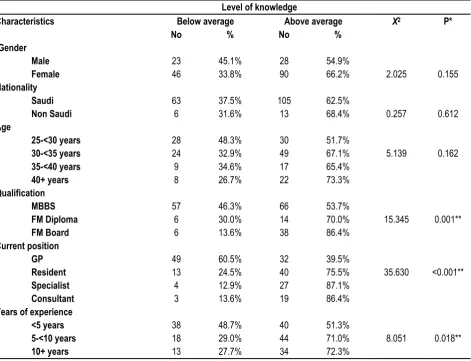
The overall mean score of knowledge was 5.9±1.8 out of nine. When setting 60% as an average for acceptable level of knowledge, Figure 1 demonstrates that approximately two thirds of the physicians (63.1%) had above average, while the rest (36.9%) had below average level of knowledge. The highest level of knowledge was observed in the Board certified family physicians (86.4%), followed by family medicine Diploma (70%), compared to physicians with Bachelor degree (53.7%) p<0.05. Also, the percentage of knowledgeable physicians was significantly higher among consultants (86.4%) and specialists (87.1%) than the general practitioners (39.5%), and increases significantly with longer experience, as it ranged between (51.3%) in physicians who had experience for less than five years up to (72.3%) in physicians who had experience for ten years or more p<0.05. On the other hand, although the percentage of knowledgeable physicians who achieved above average score was higher among females (66.2%), non-Saudis (68.4%) and those aged forty years and above (73.3%). These differences are not statistically significant p>0.05 [Table 2].
Table2: Differences in the level of knowledge of the physicians about diagnosis of OA according to their characteristics Level of knowledge
Characteristics Below average Above average X2 P*
No % No %
Gender
2.025 0.155
Male 23 45.1% 28 54.9%
Female 46 33.8% 90 66.2%
Nationality
0.257 0.612
Saudi 63 37.5% 105 62.5%
Non Saudi 6 31.6% 13 68.4%
Age
5.139 0.162
25-<30 years 28 48.3% 30 51.7%
30-<35 years 24 32.9% 49 67.1%
35-<40 years 9 34.6% 17 65.4%
40+ years 8 26.7% 22 73.3%
Qualification
15.345 0.001**
MBBS 57 46.3% 66 53.7%
FM Diploma 6 30.0% 14 70.0%
FM Board 6 13.6% 38 86.4%
Current position
35.630 <0.001**
GP 49 60.5% 32 39.5%
Resident 13 24.5% 40 75.5%
Specialist 4 12.9% 27 87.1%
Consultant 3 13.6% 19 86.4%
Years of experience
8.051 0.018**
<5 years 38 48.7% 40 51.3%
5-<10 years 18 29.0% 44 71.0%
10+ years 13 27.7% 34 72.3%
* Based on Chi Square ** Statistically significant
63.1%
36.9%
Above average
Table3: Advices given to OA patients for pain control
S. No.
Advice given to the patients for pain control Frequency of advice
Always/ most of the time
N(%)
Occasional N(%)
Not at all/ don’t know
N(%)
1. Applying ice pack or massage. 67(35.8) 75(40.1) 45(24.1)
2. Apply warm bath or shower. 67(35.8) 76(40.6) 44(23.6)
3. Advice to use compression, if swelling is present. 69(36.9) 56(29.9) 62(33.2)
4. Elevation of the affected extremity. 61(32.6) 55(29.4) 71(38.0)
5. Advice regarding weight reduction. 171(91.4) 10(5.4) 6(3.2)
6. Strengthening exercises 151(80.7) 19(10.2) 17(9.1)
7. Moderate aerobics 94(50.3) 65(34.7) 28(15.0)
8. Weight training exercises 91(48.7) 41(21.9) 55(29.4)
9. Climbing stairs 12(6.4) 40(21.4) 135(72.2)
10. Consider the use of transcutaneous electrical nerve
stimulation as adjunctive to core treatment for pain relief
14(7.5) 60(32.1) 113(60.4)
11. Prescribe appropriate foot wear 80(42.8) 63(33.7) 44(23.5)
12. Prescribe bracing/ joint support 39(20.9) 86(46.0) 62(33.1)
13. Prescribe assistive devices ( walking stick and tap turner) 40(21.4) 90(48.1) 57(30.5)
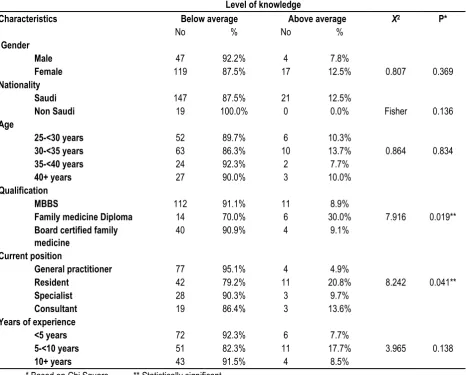
Table 4: Differences in the physician's knowledge level in advising OA patients according to physician's characteristics Level of knowledge
Characteristics Below average Above average X2 P*
No % No %
Gender
0.807 0.369
Male 47 92.2% 4 7.8%
Female 119 87.5% 17 12.5%
Nationality
Fisher 0.136
Saudi 147 87.5% 21 12.5%
Non Saudi 19 100.0% 0 0.0%
Age
0.864 0.834
25-<30 years 52 89.7% 6 10.3%
30-<35 years 63 86.3% 10 13.7%
35-<40 years 24 92.3% 2 7.7%
40+ years 27 90.0% 3 10.0%
Qualification
7.916 0.019**
MBBS 112 91.1% 11 8.9%
Family medicine Diploma 14 70.0% 6 30.0%
Board certified family medicine
40 90.9% 4 9.1%
Current position
8.242 0.041**
General practitioner 77 95.1% 4 4.9%
Resident 42 79.2% 11 20.8%
Specialist 28 90.3% 3 9.7%
Consultant 19 86.4% 3 13.6%
Years of experience
3.965 0.138
<5 years 72 92.3% 6 7.7%
5-<10 years 51 82.3% 11 17.7%
10+ years 43 91.5% 4 8.5%
* Based on Chi Square ** Statistically significant
The majority of the physicians (91.4%) indicated that they always advise their OA patients to reduce their weight, as well as to perform strengthening physical exercises (80.7%). However, only one half of the physicians (50.3%) reported that they always advise their patients to perform moderate aerobics, and (48.7%)
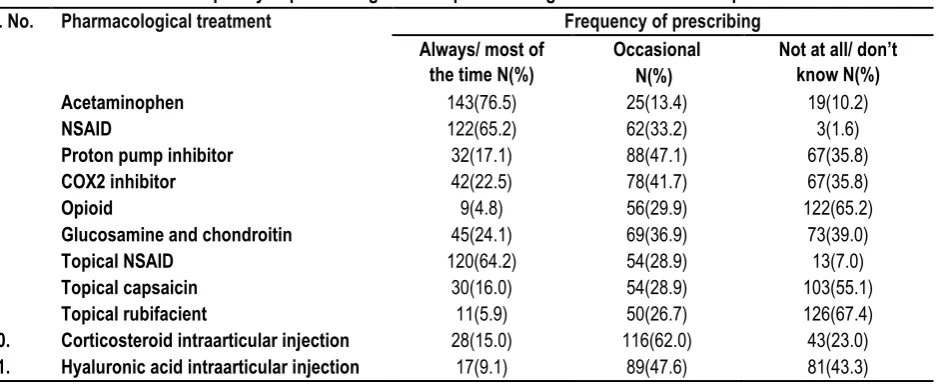
knowledge about the correct advices given to OA patients was significantly higher among physicians who have Family Medicine Diploma (30%), while the lowest percentage was found among physicians with only Bachelor degree qualification (8.9%). While, the lowest percentage was recorded among GP (4.9%), the relatively higher percentages were recorded by residents (20.8%) followed by consultants (13.6%) p<0.05.On the other side, although the percentage of knowledgeable physicians was higher in Saudi Females doctors (12.5%), those aged 30-<35 years (13.7%) and those who have working experience for 5-<10 years (17.7%), these differences are not statistically significant p>0.05. Table 5 shows that most frequently prescribed treatments for OA patients are Acetaminophen, where the majority of the physicians (76.5%) are always prescribing it, followed by NSAID which are always prescribed by (65.2%) of the physicians and topical NSAID
which are always prescribed by (64.2%) of the physicians. On the other hand, the least prescribed treatments included opioid (4.8%). Topical rubifacient prescribed by (5.9%) of the physicians, Hyaluronic acid (HA) intraarticular (IA) injection are advised by (9.1%) and Corticosteroid (CS) IA injection are prescribed by (15%) of them.
Regarding reasons for referral of the OA patients, the highest level of agreement for the causes of referral for the OA patients was observed for joint replacement surgery with prolonged and established functional limitations, where a total of 74.9% of the physicians either agree or strongly agree for it, followed by agreement on referral for joint replacement surgery in people who experience joint symptoms (pain, stiffness and reduce function) that affect the quality of life, where a total of (72.2%) of the physicians agree on it [Table 6].
Table5: Frequency of prescribing different pharmacological treatments for OA patients
S. No. Pharmacological treatment Frequency of prescribing
Always/ most of the time N(%)
Occasional N(%)
Not at all/ don’t know N(%)
1. Acetaminophen 143(76.5) 25(13.4) 19(10.2)
2. NSAID 122(65.2) 62(33.2) 3(1.6)
3. Proton pump inhibitor 32(17.1) 88(47.1) 67(35.8)
4. COX2 inhibitor 42(22.5) 78(41.7) 67(35.8)
5. Opioid 9(4.8) 56(29.9) 122(65.2)
6. Glucosamine and chondroitin 45(24.1) 69(36.9) 73(39.0)
7. Topical NSAID 120(64.2) 54(28.9) 13(7.0)
8. Topical capsaicin 30(16.0) 54(28.9) 103(55.1)
9. Topical rubifacient 11(5.9) 50(26.7) 126(67.4)
10. Corticosteroid intraarticular injection 28(15.0) 116(62.0) 43(23.0)
11. Hyaluronic acid intraarticular injection 17(9.1) 89(47.6) 81(43.3)
Table 6: Agreement of the physicians for the causes of referral of osteoarthritis patients
S. No. Causes for referral Agreement
Strongly agree
Agree Neutral Disagree Strongly
disagree
1. Referral for arthroscopic lavage and debridement in
patient with clear history of mechanical locking
24(12.8) 74(39.6) 52(27.8) 34(18.2) 3(1.6)
2. Referral for arthroscopic lavage and debridement in
patient with x-ray evidence of loose bodies
14(7.5) 67(35.8) 74(39.6) 31(16.6) 1(0.5)
3. Referral for joint replacement surgery in people
who experience joint symptoms (pain, stiffness and reduce function) that affect the quality of life.
59(31.6) 76(40.6) 32(17.1) 15(8.0) 5(2.7)
4. Referral for joint replacement surgery in cases
refractory to non-surgical treatment
42(22.5) 63(33.7) 54(28.9) 21(11.2) 7(3.7)
5. Referral for joint replacement surgery with
prolonged and established functional limitations
68(36.4) 72(38.5) 40(21.4) 6(3.2) 1(0.5)
DISCUSSION
The study revealed that PHC physicians in Jeddah are challenged with making proper diagnosis and management for OA patients. Specialists had better knowledge about diagnosis of OA than general practitioners. This notion had been documented earlier by Harold et al in 1999, they stated that "specialists are generally more knowledgeable about care of broad range of diseases and quicker to adopt new and effective treatments than GP".11 Also,
the cumulative buildup of knowledge acquired through years of experience observed in our study comes in accordance with the
findings of a study carried out in Al-Jouf, Saudi Arabia.4 OA is a
degenerative joint disease which affects mainly the weight-bearing joints, these degenerative changes had been suggested to be attributed to several suspected factors.12 Despite the available
evidence showing that the genetic factors have been found to be strong determinants of the disease13, our study showed that the
difficulty of making correct diagnosis due to ambiguous signs and symptoms of the disease14, for example, a large proportion of the
patients with radiographic evidence of OA, are not complaining of any symptoms or disability, and it is not clear whether to consider such people as having OA or not; these difficulties have led to the existence of several definitions of OA, that may partly explain disparities in OA estimates.15 In this era, the most commonly used
ways for diagnosis include; radiographic OA, symptomatic OA and self-reported OA. The radiographic diagnosis definition considers only pathophysiological joint signs present on radiographic images.16 In our study, most of the physicians (82.4%) agreed that
plain radiography helps in confirming the diagnosis radiographic OA. Also, more than three quarters of them (78.1%) knew that diagnosis of the disease can almost always be made by history and physical examination. This preclude that our participating physicians are doing symptomatic and self-reported OA diagnosis. In 2011, at Al-Jouf province similar study showed that (63.6%) of the participants reported that radiographs are the first line confirmation of presence of OA. On the other hand, (71.4%) of the physicians knew that diagnosis almost always made by history and physical examination.4 The discrepancy in physician
knowledge on radiographic diagnosis and symptomatic diagnosis between Jeddah and Al-Jouf could be partly attributed to time difference since 2012. Also, the relatively recent national CPG issued in 2013.10 Moreover, physician knowledge on diagnosing
the disease is influenced by the multifactorial nature of OA as well as the wide array of unclear signs and symptoms.14
With regard to laboratory OA diagnosis, laboratory tests such as ESR and CRP have been recognized as markers of inflammation; these tests can be used for evaluating the acute activity of the disease but not for its diagnosis.17 Our study indicated that
(52.9%) of the physicians are using ESR and CRP for making OA for definitive diagnosis. The findings reflects misconception among our study group regarding the use of OA laboratory diagnosis in confirming diagnosis, as Bochen K. concluded that almost one half of the active patients who require treatment could be missed if ESR and CRP tests are used as measures for definitive diagnosis.18
The non-pharmacological treatment mentioned in both national CPG for the management of OA in PHC and the NICE CPG for OA management 2014 included: Applying Ice packs, hot showers, weight reduction, and other relevant strengthening exercise and aerobics.10,19 For weight reduction, strong evidence had been
established for the association between overweight/obesity and health problems of the lower extremities, such as pain, disability and OA.20 Attempts to reduce weight, even for small amounts, can
be beneficial in reducing stress on weight bearing joints, in this respect, Zamboni et al. suggested that weight loss can be reached by a combination of physical activity and appropriate dietary habits.21 Almost all of the participating physicians asserted that
they are always advising their OA patients to reduce their weight (91.4%). They regularly perform strengthening exercise (80.7%), advise to do moderate aerobics (50.3%) and to do weight training (38.7%). Also (71.6%) of our physicians’ advice their patients to ably ice packs and hot shower as an adjunct to core treatment. Our study group showed an acceptable level of knowledge and alignment with the available evidence-based non-pharmacological strategies for OA pain control. Regarding the pharmacological treatment of OA, recent research showed that there is a
controversial result for the therapeutic effect of Acetaminophen on OA. In 2014, Prior and his colleagues reported that "Acetaminophen 1300 mg, given three times daily, can provide effective relief of signs and symptoms of osteoarthritis of the hip or knee”.25 Moreover, in 2015 Machado et al claimed that
Acetaminophen provides minimal short-term benefit for people with OA. Also, patients who are taking paracetamol are nearly 4 times more likely to have abnormal liver function test compared to placebo.26,27 Despite of this controversy, the majority of our
physicians (76.5%) pointed that they are always prescribing Acetaminophen for their patients. In order to meet with the current evidence for pharmacological prescription in OA, the need arise to update the available national CPG for the management of OA in PHC.10
Although that the Non-steroidal anti-inflammatory drugs (NSAIDs) are considered the cornerstone for treatment of OA, questions had been raised about its adverse events. Nevertheless, if properly prescribed oral NSAIDs can provide an effective and safe treatment for OA.28 In 2016, meta-analysis conducted by Costa
BR et al showed that no role for single agent paracetamol for treatment of patient with OA. They concluded that diclofenac 150mg/day is the most effective NSAID available in improving both pain and function. But regarding the safety profile and side effects, physicians should select the best choice according to patients’ characteristic.29 In 2013, Martin Basedow’s study to
assess physician practice in OA management showed that (84%) of PHC physician prescribe NSAID and only (6%) prescribe opioid for their patients.8 In this course, almost two third of our physicians
(65.2%) are always prescribing NSAID, (22.5%) prescribe COX2 inhibitors and (4.8%) prescribe opioid for their OA patients. In 2013, a study conducted in Australia about OA management showed that (13%) of PHC physicians prescribe supplemental glucosamine and chondroitin for their patients. Our study reflected that (24.1%) of participating physicians prescribe supplemental glucosamine and chondroitin for their patients. This finding was against what was recommended by the more recent NICE CPG and national CPG for the management of OA in PHC for not prescribing these agents for OA patients.10,19
Regarding the use of topical treatment for OA, our study reflected that (64.2%) of PHC physicians are prescribing topical NSAID, (16.0%) prescribe capsaicin, and (5.9%) prescribe rubifacient. In Al-Jouf study, less than half (42.9%) of the physicians prescribed topical NSAID as adjunct to oral medication. Our results showed an acceptable level regarding prescribing topical NSAID, which can be interpreted by the availability of such medications in PHC centers, the ease of application by patients or maybe being prescribed upon patients request. The recent NICE CPG and national CPG for OA management recommended the use of topical NSAID and capsaicin, but not rubifacient.10,19 Still our
participating physicians are advising OA patients to use rubifacient.
Intraarticular injections (IA) are considered as the last non-operative modality, if the other conservative treatment modalities are ineffective. Corticosteroid (CS) IA injection provides short effect and can be used as an adjunct to core treatment for the relief of moderate to severe pain in people with OA.30 Hyaluronic
indicated that they advise their patients to get HA IA injection (9.1%), while higher proportions of our study group are prescribing CS IA injection (15%). In Al-Jouf study, only (5.2%) of their physicians prescribe CS IA injection for treating OA pain.4
According to NICE CPG and national PHC CPG in OA management, CS IA injections should be considered as an adjunct to core treatments for the relief of moderate to severe pain in people with OA. Also, strongly advised not to offer HA IA injection for the OA management.10,19 Our results reflect the need
for conducting education programs to worn physicians against the missuses of HA IA injection in OA management.
The highest level of agreement of the study group for the causes of referral for their OA patients was observed for joint replacement surgery with prolonged and established functional limitations. The debilitating pain associated with knee OA often leads patients to seek for complete total knee arthroplasty (TKA). The baseline physical function appears to be an important element in patients considering to be operated. Also good proportion of the participating physicians agreed on referral for joint replacement surgery in people who experience joint symptoms that needs debridement. This complies with the recommendation concluded in a prospective study carried out by Hutt et al in 2015, the study stated that "although not universally effective, arthroscopic debridement for patients with knee OA and mechanical symptoms can result in significant improvements in pain and function". The fact that the procedure seemed to provide satisfaction for the patients, even at an early follow-up period, it proved to be cost-effective.31
REFERENCES
1. Cross M, Smith E, Hoy D, Nolte S, Ackerman I, Fransen M, et al. The global burden of hip and knee osteoarthritis: estimates from the Global Burden of Disease 2010 study. Ann Rheum Dis [Internet]. 2014 Feb 19 [cited 2015 Oct 21];73(7):1323–30. http://ard.bmj.com/content/early/2014/02/19/annrheumdis-2013-204763
2. Osteoarthritis - Overview - Mayo Clinic [Internet]. [cited 2017 Aug 7]. Available from: http://www.mayoclinic.org/diseases-conditions/osteoarthritis/home/ovc-20198248
3. Al-Arfaj AS, Alballa SR, Al-Saleh SS, Al-Dalaan AM, Bahabry SA, Mousa MA, et al. Knee osteoarthritis in Al-Qaseem, Saudi Arabia. Saudi Med J [Internet]. 2003 Mar [cited 2016 Feb 17];24(3):291–3. http://www.ncbi.nlm.nih.gov/pubmed/12704507 4. Homoud AH. Knowledge, attitude, and practice of primary health care physicians in the management of osteoarthritis in Al-Jouf province, Saudi Arabia. Niger Med J [Internet]. 2012 Oct [cited 2016 Feb 9];53(4):213. Available from:
http://www.pubmedcentral.nih.gov/articlerender.fcgi?artid=364024 2&tool=pmcentrez&rendertype=abstract
5. Denoeud L, Mazières B, Payen-Champenois C, Ravaud P. First line treatment of knee osteoarthritis in outpatients in France: adherence to the EULAR 2000 recommendations and factors influencing adherence. Ann Rheum Dis [Internet]. 2005 Jan [cited 2016 Feb 13];64(1):70–4. Available from: http://www.pubmedcentral.nih.gov/articlerender.fcgi?artid=175517 6&tool=pmcentrez&rendertype=abstract
6. Rosemann T, Wensing M, Joest K, Backenstrass M, Mahler C, Szecsenyi J. Problems and needs for improving primary care of osteoarthritis patients: the views of patients, general practitioners
and practice nurses. BMC Musculoskelet Disord [Internet]. 2006 Jan [cited 2016 Feb 13];7:48. Available from: http://www.pubmedcentral.nih.gov/articlerender.fcgi?artid=152476 4&tool=pmcentrez&rendertype=abstract
7. Glauser TA, Salinas GD, Roepke NL, Williamson JC, Reese A, Gutierrez G, et al. Management of mild-to-moderate osteoarthritis: a study of the primary care perspective. Postgrad Med [Internet]. 2011 Jan [cited 2016 Feb 9];123(1):126–34. Available from: http://www.ncbi.nlm.nih.gov/pubmed/21293093
8. Basedow M, Williams H, Shanahan EM, Runciman WB, Esterman A. Australian GP management of osteoarthritis following the release of the RACGP guideline for the non-surgical management of hip and knee osteoarthritis. BMC Res Notes [Internet]. 2015 Jan [cited 2016 Feb 13];8:536. Available from: http://www.pubmedcentral.nih.gov/articlerender.fcgi?artid=459319 1&tool=pmcentrez&rendertype=abstract
9. Waugh EJ, Badley EM, Borkhoff CM, Croxford R, Davis AM, Dunn S, et al. Primary care physicians’ perceptions about and confidence in deciding which patients to refer for total joint arthroplasty of the hip and knee. Osteoarthritis Cartilage [Internet]. Elsevier; 2015 Oct 23 [cited 2016 Feb 13]; Available from: http://www.oarsijournal.com/article/S106345841501331X/fulltext 10. National Clinical Practice Guideline For the Management of OSTEOARTHRITIS In Primary Health Care; Kingdom of Saudi Arabia; Ministry Of Health; Deputy Minister for Public Health; Asst. Deputy Ministry for Primary Health Care; General Directorate for H.C. Affairs & Health programs. January 2013;
11. Harrold LR, Field TS, Gurwitz JH. Knowledge, patterns of care, and outcomes of care for generalists and specialists. J Gen Intern Med [Internet]. Springer; 1999 Aug [cited 2017 Aug
7];14(8):499–511. Available from:
http://www.ncbi.nlm.nih.gov/pubmed/10491236
12. Lanyon P, Muir K, Doherty S, Doherty M. Age and sex differences in hip joint space among asymptomatic subjects without structural change: Implications for epidemiologic studies. Arthritis Rheum. 2003;48(4):1041–6.
13. Kwoh CK. Epidemiology of Osteoarthritis. In: The Epidemiology of Aging [Internet]. Dordrecht: Springer Netherlands; 2012 [cited 2017 Aug 7]. p. 523–36. Available from: http://www.springerlink.com/index/10.1007/978-94-007-5061-6_29 14. Mazières B, Bannwarth B, Dougados M, Lequesne M. EULAR recommendations for the management of knee osteoarthritis. Report of a task force of the Standing Committee for International Clinical Studies Including Therapeutic Trials. Joint Bone Spine. 2001;68(3):231–40.
15. Pereira D, Peleteiro B, Araújo J, Branco J, Santos RA, Ramos E. The effect of osteoarthritis definition on prevalence and incidence estimates: a systematic review. Osteoarthr Cartil [Internet]. 2011 Nov [cited 2017 Aug 7];19(11):1270–85. Available from: http://www.ncbi.nlm.nih.gov/pubmed/21907813
16. Ho-Pham LT, Lai TQ, Mai LD, Doan MC, Pham HN, Nguyen T V. Prevalence of radiographic osteoarthritis of the knee and its relationship to self-reported pain. PLoS One. 2014;9(4).
19. Osteoarthritis: care and management | Guidance and guidelines | NICE. NICE; [cited 2017 Jul 27]; Available from:
https://www.nice.org.uk/guidance/cg177/chapter/1-Recommendations#diagnosis-2
20. Tukker A, Visscher T, Picavet H. Overweight and health problems of the lower extremities: osteoarthritis, pain and disability. Public Health Nutr [Internet]. 2008 Apr 22 [cited 2017 Aug 7];12(3):1. http://www.ncbi.nlm.nih.gov/pubmed/18426630 21. Zamboni M, Mazzali G, Zoico E, Harris TB, Meigs JB, Di Francesco V, et al. Health consequences of obesity in the elderly: a review of four unresolved questions. Int J Obes. 2005;29(9):1011–29.
22. Bennell KL, Hinman RS. A review of the clinical evidence for exercise in osteoarthritis of the hip and knee. J Sci Med Sport. 2011;14(1):4–9.
23. Lange AK, Vanwanseele B, Fiatarone singh MA. Strength training for treatment of osteoarthritis of the knee: A systematic review. Arthritis Rheum [Internet]. 2008 Oct 15 [cited 2017 Aug 7];59(10):1488–94. www.ncbi.nlm.nih.gov/pubmed/18821647 24. Brosseau L, Yonge K, Welch V, Marchand S, Judd M, Wells GA, et al. Thermotherapy for treatment of osteoarthritis. In: Brosseau L, editor. Cochrane Database of Systematic Reviews [Internet]. Chichester, UK: John Wiley & Sons, Ltd; 2003 [cited 2017 Aug 7]. p. CD004522. Available from: http://www.ncbi.nlm.nih.gov/pubmed/14584019
25. Prior MJ, Harrison DD, Frustaci ME. A randomized, double-blind, placebo-controlled 12 week trial of acetaminophen extended release for the treatment of signs and symptoms of osteoarthritis. Curr Med Res Opin [Internet]. 2014 Nov 14 [cited 2017 Aug 7];30(11):2377–87. www.ncbi.nlm.nih.gov/pubmed/25121804 26. Machado GC, Maher CG, Ferreira PH, Pinheiro MB, Lin C-WC, Day RO, et al. Efficacy and safety of paracetamol for spinal pain and osteoarthritis: systematic review and meta-analysis of randomised placebo controlled trials. BMJ [Internet]. BMJ Publishing Group; 2015 Mar 31 [cited 2017 Aug 7];350:h1225. 27. Case JP, Baliunas AJ, Block JA. Lack of Efficacy of Acetaminophen in Treating Symptomatic Knee Osteoarthritis A Randomized, Double blind, Placebo Controlled Comparison Trial with Diclofenac Sodium. [cited 2017 Aug 7]; Available from: https://pdfs.semanticscholar.org/de0e/8b047f87c61788107d3ddb6 b1d06ef5f78eb.pdf
28. Rannou F, Pelletier J-P, Martel-Pelletier J. Efficacy and safety of topical NSAIDs in the management of osteoarthritis: Evidence from real-life setting trials and surveys. Semin Arthritis Rheum [Internet]. 2016 Feb [cited 2017 Aug 7];45(4):S18–21. Available from: http://www.ncbi.nlm.nih.gov/pubmed/26806189
29. da Costa BR, Reichenbach S, Keller N, Nartey L, Wandel S, Jüni P, et al. Effectiveness of non-steroidal anti-inflammatory drugs for the treatment of pain in knee and hip osteoarthritis: a network meta-analysis. Lancet [Internet]. 2017 Jul 8 [cited 2017 Aug 7];390(10090):e21–33. Available from: http://www.ncbi.nlm.nih.gov/pubmed/28699595
30. Ayhan E, Kesmezacar H, Akgun I. Intraarticular injections (corticosteroid, hyaluronic acid, platelet rich plasma) for the knee osteoarthritis. World J Orthop [Internet]. Baishideng Publishing Group Inc; 2014 Jul 18 [cited 2017 Aug 7];5(3):351–61. Available from: http://www.ncbi.nlm.nih.gov/pubmed/25035839
31. Hutt JRB, Craik J, Phadnis J, Cobb AG. Arthroscopy for mechanical symptoms in osteoarthritis: a cost-effective procedure. Knee Surgery, Sport Traumatol Arthrosc [Internet]. Springer Berlin Heidelberg; 2015 Dec 9 [cited 2017 Aug 7];23(12):3545–9. Available: http://link.springer.com/10.1007/s00167-014-3220-1.
[
Source of Support: Nil.
Conflict of Interest: None Declared.
Copyright: © the author(s) and publisher. IJMRP is an official publication of Ibn Sina Academy of Medieval Medicine & Sciences, registered in 2001 under Indian Trusts Act, 1882. This is an open access article distributed under the terms of the Creative Commons Attribution Non-commercial License, which permits unrestricted non-commercial use, distribution, and reproduction in any medium, provided the original work is properly cited.