Geschke Center
Doctoral Dissertations Theses, Dissertations, Capstones and Projects
2017
Social Loafing Construct Validity in Higher
Education: How Well Do Three Measures of Social
Loafing Stand Up to Scrutiny?
Jacquelyn Deleau
University of San Francisco, [email protected]
Follow this and additional works at:https://repository.usfca.edu/diss
Part of theBusiness Administration, Management, and Operations Commons,Education Commons, and theOrganizational Behavior and Theory Commons
This Dissertation is brought to you for free and open access by the Theses, Dissertations, Capstones and Projects at USF Scholarship: a digital repository @ Gleeson Library | Geschke Center. It has been accepted for inclusion in Doctoral Dissertations by an authorized administrator of USF Scholarship: a digital repository @ Gleeson Library | Geschke Center. For more information, please [email protected].
Recommended Citation
Deleau, Jacquelyn, "Social Loafing Construct Validity in Higher Education: How Well Do Three Measures of Social Loafing Stand Up to Scrutiny?" (2017).Doctoral Dissertations. 345.
The University of San Francisco
SOCIAL LOAFING CONSTRUCT VALIDITY IN HIGHER EDUCATION:
HOW WELL DO THREE MEASURES OF SOCIAL LOAFING STAND UP TO SCRUTINY?
A Dissertation Presented
to
The Faculty of the School of Education
Learning and Instruction Department
In Partial Fulfillment
of the Requirements for the Degree
Doctor of Education
by
Jacquelyn de l’Eau
San Francisco, CA
ii
THE UNIVERSITY OF SAN FRANCISCO
Dissertation Abstract
Social Loafing Construct Validity in Higher Education:
How Well Do Three Measures of Social Loafing Stand Up to Scrutiny?
The purpose of this study was to examine the construct validity of social loafing
using convergent and discriminant validity principles. Three instruments that purport to
measure social loafing were factor analyzed: A ten-item instrument by George (1992), a
13-item instrument by Mulvey and Klein (1998), and a 22-item instrument by Jassawalla,
Sashittal, and Malshe (2009) for a total of 45 items that were compiled into a single
instrument with which data were collected, correlated, and factor analyzed.
One hundred and sixty graduate and undergraduates enrolled in management
courses at a small private Northern California university were surveyed. Thirteen classes
were surveyed and data was collected over three semesters.
Data collected were factor analyzed using Principle Axis Factoring and rotated
using Promax with Kappa = 4 for each instrument. Correlations, Keyser-Meyer-Olkin, and
Bartlett’s test of sphericity were inspected for reasonable factorability, sampling adequacy,
and appropriateness of running a factor analysis. Eigenvalues > 1 and Scree plots
supported the number of factors extracted with primary factor loadings of .4 or higher.
Pattern, structure, and factor correlation matrices were inspected for content, loadings, and
iii
theoretical framework. Additionally, the eight derived factors were factor analyzed using
the same procedures. The result was three final derived factors.
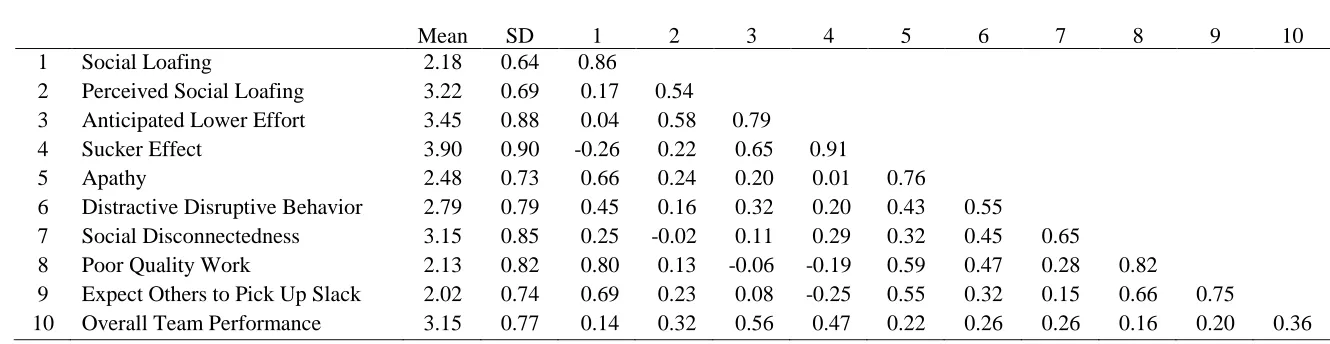
Findings showed correlations among the author’s scales indicated that the three
instruments do not measure the same thing. George’s and Jassawalla et al.’s instruments
share 55% of the variance. Mulvey and Klein’s instrument shares little in common with
Jassawalla et al. and virtually nothing with George. Further, George, Mulvey and Klein,
and Jassawalla et al. had hypothesized10 scales whereas my factoring had eight factors.
Findings showed that the 8-factor solution supported George, partially supported Mulvey
and Klein, and did not support Jassawalla et al. The final 3-factor solution does help to
define the social loafing construct. The findings suggest using the instruments with
caution. Further research to ensure accurate conceptualizations of the social loafing
iv
This dissertation, written under the direction of the candidate’s dissertation
committee and approved by the members of the committee, has been
presented to and accepted by the Faculty of the School of Education in
partial fulfillment of the requirements for the degree of Doctor of
Education. The content and research methodologies presented in this work
represent the work of the candidate alone.
Jacquelyn de l’Eau May 3, 2017
______________________________ ____________________
Candidate
Dissertation Committee
Dr. Robert Burns May 3, 2017
______________________________ ____________________
Chair
Dr. Mathew Mitchell May 3, 2017
______________________________ ____________________
Dr. Stephen Morris May 3, 2017
v
ACKNOWLEDGEMENTS
I would like to acknowledge the University of San Francisco’s School of Education
Doctoral Program, its faculty, administration, and staff’s dedication to my education and
their contribution to my learning. I especially want to acknowledge my dissertation
committee who carried me across the finish line. I am grateful to Dr. Stephen Morris who
helped me narrow the scope of my study and made it possible for me to administer my
study instrument in USF’s School of Management, and to Dr. Mathew Mitchell who
provided guidance and insight that helped me improve my research and see my findings
from a whole different (and encouraging) perspective. I am deeply grateful to the chair of
my committee, Dr. Robert Burns, who committed countless hours and scrupulous attention
to patiently guiding me through the dissertation process and without whom I could not
have done this. I also want to thank the faculty in the School of Management who so
generously allowed me to collect data from students in their courses.
I also want to acknowledge my dad, Jay de l’Eau, who never tired of my childish
curiosity, who patiently answered every question I ever asked, and thus, created a great
thirst for knowledge in me. I also want to thank my former husband and lifetime friend,
Robert Ryker, who nurtured my love of learning and supported me through both my
bachelor and master degrees. Finally, I want to express my deepest gratitude to my sister,
role model, and closest friend, Arnée de l’Eau who, as the first in our family to graduate
from college, provided the inspiration for me to do follow her lead. Her unwavering
support and unselfish sacrifice throughout this doctoral program made it possible for me to
vi
TABLE OF CONTENTS
ABSTRACT ii
ACKNOWLEDGEMENTS v
TABLE OF CONTENTS vi
LIST OF FIGURES AND TABLES viii
LIST OF APPENDICES x
CHAPTER I: STATEMENT OF THE PROBLEM 1
Purpose 6
Educational Significance 7
Theoretical Framework 8
Background and Need 14
Research Questions 28
Definitions 28
CHAPTER II: LITERATURE REVIEW 31
Social Loafing, Free Riding, Sucker Effect, and Perceived Social Loafing 31
Social Loafing 32
Free Riding 34
Sucker Effect 35
Perceived Social Loafing 39
Social Loafing in Teams 41
Construct Validity of the Social Loafing Construct 68
George (1992) 68
Mulvey and Klein (1998) 70
Jassawalla et al. (2009) 72
Summary 74
CHAPTER III: METHODOLOGY 76
Research Design 77
Sample 78
Protection of Human Subjects 79
Instrumentation 80
George 81
Mulvey 82
Jassawalla 85
Pilot Study 88
Procedures 89
Preliminary Data Analysis 90
vii
Factor Labels 96
CHAPTER 1V: RESULTS 98
Analysis Related to Research Question 1 99
Analysis Related to Research Question 2 101
George 101
Mulvey 104
Jassawalla 110
Analysis Related to Research Question 3 115
Summary 121
CHAPTER V: SUMMARY, FINDINGS, DISCUSSION & IMPLICATIONS 122
Summary of Study 122
Findings 134
Discussion 138
Conclusion 147
Implications For Research 148
Implications For Practice 149
REFERENCES 151
viii
LIST OF TABLES AND FIGURES
Page
Figure 1: Model of Social Loafing 13
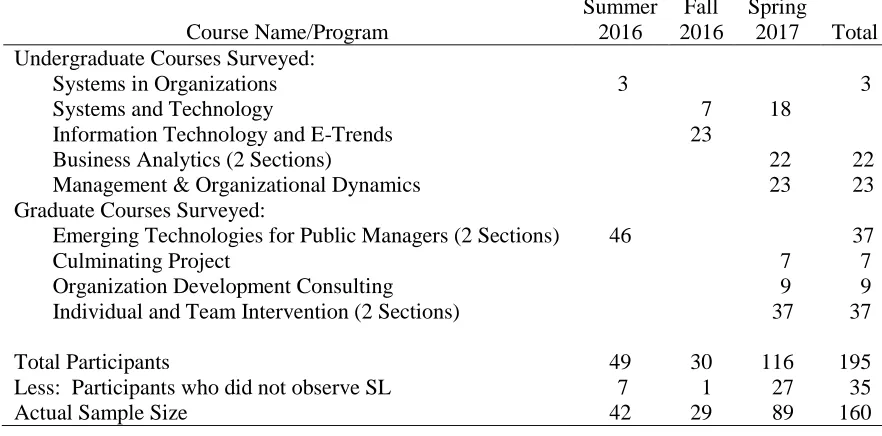
Table 1: Courses and Semesters in which Data Were Collected 79
Table 2: George’s (1992) 10 Social Loafing Items 81
Table 3: Mulvey's (1998) 13 Social Loafing Items 83
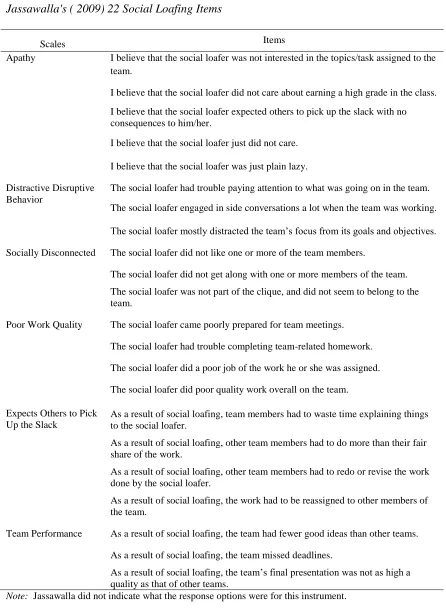
Table 4: Jassawalla’s (2009) 22 Social Loafing Items 86
Table 5: Correlations for Three Different Social Loafing Measures 89
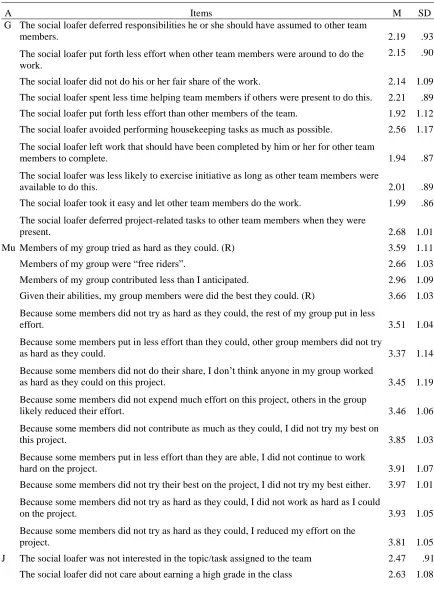
Table 6: Authors, Items, Means, and Standard Deviations 91
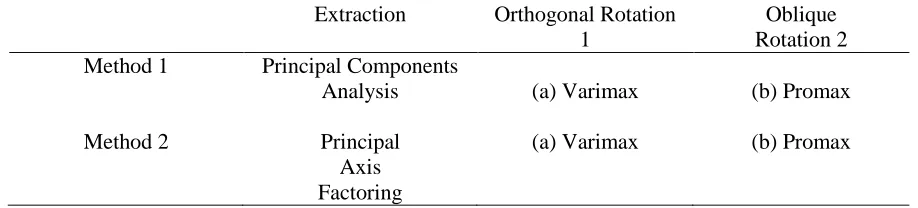
Table 7: Extraction and Rotation Combinations Used to Factor Analyze Data 93
Table 8: Means, Standard Deviations, Intercorrelations, and reliabilities Among
the 10 Subscales of the Three Social Loafing Instruments 100
Table 9: Intercorrelation Matrix for George’s 10 Items 102
Table 10: Pattern Matrix for George’s Data 102
Table 11: Structure Matrix for George’s Data 103
Table 12: Factor Correlation Matrix for George’s Data 103
Table 13: Intercorrelation Matrix for Mulvey’s 13 Items 106
Table 14: Pattern Matrix for Mulvey’s Data 107
Table 15: Structure Matrix for Mulvey’s Data 107
Table 16: Factor Correlation Matrix for Mulvey’s Data 108
Table 17: Intercorrelation Matrix for Jassawalla’s 22 Items 111
Table 18: Pattern Matrix for Jassawalla’s Data 112
Table 19: Structure Matrix for Jassawalla’s Data 113
Table 20: Factor Correlation Matrix for Jassawalla’s Data 113
ix
Table 22: Pattern Matrix for Eight Composite Variables 117
Table 23: Structure Matrix for Eight Composite Variables 117
Table 24: Factor Correlation Matrix for Eight Composite Variables 118
Table 25: Summary of Derived Final Factors, the Eight Composite Variables, and Their
Related Items 120
Table 26: Hypothesized Factors with Author Labels and Derived Factors with My
Labels 135
x
LIST OF APPENDICES
Page
Appendix A: Author, Scale, and Items Selected for Use in the 55-Item
Instrument Administered to Students
163
Appendix B: Reference Table to Interpret George, Mulvey, and Jassawalla
Intercorrelations
1
CHAPTER I
STATEMENT OF THE PROBLEM
More people work in teams today than ever. From the expansion of global markets
to the development of information and communication technology, the need for speed,
efficiency, and knowledge-sharing have made the use of teams routine (Driskell, Radtke,
& Salas, 2003; Karau & Williams, 1993; Powell, Piccoli, & Ives, 2004). In today’s
economy, teams make it possible for organizations to be agile, efficient, and responsive to
issues that emerge in complex global markets. Thus, the demand for effective teamwork
continues to grow.
Teams work under collocated and non-collocated conditions. Team members meet
either Face-to-Face (FtF) or use information and communication technology to meet
virtually. Teams form of necessity to come up with new ideas, plan strategies, and make
decisions about how to execute related tasks (Cooke, Gorman, & Winner, 2008; S. W.
Kozlowski & Ilgen, 2006a).
Teams are distinguished from groups by task demands. In teams, the task demands
are cognitive (Cooke & Gorman, 2006). Thus, they impose a focus that dictates the
activities and expertise needed to achieve a specified goal (Marks, Mathieu, & Zaccaro,
2001). Although today’s teams share definitional similarities to past research on groups
such as solving problems through social interaction, teams can no longer be reliably
referred to as intact and bounded within organizations (S. W. Kozlowski & Bell, 2003).
Contemporary definitions of teams are more nuanced to reflect their use, context, and
member expertise. Thus, teams are a special type of group or structured social unit formed
2
Bailey, 1997; Kozlowski & Ilgen, 2006a; McGrath et al., 2000; Salas, Dickinson,
Converse, & Tannenbaum, 1992); teams tackle cognitively demanding issues in which
team members role’s are defined but not fixed, and individual expertise is heterogeneous
(Cooke & Gorman, 2006).
Today’s employers want college graduates to join the workforce ready to
collaborate on teams that cross cultural and organizational boundaries. However,
employers have observed that work preparedness in college graduates falls short of what is
needed to be effective in the workplace (Klebnikov, n.d.; Myers, 2016). In a survey of 400
organizations, the Association of American Colleges and Universities (AACU) found that
less than forty percent of employers rated college students as well prepared, and that just
over 20% considered students proficient in using both knowledge and skills at work
(Association of American Colleges & Universities, 2015).
Subject matter capability is important to employers, but desire for the mastery of
soft skills cuts across all disciplines. High turnover among millennials serves as a
deterrent to employer investment in employee development (Knowledge at Wharton,
2016). Therefore, employers want to hire college graduates already competent in
teamwork, communication, ethical decision-making, critical thinking, and the ability to
apply the knowledge they have learned (Association of American Colleges & Universities,
2015). The National Association of Colleges and Employers (NACE) surveyed their
membership to find out what attributes employers want to see on résumés of 2016 college
graduates. Over two hundred NACE employer members representing a 20.1% response
rate, found that the ability to work in a team came in second at 79% of respondents and
3
(National Association of Colleges and Employers, 2016). In a similar survey conducted by
AACU released in 2015, skills most valued in new hires were ranked on a 5-point scale in
which teamwork came in at 4.6 barely eclipsed by critical thinking at 4.7 (Adams, 2015).
By 2025, 75% of the workforce will be made up of millennials (Bisoux, 2016). In
an article to anticipate the needs of both employers and millenials, Bisoux interviewed two
workplace futurists, Jeanne Meister and Karie Willyerd, and David Krackhardt, a
co-director of the Center for Future Work at Carnegie Mellon University in Pittsburgh,
Pennsylvania. According to the experts, the ability of new college graduates to work in
teams will remain among the top four job prerequisites in 2025. According to Krackhardt,
to the extent virtual teams penetrate all aspects of business and life, FtF team interaction
will become increasingly crucial to build and preserve trust across virtual teams. In virtual
teams, trust is the super glue of virtual relationships (Jarvenpaa, Knoll, & Leidner, 1998).
Even the variety of technology-mediated communication such as email, teleconferencing,
video-conferencing, and social media are not enough to forge the type or frequency of
interaction needed to innovate and generate fresh ideas without the development of trust
that can only be cultivated in FtF relationships (Bisoux, 2016).
Trends in research on teamwork and education practices to promote team
effectiveness create both teaching and learning opportunities in higher education (Kohut,
2012; Tannenbaum, Mathieu, Salas, & Cohen, 2012). In its Eligibility Procedures and
Accreditation Standards, the Association to Advance Collegiate Schools of Business
(AACSB) is explicit in stating that all bachelors, masters, and doctoral students not only
have learning experiences in interpersonal relationships and teamwork, but must also gain
4
Collegiate Schools of Business, 2016), topics important to learning how to be a team
member in good standing. Management educators have also recognized the importance of
student proficiency in both FtF and virtual teams for at least a decade (Clark & Gibb,
2006).
As the use of teams has grown, scholars of management recognize there is still
much to be learned about teamwork. Research suggests that skills gained through
collaborative learning transfer to team-based work environments (Chiong & Jovanovic,
2012). However, traditional attributes of organizational team effectiveness are changing.
For example, the importance of preparation to be an effective team member in virtual team
environments was examined in a longitudinal study (Gapp & Fisher, 2012). The findings
suggest that how student teams thought about managing their team process was just as
important to team effectiveness as how they thought about managing the team task. It
indicated that the ability to be effective in a team is predicated upon learning how to
develop the quality of social and motivational interactions that promote cooperation in
teams over the length of the task (Gapp & Fisher, 2012). Cooperation is important
because modern work is more cognitive than physical and the domains in which cognition
is used are sufficiently complex that the expertise needed is dispersed among many
different workers (Cooke, Gorman, Myers, & Duran, 2013). Today’s employers use
self-directed work teams to access and synthesize expert knowledge into new ideas because
they know that agility, efficiency, and innovation occur through team interaction (Sutton &
Millar, 2011).
According to Cooke et al. (2013) work teams are typically composed of
5
integrated into team cognition. In the education literature, team cognition is described as
“cognitive activity that occurs at the team level” (Cooke, 2008, p. 240). Team cognition is
a consequence of effective information exchange, integration, and use by team members
(Andres, 2010), and is considered imperative to solve some of today’s most complex
problems (Cooke et al., 2013).
Team cognition is relevant to business, education, medicine, and the military. A
meta analysis to measure the magnitude of cognition, motivation, and behavior on team
performance found that the three factors collectively explained 18.4% of the total variance
in performance and of that, a significant 6.8% was attributed to team cognition (DeChurch
& Mesmer-Magnus, 2010). The problem is that team motivation losses like social loafing
has been associated with diminished cognitive effort put forth by the individual team
members (Price, 1987). Social loafing describes individual motivation in a group task.
According to Karau and Williams (1993), social loafing is the amount of effort an
individual is willing to exert while working on a joint task as opposed to working alone.
Specifically, it describes a decline in individual performance output while working in a
group when compared to working alone (Suleiman & Watson, 2008).
Today, there are three main measures of social loafing, two of which are the most
commonly cited and used instruments to investigate social loafing and related construct
variables. However, little research, if any, has been done to investigate the construct
validity of these measures, nor has it examined the extent to which these instruments that
claim to measure social loafing do so. Therefore, the purpose of this study is to examine
6
Excluded from this research are team cognition and other nonmotivation factors
described in the research literature. Although this study may be extended to student teams
working virtually, virtual teams, per se, will not be the subject of this study. Other studies
have examined the impact of technological devices from text only to audio-video
functionality on virtual team performance. Suffice it to say that technological development
of information and communication technology has far-outpaced our understanding of
human behavioral implications, including motivation, of these systems (S. W. Kozlowski
& Ilgen, 2006a). At both work and school, teams can and do meet both FtF and virtually
which may promote more social loafing; however, no evidence exists to support social
loafing in this hybrid setting, and, for purposes of this study, will not be a variable for
consideration. Notwithstanding the real differences between FtF and virtual teams with
respect to both interpersonal and task processes, FtF and virtual teams experience similar
frustrations and consequences of social loafing. Therefore, the study includes student
participants enrolled in both FtF and virtual teams. Although research has investigated
self-reported social loafing, a meta analysis found effect sizes to be non-significant
suggesting that either team members were unaware of or unwilling to admit social loafing
on team tasks (Karau & Williams, 1993). Furthermore, none of the instruments under
study measure self-reported social loafing. Therefore self-reported social loafing will not
be included in this study.
Purpose of the Study
The primary purpose of the present study is to examine the construct validity of
social loafing as measured by three primary instruments currently in use. A secondary
7
social loafing measures help to define the social loafing construct.
Educational Significance
“Social loafing is a process loss that has long been a bane of group productivity”
(Blaskovich, 2008, p. 42). The educational significance of this research will be to
underscore the importance of accurate conceptualizations of social loafing to better
understand its real affect on student teams in higher education. It has suggested that social
loafing may be experienced by college students as a multivariate construct (Jassawalla,
Sashittal, & Sashittal, 2009). In contemporary literature, much of what is known about
social loafing has come from either studying organizational teams, or student teams from
which inferences have been made about social loafing in work teams (Blaskovich, 2008;
Chidambaram & Tung, 2005; Furumo, 2009; George, 1992; Liden, Wayne, Jaworski, &
Bennett, 2004; Monzani, Ripoll, Peiró, & Van Dick, 2014; Mulvey & Klein, 1998;
Suleiman & Watson, 2008). As a consequence, contemporary understanding of social
loafing from the perspective of workers may lead to its undermeasurement or inaccurate
measurement from the perspective of college students. Therefore, emphasis must be
placed on the conceptualization of social loafing to accurately measure this
counter-productive behavior as students see it. This will aid educational research by offering a
construct-valid instrument that can be used to identify and deter potential motivational
problems related to social loafing in college-age students. Further, it will serve as a
reminder to educators that learning to be an effective team member is also a goal of
8
Theoretical Framework
Several theories have guided research on social loafing, but no single theory has
provided a unifying theme that wholly encapsulates its varied and complex motivations
(Knoke, 1988; Shepperd, 1993). The following summarizes several theories used to guide
research on social loafing.
Bandura’s (1990) moral disengagement theory describes the deterioration of human
integrity and its affect on social loafing in virtual teams. This theory concludes that in the
absence of witnesses, people will act in ways that violate their own values and beliefs that
causes cognitive dissonance. According to moral disengagement theory, the remedy to
cognitive dissonance takes the form of blaming the recipient of the behavior. Although
moral disengagement theory has been used to understand harmful conduct, no one is really
exempt from occasionally behaving in morally questionable ways. Generally, social
sanctions are believed to support self-censure but to the extent social standards are weakened
in FtF and virtual environments, self-standards dictate behavior (Bandura, 1990). Moral
disengagement theory provides an interesting lens through which to view social loafing in
virtual teams. Member anonymity and lessened social presence weaken social standards of
virtual teams. Size and dispersion are salient features of virtual teams that can contribute to
lack of accountability, humanity, and empathy. Thus, teams may be even more vulnerable to
the mechanisms of moral disengagement that enables social loafing: Diffusion of
responsibility, dehumanization, and attribution of blame (Alnuaimi, Robert, & Maruping,
2010).
Similarly, Latané’s (1981) social impact theory has also used size and dispersion to
9
theory which suggests the weak social structure of teams contributes to a form of
opportunism in some team members to reduce their own effort and let others do the work,
social impact theory offers a more sympathetic explanation and applies more broadly than
Bandura’s theory to both FtF and virtual teams. According to Latané, social impact
suggests social loafing is an outcome of how people perceive others and are perceived by
others. Social impact is the way people affect one another emotionally, mentally,
intellectually, psychologically, and physically. Social impact is experienced through one
of three mechanisms that facilitates these states: Strength, immediacy, and number
(Latané, 1981). Strength refers to positional power which, while relevant in FtF teams is
far less so in virtual teams. However, immediacy refers to proximity and number refers to
how many team members exist, and are both relevant to virtual teams. According to
Latané, teams are made up of sources and targets. In Latané’s theory there is a direct
relationship between proximity, power and number of the source that determines the extent
to which the target will exert effort.
Chidambaram and Tung (2005) extended Latané’s theoretical framework to virtual
teams with the development of two theoretical explanations of social impact theory to
elaborate: Dilution effect and Immediacy gap. The dilution effect refers to motivation as a
function of team size or “number”: The larger the team the lower individual motivation.
Given the large numbers, team members may feel their contribution is too inconsequential
or redundant to make a difference; therefore, motivation declines and effort is reduced or
withdrawn. Further, Chidambaram and Tung noted the dilution effect is not only felt by
the absolute number of team members added, but it has been shown mathematically that
10
indicated by the following formula: x = (3n – 2n+1 + 1)/2, where x equals the number of
relationships and n equals the number of members (Hare, 1976). Therefore, a five-member
team will have 90 possible relationships, which is almost four times as many possible
relationships as in a four-member team. According to Chidambaram and Tung even
modest increase such as doubling the membership to 10 increases the number of possible
relationships dramatically (28,500). Thus the dilution effect can be felt more keenly by
team members as team size increases.
The immediacy gap refers to proximity, and describes the feeling of isolation as a
function of proximity between sources and targets. The immediacy gap describes how
closely individual contributions can be monitored or even discerned, and social
comparisons made. When member contributions are not easily identifiable, members may
fail to identify with the group; thus, decrease their contribution accordingly. Further, the
immediacy gap impacts relational interaction important to cohesion (Chidambaram &
Tung, 2005).
An overview of the various theoretical frameworks would not be complete without
a discussion of Knoke’s (1990) motivation model, a synthesis of three theoretical
perspectives that assumes there is a rational explanation between rewards and effort
(Kidwell & Bennett, 1993). Although, frequently applied in the examination of work
teams, it is no less relevant to student teams concerned with distribution of rewards
vis-à-vis grades, fairness, and relationships. In an adaptation of Knoke’s motivation model used
to predict whether people will contribute to collective action organizations, Kidwell and
Bennett used it to recast shirking, social loafing, and free-riding under a single moniker,
11
individual level as someone who simply does not do his job, free-riding and social loafing
describe behavior at the group level as someone who intentionally or unintentionally, does
not carry his own weight. At the heart of shirking, free-riding, and social loafing is the
tendency to withhold effort. By reconceptualizing shirking, free-riding, and social loafing
into a single construct, Kidwell and Bennett created a model to examine PWE as a whole
rather than the sum of its parts. They argued that PWE described anyone who contributed
less effort due to motivation and circumstance, and that differences among shirking,
free-loading, and social loafing may be used to describe the reason and context for putting in
less effort (Kidwell & Bennett, 1993). Returning to Knoke’s synthesized motivation
model, a central theme of PWE research is that effort is a rational economic exchange that
has ignored other incentives that collectively explain motivation as a whole. In contrast,
Knoke’s motivation model uses three theoretical perspectives that explain why, in
collective action organizations, people are willing to join and contribute: Rational choice,
normative conformity, and affective bonding (Knoke & Wright-Isak, 1982).
Rational choice describes weighing motivation in terms of costs and benefits
whereas normative conformity is concerned with values and fairness. Finally, affective
bonding describes motivation as a function of relationship quality. Using Knoke’s
supposition, none of these variables operate independently but rather operate collectively
to affect a person’s decision whether or not to contribute effort.
Knoke used this model to study contributions to collective action; Kidwell and
Bennett used this framework to study PWE; and Liden et al. (2004) used it as a framework to
study multiple contextual variables to see which, if any, predicted social loafing in work
12
variables into a nomological network (Cronbach & Meehl, 1955) of antecedents, intervening
variables, behaviors, and consequences to illustrate the relationships of the social loafing
construct to other related constructs.
The model of social loafing in Figure 1 presents these antecedents, intervening
variables, behaviors, and consequence shown to have relationships with social loafing in the
three most commonly used social loafing measures. In prior research, antecedent variables
have been shown to predict social loafing (Liden et al., 2004). However, the social loafing
model indicates that social loafing may be temporal. The model shows that social loafing is
not a single discrete act but rather a process that emerges over time. Antecedent variables
shown to predict social loafing may influence team members to loaf at any point along the
time continuum. Intervening variables that describe the reactions of group members to
social loafing may influence other team members to loaf. For example, anticipated lower
effort in a team member may prompt other team members to reduce their own effort.
Similarly, the fear of the sucker effect, or being judged as a sucker for doing all of the work,
is an intentional subjective decision to reduce one’s own effort in response to perceived
social loafing. Social loafing behaviors are most often associated with contribution quantity
or “doing less” whereas recent research suggests it may be associated with contribution
quality in the form of poor quality work and/or poor conduct described as distractive
disruptive behaviors (Jassawalla, Sashittal, & Sashittal, 2009). The consequences of social
loafing mean that other members must do more to pick up the slack created by the loafer and
13 Figure 1
Model of Social Loafing
Antecedents Intervening Variables Behaviors Consequences
Time
Past conceptualization of social loafing has been derived from co-active settings in
which participants were asked to perform either motor or cognitive tests of short duration
and ease of implementation. The evidence from this research has been sufficient to
establish that social loafing was present. What it cannot show is the sequencing or timing
at which social loafing appears. This early research created the lens through which most
empirical research on social loafing in school and work teams has been examined.
However, researchers claim that this approach does not explain unaccounted for variances
in the social loafing construct (Jassawalla et al., 2009; Liden et al., 2004). In reality, time
N o rm a ti v e C o n fo rm it y V a ri a b le s A ff ec ti v e B o n d in g V a ri a b le s Apathy
Perceived Social loafing
Social Disconnectedness
Social Loafing Poor Work Quality Disruptive, Distractive Behavior Team Performance
14
factors that include project duration, deliverables, coordination, scheduling and other
activities such as role and task assignment, deadlines and planning that influence how a
team performs over time (Marks et al., 2001), do not fit neatly into social loafing as a static
phenomenon. The Model of Social Loafing (Figure 1) suggests that, in teams, the decision
to social loaf develops over time as members have experiences that shape their willingness
to contribute. Based upon the literature, four phases observed earlier including
antecedents, intervening variables, behaviors, and consequences indicate that the inception
of social loafing may occur at different times over the life of the team.
Background and Need
Organizations are well into their third decade of team deployment to execute
complex tasks (Rutte, 2005). Today, teams are employed with such regularity that little is
accomplished in modern life without them. Although teams are central to everything we
do, team functioning is rarely discernible (S. W. Kozlowski & Ilgen, 2006b). Despite this
lack of transparency, teams have still managed to revolutionize organizational work
through work process penetration at all levels, thus supplanting the individual knowledge
worker as a primary resource of information and decision-making ( Kozlowski & Bell,
2003).
Today’s organizations rely upon a range of technology-supported activities
(Anderson, McEwan, Bal, & Carletta, 2007) to perform work. As early as 2004, Martins,
Gilson, & Maynard speculated that it was likely that most organizations had adopted some
form of technology—a statement that in 2017 is more true than ever. Furthermore, global
management practice has been responsible for the transmigration of FtF teams to virtual
15
communication technology, rapid advances in digital technology, and an emphasis on
team-based work.
Although virtual teams hold a promise of unique opportunities, and despite the
growing reliance on them, they are not without their challenges (Chidambaram & Tung,
2005; Piezon & Ferree, 2008). Research on virtual team interaction has produced mixed
results (Mesmer-Magnus, DeChurch, Jimenez-Rodriguez, Wildman, & Shuffler, 2011).
Impaired teamwork processes can negatively affect performance. Indeed, poor team
interaction has been shown to result in lower cohesion, inefficient decision-making and
insufficiency of knowledge-sharing (Driskell et al., 2003). According to Marks et al.
(2001), a review of the literature indicates that most scholars “believe the essence of
[teamwork process] lies in team interaction and that different forms of team processes
influence the type of interaction that takes place” (p. 357).
Technical competence and task proficiency alone in both virtual and FtF teams are
not sufficient for effective team functioning. Unless team taskwork is purely additive, it is
through interpersonal interaction that team members are able to negotiate meaning, resolve
issues, agree on purpose, and make decisions that direct, align, and monitor the team
taskwork. Teamwork processes have been shown to have “non-trivial” relationships with
both team performance and team member satisfaction outcomes (Cohen & Bailey, 1997;
LePine, Piccolo, Jackson, Mathieu, & Saul, 2008; Marks et al., 2001). According to Marks
et al. (2001), poor team interaction processes can be a liability capable of undermining the
effectiveness of strategy development, its planning and execution, and monitoring its
progress. Further, weak team interaction processes can spiral teams into motivation
16
Furthermore, contemporary scholars argue that today’s team evolves, and effort is
underway to advance teams as dynamic, adaptive, complex open systems (Cohen &
Bailey, 1997; Ilgen, Hollenbeck, Johnson, & Jundt, 2005; S. W. J. Kozlowski & Chao,
2012; Tannenbaum et al., 2012). In this context, neither team tasks nor team processes
are fixed (Kozlowski & Ilgen, 2006a). Taskwork, or how team members complete the task
together, relies upon team member competence and teamwork processes to coordinate
member expertise and execute the task successfully. Teamwork processes are the
interpersonal interactions by which team members work interdependently to coordinate
taskwork that culminate in short and long-term outcomes (Marks et al., 2001).
Work teams inhabit organizational structures that have evolved. Not only are
traditional hierarchies flatter, but the organization itself resides within a multilevel context
that includes the individual, the team, the organization, and the environment (Kozlowski &
Chao, 2012). At the individual level, team members are engaged in a task that influences
team-level processes. Both task and teamwork processes are shaped and constrained by
changing demands at the organizational and environmental levels. These shifting changes
force team members to constantly adapt and evolve.
In addition, teams may inhabit an organization but be more deeply embedded in the
task environment (e.g., surgical teams, emergency response teams) that drive the team task
needs and activities without regard to the organization (Cohen & Bailey, 1997; Ilgen,
Hollenbeck, Johnson, & Jundt, 2005; S. W. J. Kozlowski & Chao, 2012; Tannenbaum et
al., 2012). For example, consider drought conditions in California in which teams of
firefighters must deploy strategies that address containment in conditions that are
17
in which firefighting teams are embedded. In this instance, the environment defines team
member task and activity, and not the individual city, county or state entities that employ
individual team members.
Ilgen et al. (2005) summarized that today’s teams are temporal and contextual and
team membership is mutable; thus, interaction not only occurs within the team but also
across context, time, and membership “in ways that are [far more complicated] than simple
cause and effect relationships” (p. 519).
Since the late 20th century, teams have been further impacted by the widespread use
of sophisticated socio-technical systems. Socio-technical systems refer to the integration
of technology with social requirements that improve overall work process effectiveness
(Fox, 1995). Socio-technical systems have generated more cognitively demanding jobs,
and the work in which cognition is used are more complex and specialized (Cooke &
Gorman, 2006). Specialization has contributed to the widespread use of teams as the
necessity to share unique expertise for has grown (Cooke et al., 2008; S. W. Kozlowski &
Ilgen, 2006a).
In summary, teams play a crucial role in today’s workplace. It has been suggested
that in some ways, effective teamwork may be harder in virtual teams than in face-to-face
teams. Never-the-less, it remains that both types of teams are affected by a level of
complexity not imagined just 30 years ago. The evolving nature of teams,
socio-technology, the growth of multinational corporations, and the seriousness of today’s
problems all demand group-level cognitive bandwidth to be solved. In this environment in
18
consequences. Therefore, it is incumbent to gain better insight and understanding into
social loafing in teams.
Social Loafing
Social loafing was first observed more than 100 years ago in a comparison of group
performance with individual performance among adults during a rope-pulling exercise.
The findings showed that not only did individual performance wane in teams compared
with performing the task alone, but also individual performance deteriorated more as group
size increased (Kravitz & Martin, 1986). The study was not published (Latané, Williams,
& Harkins, 1979) but documented in a 1927 book about performance psychology by
Walter Moede, a German industrial psychologist (as cited in Ingham, Levinger, Graves, &
Peckham, [1974]), and is routinely referenced by today’s scholars for its relevance to our
current understanding of group performance and motivation, particularly social loafing.
According to Kravitz and Martin (1986), Max Ringlemann, a French professor of
agricultural engineering, was interested in the efficiency of work performance whether it
was carried out by man, animals, or machines. His early research which began in 1882
was most interested in examining human factors that would account for a worker’s
maximum performance while pushing a cart sideways. His interest in comparisons
between individual and group performance were secondary until 1913, when he
documented the mean differences of individuals and groups in a rope-pulling study, and
found that individuals working alone outperformed groups in their exertion of effort.
Furthermore, Ringlemann found that as groups grew in size, there was a corresponding
decrement in overall group effort with the addition of each new member (Ingham et al.,
19
declined on average 0.0725% up to eight participants. According to Ringlemann’s notes
reported in Moede’s book, an individual could pull 63 kg of pressure (100.0%), while three
people exerted pressure of 160 kg, only two and a half times the average individual
performance, and groups of 8 pulling at 248 kg could not even match let alone exceed the
sum of four individuals pulling alone at 252 kg (as cited in Latané et al., 1979).
Ringlemann concluded that the decline in group performance was attributed to
coordination losses (Kravitz & Martin, 1986). It would be 60 years before contemporary
research on social loafing would recast that finding.
Interest in social loafing did not reemerge until 1974. Inspired by Ringlemann’s
data reported in Moede (1927), Ingham et al. (1974) experimentally reexamined the data
despite the absence of a description of Ringlemann’s procedure (Kravitz & Martin, 1986).
Two studies were conducted to see if Ringlemann’s data could be replicated and to test
motivation as a source of process loss (Ingham et al., 1974). Twenty-four college students
and 63 boys were asked to perform a rope pulling task. Findings from the first study
showed a linear relationship. Although it confirmed an inverse relationship between group
size and individual performance, the decrement in effort was far more dramatic by the
addition of the first and second participant at 9% and 18%, respectively, then rapidly
dropped off so that the addition of the 6th person yielded a 22% decrement, after which no
further increase in mean differences between individual and group performance were
observed. In the study that followed to parse out coordination losses from motivational
losses, coordination losses were controlled by managing the participant’s perception of
group size when the participant was really pulling alone. In this instance, while the data
20
findings from this study suggest that the process losses observed in both studies were a
function of motivational losses in the form of social loafing, not coordination losses
(Ingham et al., 1974). More than that, it showed that these motivation losses contributed
to the failure of a group to reach its full potential.
The relationship between group size and motivation was commonly referred to as
the Ringlemann Effect. This moniker would last a short five years, up until Latané et al.
(1979) coined the phrase, the social loafing effect, a name forever after associated with all
manner of reduced individual exertion in groups. Latané was very cynical about social
loafing characterizing it as a “social disease” that had real consequences for individuals,
groups, and institutions by robbing individuals of their motivation to contribute their
maximum ability. Like Ingham et al. (1974), Latané et al. (1979) also controlled for
coordination losses in studies of physical tasks in which participants were asked to clap
and cheer as hard as they could. In this instance, motivation losses were associated with
individual perceptions that others were not working as hard as they, or social loafing.
Further, the goal was easy, and the participation of others in the task redundant; this meant
that the demand for individual exertion was lower. Mental calculations of the equal
distribution of rewards and the absence of ways to measure individual contribution were
suspected to be disincentives to putting forth as much effort in a collective condition.
After all, why exert effort when by doing little or nothing, the outcome will be the same?
It was concluded that increasing the size of groups lessened the social impact, or the
pressure individuals felt to perform, thus allowing them to “hide-in-the-crowd” (Latané et
21
This phenomenon would next be investigated by Kerr and Bruun (1981) who
determined that physically demanding tasks took a toll, and that larger groups afford
individuals the chance to minimize, at least in part, exertion in a group task. First, they
hypothesized that an intact, stable group would not experience social loafing, which they
attributed to fatigue associated with the competing demands of repeated trials in different
group sizes. The hypothesis was not supported demonstrating that social loafing was alive
and well in intact stable groups, too. In the study that followed, the researchers
hypothesized that if a task were redefined in a way that made each member’s individual
contribution transparent, it would follow that members would think that they could not
“hide-in-the-crowd”, thus diminish the social loafing effect. The findings suggested that
while the social loafing effect was weakened by this type of intervention, it was not
eradicated. A significant group size simple main effect indicated that there was still a
social loafing effect, F(2,128) = 7.17, p < .01 (Kerr and Bruun, 1981).
What is most interesting about these studies is that the researchers took on the role
of cheerleader urging participants to work on the task as hard as they could, but to no avail
(Ingham et al., 1974; Kerr & Bruun, 1981; Latané et al., 1979) . Despite encouragement,
and even when controlling for fatigue (Kerr & Bruun, 1981), group performance suffered
when compared with individual performance. This raised a question about the effect of
intrinsic motivation on social loafing. In a field study to examine both the extrinsic and
intrinsic origins of social loafing in a large retail store, salespeople organized by primary
work groups and their supervisors were surveyed (George, 1992). Extrinsic origins of
social loafing referred specifically to task visibility. Task visibility is the extent to which
22
contributions of other group members (Harkins & Petty, 1982). Intrinsic involvement was
measured using three indicators: Task significance, task meaningfulness, and contribution.
Both task visibility and intrinsic motivation along the three indicators had inverse
relationships with social loafing, but only task visibility was a significant predictor of
social loafing. What the findings showed is that social loafing occurred more often when
task visibility was low. Further, task visibility remained a predictor of social loafing when
controlling for intrinsic motivation, but not the reverse. However, George concluded that
intrinsic motivation served as an important moderator of the relationship between task
visibility and social loafing. Specifically that when intrinsic involvement was high (the
task was significant, meaningful, and made a difference), task visibility may not be
necessary. As noted by de Jong, Curşeu, and Leenders (2014), social loafing is not always
a by-product that results from the absence of supervision; sometimes group members
remain engaged because they perceive their contribution to be important to the output of
the group.
Concurrent with research on physical tasks, studies of effort controlling for
coordination losses were extended to cognitive tasks. Undergraduates were asked to
evaluate a poem and a related editorial either alone or in a group (Petty, Harkins, Williams,
& Latané, 1977). The results of this study suggest that social loafing was present. Further
research on cognitive tasks such as solving mazes (Jackson & Williams, 1985) found that
task difficulty affected social loafing. Easy tasks contributed to social loafing while more
challenging tasks appeared to reduce social loafing. Further research on cognitive tasks
included brainstorming (Harkins & Petty, 1982) and making paper moons (Zaccaro, 1984).
23
tasks involving the unique contribution of individuals there was no difference in
performance between individuals and groups whereas identifiability of individual outputs
was found to do little to deter social loafing. In contrast, Zacarro (1984) was interested in
the effect of task attractiveness on social loafing. This investigation was distinctly
different from earlier ones. Conditions of earlier studies were in place to induce a
perception of group participation in study subjects when, in fact, they were acting alone.
Zacarro (1984) was an early pioneer of studying social loafing in small groups. He
suspected that forces internal to the group such as group performance norms could only
occur in settings where visual and verbal interaction would place pressure on individual
group members to exert more effort who might otherwise engage in social loafing.
Further, comparisons of social loafing were examined at two levels. Like earlier studies,
group performance was compared with individual performance. Unlike other studies,
group performance was also compared with other groups. Although it is not clear that the
focus in this study was the first of its kind, research that followed also used group
comparisons as their level of analysis for understanding social loafing.
The study was a 2 x 2 experimental design in which psychology students were
assigned to either low or high task attractiveness treatment in either an individual or FtF
group condition. Treatment for individual and group students in the high task
attractiveness condition were told the purpose of the study was to investigate causes of
recent declines in American workforce productivity, whereas individual and group students
in the low task attractiveness condition were given no cover story. High task attractiveness
is a source of group cohesion (Zaccaro, 1984), and was found to be a source of group
24
Furthermore, an increase in group size from two to four members enhanced performance in
the high task condition whereas in the low task condition, it did not. The results of the
study suggest that groups with high commitment to the task perform better than groups
with low committed members.
What began as an incidental outcome from studies of human ability, social loafing
research has revealed an Achilles Heel in our understanding of teams and team
performance. Scholars agree it is a pervasive problem that persists undeterred and prevents
too many performance teams from achieving their full potential (Blaskovich, 2008; Latané
et al., 1979; Monzani et al., 2014). A Google search of Social Loafing reveals that one
hundred years of international interest and research on the phenomenon of social loafing
has generated nearly 24,000 studies and reviews published in journals that represent nearly
every academic discipline in education. Research on the parameters and antecedents of
social loafing have been repeatedly examined in FtF teams while research on social loafing
in virtual teams lags behind. A Google search of “social loafing” without the terms or
phrases “leadership”, “organizational behavior” nor “meta-analysis” that spanned the
period of time 2005-2017 (The first study on social loafing in virtual teams was published
in 2005) resulted in 208 items of which only 30 had the words social loafing and virtual
teams or other like terms (Eg., Computer-supported learning) in the title or abstract. This
is a concern. Social loafing’s long association with poor group performance in FtF teams
has only recently been identified in the literature as particularly problematic in virtual
teams (Blaskovich, 2008; Chidambaram & Tung, 2005; Driskell et al., 2003; Furumo,
2009). As a consequence, there is still much research to be done to understand social
25
Social Loafing Construct Validity
As noted, there are three main instruments used to measure social loafing cited in
the literature. They include a 10-item instrument (George, 1992), a 13-item instrument
(Mulvey & Klein, 1998), and a 22-item instrument (Jassawalla et al., 2009). A brief
description of each instrument follows.
George (1992) performed the first field study to investigate social loafing in the
workplace. The purpose was to investigate social loafing in ongoing groups. Her research
examined how intrinsic forces, such as performing meaningful work, and extrinsic forces,
such as supervisory task visibility affected social loafing specifically in retail sales
workers. The original instrument was designed for use by supervisors to assess social
loafing in individual salespeople they supervised. This instrument would become the most
frequently cited measure of social loafing, adapted as needed to fit different contexts and
users including dropping items that were not relevant (Hoon & Tan, 2008; Liden et al.,
2004; Murphy, Wayne, Liden, & Erdogan, 2003; Piezon & Ferree, 2008).
Mulvey & Klein’s (1998) instrument was used to examine what impact a
perception that someone may be loafing had on other group members while working
together on a team task. Specifically, Mulvey and Klein were interested in finding out if
the suspicion that someone is not doing their fair share, Anticipated Lower Effort, is
correlated with social loafing by the group as a whole. They wanted to know if there was a
relationship between the perception of social loafing and the Sucker Effect defined as team
members who reduce their own effort to avoid been exploited by the social loafer (Kerr &
Bruun, 1983). The authors found that Anticipated Lower Effort and Sucker Effect
26
led to more social loafing. Although not used with the frequency of the George
instrument, like George, Mulvey’s instrument has been adapted and used to measure social
loafing in different contexts (Faught, 2015; Hung, Chi, & Lu, 2009; Shiue, Chiu, & Chang,
2010; Whiteoak, 2007). Further, Mulvey’s items that measure perceived social loafing
were used to measure social loafing. Although perceived social loafing and social loafing
may covary, social loafing can happen without the knowledge or awareness of other group
members (Comer, 1995; Mulvey & Klein, 1998); therefore, using Mulvey and Klein’s
instrument to measure social loafing, may not, in fact, do so.
In 2009, Jassawalla et al. published an instrument that measured social loafing from
the perspective of undergraduate college students. Although much is known about the
effect of social loafing on work teams, Jassawalla et al. (2009) warns that it is not clear
whether students share the literature’s so narrowly defined perspective of social loafing as
the equivalent of “slacking off”. Their research suggests that from the perspective of
students, social loafing may be a multidimensional construct: Poor quality work and
distractive, disruptive behaviors. Her research also suggests that two variables not
observed in research on work teams, apathy and social disconnectedness are antecedents of
social loafing. Jassawalla et al. observed that students identify consequential relationships
between social loafing with team performance (Jassawalla et al., 2009; Mulvey & Klein,
1998) and other team members who pick up the slack created by the social loafer
(Jassawalla et al., 2009). Furthermore, Jassawalla et al. suggests that the social loafing
construct may be under measured because it has been too closely aligned with contribution
quantity not contribution quality and “fails to account for the variance that is associated
27
quality. Unlike the two previous instruments, Jassawalla’s instrument has not been used in
other research.
In closing, findings from prior controlled research under artificial or unnatural
settings do not necessarily predict social loafing in either academic project teams or
industry work teams (Liden et al., 2004). Until George (1992), what was known about
social loafing emerged from studies on motor tasks: Rope-pulling (Ingham et al., 1974;
Kravitz & Martin, 1986), clapping and cheering (Latané et al., 1979), and pumping a
rubber bulb (Kerr & Bruun, 1981), and cognitive tasks: Evaluating a poem (Petty et al.,
1977), brainstorming (Harkins & Petty, 1982), making paper moons (Zaccaro, 1984), and
solving mazes (Jackson & Harkins, 1985). Although this research made important
contributions to our understanding of social loafing, the studies were conducted in static
settings in which participants were often (and falsely) led to believe they were members of
a group. While these findings continue to inform contemporary research on social loafing,
they do not exemplify the reality in which today’s teams function. It may be that, as
suggested by Jassawalla et al. (2009), our understanding of the social loafing construct is
not only incomplete, but also as Liden et al. (2004) suggests, not representative of the
28
Research Questions
In accordance with the research aims of this study, the following will be asked:
1. To what extent do the three social loafing measures and their subscales
correlate?
2. To what extent does a factor analysis of the items in each of the three social
loafing measures correspond to the theoretical framework underlying each author’s
instrument?
3. Do the results of a factor analysis of the factors identified in research question
two help define the social loafing construct?
Definitions
Anticipated Lower Effort is an expectation by a group member that the perception
of social loafing will prompt other members to reduce their own effort to avoid the sucker
effect (Mulvey & Klein, 1998).
Apathy refers to the apparent disinterest and lack of caring for the task, other team
members, or the grade in student teams (Jassawalla et al., 2009).
Cohesion is a multidimensional construct that have been described as the forces
that act on team members to remain in the team which includes interpersonal attraction to
other team members, team prestige, and attraction to the team task (Festinger, 1950).
Distributive Justice is gauged by the perceived fairness of decision outcomes with
respect to salary, rewards, policy, evaluations, etc. (Liden et al., 2004).
Perceived Social Loafing occurs when group members hold a belief that another
member is not carrying their full weight. It may be true or not true, but can have a
29
Process Loss equals the difference between a group’s potential performance and its
actual performance (Steiner, 1972).
Social Disconnectness refers to the negative nature of social relationships between
those who social loaf and their team members because of disliking or failing to get along
with other team members and/or the team itself (Jassawalla et al., 2009).
Social Loafing is the tendency for individual motivation and effort to deteriorate in
the execution of a group task. In the literature social loafing is used interchangeably with
free-riding and is an intentional act not to participate or contribute but to take credit for the
group effort or unintentionally expending less effort than would be required if the task was
performed alone (Latané, 1981).
Sucker Effect is a fear of looking foolish for picking up the slack of a social loafing
team member (Mulvey & Klein, 1998).
Task Visibility can be a perception or fact that one’s individual contributions to a
team task is identifiable (Harkins & Petty, 1982).
Teams are two or more people who socially interact to achieve a shared
organizational goal or goals, are interdependent with respect to knowledge expertise, roles,
and responsibilities, and are embedded within an organizational system. Today’s teams
can have permeable and impermeable boundaries as to membership. In teams with
impermeable boundaries, team members have linkages to other organizational, member,
and task resources (Cohen & Bailey, 1997; S. W. Kozlowski & Ilgen, 2006a; McGrath et
al., 2000; Salas et al., 1992).
Team Cognition is a consequence of effective information exchange, integration,
30
Trust is the willingness of an individual to be vulnerable to the actions of another
based on an expectation that the other party will perform an action important to that
individual irrespective of the ability to control or monitor the other person (Mayer, Davis,
& Schoorman, 1995).
Virtual Teams are non-collocated teams often spatially separated by time and/or
distance whose members are mutually interdependent and are using information and
communication technology to work collaboratively to complete a routine task or perform
31
CHAPTER II
LITERATURE REVIEW
A substantial body of scholarly research has investigated the phenomenon of social
loafing in FtF teams throughout the twentieth century to increase group performance
(Harkins & Petty, 1982; Jackson & Williams, 1985; Kerr & Bruun, 1983; Latané et al.,
1979; Mulvey & Klein, 1998; Zaccaro, 1984), to reduce the behavior (George, 1992; Kerr
& Bruun, 1983), and to maintain group motivation (Ingham et al., 1974; Kidwell &
Bennett, 1993). This research has provided support for its existence within the laboratory
(Guerin, 1999; Ingham et al., 1974; Latané et al., 1979), the classroom (Jassawalla et al.,
2009), and the workplace (George, 1992; Kidwell & Bennett, 1993). Advances in the
growing use of ICT and virtual teams exacerbate this phenomenon. Scholars claim that
social loafing is robust in both FtF and virtual teams. However, research on social loafing
has been mostly confined to the study of FtF teams whereas technology-supported teams
has received little attention in the literature (Chidambaram & Tung, 2005).
In this review of the literature, I open with an overview of social loafing, in general,
and all its permutations: Social Loafing, Free-Riding, Sucker Effect, and Perceived
Loafing. This is followed by a review of Social Loafing in teams. Finally, Construct
Validity of Social Loafing is reviewed.
Social Loafing, Free-Riding, Sucker Effect, and Perceived Loafing
Research on social dilemmas has broadened our understanding of social loafing
(Albanese & Van Fleet, 1985; Jackson & Harkins, 1985; Kerr, 1983; Olson, 1971;
Robbins, 1995; Schnake, 1991; Shepperd, 1993). Subtle distinctions to explain
32
Social Loafing
Social loafing is a type of self-interest that induces a negative synergy responsible
for group productivity losses (Robbins, 1995; Shepperd, 1993). Social loafing describes a
type of group motivation loss that leads to productivity loss when a group member or
members reduce or withdraw physical and/or mental effort while working in a group on a
joint task compared with when the same group member(s) work alone with negative
implications and consequences for other group members, and overall team effectiveness
and team performance (Comer, 1995; Karau & Williams, 1993; Latané, 1981; Marks et al.,
2001; Rutte, 2003; Sheppard, 1993).
A meta-analysis of 78 studies, found a significant social loafing effect in studies
that predicted social loafing whereas the effect size in social loafing studies that did not
predict social loafing was found to be small. However, the overall meta-analysis showed
that across all tasks and populations studied, the effect size was both moderate and
generalizable (Karau & Williams, 1993), indicating a reliable social loafing effect across
all studies (Rutte, 2003) that suggested a social loafing tendency is robust among
individuals within teams. Economists, political scientists, sociologists, and psychologists
have investigated the effect of this type of self-interest in rational decision-making to the
detriment of the common good. This type of social dilemma is described in the parable,
The Tragedy of the Commons. This story illustrates the conflict that exists when people
share in a common good. In this story, shepherds share the same pasture to graze herds of
sheep. Each shepherd knows if they act in their own self-interest and increase the size of
their herd, they stand to make more profit. However, they also know that if enough
33
Thus the choice most beneficial to the individual, the rational choice, negatively impacts
the community as a whole if all shepherds acted in their own self-interest (Hardin, 1968).
The argument for social loafing as a social dilemma stems from the notion that the effort
necessary to realize the common good or desired outcome is akin to some other
commodity needed to realize the collective good (Shepperd, 1993).
According to Kerr, teams are often confronted with two issues common to social
dilemmas that undermine motivation. The first is the perception that some group members
over-function to achieve the group goal, making the contributions of others
inconsequential or unnecessary; the second is the perception that other team members will
free-ride on the coat tails of others’ efforts (Kerr, 1983).
In Tragedy of the Commons, acting in one’s own self interest is characterized as
defecting from the interest of the common good. Free-riding is a type of defection that
occurs to the extent that team members perceive little value in their contribution when the
division of the public goods will be the same with or without their effort (Shepperd, 1993).
Free-riding is a willful intent to exploit the shared benefits of a group task without bearing
a proportional share of the effort to achieve the task (Albanese & Van Fleet, 1985). A
decision to free-ride is based on an assessment of the benefit to be realized in contrast with
the relative effort to be exerted. Even a desired benefit does not insure that all group
members will exert effort equally (Olson, 1971). The mere expectation that one can
achieve valued performance outcomes off the backs of other group members while doing
very little oneself can incentivize free-riding (Kerr & Bruun, 1983). Therein lays the social