Center
Center
Doctoral Dissertations Theses, Dissertations, Capstones and Projects
2019
THE RELATIVE IMPORTANCE OF SIX CLASSES OF
THE RELATIVE IMPORTANCE OF SIX CLASSES OF
SCHOOL-READINESS VARIABLES WITH ACADEMIC ACHIEVEMENT IN
READINESS VARIABLES WITH ACADEMIC ACHIEVEMENT IN
ELEMENTARY- SCHOOL STUDENTS: A GROWTH ANALYSIS OF
ELEMENTARY- SCHOOL STUDENTS: A GROWTH ANALYSIS OF
THE ECLS-K:2011
THE ECLS-K:2011
Kimberly Kalkbrenner
The University of San Francisco
THE RELATIVE IMPORTANCE OF SIX CLASSES OF SCHOOL-READINESS VARIABLES WITH ACADEMIC ACHIEVEMENT IN ELEMENTARY-
SCHOOL STUDENTS: A GROWTH ANALYSIS OF THE ECLS-K:2011
A Dissertation Presented to
The Faculty of the School of Education Department of Learning & Instruction
In Partial Fulfillment
of the Requirements for the Degree Doctor of Education
by
Kimberly Ehret Kalkbrenner San Francisco
ii © 2019
iii
THE UNIVERSITY OF SAN FRANCISCO
Dissertation Abstract
THE RELATIVE IMPORTANCE OF SIX CLASSES OF SCHOOL-READINESS VARIABLES WITH ACADEMIC ACHIEVEMENT IN ELEMENTARY-
SCHOOL STUDENTS: A GROWTH ANALYSIS OF THE ECLS-K:2011
School readiness is a multi-variable construct that includes six classes of
variables: (a) cognitive knowledge and skills, (b) social and emotional skills, (c) physical
skills and health, (d) family structure and home environment, (e) access to community
resources, and (e) early school experiences. The problem with school readiness is that the
six classes have been studied separately but never together, which raises the question,
what variables make children the most ready to succeed academically in school?
Answering this question may help to address the achievement gap because differences in
students’ academic achievement can be linked to differences in school readiness.
This study examined the relationships between 13 school-readiness variables that
were organized into six classes with students’ academic achievement and growth as
represented by students’ reading and mathematics assessment scores over 5 years of
elementary school (fall kindergarten through spring fourth grade). This study was a
secondary analysis of the longitudinal data set ECLS-K:2011, a national probability
sample of more than 18,000 U.S. elementary-school students, using hierarchical linear
growth modeling (HLM growth modeling). Results indicated that of the six classes of
variables the three with the strongest relationship to academic achievement in fall
kindergarten were student’s cognitive knowledge and skills, social and emotional skills,
and family structure and home environment. Within these three classes, the variables with
iv
kindergarten as well as on academic growth in elementary school in order of importance
were kindergarten teachers’ ratings of students’ general academic knowledge, students’
working memory ability, students’ socioeconomic status (SES), students’ cognitive
flexibility, and teachers’ ratings of students’ behavior.
The academic starting points as measured by reading and mathematics assessment
scores in fall kindergarten and the growth rates for each variable as measured by reading
and mathematics assessment points in the spring semesters of grades first through fourth
are provided in this study. Implications for future research include examining the
relationships between students’ general academic knowledge, SES, and working memory.
Implications for future practice include providing more feedback to early-childhood
educators and elementary school teachers in the form of classroom observations to help
them improve their teaching practice. By improving their teaching practice,
early-childhood teachers can help their young students achieve greater academic success and
preparedness to start elementary school, which in turn can help alleviate the
v
This dissertation, written under the direction of the candidate’s
dissertation committee and approved by the members of the
committee, has been presented to and accepted by the Faculty of
the School of Education in partial fulfillment of the requirements
for the degree of Doctor of Education. The content and research
methodologies presented in this work represent the work of the
candidate alone.
Kimberly Ehret Kalkbrenner May 3, 2019 Candidate
Dissertation Committee
Robert Burns, PhD May 3, 2019
Chairperson
Patricia Busk, PhD May 3, 2019
vi
ACKNOWLEDGEMENTS
In 2006, my favorite Santa Clara University professor, Dr. Priscilla Myers, told me I should get a doctorate in education. That comment planted the seed, and thirteen years later, here I am.
Thank you to Dr. Robert Burns, Dr. Patricia Busk, and Dr. Helen Maniates for your support, critiques, and guidance, which have made me a better teacher and writer. Dr. Burns, you have helped me in too many ways to count. I appreciate all of your time and energy spent on explaining growth modeling to me. I enjoyed our meetings.
To my family and friends who have cheered me on. Especially to Dr. Elizabeth
Schroeder, my dear friend, who answered numerous questions about statistics and helped me understand a greater purpose for my study. Your patience is inspiring. And to Dr. Jeremy Chow, another true friend, you spent so much time helping me improve my writing. Thank you. Finally, thank you to Dr. Cynthia Huggins for your editing help.
Thank you to my amazing husband, Mark. I promise I’m done with school. You gave me advice and the mental strength to continue when I felt defeated. To my two children, Zadie and Sonny, I’m happy you were able to see your mom as a student. I hope I set a good example for you.
vii
TABLE OF CONTENTS
Page
DISSERTATION ABSTRACT ... iii
SIGNATURE PAGE ... v
ACKNOWLEDGEMENTS ... vi
TABLE OF CONTENTS ... vii
LIST OF FIGURES ... x
LIST OF TABLES ... xi
CHAPTER I. STATEMENT OF THE PROBLEM ... 1
Purpose of the Study ... 6
Significance of the Study ... 8
Theoretical Framework ... 9
Background and Need ... 13
Research Questions ... 15
Definitions of Terms ... 15
II. REVIEW OF THE LITERATURE………...19
School Readiness Research Review ... 19
The Early Childhood Longitudinal Study Programs ... 23
Studies Using ECLS Data Sets ... 25
Cognitive Knowledge and Skills ... 26
Social and Emotional Skills ... 28
Cognitive Knowledge and Skills; Social and Emotional Skills .... 30
Cognitive Knowledge and Skills; Physical Skills and Health ... 32
Cognitive Knowledge and Skills; Social and Emotional Skills; Physical Skills and Health ... 33
Approaches to Learning; Externalizing Behaviors ... 39
Home Environment ... 41
Early School Experiences ... 43
Access to Community Resources ... 46
Summary of Studies That Used ECLS Data Sets ... 48
III. METHODOLOGY ... 52
Research Design ... 53
Sample ... 56
Protection of Human Subjects ... 57
Data Sources and Instrumentation ... 58
viii
TABLE OF CONTENTS CONTINUED
CHAPTER Page
Class 1: Cognitive Knowledge and Skills ... 59
Class 2: Social and Emotional Skills ... 62
Class 3: Physical Skills and Health ... 64
Class 4: Family Structure and Home Environment ... 65
Class 5: Access to Community Resources ... 66
Class 6: Early School Experiences ... 67
Explanatory Variables Summary ... 68
Response Variables ... 68
Data-Collection Process ... 70
Selecting the Time Variable ... 70
Selecting the Level 1 and Level 2 Covariance Structures ... 77
Selecting the Weights ... 80
Missing Data ... 81
Data Analyses ... 82
Methodology Summary ... 89
IV. RESULTS ... 92
Research Question 1 ... 93
Research Question 2 ... 100
Research Question 3 ... 107
HLM Growth Modeling with Center Instruction ... 108
Linear Regressions ... 113
Summary ... 116
V. SUMMARY, LIMITATIONS, DISCUSSION, AND IMPLICATIONS ... 118
Summary of Study ... 118
Summary of Findings ... 122
Limitations ... 124
Discussion of Findings ... 126
Rank Order of School-Readiness Variables ... 128
Academic Growth Rates of School-Readiness Variables ... 133
Rank Order of School-Readiness Variables in Reading and Mathematics ... 136
Preschool Analyses ... 137
Conclusions ... 139
Implications for Research ... 141
Implications for Practice ... 143
ix
TABLE OF CONTENTS CONTINUED
Page
REFERENCES ... 148
APPENDICES ... 155
APPENDIX A: Hierarchical Linear Growth Modeling Overview ... 156
APPENDIX B: Descriptive Statistics for Explanatory Variables ... 164
APPENDIX C: Descriptive Statistics and Correlation Matrix for Response Variables ... 167
APPENDIX D: List of Missing Data for ECLS-K:2011 Explanatory and Response Variables ... 169
x
LIST OF FIGURES
Figure Page
1. Study Model: The Six Classes of School-Readiness Variables and Their
Relationships to Future Academic Achievement in Elementary School ... 51
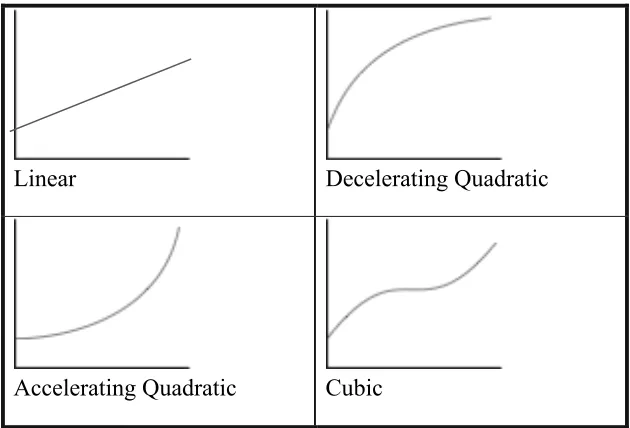
2. Four Types of Functional Form ... 71
3. Example of a Discontinuous Growth Model with a Change in Slope ... 72
4. Data Trajectories for Reading Mean Achievement (Top Line) and Mathematics Mean Achievement (Bottom Line). ... 72
5. Unstructured Error Variance-Covariance Matrix for All Individuals ... 79
A1. Fixed Effects Regression of Achievement Onto Time ... 158
A2. Level 2 HLM with Random Intercepts and Slopes for Five Students ... 159
A3. Level 2 HLM Growth Model with a Fixed Intercept for Five Students ... 160
xi
LIST OF TABLES
Table Page
1. Six Classes of School-Readiness Variables ... 6
2. Bronfrenbrenner’s Ecological Systems and School-Readiness Variables ... 13
3. ECLS School-Readiness Variables of this Study Compared with School- Readiness Variables from Linder, Ramey, and Zambak (2013) ... 22
4. Six Classes of School-Readiness Represented in Articles that Used ECLS Data Sets ... 27
5. Correlation Matrix for Cognitive Knowledge and Skills and Academic Achievement ... 29
6. Regression Results for Kindergarten Cognitive Knowledge and Skills and Social and Emotional Skills with Third-Grade Academic Achievement ... 31
7. Regression Results for Kindergarten Cognitive Test Scores, Physical Skills, and Attention with Fifth-Grade Academic Achievement ... 33
8. Regression Results of School-Readiness profiles on Academic and Social Outcomes at the End of First Grade ... 38
9. Regression Results for Home Educational Activities, Extracurricular Activities, and Use of Community Resources with Spring Kindergarten Achievement ... 48
10. Demographics from Fall 2010 Kindergarteners ... 57
11. Academic Rating Scale (ARS) Variables ... 60
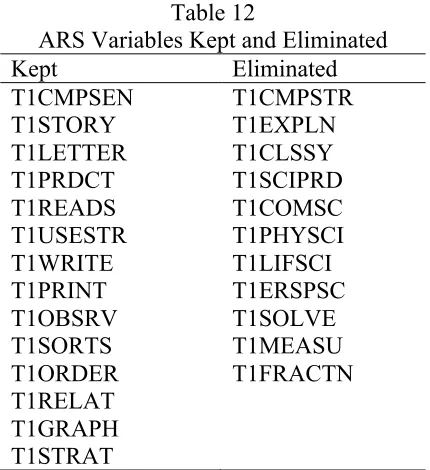
12. ARS Variables Kept and Eliminated ... 61
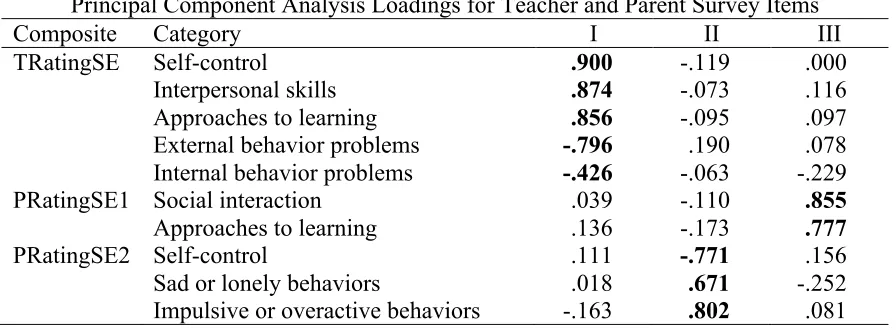
13. Principal Component Analysis Loadings for Teacher and Parent Survey Items ... 64
14. Home Environment Activities ... 66
15. Access to Community Resources ... 67
xii
LIST OF TABLES CONTINUED
Table Page
17. Response Variables: Reading and Mathematics Assessment Variables ... 69
18. Age in Months at Time of Assessment ... 74
19. Time Variables for Zerotime and Zerotime2 ... 75
20. Coding for Two-Piece Linear Time Variables ... 76
21. Fixed Effects for Time Variables ... 77
22. Parameters and Deviance Statistics for Five Error Structure Models ... 80
23. Intercorrelations and Correlations for 13 Explanatory Variables with Fall Kindergarten and Spring Fourth Grade Assessment Scores ... 84
24. Correlations between Explanatory Variables and Fall Kindergarten Reading and Mathematics Assessment Scores ... 87
25. HLM Growth Modeling Results of Reading Achievement ... 95
26. HLM Growth Modeling of Mathematics Achievement ... 102
27. Rank Order of Five Explanatory Variables for Reading and Mathematics ... 107
28. HLM Growth Modeling Results of Reading Achievement with CenterDummy ... 110
29. Percentage of Racial Demographics of CenterDummy Variable ... 111
30. HLM Growth Modeling Results of Mathematics Achievement with CenterDummy ... 112
31. OLS Regression Results for Six School-Readiness Variables and Fall Kindergarten Reading Achievement ... 114
32. OLS Regression Results for Six School-Readiness Variables and Fall Kindergarten Mathematics Achievement ... 114
xiii
LIST OF TABLES CONTINUED
Table Page
B1. Descriptive Statistics for Teacher-Reported Academic Rating Scale (ARS)
from ECLS-K:2011 ... 165
B2. Descriptive Statistics for ECLS-K:2011 Explanatory Variables ... 166
C1. Descriptive Statistics for ECLS-K:2011 Response Variables ... 168
C2. Correlation Matrix for Response Variables ... 168
D1. Missing Data for ECLS-K:2011 Explanatory Variables ... 170
D2. Missing Data for ECLS-K:2011 Response Variables ... 171
E1. Correlation Matrix for 13 Explanatory Variables ... 173
E2. Descriptive Statistics for 13 Explanatory Variables ... 174
E3. Correlation Matrix for Reading Assessments ... 174
E4. Correlation Matrix for Mathematics Assessments ... 174
CHAPTER 1
STATEMENT OF THE PROBLEM
The achievement gap—the term used to label the large standardized test score
differences between various racial, socioeconomic status, and ethnicity groups—is a
long-standing issue in education that produces many complicated and negative
consequences for students at the bottom test-score percentiles including reduced
educational attainment, income disparities, reduced employment opportunities, and a
higher likelihood of adult criminality (Kirk & Sampson, 2011; Mashburn & Pianta, 2006;
Reardon, 2011; Sadowski, 2006). If we take a step back from the achievement gap it
becomes obvious that children beginning elementary school are part of a
school-readiness gap which is understood as the differences in academic and social skills among
children entering kindergarten (Sadowski, 2006). Little research exists on understanding
how a multitude of school-readiness variables influence students’ academic starting
points in kindergarten and their subsequent academic achievement in elementary school.
Understanding how different variables contribute to school-readiness and academic
achievement can address the achievement gap with explanations based on research. This
was the main goal of this study.
The school-readiness gap is not a new educational trend. The importance of
school readiness, especially for students from low-income backgrounds, was formally
acknowledged in the mid-1960s by the United States federal government with the
establishment of Head Start (Winter & Kelley, 2008). Head Start, the end result of
research that highlighted the importance of school readiness, was designed to be a free,
risk for developmental delays (Winter & Kelley, 2008). In the years following, similar
preschool programs (e.g., High/Scope, Bank Street, Bereiter Engelmann, and many other
state-funded preschool programs) were designed to address the school-readiness gaps
among preschool students (Winter & Kelly, 2008). Although funding for Head Start has
been inconsistent, many studies have found that Head Start students have better academic
outcomes than their peers who did not participate in early-education intervention
programs (Brown, 1985; Wortham, 1992).
Even though research pointed to improvements in school readiness that Head
Start graduates were making, gains were not sufficient to address the ever-growing
school-readiness gap among preschool students (Brown, 1985). In 1990, the National
Education Goals Panel (NEGP), founded by President George H. W. Bush and 50 state
governors, declared school readiness its number one goal for early-childhood education
in America (Mashburn & Pianta, 2006). And, in 1991, approximately one-third of U.S.
children entering school were not prepared to achieve academic success (Boyer, 1991).
Even though acknowledgement of the need for early-childhood education to
prepare children for school was established decades ago, children’s lack of school
readiness is a problem that continues in the twenty-first century. For example, in 1999,
34% of incoming kindergarteners were not proficient in letter naming, and 2018 data
from the Illinois State Board of Education reported that three out of four kindergarteners
in Illinois were not ready to start school (Burke, 2018; West, Denton, &
Germino-Hausken, 2000). Additionally, more than ever, Head Start is under tight scrutiny to
improve facilities, provide better teacher training and evaluation, and hire high-quality
(DeParle, 2019). Even though the No Child Left Behind Act (NCLB) replaced the NEGP
in 2002, education stakeholders continue to work to understand how different factors
contribute to school readiness and how to best prepare children for formal schooling
(Mashburn & Pianta, 2006). The unchanging need to improve school readiness shows
that not enough has been done to understand it and how to help children become more
“school ready.”
The emphasis on school readiness by the U.S. government throughout and beyond
the 20th century has been warranted, given that research suggests that the relationship
between school readiness and student success is irrefutable. For example, a child’s school
readiness is correlated positively with future academic and social success in school
(Duncan et al., 2007). Also, children who are “ready” for school when they start
kindergarten tend to score higher on academic assessments, are more socially and
emotionally competent throughout elementary school, and have an easier time acquiring
additional academic skills, which in turn allows them to continue to achieve academic
success throughout their educational careers (Britto, 2012; Duncan & Murnane, 2011;
Hair, Halle, Terry-Humen, Lavelle, & Calkins, 2006). Many state politicians recognize
that preparing children to succeed in school ultimately benefits economies and the work
force decades later, and consequently, many preschool programs are being funded at the
local level (Pérez-Peña & Rich, 2014).
Along with the positive academic and social results of school readiness, formal
schooling beginning at kindergarten is more academic and rigorous than ever before,
especially with the introduction of the Common Core Standards. This has raised the
school readiness, especially because children who begin school unprepared to meet its
academic requirements are more likely to struggle academically (Cannon, Jacknowitz, &
Karoly, 2012; Linder, Ramey, & Zambak, 2013). Because of the extensive implications
of school readiness, it is not considered a child or family issue, but an issue that society
must resolve (Winter & Kelley, 2008).
Educational organizations and government agencies were prompted to advocate
for building school-readiness skills in all children following the outpouring of studies and
reports that demonstrated the benefits of school readiness (Winter & Kelley, 2008). Even
though there is a general consensus that school readiness is vital, agencies and
organizations define school readiness in various ways. For example, in 1995, the NEGP
defined five dimensions of school readiness: (a) physical well-being and motor
development, (b) social and emotional development, (c) approaches toward learning, (d)
language development, and (e) cognition and general knowledge (Kagan, Moore, &
Bredenkamp, 1995). In 2009, in another attempt at definition, the National Association
for the Education of Young Children (NAEYC) broadened school readiness as a
construct that extended beyond children’s basic academic knowledge. For NAEYC
(2009), school readiness also includes social skills, emotional readiness, physical
readiness, positive attitudes toward learning, a supportive family and home environment,
early school and learning experiences, and access to community resources. Further
developing and defining school readiness, the School Readiness Conceptual Framework
by the United Nations Children’s Fund (UNICEF; Britto, 2012) and the American
Academy of Pediatrics (AAP; American Academy of Pediatrics, 2016) also defined
development, social and emotional development, approaches to learning, language
development, cognition, and general knowledge. Head Start, the country’s biggest
preschool program that provides preschool to more than a million children in every U.S.
state and territory, recognized school readiness as a multivariable construct and based its
educational goals for all Head Start students on developing school readiness (DeParle,
2019; Office of Head Start, 2015). The Head Start Framework highlighted the specific
school-readiness goals for its students as cognitive knowledge; perceptual, motor, and
physical development; social and emotional development; approaches to learning; and
language and literacy skills (Office of Head Start, 2015). As these various definitions
from the organizations cited above show, school readiness consistently is defined as a
multivariable construct, yet the specific variables that compose school readiness is
inconsistent.
Definitions of school readiness similarly are diverse at the research level.
Researchers agree that it is multivariate, but they do not agree on which variables best
represent school readiness. For example, Meisels (1999) argued that school readiness is
composed of cognitive knowledge skills such as familiarity with letters, shapes, numbers,
and colors, and that these skills are made possible by social and emotional skills such as
confidence, curiosity, intentionality, self-control, and effective communication and
cooperation. Mashburn and Pianta (2006) suggested that limiting school readiness to
children’s cognitive knowledge ignores the strong influence that family relationships and
early education have in developing social and emotional skills, motivation to learn, and
meta-analysis, Duncan et al. defined school-readiness as cognitive knowledge,
attention-related skills, social and emotional skills, and behavior.
Because neither the organizations nor scholars cited above have a shared
definition of school readiness, this study seeks to remedy the problem by combining the
school-readiness skills and factors from the previously cited organizations and
researchers to create a collective definition that could benefit organizations, researchers,
and practitioners. Taking into account how these organizations and researchers have
defined school readiness, this study connects similar definitions and organizes the
variables into six classes, as presented in Table 1. Within each class there are specific
variables. These variables are explained in more detail in Chapter III.
Table 1
Six Classes of School-Readiness Variables 1. Cognitive knowledge and skills
2. Social and emotional skills 3. Physical skills and health
4. Family structure and home environment 5. Access to community resources
6. Early school experiences
Purpose of the Study
Even though organizations such as NEGP (Kagan et al., 1995), NAEYC (2009),
UNICEF (Britto, 2012), AAP (2016), and Head Start (Office of Head Start, 2015), and
authors such as Meisels (1999), Mashburn and Pianta (2006), and Duncan et al. (2007)
agree that school readiness is multivariable, only a few studies have examined the effects
of multiple school-readiness variables on future student academic success. For example,
the meta-analysis by Duncan et al. (2007) investigated six longitudinal data sets to
examine how two classes of school-readiness variables (cognitive knowledge and social
excluded variables of physical skills and health, family structure and home environment,
access to community resources, and early school experiences. Besides Duncan et al.’s
(2007) meta-analysis, the research cited in this study’s literature review (Chapter II)
demonstrate further that school-readiness variables usually are studied independently of
one another rather than together, which ignores the fact that school readiness is
multivariable.
Because no study has examined how six classes of school-readiness variables
contribute to student academic success, one purpose of this study was to engage a holistic
approach to school readiness by examining the relationships between all six classes of
school-readiness variables and students’ academic achievement. In order to achieve this
goal, a secondary analysis of the data set Early Childhood Longitudinal Study 2011
(ECLS-K:2011) was completed. Using a secondary data set allowed this study to access
data on six classes of school-readiness variables for more than 18,000 children over 5
years of elementary school (kindergarten through fourth grade). It also provided the data
to measure academic achievement and growth in the form of student test scores in
reading and mathematics for 5 years. Hierarchical linear growth modeling (HLM growth
modeling) was used to determine the relationships between students’ school-readiness
variables as measured in kindergarten and their academic assessment scores from
kindergarten, first grade, second grade, third grade, and fourth grade. HLM growth
modeling, which regresses outcome measures over time onto time measurement
variables, provided an intercept and slope for each student in the data set. When properly
scaled, the intercept indicated the achievement starting point when students entered
elementary school. This study related the intercepts and the slopes to school-readiness
variables from the six classes.
Significance of the Study
Given the importance of school readiness as a portent for academic achievement,
this study is novel in both its approach and its contribution to the current literature. First,
as stated, no current study has examined the relationship between six classes of
school-readiness variables to students’ initial academic achievement in kindergarten and
academic growth in elementary school. A comparison of school-readiness variables is
essential to best educate teachers about school-readiness and also to understand the
relationships between each variable and academic success. After the relative importance
of each variable is determined, educational resources can be used with optimal efficiency
to develop the more important school-readiness skills in students, educators can make the
best decisions to prepare children for school, and students can receive the interventions
that will make the biggest difference in their future academic careers.
Second, no previous school-readiness study has used such a sizable longitudinal
data set as the ECLS-K:2011 to examine school readiness. This data set included data for
all the explanatory and response variables needed for this study, which were (a) direct
cognitive measurements (e.g., reading and mathematics assessments; executive function
assessments), (b) indirect cognitive variables (e.g., social and emotional skills surveys),
(c) measurements of the children’s health, family structure, and home environment (e.g.,
socioeconomic status), (d) use of community resources (i.e., libraries, museums), and (e)
previous preschool experience. By studying these variables together, this study provides a
which contributes to a better understanding of how the variables relate to academic
success.
Third, the ECLS-K:2011 contains data for a nationally representative sample of
more than 18,000 students. Using a data set with such a large sample size to answer this
study’s research questions reduced sampling error (Creswell, 2012). Also, the data set
created and used a sample of children representative of the general population of the
United States, which helps this study’s results be more generalizable to the national
population (Tsang, 2014).
Finally, this study employed HLM growth modeling, which is used by education
researchers interested in how academic achievement changes over time (Anderson,
2012). HLM growth modeling produces more accurate results than ordinary least squares
regression because it produces a growth curve for each individual in a data set rather than
obtaining mean regression parameters for all individuals (Anderson, 2012). For this
study, the students’ growth curves were used to evaluate how each school-readiness
variable predicted their academic achievement in fall kindergarten and the rate of their
academic growth from fall kindergarten through fourth grade. No other study has
attempted to examine the relationships between school-readiness variables and initial
kindergarten reading and mathematics assessment scores and school-readiness variables
and academic growth in reading and mathematics in elementary school.
Theoretical Framework
If school readiness is accepted as a multivariable construct, then it is of the utmost
importance that multiple school-readiness variables be studied together to determine their
employs the theoretical framework of Urie Bronfenbrenner’s (1979) ecological systems
theory, which describes how a child’s personal development is influenced by multiple
environments. School-readiness variables can be found in Bronfenbrenner’s description
of influencers in a child’s development. Bronfenbrenner defined the ecology of human
development as “the scientific study of the progressive, mutual accommodation,
throughout the life span, between a growing human organism and the changing
immediate environments in which it lives” (Bronfenbrenner, 1977, p. 514). In subsequent
work, Bronfenbrenner added that human development is most heavily affected by
people’s relationships within and between different systems, which he defined as
“place[s] where people can readily engage in face-to-face interaction—home, day care
center[s], playground[s], and so on” (Bronfenbrenner, 1979, p. 22). Bronfenbrenner
labeled these systems as the microsystem, mesosystem, exosystem, and macrosystem. The
following sections will summarize each of these systems and relate them to school
readiness.
The microsystem is “a pattern of activities, roles, and interpersonal relations
experienced by the developing person in a given setting with particular physical and
material characteristics” (Bronfenbrenner, 1979, p. 22). In terms of school readiness, a
child’s microsystem includes home, childcare, or preschool institutions, which influence
cognitive and social or emotional growth. The materials and environment of a child’s
home and school are important not only because they provide the child with a safe,
secure, and nurturing environment but also because a child’s microsystem greatly
influences their psychological growth (Bronfenbrenner, 1979). This study acknowledges
psychological growth is influenced by the home environment and previous preschool
experiences.
The mesosystem “comprises the interrelations among major settings containing
the developing person at a particular point in his or her life” (Bronfenbrenner, 1977, p.
515). A mesosystem consists of the relationships between home, school, and community.
A child is the link between home and school, the communicator between both settings,
and the conduit for interaction between the two. School readiness is enhanced if a child’s
family supports the transition to school (Bronfenbrenner, 1979).
Exosystem refers to “one or more settings that do not involve the developing
person as an active participant, but in which events occur that affect, or are affected by,
what happens in the setting containing the developing person” (Bronfenbrenner, 1979, p.
25). For a developing child, this is their local community. Bronfenbrenner (1979)
hypothesized that the exosystem can be an important part of human development if
resources are allocated and decisions are made to benefit children and the adults who help
raise them. Additionally, the more relationships and support a community provides to a
developing child, the more the child benefits. For example, when a health-care clinic
serves disadvantaged families, a child’s health may be affected positively by access to
health care, which may help increase school readiness. Furthermore, children who have
access to playgrounds and public parks have the opportunity to exercise and spend time
outdoors, which may help promote physical skills and good health.
Macrosystem refers to the consistency of specific settings observed within a
culture (Bronfenbrenner, 1979). For example, all U.S. post offices operate much the same
schools and educational institutions. There are many different types of schools (e.g.,
public, private, independent, and charter), and students attending different schools have
access to different programs (e.g., athletic, academic, and technical), teachers (e.g.,
credentialed or not), and resources (e.g., counseling services, tutoring services, and
technology). Any disparity in children’s macrosystems can lead to differing levels of
school-readiness skills. For example, children who attended a more academic
prekindergarten program are better prepared for the academic rigors of kindergarten than
children who attended home day cares (Sadowski, 2006). Furthermore, schools with a
majority low-income population often perform academically lower on standardized tests
compared with schools with middle- or high-income students (Duncan & Murnane,
2011), which could be attributed to what Sadowski (2006) labeled a school-readiness
gap, or “the variations in academic performance and certain social skills among children
entering kindergarten and first grade” (p. 1). In terms of Bronfenbrenner’s (1979)
ecological systems theory, a school-readiness gap may be the result of children with
unequal macrosystems.
Using Bronfrenbrenner’s (1979) ecological systems perspective as this study’s
theoretical framework facilitated the examination of the connection between children’s
school readiness and their life circumstances. Bronfenbrenner’s various systems may help
us better understand how to improve school readiness for various types of children based
on their unique life circumstances. For example, children lacking social and emotional
skills may need someone within their microsystem (e.g., a preschool teacher or daycare
provider) to better support their development. Children lacking physical skills or have
do not have safe outdoor spaces or public playgrounds to promote exercise and play.
Bronfenbrenner’s ecological systems perspective is another way to understand where
school-readiness variables exist and how they develop within children.
Table 2 lists the six classes of school-readiness variables according to the
ecological systems to better connect Bronfenbrenner’s (1979) environmental systems
with school readiness. This theory also provided a way in which to order the
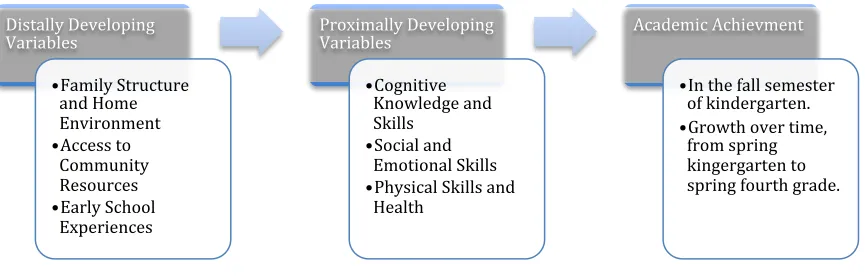
school-readiness variables from microsystem to macrosystem, which this study defines as areas
of development proximal to the child (e.g., cognitive development, social and emotional
skills, physical skills and health) to those more distal (e.g., family structure and home
environment, access to community resources, and preschool experience). The
school-readiness classes and variables are presented in the order listed in Table 2 throughout this
study.
Table 2
Bronfrenbrenner’s Ecological Systems and School-Readiness Variables
System Variables
Microsystem Cognitive knowledge and skills Social and emotional skills Mesosystem Physical skills and health
Family structure and home environment Exosystem Access to community resources
Macrosystem Early school experiences
Background and Need
The achievement gap is a decades-old educational problem (Mashburn & Pianta,
2006; Sadowski, 2006). Federal policies have attempted to address the achievement gap.
For example, Lyndon Johnson’s Elementary and Secondary Education Act of 1965
(ESEA), which was part of his “War on Poverty,” lent about $2 million—adjusting for
opportunities for underprivileged U.S. children. Head Start was one outgrowth of the
ESEA and that initial funding (Diorio, 2017; Johnson, 1965). Unfortunately, Head Start
did not solve the school-readiness gap, thus the achievement gap continues to be an
educational problem today.
Sadowski (2006) suggested that eliminating the achievement gap starts by
understanding and addressing the school-readiness gap: the differences in academic skills
and social skills among children entering kindergarten. Therefore, school readiness and
how it helps students academically succeed must be better understood. If early-education
teachers (e.g., preschool, prekindergarten, and Head Start teachers) can identify students
with weak school-readiness skills before kindergarten, then they can work with those
students to develop school-readiness skills, thus increasing opportunities for academic
achievement in elementary school and eventually work toward closing the achievement
gap.
This study aimed to help address the school-readiness gap and, consequently, the
achievement gap by including the six-classes of school-readiness variables and by using a
large-scale sample that can generalize to the U.S. student population. The ECLS-K:2011
was used to help achieve this goal as it provided data for this study’s school-readiness
variables and achievement measures from a nationally representative sample of about
18,000 children from public and private schools, full-day and part-day kindergarten, and
from diverse socioeconomic, language, and racial backgrounds. Succinctly, the goal of
this study was to use the ECLS-K:2011 data to study multiple school-readiness variables
Research Questions
One purpose of this study was to understand how students’ academic starting
points in fall kindergarten and subsequent growth throughout elementary school were
represented in the ECLS-K:2011 data set. Additionally, this study aimed to determine
how six classes of school-readiness variables related to the students’ starting points and
growth. This study had three research questions:
1. How are the six classes of school-readiness variables related to a child’s starting
point in kindergarten, and what are their growth rates from kindergarten to fourth
grade in reading?
2. How are the six classes of school-readiness variables related to a child’s starting
point in kindergarten, and what are their growth rates from kindergarten to fourth
grade in mathematics?
3. How do the starting points (intercepts) and growth rates (slopes) of reading and
mathematics compare?
Definitions of Terms
Below is a list of vocabulary and definitions essential to this study. The
definitions have been framed to aid in understanding their applications and relevancy to
this study. Many of the definitions are taken from the ECLS-K:2011 User’s Manuals
(Tourangeau et al., 2015, 2018).
Achievement gap is the standardized test score differences between various racial,
socioeconomic status, and ethnicity groups, which starts before children enter
kindergarten and continues throughout all years of school. The achievement gap has
2006).
Approaches to learning, as defined by the ECLS-K:2011 User’s Manual
(Tourangeau et al., 2015), are a student’s learning behaviors including the ability to keep
belongings organized, eagerness to learn new things, ability to work independently,
ability to adapt to changes in routine, persistence in completing tasks, ability to pay
attention, and ability to follow classroom rules.
Cognitive knowledge refers to the direct measurement of children’s knowledge
using reading and mathematics assessments. In this study, cognitive knowledge is
measured by the reading and mathematics assessments administered to children by ECLS
administrators. The ECLS used item response theory (IRT) to place all the assessment
scores on the same scale so they could be compared across years. The cognitive
knowledge variables from the ECLS data set that were used in this study included
students’ reading and mathematics test scores from fall kindergarten, spring kindergarten,
spring first grade, spring second grade, spring third grade, and spring fourth grade.
Cognitive skills are a measure of a child’s executive functions, which are
“interdependent processes that work together to regulate and orchestrate cognition,
emotion, and behavior and that help a child to learn in the classroom” (Tourangeau et al.,
2015, p. 3.15). The cognitive skills variables used in this study are the Dimensional
Change Card Sort (Zelazo, 2006) which measured cognitive flexibility and the Numbers
Reversed subtest of the Woodcock-Johnson III Tests of Cognitive Abilities (Woodcock,
Community resources included programs and additional activities outside the
home, such as community sports leagues, libraries, museums, concerts, zoos, and
aquariums. This was measured during the fall kindergarten parent survey.
Distal refers to school-readiness variables that occur in children’s surrounding
environments. This includes their socioeconomic status, home language, home
educational activities, use of community resources (e.g., libraries, museums), and
preschool experience.
Early school experiences include a child’s time in day care and various types of
preschool (public, private, or Head Start). This was measured during the fall kindergarten
parent survey.
Explanatory variable means independent variable. There were 13
school-readiness variables that were the explanatory variables in this study.
Family structure and home environment included the educational experiences a
child had at home (e.g., singing, reading, playing games), what language the family spoke
at home, and the family’s socioeconomic status (SES). These variables were measured
during the fall kindergarten parent survey.
Health was determined by a calculation of a child’s age, weight, and height to
produce a body mass index score (BMI). This determined if a child was overweight,
underweight, or on track (healthy BMI). ECLS administrators used a digital scale to
weigh the children and a Shorr Board to measure their height during fall kindergarten.
Physical skills were a measurement of the children’s gross motor skills as
determined by a question about children’s coordination on the spring kindergarten parent
Proximal refers to school-readiness variables that develop within the child. This
includes their cognitive knowledge and abilities, their social and emotional skills and
abilities, and physical health.
Response variable means dependent variable. This study used the ECLS-K:2011
reading and mathematics assessment scores from five years of elementary school
(kindergarten through fourth grade) as response variables.
School-readinessvariables are a combination of skills and behaviors that develop
in early childhood and are essential for school success, academically and otherwise.
School readiness “implies the mastery of certain basic skills or abilities that, in turn,
permit a child to function successfully in a school setting, both academically and
socially” (Hair et al., 2006, p. 432). This study organized school-readiness variables into
six classes: (a) cognitive knowledge and skills, (b) social and emotional skills, (c)
physical skills and health, (d) family structure and home environment, (e) access to
community resources, and (f) early school experiences.
Social-emotional skills were measures of social competence such as self-control,
interpersonal skills (social interaction), externalizing behavior problems (impulsive and
overactive behaviors), and internalizing behavior problems (feelings of sadness and
loneliness). These variables were measured using a survey about the children’s
social-emotional skills during the kindergarten parent survey and kindergarten teacher survey.
Socioeconomic status (SES) was described as a combination of the child’s
parent(s) or primary caregivers’ education level, occupation, and household income
(Tourangeau et al., 2015). The ECLS measured each child’s SES during the fall
CHAPTER II
REVIEW OF THE LITERATURE
As stated in Chapter I, the purpose of this study was to examine the relationships
between six classes of school-readiness variables and students’ academic achievement in
elementary school using the Early Childhood Longitudinal Study from 2011
(ECLS-K:2011). The research on school readiness reviewed in this chapter provides a better
understanding of school-readiness variables’ relationships to academic achievement.
First, the findings of a school-readiness research review by Linder, Ramey, and Zambak
(2013) are summarized. Then, the three Early Childhood Longitudinal Study (ECLS) data
sets are described. Finally, school-readiness studies that used one of the ECLS data sets
are reviewed and organized by Bronfenbrenner’s (1979) ecological systems.
Most of the studies reviewed in this chapter used variables measured at the
beginning of kindergarten to represent school readiness. This chapter includes studies
from the six classes of school-readiness variables that were established in Chapter I: (a)
cognitive knowledge and skills, (b) social and emotional skills, (c) physical skills and
health, (d) family structure and home environment, (e) access to community resources,
and (f) early school experiences. A review of school-readiness literature did not find a
study that includes variables from all six classes so this chapter does not include one.
Most of the studies reviewed used assessment scores after fall kindergarten to represent
student academic achievement.
School Readiness Research Review
Linder et al. (2013) reviewed school-readiness research about school-readiness
journals from 1995 to 2013. Their review organized the school-readiness variables most
commonly associated with later academic success in reading and mathematics into seven categories: (a) performance on mathematical and literacy based tasks, (b) social behavior, (c) learning-related skills, (d) children’s health and socioeconomic status, (e) home environment, (f) family structure and parenting, and (g) childcare experiences. Compared to the six classes used in this study, the reviewed study by Linder, et al. (2013) did not include research about children’s access to community resources. The major findings of this review are presented below.
1. Children who engaged in mathematical thinking tasks, such as playing numerical board
games or constructing complicated designs with blocks and Legos, displayed greater
success in reading and mathematics during elementary, middle, and high school than
students who did not. The review also found that children who engaged in literacy tasks
that developed phonological awareness, decoding skills, awareness of print, and letter
identification had higher levels of academic success in school.
achievement. Children who participated in early mathematics intervention were less likely to display negative social behaviors such as aggression and low attention span. 3. Learning-related skills helped children succeed academically. Kindergarteners and second-grade students who followed directions, took turns during group activities, and stayed on task had higher mathematics assessment scores than their peers without learning-related skills. Additionally, having strong learning-related skills, such as self-regulation and social competence in kindergarten, positively correlated to higher reading and mathematics test scores from kindergarten to sixth grade.
4. Premature birth weight, poor health, male gender, and low socioeconomic status
(SES) negatively influenced school readiness. Low SES was found consistently to be
most detrimental to developing school readiness: children from low-SES families were
twice as likely to have difficulty with school readiness than children from middle- or
high- SES families. Children from low-SES households were disadvantaged compared
with children from middle- or high-SES households: children from low-SES homes
scored lower on number skills, problem solving, and memory assessments. Health was
found to be important: compared to girls, boys born premature were twice as likely to be
less ready for formal schooling.
5. Providing children with literacy activities at home may promote school readiness. Children who engaged with literacy activities at home, such as reading the newspaper, and received direct literacy instruction at home, such as reading books with an adult, had higher oral-language skills, word-decoding skills, and phonological skills.
6. Parenting style may influence children academically. Children whose parents expected
pre-reading and pre-mathematics assessments, compared with children whose parents had no
expectations for high academic grades or academic success. This review also found that
parental involvement helped students with school readiness: higher parent involvement
correlated to higher levels of student achievement.
7. High-quality childcare may help develop school readiness. This review identified seven characteristics of childcare programs that are essential to developing school readiness: encouraging student exploration; mentoring basic skills; celebrating
developmental advances; rehearsing and extending new skills; protecting students from inappropriate disapproval, teasing, and punishment; communicating to students richly and responsively; and guiding and limiting student behavior.
In conclusion, the school readiness review by Linder et al. (2013) provided a comprehensive overview of variables of school readiness and their influence on reading and mathematics success, as cited in peer-reviewed journals from 1995 to 2013. The authors found seven school-readiness themes that can be likened to the six classes of school-readiness variables used for this study, as shown in Table 3.
Table 3
ECLS School-Readiness Variables of this Study Compared with School-Readiness Variables from Linder, Ramey, and Zambak (2013)
This Study Linder, Ramey, and Zambak
• Cognitive knowledge and skills • Learning related skills
• Mathematical and literacy-based tasks • Social and emotional skills • Social behavior
• Physical skills and health • Health and SES • Family structure and home
environment •• Family structure and parenting Home environment • Early school experiences • Childcare experiences
The Early Childhood Longitudinal Study Programs
The Early Childhood Longitudinal Study (ECLS) programs are conducted by the
National Center for Education Statistics (NCES), part of the Institute of Education
Sciences (IES) of the United States Department of Education. Two ECLS data sets are
complete (ECLS-B and ECLS-K), and at the completion of this dissertation in April
2019, data from the third data set (ECLS-K:2011) kindergarten through spring fourth
grade of was available for public use (Tourangeau et al., 2015, 2018).
The three ECLS programs were designed to collect data about children’s early
school experiences, child development, and school progress (including the six classes of
school-readiness variables used in this study). The ECLS programs collected information
about all variables through several methods and sources: administering assessments to the
children participants directly and collecting data from the children’s parents, teachers,
and school staff through automated phone interviews and paper surveys. Many of the
assessments and surveys are available to the public through the ECLS website
(https://nces.ed.gov/ecls/index.asp). The ECLS data sets are intended for public use in
studying child development and developing educational policy.
The first ECLS program called ECLS-B was the birth cohort, a nationally
representative sample of about 14,000 children born in 2001. The ECLS-B collected data
from parents, childcare centers, and schools about children’s cognitive, social, emotional,
and physical development from birth to kindergarten entry in 2006. The ECLS-B was
designed to provide detailed information about children’s early experiences of health,
development, care, and education to policy makers, researchers, childcare providers, and
review because the ECLS-B did not collect data past the cohort’s kindergarten year.
Detailed information about the ECLS-B assessments and domains tested are available
online (https://nces.ed.gov/ecls/birth.asp).
The second ECLS data set was the kindergarten class of 1998 (ECLS-K). This
study was a nationally representative sample of about 21,000 children attending public
and private schools, full-day and part-day kindergarten from diverse socioeconomic,
language, and racial backgrounds. Children who qualified for special-education services
were included in this study. Unlike the ECLS-B, the ECLS-K began when the children
entered kindergarten in the fall of 1998 and followed the cohort until spring of eighth
grade in 2007. Seven rounds of data were collected: fall of 1998 and spring of 1999
(kindergarten), fall of 1999 and spring of 2000 (first grade), spring of 2002 (third grade),
spring of 2004 (fifth grade), and spring of 2007 (eighth grade).
Like the ECLS-B, data about the children’s cognitive, social, emotional, and
physical development were collected from home, classroom, and school environments
about home educational activities, classroom curriculum, and teacher qualifications.
Information was gathered directly from the children participants through cognitive
assessments and from teachers, parents, families, and school administrators using phone
and paper surveys. Like the ECLS-B, the ECLS-K was designed to provide
comprehensive data to policymakers and researchers. Detailed information about the
ECLS-K assessments and data collection procedures is available online
(https://nces.ed.gov/ecls/kinderinstruments.asp). Studies using this data set are included
The third ECLS was the kindergarten class of 2010–11 (ECLS-K:2011). Like the
ECLS-K, this study was a nationally representative sample of about 18,000 children—
attending public and private schools, full-day and part-day kindergarten—from diverse
socioeconomic, language, and racial backgrounds. Children who qualified for
special-education services were included in this study. This ECLS study began in fall 2010 when
the children entered kindergarten. Data were collected every semester until spring 2016,
when the children were in fifth grade. Because this ECLS data set includes information
about all six classes of school readiness, used a large, national sample that represented
elementary-school students, and was available for public use, it was used for this study.
As of April 2019, the ECLS-K:2011 data from kindergarten and grades one, two,
three, and four were available to the public online (https://nces.ed.gov/ecls/ index.asp);
the NCES had not released the data from fifth grade for public use. This data set
contained information on the same or similar variables and from similar sources as
ECLS-K using the same data collection methods: direct assessments of the children and
phone and paper surveys of parents, teachers, and school administrators. Minor changes
were made to update the cognitive assessments given to the children participants to
reflect new school standards and curriculum. An updated ECLS allows comparisons
between different generations of children, reveals effects of educational policies, and
allows studies of different educational and demographic environments.
Studies Using ECLS Data Sets
Studies that used the ECLS-K or ECLS-K:2011 data sets to examine how
children’s school readiness measured at the beginning of kindergarten contributed to their
school-readiness variables reviewed in each article by school-school-readiness classes. The articles
reviewed here used school-readiness variables as explanatory variables and academic
achievement as measured by test scores as response variables. A list of the articles
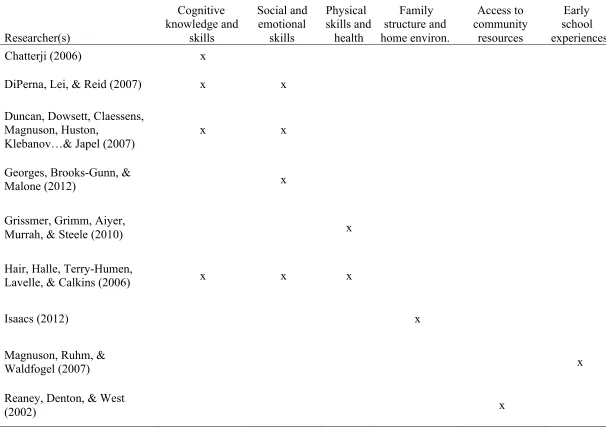
reviewed with their classes of variables is provided in Table 4.
Cognitive knowledge and skills
Chatterji (2006) estimated reading achievement gaps between ethnic, gender, and
socioeconomic groups of young schoolchildren using the ECLS-K data set. The
researcher focused on four research areas. The second area, explained below, is most
relevant to this study.
Chatterji’s (2006) second research area was the relationship between kindergarten
entry reading achievement to first-grade reading achievement. The research questions
were “To what extent do prekindergarten reading levels account for first-grade reading
variance over and above sociodemographic variables? Controlling for prekindergarten
reading levels (at kindergarten entry) and other child background characteristics, does a
child’s membership in specific subgroups still result in significant within-school reading
achievement differentials at the end of first grade?” (p. 492).
Chatterji (2006) used data from the ECLS-K to answer her research questions. For
her second area of focus, the explanatory variables were the kindergarten reading
assessment scores from the fall and spring of kindergarten, and the response variable was
the reading assessment score from spring of first grade. Data were analyzed using
two-level hierarchical linear modeling. The researcher did not include children whose data
were missing. Additionally, she included only children who did not repeat or skip
27 Table 4
Six Classes of School-Readiness Represented in Articles that Used ELCS Data Sets
Researcher(s) Cognitive knowledge and skills Social and emotional skills Physical skills and health Family structure and home environ. Access to community resources Early school experiences
Chatterji (2006) x
DiPerna, Lei, & Reid (2007) x x
Duncan, Dowsett, Claessens, Magnuson, Huston,
Klebanov…& Japel (2007)
x x
Georges, Brooks-Gunn, &
Malone (2012) x
Grissmer, Grimm, Aiyer,
Murrah, & Steele (2010) x
Hair, Halle, Terry-Humen,
Lavelle, & Calkins (2006) x x x
Isaacs (2012) x
Magnuson, Ruhm, &
Waldfogel (2007) x
Reaney, Denton, & West
Results indicated a positive correlation between fall kindergarten reading scores,
which represented student cognitive knowledge at the beginning of kindergarten, and
spring first-grade reading scores (𝛽 = .88). The researcher interpreted the result to mean that for every scale score point increase in kindergarten reading the first-grade scale
scores increased by almost one point. She concluded that prekindergarten reading
experiences are important for academic success in first-grade reading. Her results suggest
that continuing efforts to improve children’s literacy preparation in early childhood will
likely improve reading outcomes in elementary school.
Social and emotional skills
DiPerna et al. (2007) studied the relationship between students’ social and
emotional skills (internalizing behaviors, externalizing behaviors, interpersonal skills,
and approaches to learning) and their growth in mathematics. The authors defined
internalizing behaviors as feelings of anxiousness and withdrawal; externalizing behaviors as aggressiveness, hyperactivity, and regulation of behavior; interpersonal skills as cooperation and assertion; and approaches to learning as persistence, staying on task, following teacher directions, and participating in groups (DiPerna et al., 2007).
Their research question was “Are there direct relationships between young children’s
behaviors at the beginning of kindergarten and their growth in mathematics skills during
the primary grades?” (p. 371).
They used data from the ECLS-K data set to answer their research questions. The
researchers selected children who spoke English as their first language, did not repeat
kindergarten, and stayed in the same school from kindergarten to third grade. The
Skills Rating System (SSRS) values of their students on four behavior variables during
the fall of kindergarten: interpersonal skills, externalizing behaviors, internalizing
behaviors, and approaches to learning. The response variables were four mathematics
assessment scores from each student: fall of kindergarten, spring of kindergarten, spring
of first grade, and spring of third grade.
Data were analyzed using latent growth modeling to examine predictive
relationships between children’s behaviors, as measured in the fall of kindergarten, and
their mathematical assessment scores in kindergarten, first grade, and third grade,
controlling for age and general knowledge from fall of kindergarten. Results are
presented in Table 5.
Table 5
Correlation Matrix for Cognitive Knowledge and Skills and Academic Achievement
1 2 3 4 5 6 7 8 9
1 FKM 1.00
2 SKM .79 1.00
3 S1M .69 .75 1.00
4 S3M .63 .67 .74 1.00
5 IS .22 .22 .20 .18 1.00
6 Ext -.14 -.14 -.12 -.11 -.57 1.00
7 Int -.15 -.15 -.15 -.12 -.35 .25 1.00
8 AL .38 .35 .32 .30 -.70 -.50 -.35 1.00
9 GK .59 .54 .52 .51 .22 -.12 -.12 .32 1.00
10 Age .27 .25 .19 .12 .08 -.03 -.06 .18 .30
Note: Abbreviation key: FKM = fall kindergarten mathematics score, SKM = spring kindergarten mathematics score, S1M = spring first-grade mathematics score, S3M = spring third-grade mathematics score, IS = interpersonal skills, Ext = externalizing behavior problems, Int = internalizing behavior problems, AL = approaches to learning, GK = general knowledge
DiPerna et al. (2007) concluded that internalizing behaviors, externalizing
behaviors, and interpersonal behaviors failed to predict mathematical growth in young
students. They concluded that there might be a small positive relationship between
approaches to learning and mathematical growth. Their results were similar to those of
When the authors included general knowledge, however, a medium correlation was
found, which was the strongest correlation, although general knowledge was not part of
the authors’ goals. Finally, the authors concluded that approaches to learning might
represent the most important behavioral domain in promoting classroom learning. They
suggested that future research be done to examine the relationship between approaches to
learning and other subjects, such as mathematics and science, to learn whether it is a skill
worth promoting in instructional practices.
Cognitive knowledge and skills; Social and emotional skills
The meta-analysis by Duncan et al. (2007) reviewed six longitudinal studies to
estimate the relationship between three variables of school readiness and later academic
achievement. The school-readiness variables were early academic achievement, attention
skills, and social and emotional skills. The research question was “What is the
relationship between children’s early academic achievement, attention skills, and social
and emotional skills [socioemotional skills] and their later academic achievement?” They
answered their research question by examining six longitudinal data sets from Canada,
Great Britain, and the United States, including the ECLS-K. The procedures, analysis,
and results relating to the ECLS-K are summarized below.
Duncan et al. (2007) used data from 10,779 children in their study. The
explanatory variables were the fall kindergarten student reading and mathematics scores,
and the fall kindergarten teacher Social Skills Rating System (SSRS) values. The two
assessment scores represented early student academic achievement, and the teacher SSRS
values represented student attention skills and social and emotional skills. The authors
represented a student’s attention ability and (b) externalizing behaviors, internalizing
behaviors, self-control, interpersonal skills represented a student’s social and emotional
skills. By breaking the teacher’s SSRS values into two categories, the authors were able
to stay with their original purpose of examining how student attention ability and student
social and emotional skills are related to academic achievement.
The response variables were the students’ spring of third-grade reading and
mathematics scores. Data were analyzed using multiple regression. Reading and
mathematics outcomes were regressed on school entry variables. Duncan et al. (2007)
controlled for student socioeconomic status and gender. The study’s regression results are
presented in Table 6.
Table 6
Regression Results for Kindergarten Cognitive Knowledge and Skills and Social and Emotional Skills with Third-Grade Academic Achievement
Third-Grade Achievement Test Score
Third-Grade
Teacher-Rated Cognitive Knowledge
Kindergarten Reading Mathematics Reading Mathematics
Reading .18 .05 .15 .09
Mathematics .27 .53 .31 .34
Attention .04 .10 .14 .12
Externalizing .00 .00 .00 -.01
Internalizing .00 .00 -.01 -.02
Self-control .01 .00 .01 .01
Interpersonal skills .02 -.02 .01 -.01
R2 .44 .50 .39 .32
Note:Results are regression coefficients.
Results indicated that kindergarten reading and mathematics assessments were the
strongest predictors of later reading and mathematics achievement, whereas behavior and
social and emotional skills were not associated with later academic achievement. Duncan
et al. (2007) concluded that the reason early academic achievement appears to be the best
measured more accurately than behavior and social and emotional skills. Additionally,
the authors posed that behavior and social and emotional skills may matter more for other
school-related outcomes, such as graduation rates, than for academic test scores.
Cognitive knowledge and skills; Physical skills and health
Grissmer, Grimm, Aiyer, Murrah, and Steele’s study (2010) had three objectives:
“(1) provide new empirical evidence that fine motor skills, a developmental skill
measured at school entry but not included in Duncan et al.’s (2007) analysis, is strongly
predictive of later scores; (2) present several sensitivity analyses that extend Duncan et
al.’s findings including assessing the predictive power of a child’s knowledge of the
world; and (3) review the developmental and neuroscience literature to assess and suggest
mechanisms for a link between early motor skills and later achievement” (p. 1009). The
first two objectives apply to this study and thus are examined and summarized below.
Grissmer et al. (2010) intended to expand upon the research of Duncan et al.
(2007), who did not include the variables of fine and gross motor skills or general
knowledge in their review of six longitudinal data sets. This study used data from 7,814
children in the ECLS-K. The explanatory variables were two measures of the children’s
psychomotor skills (fine-motor skills and gross-motor skills), general knowledge score,
and social and emotional skills. The response variables were the children’s fifth-grade
mathematics, reading, and science test scores. Data were analyzed using ordinary least
squares. The authors controlled family and home variables.
Similar to Duncan et al. (2007), Grissmer et al. (2010) found that early reading
and mathematics scores were the best predictor of later reading and mathematics