Geschke Center
Doctoral Dissertations Theses, Dissertations, Capstones and Projects
12-2018
The Perceptions of Saudi Arabia Higher
Educational Leaders on Servant Leadership: The
Use of Authority and Power
Areej Abdullah Shafai
University of San Francisco, [email protected]
Follow this and additional works at:https://repository.usfca.edu/diss
Part of theEducational Leadership Commons
This Dissertation is brought to you for free and open access by the Theses, Dissertations, Capstones and Projects at USF Scholarship: a digital repository @ Gleeson Library | Geschke Center. It has been accepted for inclusion in Doctoral Dissertations by an authorized administrator of USF Scholarship: a digital repository @ Gleeson Library | Geschke Center. For more information, please [email protected].
Recommended Citation
Shafai, Areej Abdullah, "The Perceptions of Saudi Arabia Higher Educational Leaders on Servant Leadership: The Use of Authority and Power" (2018).Doctoral Dissertations. 461.
THE PERCEPTIONS OF SAUDI ARABIA HIGHER EDUCATIONAL LEADERS ON SERVANT LEADERSHIP: THE USE OF AUTHORITY AND POWER
A Dissertation Presented To
The Faculty of the School of Education Department of Leadership Studies Organization and Leadership Program
In Partial Fulfillment Of the Requirement for the Degree
Doctor of Education
ii
Dissertation Abstract
The Perceptions of Saudi Arabia Higher Education Leaders on Servant Leadership: The Use of Authority and Power
With the rapid changes occurring in Saudi Arabia toward achieving Saudi’s 2030
vision, more opportunities and developments will emerge in education and leadership, as
one of the main orientations of the vision. The Ministry of Higher Education in Saudi
Arabia seeks to raise the quality of higher education and its features to provide outputs
that contribute to serving the community and economic development. Responding to the
requirements of the labor market, the Ministry of Higher Education is seeking to make
higher education in Saudi Arabia competitive with higher education systems in other
developed countries. Thus, improving leadership in higher education institutions has
become more essential than ever. This study explored the perceptions of higher education
leaders on servant leadership as a leadership style. It also aimed to define their practices
of authority and power as a significant pillar of servant leadership.
A qualitative method was used to collect and analyze the data for this study. Ten
department chairs from various regions of Saudi Arabia were interviewed to gain their
perspectives and stories regarding their practice of servant leadership. The interviews
were digitally recorded and transcribed, then coded and analyzed with Dedoose
web-based qualitative data-analysis software. The major findings from this study emerged
around the five main themes that answered the five research questions: experience of
leadership, characteristics of servant leadership, service, authority and power, and
iii
leadership education and training. They were unfamiliar with various leadership styles in
general, and the term servant leadership in particular. Findings also demonstrated a tight
link between servant leadership and Islamic principles, as Prophet Mohammed (peace be
upon him) embraced the leadership approach that puts people and their needs as a top
priority. The findings clearly indicated that Saudi higher education leaders use formal
authority and still perceive formal authority as a major controlling element. Formal
authority and moral authority complement each other. More importantly, servant
leadership is an appropriate method of leadership to be applied in higher education
institutions in Saudi Arabia. However, shifting from a traditional style of leadership that
relies on authority to servant leadership needs to be gradual to reduce potential risks as a
iv
and approved by the members of the committee, has been presented to and accepted by
the Faculty of the School of Education in partial fulfillment of the requirements for the
degree of Doctor of Education. The content and research methodologies presented in this
work represent the work of the candidate alone.
Areej Shafai November 2, 2018 Candidate Date
Dissertation Committee
Dr. Patricia Mitchell November 2, 2018 Chairperson
Dr. Walter Gmelch November 2, 2018
v
This dissertation is dedicated to everyone cares about improving higher education
leadership in Saudi Arabia, to every educational leader who is seeking to thrive in his/her
career.
I dedicate this work to my wonderful parents for being the most influential people
in my life.
I also dedicate this work to my sisters and brothers, and to everyone who
vi
Foremost, I would like to thank ALLAH for everything he has given me to make
this work possible. Without the faith I have to you and the belief that you are always
there for me, I could never have accomplished this dissertation successfully.
A great thank to the government of Saudi Arabia for providing me a King
Abdullah Scholarship to study abroad and gain unique skills and knowledge that cannot
be gained in another place. Their generous support throughout my educational path is
much appreciated.
My sincere gratitude and great thank to Dr. Patricia Mitchell, not only for being
my chairperson who always provided guidance, suggestions, and advice, but also for
supporting me emotionally and professionally. She was the candle that truly enlightened
my way toward achieving this achievement. She always had a belief in me that I would
do and be well. Thank you very much, Dr. Mitchell.
I also would like to thank my committee members, Dr. Walter Gmelch and Dr.
Richard Johnson, for their ongoing support and encouragement through this process.
They were always available and ready to provide insight, feedback, and suggestions to
help me succeed this dissertation.
Thank you also to the participants of this study for providing their valuable time
and effort to share their amazing stories and insights. Without their participation, this
work could not possibly be completed.
My parents, Abdullah and Salha: thank you for your continued prayers for me,
vii
back to you a simple part of what you have given me. My parents, I love you.
To my wonderful sisters and brothers, I thank ALLAH for having and for
continuing to have you in my life. Thank you for standing by my side in a time of
viii
ABSTRACT ...ii
SIGNATURE PAGE ... iv
DEDICATION ... Error! Bookmark not defined. ACKNOWLEDGEMENTS ... vi
LIST OF TABLES ... xi
LIST OF FIGURES ... xii
CHAPTER I THE RESEARCH PROBLEM ... 1
Statement of the Problem ... 1
Background and Need for the Study ... 5
Background of Higher Education in Saudi Arabia ... 8
The Purpose of the Study... 11
Research Questions ... 12
Theoretical Framework ... 12
Limitations and Delimitations of the Study ... 17
Significance of the Study ... 18
Definitions of Terms ... 20
Summary ... 21
CHAPTER II REVIEW OF THE LITERATURE ... 24
Restatement of the Problem ... 24
Overview of Servant Leadership Literature ... 24
Definitions of Leadership ... 26
Historical Background of Servant Leadership ... 29
The Concept of Servant Leadership ... 31
Characteristics of Servant Leadership ... 35
Authority and Power in Servant Leadership ... 49
Shifting from “Formal Authority” to “Moral Authority” ... 57
Relationship Among Authority, Legitimacy, and Morals ... 59
The Relationship Between the Five Bases of Power and Servant Leadership ... 63
Legitimate Power ... 63
Reward Power ... 64
Coercive Power ... 65
Expert Power ... 65
Referent Power ... 66
Servant Leadership Across Cultures ... 68
Servant Leadership in Higher Education ... 72
Summary ... 77
ix
Research Setting ... 81
Population and Sample ... 82
Instrumentation ... 83
Validity and Reliability ... 85
Ethical Considerations ... 87
Protection of Human Subjects... 87
Informed Consent ... 87
Anonymity and Confidentiality ... 88
Data Collection ... 88
Data Analysis ... 89
The Researcher’s Background ... 93
CHAPTER IV FINDINGS ... 96
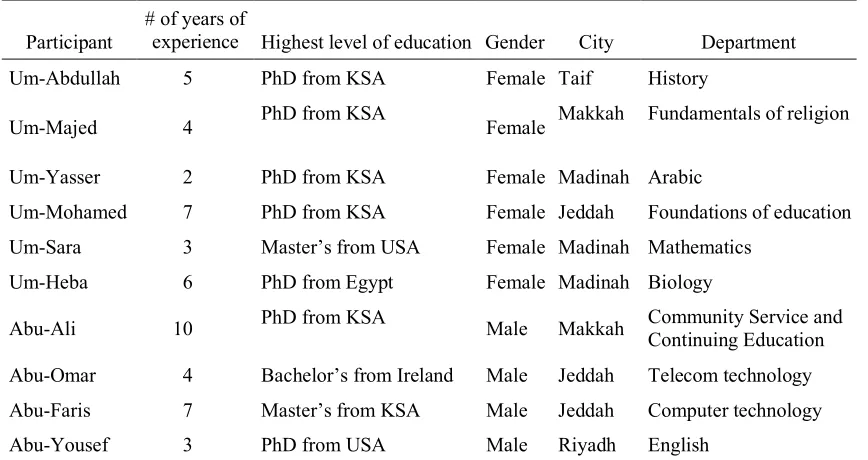
Demographic Data: Overview of the Participants ... 96
Emergent Themes: Answering Research Questions ... 97
First Theme: Experiences of Leadership ... 98
Unfamiliarity With the Term Servant Leadership ... 99
Service as a Religious and Traditional Principle ... 100
Servant Leadership in Islam ... 101
Followers’ Satisfaction ... 102
Effectiveness of Servant Leadership ... 105
Second Theme: Characteristics of Servant Leadership ... 107
Listening ... 107
Empathy ... 109
Healing ... 111
Awareness ... 113
Persuasion... 114
Conceptualization and Foresight ... 116
Stewardship ... 118
Commitment to the Growth of People ... 120
Building Community ... 122
Area of Strengths ... 124
Area of Improvement ... 125
Third Theme: Service ... 127
Service Provided ... 128
Strategies for Department Improvement ... 129
Followers First, Then Leaders ... 131
Fourth Theme: Authority and Power ... 134
Relying on Authority to Influence ... 134
Practicing Authority While Being Humble ... 135
Formal and Moral Authority ... 137
Power Derived From Personal Qualities ... 139
Fifth Theme: Challenges in Applying Servant Leadership in Saudi Arabia ... 141
x
Summary ... 147
CHAPTER V SUMMARY, DISCUSSION, CONCLUSIONS, IMPLICATIONS, RECOMMENDATIONS, CONCLUDING THOUGHTS ... 150
Summary ... 150
Discussion ... 151
First Question: What are the perceptions of higher education department chairs of servant leadership as a leadership model in Saudi Arabia? ... 151
Second Question: To what extent have servant-leadership characteristics already been or are being used by higher education department chairs in Saudi Arabia?... 153
Third Question: To what degree do higher education department chairs value service and define themselves as servants first, then as leaders? .. 155
Fourth Question: How do higher education department chairs explain their practice of authority and power? ... 157
Fifth Question: What challenges do higher education department chairs in Saudi Arabia face to change their formal authority and traditional leadership style to use moral authority and a servant-leadership style in leading others? ... 159
Conclusions ... 161
Implications ... 163
Individual Level ... 164
Organizational Level ... 164
Ministry of Higher Education Level ... 165
Recommendations ... 166
For Future Research ... 166
For Future Practice ... 167
Concluding Thoughts ... 168
REFERENCES ... 172
APPENDIX A INTERVIEW PROTOCOL... 181
APPENDIX B BRIEF INTRODUCTION TO SERVANT LEADERSHIP ... 188
APPENDIX C: INTERVIEW REQUEST ... 190
xi
Table 1 Sample of Participant Variables and Demographic Information... 83
Table 2 Qualifications of the Validity Panelists ... 85
Table 3 Participant Demographic Data ... 97
xii
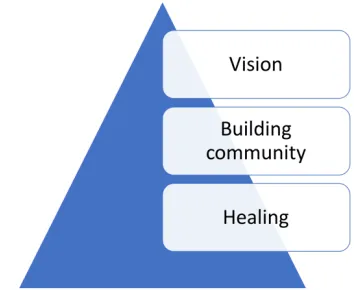
Figure 1. Characteristics of servant leadership. ... 15
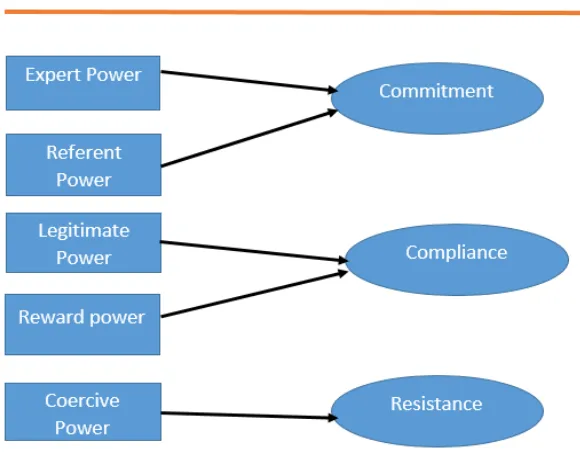
Figure 2. Types and consequences of the five bases of power. ... 17
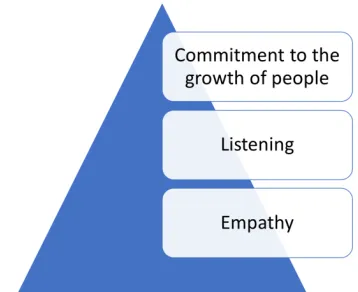
Figure 3. The greatest common areas of strengths. ... 124
CHAPTER I
THE RESEARCH PROBLEM
Statement of the Problem
Leadership is an interactive process of influencing others to achieve
organizational goals. Each process consists of different orientations and methods, as
those methods can be seen as a series of attitudes, behaviors, characteristics, reactions,
interests, values, and reliability of workers’ in different situations (Manning & Curtis,
2012). No one style of leadership is better than another; rather how leaders can act
differently in different situation defines their leadership style (Spears, 2010). In 1970,
Greenleaf coined the term servant leadership, describing a new leadership style, giving
service his primary focus (Spears, 2010). This method calls leaders to shift their minds
from being served to serving others first. Leaders today rely heavily on their authority
and position in running organizations and people, diminishing the value of service
(Russell & Stone, 2002). Russell and Stone (2002) stated:
As long as power dominates our thinking about leadership, we cannot move toward a higher standard of leadership. We must place service at the core; for even though power will always be associated with leadership, it has only one legitimate use: service. (p. 145)
Servant leaders use their potential power and moral authority rather than their
formal authority (Serrat, 2014). They realize that people listen, agree, and respect the
leaders who have legitimate power and act ethically. Mooney (1985) indicated that
effective leaders are those who do not rely on power, because it prevents from creating a
positive environment with followers, which is important in providing services and
directions. “The more that power is concentrated in the office of a leader, the more
researchers discovered how servant leaders use power and avoid relying on formal
authority in a way that does not hurt the organizations or the people. However,
researchers studying this topic conducted their research in countries outside of Saudi
Arabia.
Every nation faces challenges in leadership practice and focus in leading people
and moving entire organizations toward achieving organizational goals. Saudi Arabia is
one region seeking to create more effective leaders who meet the highest needs of
individuals without using their authority to complete tasks (Al-Yousef, 2012). Metcalfe
and Mimouni (2011) revealed that in Saudi Arabia, “there is a remarkable scarcity of
solid studies on leadership theory and practices in Saudi Arabia” (p. 180). In particular,
the problem is the lack of studies about servant leadership and its effectiveness in Saudi
Arabia. Further, as Al-Yousef (2012) discovered, many researchers ignored or did not
give sufficient attention to the effect of this style on the factor of employees’
satisfactions. Generally, researchers discarded the concept of servant leadership, as they
believed traditional leadership prepares leaders to motivate and lead others. However,
servant leadership creates leaders motivated to serve others, rather than to lead, providing
an alternative concept to leadership (Al-Yousef, 2012).
Saudi Arabia has significant ignorance about the servant-leadership style
(Al-Yousef, 2012). In their study, Shmailan and Wirbaa (2015) revealed that the majority of
managers in Saudi Arabian universities are transformational leaders and transactional
leaders, and fewer are laissez-faire leaders. The general concept of servant leadership
remains undefined as a practical leadership model in Saudi Arabia (Al-Yousef, 2012;
Salameh, Al-Wyzinany, and Al-Omari (2012) determined the absence of
important servant leadership principles among academic administrators in Jordan and
Saudi Arabia. Researchers found a lack of research in the area of servant leadership not
only in Jordan and Saudi Arabia, but also in the research world in general (Russell &
Stone, 2002). In addition, the number of years of teaching experience one achieved
identified to what extent one practiced the principles of servant leadership. Faculty with
more experience perceived the level of practice of “develops other” and “building
community” higher than those with less experience (Salameh et al., 2012). Previous
studies (Al-Yousef, 2012; Salameh et al., 2012; Shmailan & Wirbaa, 2015) concluded
that servant leadership needs more attention in the area of research across countries
generally, and in Saudi Arabia specifically.
Gonaim (2017) investigated the leadership characteristics and behaviors of
department chairs in higher education in Saudi Arabia. Very few studies measured the
leadership approaches used by department chairs in higher education in general and in
Saudi Arabia in particular. “The academic department is a fundamental unit for
transforming the university’s visions and goals into reality” (p. 1). The findings
demonstrated that department chairs are distinguished by their attitudes such as
appreciation, respect, and trust, in addition to their knowledge and skills such as clear
communication, listening, convincing, problem solving, time management, and adopting
change. More importantly, according to department chairs’ perspectives in Saudi Arabia,
a tendency exists to call for more collaborative leadership approaches that urge common
Higher education leaders in Saudi Arabia still practice the oldest forms of
leadership that focus on the performance of workers, not the workers themselves (Alamri,
2011). Although the majority of Saudi higher education leaders (e.g., deans) received
their education internationally, they tend to use bureaucratic leadership styles that heavily
rely on formal authority. Bureaucracy is still the major challenge for the higher education
system in Saudi Arabia (Alamri, 2011). Alsufyan’s (2002) study focused on the
perceptions of principals in secondary schools in Saudi Arabia, and the barriers these
principals faced that prevented them from being effective leaders. One aspect of the
major findings resulting from Alsufyan’s study was the lack of authority and power of
principals that disabled them from engaging in the whole process of decision making.
Another challenge principals in Saudi Arabia experienced was the centralized
bureaucratic operation of the Ministry of Higher Education.
In addition, researchers conducted very few studies that examined leadership
styles of managers in universities in Saudi Arabia (Shmailan & Wirbaa, 2015). The
researchers found that significantly more leadership development and training for
managers was taking place in universities in Saudi Arabia because increasing demands of
higher education in Saudi Arabia requires successful educational leadership that brings
positive change to the organizations. The Ministry of Education in Saudi Arabia revealed
that school principals suffer from unfamiliarity with leadership education. They receive
no leadership education before they receive leadership positions (Mathis, 2010). When
teachers or administrators finish 8 years in teaching or administration, they are eligible to
professional-development activities that prepare them professionally for their new
leadership position (Mathis, 2010).
Because servant leadership is not yet known and practiced by some leaders in
Saudi Arabia, no known studies assessed the nature of the authority used by Saudi higher
education leaders. For instance, some Saudi leaders may embody the characteristics of
servant leadership but do not think of themselves as servant leaders. Their potential lack
of knowledge about servant leadership may cause a failure to recognize themselves as
servant leaders. The type of authority of those leaders who are servant leaders still needs
to be defined. Currently, no study explored servant leadership in higher education in
Saudi Arabia. Researchers need to determine the level of the use of moral authority as an
essential pillar of servant leadership.
Background and Need for the Study
Today, leaders face more challenges than ever before, due to globalization and
diversity. These challenges lead organizations to think and perform globally in a way that
cultivates productivity in the workplace, creates independence of employees, improves
job satisfaction, and opens communication for everyone (Al-Yousef, 2012). By achieving
this goal, not only will stakeholders feel that they belong to the organization, but
followers will perform effectively, having found their identities in this environment.
Leadership is the heart of organizations. People need good leaders who can
empower them professionally and personally, and support them emotionally and
psychologically to reach the goals of the organization. Leadership is a “reciprocal process
of mobilizing be persons with certain motives, and values, various economic, political,
independently or mutually held be both leaders and followers” (Northouse, 1997, p. 4).
Whenever the leadership style fits the nature of the organization, goals, people, and
effective outcomes become apparent (Northouse, 1997). Servant leadership records
effective results in organizations. Servant leaders care about the interrelation between
followers, because interrelationship is a critical factor to ensure the success of leadership
(Greenleaf, 1977/2002; Northouse, 1997; Spears, 2010; Spears & Lawrence, 2004). The
advantage of building a healthy environment goes beyond achieving goals; it is about
creating a bond of ethics, respect, trust, integrity, and honesty (Sipe & Frick, 2015).
Influencing employees is a primary issue that proves the effectiveness of leadership,
because leaders should acknowledge that “employees became more educated and
articulate, and less likely to accept command, as they prefer to be more involved at work”
(Al-Yousef, 2012, p. 21). Thus, effective servant leaders are able to use factors that can
raise the level of influence and participation, so followers accomplish their work with
excitement and satisfaction rather than obedience and submission.
Today, workplaces experience many problems and turnover of employees (Harris,
Hinds, Manansingh, Rubino & Morote, 2016; Russell & Stone, 2002). Embodying a
model such as servant leadership places leadership focus primarily on people, as it puts
followers before leaders (Greenleaf, 1977/2002). When employees are led by leaders who
care about their growth, understand their circumstances, listen to their needs, and spread
their love and sense of safety, organizations experience reduction in conflict and
employee turnover. Instead, employees become creative and innovative and are less
Spears (2010) demonstrated the need for the servant leadership method in profit
and nonprofit organizations. Those organizations shifted their practices from traditional,
autocratic, and hierarchical methods of leadership to servant leadership, as they
recognized the value of building relationships, empowerment, and the undesired
consequences of practicing coercive leadership. Whitfield (2014) stated,
leading as usual with traditional tyrannical styles is not only anachronistic it is also potentially dysfunctional, given the fast pace of globalization, the complexity of transnational corporations, the addition of global educational entities, and the demographical changes in the workplace. (p. 50)
Using moral authority and power to lead is a significant dimension of servant
leadership (Greenleaf, 1977/2002; Northouse, 1997; Sipe & Frick, 2015). When leaders
use legitimate moral authority in a way that does not prevent them from providing
service, and, at the same time, allows them to earn acceptance from followers, leaders are
serving as true servant leaders. The need for servant leaders who are ethical is of utmost
importance, as traditional leaders believe in power and authority more than service and
ethics (Sipe & Frick, 2015). Shekari, Mahmood, and Nikooparvar (2012) supported this
conclusion by revealing, “the world is crying out for ethical and effective leadership that
serves others, invest in their development and fulfill a shared vision” (p. 1).
Saudi Arabia is one region that seeks to improve education. Since King Abdullah
assumed the throne in 2005, education is a top priority in Saudi Arabia. In King
Abdullah’s first year on the throne, the government spent 25% of the Kingdom of Saudi
Arabia’s total annual budget on education (Saudi Arabia: Kingdom tops world in
education spending, 2013). Because Saudis, Western media, and U.S. journalists
scrutinized the Saudi education system, King Abdullah made improving education a top
colleges, and institutions for health increased dramatically, the government of Saudi
Arabia realized the necessity to develop the higher education system, faculties, and
students to reach a world-class standard (Smith & Abouammoh, 2013). The government
considers the development of effective leadership a driving force and a prime aim in
Saudi Arabia’s government-reform agenda (Shmailan & Wirbaa, 2015).
However, Saudi educational leaders need to be educated in some of the bases and
foundations of leadership, which are critical in reforming and developing higher
education and its system in Saudi Arabia (Mathis, 2010). Educational leaders need more
accessible and available opportunities and programs that prepare them to be effective
leaders and teach them different leadership styles. The impact of each model of people
and organizations needs to be taught before leaders hold their positions.
Background of Higher Education in Saudi Arabia
The general goal of education in Saudi Arabia is for students to understand the
true Islam, the dominant religion of Saudi Arabia, and follow it in a comprehensive
manner, to provide students with necessary skills and knowledge, and to prepare them to
develop their behaviors as individuals and improve their communities (United Nations
Educational, Scientific and Cultural Organization, 2011). Education at all levels in Saudi
Arabia rests on the Islamic code of ethics, the essential ideology that shapes the lifestyle
in the Kingdom of Saudi Arabia (Gonaim, 2017). Education in Saudi Arabia is
segregated by gender, including general education for boys, general education for girls,
and traditional Islamic education. Both genders follow the same curriculum and take the
same annual examinations (Sedgwick, 2001). The Ministry of Education in Saudi Arabia,
Engendering of a new generation of male and female youth who embody the Islamic values in their persons, both theoretical as well as practical, are equipped with necessary knowledge, skills, and endowed with ease and comfort. They should be able to face international competition both at the scientific as well as technological levels to be able to meaningfully participate in overall growth and development. (Saudi Arabia, 2007. p.1)
This vision means that education is an investment aiming not only to meet societies’
demands, but also to provide Muslim individuals better quality, creativity, and success
for their lives. Saudi Arabia invested approximately $160 billion in the education budget
(Smith & Abouammoh, 2013).
The Ministry of Education is responsible for three types of education: general
education (elementary, intermediate, and secondary), special education, and adult
education and literacy. The Ministry of Education divides educational institutions into
three stages: the primary stage (6 years), intermediate stage (3 years), and secondary
stage (3 years; Yamani, 2006). The Ministry of Education is only in charge of schools,
not the field of higher education. The Ministry of Higher Education is responsible for
institutions’ systems, including universities, general colleges, teacher-training colleges,
girls’ colleges, or any 4-year higher education institutions (United Nations Educational,
Scientific and Cultural Organization, 2011). The Ministry of Higher Education, the
Technical and Vocational Training Cooperation, and the Saudi Commission for Health
Specialties for health instruction recognize all educational institutions in Saudi Arabia
(Clark, 2014).
The Ministry of Higher Education existed under the general Ministry of
Education. Due to tremendous growth in the number of universities and colleges in the
last decade in Saudi Arabia, many considered it necessary to establish the Ministry of
education institutions provide a wild range of programs and specialists in many fields.
Undergraduate programs lead to a bachelor’s degree in approximately 4 years (5 years for
architecture, pharmacy, and veterinary medicine; 6 years for dentistry, medicine, and
law). Graduate programs lead to a higher diploma, such as a master’s or doctoral degree
(United Nations Educational, Scientific and Cultural Organization, 2011). The number of
universities and colleges increased significantly and the enrollment in universities
doubled between 2010 and 2014 (Smith & Abouammoh, 2013). The system of higher
education witnessed marked development in expanding higher education institutions in
Saudi Arabia, including 23 public universities, 18 primary teacher’s colleges for men, 80
primary teacher’s colleges for women, 37 colleges and institutes for health, 12 technical
colleges, and 33 private universities and colleges (Alamri, 2011). Education is free at all
levels for Saudi students, except for those who choose to attend private institutions.
According to Ministry of Higher Education statistics (2017), 1,527,769 students enrolled
in higher education institutions during the 2014–2015 academic year.
The King Abdullah scholarship program was established by the Ministry of
Higher Education in 2005. The government of Saudi Arabia not only provides free
education for Saudis, but also provides opportunities for qualified students to study
abroad in various countries to meet the requirements for the labor market in Saudi Arabia
(Smith & Abouammoh, 2013). More Saudi students study abroad than students from any
other country in the world (Alamri, 2011). Previously, Saudi students studied in the
United States, Canada, Jordan, the United Kingdom, and Egypt (Smith & Abouammoh,
2013). This study-abroad program is considered the biggest scholarship program in the
President G. W. Bush to increase the number of students in the United States. The
number of Saudi students studying in all states of the United States exceeds 71,000
students (Saudi Arabia Cultural Mission, 2013).
The Ministry of Higher Education is responsible for funding, development of
curriculums and systems, recruitment of faculties, and improvement of the higher
education sector at all levels (Clark, 2014). The Ministry of Higher Education is
committed to preparing teachers and faculties to best serve universities and students.
According to United Nations Educational, Scientific and Cultural Organization (2011),
the full role of the higher education system is to “prepare and graduate qualified staff;
upgrade the educational and professional standards of the current general education
teachers, principals and administrators by offering various training courses in cooperation
with the Ministry of Education” (p. 13). The minimum requirement for teachers is a
4-year bachelor’s degree. A higher level of diploma is required to teach university and
college students.
Higher education in Saudi Arabia is destined to meet “world-class” standards of
education by creating quality innovative programs and initiatives that ensure the success
of students and prepare them to be successful as individuals and as members of
communities. Allowing the changes and developments to happen will contribute to
overcoming several challenges and obstacles facing the higher education system in Saudi
Arabia.
The Purpose of the Study
The purpose for this qualitative study was to explore the perceptions of higher
model, specifically in their ways of employing authority and power. This study also
aimed to identify whether higher education department chairs in Saudi Arabia implement
servant-leadership principles.
Research Questions
Five research questions were designed to guide this study:
1. What are the perceptions of higher education department chairs of servant
leadership as a leadership model in Saudi Arabia?
2. To what extent have servant-leadership characteristics already been or are
being used by higher education department chairs in Saudi Arabia?
3. To what degree do higher education department chairs value service and
define themselves as servants first, then as leaders?
4. How do higher education department chairs explain their practice of authority
and power?
5. What challenges do higher education department chairs in Saudi Arabia face
to change their formal authority and traditional leadership style to use moral
authority and a servant-leadership style in leading others?
Theoretical Framework
This study was rooted in two theories: Spears’s (1998) 10 characteristics of
servant leadership and French and Raven’s (1959) five bases of power and influence.
These theories were formulated to explain, predict, and understand the two major related
concepts of this study: servant leadership and the use of power. The first theoretical
framework is the 10 characteristics of servant leadership developed by Spears (1998).
CEO of the Greenleaf Center. Spears (2010) identified 10 characteristics that provide
insights into the behaviors and values of servant leaders. These characteristics of servant
leaders provide a specific lens to measure and analyze the behaviors and values of leaders
in Saudi Arabia to determine their level of practice of servant leadership.
Spears (1998) identified the following 10 characteristics:
1. listening: successful leaders are those who value the communication skill, and
possess a deep commitment to listen to others intently (Spears, 2010);
2. empathy: the ability to put oneself in the shoes of others and to see the issue
from others’ points of view (Northouse, 2016; Russell & Stone, 2002; Sipe &
Frick, 2015; Spears, 2010);
3. healing: “there is something subtle communicated to one who is being served
and led if, implicit in the compact between servant-leader and led, is the
understanding that the search for wholeness is something they share”
(Greenleaf, 1977/2002, p. 50);
4. awareness: this includes awareness of oneself and others. Being aware of
oneself means being aware of one’s knowledge and familiarity with one’s
own strengths so people keep improving and overcoming their weaknesses to
find solutions to address them (Northouse, 2016; Russell & Stone, 2002; Sipe
& Frick, 2015; Spears, 2010; Spears & Lawrence, 2004);
5. persuasion: “the true measure of leadership is influence; nothing more,
6. conceptualization: how leaders look and think beyond day-to-day operations
and focus on the big picture (Northouse, 2016; Russell & Stone, 2002; Spears,
2010; Spears & Lawrence, 2004);
7. foresight: “all activities that organizations and governments undertake to
make assumptions about the future that, in turn, drive policies” (Sipe & Frick,
2015, p. 106);
8. stewardship: holding an organization in trust for the greater good of
community (Northouse, 2016; Spears, 2010; Spears & Lawrence, 2004);
9. commitment to the growth of people: leaders treat everyone in an organization
as unique and the most important person with special intrinsic value (Russell
& Stone, 2002); and
10. building community. Greenleaf (1977/2002) said,
All that is needed to rebuild community as a viable life form for large numbers of people is for enough servant-leaders to show the way, not by mass movements, but by each servant-leader demonstrating his or her unlimited liability for a quite specific community-related group. (p. 53)
Figure 1. Characteristics of servant leadership.
Another theory chosen to frame this study is French and Raven’s five bases of
power and influence. In 1959, French and Raven explored the phenomenon of power and
influence, discerning why some leaders can influence people and others cannot. They
studied the essential tools of power that leaders use to get the most from followers
(Raven, 2008). French and Raven classified power into five bases: legitimate, rewards,
expert, referent, and coercive. Six years later, they added one more base of power,
informational power, as they observed some leaders to use rational reason as an effective
influence (French & Raven, 1959). These five essential types of power follow:
1. legitimate power: a belief that a person holds a legitimate right to influence
others and make demands and to expect others to accept this influence (French
2. reward power: the ability to reward and compensate;
3. coercive power: the belief that one can manipulate and punish others for
noncompliance;
4. expert power: a high level of knowledge and skills; and
5. referent power: the ability to cultivate the admiration and respect of followers
so leaders can influence others because of others’ friendship, admiration, and
loyalty (French & Raven, 1959).
According to French and Raven (1959), three consequences arise from practicing
these five bases of power. Followers can react and respond with commitment,
compliance, or resistance, based on the types of power they observe and receive from
their leaders. Leaders who use expert or referent power experience commitment from
their followers because the followers perceive the knowledge and attractiveness of their
leaders. Leaders who tend to use legitimate or reward power expect others to be
compliant and obedient. Coercive-power users expect resistance from followers because
they believe their leaders can punish them for noncompliance (see Figure 2). By
understanding these five bases of power, leaders in Saudi Arabia can identify their own
Figure 2. Types and consequences of the five bases of power.
Limitations and Delimitations of the Study
Although this study aimed to obtain broader perceptions of higher education
department chairs in Saudi Arabia of servant leadership and the use of power, the study
was not without limitations and delimitations that limited the breadth of the field of the
study. This study was limited to higher education department chairs in Saudi Arabia.
Therefore, generalizability was limited to department chairs among all staff members; the
study had limited generalizability to other settings and groups. Leaders employed only in
educational fields also limited this study. Organizational leaders from other fields, who
may hold different perceptions of servant leadership and power, were not included in this
study. Also, not all department chairs in all universities or colleges were interviewed,
which was a potential limitation of this study. Only 10 department chairs from
servant leadership exists in the literature (Van Dierendonck, 2011), and the body of
knowledge of servant leadership needs more empirical research than other methods of
research.
The first delimitation of this study was the sample of the study. The sample was
limited to ten higher education department chairs who may not represent the perceptions
of other staff members, such as professors and managers, in lower levels of management,
and who may hold different perceptions of servant leadership and power. Moreover, this
qualitative study included eight participants from different educational environments
(universities and colleges), which implies the sample size was small. The final
delimitation in the study was that the ethnicity and socioeconomic status were not
considered when selecting participants for the study. In other words, participants were
chosen based on their position in a university or college, gender, and number of years of
experience. Other variables were not considered in this study.
Significance of the Study
The Ministry of Higher Education in Saudi Arabia seeks to raise the quality of
higher education and its features to provide outputs that contribute to serving the
community and economic development. Responding to the requirements of the labor
market, the Ministry of Higher Education is seeking to make higher education in Saudi
Arabia competitive with higher education systems in other developed countries (Ministry
of Higher Education, 2010). Saudi Arabia’s government increased the number of its
universities and colleges, doubling university enrollment between 2010 and 2014. This
education and make more funds available for higher education expenses (Smith &
Abouammoh, 2013).
Saudi Arabia is enthusiastic about improving its higher education system at all
levels (Smith & Abouammoh, 2013). Saudi Arabia invested approximately $160 billion
into the education budget. Subsequently, exploring leadership practices in higher
education institutions in Saudi Arabia is essential to ensure the quality, productivity, and
effectiveness of education that can make a difference in Saudi communities. Badawood
(2003) explored the perceptions of private boys’ school principles regarding the
leadership concept. Badawood reported that the Ministry of Education in Saudi Arabia
acknowledged the need for leadership programs that help school principals understand
the different orientations and methods of leadership.
This study is important due to its contribution to the improvement of higher
education in Saudi Arabia. This study will reflect leaders’ behaviors and attitudes and
translate what is happening in practice regarding servant leadership and its impact on
others. Through this study, leaders’ challenges and concerns in shifting their formal
authority to moral authority and implementing the servant-leadership style, will be
determined. This study can help address those concerns and pave the way for leaders to
be more effective in their positions.
The concept of servant leadership is not given enough attention and support in the
workplace (Russell & Stone, 2002). This study adds global and international insights into
the body of servant-leadership knowledge. Saudi Arabia is one of the regions that
diminishes and ignores the value of the servant leadership method, because no definition
known studies conducted in Saudi Arabia assess servant leadership in terms of using
authority and power. Very few perceptions exist in scholarship of Saudi leaders about
servant leadership, specifically, with regard to their ways of using power. Conducting this
study can be helpful in exploring the perceptions of higher education leaders of servant
leadership, and analyzing their strategies in practicing authority and power. This study
can also determine the behaviors and values of Saudi leaders and to what extent they can
or cannot be servant leaders.
Because the limited literature on servant leadership described what is happening
in practice (Van Dierendonck, 2011), interviewing leaders from different universities and
informing their stories, experiences, insights, and challenges regarding servant leadership
will convey the behaviors and attitudes of educational leaders aligned with servant
leadership. By identifying and applying servant leadership in Saudi Arabia, and analyzing
the use of power by leaders, organizations can experience a healthier environment, where
service is valuable and appreciated and power is employed properly. More attention can
be given to the servant-leadership style, more research about this leadership model can be
performed in wider fields, and more programs can be designed to enable leaders to
embark on germinating this concept of leadership and enjoying its results in an entire
organization.
Definitions of Terms
For this study, the following terms were operationalized:
Authority: The right given to a manager or leader to accomplish certain tasks
Ministry of Higher Education: “The Ministry of Higher Education was
established by Royal Decree No. 1/236 dated (19/5/1975) to execute the Kingdom’s
Policy on Higher Education. The Minister of Education is responsible for the
implementation of the Government’s Educational Policy” (Ministry of Education,
2017b).
Perception: The ability to become aware of something or someone through the
senses; the way of thinking or understanding something or someone (Oxford
Dictionaries, 2017).
Power: “The ability to influence the actions of others, individuals or groups. It is
understood as the leader’s influence potential” (Krausz, 1986, p. 69).
Servant leadership: A leadership style that is best defined by Greenleaf
(1977/2002),
the servant-leader is servant first. … It begins with the natural feeling that one wants to serve, to serve first. Then conscious choice brings one to aspire to lead. That person is sharply different from one who is leader first, perhaps because of the need to assuage an unusual power drive or to acquire material possessions. (p. 27)
Spears’s 10 characteristics of servant leadership: Listening, empathy, healing,
awareness, persuasion, conceptualization, foresight, stewardship, commitment to the
growth of people, and building community (Spears, 2010).
The five bases of power: Legitimate power, reward power, coercive power, expert
power, and referent power (French & Raven, 1959).
Summary
Saudi Arabia faces major challenges in practicing leadership in higher education.
Researchers conducted very few studies observing the leadership approaches used by
education leaders received international education, they still practice old forms and
approaches of leadership. Servant leadership is being ignored in Saudi higher education,
as it remains an undefined leadership style.
In addition, Saudi higher education leaders rely most on their authority. They
practice leadership approaches, such as bureaucratic leadership, that rely heavily on
formal authority and the workers’ performance rather than the workers themselves. A
lack of research exists assessing the nature of the authority used by Saudi higher
education leaders, whether or not they are servant leaders.
The significance of this study was not solely limited to adding global and
international insights into the body of servant-leadership knowledge, but also contributed
to the improvement of the Saudi Arabian higher education system. This study helped in
determining the behaviors and values that shape the practices of leadership of department
chairs in Saudi Arabia. Furthermore, department chairs’ ways of using authority were
defined, as that definition is the first significant step in changing their mindset from being
served to serving others. This study helped department chairs understand the value in
serving others, its impact on others, and how to employ the type of power and authority
that does not hurt the organization or its people.
The next chapter provides a comprehensive review of related literature on the
following areas: (a) servant leadership, (b) characteristics of servant leadership,
(c) authority and power in servant leadership, (d) shifting from formal authority to moral
authority, (e) the relationship between the five bases of power and servant leadership,
(f) servant leadership across cultures, and (g) servant leadership in higher education.
setting of the study, the research design, instrumentation, ethical considerations, data
collection, and data analysis. Chapter 4 presents the findings and the data gathered from
this study. The final chapter discusses the findings from an analytical view, application
CHAPTER II
REVIEW OF THE LITERATURE
Restatement of the Problem
No studies took place in Saudi Arabia regarding servant leadership that assessed
the type of authority used by higher educational leaders. Saudi educational institutions
ignore the concept of servant leadership (Al-Yousef, 2012). Bureaucracy is still a major
challenge facing higher education in Saudi Arabia. Higher education leaders, such as
deans, still practice the oldest forms of leadership that heavily rely on authority rather
than influence (Alamri, 2011). In addition, very few researchers examined leadership
styles of managers in universities in Saudi Arabia (Shmailan & Wirbaa, 2015).
Overview of Servant Leadership Literature
Organizations seeking success and excellence shifted their focus onto the human
workforce, as civilizations progressed across the world. To improve organizations,
human beings should engage a process in which certain people influence, empower,
support, and motivate others to achieve an organization’s goals; a process known as
leadership (Yukl, 1998). Process implies that leadership is not focused on characteristics
or traits; leadership is not a one-way interaction, but rather a transactional event,
composed of steps between leaders and followers.
Leadership is a complex process with several meanings. It can be characterized as
social influence or “showing the way and influencing the behavior and others by ideas
and deeds” (Manning & Curtis, 2012, p. 2). Maxwell (2005) created a definition of
leadership:
caution; action more than reaction; relationships more than rules; who you are more than what you do. (p. 113)
This literature review presents a review of several themes. The first theme offers
an overarching picture of leadership including its multiple definitions and how it impacts
leaders, organizations, and followers. Next, a historical background of servant leadership
demonstrates the birth of the servant-leadership model by Greenleaf in 1970 and the
inspirations that drove Greenleaf to create the servant-leadership concept. Additionally,
the literature review includes empirical studies conducted by researchers who elaborate
on the concept of servant-leadership presentation. The fourth theme exhibits
characteristics and attributes of servant leadership extracted by Spears (2010), the CEO
of Greenleaf Center for Servant Leadership, from Greenleaf’s writings, along with a
comprehensive interpretation of each characteristic as an essential quality of servant
leaders. The following theme specifies the nature of authority and power, the difference
between those two concepts, and how servant leaders employed this type of authority.
Shifting from formal authority to moral authority is a significant transition that ensures
the success of modeling servant leadership.
Researchers described in the literature also show the relationship between
authority, morals, and legitimacy in a way that illustrates the importance for servant
leaders to be ethical and legitimate. The following theme is a brief clarification of the five
bases of power classified by French and Raven in 1959. Those types of power include
legitimate, reward, expert, coercive, and referent power. The theme also presents the
consequences and reactions of each type of power. The following theme gives an
extensive overview of servant leadership across cultures, including several studies
impact the creation of servant leaders. The final theme gives a broader understanding of
servant leadership in higher education.
Definitions of Leadership
The concept of servant leadership could indeed be traced back 2,500 years ago to
ancient Greece and Rome, flourishing most naturally in democratic institutional
environments (Valeri, 2007). People have varying definitions of the word leadership,
based on their perspectives and experiences. Leadership has multiple dimensions and
orientations according to the difference in centuries, generations and events associated
with time. From 1900 to 1929, the leadership concept emphasized control, centralization
of power, and the ability to “impress the will of the leader on those led and induce
obedience, respect, loyalty, and cooperation” (Northouse, 2016, p. 2). In the 1930s, the
focus of leadership shifted toward traits, redefining leadership as the influence of
individuals with specific persuasion over others to change their activities and behaviors.
The 1940s brought a similar orientation as scholars viewed leadership as the behaviors of
individuals to seek direct group activities.
Three themes dominated leadership definitions during the 1950s. During this
decade, leadership focused on leaders’ performance in groups, relationships between
workers and leaders to achieve shared goals, and the effectiveness of leaders to influence
a group (Northouse, 2016). In the 1960s, the world witnessed a tumultuous time that
encouraged scholars to focus on behaviors—acting a certain way to influence others—as
a prevailing concept of leadership. During the decade of 1970, leadership received a
redefinition. Burns (1978) defined leadership as a “reciprocal process of mobilizing
resources, in a context of competition and conflict, in order to realize goals independently
or mutually held be both leaders and followers” (p. 425).
Due to the increase in the formalization of the global marketplace, the 1980s and
1990s housed the development of more leadership models (Al-Yousef, 2012). Thus,
scholars brought leadership to the apex of the academic and public consciousness and
came up with four themes: following leaders’ wishes, noncoercive influence, traits
scholars brought back from the 1930s to the spotlight, and transformation (Northouse,
2016). Transformational leadership is a process that engages a number of people with
each other in an environment where motivation and morality occur. Into the 21st century,
the debate of whether leadership and management are different processes occurred first,
but the emphasis remained on leadership, as emerging research defined different
leadership models adopted as new approaches of leadership based on their effectiveness
in organizations (Northouse, 2016).
Because each decade holds its own events and needs, and because the
marketplace became more complex than ever, organizations in the 21st century realized
they urgently needed to experience different lenses of leadership according to current
issues in the workplace and to find proper leadership models that brought solutions and
better change to organizations (Al-Yousef, 2012). Four approaches emerged:
(a) authentic leadership: focusing on authenticity; (b) spiritual leadership: using values
and motivation; (c) servant leadership: using caring and service principles; and
(d) adaptive leadership: requiring leaders and followers to adapt to changes, problem
results to leaders, workers, and organizations as a whole. Still, there is no universal
approach to leadership.
After viewing different trends in leadership during various decades, one is able to
clearly identify some similarities and differences between leadership definitions, as
researchers discovered. One significant similarity between definitions mentioned, is the
interrelationship between leaders and people (Yukl, 1998). Some researchers discussed
this point in terms of influence, behaviors, motivation, and interactions with people.
These factors reflect some aspects of building an effective relationship between leaders
and workers to reach organizational or team goals. In contrast, one difference observed
between leadership definitions is that some researchers see it as a concept of control and
power. Others consider leadership to be a variety of processes of change. Still others
looked at leadership from lenses of influence, such as how to gain the ability to influence.
Furthermore, scholars designed those definitions of leadership according to their
perspectives of leadership, and each definition reflects one of the leadership theories
aligned with organizations’ needs today (Yukl, 1998). All leadership definitions are
helpful and meaningful in their application. However, their value lies in the method of
applying them. Scholars of leadership concluded that it is impossible to maintain one
definition of leadership due to rapid changes, generational differences, and globalization
in all aspects of life. However, all agree that “leadership is a complex concept for which a
determined definition may long be in flux” (Northouse, 2016. p. 5).
Leadership is the ability owned by leaders or individuals to influence others, to
motivate them, and encourage them to complete a set of objectives for organizations
practiced by leaders in all areas that require making decisions and issuing orders to
subordinates. Because leaders play a key role in controlling workflow problems, they
must be familiar with varieties of intrinsic methods of leadership to ensure they run the
organization in an effective and satisfactory manner for all parties. Each century
established and recognized different focuses and styles of leadership. Each style holds
unique strengths and some leaders are good at certain styles but may not be good at
another. Yet, the smartness translates into how leaders can navigate and manipulate
between those styles and choose the one that best fits in a situation (Yukl, 1998).
In 1970, a new leadership style was servant leadership. This approach became the
most challenging, not only in its application, but also in understanding and processing it,
because it forced leaders to shift their minds and experiences from being served to
serving others. Greenleaf originally coined the term servant leadership in 1970 and
described the nature of servant leadership:
The servant-leader is servant first. … It begins with the natural feeling that one wants to serve. Then conscious choice brings one to aspire to lead. The best test is: do those served grow as persons: do they, while being served, become healthier, wiser, freer, more autonomous, more likely themselves to become servants? And, what is the effect on the least privileged in society; will they benefit, or, at least, not be further deprived? (Greenleaf, 1977/2002, p. 27)
The need for servant leaders is at its apex, to combat leaders’ belief in power and
authority more than service.
Historical Background of Servant Leadership
Greenleaf (1977/2002) established servant leadership in 1970. Born in Terre
Haute, Indiana, Greenleaf performed most professional work in field development,
education, and management research (Spears & Lawrence, 2004). Greenleaf worked for
Mellon Foundation, Massachusetts Institute of Technology, the American Foundation for
Management Research, and others (Spears & Lawrence, 2004). After retiring, Greenleaf
started researching how organizations service their communities.
Three factors inspired Greenleaf, creating a vision that gave birth to servant
leadership: (a) a person taught Greenleaf to “see things whole,” (b) Herman Hesse’s
novel Journey to the East, and (c) Greenleaf’s father’s life. Journey to the East heavily
inspired Greenleaf, as it tells a story about travelers and a servant. The servant used to do
menial chores for the travelers and sang to them, which kept the travelers stable and
inspired. After the servant disappeared, the travelers failed to continue their journey, as
the presence of the servant made a great impact on the stability and cohesion of the whole
group (Greenleaf, 1977/2002). At the age of 66, in 1970, Greenleaf published the first
essay on servant leadership The Servant as Leader (Spears & Lawrence, 2004).
The statement of servant leadership centered on how Greenleaf lived life, what
the author learned from experiences, and more importantly, what the world needs to be a
better place to live (Valeri, 2007). Greenleaf strongly opposed relying on authority and
power in leadership, especially coercive power, believing that leaders should shift
authority to those who are being led (Northouse, 2016). Greenleaf realized that the need
of humanity in the 21st century was for servant leadership because inequality and social
injustice existed in many institutions, and servant leaders advocated for those who are
less privileged (Northouse, 2016). Decidedly, Greenleaf initially envisioned how to
create better organizations and societies by serving and helping each other. Sendjaya,
Sarros, and Santora (2008) stated:
“servant” while referring to leaders, namely diakonos, doulos, huperetes, therapon, oiketes, sundoulos, and pais (Getz, 1984). None of these words insinuates a lack of self-respect or low self-image. Instead, voluntary
subordination is manifested in the willingness to assume the lowliest of positions and endure hardship and suffering on behalf of other people. (p. 406)
The Concept of Servant Leadership
Greenleaf (1977/2002) did an extensive job in identifying servant leadership as a
mindset of leadership. It is a belief that convinces conscious and subconscious process to
believe that servant leadership is about one’s values and how one lives life, rather than an
approach to instill. Organizations, profit and nonprofit, are shifting their practices from
more traditional, autocratic, and hierarchical methods of leadership to servant leadership
because they recognized the value of building relationships and empowerment (Spears,
2010). Servant leadership is about serving others, the desire to serve, and the want to
provide help (Baggett, 1997). Servant leadership describes how leaders can find a true
moral authority and power to lead. Servant leadership is a lifestyle rather than a
characteristic that can be gained. Some leaders are more naturally servants than other
leaders (Spears, 2010). Although servant leaders are born with the internal desire to
serve, but everyone can learn how to be a servant leader (Northouse, 2016). Valeri (2007)
reported that “servant leaders voluntarily choose to take on in their journeys through life.
Its source is not egoism but a selfless regard for others” (p. 2). Ideally, servant leadership
is about the natural internal feeling of serving others and being the giver and servant for
others.
Sendjaya and Sarros (2002) enriched the term servant leadership, purifying the
inferior and weak meaning that some leaders or scholars might hold:
Instead, it would take a leader with an accurate understanding of his or her self-image, moral conviction and emotional stability to make such a choice. (p. 33)
Servant leadership rests on looking for others’ needs and interests before
considering one’s own, empowering others to perform better, caring and serving others to
influence them to achieve common goals (Spears, 2010). Servant leaders best serve
others when they first identify the needs of individuals in order to meet them. Second,
servant leaders advocate for those who are have less or are followers (Grogan, 2013).
Spears (2010) stated that in recent years, more writers tend to write about servant
leadership and advocate for it, such as Autry, Bennis, Block, Carver, Covey, DePree,
Jaworski, Kouzes, Matusak, Palmer, Peck, Senge, Vaill, Wheatley, and Zohar (Spears,
2010). However, the servant leadership style still lacks attention and support in
institutions.
Servant leadership is not an approach that can be instilled quickly. “Servant
leadership is a long-term, transformational approach to life and work—in essence, a way
of being—that has the potential for creating positive change throughout our society”
(Spears & Lawrence, 2004. p. 12). Servant leadership is a long process of transitions and
exchanged behaviors between leaders and followers. Servant leadership focuses on the
service itself, rather than the results (Al-Yousef, 2012). This method keeps employees
engaged in the environment by providing the service and support they need for
continuous improvement. Servant leaders focus on people first, discerning how to create
a moral relationship with others, leading to achieve goals, rather than emphasizing
results. Servant leaders work to reach the best results, rather than focusing on the results
themselves. Servant leaders can also be described as coaches who push others to succeed,
performance” (Stanley, 2003, p. 122). Their first wish is to see others succeed. The real
measure of a good leader is not, as Pollard (1997) concluded, the “person with the most
distinguished title, the highest pay, or the longest tenure … but the role model, the risk
taker, the servant; not the person who promotes himself or herself, but the promoter of
others” (pp. 49–50).
The business book, Good to Great: Why Some Companies Make the Leap and
Others Don’t, provides an excellent example of some leadership scholars who wrestled
with the paradox in leadership and service concepts, as many objected to the term due to
its weakness and servitude. Service and leadership are two concepts with seemingly
opposite meanings, and this is where the challenge of servant leadership lies. Northouse
(2016) talked about the criticism of the title of servant leadership, because the name
seems contradictory and creates a noisy sound that diminishes the true value of the
approach. Furthermore, the name servant leadership suggests the concept of following,
and following is completely contrary to the concept of leadership. These limitations of
the term are partly logical for some thinkers, but the tenets behind servant leadership are
that it combines leadership and service, power and influence, and decisions and
participation, enabling leaders to be effective servants.
In a traditional concept of leadership, a person lower on the chain of command is
expected to serve. In servant leadership, however, “the paradoxical concept of serving
from a leadership role seems just the natural way it should work. Servant leaders often
feel they are called to serve” (Tureman, 2013, p. 9). Many leaders enjoy a sense of
authority over others, as it is one of the perquisites of a leadership position. Such leaders
the natural desire brings one to serve, to serve first, then to lead, especially for those who
are in lower levels of performance (Tureman, 2013). Servant leaders delegate authority to
followers by empowering them to make the best decisions and solutions. Servant leaders
stand next to followers and provide a helping hand when it is needed. Servant leaders no
longer act as the “headmaster”; rather, they serve as “head learner” (Grogan, 2013,
p. 377), engaging in the enterprise of the organization by modeling, celebrating,
displaying, and serving to make sure individual’s needs are met.
Servant leadership, most of time, calls for bringing about change. Keeping old
ways of performing one’s work is enough to stifle innovation and creativity in the
workplace.
Leading as usual with traditional tyrannical styles is not only anachronistic it is also potentially dysfunctional, given the fast pace of globalization, the complexity of transnational corporations, the addition of global educational entities, and the demographical changes in the workplace. (Whitfield, 2014, p. 50)
Most organizations prefer to stay with their traditional approaches to accomplish
work. Change is an elusive and alarming idea for most organizations, as they are unaware
of the expected results and the effort needed to implement this change (Tureman, 2013).
However, organizations must be ready to employ any change needed for the good of the
organization, and employing servant leadership can be one effective change that can
bring unexpected positive outcomes. Change may take time, effort, and perseverance but
is worthwhile. Theodore Roosevelt, who discussed the art of leadership, summed up this
idea well:
greatly, so that his place shall never be with those cold and timid souls who knew neither victory nor defeat. (Manning & Curtis, 2012, p. 10)
Servant leaders bring the desired change to organizations in shaping the culture,
behaviors, values, relationships, and results of the organization. Further, leading change
while being a servant to all is incalculably demanding.
Kotter (1996) suggested a number of strategies that can bring change to
organizations. To implement change, organizations must establish a sense of urgency.
People in organizations must realize why change is important and recognize the problem
that calls for change (Kotter, 1996). Leaders should be keenly aware of employees’
questions and concerns, and serve and heal them in a way that brings a positive change to
the entire organization. In addition, choosing the right group to carry out changes is an
effective way to lead the change (Kotter, 1996). First, leaders need to identify the people
who can adapt to this change by modeling the behaviors. Effective servant leaders start
the process of change in themselves by embodyi