Page 146
ASSOCIATIVE DESKTOP GAME AS THE POSITIVE MOTIVATION FORMATION METHOD WHEN STUDYING ECOLOGICAL SUBJECTS
D. F. Zhirnova, L. V. Fomina
Krasnoyarsk State Agrarian University, Russia, Krasnoyarsk, 90, Mira Avenue
Abstract
Children’s creative potential is realized most fully if the educational process is carried beyond the scope of traditional training. Content and presentation of teaching material promotes the formation of students' positive motivation for learning.
In the article results of introduction and adaptation of interactive associative desktop games are given for educational process when studying ecological disciplines, for example in HSBEI HE «Krasnoyarsk state agrarian university». With the help of associations it is possible not only to remember the information with the first attempt, but also to keep it in the long-term memory.
The proposed variant of the game is built on the basis of the most successful ideas of the famous computer and desktop games with the addition of some new, original teaching materials. Application of this approach to training significantly stimulated assimilation of a training material, especially the glossary on the given subject. Adaptation of the proposed method in the training contributed to the formation of such qualities in students, as independence and communication in making and justifying the decisions. The method is suitable for studying all disciplines and ability levels of students.
Key words: training, method, interactivity, game, associations, ecology
INTRODUCTION
The market labor in the first turn demands the specialists able to solve non-standard tasks, to make decisions in conditions of uncertainty and risks, to self-develop, to successfully position themselves, able to think in system, to process big volumes of information and single out the main. This constituent implementation is possible with usage of practice oriented teaching technologies, including the theoretical knowledge application in practical issues solution related to the development of professional competences of a specialist. The competency approach methods allow assessing the obtained experience level. When developing competences it is necessary to take into account the needs of a student personality, his/her abilities and the motivation- need sphere. The modern society development trends and developing science- technological progress call for development and practical application of professional educational technologies directed at personality development and such qualities formation as independence at decision- making and responsibility for its implementation, creative and communicative activity, which predetermine the behavioral qualities and merits of a person actualizing him /herself on the labor market [1]. Practice- oriented competencies development in students promote such qualities formation as independence and communicativeness for various professional tasks solution and situations for which solution, very often, there is no ready solution methods available.
Page 147
The interactive teaching methods allow entering into a dialogue not only with teachers, but what’s important, with each other, what makes it possible to reveal leader’s qualities, ability for self- actualization, to eliminate specific internal complexes, etc. This leads to the need to look for and to develop the various alternative methods and ways of teaching technologies able to activate the students’ thinking process, inducing them to the independent knowledge receiving. The interactive teaching allows solving several tasks at a time, the main of which is the communicative capabilities and skills development, helps to set the emotional contacts between students, supports educational function, because it teaches to work in a team and consider his/her mates opinion. These methods develop the ability to think ingeniously, to consider a problem situation and ways out of it independently; to substantiate the own opinions, life values; develop such features as the ability to consider a different opinion, ability to cooperate, to enter into partner’s communication, showing at this the tolerance and amiability toward opponents.
The interactive forms usage in the studying process, as practice shows, takes out nervous tension of students, gives the chance to change their activity forms, to switch attention to key issues of a class topic. In the class preparation process on the interactive forms of teaching basis a teacher faces not only the issue of picking up the most efficient and suitable teaching form for a specific topic studying, but there opens an opportunity to combine several teaching methods for studying of a specific topic which undoubtedly contributes to the better apprehension by students.
As practice shows the teaching process nowadays experiences the need of introduction of new and interesting and first of all of teaching methods of learning stuff mastering. The traditional chain of learning stuff mastering “read-repeated-memorized- learnt- answered- passed a test” in the last time, as practice shows, has no success and very often is not efficient. The accessibility of electronic learning stuff, modern gadgets availability and others considerably simplify the accessibility of the necessary information but, unfortunately, doesn’t contribute to the better material mastering. There appears a kind of “ addiction” to the easy availability of the necessary stuff and the absence of efforts in the search, contributing to the better information mastering, develops in the course of time unwillingness to make efforts for the own knowledge self-improvement or to put it in plain words the ordinary “laziness”. The creative potential built into children actualizes more fully if the educational process is carried beyond the frames of traditional teaching.
The time brings in its corrections into the educational process, that’s why the educational means of every teacher are constantly widened [5]. Studying motivation mechanisms development nowadays is one of the most important tasks of the academic process optimization when training specialists of various levels and professional directions. In the system “ teacher-student” students are first of all subjects of activity to which in the modern HEI it is not recommended to approach one-sidedly, when teachers often pay attention only to the teaching technologies forgetting and ignoring the motivation as it is [6].
One of the factors developing in students the positive motivation for studying is the content and presentation of the learning stuff. In order to increase the motivation the learning stuff should be given in such form as to evoke emotional response, activate the cognitive mental processes, create new neuron links. It is necessary to use the set of methods including emotional, cognitive, volitional and social approaches. Teaching with interactive educational technologies usage implies the educational process logic different from the habitual one: not from theory to practice but from new experience formation to its theoretical comprehension through application.
Page 148
to distinctly explain tasks and goals as well as to outline the roles of all the participants of the planned game process [7].
The educational game technologies usage experience is very significant in the whole world. Very often such technologies are used for training of both school and college students and adults, tourists for example. But, as many specialists state the big part of game and testing techniques in the modern education do not always positively influence the professional training level of these students. The testing mechanism itself doesn’t promote the intellectual abilities development and the students experience decrease of ability for finding out cause-and-effect links, for independent thinking and knowledge mastering above the level, set by a teacher. That’s why when transferring the information in the educational process there often appear communication barriers, students simplify sentences, can’t clearly formulate and transfer the message essence, can’t always understand in the right way and use the received information.
The research task provided grounding of associative activity role of the students of 2-4 years, at the training direction 35.04.03 “Agrochemistry and agricultural soil science” (profile Agroecology) of the Krasnoyarsk SAU. The professional activity area of the graduates, who mastered this bachelor program include: soil, agrochemical, agroecological research and development aimed at agricultural landscapes efficient use and preservation when producing agricultural products; control over the environment state and ecological procedures following of production and land tenure; agroecological assessment of lands of agricultural purpose and their rational use methods grounding; Ecologically safe technologies development of crops production and soils fertility rehabilitation; agroecological models, soil and ecological rationing.
The professional activity objects of the graduates who mastered the bachelor program of training direction 35.04.03 “ Agrochemistry and agricultural soil science” are agricultural landscapes and agroecosystems, soils, soil modes and their functioning processes , agricultural grounds, crops, fertilizers and ameliorants, agricultural production technologies and soils fertility rehabilitation, agroecological models
Further on, in the article we will ground the students’ associative activity role for to develop and introduce it for the teaching system efficiency increase with game technique elements at subjects actualization aimed at problems study of agro ecology and environmental ecology. Terms and notions study can be done with the aid of interesting associative interactive games, based on mnemonics methods usage- the aggregate of methods of various information kinds memorizing on the associations construction basis. The association technique application in the teaching process promotes the development of creative activity and logical thinking of students, improves the memorizing mechanisms, end riches the vocabulary. Very often there is no rational explanation why this or that image leads to the other one. As every person’s associations may be strictly individual, students are not afraid to make mistakes and feel themselves at ease and show the considerable activity at classes. Games usage of various types from business to simulation ones definitely brings the variety into subject’s teaching process what develops in students positive emotional motivations for a specific subject studying. The teaching results should correspond to the needs of a person and be of significance for him.
Page 149
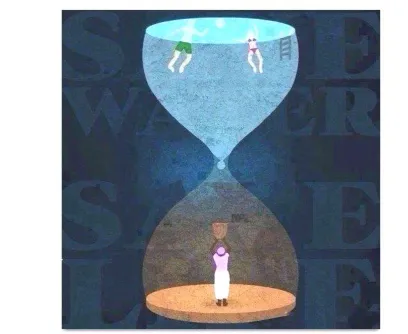
Experience of associative desktop games introduction into practical classes has shown need of drawing up before a game of words and notions list which can directly be used in a game process. Just before the game all the participants (actual players and those who will take part in discussion) are given the sheets of paper of the A 4 format and offered to write down those terms and notions which could be used in the upcoming game. At this students can be offered the collective discussion of the notions entered into this list. The quiet social and psychological atmosphere prior to a game, before the actual competition begins, and uniform motivations, for example, additional points in case of a win, joint objectives identification and achievement, allow everyone to unravel and be the most useful. The essence of the game is the following. A group of students builds a team of three to seven persons. Each of the alleged participants of the training game is given in random order six cards. One of team players is the Riddle- asker (or otherwise the story-teller).The accurate consecutive sequence is observed in the game. A participant who is the Riddle- asker picks up one of his card basing his choice on the own associations. The card chosen by the Story-teller is placed on the common game table with picture down. At this, a Story- teller him/herself says aloud its description in this case a term or a notion corresponding to the topic of a class and subject itself. The initial card isn’t shown to other players. All the other players look amidst their cards anything in the most corresponding to the said term or notion description and put cards with pictures down on the table as well. Then all laid-out cards are mixed up and displayed in a row with pictures up. The players’ task is to guess the card lay out by the Story- teller. Players guess cards of other participants of a game by their associations. The experience received in the process of this work actualization showed that it is hard for the most of students to show active attitude as many participants of the game process can’t build even the simplest associations especially on the given topic. That’s why the important task of a teacher is the explanation of the game association building essence at the very beginning of a class. For example: “Close your eyes and pronounce “ecology””. Pronouncing this word one may get absolutely any row of own associations, related to this term. For example this term may be associated with the words: ecologist, environment, pollution, clean air, city, space debris, surrounding, nature, hygiene, climate, rubbish bin, destruction, biology, farm, waste, natural reserve, processing, emission, oil refinery. The word "atmosphere" is associated with words: oxygen, air, ozone, pressure, pollution, earth, nature. The word "biocenosis" can be associated with words: family, tier, biomass, company. Word "toxicity": radiation, mercury, lead, dirty air, emissions, waste. You can try to add this list and to place words in that order which you think important. Such approach to information memorizing is based on the fact that associations in psychology, per se, reflect natural and substantiated links between separate objects, events and facts, reflected in consciousness and fixed in memory. Association is, first of all, the first thing that comes to mind and is based on emotional perception. Physiological basis of associations’ emergence is the mechanism of temporary nervous connection formation opened by I. P. Pavlov, i.e. a trail blazing of a nervous road between various regions of brain cortex, excitement closure of these regions. Association makes the basis of more complex psychic formations of a human. With the associations help it’s not only possible to memorize the information from the first try but to store it in the long term memory. Perhaps, it is the most important of all the priceless advantages of mnemonics. Let’s give the example of one construction of such game subject associations. At the figure 1 we can see the image which can cause association related to the change of anything.
The attentive looking at it shows that there change number (persons), ethnic belonging, time, flow, light and darkness. In the framework of the subject “Ecology” to such associations there may correspond the term succession, meaning consecutive regularity of one biological community (phytocenosis, microbe community etc.) to others on a certain section of the environment in time as a result of natural factors influence (including internal forces) or human impact.
Page 150
have guessed the offered term. Very important is the fact that if all the players have guessed the card thought by the Story- teller, the last one is added “minus- points”. One of the additional conditions of game – is to avoid clichés thinking, don’t think the evident. If the sky is shown on the figure, it’s not recommended to think terms related to the atmosphere directly. However if the Story- teller has formulated his association not distinctly, having indistinctly linked it with his card content and no player has guessed the original cards, then certain points are withdrawn from the score won by Story- teller at the current moment. The game goal: to guess as much as possible from the laid out cards those, thought by Story- teller and to get a good points number. The main winner becomes the player who has coped successfully with the task.
Figure 1. Example of the image for a game (from the game "Imaginarium")
Page 151
future, I’m planning to get the analog of such game for to play it in free time and develop my outlook”, to my mind this game really forces your imagination. A wonderful idea- to introduce this game into practical classes! First of all it brings group members together and secondly- the terms are memorized easily. I’m for more such classes!
The researches done show that academic result of students depends mainly on academic motivation development and not only on natural abilities. Motivation development ways and peculiarities are individual and unique for each student. When diagnosing academic motivation of 125 students of the Krasnoyarsk SAU (by method by A.A. Rean and V.A. Yakunin, adapted by N. Ts. Badmaeva) studying on the budgetary terms it has been found out that communicative motives were on the first place – 66,9 %, academic- cognitive- on the second-62,7 % [8].
This is to great extent the result of the rating- module system of education introduced in the university. The experience showed that the difference between “good” and “weak” students is based not on intellectual differences, but on the degree of their development of academic motivation.
Thus, the abilities are not the most significant factor of the academic activity as the existing system of the competitive selection into the HEI this way or another makes some applicants’ selection on the level of the common intellectual abilities. Those, who pass through this selection and are enrolled into the first year, in general possess equal abilities.
In this case the academic motivation factor may come to the forefront; and the system of internal incentives of personality for academic – cognitive activity in HEI starts playing one of the leading roles in emergence of “A- students” and “C- students”.
CONCLUSION
Ecological subjects studying are first of all assimilation of big amount of notions and definitions, laws and regularities. It’s the main task of a modern teacher to make such a work interesting and fascinating, at the same time scientific and cognitive, to increase students’ activity, to develop interest to a subject. One can’t make students think over, speculate over this or that task, issue. With the aid of game we enthrall not compel. Activity makes positive impact both on processes of thinking, memorizing, increasing this ability and strengthening the durability of the memorized. It can be reached by various means: experiments demonstration, various types’ surveillance organization, unusual story, etc.
The game situation contributes to the quicker and more accessible knowledge and skills mastering. It’s necessary as the modern conditions are characterized by the educational process humanization, address to a student’s personality. This task implementation objectively requires a new approach to the teaching, to the whole cognitive process organization. Besides, the modern approach demands to teach every student to study independently. The more independence we give students in educational tasks implementation there more efficient the educational process will be. It is the serious reason for wider game application in the teaching process organization. The research was done in the students’ audience of the Institute of agro-ecological technologies of FSBEI of HE the Krasnoyarsk SAU in 2015- 2016.
Page 152 REFERENCES
1. Ivanov D. A., What modern society challenges are met by use of concepts- key competence and competence-based approach in education?//Competences and competence-based approach in modern education./ Education Quality Assessment series, M.: Moscow center of education quality, 2008, P. 3-56.
2. Ioffe A. N., An active technique – the key to success//Civic education. Thesis of the international project, Saint Petersburg.: RSPU publishing house after A. I. Herzen, 2000, 382 pp.
3. Poleva E. A., Shkarabeynikova I. A. Case-study use potential of the technique for communicative competences development of school students// Scientific and pedagogical review (Pedagogical Review). 2015. Issue 1, P. 7-13.
4. Ponomaryov V. D., Introduction into game technology of teaching and educational activity of modern school. Kemerovo: Kem. Regional IUU, 1997, 109 pp.
5. Gomboyeva A. N., Motivation of educational activity of students when studying subject. "The account and audit of foreign economic activity"//Educational technologies and quality of training: The scientific and methodical conference theses with the international participation devoted to the 80 anniversary of formation of IrSAA. Irkutsk: Publishing house of IrSAA, 2014, Pp. 3-10. 6. Dvulichanskaya N. N., Interactive techniques of training as means of formation of key
competences development//Science and education, 2011. No. 4, Page 1-10.
7. Lombardi, Doug & Sinatra, Gale M., Views of student's youth about plausibility of anthropogenic climate change.//Researches in the field of education, 2012, pp. 201-217.